Hello! My name is Melody Aguiba. Writing has been my passion throughout life. To be able to help institutions grow in their missions, I opted to become a Public Relations person. Here’s what businessman and politician Donald Trump said of the importance of PR:
“You can have the most wonderful product in the world, but if people don’t know about it, it’s not going to be worth much. You need to generate interest, and you need to create excitement. One way is to hire PR people…If the New York Times writes even a moderately positive one-column story about one of my deals, it doesn’t cost me anything, and its worth a lot more than $40,000.”
Of course PR has no cost if you do it for yourself. But even if you hire one, it’s still most cost effective. And the most important thing is its value is worth a lot more!
I hope you will get passionate too about the stories we write about—the products and causes we will share. We hope knowing about them will be valuable for you, your home, your job, and your world!
For I will make many interesting business and socio-economic development missions more meaningful, relevant to our world, and even exciting!
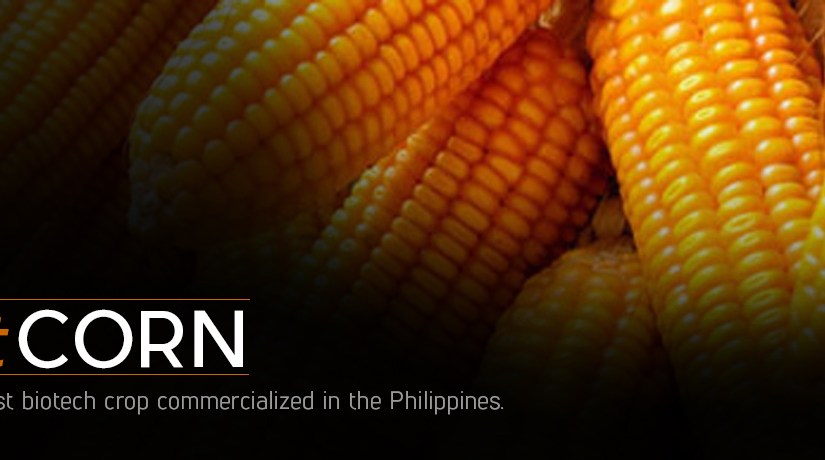
Production of biotechnology crops in the Philippines fell heftily by 21% to 642,000 hectares due to the proliferation of counterfeit Bt corn seeds that had taken up an estimated 10% of the market for registered seeds.
The International Service for the Acquisition of Agribiotech Applications (ISAAA) reported that while biotechnology area globally sustained growth by 3% to 189.8 million hectares, the local market fell as seven companies are reportedly involved in fake seed production.
Yet, the Philippines is still now one of world’s largest biotechnology producer at thirteenth place.
Monsanto, the pioneer biotechnology developer of Bt corn, the only genetically modified (GM—or biotechnology) crop commercialized in the country, is continuing to seek Department of Agriculture’s (DA) assistance in stopping fake seeds production.
“Under the regulations, only registered seeds may be distributed to the market. Presence of counterfeit seeds is a disincentive to technology developers that have put in their investments,”said Gabriel O. Romero, Monsanto regulatory affairs chief, said in a press briefing.
Aside from the concern on fake seeds, ISAAA Vice Chairman Paul S. Teng said governments, especially developing countries like the Philippines, should improve other regulations in GM crops.
One major concern is the need to speed up approval of biotechnology crops in order to arrest opportunity losses placed at cost of $1.5 trillion by 2050 in low and lower middle income countries.
“Governments are concerned on the safety, access and profitability of biotech crops, as well as local interests on biodiverisity protection and trade competitiveness. Hence, regulations become stringent which stifle access of farmers to the technology and its economic benefits,” noted ISAAA.
“Suppression of the technology in Africa is equal to $2.5 billion from 2008 to 2013. Delays in Golden Rice release in India alone costs $199 million per year. This is in the form of health costs. This is also hurting education because health is most important for learning in early childhood. It impacts cognitive development,” Teng said.
The non-adoption of Bt eggplant in India is costing it $500 million per year.
Biotechnology crops commercialization approval have slowed under certain conditions as some sectors fear an adverse effect on health and the environment as genes are transferred from one species to another under GM.
Breeding experts asserted though that GM has extremely strict regulatory policy especially in the Philippines where GM crops go through scrutiny for adverse health effects like allergenicity and toxicity. These also go through testing on effects to the environment and biodiversity and substantial equivalence (comparison to non-GM crops in nutrient content).
Teng stressed that benefits to ecosystem of GM crops is huge with 183 million hectares saved from destruction due to higher yield from these crops that require a smaller area for a bigger yield.
GM crops have also cut carbon dioxide emission equivalent to 16.7 million cars off the road. There is also a reduction of use of insecticides-pesticides by 18.4% from 1996 to 2016.
.
Moreover, gains of farmers have grown by $186.1 billion in the form of increased yield and income largely from Bt corn, GM soybean, Bt cotton. These have helped 16 to 17 million small farmers globally and their families totaling 65 million.
Teng also cited opportunity costs of non-adoption of biotech canola in Australia is estimated at $377.9 million.
The Philippines will generate revenue of as much as P400 billion ($8 billion) from an emerging industry in locally-produced engineered bamboo which is bringing tremendous import substitution value to the economy.
Given all-out government support for this new product, industry leaders see a realization of dreams for economic development in the countryside along with huge revenue generation from engineered bamboo.
“Our wood-based construction material is imported almost 94%.. The focus is bamboo as a reengineered lumber for the construction industry and as biomass and ethanol production. Enginered bamboo can import substitute in our national construction industry,” said Luis P. Lorenzo Jr., chairman of egineered bamboo producer Rizome Philippines.
Department of Agriculture Undersecretary Deogracias Victor B. Savellano said the local manufacturing of engineered bamboo is seen to account for a significant chunk of potential revenue from bamboo.
From import substitution alone, economic benefit from enginereed bamboo is placed at P400 billion ($8 billion) yearly.
To be able to realize the full potential of bamboo to be an alternative to steel or glass in construction, authorities said it is imperative that government comes up with policies that include bamboo in the National Buildiing Code or National Structural Code.
Rep. Jose Manuel F. Alba of Bukidnon has filed House Bill 9144 or an “Act Integrating Bamboo as a Sustainable Material for the Built Environment.”
Savellano, also vice chairman of Philippine Bamboo Industry Development Council (PBIDC), said the legislation on the Bamboo Structural Code as proposed in HB 9144 is critical to implementing Executive Order 879.
“We look forward to finally implementing EO 879 which envisioned industrialization through bamboo-based manufacturing,” Savellano said.
Government should consider ratifying a law on the Bamboo Structural Code as urgent in order to seize the big global market for engineered bamboo.
“(To use bamboo) for import substitution and earn billions of dollars, we need to move fast (in coming up with policies) that include bamboo in every instrument– into the structural building code,” Lorenzo said.
EO 879, issued in 2010, has not been implemented at all. Neither has PBIDC received any budget allocation.
A product developed by Filipino scientists and incorporated with state-of-the art technologies overseas, engineered bamboo is now recognized not only as a sustainable construction material. It has been proven to have tensile strength equal to or better than steel.
With the incentives that will be given under the proposed Kawayan Act (Senate Bill 2513) which has been filed in the Senate by Senator Mark A. Villar, private sector investment is seen to pour into the bamboo industry.
The local manufacturing of engineered bamboo will bring about livelihood to Indigenous People (IP) who hold vast tracts of ancestral domain land that are now being tapped for bamboo production. “The bamboo industry is anti-poverty and anti-insurgency in Mindanao’s poor rural communities. We have proven it today in North Cotabato and Bukidnon,” said Lorenzo.
Rizome just entered into a Memorandum of Agreement for a bamboo project with the IP Manobos covering 2,500 hectares of ancestral domain land in North Cotabato.
Bamboo is a sustainable material as it grows abundantly anywhere in the Philippines. It is harvestable for timber and other uses for 100 years. It releases 38% more oxygen than trees and sequesters 12 to 17 tons of carbon dioxide per hectare. It is a tool for combatting erosion and flooding.
HB 9144 will direct relevant agencies to develop a Bamboo Stuctural Code (BSC) which will provide the guidelines, standards, and best practices for the safe and sustainable use of bamboo in building design and construction.
Bamboo is traditionally used for housing in the rural areas, but only for one or two story houses. But to be used as alternative to steel, especially in high-rise structures, guidelines should be put up in the National Building Code or Structural Code.
Bamboo industry leaders hold giant bamboo and engineered bamboo sample. (L-R) Butch Alcantara, Kilusang 5K Foundation director, PBIDC Executive Director Rene Madarang, Rizome Philippines Chairman Luis P. Lorenzo Jr., Agriculture Undersecretary and PBIDC Vice Chairman Deogracias Victor B. Savellano. Credit- Rene Madarang
Rene Madarang, executive director of PBIDC, said the Philippines should now catch up in bamboo commercialization.
“Total export trade value of bamboo commodities (in 2020) reached $2.969 billion with Asia accounting for a significant 80.2% share. However, the Philippines contributed to just $473,852,” he said.
Madarang said the local industry has to hurdle the challenges including low product quality and high production cost, inaccessible financing, and non-supportive policies.
With the now pending bills in Congress institutionalizing PBIDC, Philippines is establishing an agency that harmonizes all bamboo functions scattered in different government agencies, he said. Even now, PBIDC is supporting establishment of a bamboo electronic database, policy incentives for private sector investments, and rural-based bamboo enterprises.
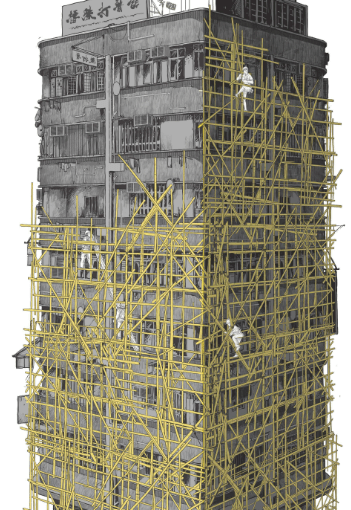
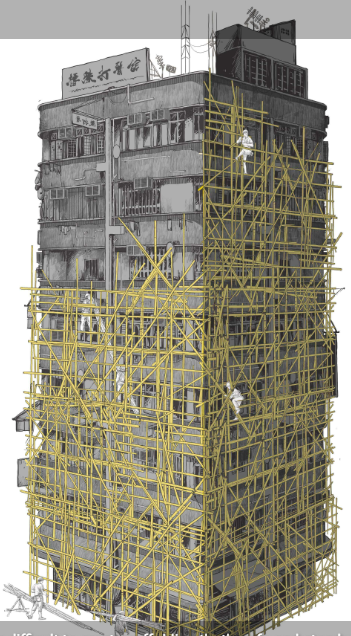
Extensive research has shown that bamboo has the mechanical properties for use in construction. “Bamboo’s internal cell-like structure allows it to withstand compression, making it an ideal material for scaffolding. Compared to steel, bamboo is much lighter, six times faster to erect and 12 times faster to dismantle,” South China Morning Post reported.
According to the Advances in Science and Technology Journal (ASTJ), bamboo can be used as reinforcement in concrete as a replacement to steel.
“Bamboo culms are often used directly without any alteration as structural members such as beams and columns. The shear and flexural behavior of bamboo reinforced concrete (BRC) beams is significantly better than plain concrete beams,” reported the ASTJ.
“Bamboo fibers reinforced concrete (BFRC) is a good alternative to existing synthetic fibers reinforced concrete such as glass and steel fibers.”
Interesting Engineering (IE) reported that “steel has a tensile strength of 23,000 pounds per square inch. But bamboo surpasses steel with a noticeable lead at 28,000 pounds.
“That is because when we consider the strength of a material, there are variables to keep in mind. The tensile strength can be defined as the resistance offered by an objecting to breaking or splitting under tension,” reported IE.
“Bamboo is stronger than steel in this case, as it has a tightly packed molecular structure than steel.” GF
FEATURED PHOTO Engineered bamboo is not only as hard as steel or tough as concrete. It is as beautiful as hardwood in this Rizome interior model.
A bill that will strengthen commercialization of engineered bamboo as a sustainable construction material potentially in high-rise buildings has been filed in Congress.
House Bill 9144 or an “Act Integrating Bamboo as a Sustainable Material for the Built Environment” has been filed by Rep. Jose Manuel F. Alba of Bukidnon.
HB 9144 will direct relevant agencies to develop a Bamboo Stuctural Code (BSC) which will provide the guidelines, standards, and best praactices for the safe and sustainable use of bamboo in building design and construction.
Department of Agriculture Undersecretary Deogracias Victor B. Savellano said the local manufacturing of engineered bamboo is seen to account for a significant chunk of potential revneue from bamboo for the Philippines. From import substitution alone, economic benefit from enginereed bamboo is placed at P400 billion ($8 billion) yearly.
Savellano, also vice chairman of Philippine Bamboo Industry Development Council (PBIDC), said the legislation on the Bamboo Structural Code is critical to implementing Executive Order 879 which created the PBIDC.
“We look forward to finally implementing EO 879 which envisioned industrialization through bamboo-based manufacturing,” Savellano said.
EO 879, issued in 2010, has not been implemented at all. Neither has PBIDC received any budget allocation.
But the bills now filed in Congress, particularly Senate Bill 2513 (Kawayan Act), will put teeth on existing policies. SB 2513, filed by Senator Mark A. Villar, is allocating a budget for PBIDC in order to spur private sector investment in the bamboo sector.
HB 9144 will promote bamboo as a sustainable building material, boosting Philippines’ compliance with United Nations Sustainable Development Goals (UN-SDG). It will call for integration of bamboo-related education into higher education curricula and continuing professional education for archictets, interior designers, and engineers.
Bamboo will be introduced as a construction material that is comparable to steel in tensile strength and as beautiful as hardwood.
Bamboo is traditionally used for housing in the rural areas, but only for one or two story houses. But to be used as alternative to steel or hardwood, especially in high-rise structures, guidelines should be put up in the National Building Code or Structural Code.
Luis P. Lorenzo Jr., chairman of egineered bamboo producer Rizome Philippines, said government should consider it urgent to come up with policies on the Bamboo Structural Code in order to seize a huge market.
“Our wood-based construction material is imported almost 94%. (To use bamboo) for import substitution, and earn billions of dollars, we need to move fast (in coming up with policies) that include bamboo in every instrument– into the structural building code,” he said.
Extensive research has shown that bamboo has the mechanical properties for use in construction. Savellano has been pushing for the commercial use of bamboo both as an agricultural support material and as an industrial product.
“Bamboo can be our single biggest source of revenue that can enable many of our countrymen to rise above poverty especially our Indigenous People who are also the guardians of our environment,” Savellano said.
As an Ilocos Sur representative, Savellano had authored House Bill 9576 or the Philippine Industry Development Act.
DA is now strengthening its bamboo propagation program, having recognized that bamboo is a high value crop that has both food and consumer-industrial uses.
For one, DA has funded the bamboo nursery of University of the Philippines-Visayas which has a planned plantation expansion over 10 hectares.
Rene Madarang, executive director of PBIDC, said the Philippines should now catch up in bamboo commercialization.
“Total export trade value of bamboo commodities (in 2020) reached $2.969 billion with Asia accounting for a significant 80.2% share. However, the Philippines contributed to just $473,852,” he said.
Madarang said the local industry has to hurdle the challenges including low product quality and high production cost, inaccessible financing, and non-supportive policies.
With the now pending bills in Congress institutionalizing PBIDC, Philippines is establishing an agency that harmonizes all bamboo functions scattered in different government agencies, he said. Even now, PBIDC is supporting establishment of a bamboo electronic database, policy incentives for private sector investments, and rural-based bamboo enterprises.
Bamboo’s internal cell-like structure allows it to withstand compression, making it an ideal material for scaffolding. Compared to steel, bamboo is much lighter, six times faster to erect and 12 times faster to dismantle. Credit- South China Morning Post
Engineered bamboo for construction can indeed be one of the sunlight bamboo industries.
According to the Advances in Science and Technology Journal (ASTJ), bamboo can be used as reinforcement in concrete as a replacement to steel.
“Bamboo culms are often used directly without any alteration as structural members such as beams and columns. The shear and flexural behavior of bamboo reinforced concrete (BRC) beams is significantly better than plain concrete beams,” reported the ASTJ.
“Bamboo fibers reinforced concrete (BFRC) is a good alternative to existing synthetic fibers reinforced concrete such as glass and steel fibers.”
Bamboo has been reported to have a tensile strength comparable to steel.
Interesting Engineering (IE) reported that “steel has a tensile strength of 23,000 pounds per square inch.”
“But bamboo surpasses steel with a noticeable lead at 28,000 pounds That is because when we consider the strength of a material, there are variables to keep in mind. The tensile strength can be defined as the resistance offered by an objecting to breaking or splitting under tension,” reported IE.
“And yes, bamboo is stronger than steel in this case, as it has a tightly packed molecular structure than steel.”
PHOTO Bamboo’s internal cell-like structure allows it to withstand compression, making it an ideal material for scaffolding. Compared to steel, bamboo is much lighter, six times faster to erect and 12 times faster to dismantle. Credit- South China Morning Post
Philippines’s meat importation declined heftily in October this year to 95.979 million kilos, down by 18.9% in light of the Department of Agriculture’s (DA) aggressive fight against illegal trade along with a rigorous program for increased local production.
DA-Bureau of Animal Industry (BAI) also reported lower cumulative meat imports from January to October this year to 1.019 billion kilos, down by 9.7% from 1.128 billion kilos in the same period last year.
DA Undersecretary Deogracias Victor B. Savellano attributed the sustained downtrend in meat importation to the government’s thrust to raise local production. DA has also been collaborating with different government agencies in fighting illegal trade as this is the same marching order received by DA Secretary Francisco Tiu Laurel from President Ferdinand R. Marcos.
“Our mandate is to eliminate illegal meat importation, smuggling, hoarding, price manipulation, and anything that distorts prices in the market,” said Savellano. “We will raise production by five times (in five years). With enough volume we hope to make food affordable for Fiipinos. We want producers, especially small scale farmers, to make money.”
For beef, importation dropped 22.1% to 13.963 million kilos in October. Buffalo meat importation reached only 1.987 million kilos, down by 42.5% from 4.676 million kilos in the same period last year.
Pork which takes up the biggest share among meat import decreased by 26.35% to 45.604 million this ear from 61.927 million kilos in October 2022.
However, chicken importation in October this year rose slightly by 1.28% to 34.252 million kilos from 33.817 million kilos last year.
In the aim to raise local production, an immediate program of DA is to control infestation of African swine flu (ASF) and avian influenza (AI) while awaiting approval for vaccine commercialization.
“There are problems in the availability of vaccines for ASF and AI that are now being solved so that we can protect the population of hogs and chicken. We will also intensify research on vaccines so we can improve their availability,” said Savellano.
DA is raising its target on the use of artificial insemination in order to raise genetic quality of animals.
“We are raising our target on the use of artificial insemination by 50% from the previous 30%. We are improving availability of high quality semen to farmers under our breeding program in order to raise our animal and meat production,” he said.
DA is also embarking on long term programs to raise local animal and meat production. Investment are being done in infrastructure development including farm-to-market roads and transportation networks, cold storage facilities, and meat processing plants that can help reduce post harvest losses.
Food safety standards such as Good Agricultural Practice, Good Manufacturing Practice, and Hazard Anaysis Critical Control Point are being complied with.
DA will explore development of high-value meat products that have untapped markets. It will expand sources of meat importation that can offer good quality meat and competitive prices while curbing smuggling and illegal trade.
It is now setting up a Central Information Technology hub as part of a program to register all legitimate livestock farmers under a National Livestock Library. This will legitimatize contributors and beneficiaries of government’s livestock program.
PHOTO (L-R) Philippine Bamboo Industry Devt. Council Executive Director Rene Madarang, Deputy Speaker Antonio ‘Tonypet’ T. Albano of the 1st District of Isabela, DA Usec Deogracias Victor Savellano, and DA Secretary Francisco Tiu Laurel Jr. await flag ceremony at DA.
The Senate has strongly supported passage of the “Kawayan Act” as bamboo has the potential to contribute $3.5 billion to the economy and strengthen the country’s pollution control under its Sustainable Development Goal commitments.
Senate Bill or an “Act Institutionalizing the Bamboo Industry in the Philippines and Appropriating Funds Therefor” has been broadly supported in the Senate.
An official legislative statement indicated Senator Mark A. Villar’s speech has been “overwhelmingly supported by the Senate having been co-sponsored by multiple senators, including Senate President Migz Zubiri who is one of the co-authors and co-sponsors of the bill.
Villar, chairman of the Senate Committee for Trade, Commerce, and Entrepreneurship. led sponsorship of the bill.
Villar cited multiple economic potentials and environmental values of the bamboo industry including its global trade value that is expected to reach $88.43 billion by 2030 among others.
The bamboo industry is also expected to contribute $3.5 billion to the Philippine economy. He also emphasized the efficient pollution control capacity of bamboo as it releases 38% more oxygen than trees and sequesters 12 to 17 tons of carbon dioxide per hectare.
“The Institutionalization of the Bamboo Industry Development in the Philippines or the Kawayan Act aims to pursue further efforts that will develop the bamboo industry. At present, government agencies such as DTI, DOST, DENR and DA implement their own research and development programs, in an attempt to address the insufficiency of information and data resources, among others,” Villar said during a sponsorship speech last week.
“Yet, these initiatives are fragmented and this is worsened by the perception of the private sector for a lack of a functional governmental body overseeing the development of the industry which thus hinders its optimization.”
The Kawayan Act seeks to institutionalize the Philippine Bamboo Industry Development Council (PBIDC), which was created by Executive Order 879, to serve as the central body for overall policy and program direction for all bamboo stakeholders. The Council is also mandated to formulate and implement the Philippine Bamboo Industry Development Roadmap.
The Kawayan Act will further provide a comprehensive approach to the development of the bamboo industry as its provisions mandates DENR, DTI, DOT, DepEd, and DOST and their attached agencies to use bamboo in government programs and to scale up the use, investment promotions, research and development of bamboo.
“The Philippine Bamboo Industry Development Roadmap will be guided with actionable, time-bound, and realistic objectives that are aligned with the Philippine Development Plan, in which the former will include substantial and attractive incentives to encourage investments in the bamboo industry,” said Villar.
Department of Agriculture Secretary Deogracias Victor B. Savellano has expressed confidence that the legislative support to the institutionalization of the PBIDC will accelerate bamboo’s role in industrialization. It will lure private investors with the incentives granted by the law.
PBIDC Executive Director Rene Butch Madarang said the Kawayan Act will speed up and enhance efficiency of plantation, harvest, and bamboo transport permit approvals.
Savellano who is also PBIDC vice chairman said PBIDC, since the issuance of EO 879 in 2010, has been convening representatives of DENR, DA, DTI, DepEd, and other appointed public and private agencies as mandated, despite budget lack.
Villlar said “through the Kawayan Act, we can look forward to a Philippine economy that stands as mighty and grows as rapidly as bamboo does. Similarly, the development of our bamboo industry mirrors the persisting Filipino resilience amid various challenges. No matter what hinders us, no matter what sways and bends us, we will continue to push forward towards progress and development,” he said.
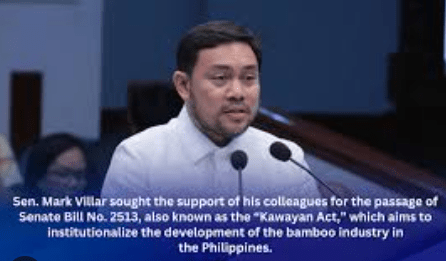
“It is high time we push for the development of the Philippine bamboo industry” PHOTO Senator Mark A. Villar in a sponsorship speech on Kawayan Act. Credit- Senate
The Philippines will carry out in 2024 a P100.05 million bamboo work program which includes trade and marketing in global venues to promote Filipino innovations in bamboo architecture and other products.
The Philippine Bamboo Industry Development Council (PBDIC) is sustainining inter-agency programs for Filipino bamboo products despite prevailing budgetary constraints.
As the council is composed of several government agencies led by the Department of Trade and Inudstry (DTI), PBIDC is consolidating budgets in order to implement the 2024 program, according to PBIDC Vice Chairman Deogracias Victor B. Savellano, also Department of Agriculture (DA) undersecretary.
“Bamboo is an industry where we have huge potential to earn from export. This is why PBIDC is putting up with our present budgetary lack to promote our products that are really world class,” said Savellano.
Foremost among the trade exhibitions is the First Philippine Bamboo Conference and Exhibition on Architecture, Interior Design and Construction. P8 million is being allocated of which P5 million may be sourced from the Department of Science and Technology.
DTI Undersecretary Blesila A. Lantayona disclosed other venues for bamboo’s promotion are the Philippine International Furniture Show (PIFW) and Manila FAME, Asia’s trade show for home, furnishings, and lifestyle. PIFW and Manila FAME will have a P1 million each allocation. The country’s biggest construction show, Philconstruct Expo, and the National Trade Fair will also have a bamboo exhibitions.
As bamboo is seen as a sunshine industry, P24 million is being allocated by PBIDC for Nationwide Nursery Establishment and Management in 2024.
To support identification of existing bamboo plantations, PBIDC is allocating P5 million budget for the Bamboo Inventory and Technology-Enabled Mapping (BRITEMAP).
Inventory mapping of bamboo plantations will be critical now that many private companies have started investing in bamboo product manufacturing, according to PBIDC Executive Director Rene Butch Madarang.
PBIDC is looking at expanding the BRITEMAP program to as many regions of the Philippines. This will facilitate supply for bamboo raw materials of investors that are now putting up manufacturing plants all over the country, said Madarang.
Engineered bamboo is now being manufactured by the Philippines and is seen to potentially substitute P400 billion worth of wood imports. PBIDC is supporting this vision with its program for Value Chain Analysis for Bamboo as an Architectural and Construction Material. For 2024, P5.5 million is allocated for this study.
Nursery establishment will be supported by a training program of farmers and entrepreneurs on Nursery, Management, Bamboo Propagationad Bamboo Shoot Production, P4 million.
While seeking for the passage of the Kawayan Act in Congress which will harmonize all activities of different government agencies on bamboo, PBIDC is already embarking on master planning. The Philippine Bamboo Roadmap updating is budgeted with P5.55 million.
Further exposure to international trends in bamboo is given importance with Philippines’ partiicpation in the Bamboo Industry Immersion Program in Taiwan and China. It will receive P3 million allocation.
The Kawayan Act, authored by Senator Mark A. Villar, also Senate Committee Chairman on Trade, Commerce, and Entrepreneuship, eyes an initial P100 million budget for the future law’s implementation.
However, this budget is apparently just for administration and organization of the envisioned bamboo center. On the other hand, Philippines’ neighbors are investing heavily in their bamboo industries. Thailand is reportedly infusing $10 billion for its “Bamboo Villages” development.
The Bamboo Global Report Market 2023 placed bamboo revenue at $66.22 billion in 2022 and $71.63 billion in 2023. This is seen to further grow to $92.62 billion in 2027.
The private sector has asked the Department of Agriculture (DA) to scrap the Minimum Access Volume (MAV) in poultry and pork imports while also ensuring that fees collected from the Safeguard Measures Act implementation be channeled for the competitiveness of the agriculture sector.
In a meeting last January 18 with DA Secretary Francisco Tiu Laurel, the Philippine Chamber of Agriculture and Food Inc. (PCAFI) asserted the MAV has become useless as actual import volume for chicken, pork, and corn have ballooned many times more than the MAV.
“The volume of importation for chicken is more than 15 times the MAV. Thus, our treaty commitment with the GATT-WTO shows that with this condition, there is no longer need for a MAV,” said PCAFI President Danilo V. Fausto.
Philippines’ committed in 1995 to the General Agreement on Tariff and Trade-World Tade Organization (GATT-WTO) for an import volume of 23,500 metric tons (MT) for chicken with lower tariff of 40% under MAV.
Outside MAV, tariff commitment was at 50%. However, in 2005 tariff rate became equal for in and out of MAV volume.
Removing MAV will result in a “level playing field among importers and importers vis a vis local producers,” Fausto said.
PCAFI is concerned that farmgate price of chicken reported by the United Broilers and Raisers Association as of January 4 was P89.15 per kilo liveweight. This is way below production cost per kilo. For imported chicken, estimated cost was at P84.83 per kilo within MAV and P90.83 per kilo outside MAV.
On the other hand, retail price as per DA Bantay Presyo data on January 4 was at P170 to P180 per kilo.
In 2023, total chicken importation stood at 426,620 kilos. The same sitution is true for corn and pork where actual import volume far exceeds MAV.
In his Aide Memoire No. 2, Fausto also asked government to strictly enforce Section 34, Chapter 4 of the Safeguard Measures Act (Republic Act 8800) which was aimed at protecting local farmers from any surge in imports.
This mandates that fees and safeguard duties from the implementation of RA 8800 totalling to 50% be allocated for the competitiveness of the agriculture sector adversely affected by the surge in imports.
“RA 8800 was approved last July 19, 2000. Two decades have passed and we have yet to see where the money collected under the law was allocated. More particularly coffee, pork and chicken,” said Fausto.
As the coffee sector is negatively affected by excessive imports, PCAFI asked DA to use the RA 8800 fees to develop the coffee industry.
“The DA budget should provide for enough planting materials either through cuttings or tissue culture to a wider coverage of farmer groups to generate at least five million coffee trees with a better yield from 700 kilos per hectare comparable to Vietnam production of 3-5 tons per hectare.”
DA coffee program should also provide training and better technology to farmers; encourage the youth to participate in the project; encourage a wider participant granting National Seed Certification from the Bureau of Plant Industry; and prioritize coffee for intercropping with the coconut trees.
PCAFI also asked DA to simply farmers’ access to the credit guarantee of the Philippine Guaranty Corp. The guarantee will ensure easier access of farmers to credit with banks.
Likewise, the Philippine Crop Insurance Corp. (PCIC) should insure crops, livestock, poultry and dairy against climate change, pests, and diseases. PCIC should expedite payment of insurance calls to provide confidence to investors and banks.
DA in collaboration with the Department of Finance should encourage front-end or forward purchase on planted crops to provide a turn-around capital of farmer-producers. Such production contracts and warehouse receipts should enable farmers to use these as collaterals to avail of loans from Land Bank and Development Bank of the Philippines.
Special safeguard funds must be put up to encourage banks, Land Bank and DBP to provide farmers easy access to credit.
PHOTO DA Secretary Francisco Tiu Laurel (sixth from left) meets with PCAFI led by President Danilo V. Fausto (fifth from left)
The “Kawayan Act” or the Bamboo Industry Development bill is seen to be approved until Congress’s third regular session in 2024 as government speeds up institutionalized mandate boosting investments into bamboo-based industrialization.
Sponsored by Senator Mark A. Villar, Senate Bill 2513, “An Act Institutionalizing the Bamboo Industry Development of the Philippines,” is now being finalized. It will be subjected to interpellation by senators perhaps by the first quarter of 2024 for any amendments.
Bicameral discussions ensue to come up with a unified version from the Senate and Lower House bills prior to submission to the Office of the President for ratification.
“We have enough time until the third regular session to complete the whole process,” said Lawyer Ken Sta. Rita, presiding officer at the Senate Committee on Trade, Commerce, and Entrepreneurship (SCTCE). Congress’s third regular session begins in July 2024.
Department of Agriculture (DA) Undersecretary Deogracias Victor B. Savellano, also Philippine Bamboo Industry Devt Council vice chairman, said the urgent approval of the bamboo bill will enable realization of the vision of Executive Order 879 on bamboo industrialization.
“We will finally have a true ‘Pinoy’ industry that uses a green material to promote industrialization and dollar generation,” said Savellano. He authored an early version of a House bill supporting the productive use of the climate-smart native plant ubiquitously grown nationwide.
Philippine Bamboo Industry Development Council (PBIDC) Executive Director Rene Madarang said the bamboo law as approved will finally institutionalize a counterpart PBIDC office that harmonizes the myriad bamboo programs of government.
“It will all be under one center so that the private sector knows where to go to for different kinds of assistance that will enable us to nurture our bamboo industry,” said Madarang.
Senate Bill 2513 introduces incentives into the industry including making it an Investment Priorities Program product under Bureau of Investments in order to enjoy tax holidays, among others. Bamboo plantations will be exempted from permits for tree cutting, harvesting and transport. Private plantations will be allowed to enjoy free rental of government lands. Plantations will also be accepted as collateral for government loans.
Private sector players have also been pushing for incentives and policies that will encourage investments into the sector foreseen to gross $92 billion globally by end-2030. These are among the motions for which the SCTCE requested written proposals:
Tap the 204,000 hectare mature natural growth bamboo identified by the Forest Management Bureau. It can immediately be transformed into a processing center for high value added products — handicrafts, furniture and bamboo slats that will support indigenous people’s livelihoodCraft a Bamboo Villages program similar to Thailand’s which is reportedly investing $10 billion in 10 years for bamboo development.
Grant a 40-year bamboo plantation tenure so investors may have enough time to recover investments. Private sector investments in large scale plantations should be encouraged under an ease of doing business environment.
Land Bank of the Philippines should set up a credit program for micro small medium enterprises (MSME) engaged in bamboo business similar to the program that made a success of Masagana 99 in the 1970s.
Consider issuing a policy mandating 5-10% of construction materials should use locally processed bamboo out the P400 billion construction material industry.
Infrastructure such as farm to market roads and irrigation systems should be established as many bamboo plantations are in unreachable areas.
The bamboo bill should provide stability and predictability in policies as big investors cannot just put their money in policies that keep on changing.
5. Marketing assistance and supply of big volume of bamboo should be accorded to end-of-value-chain industries such as innovative house builders like Cubo.
The bamboo law should include a provision for bamboo as a structural timber in the Building Code. Bamboo lumber is a $5 to $10 billion industry. Government should focus on its development.
Tax incentives should be granted for the mining industry to engage in large scale bamboo plantation as a supportive livelihood program for Indigenous People.
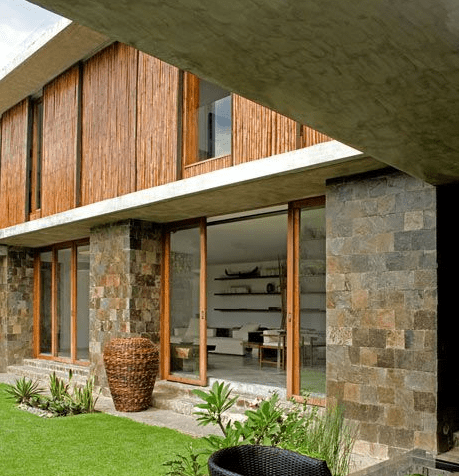
PHOTO Swiss-Filipino Studio Couture used bamboo in this elegant Paranaque residence. Credit Arch20
The Department of Agriculture (DA) will replicate a beekeeping program that propagates indigenous honeybee breeds that now gives livelihood to Mangyans of Occidental Mindoro and has untapped potential for export.
DA Undersecretary Deogracias Victor B. Savellano said the beekeeping program will encourage local farmers to tap native honeybee breeds that are easy to grow. The program offers huge opportunities as income earner for farmers with honey’s medicinal and pharmaceutical properties.
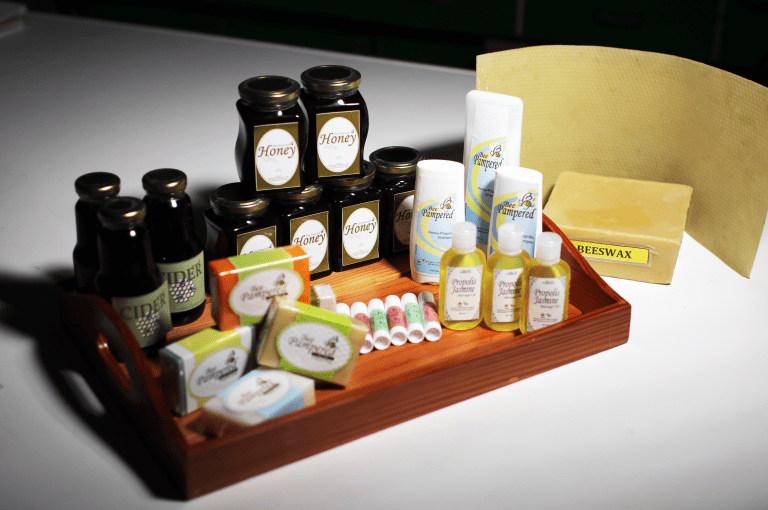
The products of beekeeping- honey, pollen, propolis– are turned into-antibacterial soap, massage oil, lip balm, shampoo, and other products.
Local processed bee products have reportedly been reaching prominent export markets—particularly the royalties of England.
Savellano said DA will explore budget sources for the program through a Bureau of Animal Industry (BAI) program.
“Beekeeping is a high value farm sector. It has export potential given an organized national program to develop it,” said Savellano.
Under its program, DA will accredit bee suppliers as part of developing the local industry. This accreditation policy will get rid of smugglers of queen bees which are the bees for reproduction.
“Queen bee smuggling has been destroying our local industry,” he said.
DA is partnering with the University of the Philippines-Los Banos (UPLB) on a commercial system, yet community-based program on beekeeping.
Dr. Cleofas M. Cervancio, UPLB project leader, said UPLB is coming up with a bee roadmap whose aim is to tap the export market.
So far, the UPLB project has been benefitting rural communities. This includes Muslim communities in Lanao del Norte and Mangyans in Victoria, Occidental Mindoro.
Bee farms are now also being developed as agriculture tourism sites. One of such site is the Balay Buhay sa Uma Bee Farm in Bulusan, Sorsogon. It is accredited by the Department of Tourism.
UPLB has been developing technologies using native bees, particularly stingless bees, in order to raise crop yield and sustain biodiversity.
The Magic of Bee. Credit- UPLB Regina Mae C. Ongkiko
The bee program has been identified by the Technical Education and Skills Development Authority (TESDA) as the National Training Center for beekeeping. Trainings are on beekeeping, bee colony health, management and bee pasture development.
The UPLB Bee Program also participates in establishing Standards for Tropical Honey and Beekeeping Practices in the Asia Pacific Region.
The TESDA program features low cost rearing technology for bees and establishment of bee pasture and sanctuary in an agroecosystem. It developed a policy paper on Standards for Tropical Honey ratified by the Asian Apicultural Association.
These are other UPLB-developed bee technologies: Use of stingless bees for pollination; how to harvest honey, pollen, and propolis from stingless bees; propagation of stingless bees using coconut shells; and harvesting honey from giant honeybees.
The program enters into collaborative agreements on establishing Food and Drug Administration-accredited bee facility. Partnership is also promoted for the protection of intellectual property rights for the wooden hive technology. PHOTO UPLB bee products. Credit–UPLB Agora
Agriculture Undersecretary Deogracias Victor B. Savellano, the lone Filipino Gusi Peace Prize 2023 leaureate, has called on collaborators to strengthen ties with government on food production as a means to counter insurgency and terrorism.
Awarded for good governance now geared toward increased food security, Savellano said political factions should all set aside ideologies in order to contribute to raising food supply.
With good governance, he means the least privileged, the most disadvantaged, the poor and marginalized should be given priority in government programs.
Food production is a primary mandate of government through which many socio-economic problems in the countryside can be solved, he said.
“When the Filipino goes hungry, we have a national security problem. We are all confronted with food security which in fact is a national security problem. That’s why all of us public and private sector people should be involved in finding ways to raise food supply,” he said.
Savellano made the statement in light of a bombing incident in Marawi early this week that is reportedly exposing internationally-linked terrorists to the violence.
However, government’s program for reintegrating rebels have been successfully luring returnees as its package of benefits includes safety and security of rebels’ families along with a health program and livelihood opportunities.
With increased food production and livelihood generation in the countryside, rural folks are less likely to be influenced to join armed rebellion, said Savellano.
Ambassador Barry Gusi, founder of the Gusi Peace Prize, said the appointment of strong leaders in government as that of Savellano is so timely even now that violence has recurred with the bombing in Marawi City.
“This (violence) has many factors—security, economy, political (differences). They in the South should be given equal attention. These people are not treated equally. It’s not important whether you’re a Christian or Muslim. People should be treated equally,” said Gusi.
Savellano is doing an important role in making available food, resources, and livelihood opportunities to all.
“Food is a necessity. Food is one of the main reasons (for all these violence). Political (conflicts) arise from a lack of attention to Muslims. They have been neglected in part in health care and food. They don’t have enough.”
The Gusi Peace Prize is awarded for excellence in many areas like Medicine, Physics, etiology, environment, humanitarian works.
This year’s other laureates in the Gusi Peace Prize are Atty. Jordan Gjorchev, founder, National University of Macedonia; Dr. Lars Larsen, Medicine -Neuroscience trailblazer;
Dr. Carlos Paya, CEO of Immune Design; Fmr Princess Himani Rajya Laxmi Devi Shah, supporter of disadvantaged Nepalese Community through The Himani Trust; Prof. Paris Katsivelos, quintessential actor, director, and educator of the dramatic arts.
The rest are Amb. Georges Suha of the European Union in Africa; Dr. Craig Elevitch, pioneer, Mama Food Forests cultivating 800 million of such to help address food security; Mr. Frank Shooster – Haiti Relief Efforts during the 2010 earthquake; Mrs Xiomara Delgado Reynoso – Improving Children’s Rights; President Vit Jedlicka – political leader, Liberland; and Hon. Samuel Charles – Leader of New Nigeria, CEO ANOG Petroleum LTD and 11 other companies.
“Undersecretary Savellatno’s work (in agriculture) is one of humanitarian nature. If he can put something on the table, that helps many Filipinos,” he said.
“Undersecretary Savellano is a man of understanding and compassion. It is not hard to come to him and ask for help. I admire his efforts since he was a vice mayor, mayor, governor, and congressman in Ilocos.”
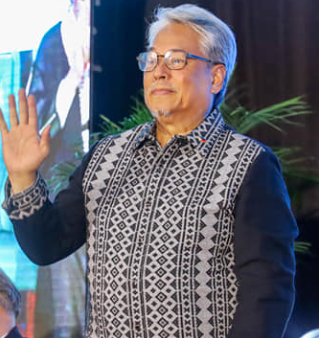
PHOTO Gusi Prize awardee Deogracias Victor B. Savellano
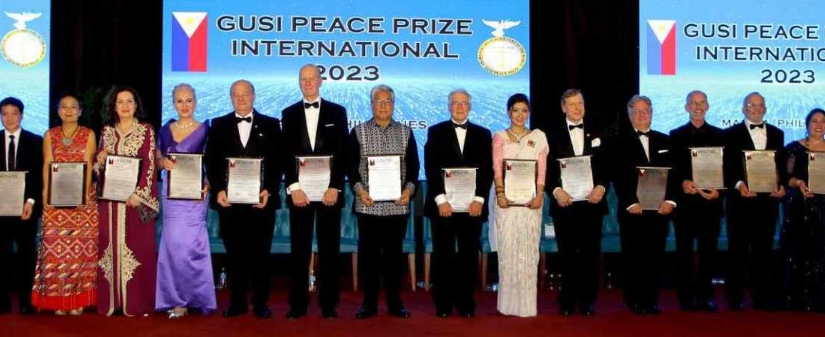
Agriculture Undersecretary Deogracias Victor B. Savellano (9th from L) is the lone Filipino Gusi Peace Prize 2023 awardee for good governance. Other laureates are Dr.(L-R) Hussein Said Bahri – Wedad Charity for helping orphans; Dr. Ing Ilgam Akbar Habibie, CREATE Foundation for youth empowerment; Dao Chi Manh, educational innovation and Leadership’ Dr. Jamyang Dolma, preservation of traditional folk music, ancient chant, and weaving in Tibet and Bhutan; Madam Al Ali Nada, improving children’s rights; Prof Irina Bondar – Development of National Culture, and the UNESCO Art for Action; Atty. Jordan Gjorchev, founder, National University of Macedonia; Dr. Lars Larsen, Medicine -Neuroscience; Carlos Paya, CEO of Immune Design; Fmr Princess Himani Rajya Laxmi Devi Shah, supporter of disadvantaged Nepalese; ; Prof. Paris Katsivelos, quintessential actor, director; Amb. Georges Suha of the European Union in Africa; Dr. Craig Elevitch, pioneer, Mama Food Forests for food security; Mr. Frank Shooster – Haiti Relief, 2010 earthquake; Mrs Xiomara Delgado Reynoso – Improving children’s rights; President Vit Jedlicka – political leader, Liberland; and Hon. Samuel Charles – Leader of New Nigeria.








 Growth Features