Mt. Hamiguitan beekeeping project taps farming expert Green Solutions to bring expertise in the industry teeming with international market potential

August 24, 2022

A beekeeping project of the Department of Environment and Natural Resources (DENR) in Mt. Hamiguitan sanctuary has tapped the Green Solutions Agricultural Farming Training Center (GSAFTC) to bring beekeeping expertise in the industry teeming with international market potential.


The Mt. Hamiguitan Range Wildlife Sanctuary (MHRWS) looks forward to improved crop production for its honey enterprise in its farms in Brgys. San Isidro and General Generoso, Davao Oriental.


A Memorandum of Agreement (MOA) was signed between MHRWS Protected Area Management Board and GSAFTC to expand collaboration on trainings, marketing-promotional work, experimental, and technology -demonstration on beekeeping.


The beekeeping livelihood program is a special project called “Beekeeping as Bio-diversity-Friendly Community-Based Enterprise in MHRWS” of the DENR as part of forest conservation.


Mt. Hamiguitan is a wildlife sanctuary recognized by UNESCO (Unied Nations Educational Scientific & Cultural Organization) to have a universal value. It is home to globally threatened flora and fauna eight of which are found only Mt. Hamiguitan itself.


The beekeeping project in Mt Hamiguitan ensures the surrounding communities have a livelihood so that they do not resort to illegal forest activities around Mt. Hamiguitan.


Beekeeping is also known to have the very important “pollinating” function in the ecosystem, enhancing environmental balance. It contributes to rapid generation of forest reserves.


The government sees a good market potential for beekeeping products (pollen, propolis, beeswax, and value added products including honey wine, honey and propolis-based soap, massage oil, shampoo, and ointment). The Philippines even imports honey. Local producers may be able to fill that import volume.
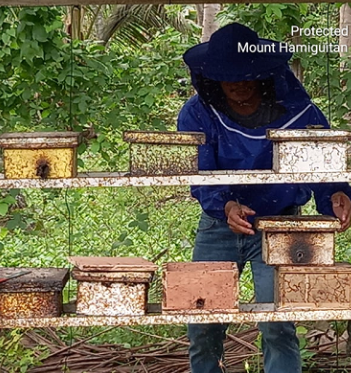
Beekeeping at Mt. Hamiguitan

With a more dependable livelihood and income, residents of the buffer zone of Mt. Hamiguitan Range Wildlife Sanctuary (MHRWS) are turning to become strong forest guards who help conserve forests and biodiversity of the protected site.


People’s Organization to be benefited by the project are the Progressive Organic Farmers and Fisherfolks Towards Ecology Conservation of Talisay (PROFTECT) of San Isidro, Davao Oriental and PO Sergio Osmena Rattan Association of Serbio Osmena, Governor Generoso.


The beekeeping project has been financed under DENR’s special project fund supervised by the Foreign Assisted and Special Projects Service (FASPS).
The project already identified two potential expansion sites in Sto Rosario, San Isidro and Macambol, City of Mati.


The project was compelled to transfer the beekeeping activity to the GSAFTC site which serves as the recovery area for the propagation of the bee colonies. This is because an infestation of the small beehive beetles occurred due to the erratic whether. This caused the decline of colonies from 241 to 89.


Part of the project’s target is to come up with local policies on biodiversity friendly enterprise and sustainable honey production. As such, an ordinance for the preservation, habitat protection, and collection of bee products from the wild has been drafted together with the legislative members from municipal and barangay levels, Davao Oriental State University, Department of Agriculture, Department of Trade and Industry (DTI), and municipal tourism offices.


The DTI and Department of Science & Technology (DOST) also facilitated a training of beneficiaries on handling and packaging of bee products.

Mt. Hamiguitan

Mt. Hamiguitan is being strictly protected as it faces threats of conversion of land for agriculture. There are also mining threats outside the site.


Potential risks from climate change and increasing tourism are now being addressed by DENR.

Mt. Hamiguitan is known for its highly diverse mountain ecosystem that makes it home to a number of endemic species known only in Mindanao and particularly found only in Mt. Hamiguitan.

“The combination of terrestrial and aquatic ecosystems within the boundaries of the property and the large number of species inhabiting each makes the MHRWS home to a total of 1,380 species with 341 Philippine endemics,” according to UNESCO (United Nations Educational, Scientific and Cultural Organization.

That includes critically endangered species — the iconic Philippine Eagle (Pithecophaga jefferyi). Also considered endangered are the Philippine Cockatoo (Cacatua haematuropygia), the trees Shorea polysperma, Shorea astylosa and the orchid Paphiopedilum adductum.

“Its high level of endemicity is well exemplified by the proportion of its amphibian (75% endemic) and reptile (84% endemic) species. The fragile tropical ‘bonsai’ forest that crowns the MHRWS epitomizes nature’s bid to survive in adverse conditions,” UNESCO said.

Scientists believe there may be more undiscovered unique flora and fauna in the mountain range.

“In the lower elevations the agro-ecosystem and remnants of dipterocarp forests house some 246 plant species including significant numbers of endemics such as the globally threatened dipterocarps of the genus Shorea.”

“The dipterocarp forest ecosystem is characterized by the presence of large trees and is home to 418 plant and 146 animal species, which include threatened species such as the Mindanao Bleeding-heart dove (Gallicolumba crinigera) and Philippine warty pig (Sus philippensis).” (Melody Mendoza Aguiba)
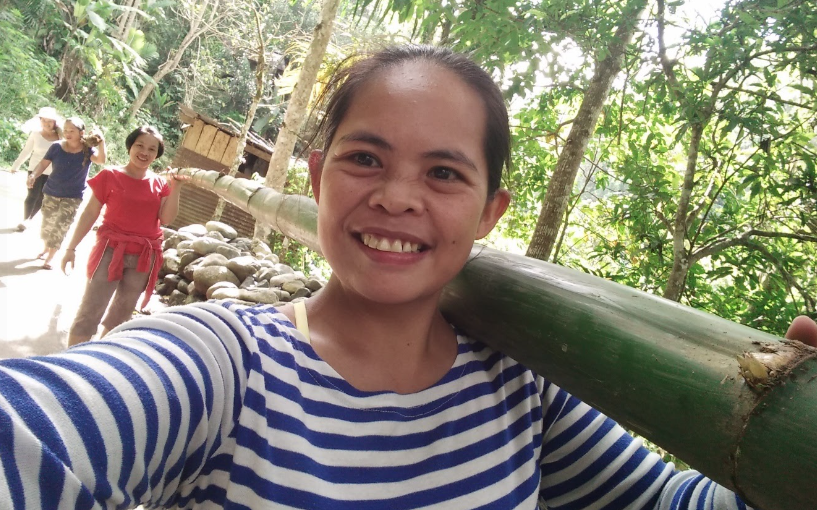
People’s organization Greener Pasture Ad Holnad produces farm-to-table tablea under JICA-funded forestry project in Hingyon, Ifugao

August 19, 2022

A people’s organization in Hingyon, Ifugao, the Greender Pasture Ad Holnad Inc. (GPAHI) is now benefitting from an agroforestry farm-to-table tablea (chocolate-cooking delicacies) enterprise that they developed under a JICA-funded forestry project.


Actual site monitoring activities in Hingyon, Ifugao was held by Japan International Cooperation Agency (JICA) delegates in its funded projects, particularly the Forestland Management Project (FMP) in partnership with the Department of Environment and Natural Resources (DENR).


JICA was earlier constrained to do site monitoring by the Covid 19 pandemic for two years. After a long wait, JICA resumed its project site visits starting in the Ifugao, Cordillera Administrative Region (CAR).

FMP has enabled GPAHI to produce farm-to-table tablea using cacao from its plantations. It has also established a cacao processing facility for enterprise development.

GPAHI has been one of the successful people’s organizations (PO) supported by JICA.
From 2013, GPAHI has established and maintained a Site Development (SD) area of 200 hectares– kickstarted livelihoods such as ginger production, and established swine and chicken raising as additional sources of income.

“The PO’s vision for the future carries an intergenerational value – for the future generations to benefit from their efforts. Therefore, sustainability is integral to their strategic plans for the conservation and sustainability of our natural resources while uplifting women in their communities,” according to the DENR project “Save our Watershed.”

During the JICA site monitoring in Ifugao in June this year, the Boliwong Organization of Muyung Protectors, Inc. (BOMPI) also showcased the PO’s fruit trees intercropped with bananas which are both bearing fruits at this stage.

A line up of activities was prepared by FMP-CAR for the visit which mainly involves a turn-over ceremony of an FMP-funded access road to the local government unit of Brgy.Montabiong in the municipality of Lagawe.

A monitoring of banana plantation and enterprise development activities of a partner PO of the Lagawe subwatershed was also made.

The JICA team also and inspected the Subproject Site Management Office (SUSIMO) of the Lagawe subwatershed and Provincial Project Management Office (PPMO) of FMP Ifugao.

The main purpose of the three-day site visit is for JICA to witness first hand project gains at the field level to further support the decision of the funding agency in granting the request for project extension of an additional year or until July 2023.

Consequently, DENR’s Foreign Assisted and Special Projects Service (FASPS) led by its new director, Al Orolfo, made sure its technical assistance to the activity to affirm its support to the project in the region.

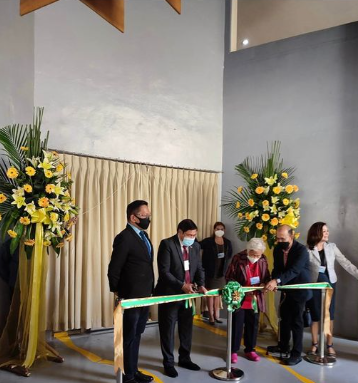
The turn-over ceremony of the Rehabilitation of the Montabiong Access Road was further graced by the Embassy of Japan contingents led by its First Secretary, Tachikawa Junpei.

Part of the ceremony’s key message of JICA representative, Hashizume Takuya, is urging “LGU officials and partner POs to take care and maintain the 4.5–kilometer infrastructure in order to ensure longer utilization of the subproject” and achieve “improved access to our critical subwatershed in order to sustain reforestation, conservation, and protection efforts”.

Further, Engr. Ralph C. Pablo, the Regional Executive Director of DENR-CAR, reminded the community people of Montabiong to “strike a balance” between socio-economic and watershed rehabilitation and conservation activities as in the end humanity cannot survive a heavily degraded environment with the emphasis that “there is no planet B”.

FMP is a 10-year project of DENR ending in 2022. It integrates conservation and development activities beneficial to local communities. Its beneficiaries are 147 People’s Organizations (POs) within 24 sub-watershed areas including those in Ifugao. The total project investment cost is estimated at P5.870 billion.

ADB commissions SEARCA for 10-year agriculture modernization plan that needs a multi-trillion budget

August 17, 2022

The Asian Development Bank (ADB) has commissioned the Southeast Asian Regional Center for Graduate Study & Research in Agriculture (SEARCA) for a 10-year plan in an aim to catapult Philippines to be a major agricultural producer, probably a farm produce exporter.

This endeavor apparently aligns with the pronouncements of President Ferdinand R. Marcos Jr. about Philippines’ pursuing food security aims, even agriculture modernization, having himself taken on the task as secretary of the Department of Agriculture (DA).

SEARCA Director Dr. Glenn B. Gregorio told a press orientation that the “National Agriculture and Fisheries Organization and Industrialization Plan” has an indicate implementation schedule for 2021 to 2030.

The press orientation was in conjuction with the lauch of the SEARCA Hub for Agriculture and Rural Innovation for the Young Generation (SHARING) Cafe.

“We have already submitted our recommendations to the Department of Agriculture (DA),” said Gregorio.

The industrialization plan has a nine-point track to carry out:

  1. Consolidated production and post harvest facilities (commodity systems-oriented
  2. Construction of critical infrastrucutre spatially integrated within agri-fisheries industrial business corridors (AFIBCs
  3. Modernized food terminal facilities and similar facilities linked to transport nodes in urban and peri-urban areas.
  4. Smart irrigation and water impoundment or retention systems serving two or more commodities
  5. Other large-scale infrastructure (waste management facilities, fish ports, ICT (Information Communication Technology) including high-speed connectivity
  6. Scaled up mechanization and adoption of other commercial scale-oriented technologies
  7. Large-scale production and distribution of biologically safe technologies including biopackaging
  8. State-of-the art R&D (research and development) facilities linked to PAFES (province-led agriculture and fisheries extension systems) networks
  9. Development of agri-fishery enterprises and business incubation initiatives linked to large investors.


Gregorio said the 10-year industrialization plan requires a budget of P5.03 trillion.

“The budget should come from the public sector, P2.5 trillion, while the other P2.5 trillion will come from the private sector,” he said.

SEARCA itself has launched its own programs inspiring investments in the knowledge economy which taps on the economy’s intellectual resources in order to generate wealth.

For one, the SHARING Cafe provides for creative learning experience that can lead the young generation to contribute to farm industrialization.


SEARCA conducts sessions on Lego education robotics at its SHARING Cafe

“The SHARING Café is an interactive component of the SHARING innovation spaces, which aims to provide a creative learning experience geared towards Agriculture 4.0 in Southeast Asia,” said SEARCA.

“The SHARING Café will be an innovative venue for ‘play-to-learn’ activities for guests and fun learning modules for K-12 students in the beginner, intermediate, and advanced levels.” (Melody Mendoza Aguiba)

JICA graced turnover of access road and banana plantation project in Brgy. Montabiong, Lagawe, Ifugao

August 16, 2022

The Japan International Cooperation Agency (JICA) has graced the turnover of an access road and a banana plantaiton and development enterprise project in Brgy. Montabiong, Lagawe in Ifugao Province showing significant gains in its funded Forestland Management Project (FMP).

Actual site monitoring activities by JICA to its funded projects such as the Forestland Management Project (FMP) was constrained by the Covid 19 pandemic for two (2) years. After a long wait, JICA resumed its project site visits starting in the Ifugao, Cordillera Administrative Region (CAR) on June 13, 2022.

The Department of Environment and Natural Resources (DENR) has led the project implementation of FMP.

The access road plays an important role in the socio-economic progress of the town as it leads to the center of Brgy. Montabiong. It also serves as a farm-to-market road.
Beneficiary and partner of the banana enterprise and road are peoples organizations (POs) of the Lagawe subwatershed.

JICA also had an inspection of the Subproject Site Management Office (SUSIMO) of the Lagawe subwatershed and Provincial Project Management Office (PPMO) of FMP Ifugao.

The main purpose of the three-day site visit is for JICA to witness first hand project gains at the field level to further support the decision of the funding agency in granting the request for project extension of an additional year or until July 2023.


Consequently, DENR’s Foreign Assisted and Special Projects Service (FASPS) led by its new director, Al Orolfo, made sure its technical assistance to the activity to affirm its support to the project in the region.

The turn-over ceremony of the Rehabilitation of the Montabiong access road was further graced by the Embassy of Japan contingents led by its First Secretary, Tachikawa Junpei.

Part of the ceremony’s key message of JICA representative, Hashizume Takuya, is urging “LGU officials and partner POs to take care and maintain the 4.5 km infrastructure in order to ensure longer utilization of the subproject” and achieve “improved access to our criticalsubwatershed in order to sustain reforestation, conservation, and protection efforts”.

Further, Engr. Ralph C. Pablo, the regional executive director of DENR-CAR, reminded the community people of Montabiong to “strike a balance” between socio-economic and watershed rehabilitation and conservation activities as in the end humanity cannot survive a heavily degraded environment with the emphasis that “there is no planet B”.

The subsequent activities focused on visiting the PO office and tree and agroforestry plantations of the Greener Pasture Ad Holnad, Inc. (GPAHI), specifically beholding how agroforestry farm-to-table tablea are made possible by the organization through its cacao plantations all the way to its established enterprise development cacao processing facility.


A PO member Mr. Stewart of BOMPI shows the JICA Visit team their agroforestry plantation intercropped with banana crops

The Boliwong Organization of Muyung Protectors, Inc. (BOMPI) on the other hand, showcased to the honored guests the PO’s fruit trees intercropped with bananas which are both bearing fruits at this stage.

Inspection of project offices and interviews with project staff gave JICA a glimpse on how day-to-day operations are made by the DENR to pursue project activities albeit now in a more fast-paced manner in view of tight project implementation timeline.

From these, issues and concerns were discussed and recommendations by the site visit team were formulated to overcome them.

Undoubtedly, the lessons learned gained from the visit such as PO field practices on project implementation, their networking and linkaging efforts and most of all their enduring visions for their communities and the environment highlighted the event. Takuya, as part of his concluding field impressions, cannot help but convey his congratulations for the exemplified humble but growing successes of the project in the region.

Pablo is pleased that CAR has been selected as JICA’s postpandemic pilot area for its project site visits which is also in time for FMP’s 10th year of implementation.

With the naturally long-term nature of forestry projects and with the promising results seen on the ground, the region hopes to have provide appropriate impetus for the funding agency, JICA, to affirm the request for project extension soon. – Ara Gendrano (PEO, FMP CAR).

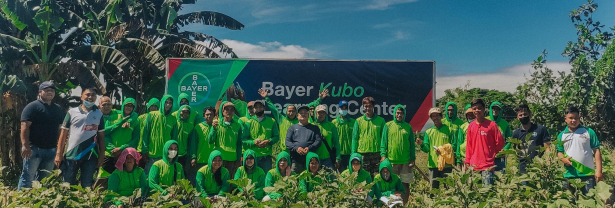
Bayer Philippines empowers 100 women as Community Champion Farmers along with training 1,500 women on Family Planning in its Bayer Kubo, Manaoag, Pangasinan

August 11, 2022


The pandemic lockdowns have disrupted farming communities and stretched out rural healthcare networks with farmers still struggling to recover and boost productivity. To support the agricultural community, global life sciences firm Bayer Philippines Inc. is launching a pilot Bayer Kubo in Manaoag, Pangasinan with the Asia Society for Social Improvement and Sustainable Transformation (ASSIST) to run capability and capacity building programs combining health and agriculture by tackling family planning, self-care and nutrition, as well as agri-oriented financial management and best practices.

The program will be piloted in Brgy. Cabanbanan in Manaoag, supporting the community of smallholder farmers surrounding the Bayer Learning Center located in the area.

The Bayer Learning Center is a venue for farmers in the community where they can learn best practices and see the latest solutions available for vegetable production. With the Bayer Kubo program in place, women farmers and farmers’ wives can get expert-led training on family planning, farmer self-care, and basic farm financial management.

“This Bayer Kubo is where Bayer in the Philippines is bringing together our three divisions: Consumer Health, Pharmaceuticals, and Crop Science under one program to support our farmers,” says Angel Michael Evangelista, Managing Director and Country Division Head – Pharmaceuticals for Bayer Philippines Inc.

“With the growing role of women in Philippine agriculture, who face competing demands to care for their families while ensuring they contribute to farm work and productivity, we aim to support women farmers and farmers’ wives’ through health, wellness, and sustainable agricultural practices –contributing to Bayer’s vision of ‘Health for all, Hunger for none'”

Through the pilot program, Bayer Philippines and ASSIST aim to empower over 100 women farmers as Community Champions that will ensure continued knowledge sharing and capacity building to train additional 1,500 community members on the best practices of family planning, farmer self-care, and

Smallholder Farmer Support

“As ASSIST moves forward in this partnership with Bayer Philippines, we will remain committed increating more capacity-building opportunities that fit the needs of the women farming communities in Manaoag, Pangasinan. We acknowledge that other farming communities would greatly benefit from our intervention. As such, we hope to replicate the Bayer Kubo program in other farming communities and locations in the Philippines,” said Francis Macatulad, executive director of ASSIST.

The Bayer Kubo is Bayer Philippines’ local corporate social engagement (CSE) program that started out by encouraging and supporting communities to grow their own produce while encouraging an integrated, holistic approach to growing nutritional food using responsible agricultural practices.

To date, Bayer Philippines has established three Bayer Kubo across different communities: in Ususan, Taguig; in Calauan, Laguna; and in Payatas, Quezon City in partnership with NGOs such as Rise Against Hunger and AGREA.

About ASSIST

Asia Society for Social Improvement and Sustainable Transformation (ASSIST) is an international non-government organization focused on capacity building. It seeks to promote sustainable practices to address social problems in the developing world, particularly in Asia and Africa.

ASSIST takes pride in its process-oriented approach to capacity building towards social improvement and sustainable transformation. Its goal is to empower its target groups to make them resilient to the social, economic and environmental challenges.

Presently based in Makati City, Philippines, ASSIST also has operations in India, Vietnam, Cambodia and Kenya.

Through its Partner to Progress philosophy, it has successfully implemented such projects in collaboration with the European Union, United Nation Environment Program (UNEP), United Nations Industrial Development Organization (UNIDO), USAID, International Finance Corporation (IFC), GIZ, and DEG/KFW amongst other organizations.

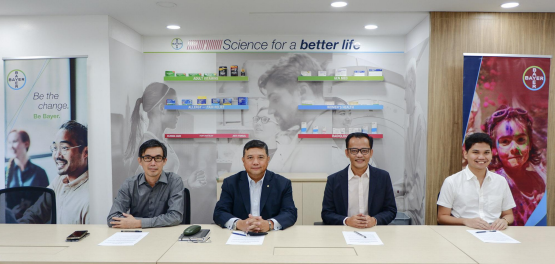
Bayer Philippines launches Bayer Kubo Learning Center in Manaoag, Pangasinan (L-R) Iiinas Ivan Lao, Country Commercial Lead, Bayer Crop Science Philippines; Angel Michael Evangelista, Managing Director and Country Division Head – Pharmaceuticals, Bayer Philippines, Inc.; Francis Macatulad, Executive Director, ASSIST; Franz Raña, Social Actions Manager, ASSIST. (Photo: Nadira Abubakar)

DENR implements ASEAN-wide GEF-funded project on Large Marine Ecosystems

July 26, 2022

The Department of Environment and Natural Resources (DENR) held an inception workshop as it prepares for an extensive GEF-funded ASEAN collaborative project on Large Marine Ecosystems (LMEs) which face serious threats amid their vast marine resources.


The project “Effectively Managing Networks of Marine Protected Areas in Large Marine Ecosystems (LME) in ASEAN” (ENMAPS) is being deliberated for implementation of the United Nations Development Programme (UNDP).

Director Al Orolfo of the DENR Foreign-Assisted and Special Projects Service (FASPS) joined the National Inception Workshop at the Crowne Plaza Manila Galleria, Quezon City, Metro Manila on July 13, 2022, stressing project importance to sustainable development. LMEs in ASEAN are a huge source of livelihood and jobs for struggling fishers.

The workshop aimed to inform the stakeholders from the national and regional government agencies, private sector, non-government organizations and academe about the project and to validate/gather inputs to the project concept that will be elaborated during the full proposal development.

The Coastal and Marine Biodiversity of ASEAN is known to have 20% of the world’s seagrass beds, a third of world’s mangrove forests with 45 to 75 true species, and a third of the world’s coral reefs with more than 75% of species of coral and 40% of of fish species.

ENMAPS will involve at least five countries in ASEAN including Philippines, Indonesia, Thailand, and South China Sea.

The workshop also provided the opportunity to discuss the project partners’ potential role and contribution in project implementation.
The ASEAN ENMAPS project will be executed by the ASEAN Centre for Biodiversity

(ACB) in collaboration with the DENR’s Biodiversity Management Bureau (BMB) under the Global Environment (GEF) Facility funding.
It aims to develop and improve the management of networks of MPAs and marine corridors within selected Large Marine Ecosystems (LMEs) in the ASEAN region for the conservation of globally significant biodiversity and support for sustainable fisheries and other ecosystem goods and services.

As the oversight office for foreign-assisted and special projects, FASPS Director Orolfo delivered the closing message highlighting the importance of the establishment of MPA and the management of its network as an effective approach to address challenges such as climate change, marine pollution and biodiversity loss.

“The project is expected to complement our existing efforts in the Philippines towards productive partnerships with the neighboring countries in terms of scaling up management under the regional MPAN approach,” said Orolfo.

GEF has been concerned that the world’s oceans have been reaching their ecological carrying capacity, a limit to their ability to produce fish for food.

“More than 75% of world fish stocks are already fully exploited, overexploirted, depleted or recovering from depeletion,” according to GEF website.

GEF has supported sustainable governance of 23 large marine ecosystems (LMEs) involving collaborative of work of many countries. The world’s oceans is known to be divided into 66 LMEs.

This area covers 7.7 million square kilomters with 173,000 kilometers of coastline.

LMEs are huge marine areas extending beyond boundaries among countries which is why collaboration is important here.

ENMAPS has a cost of $77.596 million. Of this, $12.548 million consists of GEF grant. (Melody Mendoza Aguiba)
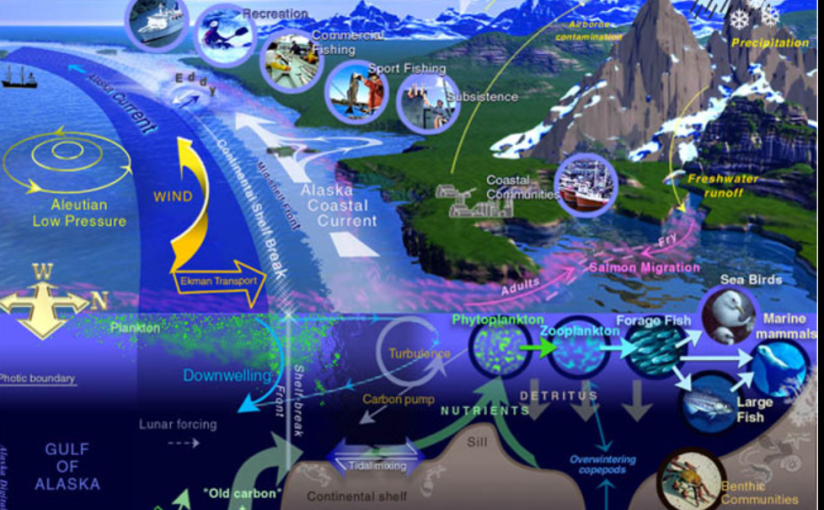
PHOTO General characteristics of an LME. NOAA


Marine ecosystem. Credit- Sciencelearning.org.nz

Cooperation on environment through science, technology and satellite development eyed by Republic of Korea (ROK) legislator

July 21, 2022

A Korean National Assembly (KNA) representative and the Department of Environment and Natural Resources (DENR) are exploring a collaboration on the use of COMSAT (communications satellite) to monitor and protect the environment.

KNA Member Congresswoman JO Myung-hee paid last July 13 a courtesy visit to the DENR in a pivotal meeting to introduce state-the-art technologies on the collection of data to monitor environmental conditions on the ground.

In her visit, she was officially welcomed by DENR-Foreign Assisted and Special Services (FASPS) Director Dr. Al O. Orolfo who acknowledged satellite technologies and high resolution images’ significant role in the management and protection of natural resources and environment.

Other senior officials present at the courtesy visit were Lawyer Ernesto D. Adobo, Jr., Officer-in-Charge (OIC), DENR and Maria Elena A. Morallos-Manila, Director of the Knowledge and Information Systems Service (KISS).

Present also in the meeting is Korea International Cooperation Agency (KOICA) Philippines Office Assistant Country Director Kim Younlee.

JO explained that in Korea, they already use two systems for real-time monitoring of the environmental and weather conditions through satellite imagery and meteorological stations.


DENR OIC Secretary Adobo expressed DENR’s gratitude to the support and
assistance extended by the Korean Government in the environment sector of the country, reported FASPS’s John Darren M. Chua.


There are two ongoing KOICA-funded projects with the DENR. One of these is the Establishment of Integrated Water Resources Management and Information System for the Pampanga River Basin Phase 2 (IWRMIS II) implemented with the National Water Resources Board (NWRB).

The other is the Enhancement of Marine Litter Management in Manila Bay (EMLM) to be spearheaded by the Manila Bay Coordinating Office (MBCO).

JO is looking forward to this collaboration as well with other Philippine government agencies such as the Philippine Space Agency (PhilSA) and PAGASA.

At present, the Philippines capability to monitor ground and surface conditions are through local weather stations of the Philippine Atmospheric, Geophysical and Astronomical Services Administration (PAGASA) and the Geographic Information System (GIS) which generates and analyses data dependent on a particular location or coordinates on the ground.


The Korean technologies will strengthen Philippines’ capabilities the the use of COMSAT data generated through orbital satellites which provide high resolution images of the terrains.


Representative JO Myung-hee is Korea’s first doctorate degree holder in the Remote Sensing Area and is recognized for her contribution in the development of talent and advance technology in the field of satellite images and geospatial data. (John Darren M. Chua)

Bayer opens doors for students in Philippine Science High School Science Immersion Program

June 28, 2022

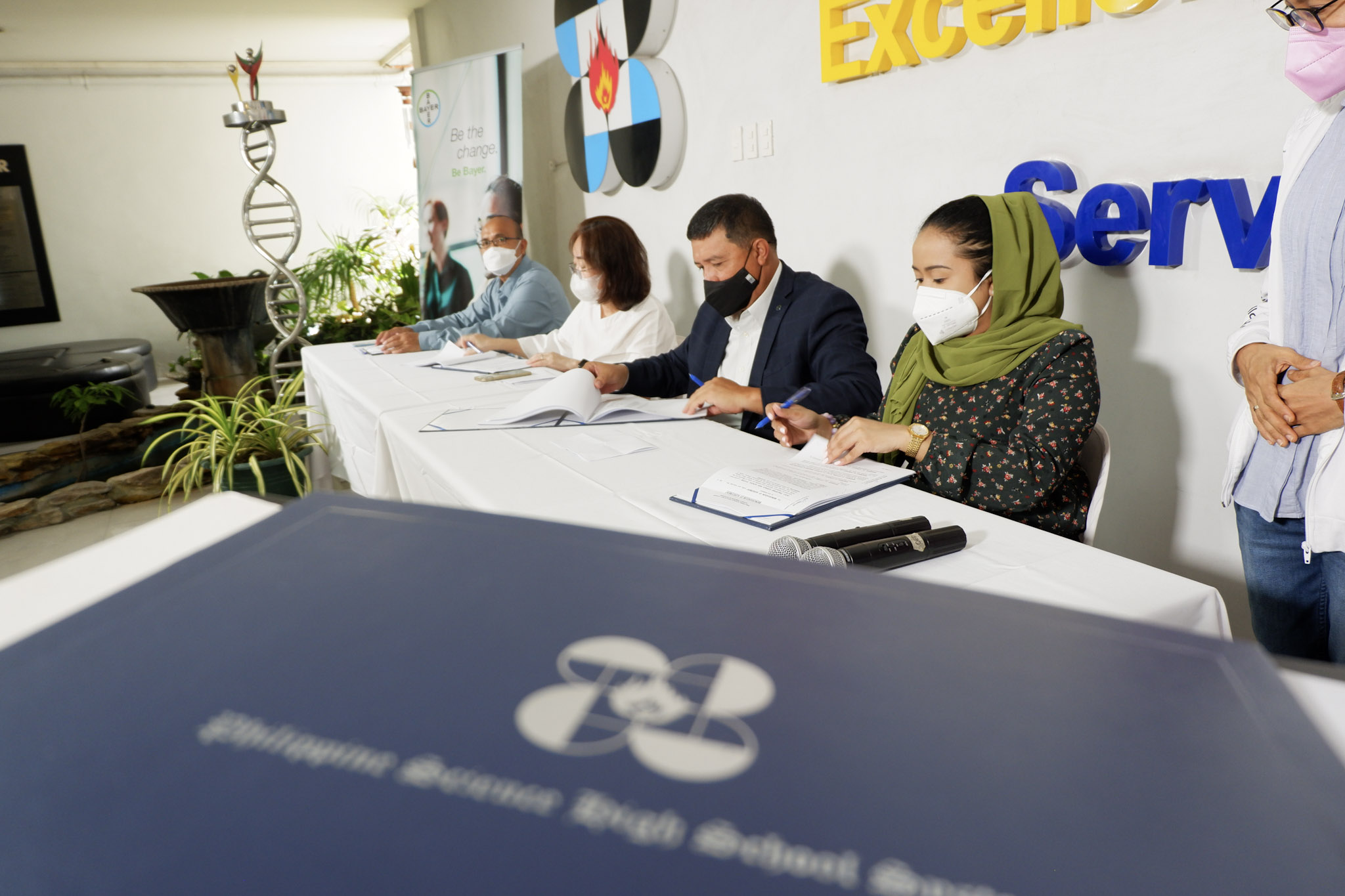
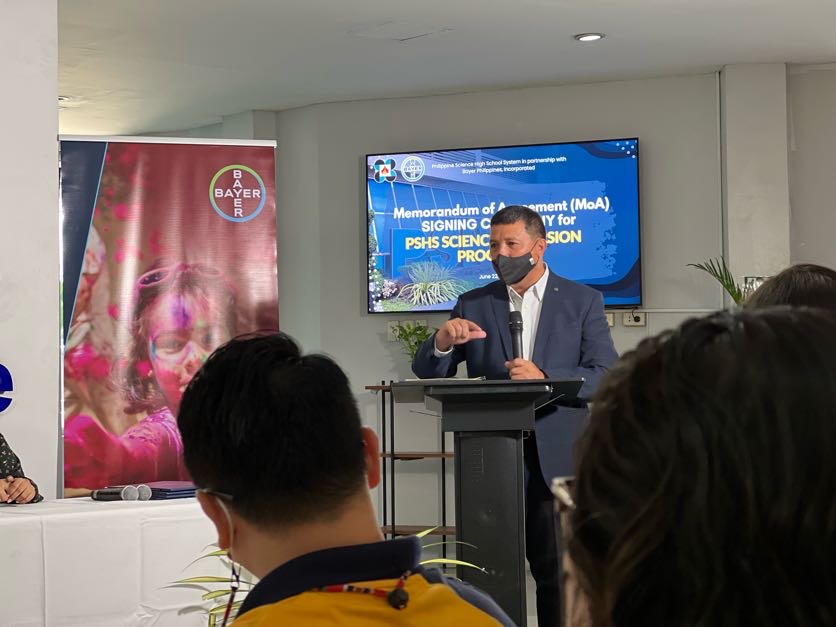
Bayer Philippines Inc., a global life science company, is now a partner of the Philippine Science High School (PSHS) for their Science Immersion Program (SIP) after signing a Memorandum of Agreement last Wednesday, June 22, 2022.
Bayer is opening the doors to its agricultural research and development centers in the Philippines as immersion sites for selected students to learn and gain hands-on experience on the science behind crop protection and plant breeding.


“The Philippine Science High School System is committed to provide Pisay students relevant learning opportunities to advance their scientific aptitude and interpersonal skills.Today we earned another collaborator to champion the worthy cause of science education. I am thankful to Bayer Philippines for accommodating the PSHS System to the Science Immersion Program (SIP) for Grades 10-12 students,” said Lilia Habacon, PSHS director.

The Science Immersion Program is a required course where PSHS student-interns can learn science, engineering and research laboratory skills and concepts; foster interaction with researchers, scientists, and technical personnel; be exposed to basic science or engineering principles applied in facility operations; identify possible research problems; and establish linkages with institutions for collaboration.

“Bayer aspires for a world where there is ‘Health for all, Hunger for none’ – and science will help us get there. It’s in our purpose of ‘Science for a Better Life’ and it is integral to our Pharmaceutical, Consumer Health and CropScience divisions. As a partner of the Philippine Science High School for their Science Immersion Program, we hope to help inspire our young scientists to take a deeper interest in agriculture, and to support science education in the country through hands-on activities in our research sites in Laguna and General Santos City,” said Bayer Philippines Inc. Managing Director Angel-Michael Evangelista.


From left to right: PSHS Deputy Executive Director Rod Allan De Lara, PSHS Executive Director Lilia Habacon, Bayer Philippines Inc. Managing Director Angel-Michael Evangelista, and Bayer Philippines Communications Manager Nadira Abubakar. (Photo Credit: John Carlo Quito)

Selected students coming from different PSHS campuses across the country are slated to start their immersion with Bayer around August this year at the Agronomic Testing Center Southeast Asia (ATC-SEA) in Laguna, as well as Plant Breeding Station in General Santos City.

At the Bayer ATC-SEA site, PSHS students will gain basic understanding of agriculture and crop protection research and gain hands-on experience in conducting laboratory and field bio-efficacy trials from insect rearing, field assessments and analysis.

They will also be exposed to agriculture operations like seedling production, land preparation activities, crop maintenance, and safe use of crop protection products.
At the Bayer Seeds R&D Station in General Santos City, students will learn about plant breeding as both a science and a business.

They will be familiarized with the activities of the Plant Pathology Lab, Seed Lab, and field and screenhouse nurseries.

They will participate in actual inoculum propagation, inoculation, rice emasculation and hand pollination. They are expected to gain exposure to the end-to-end breeding process of rice and corn in an industry setting, which includes development of breeding populations, molecular breeding, testing and evaluation of lines and hybrids from early pipeline to pre-commercial stage, as well as exposure to digitalization, mechanization, and automation of breeding operations.

Prior to the Science Immersion Prgram, Bayer scientists from India and the Philippines also conducted a plant breeding and biotechnology webinar across all PSHS campuses to share how Bayer DEKALB corn seeds from the lab to the farm have helped Filipino farmers increase theiryield and improve their livelihood.
Aside from Bayer Philippines, other partners in the PSHS Science Immersion Program include private companies, government institutions and universities. For more information about Bayer in the Philippines and its solutions for agriculture, check out the Bayer CropScience Philippines website at http://www.cropscience.bayer.com.ph or visit their Facebook page at
https://www.facebook.com/BayerCropSciencePH/ or subscribe to the Bayer AgricademyTV
channel on Youtube at https://www.youtube.com/c/BayerAgricademyTV.


Bayer Philippines Inc. Managing Director Angel-Michael Evangelista conveying support for science education through the PSHS Science Immersion Program. (Photo credit: John Carlo Quito)

DENR launches two special projects on Philippine Tarsier in Mt. Matutum and carbon valuation in forests of Mt. Timolan Protected Landscapes Protected Landscapes

June 27, 2022

The Department of Environment and Natural Resources (DENR) has launched two special projects involving the conservation of “endangered” Philippine Tarsiers in Mt. Matutum, South Cotabato and the valuation of carbon input in reforested and secondary forest in Mt Landscape, Zamboanga del Sur.


The special projects are under DENR’s Foreign Assisted and Special Projects Service (FASPS) where DENR shells out its own fund for special conservation programs.
The study on the Philippine Tarsier in Mt. Matutum is in partnership with the University of the Philippines- Diliman. It aims to further understand the ecology and behavior of Philippine Tarsiers within Mt. Matutum Protected Landscape (MMPL) to enhance and supplement conservation efforts in the Tarsier Sanctuary.

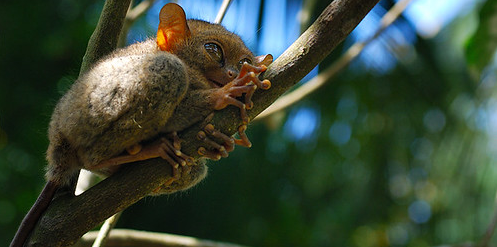
Philippine Tarsier in Mt. Matutum. Credit- South Cotabato News


The project on the Mount Timolan Protected Landscape will be carried out by the Zamboanga del Sur Provincial Government College.


It will study differences in the production and decomposition for quantifying carbon input in reforested and secondary forest in Mt. Timolan Protected Landscape.


The Philippine tarsier was classified as endangered by the International Union for the Conservation of Nature (IUCN) in 1986, 1988, and 1990.


In 2008, it was reclassified as near threatened. While tarsiers have been known to be popular in Bohol, the nocturnal (active at night) primate endemic to the Philippines has also been found in Siargao Island, Maripipi Island, Dinagat Island, Samar, Leyte, and Basilan.


Tarsiers are one of the smallest primates (where monkeys and the human species belong). Their height ranges from only 3.35 to 6.30 inches. They weigh from 80 to 160 grams. They are arboreal (tree-living) creatures.

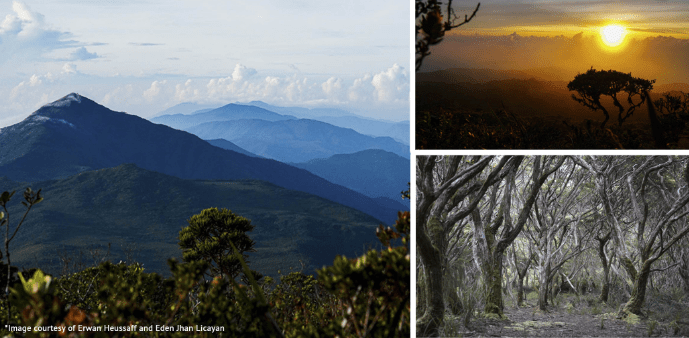
Mt. Timolan Protected Lanscape Zamboanga del Sur. Credit-Pinoy Mountaineer

The Mt. Timolan Protected Landscape, spanning over 1,994,79 hectares and a buffer zone of 695.39 hectares, is an important watershed.

It supports river systems that are sources of irrigation for many rice farms. Eighty percent of Mt Timolan’s landscape consists of dipterocarp forests. Seven percent is made up of man-made forest plantations of Gmelina and Acacia, according to the Philippine Clearing House Mechanism for Biodiversity.

Acting Secretary Jim O. Sampulna said during the launching of the two special projects at the Radisson Hotel that the projects’ signing of memorandum of agreement indicates that successful partnerships lead to attaining shared goals on sustainable development. The partnerships extend to international agencies, the academe, and other government and civic institutions.


“The project in Mt. Timolan will surely help in achieving the country’s international commitment in climate change,” Sampulna said. (Melody Mendoza Aguiba)

DNA barcoding of bamboo to support bamboo conservation and propagation in typhoon-affected Cagayan Valley

June 25, 2022

A phytochemical screening and DNA barcoding of economically important bamboos will be carried out as part of aims to conserve and propagate the species in typhoon-affected Cagayan Valley  and explore bamboo’s pharmaceutical-industrial prospects.
   “Bamboo has numerous industrial, pharmaceutical, phytochemical, medical, nutritional, and food advantages.  Characterization of bamboo germplasm is an important connection between conservation of diversity and utilization of germplasms (seeds or living tissues that carry genetic resources useful in plant breeding and conservation),” according to Alvin Jose L. Reyes and Eddie B. Abugan Jr of the Project  Management Division (PMD).
   PMD is one of the units of the Department of Environrment and Natural Resources (DENR)-Foreign Assisted and Special Projects.
   The Bamboo Characterization Project of the Cagayan State University (CSU)-Gonzaga through its Project Leader Jeff M. Opeña. just made a presentation at DENR Protected Area Management Board (PAMB) in Sta. Ana, Cagayan.
It is in relation to its petition for a gratuitous permit to conduct the bamboo characterization and sample collection activities in the Palaui Island Protected Landscape and Seascape.
   The project also aims to refurbish a research laboratory in CSU-Gonzaasga. It will collect and characterize different species in different ecosystems in Cagayan Province.

Cagayan’s bamboo growing in rivers and volcanic areas


   DNA barcoding will be a modern and innovative way to characterize bamboo species.  It will accelerate experts’ identification of the species that they desire to use based on traits—such fast propagation or medicinal properties.  
   Bamboo has been traditionally characterized based on its flowering frequency or abundance—annual flowering, sporadic or regular flowering, and gregarious flowering.
   “However, characterization using floral morphology posed a limitation and difficulty due to the requirement of long period of time which can occur in years or even decades,” according to Reyes and Abugan.
   Moreover, biochemical characterization through phytochemical (plant chemistry) screening enables experts in pharmaceuticals and medicine to detect plant secondary metabolites in bamboo which have utilization potentials in the industry.  
   While primary metabolites include small molecules like amino acids and sugars, secondary plant metabolities such as alkaloids, anthocyanin, flavonoids, phenols, saponins, steroids, tannins, and terpenoids are studied for medicinal plant herbal purposes, among other possible commercial uses.
   Former DENR Secretary Roy A. Cimatu ordered in November 2020 the extensive propagation of bamboo in Cagayan Valley to prevent massive flooding that plagued the province arising from Typhoon Ulysses.

CSU Project Leader Jeff Opena (left) leads bamboo DNA bamboo barcoding


   Executive Order 879 also mandated that 25% of the annual school desks of the Department of Education should be made of bamboo. EO 879 creates the Philippine Bamboo Industry Development Council (PBIDC).    
   DENR”s own reforestation areas should be planted with bamboo in its directive to DENR-attached Forest Management Bureau, Laguna Lake Development Authority, and Mines and Geosciences Bureau.
   The bamboo project costs P1.601 million consisting of P1.261 million from DENR and P340,000 from CSU.  Aside from involving DENR’s local offices in Cagayan, implementor includes Municipal Environment and Natural Resources Offices of Cagayan, and the Central Analytical Laboratory of CSU.
   Aside from preventing flooding effects of typhoons, DENR also aims to use bamboo as tool to climate change mitigation.  Bamboo is known to sequester five metric tons of carbon dioxide per hectare of plantation.  
   Bamboo is also being planted in the rivers of Marikina and Bicol– areas usually flooded during typhoons.
   DENR is also promoting its use as lumber substitute using engineered bamboo.  
   While it has extensive use as raw material in many industries, the Philippines’ bamboo export actually slowed from a high of 106,000 kilos in 2011 to  35,000 in 2015 and even further lower to 8,00 kilos in 2018, according to Statista.com.  Exports just picked up to 66,000 in 2020.
The phytochemical and morphological studies of bamboo species will be a first among bamboo species studies that will take into consideration the different ecosystemswhere bamboo grows in Cagayan province.  
   “Cagayan is  rich natural systems, not only agro-ecosystems but grasslands, and others like water falls and volcanic areas where sulfur-rich soil is found.  For example, we will study if the Bayog bamboo species carries different morphological and phytochemical characteristices when they are grown in sulfur-rich volcanic areas,” said Opeña
   The study will find out if in the future, the “species’ phytochemical properties may be used (as raw material) for pharmaceutical, nutraceutical products, for medicine and other products.”
   Target for the bamboo species growth study are in two volcanoes– the Smith Volcano, also called Mount Babuyan, which is politically located in Calayan Island and Mount Cagua in Gonzaga.
   Among other ecosystems  the bamboo species will be studied  in coastal areas, residential areas, glasslands, agroecosystems, near bodies of water (rivers, creeks, waterfalls, dams, lakes, freshwater and hotsprings), caves, near the volcano, rainforests/forests, islands, protected areas, and others. .  (Melody Mendoza Aguiba)