PBBM’s Agriculture appointee a bamboo advocate pushing for economic development, poverty reduction

July 31, 2023

Melody Mendoza Aguiba

President Ferdinand “Bongbong” R. Marcos Jr. has appointed former Representative Deogracias Victor Barbers Savellano as Department of Agriculture (DA) undersecretary, recognizing his contribution to economic development  and poverty reduction – being an advocate of bamboo industrialization.

   Also a former governor of Ilocos Sur, Savellano was deputy speaker of the House of Representatives during the 18th Congress.   

   As a bamboo advocate all his life, he has authored House Bill 9576 or the Philippine Bamboo Industry Development Act.

   He has sustained his passion to push for bamboo as a tool for Philippines’ industrialization through his current work as vice chairperson at the Philippine Bamboo Industry Development Council (PBIDC) just before the DA appointment.

   In his own home province in Ilocos Sur, Savellano has inspired communities to put up a Bamboo Park in each barangay.

   This fostered collaboration, skills coaching, and product development involving every age in the community—oldest to youngest—imparting how bamboo is traditionally used for different purposes passed on from a generation to another. This also egged up creation of emerging, innovative bamboo products.

   Savellano’s vision is to see Philippines begin eating up a significant share of the global bamboo market which is expected to grow to $92.62 billion by 2027 (United Nations Comtrade).  This is from $66.22 billion in 2022 and $71.63 billion in 2023.

   Philippine Bamboo Foundation Ed Manda praised PBBM’s appointment of Savellano as DA secretary.

   “Congressman DV’s appointment will further boost efforts of stakeholders to fast track development of the emerging bamboo industry,” Manda said.

   The development of bamboo industry will address or aid in many serious concerns  in the Philippines.  These include emission of pollutant, greenhouse gases, environmental and land degradation, soil erosion, landslides, typhoon surge, and flooding.  Bamboo is a  cost-effective, lower-budget approach—being a grass abundantly growing nationwide and needs modest maintenance.

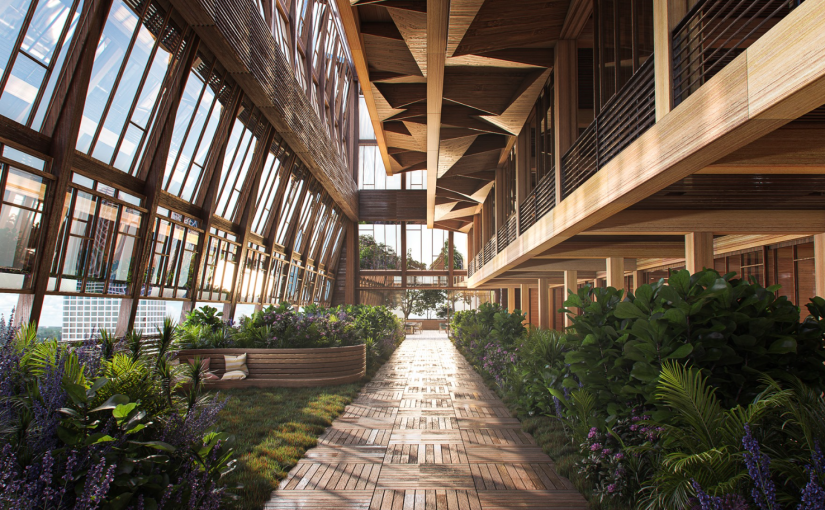
   Bamboo can catapult to industrial status many simple industries including building and house construction, renewable energy, biomass, cooking fuelwood, furniture, fiber and textile, and lumber from a highly-durable yet beautiful material to substitute for hardwood.  It will generate millions of jobs in rural areas and ancestral lands tended by Indigenous People and bring in needed dollar reserve.

   Savellano co-founded and was president of the National Movement of Young Legislators with which he is continuing to partner for bamboo propagation all over the country.

   As a businessman, he was chairman of the Ilocos Sur Hotels, Restaurants and Related Enterprise and of the Ilocos Sur Convention and Visitors Bureau. He has been running his own fine dining restaurants in Ilocos Sur and Quezon City that have popularized to the city the unique heritage of Ilocano cooking.

   He founded Kilusang 5K (Kawayan:  Kalikasan, Kaunlaran, Kabuhayan, Kinabukasan) Foundation Inc.  Kilusang 5K, together with Rotary International, has put up a 30-hectare pilot bamboo farm (propagation, nursery)  in Karugo and Puray, Montalban, Rizal to demonstrate the economic and environmental value of growing bamboo.  Kilusang 5K will also participate in a long term 20,000 hectare bamboo propagation in the Marikina Watershed as part of fighting perennial flooding and landslides in the area.

   Savellano received in 2009 a Hall of Fame Award for the Best LGU Poverty Reduction program  program. He is also a recipient of a CROWN Award in Nutrition for being a consistent regional outstanding winner in Nutrition National Nutrition Council. 

   He is an immediate past president of the UP Manila College of Arts and Sciences Alumni Society, UP Manila Alumni Association, currently board of director, UP Alumni Association, and president, Rotary Club of Quezon City Circle

 Savellano finished AB Economics at the University of the Philippines Manila and Master in International Business Administration at the Monterey Institute of International Studies in Monterey, California USA.

PHOTO ATTACHED Deogracias Victor Barbers Savellano

ASEAN farm consortium put up by SEARCA to cut huge greenhouse gas emission, rice straw burning, and raise farmers’ income

By Melody Mendoza Aguiba

July 28, 2023

An ASEAN carbon farming consortium has been put up by the Southeast Asian Regional Center for Graduate Study and Research in Agriculture (SEARCA) to generate carbon credit and cut greenhouse gas emission while raising farmers’ income.

   SEARCA Director Dr. Glenn B. Gregorio said the consortium will give incentives for Asian farmers to adopt innovative technologies that will reduce  emission of a very powerful greenhouse gas, methane, that comes from rice farming.  It will generate carbon credits in the future. 

   Aside from solving a huge environmental problem, it  will raise farmers’ income by at least 50%.  It will generate rural jobs, and produce an organic-type fertilizer.  

   “We will share the data (between Southeast Asian countries), the experience from everyone,  We will get funds together, and SEARCA will commit some funds to start it up,”  said Gregorio at the roundtable discussion on “Sustainable Food and Agriculture System in Southeast Asia. SEARCA co-organized it with the Bangko Sentral ng Pilipinas.

   SEARCA will start with a few pilot sites, use these as model for replication, and do actual measurements (greenhouse gas emissions, income) as scientific basis for replication.

   Farmers will be organized, formed into communities, and incentivized to use the innovations.

   “We’ll incentivize them, and use these incentive system as policy that may be adopted by legislators.  Using these technologies needs a new mindset,”  said Gregorio.

    Among climate-smart varieties to be popularized to farmers are short-maturing and high-yielding, tolerant to biotic and abiotic stresses, and high-biomass varieties,

drought-tolerant rice, submergence-tolerant rice, salt-tolerant rice.

   “We’ll make a model, make it work, and after a few years, once we see farmers benefitting, it will spread like fire,” said Gregorio.   “Once the soil is rehabilitated, it will have health benefits.  It will benefit all.  We will use digital  technology.  It’s a dream, but it’s reachable.”

   In one technology to be adopted by the consortium, SEARCA has partnered with the UK-based Straw Innovation Ltd for the “Rice Straw Biogas Hub.”  The project also involves UK SME Koolmill, and UK academic partner Aston University.

   The project solves the huge problem of disposing rice straw which becomes a waste material from producing rice.  An estimated 750 million metric tons (MT) of rice straw is produced yearly.  To dispose of the waste, an estimated 300 million MT is burned.  The remaining 400 MT is left to decay in the fields, emitting a huge amount of methane, a greenhouse gas 80 times more dangerous to the environment than carbon dioxide when emitted over a 20 year period, according to SIL.  GHG emission is more than that of the entire global aviation industry. 

   However, SIL has developed a harvester enabling synchronous harvesting of both rice and the rice straw. That omits burning, disposal of much waste, and significantly reduces GHG emission.

   Income for farmers is increased by 50%.  The technology enables production of fertilizer that stores carbon. The innovation brings jobs in rural areas, reduces post harvest losses, and generates billions of dollars for the Philippines’ rice sector.

   Other technologies to be popularized among Southeast Asian farmers are water-saving technologies like alternate wetting and drying of rice farms, soil and nutrient management, and cropping and crop-animal system.

   GHG-reducing soil and nutrient management techniques include nutrient-fixing legumes, use of chemical versus organic fertilizer, and methane-oxidating bacteria.

   Cropping and crop animal systems that reduce GHG emission include lowland agroforestry, crop-animal integration, and crop biomass and animal manure management.

   The carbon farming system will improve traceability of farms and agricultural products or the process by which a product in the market or at any stage in the supply chain can be traced to its origin. Such provides for food safety and transparency.

PHOTO Innovative harvester that synchronously reaps rice and the rice straw– omitting much greenhouse gas emission,  much waste burning, and post harvest loss.

“Bamboo Bill” Senate 605 set for Senate public hearing July 19, passage to cement PBBM huge contribution to economic development in 5 years

July 11, 2023

Melody Mendoza Aguiba

“Bamboo Bill” Senate Bill 605 has been set on July 19 for Senate public hearing amid the Marcos Administration’s aim to speed up economic development, create livelihood, and cushion vulnerable poor population from climate disasters.  

   Authored by Senate President Juan Miguel F. Zubiri, SB 605 or an “Act Institutionalizing the Philippine Bamboo Industry Development Program,” will create among the biggest agriculture industries with up to 55,000 hectares of existing bamboo stands across the islands, Zubiri said.

   Six other bamboo development-related bills will be deliberated in the Senate on July 19.  All these bamboo bills, generally strengthening functions of the Philippine Bamboo Industry Development Council (PBIDC), are seen to be consolidated with SB 605.  

   The bills are SB 615 (Senator Cynthia Villar), SB 1044 (Sen. Joel Villanueva), SB 1145; and SB 1552 (Senator Lito Lapid), SB 1118 (Senator Loren Legarda), SB 1145 (Win Gatchalian),  and SB 2172 (Senator Jinggoy Estrada).

   Not only is bamboo a unique Filipino cultural symbol with the “bahay kubo” and the innovative industrial design works of Bobby Manosa and Kenneth Cobonpue.

   Philippines  also has the world’s fifth biggest bamboo industry.  Yet it has to keep up with far distant huge bamboo industries of China and Vietnam, said Zubiri.  Global market is estimated by the Department of Environment and Natural Resources at $17 billion.

   SB 605 fortifies PBIDC’s policy-making role in creating community-based enterprises that will have sufficient supply of quality materials and produce new products from research and development-inspired technologies. 

   Manufacturers are mandated to use bamboo on at least 25% of their raw materials inputs for furniture, lumber (wood processed into uniform sizes such as beams and planks),  and manufactured products that can use bamboo as an alternative to wood.

   Plantations will be accepted as loan collateral in government-owned-and-controlled financial institutions.  Plantation developers and bamboo processors will have priority access to credit and guarantee.  Bamboo plantations will be exempted from security cutting, harvesting, and transporting permits.

   Markets will be created through aggressive trade promotion.  Supply of trained and skilled labor will be stabilized.  There will be a comprehensive program on bamboo nursery expansion;

bamboo propagation, breeding, site-specific bamboo species development; and sustainable planting, harvesting, soil and water conservation protocols.

   Bamboo advocate former House Deputy Speaker Deogracias Victor B. Savellano, currently vice chairman of PBIDC, said he hopes the Bamboo Bill will be ratified on or before the year ends. 

   “It is imperative that the industry that is so natural to us Filipinos can be developed sooner.  It has been waiting for a long time now to help our poorest population.  And you don’t need big budget for infrastructure to address our climate-related ills — soil erosion and environmental degradation that are causes of natural disasters,” Savellano said.

   “Bamboo will substantially support our farmers and fisherfolks.  It supplies their need for simple devices like banana tree’s support pole or the katig (outrigger) in boats,” he said.

   PBIDC Executive Director Rene Madarang said the industry hopes government will cite SB 605 a priority bill in President Ferdinand R. Marcos Jr.’s State of the Nation (SONA) address as the bamboo industry will cement in the next five years the Administration’ contribution to economic growth.

   Edgardo Manda, Philippine Bamboo Foundation president, said the strengthened PBIDC will provide a coherent direction in developing commercial, large scale bamboo plantation to support the manufacturing of bamboo products.

   Without the passage of such bamboo law, PBIDC which is under the Office of the President lacks not only the budget but the powers to harmonize all government bamboo programs that has left the industry undeveloped.

   At least 20% of planting materials needed for the National Greening Program of the Department of Environment and Natural Resources (DENR) will come from bamboo.

   The industry will be supported by accurate and reliable data for decision-making aid of investors and entrepreneurs.

   Among incentives to be granted to stakeholders of bamboo-based products are those under the Board of Investments and National Internal Revenue Code.

   The Bamboo Industry Research and Development Center will be established under the bill.  Local Bamboo Industry Development Councils (BIDC) will be put up in towns and provinces to localize planning and support for budget and policies for industry development.

    The amount needed to implement the Bamboo Bill (Law) will initially come from unexpended contingency fund of the Office of the President and existing bamboo industry budget of the Department of Trade and Industry and DENR.    “Thereafter, such amount … shall be included in the annual General Appropiations Act.” 

PHOTO Florida-based Rizome Philippines produces world-class engineered bamboo that make for sophisticated and beautiful building material.