
August 18, 2023
Melody Mendoza Aguiba
The Marcos Administration is embarking on a flagship multi-billion peso “Bamboo Villages” program that will uplift the livelihood of the poor and Indigenous People in ancestral lands while generating foreign exchange from bamboo’s $90 billion global market (by 2030).
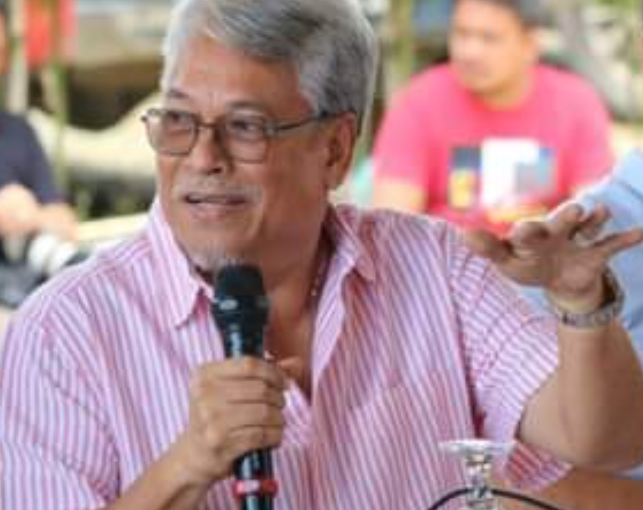
Newly-appointed Department of Agriculture Undersecretary (DA) Deogracias Victor B. Savellano has spearheaded “Buong Bansa Magtanim (BBM) ng kawayan “ to create livelihood in the countryside.
The program will use bamboo as a climate change mitigation tool even as President Ferdinand R. Marcos Jr (PBBM) himself cited during the United Nations General Assembly that the climate challenge is a major policy goal of his administration.
Savellano has been leading consultations on the concept of Bamboo Villages which he has been pushing for as an inclusive, community-based approach to jobs creation and agricultural development.
“With bamboo growing abundantly in the Philippines, we can tap a rich economic resource if we only have a national program to develop it as an industry as what our neighbors have already invested in,” said Savellano.
Among Asian bamboo programs that brought huge economic value are Indonesia’s 1,000 Bamboo Villages and Vietnam’s 100-hectare Bamboo Villages.
Isidro I. Alcantara, a bank and mining executive, said Thailand just allocated $10 billion for the next 10 years to develop its bamboo industry. Alcantara pioneered bamboo planting in a mining area in Marcventures in Surigao del Sur.
China generates the biggest bamboo revenue at $35 billion yearly.
Savellano just led last week a consultation in Manolo Fortich, Bukidnon a proposed legislation allocating 5% of the budget of various government agencies for bamboo propagation.
However, he asserted at a Senate hearing last August 9 that an institutionalized bamboo program will be needed to consolidate different government programs on bamboo that are now scattered across agencies.
“We need to harmonize our programs that are now uncoordinated. We need to obtain the cooperation of each individual and harness all economic resource to attract private sector investment in bamboo,” Savellano said.
Senator Mark Villar, who presided over the Senate hearing, said PBBM appears to find the concept of bamboo industrialization a bright light for the Philippine economy.
“He is very excited about this,” Villar said.
Bamboo bills filed in Congress, primarily Senate Bill 605 and House Bill 7941, have provided for a P100 million budget for the institutionalization of the Philippine Bamboo Industry Development Program.
While P100 million yearly may be a heavy yearly budget for government, Senator Nancy Binay said the legislature should review the huge economic potential offered by bamboo as against costs. This, as bamboo’s time has come given the global urgent call to reverse climate change.
Former Agriculture Secretary Luis P. Lorenzo Jr., an investorat Flo rida-based Rizome Philippines which produces world-class engineered bamboo as alternative to hardwood lumber, said bamboo can be the biggest agriculture industry that the Marcos Administration can build.
Bamboo can be the long term solution to insurgency. Rizome’s bamboo plantations are now reintegrating rebels into mainstream economy by giving them livelihood.
His company just entered into a Memorandum of Agreement for a bamboo project with the IP Manobos covering 2,500 hectares of ancestral domain land in North Cotabato.
“Bamboo gives a very good return. Our business is already a billion peso business just with that. It employs thousands of people. What’s good about it is we can create community-based first level processing (livelihood programs). (People) can make slats, instead of we just buying a P70 peso pole. We can give them P400 per pole equivalent,” Lorenzo said.
A single bamboo slat is now bought by Rizome’s Cagayan de Oro plant at P13 each. As there is an average of 24 slats per pole, and seven poles per clump, a land producing 200 clumps per hectare can generate P436,800 gross income per year.
“Given you have a P100,00 cost, you have a huge net income of (more than) P300,000 per hectare. Our people just have to be taught. They must be hardworking and should sharpen their blades everyday.”
To support the development of the bamboo industry, Lorenzo said bureaucratic processes should be eliminated in plantation, harvesting permits. Plantation contracts of 25 years plus 25 years should be easy to obtain.
“Honestly we’re getting invitations from Vietnam, Indonesia, India where it is much easier to do business than here. We’re being offered lands for free. No bureaucratic processes,” said Lorenzo. “(Fortunately though), they don’t have good quality as our lumber because they cannot grow our node to node distance which is very long.”
With bamboo’s “strong like steel, tough like concrete, beautiful as hardwood,” amboo should be included as a certified material in the Building Code.
Bamboo has become a raw material for a wide range of products including lumber as alternative to hardwood (beams, engineered wood, tiles), textiles, carbon composites for windmill turbine blades, large diameter water pipes and sewage mains, and bamboo pellets to replace coal in power generation.
Alcantara, also former chairman of Philippine Nickel Industry Association, said during the Senate hearing that the mining industry can be a catalyst to bamboo’s development as an industry. It can generate $3.5 billion in revenue per year, equivalent to the revenue from Philippines’ mining sector. This is given vast areas in mining tenements where only 25% have mineable ore.
The Philippines has 3.75 million hectares of idle land waiting to be developed, Alcantara said. Yet, even if only 400,000 hectares are developed for bamboo equivalent to 10% of China’s 4.2 million hectares, Philippines can earn $3.5 billion yearly. It can generate one million new direct jobs.
For wood products alone, the Philippines exported $1.81 billion in a recent year. However, Philippines imported $1.29 billion in wood products.
“If we substitute the imports, can you imagine the savings in foreign exchange reserve? It’s like exporting also,” Alcantara said. “For handicraft, we have the best handcraft makers in the world. Our craftsmen are being offered P60,000/month by other countries. We’re even losing our craftsmen.”
Department of Trade and Industry Regional Director Leah P. Ocampo said during the same Senate hearing that bamboo market value will grow to $88.43 billion in 2030. This is from $61.69 billion in 2022.
“Asia Pacific led the largest revenue share of 78.8% in 2021. It is expected to grow at over 4% compound annual growth rate,” Ocampo said.
In the 2021 revenue of $59.3 billion, the furniture segment had the largest revenue share of 25.7%, expanding yearly at 4.4%.
Ocampo said the bamboo shoots segment is also a growth area as edible vegetable is significantly growing due to the rising awareness of healthy food. Bamboo shoots contain amino acids, proteins, Vitamin A, niacin, and thiamine, among others.
For Philippines’ bamboo product export, destinations are United States, Japan, Europe (United Kingdom, Germany, and France).
As of 2022, investments generated in the bamboo industry totalled P89.2 million, and domestic sales, P143 million. The sector generated 10,898 jobs, 5,012 micro small and medium industries, and 92 community-based enterprises.
As a climate friendly grass, bamboo sequesters 11 to 15 times the carbon dioxide compared to a tree. It can be nurtured and ustainably harvested, for 100 years.
It can fight soil erosion. Given bamboo’s plantation in 3 million hectares of denuded land in Mindanao alone, bamboo will play a significant role in Philippines’ reforestation, more popularly under National Greening Program.
 Growth Features