
October 26, 2023
Agriculture Undersecretary Deogracias Victor B. Savellano is eyeing the processing of seaweed through a technical cooperation with the Food and Agriculture Organization (FAO) in order to produce nutrient-dense and cost-efficient feed to help lower costs of meat and poultry.
“We are tapping the expertise of Mr. Lionil Henri Valentin Dabbadie, country representative of the Food and Agriculture Organization (FAO) of the United Nations, to explore the processing of seaweeds as commercial feeds for farm animals and livestock,” said Savellano
“This will relieve our local animal raisers from the high cost of commercial feeds in the market,” he said.
Savellano, Department of Agriculture (DA) undersecretary for livestock, said that the country has abundant seaweed resources that grow in its coastal waters whose length is one of world’s fifth longest. Seaweeds are relatively cheaper and are very rich sources of protein.
Savellano is also an oversight official for livestock and poultry feeds development and of the National Tobacco Administration (NTA) along with being alternate chairperson–designate to the NTA Governing Board.
Seaweed is a sustainable source of macronutrients, particularly dietary fiber, and micronutrients for animal feeds. It provides several antioxidants which can increase animals’ longevity and may lower the risk of infections.
There are three main reasons to use seaweed in poultry feed. These are improving animal immunity, decreasing microbial load in the digestive tract, and enhancing nutrient content of meat and eggs.
Savellano said during the World Food Day celebration last October 17 that he is also looking at expanding the production of native pigs and native chicken which are easier to raise. Native animals require commercial feeds at cheaper costs.
“We need to go back to the basics and the traditional way of raising our livestock so we can cut on our expenses for food for our family,” he said.
Considering that corn accounts for 80% of feed formulation, DA is working on the planting of corn at the former sugarcane plantation in Batangas, he said. This, after the closure of a Batangas sugar mill here. As such, sugarcane farmers can take on a new livelihood and help supply requirements for animal feed ingredients of the livestock and poultry sector.
According to Savellano, these ongoing initiatives are in in line with the three marching orders of President Ferdinand R. Marcos, Jr., also concurrent agriculture secretary.
The orders are stated in an acronym VAM which means 1. increasing Volume for export of agricultural products; 2. making price of food Affordable; and 3. increasing Margin or income of Filipino farmers.
“These are some of our agency initiatives to achieve the ultimate goal of President Marcos Jr. of producing more foods at affordable for every Filipino consumer,” Savellano said.
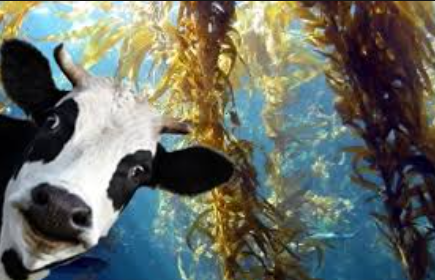
PHOTO Feeding cattle with seaweeds lessens greenhouse gas emission. Credit- Steemit.com
 Growth Features