
Kawayan Act seen to be approved in 2024, to boost investments in bamboo-based industrialization

December 31, 2023

By Melody Mendoza Aguiba

The “Kawayan Act” or the Bamboo Industry Development bill is seen to be approved until Congress’s third regular session in 2024 as government speeds up institutionalized mandate boosting investments into bamboo-based industrialization.


Sponsored by Senator Mark A. Villar, Senate Bill 2513, “An Act Institutionalizing the Bamboo Industry Development of the Philippines,” is now being finalized. It will be subjected to interpellation by senators perhaps by the first quarter of 2024 for any amendments.


Bicameral discussions ensue to come up with a unified version from the Senate and Lower House bills prior to submission to the Office of the President for ratification.


“We have enough time until the third regular session to complete the whole process,” said Lawyer Ken Sta. Rita, presiding officer at the Senate Committee on Trade, Commerce, and Entrepreneurship (SCTCE). Congress’s third regular session begins in July 2024.


Department of Agriculture (DA) Undersecretary Deogracias Victor B. Savellano, also Philippine Bamboo Industry Devt Council vice chairman, said the urgent approval of the bamboo bill will enable realization of the vision of Executive Order 879 on bamboo industrialization.


“We will finally have a true ‘Pinoy’ industry that uses a green material to promote industrialization and dollar generation,” said Savellano. He authored an early version of a House bill supporting the productive use of the climate-smart native plant ubiquitously grown nationwide.


Philippine Bamboo Industry Development Council (PBIDC) Executive Director Rene Madarang said the bamboo law as approved will finally institutionalize a counterpart PBIDC office that harmonizes the myriad bamboo programs of government.


“It will all be under one center so that the private sector knows where to go to for different kinds of assistance that will enable us to nurture our bamboo industry,” said Madarang.


Senate Bill 2513 introduces incentives into the industry including making it an Investment Priorities Program product under Bureau of Investments in order to enjoy tax holidays, among others. Bamboo plantations will be exempted from permits for tree cutting, harvesting and transport. Private plantations will be allowed to enjoy free rental of government lands. Plantations will also be accepted as collateral for government loans.


Private sector players have also been pushing for incentives and policies that will encourage investments into the sector foreseen to gross $92 billion globally by end-2030. These are among the motions for which the SCTCE requested written proposals:

  1. Tap the 204,000 hectare mature natural growth bamboo identified by the Forest Management Bureau. It can immediately be transformed into a processing center for high value added products — handicrafts, furniture and bamboo slats that will support indigenous people’s livelihoodCraft a Bamboo Villages program similar to Thailand’s which is reportedly investing $10 billion in 10 years for bamboo development.
  1. Grant a 40-year bamboo plantation tenure so investors may have enough time to recover investments. Private sector investments in large scale plantations should be encouraged under an ease of doing business environment.
  2. Land Bank of the Philippines should set up a credit program for micro small medium enterprises (MSME) engaged in bamboo business similar to the program that made a success of Masagana 99 in the 1970s.
  3. Consider issuing a policy mandating 5-10% of construction materials should use locally processed bamboo out the P400 billion construction material industry.
  4. Infrastructure such as farm to market roads and irrigation systems should be established as many bamboo plantations are in unreachable areas.
  5. The bamboo bill should provide stability and predictability in policies as big investors cannot
    just put their money in policies that keep on changing.

  6. 5.  Marketing assistance and supply of big volume of bamboo should be accorded
    to end-of-value-chain industries such as innovative house builders like Cubo.
  7. The bamboo law should include a provision for bamboo as a structural timber in the Building
    Code. Bamboo lumber is a $5 to $10 billion industry.  Government should focus on its
    development.
  8. Tax incentives should be granted for the mining industry to engage in large scale bamboo plantation as a supportive livelihood program for Indigenous People.

  9. PHOTO Swiss-Filipino Studio Couture used bamboo in this elegant Paranaque residence. Credit Arch20
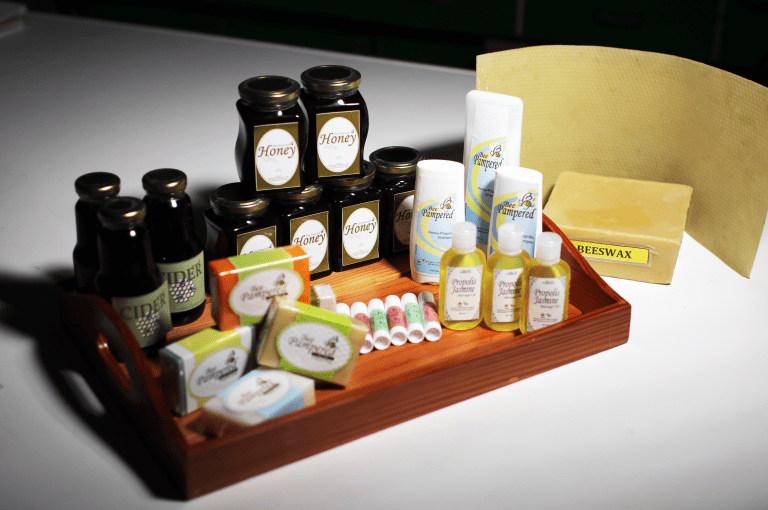
DA to replicate beekeeping program of Mindoro’s Mangyans that propagates indigenous honeybee breeds

December 30, 2023

By Melody Mendoza Aguiba

The Department of Agriculture (DA) will replicate a beekeeping program that propagates indigenous honeybee breeds that now gives livelihood to Mangyans of Occidental Mindoro and has untapped potential for export.


DA Undersecretary Deogracias Victor B. Savellano said the beekeeping program will encourage local farmers to tap native honeybee breeds that are easy to grow. The program offers huge opportunities as income earner for farmers with honey’s medicinal and pharmaceutical properties.


The products of beekeeping- honey, pollen, propolis– are turned into-antibacterial soap, massage oil, lip balm, shampoo, and other products.


Local processed bee products have reportedly been reaching prominent export markets—particularly the royalties of England.


Savellano said DA will explore budget sources for the program through a Bureau of Animal Industry (BAI) program.


“Beekeeping is a high value farm sector. It has export potential given an organized national program to develop it,” said Savellano.


Under its program, DA will accredit bee suppliers as part of developing the local industry. This accreditation policy will get rid of smugglers of queen bees which are the bees for reproduction.


“Queen bee smuggling has been destroying our local industry,” he said.


DA is partnering with the University of the Philippines-Los Banos (UPLB) on a commercial system, yet community-based program on beekeeping.


Dr. Cleofas M. Cervancio, UPLB project leader, said UPLB is coming up with a bee roadmap whose aim is to tap the export market.


So far, the UPLB project has been benefitting rural communities. This includes Muslim communities in Lanao del Norte and Mangyans in Victoria, Occidental Mindoro.


Bee farms are now also being developed as agriculture tourism sites. One of such site is the Balay Buhay sa Uma Bee Farm in Bulusan, Sorsogon. It is accredited by the Department of Tourism.


UPLB has been developing technologies using native bees, particularly stingless bees, in order to raise crop yield and sustain biodiversity.

The Magic of Bee. Credit- UPLB Regina Mae C. Ongkiko


The bee program has been identified by the Technical Education and Skills Development Authority (TESDA) as the National Training Center for beekeeping. Trainings are on beekeeping, bee colony health, management and bee pasture development.


The UPLB Bee Program also participates in establishing Standards for Tropical Honey and Beekeeping Practices in the Asia Pacific Region.


The TESDA program features low cost rearing technology for bees and establishment of bee pasture and sanctuary in an agroecosystem. It developed a policy paper on Standards for Tropical Honey ratified by the Asian Apicultural Association.


These are other UPLB-developed bee technologies: Use of stingless bees for pollination; how to harvest honey, pollen, and propolis from stingless bees; propagation of stingless bees using coconut shells; and harvesting honey from giant honeybees.


The program enters into collaborative agreements on establishing Food and Drug Administration-accredited bee facility. Partnership is also promoted for the protection of intellectual property rights for the wooden hive technology.
PHOTO UPLB bee products. Credit–UPLB Agora

Lone Filipino Gusi Peace Prize laureate awarded for “good governance” calls on collaborators in food production to counter insurgency, terrorism

December 11, 2023

Melody Mendoza Aguiba

Agriculture Undersecretary Deogracias Victor B.  Savellano, the lone Filipino Gusi Peace Prize 2023  leaureate, has called on collaborators to strengthen ties with government on food production as a means to counter insurgency and  terrorism.

   Awarded for good governance now geared toward increased food security, Savellano said political factions should all set aside ideologies in order to contribute to raising food supply. 

   With good governance,  he  means the least privileged, the most disadvantaged, the poor and marginalized should be given priority in government programs.  

   Food production is a primary mandate of government through which many socio-economic problems in the countryside can be solved, he said.

   “When the Filipino goes hungry, we have a national security problem. We are all confronted with food security which in fact is a national security problem.  That’s why all of us  public and private sector people should be involved in finding ways to raise food supply,” he said.

   Savellano made the statement in light of a bombing incident in Marawi early this week that is reportedly exposing internationally-linked terrorists to the violence.

   However,  government’s program for reintegrating rebels have been successfully luring returnees as its package of benefits includes safety and security of rebels’ families along with a health program and livelihood opportunities.

   With increased food production and livelihood generation in the countryside, rural folks are less likely to be  influenced to join armed rebellion, said Savellano.

   Ambassador Barry Gusi, founder of the Gusi Peace Prize, said the appointment of strong leaders in government as that of Savellano is so timely even now that violence has recurred with the bombing in Marawi City.

   “This (violence) has many factors—security, economy, political (differences).  They in the South should be given equal attention.  These people are not treated equally.  It’s not important whether you’re a Christian or Muslim.  People should be treated equally,” said Gusi. 

   Savellano is doing an important role in making available food, resources, and livelihood opportunities to all.

   “Food is a necessity.  Food is one of the main reasons (for all these violence).  Political (conflicts) arise from a lack of attention to Muslims.  They have been neglected in part in health care and food.  They don’t have enough.”   

 The Gusi Peace Prize is awarded for excellence in many areas like Medicine, Physics, etiology, environment, humanitarian works. 

   This year’s other laureates in the Gusi Peace Prize are Atty. Jordan Gjorchev, founder, National University of Macedonia; Dr. Lars Larsen, Medicine -Neuroscience trailblazer;

Dr. Carlos Paya, CEO of Immune Design; Fmr Princess Himani Rajya Laxmi Devi Shah, supporter of disadvantaged Nepalese Community through The Himani Trust; Prof. Paris Katsivelos, quintessential actor, director, and educator of the dramatic arts.

   The rest are Amb. Georges Suha of the European Union in Africa; Dr. Craig Elevitch, pioneer,  Mama Food Forests cultivating 800 million of such to help address food security; Mr. Frank Shooster – Haiti Relief Efforts during the 2010 earthquake; Mrs Xiomara Delgado Reynoso – Improving Children’s Rights;  President Vit Jedlicka – political leader, Liberland;  and Hon. Samuel Charles – Leader of New Nigeria, CEO ANOG Petroleum LTD and 11 other companies.

      “Undersecretary Savellatno’s work (in agriculture)  is one of humanitarian nature.  If he can put something on the table, that helps many Filipinos,” he said.

   “Undersecretary Savellano is a man of understanding and compassion.  It is not hard to come to him and ask for help. I admire his efforts since he was a vice mayor, mayor, governor, and congressman in Ilocos.” 

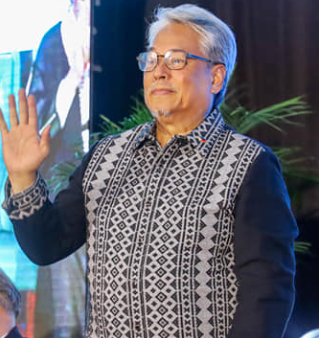
PHOTO Gusi Prize awardee Deogracias Victor B. Savellano

GUSI PRIZE for good governance: Savellano lone Filipino laureate

December 8, 2023

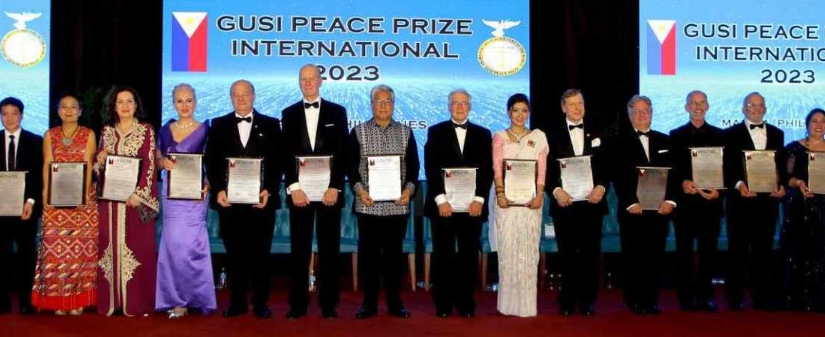
Agriculture Undersecretary Deogracias Victor B. Savellano (9th from L)  is the lone Filipino Gusi Peace Prize 2023  awardee for good governance.  Other laureates are Dr.(L-R) Hussein Said Bahri – Wedad Charity for helping orphans; Dr. Ing Ilgam Akbar Habibie,  CREATE Foundation  for youth empowerment; Dao Chi Manh, educational innovation and Leadership’ Dr. Jamyang Dolma, preservation of traditional folk music, ancient chant, and weaving in Tibet and Bhutan; Madam Al Ali Nada, improving children’s rights; Prof Irina Bondar – Development of National Culture, and the UNESCO Art for Action; Atty. Jordan Gjorchev, founder, National University of Macedonia; Dr. Lars Larsen, Medicine -Neuroscience; Carlos Paya, CEO of Immune Design; Fmr Princess Himani Rajya Laxmi Devi Shah, supporter of disadvantaged Nepalese; ; Prof. Paris Katsivelos, quintessential actor, director; Amb. Georges Suha of the European Union in Africa; Dr. Craig Elevitch, pioneer,  Mama Food Forests for food security; Mr. Frank Shooster – Haiti Relief, 2010 earthquake; Mrs Xiomara Delgado Reynoso – Improving children’s rights;  President Vit Jedlicka – political leader, Liberland;  and Hon. Samuel Charles – Leader of New Nigeria. 

Govt should consider investing in Automatic Identification System to track small boats used in smuggling, illegal tobacco trade

December 4, 2023

By Melody Mendoza Aguiba

The government should consider investing in Automatic Identification System (AIS), a vessel tracking method, in its fight against smuggling and illicit  tobacco trade which have grown  into gigantic proportion, making these not only economic, but a national security threat.

    Former Congressman Jericho “Koko” Nograles warned that agriculture smugglers and perpetrators of illegal tobacco trade have unbelievably become “bigger and bolder.”

   The magnitude of agriculture smuggling, illegal tobacco trade, and all related illegal trades leads to suspicions of their threat to national security. Illegal activities have even been linked to financing terrorism. 

   “The problem wasn’t as bad as now,” said Nograles during the Anti Illicit Trade Inter Agency Dialogue. “Then, barely two years ago,  the legitimate tobacco industry was just getting pinched.  Now it’s bleeding.”

   A serious victim of illegal tobacco trade is the consumer himself who is exposed to risks of adverse health effect brought about by unregulated tobacco manufacturing.

   “We are fighting illegal tobacco smuggling because it is posing serious health risks to consumers while the government suffers from foregone revenue in billions,” according to Department of Agriculture Undersecretary Deogracias Victor B. Savellano during the same dialogue.

   “With its complex nature, we need a whole-of-nation approach in this fight.   We should involve all agencies including DND (Department of National Defense) and the National Security Council,” he said.

   Tobacco smuggling’s impending victim also are legitimate tobacco manufacturers that are paying their tax dues.

   “If smuggling and illegal tobacco trade continues, the legitimate industry will close.  They will pack and go.  These will accelerate their decision making to say ‘it’s the end.’   That is goodbye to people who are willing and happy to pay taxes,”  said Nograles.

   Government should look into strengthening its border control while also investing in human resource training, automation, digitalization, and technology in the fight against smuggling, said Savellano.

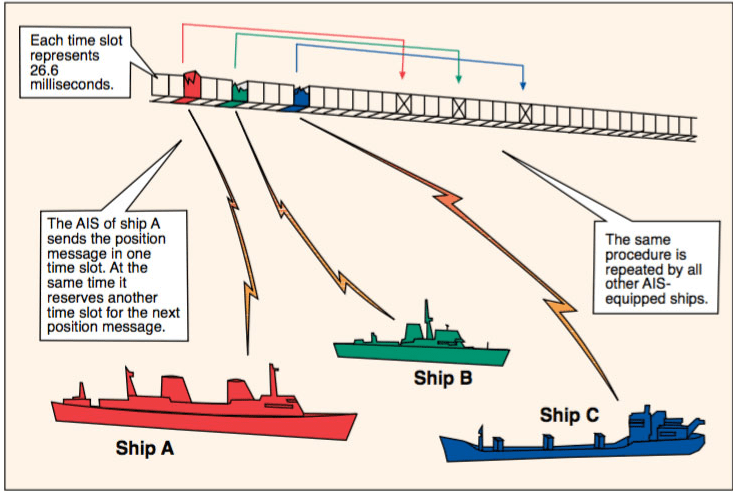
   Automatic identification system or AIS is a transponder system enables information exchange between ships and ship stations (Marine Online).

   As there are dotted gray lines between countries’ territories at sea, the question on which country has jurisdiction on policy enforcement over this area arises.

   An AIS system will enhance collaborative agreements between Indonesia, Malaysia, and Philippines on the  enforcement of anti-smuggling laws over these questionable areas.

   “These dotted gray lines have become a good business for smugglers,” said Nograles, explaining it must be another reason why illegal activities have been flourishing.

   As part of the AIS technology, a tracker of vessels, an app called “Marine Traffic,” is capable of identifying vessels including small boats that are now apparently being heavily used in smuggling. 

   The small boats, called “jongkong,” are able to dock on any small island which may have caused the huge growth in illicit trade activities.

   The AIS technology may be very expensive for small fishermen.  But if government shoulders the costs, its economic benefit  may turn out to be huge since the illegal trade problem is even causing huge economic losses to the country.

“The new Coast Guard has proposed it (AIS),  but it’s too expensive.  But we find ourselves in a situation now that is so absurd that the losses could actually pay for the solution,” said Nograles.

   Under prevailing practice, only vessels with huge capacity are required to acquire the system that enables their tracking at  sea.

   And jongkong boats are not required to install such system, making these untraceable, enabling tobacco smugglers to easily run away with their illegal trade.  

   If government invests in such system, Nograles suggested government may even find it easier to guard its territorial rights over West Philippine Sea.

PHOTO Automatic Identification System  Credit-Aeromarine SRT

DA-BAI to implement P850 million livestock dispersal among coconut farmers under RA 11524, the trust fund managing coconut levy

December 1, 2023

By Melody Mendoza Aguiba

The Department of Agriculture (DA) is implementing an P850 million livestock dispersal program for coconut farmers in partnership with the Philippine Coconut Authority (PCA).

   In accordance with the Coconut Farmers Industry and Trust Fund Act (CFI-TFA) under Republic Act 11524, DA will start dispersing chicken, native pigs, and goats perhaps toward the end of the year. 

   This is in support of coconut farmers, coconut industry in general, who are the intended beneficiary of the coconut levy fund that is now under the management of the Coconut Farmers Industry Trust Fun).

   Dr. Rene C. Santiago of the DA-Bureau of Animal Industry said during the Animal Health Congress that the budget for the livestock program stands at P166 million or thereabouts per year for five years. It totals to around P850 million over five years.

   “It is now under process with the procurement.  There is already a supplier for chicken, native pigs and goats,” said Santiago.

   The five-year program will make a significant difference in the lives of coconut farmers who own or tend not more than five hectares of coconut farms as per the CFI-TFA. 

   “We  in DA’s Livestock Group and with the leadership of Secretary (Francisco) Tiu Laurel all follow the same mission to help raise income of farmers among whom coconut farmers are the poorest.  Teaching them how to raise animals will make so much difference in their ability to earn income for their families,” said DA Undersecretary Deogracias Victor B. Savellano.

   Beneficiaries who are now being identified by PCA also include leaseholders or tenants who till coconut on not more than five hectares.

   Farm laborers, whether occasional or itinerant, who are harvesting coconuts or work in the processing of copra as a major means of livelihood are also beneficiaries.   

   Santiago said that since the program will be implemented by DA-BAI, the potential for successful adoption of animal raising technology even among coconut farmers is high.

   “We are already integrating training of coconut farmers on how to raise animals.  Farmers need to sign a form, and they need to declare that they have undergone trainings and seminars in order to start an animal raising business,” Santiago said.

   Local government veterinarians forming the Provincial, City, Municipal Veterinarians League of the Philippines (PCM-VLP)  have observed that many livestock dispersal programs of government have failed. 

   This is apparently due to the absence of support systems to help crop farmers run livestock and poultry businesses.

   “They should involve us provincial  veterinarians from the very beginning so we may hold trainings and seminars even before farmers start raising animals.  What has been happening is we are called when there is already a problem (animals get sick).  This is so that we won’t waste our resources when animals die before we come in,” said Dr. Mary Grace Bustamante during the Animal Health Congress.

   The livestock program is set now for just five years in line with the DA’s mandate to raise livestock production during the term of President Ferdinand R. Marcos Jr.  However,  the trust fund itself extends to 50 years. 

   As such, the trust fund could help sustain a long term livelihood enhancement program for farmers who may continue to integrate livestock raising in their coconut farming.  

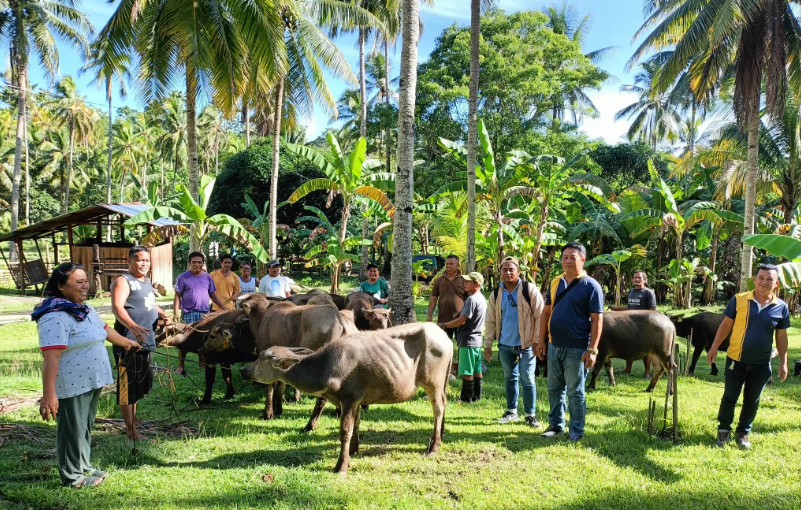
PHOTO Farmers receive carabao dairy under a Department of Agriculture program