
Teleconsultation gains momentum in educating Filipino women on family planning

December 5, 2020

By Melody Mendoza Aguiba

Teleconsultation is steadily increasing acceptance among Filipino women in learning about modern family planning and contraceptive methods.

Besides, reproductive healthcare professionals are now more easily accessible through digital means where they can provide sufficient education to their patients.  

   Undersecretary Juan Antonio Perez III, MD, MPH, the Commission on Population and Development (POPCOM)’s executive director, said that many women have yet to be enlightened on traditional beliefs, myths and misconceptions in family planning. These misconceptions contribute to the high unplanned pregnancy rate in the country.

   “Much of our work in the past was conducted through face-to-face advocacy communications and public events,” said Usec. Perez. “We need to transition from that setting to another using our help lines and social-media platforms.”

   “Already, we have set up systems for women to gain access to health services through virtual channels, where doctors will ask them to go online and have a discussion,” added POPCOM’s chief.

   The use of teleconsultation through video calls has started to pick up since the country-imposed lockdowns due to the pandemic, according to Doctor Anywhere physician Dr. Rachel Chin at the Bayer-supported virtual forum on “Women’s Health, Empowerment, and Progress.

   “Based on statistics, telemedicine is filling a critical gap for women during these times. Despite not being physically in the same room, telemedicine is not impersonal,”  confirmed Dr. Chin.    

   “From my experience, I have had deep consultations with my patients. Good doctors should not be rushing through consu  lts—regardless whether they are done face-to-face, or via video call.”

   Teleconsultation, she remarked, allows patients to be as personal in confiding to doctors their concerns regarding reproductive health and sensitive information:

“Health care professionals can tailor advice on the topic of women’s health. They can provide a safe space for women to confide in and recommend options to reduce future health uncertainties, such as through regular screening, vaccination, or contraception.”

   According to Dr. Chin, teleconsultation brings convenience to patients who do not have to wait at doctors’ offices. Appointment of schedule of consult may be fixed. Patients may also choose female doctors if they find information being shared to be sensitive.

   “With telemedicine, women can pick and select a doctor of their choice to consult at their fingertips—rather than having to check personally or contact different clinics,” she added.

   In support of POPCOM during the pandemic, Bayer has increased focus on its social-media program on Facebook, Ask Mara Ph, to reach out to more Filipino women. The platform houses practical and accessible information on the different contraceptive options available, while addressing common misconceptions about birth control.

   “Many women ask me about the side effects of contraceptive pills. While it depends on each individual, there are definite benefits from taking them,” said Dr. Amity B. Casurao-Trono, an obstetrician-gynecologist.

   Primarily, the contraceptive pill can prevent ovarian cancer and endometrial cancer, according to a published study of the Journal of the American Medical Association-Oncology.

“The pill has been one of the most effective birth control methods. It also has added benefits—including prevention of rheumatoid arthritis, reduction of risks from ovarian cancer, and even address polycystic (ovary) syndrome.” said Dr. Casurao-Trono. “It can address hormone-related fluid retention experienced by some women when they’re about to have a period.”

   “First and foremost, however, women should consult their doctor before using the pill or other modern contraceptives,” added Dr. Casurao-Trono.

   Bayer also supports the celebration of the World Contraception Day (WCD) every September 26. One of its reproductive-health education programs is “Your Life,” which targets 13- to 25-year-old women as participants in learning about reproductive health. WCD is part of the United Nations’ (UN) movement “Every Women Every Child.”

   The UN estimates that today 151 million women all over the world aged between 15 and 49 use the pill as their contraceptive method of choice. There were 99 million unplanned pregnancies from 2010 to 2014, of which 56 percent ended in abortion, according to “Uneven Progress and Unequal Access” published in 2018.

   Meanwhile, the United Nations Population Fund projected that unplanned pregnancies in the Philippines will total to 214,000 this year. For 2021, it will increase to 740,000—almost a 50% increase.    As part of its sustainability targets, Bayer is looking to provide 100 million women in low- and middle-income countries with access to modern contraception methods by 2030 to address this global concern in developing countries. It has regularly supported POPCOM’s social-media programs, so that more child-bearing women can be empowered to make wise choices in their reproductive health. (Melody Mendoza Aguiba)

6 phytoremediation tree species identified by ERDB for Palawan mercury mine’s rehab

November 30, 2020

By Melody Mendoza Aguiba

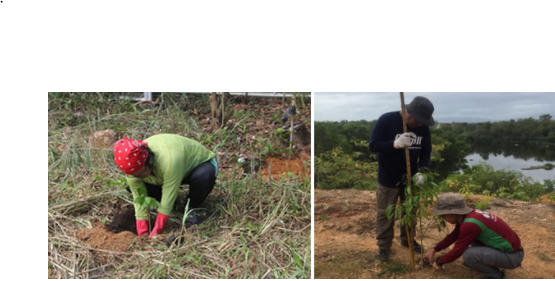
Six forest tree species have been identified by the Ecosystem Research and Development Bureau (ERDB) as “phytoremediation” tool to rehabilitate the mercury-polluted Palawan Quicksilver Mines (PQM) as part of an aim to transform it into an ecotourism site.

   The tree species are eyed to reduce movement of soil contaminants to the groundwater and to the bay. These will stabilize the soil as contaminants are absorbed by the trees’ roots.

   The six forest species are Molave (Vitex paviflora); Narra (Pterocarpus indicus)); Ipil (Instia bijuga); Bani (Pongomia pinnata ; Nato (Palaquium luzoniense; and Balayong (Cassia nodosa).

   “These plants can quickly absorb chemicals in the abandoned site.  The pit has very high volume of very lethal mercury. Every time  it rains, the contaminated water runs to the bay (Honda Bay) in Puerto Princesa.  We’re now working on a research on these plants’ use to absorb the chemicals,” said ERDB Director Henry A. Adornado in a biotechnology forum.

   Phytoremediation is the use of green plants to clean up contaminants in the environment without necessarily removing the contaminants directly.

ERDB staff in phytoremediation work in Palawan mercury mine

   ERDB, its Agroforestry Research, Development and Extension Center (ARDEC), is implementing the project with Mines and Geosciences Bureau until 2023.  By then, the abandoned mine will have been transformed into  an ecotourism and research destination in Puerto Princesa City.

   “Phytostabilization using forest trees has been suggested as a cost-efficient, socially acceptable, sustainable, and ecologically-sound solution to remediate heavy metal-contaminated areas. It is ideal to use forest trees because they produce high biomass that serves as storage for contaminants being absorbed and provide aesthetic value  to the area,” according to ERDB.

   The PQM operated from 1953 to 1976 in Barangay Sta. Lourdes producing 2,900 tons of mercury and 2,000,000 tons of mine-waste calcines (retorted ore).

   Unfortunately, this was the era when government has not yet adopted  policies on mine rehabilitation.   The prevailing Philippine Mining Act has now mandated mining companies to fund in advance the future rehabilitation of a mine while still operating.

   Initial field planting in observation plots was conducted in October 2019.

  The phytoremediation project has received initial success as all the six forest tree species had a 90 to 94% mean survival rate. 

   Neverthless, Narra and Molave performed with an even promising mean growth increment in terms of height and diameter.

   The sample collection for the plant-tissue and rhizospheric soil and their analysis are scheduled before the end of this year. The samples will determine plants’ capability to do actual phytostabilization work that will prevent contaminants’ movement to the bay water and groundwater.

   “Other parameters such as soil, total mercury and plants’ total accumulated mercury are needed to determine the potential of the test-plants for phytostabilization,” said ERDB

   Metallophytes and hyperaccumulators—plants that can grow and withstand high heavy metal presence in the soil will also be introduced in the area.

   One million trees are initially eyed to be planted in Barangay Sta. Lourdes.  It is part of a proposal of Puerto Princesa City local government unit to plant Balayong trees in the project area.

   The rehabilitation work of PQM will also involve earthworks (topsoil capping, benching for the slope stabilization, additional landscaping); perimeter lightings with underground wiring;  construction of three-meter wide concrete pathway and fence to contain the 60 meter-wide abandoned national road; installation of water system; repainting of existing inner and outer fence; and construction of driveway parking, guard house, and mini-information center building.

   The MGB and Puerto Princesa’s City Engineering office will be part of the implementation of the infrastructure works under a P10 million fund they are allocating.

   MGB earlier funded with P15 million the first phase of rehabilitation of the PQM mine. This involved the isolation of the area with the construction of outer and inner fences within the identified 20-40 meters buffer zone/easement of the pit lake.

   Earlier vegetation work has been done by introducing carabao grass, bamboo, and other ornamental plants. 
   However, rehabilitating the abandoned mine needs an even more important task of cleaning up of mercury-laden soil which is hoped to be done through the contaminant-absorbing tree species.

   Aquatic and terrestrial biota sampling are also being conducted.  It is carried out along with sediment sampling, research on the health effects of mercury, and a series of information drive and dialogues with partner agencies and mining companies operating in the province.

   The abandoned mine has become a health and environmental hazard in the community.

   Its operation  resulted in  heavy metal contamination in the soil and sediments of the surrounding natural environment.

   Mercury concentration  in the soil,  at 1.04-67.5 milligram (mg), was found to be elevated compared to global background of 0.045-0.16 mg.

   River sediments had 1.8-119 mg, and marine sediments had 0.04-12.7 mg.

   “The mercury  in marine sediments was caused by the erosion of mine waste calcines near the pit lake, and calcines used to construct a wharf at the nearby Honda Bay. Mine wastes represent the largest source of mercury contamination in the area, due to the low efficiency of the recovery process during calcination,” according to a study led by Jessie Samaniego.

   Because of its impact to marine environment and the health of the surrounding community, the mercury mine has been known as a waste hotspot of the world.

Credit XDD Environmental

   Studies since 1994 indicated that population in the area had high mercury concentration  in their hair and blood samples above the recommended exposure of 20 parts per billion.

   They complained of symptoms including miscarriages, tooth loss, muscle weakness, paralysis, anemia, tremors.

   “Department of Health (DOH) reports say that 33–40% of the 10,000 combined Tagburos and Sta. Lourdes residents have ‘chronic mercury poisoning’ from the exposure to mine tailings and ingestion of marine products with high mercury content,” reported Samaniego along Cris Reven Gibaga , Alexandria Tanciongco and Rasty Rastrullo. (Melody Mendoza Aguiba)
AI-driven drone revolutionizes PH rice farming; Bayer demonstration in Paniqui, Tarlac completed

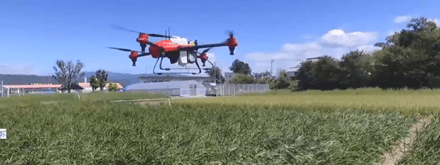
November 27, 2020 – Artificial intelligence-driven drone has started revolutionizing Philippines’ rice farming n as Bayer Crop Science (BCS) completed a “drone seeding” demonstration in Paniqui, Tarlac that is significantly eliminating costly and time-consuming labor in rice planting.

A technology demonstration completed by BCS in Brgy. Sampot last November 20 has shown the success of using drone to broadcast (‘sabog tanim’) rice seeds. Sabog tanim or direct seeding is a method of sowing rice seeds.

The drone seeder is being received enthusiastically by Filipino farmers in Central Luzon as it substantially cuts labor and cost of direct seeding. The drone seed spreading service fee is being placed at only P3,000 per hectare for Bayer Arize farmer-customers.

Labor cost for transplanting rice traditionally costs P11,000 to P13,000 per hectare.

Instead of a whole day to do direct seeding in one hectare, drone seeding for the same area can be completed in only 30 minutes. Based on the conducted trial, seeding rate is 20 to 25 kilos of hybrid rice seeds per hectare, which is far less than the 40-50 kilos seeding rate in the manual sabog tanim, indicating effective seed distribution.

“We are preparing farmers for a complete package of smart technology. We can now use the drones to support agriculture modernization. Other countries in Southeast Asia have started to use drones in farming, including Thailand, Indonesia, and Vietnam. Meanwhile, It’s already used extensively in China,” said Aaron Cano, BCS new business activation manager during the technology demonstration. “This is the future of farming. We are opening an opportunity for the youth to get interested in farming.”

BCS has started setting up a “one-stop-shop” for farmers to bring a complete service of hardware, apps, and inputs—high yielding Arize hybrid rice seeds and crop protection products.

“We’re developing that model right now—a complete service that goes beyong distribution of farm inputs. Down the road, we’ll also look at other hardware and applications that collect relevant data on climate, weather, and plant health to be provided regularly to farmers,” said Cano.

New Hope Corp. (NHC) Founder/Director Anthony Tan said NHC, which distributes drones in the Philippines, has already been licensed by the Fertilizer and Pesticide Authority (FPA) to use drones for spraying application. However, approvals for specific crop protection products that can be applied using drones have yet to be realized. This is where BCS is working to ensure regulatory compliance with FPA guidelines for priority products and crops.

Bayer holds technology demonstration on drone seeding in Paniqui, Tarlac

A sprayer, much as the broadcaster, is an attachment of the drone that enables farmers to conveniently spray pesticides or other granulated materials on their plants.

The Department of Agriculture (DA), particularly Region 3 under Director Crispulo G. Bautista, has already adopted a drone technology program. “We are scheduled to have a technology demonstration in mid-December in Candaba, Pampanga. We are also providing other venues for demo. Those who want to request us to hold demo in their place may just contact us,” said Shiela Hipolito DA Region 3 Rice Program Manager.

Cano added that BCS is introducing a web-based app called Agrolink. Bayer Arize rice seeds users just have to sign up an account to access Agrolink. Through this integrated Smart Farming program, farmers are given points from purchases that they can acculmuate to get discounts and likely include the drone services.

“All the data we’re going to get will be part of an integrated agriculture—a complete, integrated solution for smallholder farmers is what we’re aiming for to boost their yields and incomes,” said Cano.

For now, Tan said the drone’s seed broadcasting service will initially be carried out in partnership with Bayer’s Arize seeds. “We’ve been successful in testing the technology with Bayer’s Arize rice seeds. We find comfort in this partnership since we have been testing this for two years,” Tan said.

“Any new technology goes through trial and error stage,” Tan added. “That is what the drone technology has hurdled under the partnership between NHC and BCS. The collaboration successfully proved that Arize hybrid seeds can be utilized efficiently using drones in certain soil types. 

First, farmers have to prepare Arize hybrid rice seeds by soaking in water for 12 to 18 hours with Gaucho seed treatment. Next, the seeds are incubated for 18 hours. Afterwards, the rice seeds are loaded on drones for aerial distribution and seeding. The seeds shouldn’t have shoots so it can freely be dropped to the soil by the drone. Seed treatment with Gaucho prevents birds and other pests like preying on the seeds for up to 30 days.

The drone, registered with the Civil Aviation Authority of the PHilippines (CAAP), has a weight of 25 kilos and a rice seed loading capacity of 10 kilos. Drone pilots are also registered by CAAP.

Good seeding has also been observed when land preparation has been done properly. For now, the introduction of the drone seeding service will be focused in Central Luzon, Philippines’ rice granary.

“We want to put farmers at ease with the technology. A lot of farmers in Iloilo have been pressing us on the supply of the drones, but these have to be scheduled,” Tan said. While direct seeding has been known to be less productive than transplanting (producing seedling first then transferring these to permanent locations), transplanting is laborious, costlier, and takes a longer time to complete.

“You can’t expect different results from doing the same thing. With drones, we do things very differently. First, the seeds should be quality seeds. The choice of farmer is to transplant hybrid seeds, but now, there’s a new hope with Bayer’s proposition on automated drone technology,” said Tan.

Within just one day, 20 hectares may be planted with the seeds using drones versus 1 hectare if done manually. The drone distributes rice seeds aerially from an altitude of 2.5 meters at a speed of one meter per second. 

As a single drone would cost around P1 million which are out of reach for most farmers, NHC plans to provide the service at a reasonable fee for farmers within selected communities.

The Tarlac government is also supporting the supply of drones to its farmers. “Rep. Charlie Cojuangco wants average rice yield of Tarlac farmers to increase to more than five tons per hectare. We just finished just one techno-demo first, and maybe we will add more techno demos to introduce the technology to farmers,” said Ar-ar Molic, Carlos O. Cojuangco Foundation project manager. Melody Mendoza Aguiba

Plant breeders urged to use genomics to fast-track development of crops with superior traits

November 19, 2020

By Melody Mendoza Aguiba

The Philippines should tap genomics to develop crops with “novel traits” and rich nutrition content such as as Golden Rice which solves blindness-causing Vitamin A deficiency with its pro-betacarotene content hitting 14 parts per million (PPM) through “gene transformation.”

   The Southeast Asian Regional Center for Graduate Study and Research in Agriculture (SEARCA) has pressed plant breeders to use the technology that makes use of gene transformation to fast-track development of crops. That with superior traits such as that of pro betacarotene-rich Golden Rice.

   Golden Rice, just awaiting go-signal to be released to the market anytime, has hit pro-betacarotene (Vitamin) A rich level of 14 PPM compared to zero Vitamin A content for non-Golden Rice. PPM stands for parts per million.


Human genome mapping in 1986 started a revolution in systems biology including crop development; Credit: Natl Genome Research Institute

   Effectively, it is averting blindness for up to 500,000 children who go blind yearly due to Vitamin A Deficiency (VAD).  VAD also affects immunity and increased mortality among children in the developing world including Philippines.

   Such efficacy in significant nutrition supplementation holds true too for “Zinc rice” which has reached a level of 25 to 51 PPM zinc content from zero. And “Iron rice” has likewise already reached the target at 12 to 15 PPM iron content from zero.

   These crops are among the desperately needed by end-consumers.

   Meeting such market’s needs should be the focus of genomics—an interdisciplinary field that revolutionized research in many fields — and of systems biology that started in human genome’s mapping in 1986.

   “Most important for us is genetic gain– the difference genomics gives to a new product from the original. If you have molecular markers for gene editing, that’s where you increase (and fast-track) selection (of a plant variety) with accuracy.  That  reduces  breeding cycle and product development time. You could see the genetic gain,” said Dr. Glenn B. Bregorio, SEARCA director.

   Gregorio himself was a plant breeder for 29 years at the International Rice Research Institute (IRRI) and at hybrid vegetable producer East West Seeds.

   “I  am a plant breeder, and I’m very familiar with (molecular) marker-assisted selection.  As I get older, I realize the importance of sales, of commercialization. We should have market-aided selection so that our selection for traits should be based on the market, not only markers (molecular markers). There should always be a business component in everything we do,” Gregorio said.

Breeding with genetic selection fast-tracks development of crops with superior trait

   Breeding costs can be reduced by 32% and is even faster using genomics, he said.

   Molecular markers of desired traits in genes — identifying targeted novel or superior traits in plants — have played a huge role in fast-tracking crop development since the human genome mapping started in 1990. 

   Such desired genes – disease resistance or high yield, for example–  are inserted into the “transformed” crop.  

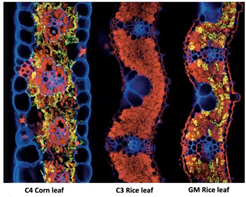
C4 rice now has the yellow content representing the protein corn originally has

    Genomics, and other “omics” disciplines – eg. Metabolomics which studies metabolites in relation to precision medicine in metabolic diseases–  should have huge commercial function in the following according to Gregorio:

  1. Developing more cereals by up to 45% in 2030 and raising yield of rice by 2.5% increase yearly as in the 1970-1990 era in order to meet population food demand. Rice yield growth slowed down to 1% yield yearly from 1990 to 2011.
  2.  Developing more climate-smart products as the C4 rice (ongoing development) which has “photosynthesis-efficiency” as that of corn. That means C4 rice is more drought resistant and produced with half the irrigation water used in normal rice.  It  even has 50%  yield increase due to nitrogen efficiency.

“We have to copy what has been done in corn. Because of hybrid, because of GMO (genetically modified organism), corn increased productivity very fast,” said Gregorio. Super diet rice, corn, and vegetables; low-glycemic cereals; and crops with novel traits such as the blue rose.

3. Crops grown with low carbon footprint demanded in rich markets as Europe.

Melody Mendoza Aguiba

Farmers prefer mechanical dryers over just P5,000 temporary food aid

November 20, 2020 

Rather than a temporary food aid of P5,000 per farmer, farmers have pressed government to put up mechanical dryers for rice and corn which will have lasting benefit of raising the produce’s price per kilo and stretching their shelf life, enabling them to hedge on the stocks for a longer period.

   While not directly opposing the P5,000 food aid program approved under a Senate resolution, the Philippine Maize Federation (PMFI) asked government for a more beneficial investment—that of putting up rice and corn mechanical dryers.

   “We are not comfortable with the decision of government to impart the excess tariff collected from rice imports to farmers at P5,000 each.  We view this as if government is promoting our farmers’ state of mendicancy,” said PMFI President Roger Navarro

   PMFI, many of  whose members also plant rice and representing other farmers belonging to Philippine Chamber of Agriculture and Food Inc (PCAFI), said Filipino farmers deserve more “dignity and respect.”

    Being a powerful investment tool, the money from excess rice tariff and whatever is approved by Congress under Bayanhan 2 should be used to empower farmers, according to PMFI.

   “More funds should be invested for long range and sustainable projects that farmers badly need which are the post harvest and storage facilities,” said Navarro.

   With higher quality dried corn and rice, farmers will be able to store their produce for a longer period of around one year. That enables them to trade on their rice and corn, hold them in storage and sell them when prices are higher compared to right when just harvested.

   The farmers particularly refer to mechanical dryers that enable them to meet the National Food Authority’s (NFA) quality for buying palay.  Paddy rice must have a moisture content of 14% so  NFA may buy it at a higher price by at least P1 per kilo compared to those not properly dried. For corn, ideal moisture content is 15.5%.

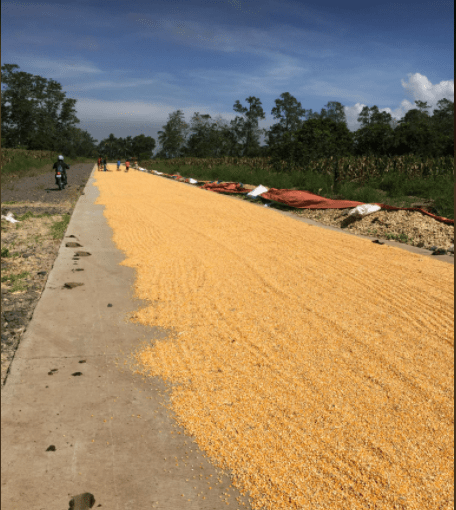
   While there is a substitute to mechanical dryers—concrete pavements or roads—these oftentimes render the product unclean with stones and other dirt.  Worse, these cannot be used when it is raining.

   “We can still see farmers drying their produce on the highways.  We must resolve this problem first and foremost. This is a basic fundamental infrastructure intervention support that government should do.  Or it will fail in its mandate and can therefore be charged for dereliction of duty,” said Navarro.

   PMFI also asserted government should  implement the Magna Carta for Small Farmers or Republic act 7607.

   “Government failed to implement price support mechanism both for rice and corn which NFA used to do before the Rice Tarrification Law.”

   The agriculture sector has been disappointed by government’s failure to implement the Agriculture and Fisheries Modernization Act (AFMA) and its provisions.

   In their letter to Department of Agriculture Secretary William D. Dar, 58 farmers’ organizations led by Lawyer Jose Elias Inciong  of the United Broilers and Raisers Association and Danilo Fausto of DVF Dairy Inc. (also PCAFI president) cited what has not been implemented under AFMA:  

  1. Provision of responsive business information and trading services that link farmers to market
  2. Creation of a national marketing umbrella to generate highest income to farmers
  3. National Information Network (NIN) to be set up one year from AFMA’s enactment in 1997.

            The NIN should provide industry data, similar to that being produced extensively by the United States DA (USDA). USDA extensively studies and reports even Philippines’ industry data.

“The NIN shall provide information and marketing services related to agriculture and fisheries which shall include the following: supply; demand; price and price trends; product standards for both fresh and processed agricultural and fisheries products; directory of, cooperatives, traders, key market centers, processors and business institutions.”

The NIN should also provide research information and technology generated from research institutions; international, regional and local market forecasts;  and resource accounting data.

“The NIN shall likewise be accessible to the private sector engaged in agriculture and fisheries enterprises,“ according to Section 45.

   The farmers’ groups said that DA’s budget for 2001-2004, 2011-2017, and 2018-2023 have not been consulted with the agriculture sector at all despite AFMA’s provision for this to be implemented. 

Dar asked to hold consultation with farmers and not come up with its own self-conceived plan

November 9,2020

Agriculture Secretary William D. Dar was asked by a 58-signatory farmers’ groups to hold consultation with farmers and not come up with its own plans which has rendered failure in  implementing two-decade-old Agriculture and Fisheries Modernization Act (AFMA).

   In a letter received on November 4 by DA, Dar was also asked by the 58 farmer-leaders to explain why  the Department of Agriculture (DA) refuses to implement trade remedies allowed by the World Trade Organization (WTO) and local laws addressing import surges and price depressions.

   DA’s failure to consult farmers is precisely the reason why there is “misallocation and misuse” of DA funds.

   “The absence of consultations is at the heart  of misallocations and misuse of funds by DA,” said the United Broilers Raisers Assn, Philippine Chamber of Agriculture and Food, Samahang Industriya ng Agrikultura (SINAG), and more than 50 other farmer-leaders.

   “DA’s plans, given the results, are certainly not for the stakeholders.  The law mandates that stakeholders be consulted in the formulation and implementation of AFMA.”

   Consultation should include budget requests which should be subject to transparency.

   The farmers’ groups lamented the non-implementation of Sections 38 to 45 of AFMA. These are among the provisions DA failed to implement:

  1. Provision of responsive business information and trading services that link farmers to market
  2. Creation of a national marketing umbrella to generate highest income to farmers
  3. National Information Network (NIN) to be set up one year from AFMA’s enactment in 1997.

            The NIN should provide industry data, similar to that being produced extensively by the United States DA (USDA). USDA extensively studies and reports even Philippines’ industry data.

“The NIN shall provide information and marketing services related to agriculture and fisheries which shall include the following: supply; demand; price and price trends; product standards for both fresh and processed agricultural and fisheries products; directory of, cooperatives, traders, key market centers, processors and business institutions.”

The NIN should also provide research information and technology generated from research institutions; international, regional and local market forecasts;  and resource accounting data.

“The NIN shall likewise be accessible to the private sector engaged in agriculture and fisheries enterprises,“ according to Section 45.

   On Dar’s battlecry that DA has to engage in “New Thinking,” DA should now look into why other countries (Thailand, Vietnam, Malaysia) thrived despite their World Trade Organization (WTO) membership, the farmer-leaders said.

   On the other hand, Philippine agriculture reels into further poverty as imports flood the market and kill farmers’ livelihood.

   The farmers’ groups said that DA’s plans in 2001-2004, 2011-2017, and 2018-2023 have not been consulted with the agriculture sector.

   “We have only come to know these AFMA programs upon  discovery of counsel as part of due diligence in preparation of a case,” the 58 farmers’ group confessed.

   DA’s plans all the years were made simply as “paper compliance” with the requirement of the Department of Budget and Management.

   In professional budget management, the farmer-leaders said budgets should have “clear performance targets and quantifiable and verifiable impact indicators and conduct of up-to-date monitoring.”

   Absence of data is another reason why there is disconnect between farmgate and retail  prices.  This happens for instance in rice where farmgate price is now down to P10 per kilo.  But consumers still pay for a high P38 to P45 per kilo in wet markets.

   “How can DA effectively plan without a data and information system? What will be the basis for its plans? How can stakeholders plan investments base on the realities of the supply and demand in an industry?”

   The farmer-leaders lamented that AFMA’s other major provisions have not been implemented:

  1. Strategic Agriculture and Fisheries Development Zone
  2. Agro-industry Modernization and Credit Financing Program
  3. Irrigation and Agriculture and Fisheries INfrastructure Support SERvices
  4. Trade and Fiscal Incentives

   DA also did not receive at all the P20 billion initial AFMA allocation and P17 billion yearly at least for 6 years since AFMA’s enactment.

   “You have spoken of rebooting the industry. The first step is to follow the law and implement AFMA,” said the 56 farmer-groups to Dar in a letter. “That is the only way to effectively gain the trust and respect of stakeholders.” Melody Mendoza Aguiba

P20 billion economic loss seen for crop year due to Fall armyworm corn pests, yield down by 1.6 M t

October 27, 2020

The government foresees a P20 billion economic loss for corn’s crop year due to the highl-infesting Fall armyworm (FAW), affecting 1.6 million metric tons (MT) of harvest on a total of 2.5 million hectares of corn area.

   On top of making life more difficult for corn farmers, the infestation has a negative domino effect on the cost efficiencies of feed millers, food processors, livestock and poultry raisers, traders and consolidators, and finally consumers.

   Department of Agriculture’s (DA) FAW Crisis Management Team Chief Dr. Lorenzo M. Caranguian reported government is intensifying strategies against FAW as loss is foreseen to be worsened by the incoming dry season planting.

   “As we approach the dry season, this November to December planting up to harvest in March to April (2021), mostly likely FAW will peak.  That is a period when we’re really expecting harvest to be bountiful,” said Caranguian in a  FAW forum co-hosted by Bayer Philippines Inc.

Lorenzo M. Caranguian, DA Region 2 director, reports foreseen P20 billion corn output loss due to Fall armyworm

   DA has already adopted an FAW Integrated Pest Management (IPM) protocol.  Under this, corn farmers are advised to detect presence of the pest at the earliest stages and apply three actions against the pest, according to Brueau of Plant Industry Crop Protection Chief Wilma Cuaterno , also resource person at the “FAW:Status & Management Strategies.”.

   These are use of trap crops (planting legumes 20 days prior to corn planting); field inspection (observe feces, egg masses, larvae that indicate FAW presence); and use pest attractants –organic bait trap such as molasses with vinegar; and use of commercial pheromones as traps and lures).

   DA has released a P150 million quick response fund for the program.  It has also allocated another P100 million to intensify pest control .  This P100 million is part of the P470 million alloted from the national government’sBayanihan 2.

  Caranguian said government is also studying corn varieties claimed to be resistant against FAW, particularly the Dekalb VT Double Pro.

   “DA will conduct a nationwide corn derby where all corn varieties claiming resistance against FAW will be grown and tested for their pest resistance and yield. It will be multi-locational in order for farmers to see for themselves varieties suitable to them,” Carangian said.

   Field studies have shown the Dekalb VT Double Pro corn plants have withstood FAW in the last dry season.

   The biotechnology-bred corn variety has a multiple Mode of Action (MOA) against the pest.  Multiple MOA) has enabled corn plants to combat infestation, according to John Fajardo, Bayer Philippines Agronomic System Corn & Knowledge Transfer manager.

Bayer’s Communications Head Bryan Rivera and Agronomic System and Knowledge Transfer Manager John Fajardo lead FAW forum

   Some Bacillus thuringiensis (Bt) seeds, also biotechnology-bred, only has one MOA which is against Asiatic corn borer.  As such, some Bt corn plants have been destroyed by FAW.

   HOwever, Dekalb VT Double Pro corn plants sustained only 2-3% damage in the last dry planting.

   With Dekalb VT DoublePro, given the proper climatic condition, cultural management, and a growing period of 115 to 120 days depending on the variety, corn can yield as much as 13-15 metric tons (MT) per hectare.

   As a rather auspicious development, Caranguian said FAW has not been observed to infest rice plants which is possible based on the pest’s polyphagous (feeds on various food) nature.

   “Corn is their favorite. It is more palatable to them,” he said.

   However, it has been observed to hurt some sugarcane crops in Region 2.

   Cuaterno said DA-BPI has also adopted under the FAW Protocol three actions for prevention of the infestation. 

   These are crop diversification (planting different crops or alternate crops after corn), synchronous planting (so that plants, particularly those in vegetative stage, can avoid the pest), and field sanitation (weeding and plowing under of stubbles).

   DA is also using natural enemies or biocontrol agents (predators) as natural pesticide against FAW.

   “It is better to use natural enemies because that is sustainable  management.  For high population of pests, we use organic pesticide, and then we apply inorganic pesticide,” she said.

   FAW infestation has already adversely affected corn harvest in 57 out of 81 provinces covering 288 out of 1,488 towns and cities. Average degree of damage in surved areas is 44.43%, DA records showed. Destruction is severe in Cagayan Valley, 5,428 hectares; Zamboanga Peninsula, 1,154 hectares; SOCKSARGEN( South Cotabato, Sultan Kudarat, Saranggani, General Santos), 1,703 hectares.

   Other serious incidence has been found in  Northern Mindanao, 1,191 hectares and Bicol, 533 hectares.

   FAW reproduces quickly with female adults laying 2,000 eggs in a single instance. Its dispersion is fast as it can fly at night over a 100-kilometer distance and up to 500 kilometers with the aid of wind.

   Being able to eat anything at hand enables the FAW to increase in population at exponential rate and travel to far distances. By flying, it can travel 100 kilometers per night.

   All Dekalb varieties with VT DoublePro have  a 5% refuge in a bag. This government requirement is part of the Insecticide Resistance Management (IRM) strategy of the industry.  It is aimed at minimizing the risk that corn varieties resistant to FAW will one day become ineffective in killing the pest.

   Fajardo said members of Croplife Philippines, a group of bioscience companies developing corn varieties resistant to pests, are collaborating on coming up with a common IRM.  It will ensure corn farmers will enjoy the use of FAW-resistant seeds as the Dekalb VT Double Pro for a long time.

   In the Philippines, FAW was first observed in March 2019 in Piat, Cagayan. “It was first identified morphologically by the FAO (Food and Agriculture Organization). From Piat, Cagayan, it was then seen in Gonzaga, Sta. Ana, and other municipalities until it reached the provinces of Isabela, Nueva Vizcaya, and Quirino.

   FAW was first found infesting farms in Africa in 2016. It had spread all over Africa in just one year. Afterwards, it was found in India, devastating 60 to 80% of farm harvest in some areas. It was in 2019 when it reached Pakistan, Thailand, Vietnam, and the Philippines.  (Melody Mendoza Aguiba)

UN-inspired “carbon credits” launched by Bayer as incentive to “climate-smart” practising farmers

October 17, 2020

By Melody Mendoza Aguiba

Bayer’s Crop Science division reinforced its commitment to nature-friendly and sustainable food systems amid COVID-19 with its launch of the Bayer Carbon Initiative (BCI).

BCI provides farmers incentives for adopting climate-smart practices.

As part of the company’s Future of Farming Dialogue virtual event series, Liam Condon, president of the Crop Science division of Bayer, emphasized the importance of the company’s sustainability commitments it set in 2019.

Condon addressed how the impact of COVID-19 and the resulting economic instability reinforced the need to intensify the focus on agricultural innovation. Innovation should help make agriculture part of the solution to climate change while continuing to ensure food security for all.

“The agricultural industry is no stranger to adversity—from flooding to drought to pest infestations. And COVID-19 is yet another stark reminder of the need to create a more sustainable and resilient food system to ensure food security,” said Condon.

“Innovation is key to not only solving the pandemic but also the present and future challenges facing farmers.”

The COVID-19 pandemic has caused economic instability and a food crisis among many nations, especially for developing countries. Agriculture must become a pivotal part of the solution to address this challenge, including climate change.

Photo credit: viridis.energy

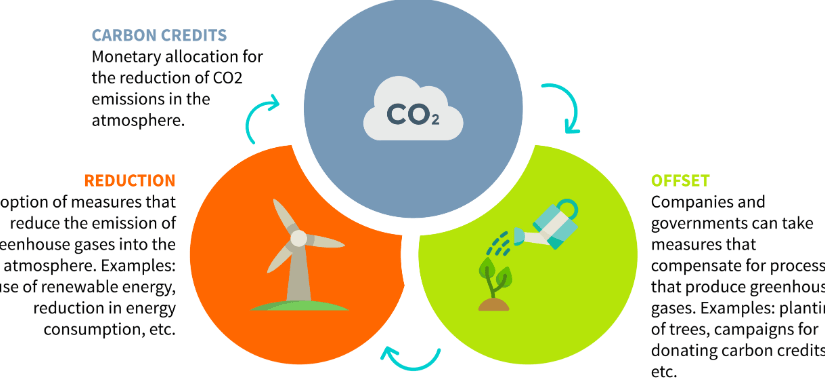
The Bayer Carbon Initiative intends to help farmers generate revenue for adopting specific climate-smart practices.

It was derived from the successful “carbon credit” model of the United Nations Framework Convention on Climate Change.

One example is the use of no-till farming which has been proven to reduce use and cost for fuel, labor, and equipment. It also improves soil structure, combats erosion as more surface soil is retained, and minimizes soil compaction.

In a statement, Bayer mentioned that it is paving the way towards a carbon-zero future for agriculture through this innovative, science-based and collaborative pilot program, and that it can deliver unmatched value to many more farmers through expansion in other countries.

The Future of Farming Dialogue features a variety of internationally renowned speakers and stakeholders from academia, industry and media. The focus of discussion is how to build more resilient food systems, accelerate sustainable-driven innovations and develop new business models that can reward farmers for their services to the ecosystem.

Condon commented on Bayer’s sustainability commitments: “Especially in challenging times, it’s our responsibility to help ensure food security and reduce our environmental footprint. We also need to help farmers do the same by providing the products, services and technologies needed to produce enough food while using less resources and caring for the environment. The key to this is innovation and this is what we continue to drive forward.”

In the Philippines, Bayer has experience in the company’s “Better Life Farming” initiative for remote agricultural areas where both farming and technical expertise are highly underdeveloped.

The intention is to introduce farming know-how, inputs, and market access for smallholder rice farmers to improve their yields and income. One such project is their concept store in Alicia, Bohol where rice farmers are guided on the right crop management technologies. The Bohol farmers are now able to use the recommended inputs for their farm production.

Bayer also provided seeds and crop protection inputs along with market assistance and support for health and safety needs due to COVID-19 for smallholder farmers in Asia, Africa and Latin America.

These efforts are already helping Bayer fulfill its commitments to empower 100 million smallholder farmers through access to technology, agronomic knowledge, tools and partnerships. These reduce field greenhouse gas emissions produced by key crops in major agricultural markets by 30 percent; and reduce the environmental impact of crop protection 30 percent by 2030.

“By integrating sustainability into our core business, we are able to not only help ensure food security, but also transform agriculture so that it can become part of the solution for climate change,” added Condon.

Bayer will continue to host its Future of Farming Dialogue in a virtual series throughout 2020 and into 2021. Melody Mendoza Aguiba

Ph posts high mortality ratio of 111 maternal deaths per 100,000

October 17, 2020

The Philippines has recorded a relatively high mortality rate of 111 maternal deaths per 100,000 women giving birth, prompting health authorities to step up to help achieve the United Nations Sustainable Development Goal of reducing the mortality ratio to 70 per 100,000 live births by 2030.

Heightened focus on helping poor families cope with a further worsening poverty situation due to COVID-19 has prompted the government to maximize the use of digital platforms to deliver family planning services as part of efforts to curb this high maternal death rate.

“The large number of unmet need for family planning in the country still translates to around 2,000 women dying of maternal related causes,” said Undersecretary Juan Antonio Perez III, MD, MPH, Commission on Population and Development (POPCOM) executive director, at Bayer’s Asia Pacific Virtual Forum on Women’s Health, Empowerment, and Progress (VHEP). “Our maternal mortality ratio is at around 111 per hundred thousand women giving birth.”

While the country has achieved success in reducing unmet family planning need early this decade from 2013, such success is being eroded by the limited access by the poor.

According to the National Demographic and Health Survey 2017, the unmet need for family planning has already decreased to 17%. This accounts for  2 million Filipino women who have difficulty accessing family planning and contraceptive methods due to financial means or other hindrances. Current movement limitations on transportation and health services due to the pandemic is again raising this rate of unmet family planning need.

“What we’ve seen on the ground is that because of lockdowns and restrictions, there is limited public transport, particularly in Metro Manila and in nearby regions,” added Dr. Perez during the Bayer-hosted forum. “The less fortunate rely heavily on this mode of transportation to get the services they need.”

Limitations: Women across Asia Pacific are experiencing difficulties accessing family planning services due to the global crisis. However, the worst is being felt by developing countries like the Philippines with its already large population at 109 million.

“Among higher-income countries and territories such as Singapore, Hong Kong and Taiwan, women have long enjoyed great access to sexual reproductive health. They have seen smaller family sizes and low levels of fertility,” Dr. Ashish Bajracharya, South East Asia Population Council Deputy Director also said during the same virtual forum. “For lower- and middle-income countries, it continues to be a challenge for women to access sexual reproductive health and family planning services. There are higher rates of unplanned pregnancies, particularly for vulnerable groups such as adolescents.”

COVID-19 has also caused budget restrictions, as focus is now on testing, treatment, and quarantine measures. Dr. Perez commented, “We have a lot in place for which we have prioritized resources, but because of the constraints due to our situation, we may have to bring down the budget a bit for next year, and that is a concern for [us at POPCOM].”

Online help: Prior to the pandemic, the number of women using family planning has doubled from 4 to 8 million, according to the POPCOM chief. “Our gap is now only at 2 million women—the last mile, you might say. But with COVID-19 restrictions, we had to set up help lines and social media platforms. Women can call a number and arrange for a meeting between the midwives who can deliver the service. They can access such by visiting http://www.popcom.gov.ph. We also have active chat facilities in our Facebook pages: @OfficialPOPCOM and @UsapTayoSaFamilyPlanning.”

He further stated, “POPCOM health workers are going the extra mile of delivering contraceptives to the homes of poor women who are quarantined within their communities.”

Dr. Perez mentioned that they are looking to other channels to augment their efforts: “Digital means of delivering family planning services will still be one of our priorities. Women and their maternal health are priorities of great importance in our health plans.”

“Women take on many burdens. They work at home and they take on income-generating tasks, which makes them an important facet for the household economy,” remarked the undersecretary. “An unplanned pregnancy will lead to economic deprivation and an untimely use of savings. With this, women should have a choice when it comes to reproductive health to maintain that status of contributing to the economy. Melody Mendoza Aguiba

Corn entrepreneur ex-multinational Unifrutti VP pleads for help for poorer corn farmers

October 15, 2020

A former vice president of banana-exporting multinational Unifrutti has pleaded for help for poorer corn farmers who are being “killed” by illegal smugglers and importers even as price plunged to an all-time high P9 per kilo.

   Rodolfo Pancrudo, farmer-owner of Pancrudo Farm in Manolo Fortich, Bukidnon, has asked

government not to allow the killing of corn farmers. 

   This may be the ultimate plight of farmers since they do not enjoy corn support price, supposedly expected before from the National Food Administration (NFA). Nor do they have post harvest facilities by which to dry and store their corn.

   Mechanical dryers and storage facilities should enable them to hold their sale of corn and wait until prices become more profitable.

   “Traders haggle for the lowest price and tell farmers, ‘Your corn is of low quality.’ That’s why farmers are forced to sell their corn even at only P9 per kilo because they need money.  Otherwise the harvest will just go to waste since there are no post harvest facilities,”said Pancrudo.

   While he is more fortunate because he is a retiree of Unifrutti, one of the world’s largest producer-exporters of fresh produce, more farmers are poor.

   “I am just more fortunate since I am more of an entrepreneur.  I have an integrated farm. It’s a kind of sustainable farming.  But I see farmers having a very difficult life. They are in a hand-to-mouth existence,” he said.  

   Pancrudo Farm also has a piggery.  The farm uses hogs’ dung to feed a biogas facility and uses it for fertilizer. It also grows papaya as Pancrudo is a sub-contractor of also multinational Del Monte.

   “I hope other corn farmers may also become entrepreneurs.  But most of them are not learned. When I retired from my company (Unifrutti), I went into farming just to practice my being an agriculture engineer. But many farmers run to me  for these problems. I have to speak for them.”

Farmer-entrepreneur Rodolfo ‘Opong’ Pancrudo

   The Philippine Chamber of Agriculture and Food Inc. (PCAFI) with its president, Danilo V. Fausto, has been seeking an audience from the Department of Agriculture (DA) regarding the plight of farmers in light of the Covid 19 food crisis. PCAFI asked for least an increase in tariff  of farm commodities—mainly rice – so as to support local farmers.

   For corn, DA should at least prohibit imported corn to coincide with the harvest.

   However, PCAFI member and Philippine Maize Federation Inc. (PMFI) President Roger V. Navarro feared DA’s inaction on the plummeting corn price forebodes a collapse of the sector. Worse, DA appears to be attempting to hide the problem of farmers experiencing low corn price.

   “To my mind, this is not a good indication.  (DA’s trying to cover up the truth) tries to tell the people to keep quiet as it intentionally tries to hide the problem and the reality,” said Navarro.

   “We cannot hide the trutht that we have a problem in agriculture.  In effect DA is building a high wall.  But the crack on the wall runs down that it may suddenly collapse—shattered and badly broken.  I don’t want to see that happen.”

   PMFI has also asked government to investigate possible corn smuggling.  Bureau of Plant Industry (BPI) Director George Y. Culaste reportedly claimed that no permit has been issued for incoming importations of corn.

   “This leads us to assume that this coming corn is smuggled,” Navarro said.

   Expected to arrive soon are the following corn shipments: 6,000 metric tons (MT) for General Santos arrival; 20,000 MT, Cagayan de Oro; 50,000 MT, Bicol; and 30,000 MT, Iloilo.

   “We reported this to DA Secretary (William) Dar, and we are awaiting his action.  These corn shipments will strike the fatal blow to the corn farmers who painstakingly harvested a huge 3.5 million tons, wet season crop,” Navarro said.

   Pancrudo said farmers will hardly be able to make money from gross earnings of just around P30,000 per hectare. This is against production cost of P35,000 to P40,000 per hectare.

   Support for fertilizers and good seed varieties is also an important intervention Filipino farmers do not get, unlike farmers in neighboring countries as Thailand.

   “There will come a time Filipinos will no longer have (locally-produced) food.  All will be imported,” said Pancrudo. “Even a small amount of support for fertilizer will already be a (significant) help in raising yield.  But there is no such support.”

   Navarro invoked the implementation of prevailing laws that should help farmers during this Covid 19 crisis.

   These nationally sanctioned policies will not require much budget:

  .These are Republic Act (RA) 8800, the Safeguard Measures Act; RA 7607, Empowering Smallholder Farmers in their Economic Endeavors,” and RA 8435 or Agriculture and Fisheries Modernization Act.

   “From the recent articulation of Congressman (Rodante) Marcoleta, he was saying DA should look outside the box, away from traditional structured intervention mindset that makes agriculture development restrictive,” said Navarro.

  “There are non-funding interventions that need to be reformed or made new.  RA 7607 upholds farmers’ rights to price support especially for corn.  RA 8435 mandates banks to give loans to farmers.  The best policy is derived from good consultation.”

   The perennial problem of lack of storage and drying facilities will forever hinder farmers’ becoming more profitable – unless these are invested in.

   “We need storage to (stretch shelf life of)  surplus harvest that cannot be absorbed by the demand from industries. Without this infrastructure support, we will be the same year in and year out.”

   “DA is trying to rally farmers to increase production, but when harvest comes, DA can’t help them.”