Agriculture Undersecretary Deogracias Victor B. Savellano is eyeing the processing of seaweed through a technical cooperation with the Food and Agriculture Organization (FAO) in order to produce nutrient-dense and cost-efficient feed to help lower costs of meat and poultry.
“We are tapping the expertise of Mr. Lionil Henri Valentin Dabbadie, country representative of the Food and Agriculture Organization (FAO) of the United Nations, to explore the processing of seaweeds as commercial feeds for farm animals and livestock,” said Savellano
“This will relieve our local animal raisers from the high cost of commercial feeds in the market,” he said.
Savellano, Department of Agriculture (DA) undersecretary for livestock, said that the country has abundant seaweed resources that grow in its coastal waters whose length is one of world’s fifth longest. Seaweeds are relatively cheaper and are very rich sources of protein.
Savellano is also an oversight official for livestock and poultry feeds development and of the National Tobacco Administration (NTA) along with being alternate chairperson–designate to the NTA Governing Board.
Seaweed is a sustainable source of macronutrients, particularly dietary fiber, and micronutrients for animal feeds. It provides several antioxidants which can increase animals’ longevity and may lower the risk of infections.
There are three main reasons to use seaweed in poultry feed. These are improving animal immunity, decreasing microbial load in the digestive tract, and enhancing nutrient content of meat and eggs.
Savellano said during the World Food Day celebration last October 17 that he is also looking at expanding the production of native pigs and native chicken which are easier to raise. Native animals require commercial feeds at cheaper costs.
“We need to go back to the basics and the traditional way of raising our livestock so we can cut on our expenses for food for our family,” he said.
Considering that corn accounts for 80% of feed formulation, DA is working on the planting of corn at the former sugarcane plantation in Batangas, he said. This, after the closure of a Batangas sugar mill here. As such, sugarcane farmers can take on a new livelihood and help supply requirements for animal feed ingredients of the livestock and poultry sector.
According to Savellano, these ongoing initiatives are in in line with the three marching orders of President Ferdinand R. Marcos, Jr., also concurrent agriculture secretary.
The orders are stated in an acronym VAM which means 1. increasing Volume for export of agricultural products; 2. making price of food Affordable; and 3. increasing Margin or income of Filipino farmers.
“These are some of our agency initiatives to achieve the ultimate goal of President Marcos Jr. of producing more foods at affordable for every Filipino consumer,” Savellano said.
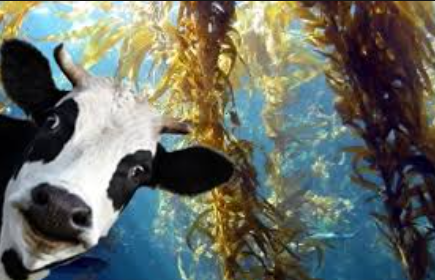
PHOTO Feeding cattle with seaweeds lessens greenhouse gas emission. Credit- Steemit.com
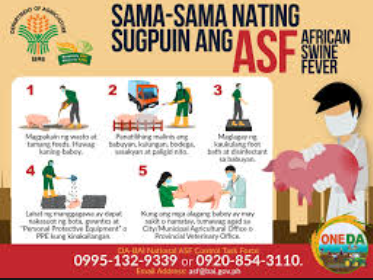
The Department of Agriculture (DA) has asked local government units (LGU) to supplement DA’s effort to curb African swine fever (ASF) and compelled them to declare a State of Calamity in order to access disaster program budget.
DA Undersecretary Deogracias Victor B. Savellano said DA and its attached Bureau of Animal Industry (BAI) is strengthening biosecurity measures amid a State of Calamity declaration in Nueva Vizcaya.
Dr. Arlene Vytiaco, BAI deputy director, said that under the NDRRMC (National Disaster Risk Reduction and Management Council) guidelines, provincial LGUs are compelled to declare a State of Calamity if more than two of their municipalities have an outbreak.
“This (declaring a State of Calamity) will allow them to access disaster funds to combat ASF,” said Vytiaco.
DA-BAI has already sent investigators, trained personnel and supplies to Nueva Vizcaya as soon as it declared a State of Calamity after its infected areas reached to nine municipalities.
Savellano urged LGUs to supplement DA’s limited budget for ASF control. As the deliberated budget of DA for vaccines for 2024 just amounts to P1.5 billion, LGU’s accessing its own funds will be a significant move to control the disease.
“Malaking bagay ang pag access ng LGU funds sa pakikipaglaban ng ASF. Sa amin sa DA, biosecurity war na ito. Ang laban namin ay sitio kada sitio, bara-barangay, muni- munisipyo at probi-probinsiya.’ Ngayong wala pang aprubadong bakuna, pag iingat na di kumalat ang ASF ang ating ginagawa,” said Savellano.
He also urged vaccine manufacturers to apply for commercialization with government.
“We call upon vaccines companies to register and undergo testing and trials for the local market with the proper authorities,” he said.
Savellano believes that as there is no approved vaccine yet, the P1.5 billion budget should also be made available for biosecurity efforts.
In coordination with enforcement authorities, it is putting in place checkpoints to monitor movement of diseased hogs.
There is also a need for a huge indemnification fund which will encourage hog raisers to report ASF as they will be compensated for reporting it.
Department of Agriculture Undersecretary Deogracias Victor B. Savellano files with Malacanang a position paper asserting that DA’s Bureau of Animal Industry (BAI) should have jurisdiction over animal vaccine (veterinary drugs, supplies) regulation. Food and Drug Administration (FDA) has jurisdiction over food safety regulation and even registration of veterinary drugs and vaccines. However, evaluation of such veterinary supplies is under the realm of DA-BAI as it has the human resource expertise and laboratories. This policy has become crucial with the escalating pestilence of animal diseases (African swine fever, avian flu) in livestock and poultry—needing expansive vaccination.
The Department of Agriculture (DA) will raise by five times in five years the local production of livestock and poultry which will be a Marcos legacy that reverses any record of excessive importation in order to benefit Filipino farmers.
As a marching order from President Ferdinand R. Marcos Jr, also DA secretary, government will pursue all means to raise livestock and poultry production to achieve food security, according to DA Agriculture Undersecretary Deogracias Victor B. Savellano. This will go along with raising farmers’ profit and lowering farm product prices while ensuring availability of sources of protein for consumers.
At the Poultry Forum 2023, Savellano said that as food security is national security, raising local agricultural production will be prioritized. It will be realized through a consultative approach to governance.
“Recommendations from various sectors of our agriculture is currently being heard and studied on what, where, and how government actions are to be applied to boost our poultry sector,” he said.
“We have started to meet with stakeholders to strategize a common direction and priorities in order to significantly increase our local food production, making it efficient, robust, and profitable for farmers.”
The same assurance of a consultative governance was given by Savellano during an earlier convention of the National Federation of Hog Farmers Inc.
“We will find ways to produce more to lessen importations. By consulting with livestock associations on how much each sector can produce, (we will know) the actual demand. It will be the consideration in determining the minimal quantity” of imports.
Importation in previous years has brought huge opportunity losses for the local poultry industry. DA aims to reverse these losses into gains.
Chicken meat importation has been consistently rising from 45.772 million kilos in 2008 to 67.264 million in 2009, 101.957 million in 2010, 127.227 million in 2011, and 411.069 million in 2022.
United Broilers and Raisers Association (UBRA) Chairman Gregorio San Diego said during the same poultry forum that direct impact of this importation is displaced local production totalling to a whopping P58.286 billion (299.366 million broilers).
Displaced too are 315.122 million day old broilers amounting to P9.138 billion and 2.52 million broiler breeders valued at P756.294 million. Lost sales from byproducts (head, feet, intestine, blood) totals to P5.987 billion.
Importation brings lost direct labor totalling to 31,512 at one caretaker per 10,000 broilers and lost jobs in feed milling, trucking, and dressing plants.
Lost feed sales totals to P4.877 billion. Lost feeds ingredient sales totals to P11.89 billion (corn); P8.154 billion (soya); P4.478 billion (coconut oil); and P1.132 billion (rice bran).
There is also opportunity loss for veterinary products (disinfectants, vaccines vitamins, antibiotics), P3.623 billion. Dressing plants have lost business of P2.993 billion.
In order to achieve the goal of raising local food production, these are among strategies DA will adopt:
Synergize (integrate operations of) National Meat Inspection Service, Bureau of Animal Industry, Philippine Carabao Center, National Dairy Authority, and National Livestock Program.
Include Livestock Group in Regional Field Office (RFO) regular meetings.
Merge livestock with feeds development. Work with the corn program, seaweed program, and other high value crops.
“We have to focus on feeds as we cannot grow livestock without it. We want RFO 4-A to transition its focus from sugarcane to corn,” said Savellano.
Rationalize the many committees of the Center for Trans-boundary Animal Diseases even as its new building is underutilized.
Appoint a focal person for all animal disease matters supported by the many units for livestock.
Boost biosecurity (First Border in all Entry Points) through a partnership with the Department of National Defense.
Enforce prohibitive policies on selling of questionable meats, vaccines and veterinary medicines through Lazada and Shopee.
Work with Agriculture Marketing Assistance Service (AMAS) on market development functions where the DA livestock group can focus on the supply side and share market surveillance functions.
Pursue memoranda of agreement (MOA) with Department of Interior and Local Government, Department of Agrarian Reform, and Department of Trade and Industry on various DA tasks handed over to other units and local government units (LGUs) during devolution.
“DA orders and circulars intended for LGUs should be covered by a MOA. An example is the (Philippine Animal Health Information System (PhilAHIS) which is manned by LGUs, although DA lacks a MOA with LGUs and DILG. Others are reporting vaccination, insemination and birth instances for livestock. Operation of slaughterhouses, cold storage monitoring and other facility reviews.
“DILG has agreed in principle, but we have to make our laundry list for the MOA,” said Savellano.
Lobby for access and increase in avail of low interest loan packages with Land Bank.
Fund improvements in the Philippine Agriculture Industry Management Information Service (PhilAIMIS).
Bat for an increased share of livestock in the Philippine Rural Development Program and other Foreign Funded Projects as its present share is too low compared to livestock and poultry’s contribution to gross domestic product (GDP).
Develop and fund a program for agro-industrial complexes for milk, feeds, cattle raising, among others.
Raise insurance coverage of the Philippine Crop Insurance Corp. PCIC refuses to cover formerly ASF (African swine fever)-afflicted area. When an area recovers, the more should PCIC cover hog raisers to encourage them to repopulate their farms
Strengthen an indemnification program for animals infected with diseases as no indemnification means no reporting.
“We must have an indemnification program where it will be attractive for farmers to report ASF or AI (avian flu) outbreak in their farms. Now, nobody is reporting. We need to fund this program,” said Savellano.
L-R Dr. Orlando Fernandez, Atty. Bong Inciong, Dr. Mike Banawa, DA Undersecretary Deogracias Victor Savellano, Dr. Benito Oliveros, Gregorio San Diego
A documentary “Amazing Bamboo” has been launched as part of jumpstarting a true “Pinoy industry” in the versatile bamboo as a raw material for “10,000 products with documented uses” even as bamboo grows ubiquitously throughout Philippines.
Authored by Department of Agriculture Undersecretary Deogracias Victor B. Savellano and former Department of Science and Technology Undersecretary Florentino O. Tesoro, Amazing Bamboo was launched September 18 as part of this month’s World Bamboo Day celebration.
Also co-author of the book is Ramon A. Razal, a former dean of the University of the Philippines Los Banos-College of Forestry and Natural Resources.
The book substantiates findings on how bamboo abates climate change and environmental threats. Bamboo is used for soil erosion control, water conservation and moisture retention, land rehabilitation, ecotourism, and landscape beautification.
Senator Cynthia A.Villar who graced the book’s launch said the United Nation’s Sustainable Development Goal recognized bamboo’s contribution to economic growth.
Its fast-growing nature makes it a sustainable and renewable material for many consumer and industrial products.
“Bamboo grows very fast and can be grown easily in different climate conditions and altitudes. It reduces the pressure on trees to produce timber for wood products,” said Villar.
“Bamboo regrows from its own root system. It doesn’t need to be planted again. It plays a leading role as carbon sink. It can absorb 12 metric tons of carbon dioxide per hectare per year and releases 30% more oxygen than other plants.”
Savellano stressed that Philippines must now aggressively pursue the development of bamboo as a true Pinoy industry considering its all-pervasive presence nationwide.
“We must develop the bamboo industry within the next five years of the administration of President (Ferdinand) Bongbong Marcos. If we cannot develop it now, I don’t think we’ll be able to do it any other time,” he said.
Savellano has spearheaded the Marcos Administration’s “Buong Bansa Magtanim (BBM) ng kawayan)” in pursuit of bamboo industrialization.
To prop this development, he insists bamboo bills filed in Congress—mainly Senate Bill 605 and House Bill 7941—should be immediately ratified. The proposed law provides incentives for private sector to invest in the industry. For one, government land may be used by private owners for free lease for five years. Other incentives are easy permitting or permit-free cutting and transportation of bamboo for as long as holders are duly government-registered.
The bills provide for a P100 million yearly budget for the operation of the future institutionalized Philippine Bamboo Industry Development Council (PBIDC).
The council was put up under Executive Order 879 which recognized in 2011-2012 the tremendous revenue potential from the global bamboo market. Such global value is now foreseen at $90 billion before the end of 2030 from the present $70 billion.
Asked during the book’s launch about the urgent passage of the Senate bill, Villar hinted this move may rather be pursued by her son, Senator Mark Villar. The younger Villar presided last August 9 over the Senate hearing on the bamboo bill.
PBIDC Executive Director Rene Madarang said that as government has not allocated any budget for PBIDC, it is good that the private sector has funded projects of PBIDC and Kilusang 5K. The 5K stands for Kawayan: Kalikasan, Kabuhayan, Kaunlaran, Kinabukasan) Foundation Inc. which Savellano himself founded when he was yet with the private sector.
“Amazing Bamboo” by Deogracias Victor B. Savellano, Ramon A. Razal, Florentino Tesoro
The pilot bamboo propagation project totalling 30 hectares in Puray and Karugo, Montalban is a multi-sectoral cooperation. It also involved Rotary International which funded it by at least P2 million. Other private funders of bamboo projects are Philippine Chamber of Commerce and Industry and Philippine Exporters Confederation Inc.
Madarang also recognized during the book launch Edgar Mariano, president of the Karugo Agri Farmers Association. The farmers operate within Montalban which is part of the Marikina Watershed where massive deforestation has been observed in the past years.
“If there was someone who planted the bamboo, there should be someone to look after it. We depend on the residents in the watershed to take care of what was planted,” said Madarang.
The book with its complete title “Amazing Bamboo: Rediscovering its Wonders and Potentials” teaches one how to grow bamboo in the farm.
It demonstrates bamboo’s everyday use in the life of the Filipino—including how it serves as the food “Labong.” It shows how bamboo supports industries and feeds factories with raw materials.
Finally, it updates the reader on how government leads the way into the industry’s development. The private sector has also been actively advocating the use of bamboo in many innovative and technology-driven products including engineered bamboo for construction, bamboo fiber for clothing, biomass for renewable energy, and many consumer goods.
During the launch, Villar noted her family’s own Villar Foundation established in 2005 a Bambusetum, a depository of bamboo genetic species meant for preservation. It keeps 70 varieties of bamboo species. It was also put up in order to assure a constant supply of bamboo planting materials for the Sagip-Ilog, a slope protection project along riverbanks.
Villar cited 28 other bamboo varieties are stored at the Ramsar-listed Las Pinas Paranaque Critical Habitat and Ecotourism Area.
Las Pinas City itself has its bamboo processing facility that generates jobs for skilled craftsmen.
“The bamboos are sourced outside of our city and are brought to our factory to undergo an 11-step process to become the very useful and aesthetically-pleasing bamboo steps which our company buys.”
Villar noted her hometown Las Pinas is known for the world-renowned bamboo organ and as “Parol Capital” which uses bamboo as raw material.
It is but apt that DTI identified bamboo as a priority industry. Bamboo is documented to have 10,000 uses, according to the International Fund for Agricultural Development.
PHOTO: “Amazing Bamboo” authors Agriculture Undersecretary Deogracias Victor B. Savellano (third from left) and former Science Undersecretary Florentino O. Tesoro (rightmost) are joined by Senator Cynthia Villar (fourth from left). Also in photo are PBIDC Executive Director Rene Madarang (Leftmost) and Trade Undersecretary Blesila Lantayona (second from left).
The Marcos Administration will carry out a capability building program for tobacco farmers on multiple cropping system that gives farmers alternative income amid health concerns raised against tobacco.
“We must seek ways to protect the livelihood of thousands of our tobacco farmers,” said Marcos through a speech delivered for him by Ilocos Norte Governor Matthew Joseph Manotoc during the First International Tobacco Agricultural Summit.
“I urge the Department of Agriculture (DA), and the NTA (National Tobacco administration) — together with the academe and the private sector — to explore other crops that can be grown alongside tobacco so as to contribute to our goal of food security.”
Marcos sees the need to introduce alternative sources of income for tobacco farmers considering intensifying health concerns raised against tobacco.
“These past years, we had seen so much change in our health policies that affected the tobacco industry. As such, we must seek ways to protect the livelihood of thousands of our tobacco farmers.”
Government is committed to safeguarding the livelihood of tobacco farmers, recognizing that it is a “vibrant catalyst for economic growth in the country” particularly in Mindanao and Northern Luzon.
In a separate farmers’ pre-tripartite conference in Vigan City, DA Undersecretary Deogracias Victor B. Savellano said DA and NTA will encourage farmers to similarly adopt a multiple cropping system.
Savellano said technical assistance will be extended to farmers so they may also plant rice, corn, sugarcane, vegetables, garlic, onion, and bamboo along with other high value crops.
Developing alternative livelihood for farmers, such as the planting of the versatile bamboo will enable farmers to no longer depend just on tobacco farming for income especially as health concerns confront the tobacco industry.
“Don’t forget my advocacy of planting bamboo which supports the daily needs of our farmers and fisherfolks. Bamboo plants are versatile and are used as trellis for vegetables, ‘katig’ for fishing boats, brace for fishpens,” said Savellano.
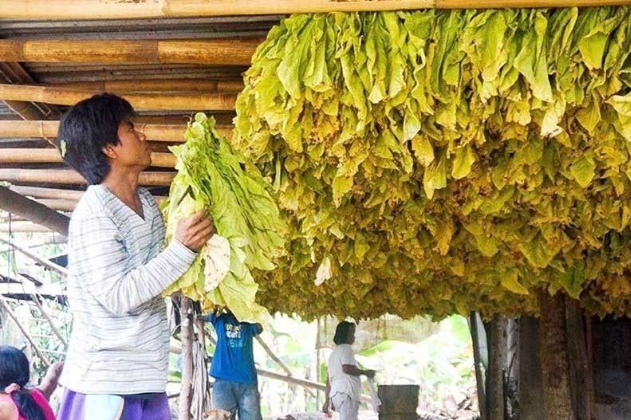
For one, bamboo is used as the device where cured tobacco leaves are hung.
Bamboo has 10,000 documented uses as wood, pulp and paper, and raw material in many industries.
Engaging in other businesses, such as livestock farming, will add a significant income for tobacco farmers.
“When purchasing power of farmers is high, they are able to contribute more to economic growth as they can increase consumption of Filipino-produced goods,” said Savellano.
The government is also implementing stricter regulations in ensuring illegal tobacco trade is curbed.
NTA Regulatory Head Robert Ambros said government’s revenue losses due to illicit tobacco trade is expected to exceed P30 billion by the end of the year.
The World Health Organization (WHO) reported that illegal tobacco trade involves products that are “untaxed and unregulated, with no health warnings, packaging or labeling requirements; which makes them cheaper, more readily available and accessible, especially to young and poor people.”
WHO said that eliminating illicit tobacco trade “will increase tobacco product prices, lower consumption, reduce premature deaths, and increase government revenues.”
DA-NTA has a coordinating mechanism with the Bureau of Internal Revenue and the Bureau of Customs in fighting illegal trade. End
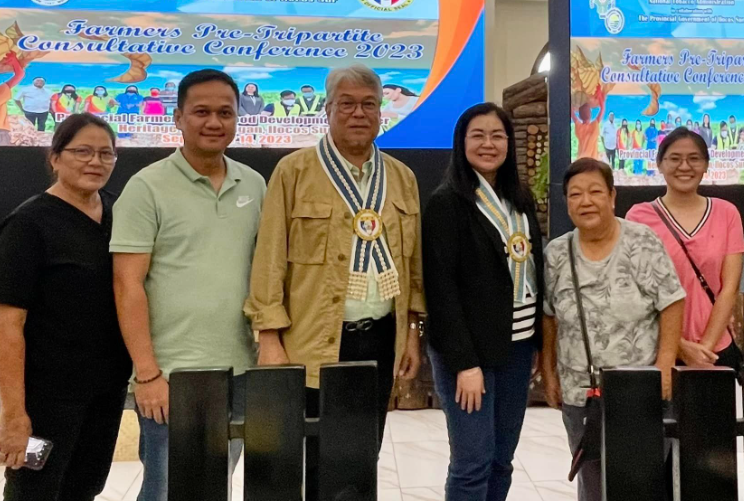
PHOTO DA Undersecretary Deogracias Victor B. Savellano (third from left) led a farmers’ consultative conference in Ilocos Sur
President Ferdinand R. Marcos Jr. has vowed to fight illicit tobacco trade that brings P30 billion in foregone revenue to government.
The Marcos Administration will also introduce a multiple cropping system that gives alternative income to farmers amid health concerns raised against tobacco.
In a speech delivered for him by Ilocos Norte Governor Matthew Joseph Manotoc during the First International Tobacco Agricultural Summit, Marcos said the government will not let up on tobacco smuggling which likewise to date this year P16 billion in foregone revenue to the government.
“We must seek ways to protect the livelihood of thousands of our tobacco farmers,” said the president
“I urge the Department of Agriculture (DA), and the NTA (National Tobacco administration) — together with the academe and the private sector — to explore other crops that can be grown alongside tobacco so as to contribute to our goal of food security.”
Marcos sees the need to introduce additional or alternative sources of income for tobacco farmers considering health concerns raised against tobacco.
“These past years, we had seen so much change in our health policies that affected the tobacco industry. As such, we must seek ways to protect the livelihood of thousands of our tobacco farmers.”
He recognized that the tobacco industry is a “vibrant catalyst for economic growth in the country” particularly in Mindanao and Northern Luzon.
In a separate farmers’ pre-tripartite conference in Vigan City, DA Undersecretary Deogracias Victor B. Savellano said DA and NTA will encourage farmers to adopt a multiple cropping system.
Savellano said technical assistance will be extended to farmers so they may also plant rice, corn, sugarcane, vegetables, garlic, onion, and bamboo along with other high value crops.
As part of the aim to raise farmers’ income, DA will carry out an intervention program for the industry.
There are six important things to take note of in improving the quality of tobacco, Savellano said. These are 1. Water 2. Fertilizers and pesticides as prescribed by agronomists 3. Good-quality fuel wood 4. Upgraded flue-curing barns 5. Greenhouses 6. A research and development program.
Tobacco leaves are hung for drying on bambo poles. Credit-Philstar
“Our main goal is to export our tobacco. That’s why we should produce high quality tobacco in order to be competitive in the world market and earn the dollar revenue we deserve,” said Savellano.
NTA Regulatory Head Robert Ambros said government’s revenue loss due to illicit tobacco trade is expected to exceed P30 billion by the end of the year.
The World Health Organization (WHO) reported that illegal tobacco trade involves products that are “untaxed and unregulated, with no health warnings, packaging or labeling requirements; which makes them cheaper, more readily available and accessible, especially to young and poor people.”
WHO said that eliminating illicit tobacco trade “will increase tobacco product prices, lower consumption, reduce premature deaths, and increase government revenues.”
DA-NTA has a coordinating mechanism with the Bureau of Internal Revenue and the Bureau of Customs in fighting illegal trade.
While critics hit tobacco’s role in the economy, Marcos noted that the tobacco industry
is a “significant source of tax revenues that are used to fund government programs.”
“It is an indispensable bedrock that generates income, livelihood, opportunities, and employment, particularly in areas where its cultivation spans generations and holds pivotal significance in the way of life of its communities,” said Marcos, also DA secretary.
The tobacco industry provides livelihood to 2.1 million people including more than 89,000 direct labor force in tobacco farming consisting of farmers, laborers, and helpers, according to Savellano.
These are the other significant contribution of the tobacco industry to the economy, Savellano said:
Tobacco collections are reinvested into tobacco producing regions via beneficiary local government units (LGUs). A total of P19 billion was released in 2020 from tobacco excise tax which LGUs use for their priority programs.
The tobacco industry is a key contributor to public sector revenues. Excise tax collection amounted to P 160 Billion in 2022. Tobacco comprises 54% of sin tax collection in 2022.
The tobacco industry is a foreign exchange generator and finances the government’s health programs. Export values rose by 46.3 % from 2018 to 2022. The tax revenue from tobacco products is reinvested in government’s universal healthcare program (UHP). A total of P74.48 billion has been earmarked for (UHP) in 2022 out of the tobacco excise tax collections.
High quality tobacco for export
DA-NTA will increase the quality of tobacco for export to make products more competitive for the export market.”
“We will create more employment . We will lower cost of production to increase the income of our farmers. We will facilitate partnerships between farmers and their buyers or with manufacturers that use their produce as inputs.”
LGUs will play a vital role in helping tobacco farmers improve their tobacco to make it of high quality for export. LGUs should partner with DA-NTA’s in introducing interventions to tobacco farmers.
“LGUs receive excise tax from the production of tobacco, so they should be proactive in partnering with DA and NTA in helping farmers improve productivity. Our goal is to raise our production and raise the quality of our products so we can up the dollar value of our export,” said Savellano.
Developing alternative livelihood for farmers, such as the planting of the versatile bamboo will enable farmers to no longer depend just on tobacco farming for income especially as health concerns confront the tobacco industry.
“Don’t forget my advocacy of planting bamboo which supports the daily needs of our farmers and fisherfolks. Bamboo plants are versatile and are used as trellis for vegetables, ‘katig’ for fishing boats, brace for fishpens,” said Savellano.
For one, bamboo is used as the device where cured tobacco leaves are hung.
Bamboo has 10,000 documented uses as wood, pulp and paper, and raw material in many industries.
DA-NTA will continue to engage in programs that will improve sustainability of the tobacco industry—both as a nature-friendly activity and as a constant source of livelihood for farm families.
“When I was a member of the House of Representatives, DA, NTA, and my office formulated the step (Sustainable Tobacco Enhancement Program),” said Savellano.
Engaging in other businesses, such as livestock farming, will add a significant income for tobacco farmers.
“When purchasing power of farmers is high, they are able to contribute more to economic growth They can increase consumption of goods,” said Savellano..
PHOTO DA Undersecretary Deogracias Victor B. Savellano (third from left) led a farmers’ consultative conference in Ilocos Sur
Tobacco leaves are hung for drying on bambo poles. Credit-Philstar
Senator Cynthia A. Villar (middle) led Monday the inauguration of the PBIDC Shared Service Facility (SSF) in Marikina City which will help boost Philippines’ vision to industrialize bamboo.
Shown is a display at the SSF of a Filipino-designed bicycle that uses bamboo.
Department of Agriculture Undersecretary Deogracias Victor B. Savellano (right) assisted Villar on a tour of the Philippine Bamboo Industry Development Council’s (PBIDC) SSF which is housed at the Center for Innovation and Technology for Enterprise (CITE) in Marikina City.
The SSF has training machines, equipment, function rooms, a dormitory for in-house training, and offices. The CITE also has a Bambusetum, a depository of bamboo genetic species. PBIDC-SSF offers training on bamboo propagule production and bamboo product processing. The global bamboo industry generates $70 billion in yearly revenue—growing to $100 billion before end-2030. (Melody Mendoza Aguiba)
The Department of Agriculture (DA) will put up a Livestock Animal Registry (LAR) as part of ensuring legitimate livestock farmers get the benefit from DA programs and in order to carry out repopulation amid diseases like the African swine fever (ASF) that brought farmers huge losses.
DA Undersecretary Deogracias Victor B. Savellano told the general assembly of the National Federation of Hog Farmers, Inc.(NATFED) that DA will partner with the private sector in establishing the LAR.
“This will identify how many and where are the different farm animals and to whom should the government give any form of subsidy from funds earmarked by the government.”
DA’s partnership with the private sector will also ensure accurate industry data. This will ensure industry leaders will be able to come up with best business decisions.
“Philippine Statistics Authority reports there are 10.2 Million Pigs. But in fact it could be just around 7.5-8 million if industry stakeholders said the industry lost around 40% from African Swine Fever from 2019,” Savellano said.
DA will also study ways to help livestock farmers cut costs of farm inputs – feed ingredients and livestock genetics (superior breed of piglets, calves, chicks). The aim is to ease farmers’ burden on these costs that represent the sizable 70% of producing meat, milk, and egg.
Indemnification system will further be improved to aid livestock owners who lost from ASF and other diseases.
Savellano said DA will also be transferring to farmers the technology that have long been developed in the country’s state universities and colleges (SUC). This may include vaccines and other modern farming systems and technologies that will be adopted in partnership with the Department of Science & Technology.
“The concern of neglect in our agriculture for decades (as aptly described by our (DA Secretary President BongBong Marcos) should be resolved. One of the solutions is to closely study particular farm inputs in livestock production,” said Savellano.
Tax reductions suited to the livestock sector will also be considred.
A statement released by the Department of Budget and Management indicated that out of the proposed P197.84 billion budget of DA, the National Livestock Program will get a share of P4.3 billion. Also, based on the proposed budget, P2.22 billion will be allotted for the Integrated National Swine Production Initiatives for Recovery and Expansion program (INSPIRE).
DA’s thrust is to repopulate hogs amidst the continuing threat of ASF. DA will ensure that the vaccine under trial will be proven safe and effective. The vaccine should follow all universally acceptable protocols.
These will be implemented by DA:
1. Promotion in the rural barangay levels of the propagation of different kinds of farm animals. Such operations should follow strict biosecurity practices. Genetic improvement will be introduced for profitability and sustainability.
“Government may help farmers in market identification for small farm holds, semi and commercial scale farms. It will give direction to livestock farmers on how they can reach their target market. DA will help them sell direct to retailers and end consumers in order to gain greater margin.
DA will curb all kinds of smuggling, hoarding and profiteering.
“We will find ways to produce more and lessen importations of pork and other food animal products. We will consult livestock stakeholders on how much each sector can locally produce. We will study the minimal quantity the private sector and government will import in order to stabilize consumer market prices and make animal protein source products affordable to consumers.”
The focus for the DA Livestock Group will 1) Produce more livestock and products locally in large volumes, (2) Balance local production with minimal importation (3 Ensure enticing profit margin for livestock farmers, creating more livelihood and jobs.
“Let us campaign for more production– cook more and eat more pork from 10.7- 11 kilos per capita consumption to about 14-15 kilos in the coming years towards BBM- Big Boost for Meat Production.”
The livestock industry has been pushing for a bigger budget considering that poultry and livestock contribute 30% of the entire agriculture revenue. In budget, it gets only around 3-4%.
Savellano committed to holding regular consulations with industry leaders “in order to hear directly from your end, where and how your government under the PBBM Administration can fully support the food security goal .”
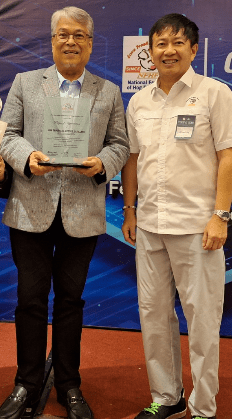
PHOTO: DA Undersecretary Deogracias Victor B. Savellano (Left) and Alfred Ng, National Federation of Hog Farmers vice chairman





 Growth Features