Telemedicine support platforms continue to expand as pandemic restrictions tighten, with women turning to the internet and social media to access reproductive health services.
In turn, Bayer Philippines’ ‘Ask Mara’ chatbot on Facebook has expanded its features to include access to teleconsultation services.
The Facebook chatbot can now also help one locate nearby Mercury Drug, Watsons, Southstar and Rose Pharmacy drugstores, or get more information soon on topics like androgen excess and endometriosis.
Ask Mara Facebook chatbot offers help for any questions on Family Planning and Reproductive Health
In an exclusive online event entitled “The PILLipina Choice: Your voice for your empowered choice” held September 18, 2021, leading womens health advocates and influencers looked back on the history of the contraceptive pill and reaffirmed the importance of giving Filipinas safe and easy access to the right information and support to make informed reproductive health choices.
“It’s great that Ask Mara is there as a friendly resource for Filipinas who want on-demand advice about contraception and reproductive health. It’s accessible, expert-driven, and most importantly—non-judgmental,” said Jillian Gatcheco, former Editor-in-Chief of Cosmopolitan Philippines and a supporter of reproductive rights.
“With our current limited access to professional advice, Mara gives us real power through reliable information” said Inka Magnaye, voice talent and host behind popular podcast series Sleeping Pill with Inka.
“Ask Mara can help me get in touch with a doctor, locate the nearest drugstore, and even send me reminders. She gives us options, provides reliable information, and just enables us to make an informed choice.”
“Mara is really your go-to-girl for relevant health choices and now she makes it easier for us to access our partner experts” said Dr. Marie Michelle Dado, a Fellow of the Philippine Obstetrical and Gynecological Society.
Ask Mara daily pill reminder available via Facebook
“In this pandemic where it can be difficult to get in touch with doctors and find options for contraceptive and reproductive health, these new features help take some of the worry out for women and let us focus on ourselves, on work and our family.”
Digital avenues needed for womens health
At the start of the pandemic last year, family planning services were reduced by over 50% in March and government-run reproductive clinics operated with limited staff due to lockdown measures.
To open up new lines to access to these services, the Commission on Population and Development (POPCOM) also set up hotlines for remote medical consultations and door-to-door delivery of birth control supplies.
“While we have since built up systems for women to gain access to health services through a variety of channels”, said USec. Juan Antonio Perez III, POPCOM’s Executive Director, “we need innovative solutions from both private and public sectors that champion women’s reproductive health choices and empower women to make informed choices.”
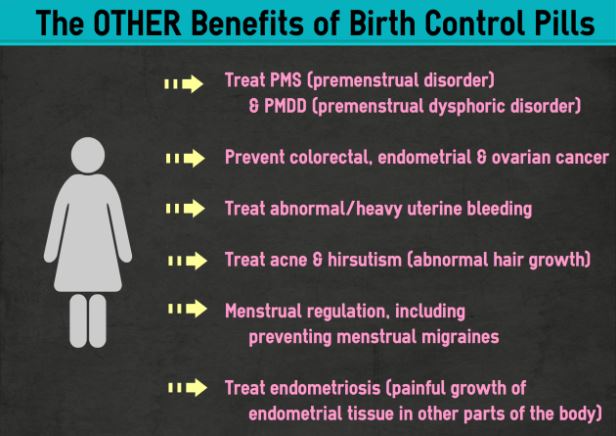
Benefits of pills. Credit: Birth Control Pharmacist
On top of the new features, the ‘Ask Mara’ chatbot provides information on the different contraceptive options available, both natural and modern methods. Mara shares the usage, pros and cons of contraceptive pills, condoms and intrauterine devices among others.
She also responds to frequently asked questions and includes a pill reminder feature to help those who are just getting started. To start chatting, just message Ask Mara on the Facebook Messenger app or visit https://www.facebook.com/AskMaraPH/
The Covid 19 pandemic is accelerating digitalization of the marketplace, propping up e-commerce sales of Filipino-founded Go Shopping Philippines(GSP)which foresees a sustained boom in cashless transactions.
Boasting of branding differentiation and protection from online shopping, GSP Mall has easily joined the league in successful online transactions among now famous online companies due to the pandemic Covid 19.
“The pandemic has drastically hastened the use of online shopping among residents of Metro Manila and nationwide. People can no longer do the normal transaction on the malls for fear of Covid 19 and the new variant delta,” GSP Chief Executive Officer Neil Garcia La-as in an interview with a broadcast firm.
“With the imposition of lockdowns, it’s inevitable people can’t go out. This paved the way for online e-commerce to blossom like mushroom. This is an industry that has a great future.”
Neil GArcia La-as, GSP Mall chief executive officer
With such phenomenal growth the digital mall has been experiencing in one year or so, it will take just a matter time before GSP Mall franchises out to neighboring Southeast Asian countries.
“Partnering with GEP solutions, a developer based in Singapore, is an advantage for a localized company like ours because they have been 26 years in the business,” La-as said.
Big brands with the traditional brick and mortar stores can no longer ignore opportunities that have emerged in digital transactions.
That compels them to put up venues for people to buy their products online. And GSP Mall comes out as a preferred consumer outlet with the ecosystem it is building that offers solution to every need.
“As a previous leasing manager of the one of the major mall operators in the Philippines, I have seen drastic change of brick and mortar stores in presentation of their products. There’s no way they can’t be present online as it naturally bccomes a support to sustaining sales momentum,” he said.
“Visibility is the name of the game.”
While the pandemic has brought consumers the convenience of shopping while at home, it has also caused proliferation of low quality and fake items available online.
But GSP Mall commits to give consumers the digital lifestyle they deserve. It scrutinizes legitimacy of merchants and the quality of products or service they offer.
It makes sure products like cosmetics and skin care produts are FDA (Food and Drug Administration)-registered.
“We have a self regulatory body to make sure the kind of merchants we choose is the kind of concept we want to offer to Go Shopping community.We started a bit slower because our game plan is not really to massively allow a lot merchants to be on board for as long as I don’t have enough manpower to scrutinize them all one by one, he said.”
“We’re very slow, but very consistent. We target 1,000 merchants to be on-boarded by the end of the year. We have a timeline so we can secure inventory before the ‘ber’ (September to December) months take off. We are alluring all of them to be with us these coming months.”
Go Shopping Philippines has already made a distinction for itself as it is not just a retail e-commerce site.
It is an entire community, an ecosystem.
“We aggregate other apps to exist with us. We try to synergize with other e commerce platform like Metrodeal and Tourism Ph, restaurant bookings. We move beyond what’s currently the status of e commerce platforms.”
GSP will provide its consumers its own Go TV under which it will produce its our own shows and news and current affairs program. It will offer its Gflix or online movie offerings. It will , we have its own Cineplex to showcase online cinemas on a pay per view feature.
To top it all, it will have a foreign exchange venue.
“It’s a huge ecosystem where anybody can converge and do business with us.”
GSP is targeting a revenue of P500 million by the fiscal year 2021-2022. Its revenue comes from percentage of sales from merchants from different product categories.
About GSP Mall
GSP Mall will be a big virtual mall where practically all one needs can be delivered via what is called Smart Logistics.
Through an easy access from the GSP app from one’s smartphone, one can have his desired product delivered at his doorstep via GSP’s Smart Logistics. The logistics systems aggregate third party couriers with warehouse and delivery services.
GSP’s strategically located warehouses make sure a product from within the country or overseas is tracked and delivered as expected.
GSP has an ERP (Enterprise Resource Planning) system that automates business processes including warehousing and logistics.
Technology will be a tool through which anyone is protected, assuring anyone that his well-earned money is well-returned with the added perks. It should create full satisfaction from the digital lifestyle.
Digital also now operates under Artificial Intelligence advancements. GSP Mall’s Analytics Program enables GSP and its merchants to systematically sell goods based on data, statistics, and market demographics.
GSP Mall offers Filipino products
A fraud detection system, on top of firewalls, secures GSP Mall’s transactions.
And double protection security systems ensure that when cyber-attacks are attempted against the system, at the worst case scenario, only a portion, not the entire ecosystem, can be affected. That is given the self-locking capability of the digital mall systems’ various components.
On top of supermarket products, food and beverage, fruits and vegetables, apparel, fashion accessories, and jewelry, the GSP Mall offers practically everything—appliances, furniture, home furnishings, most department store products.
The GSP Mall app makes purchasing fast and friendly. Registration is easy through Facebook or email.
To keep one protected, a verification system is required to make sure the real person is the one who really makes the transaction. That is done as a user is asked to take a selfie of himself and also send a copy of his legitimate ID card.
Medical, dental, and veterinary services, architectural and interior design, carpentry, and upholstery services, sewing and embroidery can all be easily arranged from the mobile phone.
As GSP promises to give what once can only be imagined, the features of the mega GSP Mall are all-encompassing — leaving one without anything to ask for even in the middle of pandemic’s lockdowns.
These services, though, will be offered one after the other, one phase at a time.
The GFlix offers on-demand movie — both local and international films — now possible for viewing via one’s mobile phone. GO LIVE is a livestreaming platform for conferences, trade exhibitions, and events.
GSP Mall, your go-to digital mall for all
GO CINEPLEX is a 3D virtual cinema that has multiple halls, secured online ticketing system, and high-quality audio and video setup. It is enabling feelings of warmth among people commonly watching theatre shows and live presentations, virtual nevertheless. Fashion shows and sports activities can now all be viewed at the flick of a finger.
With the first mega digital mall in the Philippines will be its own GoTV. It will be airing 24/7 to entertain users any hour of the day, or night. It will air select television programs accessible anywhere through one’s own mobile phone. (Melody Mendoza Aguiba)
An Israeli technology provider is seeing market growth in automated optical distribution frames (AODF) as investment in telecommunication soars particularly for advanced technologies useful in floods and natural disasters in the post Covid 19 scenario.
As government and private investors bounce back to pouring investments in infrastructure for connectivity that is much needed today and, in the post Covid 19 situation, Israeli Teliswitch sees tremendously bright prospects for its AODF technology.
Now more than ever, the need for internet connectivity in offices and residences is surging arising from the Work from Home (WFH) mode that has since prevailed due to the Covid 19 pandemic.
As floods and natural disasters further highlight the Covid 19 condition, Teliswitch sees huge opportunity to provide telecommunication and data center operating companies a resilient AODF technology.
AODF is an important support equipment in cable interconnections for the optical transmission system as part of the communication networks critical in long distance trunk lines and network relay transmission.
“Our new Network Service Recovery solution allows optical network operators to switch automatically to alternate, predefined fiber links in case of fiberoptic cable failure caused by natural disaster or human-made damage,” according to Teliswitch.
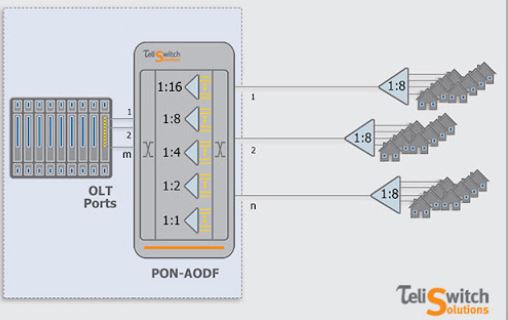
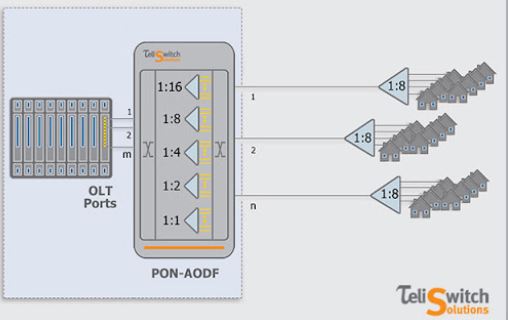
Multi-operator automatic optical switch
Fiber optic cables are the backbone of network infrastructure today.
In case of partial or complete damage to a cable arising from man-made or natural calamities like typhoons typical in a typhoon belt as the Philippines, large parts of the network are disconnected.
It may take weeks or even months to renew the service to the damaged areas.
TeliSwitch’s solution enables quick and automatic connection to alternate or backup cables– employing its Automatic Optical Distribution Frame (AODF) to make the connection on real time.
Its technology’s advantage is fast– effectively zero- time lag on the part of users — and automatic repair of damages.
“There is no time lag in term of user connection because the subscribers will not even notice something went wrong somewhere because the switching from one broken or defective line to another is automatic.”
Robotics is making a difference in seamless user connectivity. No human presence is needed at the site.
The company’s AODF is a cost-effective, all-optical switch, using a single switching robot and advanced image recognition.
The AODF is operated remotely and can withstand harsh weather conditions, thus assuring the connection is made even when there is no physical access to the AODF.
With the new release, users can now use the Elements Management Software (EMS) to monitor and manage complex, end to end interconnection scenarios that can be executed automatically once the system detects fiber link failure.
“TeliSwitch’s opto-mechatronics design keeps our AODF link connections alive, even during power loss events or system maintenance. The AODF solution includes an SW-based element manager system for a real-time, holistic view of the fiber optic networks’ physical layer.”
Part of the effort to prepare for expected climate change damages to the communication networks, optical networks have to be automated at the physical layer, according to TeliSwitch Chief Executive Officer Rafi Benatar.
Automatic Feature Recognition (AFR), an essential tool in automating computer systems, should be implemented to provide quick recovery from natural disasters.
Teliswitch is the leading vendor of Automated Optical Distribution Frames for fiberoptic network connectivity.
Its Elements Management Software (EMS) provides remote and central management.
The company’s systems are deployed successfully by telecommunication operators around the world.
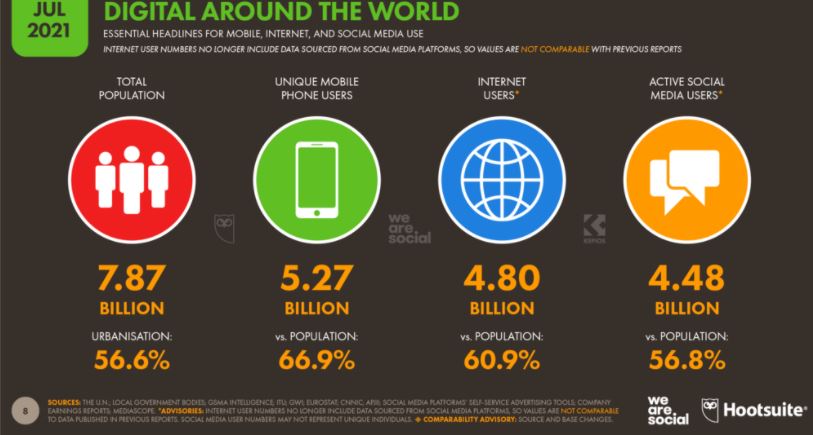
As Covid 19 has intensified the global need for connectivity, the International Telecommunication Union (ITU) foresees continuing growth of the telecommunication industry as 49% of the world does not use the internet.
“The network coverage gap is even larger at 83.9 per cent of the world’s population is not covered by 5G. A large portion of the rural population remains unserved by broadband networks: 29 per cent of the world’s rural population is not served by 4G networks.”
Digital Around the World. Credit-Datareportal
The provision of state-of-the-art network and data Solutions are increasingly effected to adeptly build and better manage telecoms and Data Center fiber optic infrastructures in order to attain utmost efficiency while bridging the present gaps in network deployment. (Melody Mendoza Aguiba)
Six youth leaders from the Philippines are joining 100 delegates from more than 44 different countries in Bayer’s 2021 virtual Youth Ag Summit this November.
The global forum and biennially organized conference selected young leaders between the ages of 18 and 25 with a passion for sustainable global agriculture for the opportunity to learn and collaborate with others on solutions to issues challenging food security.
This year’s delegates come from more than 2,000 applicants representing nearly 100 countries.
“This is a very important project of Bayer to really highlight the United Nations Sustainable Goals, particularly that of feeding a hungry planet. It’s also for us to empower the next generation, giving them a forum and chance to meet like-minded peers not just in the Philippines but across the world” said Iiinas Ivan Lao, Country Commercial Lead of Bayer CropScience Philippines.
To be selected, this year’s delegates presented project ideas and examples of previous advocacy work based on the summit’s overall theme “Feeding a Hungry Planet”.
The six delegates from the Philippines come from provinces around the country and are students in national and private universities.
Delegates to the 22 Youth Ag Summit together with Bayer officials
They are Grand Cayona Gascon (University of the Philippines Visayas), Remigio Mujar Lozano Jr. (University of the Philippines os Banos), Tracey Chua Tedoco (University of St. La Salle), Christian King Lagueras Condez (Ateneo de Manila University), Mark Virgil Casimo Jamer (University of the Philippines Los Banos) and Thoreenz Panes Soldevilla (University of the Philippines Diliman).
“The Youth Ag Summit has always been a great opportunity for me to connect with the next generation of Ag leaders. These young people provide the passion needed to make a real difference in tackling food security challenges,” said Liam Condon, member of the Board of Management of Bayer AG and president of the Crop Science Division.
“By supporting and nurturing these future leaders, we aid them in what we hope is a lifelong journey of learning and action for a more sustainable food system.”
This year’s 5th biennial Youth Ag Summit will be the company’s first virtual YAS event and its first with a virtual idea incubator called YAS University.
Within the YAS University program, delegates will continue to develop their business and communications skills, receive coaching from mentors, and complete weekly assignments that help them hone their own project concepts for 10 weeks following the summit, beginning in January 2022.
At the end of YAS University, the delegates will have the opportunity to pitch their project ideas to a panel of experts to compete for prizes.
Bayer’s partnerships for this year’s forum with the UN Sustainable Development Solutions Network (SDSN) and the tech company Babele make the unique experience of YAS University possible. Delegates will work with the UN SDSN and Balbele on a 10-week Youth Ag Summit (YAS) University program following the forum with mentoring from industry leaders, farmers, and YAS alumni.
For more on the Youth Ag Summit 2021 and see a full list of selected delegates, please visit www.youthagsummit.com and follow #AgvocatesWithoutBorders on Twitter and Youth Ag Summit (@youthagsummit) on the YAS Instagram channel. End
About the Youth Ag Summit
The Youth Ag Summit movement is a community of global young leaders championing sustainable agriculture and food security and working to bridge the understanding gap between those who produce our food and those who consume it. Every two years, 100 delegates are chosen to take part in the Summit. Previous editions have been hosted in Canada, Australia, Belgium and Brazil. Due to COVID restrictions, this year’s summit is the first completely virtual event.
About the UN Sustainable Development Solutions Network (SDSN)
The UN Sustainable Development Solutions Network (SDSN) was set up in 2012 under the auspices of the UN Secretary-General. SDSN mobilizes global scientific and technological expertise to promote practical solutions for sustainable development, including the implementation of the Sustainable Development Goals (SDGs) and the Paris Climate Agreement. For more information, visit www.unsdsn.org.
The recent government approval for the commercial cultivation of Golden Rice (GR) is a most welcome, long-awaited development for the science community, according to National Scientist Emil Q. Javier and Institute of Plant Breeding founder.
GR is a new unique variety of rice specially bred that contains beta carotene, the precursor of vitamin A, an essential nutrient which humans cannot synthesize on their own, and therefore cannot live without.
This rice variety is first of its kind in the scientific world because the genes for beta carotene bred into Golden Rice were obtained by genetic engineering. The beta carotene genes come from a genetically distant edible relative, yellow corn.
“We had been long waiting for Golden Rice’s regulatory clearance,” according to Dr. Nina Gloriani, former dean of the College of Public Health, UP Manila.
The permit to cultivate Golden Rice was finally granted by the Bureau of Plant Industry after the proponent, the Philippine Rice Research Institute (PhilRice), complied with the lengthy, rigorous food safety and environment regulatory requirements.
This rigorous regulation was prescribed by the Joint Department Circular issued by Department of Science and Technology (DOST), Department of Agriculture (DA), Department of Environment and Natural Resources (DENR),Department of Health (DOH), and Department of Interior and Local Government (DILG).
Lack of vitamin A predisposes people, especially children, to increased risk to respiratory diseases, diarrhea, measles, night blindness, and can lead to death. Vitamin A deficiency (VAD) continues to be a major nutrition and public health concern in low- and middle-income countries, including the Philippines.
It affects some 190 million children under five years of age worldwide.
Further, Dr. Gloriani called out that the Philippines had been remarkably successful in combating VAD in recent years.
Between 2003 and 2008, we have brought down VAD prevalence among children from 40% down to 17% (DOST-FNRI, 2021). However, among the poorest fifth of Filipino children, VAD prevalence remains unacceptably high at 26%.
Moreover, these deficiency numbers have not changed between 2008 and 2018. And therefore, a lot remains yet to be done.
According to the 2019 national nutrition survey by the Food and Nutrition Research Institute (FNRI-DOST), only two out of 10 Filipino households meet the estimated average equivalent for Vitamin A.
Partial relief could be provided by Golden Rice.
Laboratory and human feeding trials suggest that one cup of cooked Golden Rice can provide 30–42% of Vitamin A estimated average equivalent for pre-school children.
Since the beta carotene is naturally embedded in the GR grain, the needed essential nutrient comes at no additional cost and effort to the consumer, a significant benefit to poor households.
Dr. Eufemio T. Rasco, Jr., chairman of the Agriculture Sciences Division of the National Academy of Science and Technology, said the development of Golden Rice took very long (over 20 years) because the beta carotene genes from yellow corn had to be meticulously transferred into popular rice varieties acceptable to farmers.
Otherwise, the farmers will not plant them. The new Golden Rice varieties must have high yield, resistant to pests and diseases, suited to a wide range of growing conditions and with superior eating quality.
The conversion of regular rice varieties into Golden Rice involved conventional plant breeding methods spanning over many crop generations and years.
Unlike the regular white well-milled rice, the grains of Golden Rice are translucent golden yellow in color.
When cooked, Golden Rice looks very much like the saffron-colored rice in the Spanish paella, a dish many Filipino chefs have adopted as very much part of the Filipino cuisine.
Initially, according to rice specialist, Dr. Reynante Ordonio, PhilRice will promote cultivation of Golden Rice versions of two registered varieties — PSBRc 82 and NSICRc 283.
As the Golden Rice beta carotene genes are regularly incorporated in national rice breeding programs, more Golden Rice inbreds and hybrids are expected to be released in the future not only in the Philippines but also in parts of Asia, Africa, and Latin America where VAD is rife and where rice is the major staple.
Finally, National Scientist Javier clarified that all along Golden Rice had been intended by its inventors as an additional option. It should not be a substitute for existing VAD-elimination programs. But it should be a complement to diet diversification, breast feeding, vitamin A supplementation and artificial food fortification of flours, cooking oil, sugar, dairy and other products.
With Golden Rice, a naturally bio-fortified no-additional-cost option now available to consumers, a multipronged long-term sustainable solution to the scourge of vitamin a deficiency in many parts of the developing world is in sight.
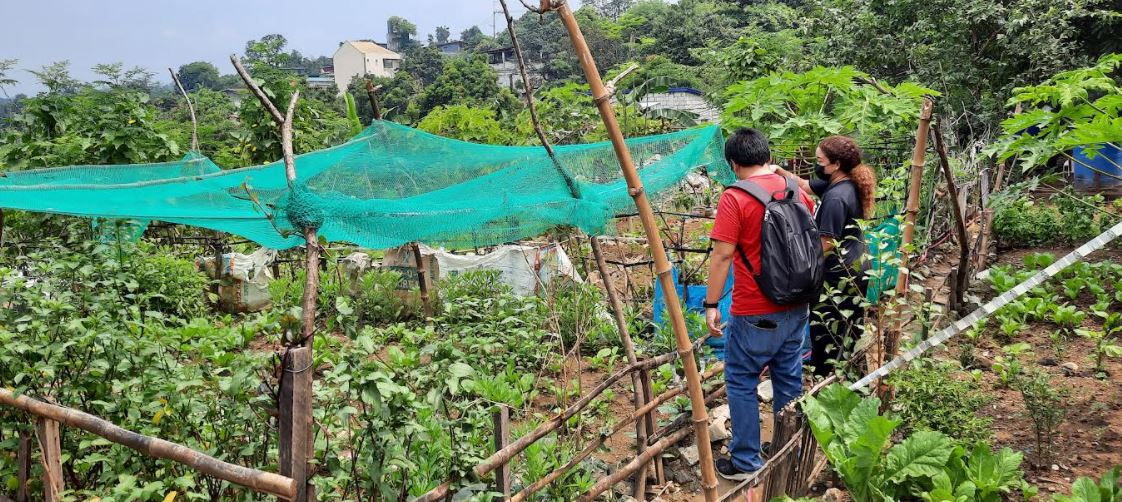
PRESS RELEASE Urban farm within Payatas dumpsite, QC to promote vegetable consumption, jobs creation, food security
July 28, 2021
An 800-square meter urban farm will be set up in Payatas, Quezon City by Bayer with an aim to promote vegetable consumption and help in food security.
The Bayer Kubo project is in partnership with Rise Against Hunger Philippines, AGREA Foundation, and Puso ng Ama Foundation, a grassroots-based organization that extends social aid to impoverished communities.
For the intended farm area, there have been efforts from residents to grow vegetables there. However, it remains underdeveloped as they lack the knowledge and experience to get good yields and sustain production.
“We’ve started engaging with volunteer community members in Payatas whom we intend to train on ideal farming practices,” said Bryan Rivera, head of communications and public affairs for Bayer Philippines. “Beyond growing food, the training will also include financial literacy and basic business skills to help them sustain the farm long term.”
Bayer trains housewives, the jobless, former scavengers in Payatas dumpsite on ideal farming practices
In its global sustainability targets, Bayer has a goal of reaching out to 100 million smallholder farmers to support their livelihood by 2030. While urban farming is a small fraction from this aspiration, the Bayer Kubo project in Payatas will be Bayer’s third urban farm and it expects to develop more urban communities into food and income-generating venues. Bayer’s other projects are in Taguig City and Calauan, Laguna.
To be grown in Payatas are “pinakbet” vegetables, including ampalaya, eggplant, okra, squash, and sitao (string beans). The popular dish, originated in Ilocos region, is nutrient-dense with its variety of healthy ingredients.
Bayer reinforced its commitment to increasing fruit and vegetable consumption in a recent announcement of new portfolio innovations and a business strategy for horticulture. The strategy focuses on activities that deliver tailored solutions to the farm, advance sustainable innovations on the farm and address value chain and consumer needs beyond the farm.
“Only a fraction of the global population comes close to consuming the daily recommended serving of fruits and vegetables,” said Inci Dannenberg, head of global vegetable seeds at Bayer.
“In the UN’s International Year of Fruits and Vegetables, Bayer is doubling down on its approach to enabling growers and partners to address the barriers to improving fruit and vegetable consumption in order to achieve Health for All, Hunger for None.”
The horticulture strategy is underpinned by Bayer’s leading genetics, crop protection and digital capabilities, which provide growers with the tools they need for smarter, on-farm decision making, and consumers with the quality and nutrition they need to promote a healthy lifestyle.
Bayer will improve the present urban farm in Payatas with its expert horticulturists
Most recently, the company announced its membership in the Sustainability Initiative for Fruits and Vegetables (SIFAV), alongside other produce industry leaders. SIFAV is a cross-industry platform dedicated to scaling up collaboration and reducing the environmental footprint of fresh food. (Melody Mendoza Aguiba)
A second treatment storage disposal (TSD) facility for electronic wastes will be put up by the government in Brgy. Dampalit, Malabon City as part of its commitment to the Stockholm convention on Persistent Organic Pollutants (POPs) to control these health and environment-hazard materials.
The TSD facility in Malabon will be supplementing the handling of electronic (E) wastes that is now being done in Bagong Silang, Caloocan City.
The two will be the only Materials Recovery Facility upgraded to TSD facilities in the Philippines that have the capability and permit to treat electronic (e) waste.
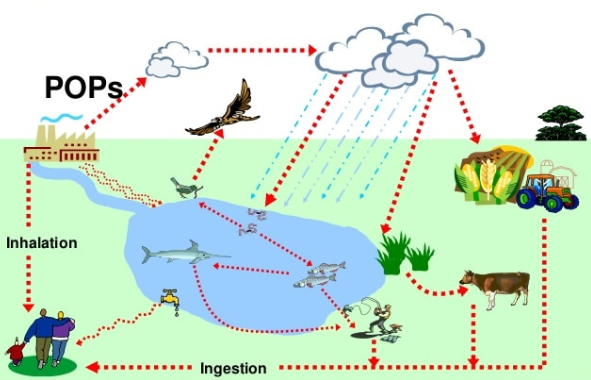
Electronic wastes– also called waste from electric and electronic equipment (WEEE)– such as used computers, television (TV) sets, refrigerators, and cell phones were found to contain toxic metals such as lead, cadmium, mercury and hexavalent chromium.
Also included in the waste group are persistent organic pollutants (POP) flame retardants like polybrominated diphenyl ethers (PBDE) found in plastic casings.
The Department of Environment and Natural Resources (DENR) and the Environmental Management Bureau (EMB) held last June 29 a ceremonial signing for the upgrading of the existing MRF to a TSD facility in Malabon City.
ABCs of Waste Management. Credit- Albion Environmental
The agreement was signed with UNIDO ((United Nations Industrial Development Organization), Malabon City Local Government Unit, and the Integrated Recycling Industries Inc. (IRI), a Laguna-based company specializing in the reclamation and recycling of useful materials from WEEE, EcoWaste Coalition, DENR-EMB and Globe Telecom, Inc.
UNIDO is the implementing agency of the project entitled “Implementation of PCB Management Programs for Electric Cooperatives and Safe e-wastes Management” funded by the Global Environment Facility (GEF) .
DENR-EMB recognized the role of the informal sector in the proper handling and disposal of WEEE.
Globe Telecom Inc. will also provide co-financing for the operations of the MRF/TSD facility.
“With the upgrading of the MRF (material recovery facility) of Bagong Silang, Caloocan City to a TSD facility for e-wastes, members of the informal sector had been employed in the TSD facility for e-wastes,” said EMB Director William P. Cunado.
The DENR trains its informal sector-partners on proper dismantling of e-waste and proper management of residuals.
As such, exposure to human and environment is controlled as these waste are have been linked with cancer, damage in human nervous system, liver, and reproductive system, and other health ills.
The UNIDO-supported project’s target is to collect at least 50,000 cathode ray tubes (CRTs) (which generate POP polybrominated diphenyl ethers) from televisions or computers. At least 26,000 CRTs has been collected as of May 31, 2021.
There is also a target to treat 600 metric tons of PCB (polychlorinated biphenyls) oil and PCB contaminated equipment from at least 23 Electric Cooperatives nationwide.
“The CRTs are coming from households collected by the informal sector (i.e. Samahan ng Mangangalakal and EcoWaste Coalition,” according to an EMB report.
Collected e-wastes are transferred for proper dismantling and recycling at IRI’s Laguna facility.
Recognized for such proper e-waste dismantling and disposal are the leaders of Barangay Bagong Silang and Camarin, Caloocan City; Barangay Longos, Malabon; Barangay Capulong, Tondo; and Bagong Silang Junkshop.
During the ceremonial signing, DENR-EMB also recognized electric cooperatives that agreed to ensure WEEE are properly disposed, treated, and recycled.
How do pollutants get into the environment? Credit- Green and growing
These are Central Pangasinan Electric Cooperative (CENPELCO),Tarlac Cooperative INc. (TARELCO), La Union Electric Cooperative (LUELCO), Pangasinan Electric Cooperative (PANELCO), Pampanga Electric Cooperative (PELCO), Ilocos Sur Electric Cooperative, Camarines NOrte Electric Cooperative (CANORECO), MERALCO, and National Grid Corp. of the Philippines (NGCP).
Eight cooperatives from Regions Regions 1, 3 and 5 have already signed contracts with NRDC for the disposal of waste to the TSD facility. (Melody Mendoza Aguiba)
PHOTO How do pollutants get into the environment? Credit- Green and growing
About 460,000 Filipino farming families have gained economically from adopting genetically modified (GM) corn as the area planted with this crop has reached around 835,000 hectares in the country since its first regulatory approval in 2002.
Based on a recent study entitled “Economic Assessment of GM Corn Use in the Philippines”, the total factor productivity growth in the corn industry was estimated to be 11.45% higher due to GM corn adoption.
In addition, it mentioned that “not only was the gain positive for all household income deciles, it was also inclusive: lower household income deciles benefit from the GM technology more than richer households.”
The study, authored by Flor Alvarez, Abraham Manalo, and Ramon Clarete, was published in the International Journal of Food Science and Agriculture.
Its intention was to gauge the economic impact of GM corn over the last 17 years across the country and segmenting into low to high household income.
“Total welfare gain from adopting GM corn as measured by the equivalent variation of income reached $189.4 million or nearly a tenth of a percent of total household income,” said Alvarez, Manalo and Clarete.
Clean, genetically modified, pest resistant corn. Credit-GLC
Farmers took advantage of higher income from increased yield from GM corn. From corn’s national average yield of only 3 metric tons per hectare, potential yield from GM corn use can attain double or triple this output.
Current technologies in the market include Bacillus thuringiensis (Bt) corn, which provides built-in resistance against the Asiatic corn borer, one of the most prevalent and destructive insect pests in the Philippines.
There have been other insect-resistant traits introduced to farmers after these have been thoroughly evaluated and approved by the government using its existing regulatory guidelines on biosafety.
In addition to insect resistance, herbicide tolerant traits help farmers to conveniently manage weeds that impact corn yields. This technology protects the corn from damage when using glyphosate-based herbicides and promotes minimum tillage, which helps the environment by preventing soil erosion and degradation.
“We support the livelihood of Filipino farmers through introduction of modern technologies that can help them improve their yields and profits,” said Edilberto de Luna, Executive Director of CropLife Philippines.
“Through established government biosafety regulations that assess the safety & benefits of GM corn traits to human and animal health, and to the environment, both farmers and consumers gain from these innovations for our country’s food security and resiliency drive.”
As of October 2020, the Bureau of Plant Industry of the Department of Agriculture has approved 42 GM events in corn. Thirty of these approvals are for direct use as food, feed, or for processing, while twelve are for commercial planting.
The top corn-producing regions in the Philippines are Cagayan Valley, Socksargen, Northern Mindanao, ARMM, and Ilocos Region. The country’s total corn production increased from 4.5 million metric tons (MT) in 2000 to 8 million MT in 2019.
GM corn also enabled the Philippines to export corn silage as the disease-resistant corn plants remain free from holes from pest infestation.
CropLife Philippines is an association of companies that help improve the productivity of Filipino farmers and contribute to Philippine food security in a sustainable way. It belongs to a global and regional network of national associations and member-companies representing the plant science industry.
CropLife supports innovation, research and development in agriculture through the use of biology, chemistry, biotechnology, plant breeding, other techniques and disciplines. It promotes the benefits and responsible use of products of the plant science industry such as crop protection and modern agricultural biotechnology—all under a sound regulatory framework. (Melody Mendoza Aguiba)
Three hybrid corn varieties of Bayer led by DEKALB 9118S topped a corn competition in Asturias, Cebu with a computed yield of 8.3 metric tons per hectare (MT/ha) and are seen to uplift farmers’ lives in Cebu’s biggest corn-producing town.
Developed to have good resistance against tough corn diseases, particularly foliar disease, banded leaf sheath blight (BLSB), and stalk rot disease, DEKALB 9118S seized the highest net income standing from the local government-organized corn derby in Asturias. On return on investment, it was pegged at 84.7% showing a net income of more than P45,000 per hectare.
The corn derby was conducted in a 4.5-hectare farm in Asturias, Cebu owned by Virginia Farms. The group co-hosted the competition with the objective of assessing the performance of different hybrid corn varieties available in the market.
The municipality of Asturias and the provincial government of Cebu is aspiring to raise
corn production while also helping raise the livelihood levels of farmers.
“Asturias is now the biggest in the whole of Cebu island province in terms of land area planted to hybrid corn. We are also the highest corn yielding town,” according to Asturias Municipal Agriculturist Jade Mesias who co-administered the corn derby.
Nice and clean Bayer pest resistant hybrid corn. Credit-GLP
While the Cebu is not a major producer of yellow corn in the country, the province has a huge demand and relies on neighboring islands for its requirements. Given, Asturia’s target is to grow the corn area there to meet the needs of feed millers in the province.
“Agriculture is the lifeblood of Asturias’s economy. The impact will be very significant, both socially and economically if we’re able to plant more area with hybrid corn,” said Mesias.
From the corn derby, other Bayer varieties that ranked second and third were DEKALB 9919S and DEKALB 6919S, respectively. DEKALB 9919S had an ROI of 78.7% with 7.9 MT/ha, while DEKALB 6919S obtained 71.3% ROI at 7.5 MT/ha.
“Aside from being the top performer in the Asturias corn derby, DEKALB 9118S characteristics include high shelling recovery at 84%, which indicates heavy grains once the corn ears are removed from the cobs,” said Erwin Vibal, Grower Marketing Lead of Bayer Crop Science. “This is advantageous for end-users who require high yield output from corn production.”
Virginia Farms itself has been eyeing corn area expansion due to the significant demand for this feed input. It supplies meat products not only to Cebu but to the rest of Visayas region. The corn requirement for Cebu is estimated at 20 million kilos every month for swine feed.
The Cebu provincial government announced last year its Enhanced Countryside Development program with a total budget of P15 billion for agriculture. It is reported thatat least P28 million is already allocated for investment in four yellow corn post harvest facilities to be situated in strategic areas, including Bantayan Island and Camotes Island.
The Department of Agriculture (DA) was also reported to be allocating P454 million forCebu’s agriculture sector in 202 1. (Melody Mendoza Aguiba)
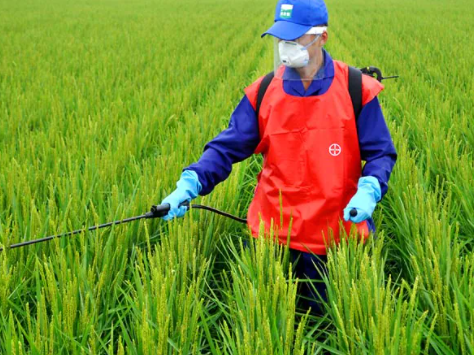
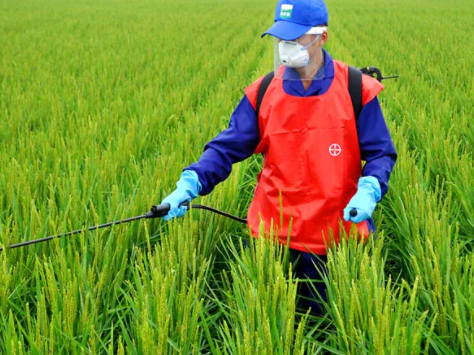
Bayer Crop Science will be implementing a pilot project in selected agricultural towns aimed at making personal protective equipment (PPE) available for farmers when applying crop protection products in their fields.
The project, which will be implemented in vegetable-producing municipalities of Buguias
and La Trinidad in Benguet, and the rice areas of Bayambang, Pangasinan and Concepcion, Tarlac, aims to offer a Safety Kit. This package will be composed of 2 filter face masks, a pair of nitrile gloves, and goggles.
While Filipino farmers seeking good yields ensure that their crops are protected from
insect pests and diseases, most farmers do not use the complete recommended PPE at
the time when spraying is necessary.
Based on a survey conducted by Bayer, only 6 out of 10 farmers wear a face mask when preparing and applying crop protection products.
Among those who do sport them, they use the surgical mask type, which is not recommended as it doesn’t protect the farmer from potential inhalation of the product due to dispersal and wind changes.
Farmer dons complete Personal Protective Equipment for his health protection while spraying pesticides
“The right face mask when spraying crop protection products are those with a filter, ideally
FFP2 type,” said David Cristobal, Regulatory Stewardship and Compliance Lead for
Bayer Crop Science.
“FFP2 masks have three layers of synthetic non-woven materials with the inclusion of filtration layers between, and they provide sufficient protection for farmers.”
In addition to low and incorrect mask use in the survey, only 10% of farmers use googles
when spraying crop protection products, while 60% use surgical gloves, which is also not
the right material to shield the farmers’ hands.
“As part of our stewardship efforts, we make it a point to train farmers on the proper
application of crop protection products, which includes wearing full PPE when spraying,”
said Iiinas Ivan Lao, Country Commercial Lead for Bayer Crop Science. “A complete PPE
set is comprised of boots, long sleeved shirts & trousers, nitrile gloves, filter mask, and
goggles.”
While nearly all farmers said that PPE is important to protect themselves from any harm,
some reasons why they chose not to wear them include the cost, unavailability, and lack
of comfort.
From the pilot project, Bayer will be selling the Safety Kit through selected distributors in
the 4 municipalities with the objective of gauging farmer adoption of the PPE and
generating insights from the initiative. The farmer also has the option to purchase
individual items instead of the entire kit.
“We’re hoping that this project can solve some of the concerns of farmers on low and
wrong PPE usage, and that this will help sustain their health as they continue to provide


















 Growth Features