
ASEAN-SEARCA-supported Grow Asia grew to benefit 117,000 Filipino smallholders in coconut, coffee, corn

SEARCA Director Glenn B. Gregorio

November 23, 2019

ASEAN arm SEARCA has supported the development of organized and skilled farmers that now form part of Grow Asia, a farm production partnership platform that’s benefitting 117,000 smallholders in coconut, coffee, corn, fisheries, and vegetables.

   The Southeast Asian Regional Center for Graduate Study and Research in Agriculture (SEARCA) reported that Grow Asia, through its Philippines Partnership for Sustainable Development (PPSD), has become a successful farm partnership model.

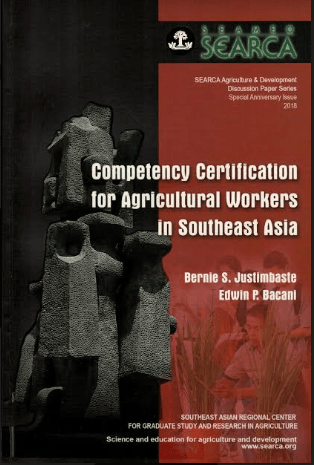
   Bernie S. Justimbaste and Edwin P. Bacani reported in the SEARCA-published “Competency Certification for Agricultural Workers in Southeast Asia” that Grow Asia has demonstrated farming models that now integrate small farm owners into the big ASEAN value chain.

   ASEAN (Association of South East Asian Nations) co-founded Grow Asia with the World Economic Forum.

   Grow Asia-PPSD has built synergies between different value chain players in agriculture.  It facilitates delivery of many interventions including agricultural and technical-vocational (Tech-Voc) skills training in the production of these farm products:

  • Coconut– Grow Asia-PPSD is providing a Mindanao-based program multiple interventions in farmers’ production of coconut water:  development of skills and know-how in coconut intercropping, replanting, and market access. Partners in this program are Unilever, Friends of Hope, and KFI Center for Community Development.
  • Coffee—Ten cooperatives in Tagbina, Surigao del Sur are being helped by a Nestle project through technical assistance, intercropping know-how, provision of quality planting materials (Robusta coffee), and establishment of market.  Macnut Philippines is also involved in contract growing and buy-back of Arabica coffee. This project has 15 other partners including the Philippine Coffee Alliance.
  • Corn-  Farmers in Zamboanga del Norte have been connected through ZMDC Grains Inc. to a hog farmers’ cooperative in Batangas (to buy corn).  Aside from skills training, interventions include credit and post-harvest technologies. Partners here are Pioneer, and 8 other agencies including Philippine Maize Federation Inc.
  • Fisheries—A hatchery for mudcrab for export has been constructed that is supporting 1,000 farmers.  Interventions are working capital credit, know-how on the development of loan products and business development, and technical assistance via the Zamboanga Peninsula-wide baseline and performance indicators system.  The project has 8 other partners including Dipolog School of Fisheries.
  • Vegetables—Interventions in this Zamboanga program include design of vegetable supply chain from quality seeds to the sale of vegetables to supermarkets. Other interventions are credit, post harvest facility, and a water management system.  Partners are East West Seed, Jollibee, and Zamboanga local government unit.

   SEARCA has supported the replication of such farm production model as that of Grow Asia. 

  This, as Grow Asia-PPSD has proven to foster skills capability building of agriculture human resource, a major SEARCA function being ASEAN’s graduate education and research center.
Competency Certification for Agricultural Workers in Southeast Asia

   This mandate involves not only development of academic or entrepreneurial agriculture skills but also Tech-Voc farm skills to help improve the labor force in ASEAN agriculture.

   SEARCA has actively supported Tech-Voc Education and Training (TVET) since it was tapped by  ASEAN education ministers (SEAMEO) to lead a research on competency certification for agricultural workers in Southeast Asia.

   SEARCA Director Glenn B. Gregorio said a common competency certification system among ASEAN countries will enable freer exchange of farm workers between countries.

   ASEAN countries are working toward one ASEAN Qualifications Reference Framework (AQRF) in order to allow this matching of farm skills and competencies between countries.       

   Gregorio said the AQRF recognizes both non-formal and informal learning in assessing farm workers’ skills level and qualifications.

   “The AQRF would benefit agricultural workers as they acquire skills and knowledge largely through non-formal and informal learning modes provided mostly by agriculture extension services systems,” said Gregorio.

   ASEAN countries have been concerned about the status of skills among agricultural workers as they acknowledge that “competitiveness, productivity, and economic growth largely depend on the ability to acquire and use knowledge, as well as to attract the best talents.’”

   As ASEAN aspires to have a “single market and production base”, the AEC (The ASEAN Economic Community) Blueprint has called for a “free flow of skilled workers” between ASEAN states.

   ASEAN leaders from ministries of education, labor, and vocational training,  met last Sept. 9-10, 2019 in Brunei to develop strategies on the adoption of AQRF in ASEAN.

    The Philippines’ delegation include those from Department of Education, Technical Education and Skills Development Authority (TESDA), and SEARCA.

    Gregorio said that as part of a SEARCA study, SEARCA has recommended that partnerships and alliances (such as that in Grow Asia-PPSD) should be encouraged in ASEAN countries.

   Partnerships under Grow Asia-PPSD is seen by 2020 to involve 10 million smallholder farmers in Southeast Asia.

   “Currently, it has reported to have collectively reached nearly 500,000 smallholder farmers through 26 value chain initiatives,” said Justimbaste and Bacani.

   “The private sector can play a crucial role in spreading lifelong and reskilling opportunities among agricultural workers, while innovating on methods of education and training delivery that fit the prevailing non-formal and informal learning and skills development in the agricultural and rural areas,” said SEARCA authors said.

  “The driving strategy to scale up these opportunities is to put in place a competency certification system.” (Melody Mendoza Aguiba)

  1.  SEARCA Director Glenn B. Gregorio
  2. Competency Certification for Agricultural Workers in Southeast Asia
Think tank pushes for replication of 9 successful agroforestry sites

Think tank documents profit-sharing models of 9 successful agroforestry cooperatives including one in Mt Kitanglad, Bukidnon

June 8, 2019

Co-owner Benjamin Maputi visits the Mt. Kitanglad Agri-Ecological Techno-Demo Center

Think Tank SEARCA is pushing for replication of 9 successful agroforestry cooperatives including the notable reforestation in Imbayao, Mt. Kitanglad, Bukidnon which is now under review for key profit sharing models.

   The profit sharing models of 9 agroforestry cooperatives including one found over the 47,270 hectare Mt. Kitanglad Natural Park (MKNP) in Malaybalay City are being documented by think tank Southeast Asian Regional Center for Graduate Study & Research in Agriculture (SEARCA).

  It is part of an aim to replicate the success models of these job-generating, export-earning  forest farms all over Southeast Asia, according to SEARCA.

   The 9 agroforestry cooperatives hold a Community Based Forest Management (CBFM) contract with the Department of Environment and Natural Resources.

   CBFM is government’s instrument and strategy for sustainable forest management amid heavy denudation that decimated forest cover down to less than 24% from the original area in the 1900s.

   For one, Mt. Kitanglad in Bukidnon, a declared protected area, suffered from a forest fire in 1983.

   Fortunately, the Imbayao CBFM-People’s Organization (PO) in Mt. Imbayao, the most extensive lowland area in Mt. Kitanglad, has been instrumental in its agro-forestry development.

   SEARCA is also looking into the benefit sharing models of (in Luzon) Tao Kalikasan Foundation of the Phils, Labo, Camarines Norte; LBN Multi-Purpose Cooperative (MPC)  Vintar, Ilocos Norte; and Caunayan MPC, Pagudpud, Ilocos Norte.

   In Visayas, SEARCA has identified the Nalundan United Farmers Association, Inc., (NUFA) Bindoy, Negros Oriental and Katilingban sang Pumuluyo nga naga-Atipan sang Watershed sa Maasin (KAPAWA), Maasin, Iloilo.

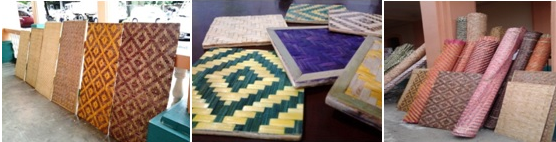
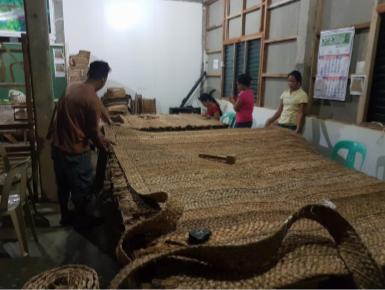
Woven mat in Tao Kalikasan, Labo, Camarines Norte

   The rest in Mindanao are San Isidro Upland Farmers MPC (SIUFMUCO) Santiago, Agusan del Norte; Limatong Dalumangkom Bual Farmers Multipurpose Association, Pigcawayan, North Cotabato; Malakiba People’s Improvement MPC (MPI-MPC), Davao City.

   SEARCA’s benefit-sharing study is funded by the ASEAN Working Group on Social Forestry.

   It will come up with policy recommendations for DENR as it reviews CBFM’s aim on socioeconomic benefits to community (jobs, project profits, skills training, strengthening of social networks).

Ecological, biodiversity use

   The agroforestry cooperatives play a significant role in ecological functions and biodiversity enrichment in the forests.

   For one, the Mt. Kitanglad Natural Park (MKNP) plays a critical role in water supply as its watershed is  the most important source of water in Bukidnon and and Misamis Oriental.

.  It is home to bird species found only in higher mountains in Mindanao including the Mindanao Lorikeet, Mindanao Racquet-tail, Mindanao Scops-owl, Slaty-backed Jungle-flycatcher, Red-eared Parrotfinch and Apo Myna.

   It is a habitat for a rich biodiversity, making it a birdwatching site. It is home to endemic but threatened bird species in Mindanao and Eastern Visayas—the endemic Philippine eagle included.

   These are among Imbayao CBFM’s best practices:

  • Use of organic fertilizers and natural pest control
  • Establishment of the Mt. Kitanglad Agri-Ecological Techno-Demo Center (MKAETDC) with co-owner Benjamin Maputi– visited by some 200 farmers monthly, training them on sustainable practices that raised the CBFM’s productivity by 50%( sustainable upland farming, diversified agriculture, agroforestry, goat- and sheep-raising, and abaca production)
  • Contour farming, preventing soil erosion, preserving soil nutrients—preventing farmers from clearing other forest lands areas as soil stays productive
  • Crops diversification, high value crops plantation
  • Multiple livelihood sources– . fuelwood collection, cattle grazing, extraction of cinnamon bark, fishing,  pilgrim service centers
  • Ecotourism which generates P30,000 yearly from visitors that enjoy hiking and birdwatching and motivate the community to preserve the environment
  • Continuous fund raising from government and international agencies for livelihood programs including one from World Bank that encouraged local government officials to support the project
  • Consultation with local officials which obtains their support
  • Support for the deployment of the Kitanglad Guard Volunteers (KGV) who watch over illegal forest activities over the 47,200 hectare MKNP.

Abaca processing in SIUFMULCO

   SEARCA’s documentation tools include key informant interview guide, guide questions for focus group discussion, video recording, and primer on benefit-sharing. Field documentation was already conducted in the two Visayas sites and the Davao City site.

   The output of the SEARCA-ASRF project will be presented in a national workshop to further draw inputs from CBFM leaders, coordinators, and stakeholders, civil society organizations, non-government organizations, and the academe.

Tao Kalikasan, Caunayan, LBN

   The Tao Kalikasan Forest Rehabilitation Project supplies seedlings of indigenous forest tree species and fruit trees to the forest plantation in Labo, Camarines Norte. It has its own nursery.  It sells abaca fiber and other forest products like rags, eco-bags, and storage baskets, twine, and bakbak. 

   The Caunayan  MPC (CMPC) operates in Caunayan, Pagudpud Ilocos Norte which forms part of a coconut plantation that will be the site of a future biodiesel plant that will source coconut  from the area. The coconut methyl ester (CME) source is part of a huge 600,000 plantation are in Ilocos NOrte.

   CMPC has so far been successful  in developing 25 hectares of agroforestry farm.

   The LBN MPC has a 448 hectare fuelwood production area in Vintar, Ilocos Norte.

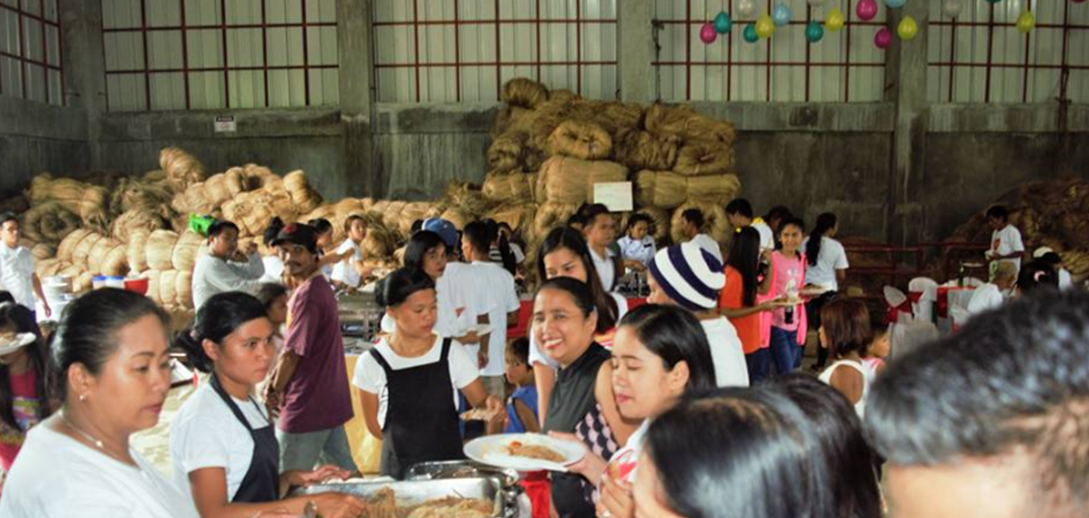
Abaca produce at SIUFMULCO’s warehouse as it celebrates anniversary

Visayas agroforestry

   In Visayas, the Katilingban sang Pumuluyo nga naga-Atipan sang Watershed sa Maasin (KAPAWA) in Maasin, Iloilo produces abaca, coffee, organic vegetables, and woven bamboo products  from a 35 hectare CBFM.

   These are marketed through the Tinukib Pasalubong Center, a known souvenir shop in the Visayas region.

   The Nalundan United Farmers Assn. is also an abaca agro-forestry area in Bindoy, Negros Oriental

SIUFMULCO

   In Mindanao, the San Isidro Upland Farmers MPC (SIUFMULCO) is a producer of abaca and abaca products in Agusan del NOrte. 

   SIUFMULCO has a fast membership growth with more than 600 abaca farmers. It runs 5 abaca production clusters in Agusan del Norte –Santiago, Nasipit, RTR, Kitcharao and Cabadbaran City.

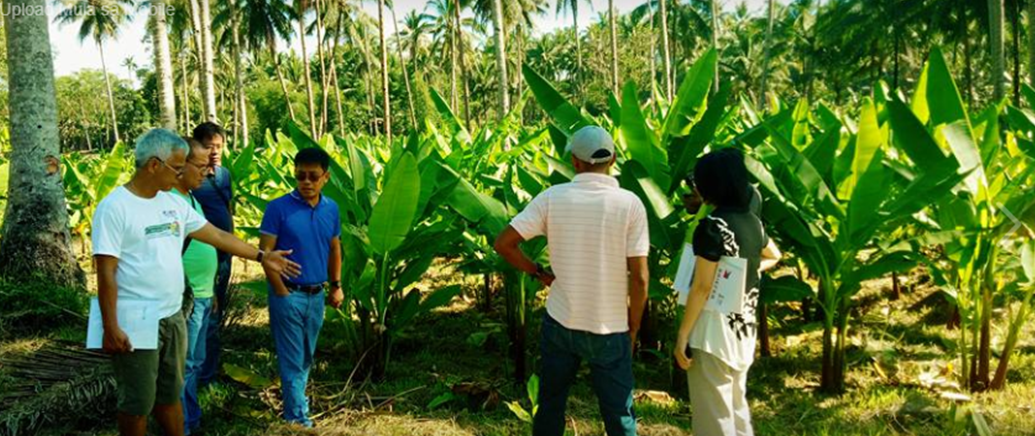
Abaca-coconut intercrop in SIUFMULCO, Agusan del Norte

   It has been supported by the government and the International Food and Agriculture Development through projects such as funding for provision of planting materials, organic fertilizer, nursery and stripping machines.

   It has put up post harvest and processing facilities.

Abaca products and fresh produce in SIUFMULCO

Limatong Dalumangkom

   The Limatong Dalumangkom Bual Farmers Association (LDBFA) in Pigcawayan, North Cotabato  is engaged in fuelwood (charcoal) production which has become in demand due to the prohibitive cost of petroleum based fuel.

   It is part of DENR’s project for growing fuelwood species in Region 12 including ipil-ipil (Leucaena glauca) and kakawate or madre de cacao (Gliricidia sepium).

   The LDBFA has a CBFM deal covering 810 hectares now planted on rubber, cacao, abaca, coffee, mahogany, narra in  Brgy. Kimarayag; Pigcawayan. It has 150 beneficiaries.

Quality woven products in Katilingban, Maasin, Iloilo

Malakiba

   The Malakiba Peoples Improvement Cooperative (MAPICO) markets farm products such as Tangan-Tangan, peanuts, corn, cacao, coffee, and banana (latundan, binangay, and cardava) out of the produce of its CBFM in Davao City. It also runs a canteen and consumer store.

   It also raises livestock –goat, carabao, and swine.  It produces and sells seedlings– cacao, rubber, lawaan.

   Its wood production are turned into furniture.  It had total asset of P4.434 million as of 2012.  It has 150 members. It has 176 hectares of area planted to abaca, cacao, fruit trees, and timber in Bantol, Marilog, Davao City.  (Growth Publishing for SEARCA)

Farmer leader Margie Esteban at the Limatong rubber plantation in Cotabato

Farm tourism sites boosted Ph’s tourism potential, foreign visitor arrivals growing by 10.24%

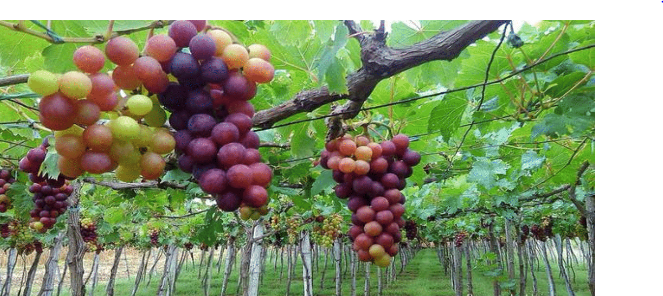
PHOTO Gapuz Grape Farm
Gapuz Grape Farm, La Union
April 26, 2019

Farm tourism sites have boosted Philippines’ tourism potential as the country is now a top agri-tourism destination with foreign visitor arrivals growing by 10.24%, hitting all-time high of 732,506 arrivals in a single month in 2018.

The country is now among top agri-tourism destinations in the world, Rose H. Libongco of the Hotel Sales & Marketing Assn Int. (HSMA) said during a Global Farm Tourism Summit co-hosted by the Southeast Asian Regional Center for graduate Study & Research in Agriculture (SEARCA).

PHOTO La Union FArmer Field Schools
La Union Farmer Field Schools

Other top agri-tourism destinations are Taiwan, Hawaii, Tuscany, Grenada, Mallorca, California, and Brazil. As of January to May 2018, foreign visitor arrivals totalled 3.177 million, a 10.24% growth from the same period in 2017.

The Philippines, according to Libongco, is highly suitable as an agri-tourism destination considering these factors:

.It is an agricultural tropical country rich in natural resources and biodiversity in land, air, and sea
•Its farming heritage is reflected in folk songs such as Bahay Kubo
•Filipinos have innate hospitality and openness that make transition from pure farming to welcome visitors easy.

PHOTO Lotus Farm, La Union
Lotus Farm La Union

The country’s tourists come from Korea, 22.2% share; Japan, 8.68%; Australia, 3.79%; Canada, 3.43%; Taiwan, 3.19%; United Kingdom, 2.83%; Singapore, 2.39%; Malaysia, 1.92%.

SEARCA has supported farm tourism promotion in the country as the sector creates multiple revenue streams for farmers, improving profitability of small and medium enterprises (SME).

In order to market farm tourism sites, Libongco advised farm owners to put up websites through which global tourists look for places to visit.

“Online availability is important in this social media era. People will find you first online. A website establishes your credibility as a business,” she said.

Local government units (LGUs) have started promoting local tourism, recognizing its contribution to jobs creation.

In La Union, a 25% growth (591,432 tourists in 2017) in tourist arrivals has been noted as the province is also known as the country’s surfing capital, according to La Union Gov. Francisco Emmanuel Pacoy R. Ortega III during the same SEARCA-organized summit.

PHOTO Malagos Garden REsort
Malagos Garden, Davao City

There are 23 farm tourism sites in La Union including grape farms in Bauang and family farms including Rocapor’s Farm, Fer-gie Navarro Farm which is a certified Good Agricultural Practice (GAP) vegetable farm, Lomboy Farm, and Lotus Farm. Tourism gives jobs to 100 locals and 50 household members.

Average income of farm tourism sites is P25,000 to P60,000 per month. There were 18,000 visitors to its farm tourism sites in 2017, growing from 7,000 in 2016.

The La Union Investment Program is also supporting overall economic development with a P25.2 billion budget from 2018 to 2022. It extends assistance to tourism SMEs through provision of equipment, farm machinery, post harvest facilities, and organic farming and construction of provincial roads and other infrastructure.

Organic farms, nature-friendly farms, and health and wellness farms are among the top farm tourism destinations in the PHIlippines.

Villa Socorro

For one, the Villa Socorro Farm in Laguna is an agri-eco village that grows native saba bananas. Its offer is to visit its plant to pack site within 24 hours. Tourists are able to take home farm products—corn pops (wasabi shoyu), banana crisps in caramelized sugar, “Sabanana” cider vinegar, “atsarampalaya” pickled bitter melon, and Ilocos bagnet chicharon.

The farm adopts best green business practice and is participant to the Global Green Growth Institute. It practices rain water harvesting. Its vision is to create a community of empowered farmers with living with pride and dignity.

PHOTO Villa Socorro Farm
Villa Socorro Farm

Malagos Farm

The Malagos Farm in Davao started with the durian and coffee farm in Tagakpan. This was followed by lanzones, pomelo and orchid farms in Cabantian. It then constructed in 1994 a small restaurant and swimming pool and in 1997 an overnight accommodation and resort facilities.

It offers agriculture training—daily module, cacao module, and solid waste management.
It planted narra trees for the bees and bignay to give habitat to birds. It offers a showcase of cultural events and experience tourism including tractor ride around the farm, Malagos farm fair,and interactive bird show. Tourists are able to bring home farm products—orchids, funghi marinate, tableya from cacao, virgin coconut oil, bignay wine, and dairy goat and cow products.

It has further grown as it obtained certification from the Department of Tourism (DOT), Department of Agriculture, and Food and Drug Administration. Among its best practices are environmental planning, use of vermicomposting, and solid waste management.

Nurture Wellness

The Nurture Wellness Village is a DOT-accredited wellness resort. It focuses on producing nutritious superfoods such as the kale and essential oils that help give jobs to depressed communities. It has holistic, medically-supervised programs that include relaxation practices, exercises, acupuncture, lectures, and therapeutic massage.

It offers barangay organic farming training. It has bokashi kitchen waste recycling, grey water recycling, production of vermicomposts, natural pesticides and fertilizers, and use of old wood.
(Melody Mendoza Aguiba-Growth Publishing for SEARCA)

PHOTO Nurture Wellness promotes food as medicine
Nurture Wellness promotes food as medicine

Uploads by Maricar Aquino Bou

Philippines strengthens skills of agri workers

Philippines strengthens skills of agricultural workers, sends 17 state colleges to tech-voc training mission in Malaysia
PHOTO agricultural competency workshop SEARCA
April 10, 2019

The Philippines has beefed up effort to strengthen skills of agricultural workers as it sent 17 state universities and colleges (SUC) to a Malaysian regional meeting on technical-vocational educational training (TVET) that can support local farm sector development.

As part of helping enhance skills of agricultural workers, the Southeast Asian Regional Center for Graduate Study & Research in Agriculture (SEARCA) has supported sending 36 representatives from 17 SUCs in support of labor exchange in Southeast Asia.

Southeast Asian ministers are investing in more TVET jobs program, aligning each other’s program for standardization and labor exchange.

SEARCA is also carrying out a research on competency certification for agricultural workers to promote TVET in agriculture.

The Philippine government is supporting technical-vocational (tech-voc) jobs having ratified last month the Tulong Trabaho Act (Republic Act 11230). It establishes a Philippine Labor Force Competencies Competitiveness PRogram. Training fees for tech-voc jobs will be free under the law.

Government is also strengthening capacity development for agricultural workers in TVET as studies have shown that “excellent agricultural vocational schools persist in serving the rural community and strengthen school enterprise cooperation.”

A World Bank study showed that agricultural tech-voc schools in China have popularized new technology in agriculture and production methods and have optimized planting techniques.

“The school has dispatched teachers to train farmers in cultivation, pest control and preservation,” according to the World Bank’s “Case Study of Excellent TVET Institutions.”
TVET agricultural schools also help construct pilot farms.
PHOTO SEAT TVET

TVET participants

The country’s delegates to the TVET meeting come from Bicol State College of Applied Science and Technology, Bulacan State University, Camarines Norte State College, Central Bicol State University of Agriculture, Central Luzon State University, Central Mindanao University, Don Mariano Marcos Memorial State University, Guimaras State College, Iloilo Science and Technology University, Iloilo State College of Fisheries, Lyceum Northwestern University, Mariano Marcos State University, Mindoro State College of Agriculture of Technology, Nueva Ecija University of Science and Technology, Pangasinan State University, President Ramon Magsaysay State University, Saint Louis University, Tarlac Agricultural University, Trimex Colleges Inc., University of Mindanao, and University of the Immaculate Conception.

There are also representatives from the Technical Education and Skills Development Authority (TESDA) at the conference in Ipoh, Malaysia which was convened by the Southeast Asian Ministers of Education Organization (SEAMEO) last March 26-27.

The TVET program of Southeast Asia aims to enhance the internationalization and partnership of TVET institutions and promote global competitiveness and 21st century skills of TVET students.

SEAMEO is also developing a common regional policy framework for labor,
skills, and learner mobility that will allow competent Filipino farm workers to work in the neighboring countries.
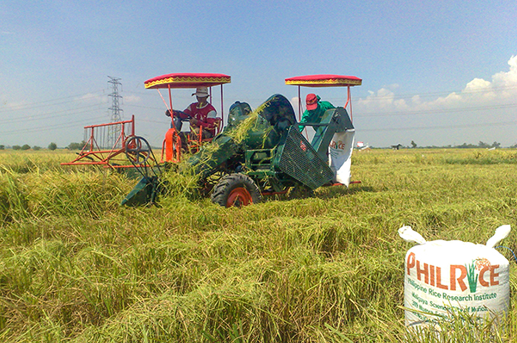
PHOTO Filipino agricultural workers run harvesting machines

World Bank study

The TVET agricultural schools cited in the World Bank study built farms in the rural areas, training centers for seed production, research laboratories on campus and training centers outside the school. These also formulated training courses with programs reflecting efficient production systems in enterprises.

For one, the Heilongjiang Nongken Vocational offered food safety and quality system training to companies and conducted research on the preservation of mashed potato.
PHOTO Farm technicians at IRRI
Tech-voc jobs in agriculture

As there has been a decreasing enrolment in agricultural schools and a decreasing number of farm workers, the World Bank study has recommended the following to enhance training in tech-voc jobs:

1. Promote development of agricultural vocational education.
“Promoting the development of agricultural vocational education is closely linked to the development of regional economies in China. To support the country’s economic development goals, the government must continue to pursue agricultural modernization, which in turn will develop agricultural vocational education.”

2. Promote green and creative agricultural production which is now recognized by trade certification advocates globally.

3. Develop the processing industry of local agricultural products to increase added value.

4. Develop the agricultural cooperative model to support the farmers throughout the production process.

5. Enhance IT resources to provide on-line courses on agricultural on tech-voc training.

6. Develop the online market of agricultural products to promote their production, sales, branding and other related activities.

7. Enhance the attraction of Agriculture-related majors to raise awareness on the developing agriculture sector.

“Currently, the development of the agriculture industry is far beyond the traditional planting, and this new development requires a large number of excellent skilled workers.”

Tech-voc schools also need to integrate new agricultural trends and technology into their curriculum.

“Government also needs to increase public finance to improve learning conditions within agricultural vocational schools and between the schools and enterprises. The increase in teacher welfare and training will also do much to develop agricultural tech-voc education.”

SEA cooperation

Southeast Asian countries are collaborating on putting up policy reforms in tech-voc education even in agriculture, recognizing its unique role in rural development.

“All Southeast Asian countries have placed TVET in mainstream education because of its important role in the socio-economic development of a nation. In addition, TVET has been identified as one of the seven priority areas in education in Southeast Asia as agreed at the Strategic Dialogue of Education Ministers (SDEM).” (Growth Publishing for SEARCA-Melody M. Aguiba)


PHOTO CAPTION:
1 SEARCA agricultural competency working
2 SEA TVET
3 Filipino farm workers run harvesting machine
4 Farm technicians at IRRI

Off season calamansi production in Victoria, Oriental Mindoro

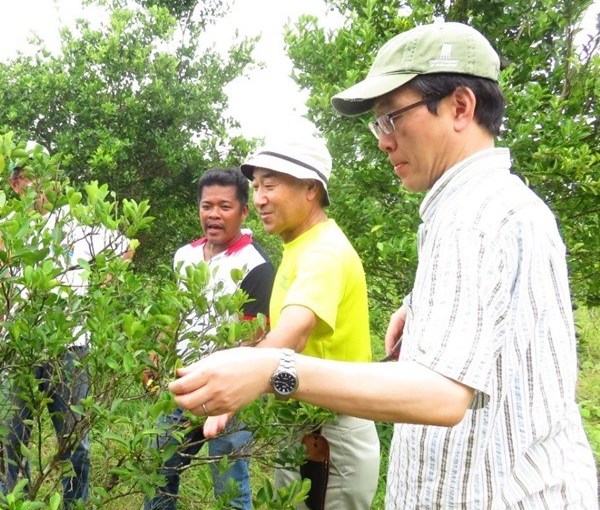
Tokyo University of Agriculture introduced off season production of calamansi in Victoria, Mindoro
March 29, 2019

The Tokyo University of Agriculture (Tokyo NODAI) has introduced the off season production of calamansi in Victoria, Oriental Mindoro as part of helping expand jobs and beef up Philippines’ calamansi export.

A technology on pruning and the use of plant growth regulators in order to delay the harvest of calamansi have been employed in a pilot calamansi production in Victoria.

With such techniques, harvest can become year-round. This will enable farmers to enjoy a higher income from the high value crop. Production will not be available in just a single season, peaking to a high volume and causing prices to collapse.

It also raises potential to expand the Philippines’ export of around 170 metric tons (MT) yearly to Hongkong, United Arab Emirates, and Saudi Arabia. Export is in the form of fresh and processed calamansi.

The Mindoro State College of Agriculture & Technology (MinSCAT) led by Dr. Ma. Conception L. Mores, vice president, has coordinated with Tokyo NODAI to identify farm sites for the continuous trial on the off season calamansi technology.

Farmer-cooperators had been tapped to participate in the pilot farming so as to train Filipino farmers.

“The success of these farming technologies in attaining a stable supply of calamansi even during lean months will bring farmers in a better position where they can maximize the economic benefits brought about by higher level of farmgate prices, which in turn raise farm income,” reported Patricia Ann A. Pielago of SEARCA.

The South East Asian Regional Center for Graduate Study & Research in Agriculture (Searca) has partnered with MinSCAT and Tokyo NODAI in this capability building project.

Two types of pruning were employed to delay fruiting: the half and the full pruning of shoots, young flower buds, and fruits.

Basal application of fertilizer solutions using abscissic acid (ABA) and Miyobi Gold, a commercial fertilizer in Japan containing natural type of ABA and potassium were also done to promote and increase flower formation during off-season.

The 2-hectare calamansi demonstration farm owned by calamansi grower Cornelio Palomar in Brgy. Leido, Victoria was the chosen experimental site considering the age (6 years) and height (1 to 2.5 meters) of trees. These fit the required tree characteristics for each treatment.

A total of 30 calamansi trees were purposively selected, tagged, and weeded. These were equally divided into six treatments including the control.

A quarter of a kilogram of fruit samples for each of the 4 maturity stages of calamansi (mature green, breaker, ripe, and over-ripe) were gathered for laboratory analysis to determine the physio-chemical characteristics. That includes ascorbic acid content as part of the fruit quality evaluation.

The export of more processed calamansi (puree, juice) may be expanded by the project.

“The quality evaluation of fruits produced in the area at different ripening stages is expected to aid in determining the suitable maturity stage ideal for processing.”

PHOTO Processed calamansi juice

Dr. Tadashi Baba, Dr. Yoshitaka Kawai, Mika Yoshida from the Department of Agriculture – Postharvest Physiology and Technology of Tokyo NODAI, agreed to replicate their previous joint study on calamansi with the University of the Philippines Los Banos-Post Harvest Technology REsearch Center (UPLB-PHTRC) in Mindoro.

Providing technical assistance and logistical support needed are Dr. Jose Medina and Pielago,SEARCA program coordinator, Dr. Josephine Agravante and Kristelle Marie Ybañez from UPLB-PHTRC.

There will be a systematic way of monitoring, data collection, and proper documentation to analyse the technology’s efficacy.

Export

The country’s calamansi export ranged from 20 to 35 MT in 2008 to 2013 with an average yearly export of 29.5 MT in fresh fruits.

A value chain advantage may be found in processing more fresh fruits.

Studies showed that constraints in calamansi sector’s growth include lack of good-quality calamansi seedlings; high incidence of pests and diseases; declining volume of production; huge postharvest losses; limited access to market; inconsistent quality of processed calamansi products; and low prices during peak season.

There is also lack of resources, skills, knowledge, and experience in collective marketing among calamansi farmers.

The two-year project aims to address these technical and market constraints.
It intends to improve calamansi production and fruit quality by using proven technologies and practices in integrated pest management, fertilization, off-season fruiting, and postharvest handling.

The project will build on the gains of SEARCA’s action research program “Piloting and Upscaling Effective Models of Inclusive and Sustainable Agricultural and Rural Development (PUEM-ISARD) that helped revitalize the calamansi industry of Oriental Mindoro.

SEARCA has been implementing PUEM-ISARD with MinSCAT and the local government units of Oriental Mindoro since 2015.

Calamansi

Calamansi is indigenous to the Philippines. The largest production is in Victoria, Oriental Mindoro.

According to the Department of Agriculture-Philippine Rural Development Program, buyers prefer calamansi from Oriental Mindoro because it has a thicker rind, stronger taste, longer shelf-life, and resists weight loss.

Calamansi, or calamondin, is used primarily as juice, puree, and for souring food.

Production had declined over a 6-year period from 199,675 MT over a land area of 20,956 hectares in 2008 down to 164,050 MT over a land area of 20,246 hectares in 2013.

The decline is due to the greening disease or ”huanglubin’ which decreases yield and causes death of trees, reported the Food and Fertilizer Technology Center (FFTC).

Calamansi is produced primarily from MIMAROPA (Mindoro, Marinduque, Romblom, Palawan– 6,872 hectares), Central Luzon (Zambales, Bulacan, Pampanga, Nueva Ecija, Bataan-1,734ha) and Ilocos Region (1,026ha) in Luzon.

In Mindanao, producers are in Davao Region (1,797 hectares), CARAGA (1,412 hectares) and Zamboanga Peninsula (1,077 hectares).

Yield has been dropping from an average of 9.53MT hectares in 2008 to 8.10 MT in 2013, down to an annual growth rate of -3.18.

A sizable 93% of the volume as of 2013 was used domestically for food and the rest for export.

With production decline, prices has been increasing at P23.13 per kilo in 2013 from only P13.28 per kilo in 2008. End (Growth Publishing for SEARCA).

PHOTO CAPTION
1. Dr. Tadashi Baba (1st from right) and Dr. Yoshitaka Kawai (2nd from right) demonstrating the full-pruning technique as another treatment for off-season fruiting of calamansi
2. Samples of calamansi fruits at different ripening stages subject to quality evaluation (from L-R: over-ripe, ripe, breaker and mature green)
3. Processing calamansi into products like calamansi juice, puree, jam and others will provide added value to calamansi harvests. When there is an oversupply of harvest, the best option is to process them into products of higher value.

Farm sector should tap digital agriculture, disruptive technologies to catch up with food security, raise agri contribution to jobs, GDP

Farm sector should tap digital agriculture, disruptive technologies to catch up with food security, raise agri contribution to jobs, GDP
December 29, 2018

The farm sector should transform into adapting digital agriculture and disruptive breeding technologies in order to catch up with predicted food scarcity and raise agriculture contribution to jobs and GDP.
The farm sector in Southeast Asia is the least digitized sector of the economy with only $4.6 billion invested for agriculture technology in 2016 according to AgFunder.
On the contrary, the needed investment for agriculture technology in the region totals to $265 billion per year according to the Food and Agriculture Organization (FAO).
Southeast Asian agriculture expert Dr. Paul S. Teng said in a consultation organized by the Southeast Asian Regional Center for Graduate Study & Research in Agriculture (SEARCA) that technology adoption will be a key determinant of farm growth.
Teng stressed digital agriculture, which primarily refers to Internet of Things (IoT) enables knowledge intensity in agriculture. For one, agriculture production depends highly on weather stability, and IoT provides higher accuracy of information on data-enabled agriculture through more accurate weather forecasting.
IoT—mobile computing data sensors, satellite and imagery— contributes to information on irrigation, soil condition, and topography which are critical in farming.
Technologies in financing (fintech) will also be pivotal in farm development—providing time-sensitive small loans to farmers.
“Given that time-sensitive small loans are the biggest challenge that farmers face, it’ll be interesting to see solutions such as record-keeping platforms that enable small and marginal farmers to keep records, track their farming activity and build a credit profile,” said Teng
Smart phones are instrumental in collaboration between fintech startups and traditional farm financing entities.
“This would help farmers in effectively building a knowledge base that will help them get access to favourable loan terms that correlate with their farming activities,” said Teng in the SEARCA-organized “Reshaping Agriculture & Development in SE Asia.”
New biology will also help raise food production
“Gene-Editing biotechnologies (CRISPR, TALENs, Zinc Finger Nucleases) provide capability – the ability to edit native crop genes coding for important traits and generating non-transgenic plants. Genome-edited (important) crops include, soybean, maize, wheat, rice, potato, tomato, and peanuts.”
These are among the technologies that should be invested in, according to AgFunder 2018:
• Farm Management Software, Sensing & IoT – Ag data capturing devices, decision support software, big data analytics
• Robotics, Mechanisation & Equipment – On-farm machinery, automation, drone manufacturers, grow equipment
• Novel Farming Systems – Indoor farms, aquaculture, insect, algae & microbe production (excludes consumer home grow kits)
• Novel seeds – Biotech seeds
• Bioenergy & Biomaterials – On-farm agriculture waste processing, biomaterials production, anaerobic digesters (excludes supply chain companies)
• Agribusiness Marketplaces – Commodities trading platforms, online input procurement, equipment leasing used by farmers
• Farm-to-Consumer eGrocery – Online platforms for farmers to sell and deliver their produce direct to consumers
• Miscellaneous – Land management tech, financial services for farmers
But on top of investing in technology, Teng said the agriculture sector should be directed to this transformation process toward the following:
• Managing Climate Uncertainties and Water Scarcity
• Agro-industrial Value Chains and Integration of Smallholders
• Farm Tourism and Family Farming
As global population is projected to reach to 10 billion by 2050, worldwide farm productivity should be raised by 60% in 2050 in order to close the food gap.
In the Philippines, agriculture’s contribution to GDP (gross domestic product) as of 2016 dropped to 9.7% from 19.14 in 1990.
Nevertheless, employment in agriculture was still significant at 27% of population depend on it for livelihood.as of 2016.
Importation in developing countries like the Philippines is still intensive to which the economy depends to sustain people’s nutrition.
“ASEAN countries produce much (top 3 for a range of agrifood products) but still depend on imports from outside region to meet needs for animal feed (soybean) and wheat . There’s still high prevalence of hunger and under-nutrition.” End (Growth Publishing for SEARCA).

’Value chain’study of calamansi carried out to beef up 170 MT export to UAE, Hongkong

_’Value chain’study of calamansi carried out to beef up 170 MT export to UAE, Hongkong
December 11, 2018

A “value chain study of calamansi is being carried out to beef up output and some 170 metric tons (MT) of export of fresh and processed fruits per year shipped to Hongkong, UAE, and Saudi Arabia.
The Southeast Asian Regional Center for Graduate Study and Research in Agriculture (SEARCA) has supported Bureau of Agricultural Research’s (BAR) piloting of the project in Oriental Mindoro.
“There are gaps and constraints in the calamansi industry that limit its potential to increase income and generate the much-needed employment for the calamansi-growing communities in Oriental Mindoro,” according to SEARCA.
“The project will strengthen capacities of calamansi stakeholders on the improved production and postharvest handling practices, calamansi processing, and entrepreneurship.”
Value chain concept involves creating “value” from activities that have been identified to make a business more profitable. For instance, activities that increase farm sales are hiring sales agents to market a product or training farm experts on pest management practices in order to increase harvest.
Value chain studies enhance a business’s competitiveness and was introduced by economist Michael Porter in his “Competitive Advantage (1985)”.
The country’s calamansi export ranged from 20 to 35 MT in 2008 with an average yearly export of 29.5 MT in fresh fruits.
A value chain advantage may be found in processing more fresh fruits. A total of 144 MT of calamansi juice and concentrate was exported to Hongkong, United Arab Emirates and Saudi Arabia in 2013. An important consideration in this project is on expanding employment and farmer’s income from the business.
Constraints in calamansi sector’s growth include lack of good-quality calamansi seedlings; high incidence of pests and diseases; declining volume of production; huge postharvest losses; limited access to market; inconsistent quality of processed calamansi products; low prices during peak season; and lack of resources, skills, knowledge, and experience in collective marketing among calamansi farmers.
The two-year project aims to address these technical and market constraints.
It intends to improve calamansi production and fruit quality by using proven technologies and practices in integrated pest management, fertilization, off-season fruiting, and postharvest handling.
It will also support the commercialization of calamansi-based products through value chain analysis of processed products, market study, and product enhancement.
Moreover, it will also promote faculty and student exchange for R&D (research and development) and technology transfer and promotion.
The project will build on the gains of SEARCA’s action research program “Piloting and Upscaling Effective Models of Inclusive and Sustainable Agricultural and Rural Development (PUEM-ISARD) that helped revitalize the calamansi industry of Oriental Mindoro.
SEARCA has been implementing PUEM-ISARD with Mindoro State College of Agriculture and Technology (MinSCAT) and the local government units of Oriental Mindoro since 2015.
Recently, Tokyo University of Agriculture (Tokyo NODAI) of Japan also began conducting experiments at the project site to validate the effects of off-season production technologies suitable to the growing conditions of calamansi in Victoria, Oriental Mindoro.

PRoduction

Calamansi is indigenous to the Philippines . The largest production is fromVictoria, Oriental Mindoro.
According to the DA-Philippine Rural Development Program, buyers prefer calamansi from Oriental Mindoro because it has a thicker rind, stronger taste, longer shelf-life, and resists weight loss.
Calamansi, or calamondin, is used primarily as juice, puree, and for souring food.
Production has been declining for 6 years from 199,675 MT and 20,956 hectares in 2008 down to 164,050 MT and 20,246 hectares in 2013.
The decline is due to the greening disease or ”huanglubin’ which decreases yield and causes death of trees, reported the Food and Fertilizer Technology Center (FFTC).
Calamansi is produced primarily from MIMAROPA (Mindoro, Marinduque, Romblom, Palawan– 6,872 hectares), Central Luzon (Zambales, Bulacan, Pampanga, Nueva Ecija, Bataan-1,734ha) and Ilocos Region (1,026ha) in Luzon.
In Mindanao, producers are in Davao Region (1,797 hectares), CARAGA (1,412 hectares) and Zamboanga Peninsula (1,077 hectares).
Yield has been dropping form an average of 9.53MT hectares in 2008 to 8.10 MT in 2013, down to an annual growth rate of -3.18.
A sizable 93% of the volume as of 2013 was used domestically for food and the rest for export.
With production decline, prices has been increasing at P23.13 per kilo in 2013 from only P13.28 per kilo in 2008. End (Growth Publishing for SEARCA).

International conference on Nutrition-sensitive Agriculture to help boost nutrition-rich food production, cut malnutrition that affect 15-25% of population

PHOTO Nutrition-Sensitive Agriculture
International conference on Nutrition-sensitive Agriculture to help boost nutrition-rich food production, cut malnutrition that affect 15-25% of population
3 November 2018

An international conference on Nutrition-sensitive Agriculture (NSA) will be held in the Philippines to help boost vitamins and minerals-rich food production and cut malnutrition that’s adversely affecting 15-25% of 105 million Filipinos.
The Southeast Asian Regional Center for Graduate Study and Research in Agriculture (SEARCA), in a tieup with the Food and Agriculture Organization of the United Nations (FAO), will host “Strategic Approaches to Nutrition-Sensitive Agriculture and Food Systems in Southeast Asia” on Nov. 7-10, 2018.
“Our food security ranking globally shrunk from rank 62 in 2011 to 72 in 2017 out of 109 countries. FAO through its Integrated Food Security Classification mapped the entire Philippines as food insecure,” according to a SEARCA NSA primer.
“Food security is continuously challenged by poor agricultural productivity brought about by climate change, environmental degradation, higher input cost, low farm income and lack of competitiveness.”
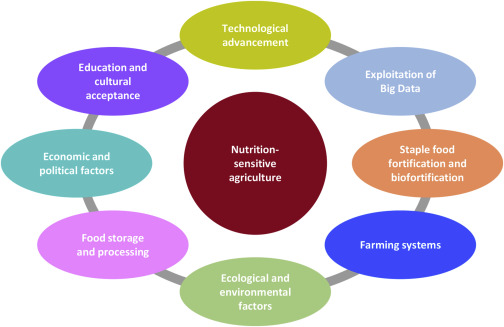
NSA is a concept that has recently emerged in light of the pervasiveness of malnutrition especially in developing countries as the Philippines.
It seeks to maximize a farming system that enhances nutritional supply especially in impoverished areas through provision of a variety of affordable, nutritious, culturally appropriate and safe food.
“It is generally recognized that addressing malnutrition requires an integrative approach in the food chain from production, processing, retail to consumption,” said SEARCA.
“Making agriculture and food systems nutrition-sensitive also requires that we have to address input quality, production, post-harvest handling, processing, retailing and consumption, and to deliver safe and nutritious foods all year round to the consumer.”
Also supporting the conference are the Interdisciplinary Studies Center on Food and Nutrition Security of the University of the PHIlippines Los Banos and Cavite State University (CvSU).
The conference will formulate polices and strategies to enhance NSA in relation to food and nutrition security.
In line with Food and Nutrition Security program in Southeast Asia, SEARCA has put in sessions on case studies on integrating nutrition into agriculture. It will focus success stories of addressing nutrition across stages of the food system.
Fisheries production—aquaponics, organic food farming, hydroponics, agricultural biotechnology, potato and mushroom production, nutrition in vegetables, plant factories in urban setting, Palaymanan, rice-corn blend for diabetics, and development of MSMEs (micro, small, and medium enterprises) are among the topics of the conference.
Dr. Marco Wopereis, Director General of the World Vegetable Center, will speak on nutritional power of vegetables; Dr. Leila S. Africa of Human Ecology-Institute of Human Nutrition and Food will present outcomes of Promoting Nutrition-Sensitive School Gardens and Feeding Programs through the School-Plus-Home-Gardens Project (in Laguna).
Dr. Wei Fang, director of the Center of Excellence for Controlled Environment Agriculture and Professor of Bio-Industrial Mechatronics Engineering of the National Taiwan University, will discuss how plant factories in Taiwan to promote food and nutrition security in an urban setting.
Other speakers are International Institute of Rural Reconstruction (IIRR) Country Director Emily Monville (sustaining and scaling-up nutrition-sensitive agriculture); Rizal G. Corales, program lead, Integrated Rice-based Agribiosystems of Philrice, (Palayamanan as a strategy to promote nutrition-sensitive agriculture); and Dr. Mallikarjuna Swamy, Healthier Rice Breeding Group of the International Rice Research Institute (nutritional security through development of healthier rice).
It will be held at the Development Academy of the Philippines in Tagaytay City. (Growth Publishing for SEARCA) End
PowerPoint Presentation

SEARCA establishes capability building courses for agricultural entrepreneurs to help boost productivity in mango, abaca, cacao, herbal medicine

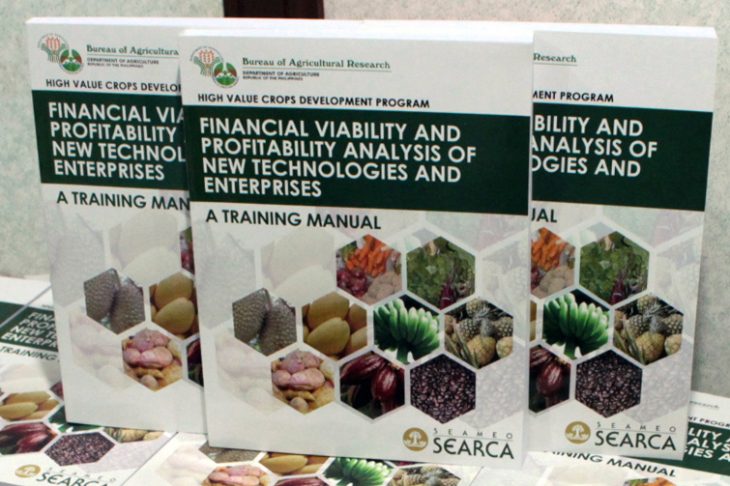
Investment Guide training manual
FOR IMMEDIATE RELEASE SEARCA establishes capability building courses for agricultural entrepreneurs to help boost productivity in mango, abaca, cacao, herbal medicine
September 28, 2018

Government research partner SEARCA has established capability building courses for trainers and agricultural entrepreneurs as part of helping boost productivity in mango, abaca, cacao, and herbal-medicinal products.

The training for trainers and farmer-entrepreneurs will beef up skills of Filipino farmers-businessmen in ensuring their farms thrive as profit-making businesses, rather than mere source of sustenance.

The course is called “Financial Viability and Profitability Analysis of New Technologies and Enterprises under the High Value Crops Development Program.”

SEARCA also supported the publication of an investment guide of the Bureau of Agricultural Research-Department of Agriculture (BAR-DA) with the same title. BAR launched the investment guide during its Agriculture and Fisheries Technology Forum last August 30.

“We believe that given the right opportunities, training, and innovations, farmers and fishers can be ‘agripreneurs’,” DA-BAR Executive Director Nicomedes Eleazar said.

Participants in these courses will also be trainors of agricultural entrepreneurs or support them on how to plan financial viability for businesses after training themselves first.

A higher education center formed part of ASEAN bonds, SEARCA’s major thrust is to support training of farm technologists and farm entrepreneurs as aid in agricultural progress toward ASEAN Economic Community.

It is also pushing for harmonization of skills standards of farm technicians in ASEAN through a competency certification in partnership with institutions as TESDA (Technology Education & Skills Development Authority).

It is hoped such programs will raise farm production and export of the Philippines while ensuring the future generation are lured into becoming farmers and agriculture businessmen.

Those that already completed the program include agriculture technocrats of Department of Agriculture (DA) and DA- attached agencies staff, state universities and colleges in 16 selected projects funded by DA-BAR, and farm managers.

The topics include subjects studied in Business Management courses– cost and return analysis, partial budget analysis, break-even analysis, and financial cash flow analysis.

SEARCA has supported personnel training for 16 projects of the Department of Agriculture-Bureau of Agricultural Research (DA-BAR).

The following are the 16 DA-BAR funded projects:

• Development of Commercial-Scale Belt-Type Dryer with Combination Far-Infrared and Convection Heating for Rapid Drying of Mango Slices
• Conservation, Evaluation, and Commercialization of Batuan (Garcinia binucao) in Region V (Masbate and Sorsogon)
• Lotus R&D for Region 3: Production Technology Generation for Food and Non-Food Products, Aesthetics, and Medicinal Purposes
• Village-level Processing, Technology Development, and Promotion of Katmon (Dillenia philippinensis) Production and Commercialization of Abaca Yarn, Twine, and its Derived Products in Region VIII Areas
• Development and Promotion of Postharvest Equipment for Carrot Processing in BAPTC Commercialization and Marketing of Sweet Potato, Adlay, Soybean & Roselle Products & By-products in Region 10
• Development and Commercialization of Sweet Potato and Potato Products Production and Processing Technologies Development and Commercialization for Organically-Grown Cucumber and Carrots in Bukidnon
• Promotion of Organic Production Technologies for Rice and Muscovado Sugar for Smallholder Farmers and Agrarian Reform Beneficiaries
• Piloting Arabica Coffee Rooted Cuttings as Plant Materials in the Highlands Macadamia Conservation, Propagation, and Commercialization in Luzon
• Promotion of Generated Cacao Technologies and Development of New Products towards Improved Livelihood
• Promotion and Commercialization of Soya Nuggets and Soya Chunks Insta Ulam Project Development and Commercialization of Tropical Fruit-based Products (Rimas Ice Cream)
• Product Improvement and Marketing Plan for Dalanghita Nectar
Philippine government-hosted SEARCA (Southeast Asian Regional Center for Graduate Study and Research in Agriculture is a regional treaty organization that promotes inclusive and sustainable agricultural and rural development through graduate education and institutional development, R&D, and knowledge management. It has been a long-time partner of DA-BAR in research, capacity building, and knowledge management projects.
Copies of the investment guide may be availed from the DA-BAR. (Melody Mendoza Aguiba-https://www.manilatimes.net/expert-ph-agri…digital…/491397/Growth Publishing for SEARCA).