
Zamboanga City cacao farmers started to supply dried cacao beans to Hershey chocolate’s Kennemer, help sustain Pasonanca Natural Park

November 22, 2021

A 100-strong cacao farmers association in Zamboanga City has started supplying dried cacao beans to Hershey chocolate-associated Kennemer Foods International while being able to contribute to sustainability of the watershed Pasonanca Natural Park.

   The Tolosa Buffer Zone Association (TBZA) and the Salaan Buffer Zone Association (SBZA), with around 50 farmer-member each, have successfully cultivated an estimated 8.2 hectares of cacao land in Zamboanga City. 

   Another market for their cacao beans is the and JAS Agri-ventures Inc.  

   The Department of Environment and Natural Resources (DENR) just conducted in August a five-day training for farmers in Tolosa on cacao farming,

   With an initial 10 to 20 sacks of dried cacao beans supplied to Kennemer Foods per month, this volume is expected to increase next year.

   “By the middle of next year (2022), we will have been ready to harvest from more cacao areas that we helped rehabilitate,” said Dr. Reynaldo C. Navacilla, field manager of Protect Wildlife. 

   Protect Wildlife, funded by the United States Agency for International Development (USAID), is a consortium of agencies helping the watershed natives to learn agriculture and agro-forestry in exchange for destructive wildlife practices.

   DENR’s training on cacao farming was conducted with USAID’s Women’s Global Development and Prosperity Initiative (W-GDP).

   Kasanyangan Center for Rural Development & Microfinancing Inc (KCRDMFI) has supplied UF18  and W10 varieties of cacao seedlings to the communities. KCRDMFI also supplied them the fertilizers..

   The  TBZA and SBZA have also been producing their home-made tableas sold at P120 per pack, producing around 50 packs per month.

   The cacao farms of TBZA and SBZA have helped forest communities within the Pasonanca Natural Park to sustain a livelihood for themselves.

   “Some of them used to poach wildlife in the area.  Some of them used to get firewood in the forests in order to produce charcoal sold to bakeries downtown. With a livelihood now, majority of them no longer do these destructive practices,” said Navacilla.
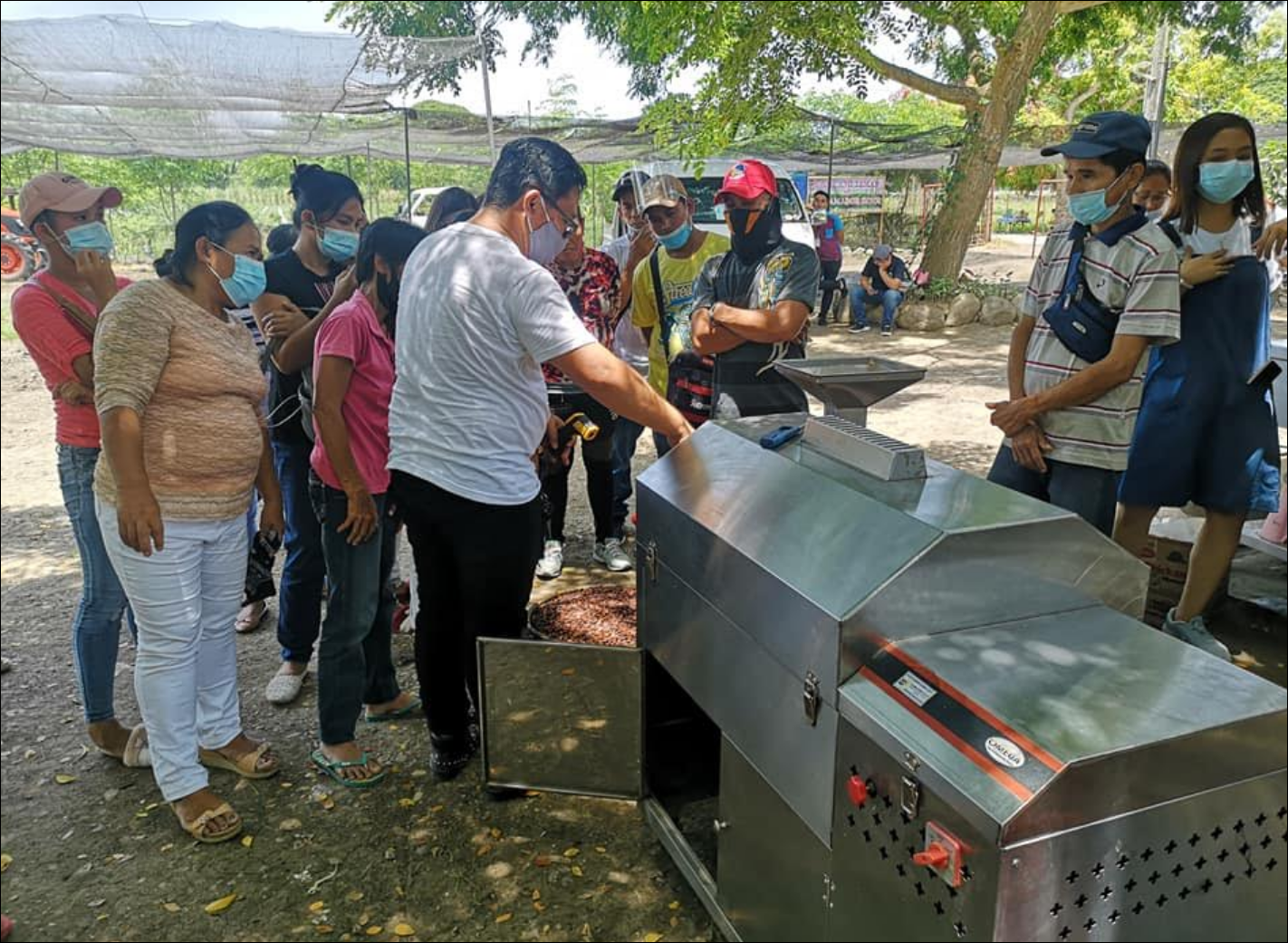
DENR Protect Wildlife project donates cacao processing facility to Pasonanca community

   As to their agforestry and intercropping practices, the farmers are able to help conserve soil, reduce soil erosion, and stabilize slopes in the mountains. Intercropped with cacao are coffee and vegetables.   

   Inday Campaner, protected area superintendent at Pasonanca Natural Park, said DENR’s vision is for the Pasonanca Natural Park to become recognized as an ASEAN Heritage Park.

   ASEAN Heritage Parks are selected based on their  “unique biodiversity and ecosystems, wilderness and outstanding values in scenic, cultural, educational, research, recreational and tourism.”  As such, they become significant sites for conservation.

   Strengthening the conservation program in Pasonanca is important even as new flora and fauna species are being discovered in the protected area.  Among these are the mistletoe and amorphophollus, according to Dr. Dante Oporto, former PENRO (provincial environment and natural resources officer) of Zamboanga Sibugay.

   Partnering with USAID in the effort to help the communities and conserve the environment are Conservation International, DAI Global LLC, Orient Integrated Development Consultants Inc., Conservation International, Rare, and Tanggol Kalikasan.

   However, Lorna Guerrero, president of TBZA, said the farmers’ group needs support in maintenance of the cacao trees to make them bear fruit. They need fertilizers, pesticides, and perhaps sustained technical assistance for best agronomic practices in cacao farming.

   Nevertheless, numerous organizations continue to aid the farmers.  USAID provided the coffee grinder to them.  USAID gave each farmer a set of three tools (including knives and pruning tools) for maintaining their farms.

   The Pasonanca Natural Park is an important watershed that contains the headwaters of the Tumaga River in southern Zamboanga Cordillera Mountain.  It is the source of water for nearly one million residents in Zamboanga City.

   It covers an area of 10,560 hectares of forest reserve and is the largest remaining old growth dipterocarp forest in Zamboanga.

   As part of its conservation, DENR’s Protect Wildlife project with USAID has also introduced financing measures for its protected area management. This is to help fund the P30 million annual cost for watershed and environmental management by the Zamboanga City local government unit (LGU).

DENR-USAID Protect Wildlife project trains farmers in Zamboanga’s Pasonanca protected area on cacao growing

  The LGU hires around 120 forest guards in the protected area.

   Moreover, the project’s livelihood program ensures that the communities in the buffer zone become protectors of the watershed especially during critical times as the Covid 19 pandemic.

   “DENR distributed 5,400 ready-to-plant vegetable and fruit tree seedlings and 1,500 Acacia mangium seedlings to Tolosa and Salaan people’s organizations in the park’s buffer zone as part of the government’s livelihood assistance during the COVID-19 pandemic,” reported the USAID.

   The Zamboanga City LGU also allocated P1 million yearly for the conservation of the park, being known as habitat of Philippine eagle and the Zamboanga bulbul, flagship species of the park.

   Since the Pasonanca Natural Park is an ecotourism—trekking and adventure – site, the Protect Wildlife Project installed monuments and markers on strict protection and multiple use zones.

   “Park signage was installed to remind nearby communities of prohibited activities in the strict protection zone and to promote agroforestry in buffer zones. Signage was installed along marked boundaries, where the threat of encroachment is high.”

  The Protect Wildlife project also supported the Zamboanga City Anti-Wildlife Trafficking Task Force (ZCAWTTF).  It helps in the enforcement of environmental laws in Zamboanga City.

    Pasonanca Natural Park is home to a reported 96 highly threatened species. These include the Philippine Eagle and  Zamboanga bulbul Mindanao bleeding-heartPhilippine kingfisherPhilippine leafbird and little slaty flycatcher. It is said to be home too to the Mindanao broadbillazure-breasted pittacelestial monarchsouthern silvery kingfisherblue-capped kingfisherspotted imperial pigeongiant scops owlJapanese night heronChinese egretrufous-lored kingfisherPhilippine dwarf kingfisher and Philippine cockatoo(Melody Mendoza Aguiba)

20,000 households in Bohol island gets stable 24-7 green solar energy supply, enjoy sustained economic growth

November 16, 2021

A renewable energy project called “DREAMS” has brought a stable 24-7 solar energy supply to 20,000-household residents of Pamilacan, Baclayon, Bohol– stabilizing economic development in the island.

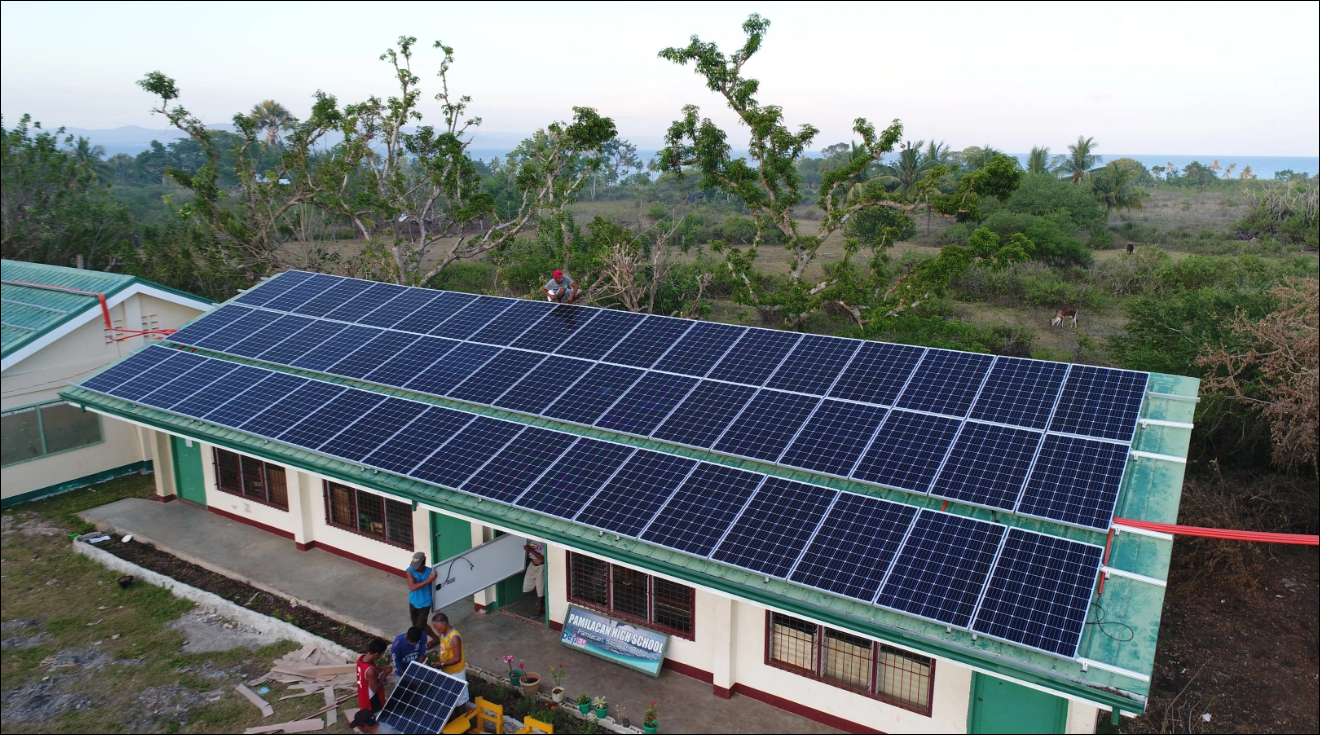
   Financed under the Global Environment Facility’s (GEF) Support Facility for Renewable Energy (SF4RE), the solar energy project installed a 39 kWP (kilowatts peak) Photovoltaic (PV) system to the Pamilacan Island Community.

   The Department of Environment and Natural Resources (DENR) has expressed support for the solar energy project that will be generating carbon sequestration credits for Bohol Province.

   As the GEF Operational Focal Point in the Philippines is in DENR under the office of Undersecretary Analiza Rebuelta-Teh, DENR is gratified that  an entire 20,000 household community benefits from an energy source that contributes to reduction in greenhouse gas (GHG) emission.

   A switch on event was held last October 28 in Pamilacan Island, Bohol to signal the operation of the Photovoltaic expansion project.

   The WeGen Laudato Si Social Enterprise and Bohol Electric Cooperative (Boheco I) will lead the operation of the PV system. 

   They will also coordinate with the LGU (local government unit) and assist the community partners to have the management capacity as an energy association.

   These are the other community partners of the PV project:

  1.  Pamilacan Solar Credit Cooperative, a women enterprise that collects payment from consumer households at P10 per kilowatthour (kwh).
  2. Department of Education which provides the school space or roof tops for the solar PV installation.

   The operation of the PV system generates financial benefits for the Pamilacan community as the share of the cooperative becomes a trust fund. 

   The GEF SF4RE is a $1 million facility under GEF’s DREAMS (Development of Renewable Energy Application Mainstreaming and Market Sustainability).  SF4RE’s aim is to generate renewable energy investments or financial support for renewable energy.

   The SF4RE also  builds partnerships among local government units, distribution utilities, power generators and community associations to attain energy security and 100% household electrification.

   The PV expansion system in Pamilacan Island is such a milestone since the island enjoyed power for only five hours per day five years ago. 

   Their electricity was powered then by diesel generators of the Boheco 1 through a Genset with 50 kVA (kilovolt-ampere) and 80 kVA for nightime power supply.

Solar energy lights up Pamilacan Island, Bohol. Credit– Cbholganza

   As soon as WeGen installed in 2017 an off grid solar PV system that supplied 24/7 electricity to the households, economic development was immediately observed.

   “Economic growth flourished as the island is an ecotourism area.  Living conditions improved with additional livelihood.  Energy demand increased due to more appliances and equipment for household use and business.”

   However, increased demand was ensued by shortage in supply and system malfunctions.

   Thus, the PV expansion at present is needed to match power demand from additional 357 households.

   “The expanded system would reduce the community usage of the diesel generators.  Thus it is expected that the average cost of energy at the family level will decrease since households will be getting cheaper power during the day.  This will also continue to support the electricity of the school,” reported the Department of Energy (DOE).

    The diesel generators will only supply night-time electricity.

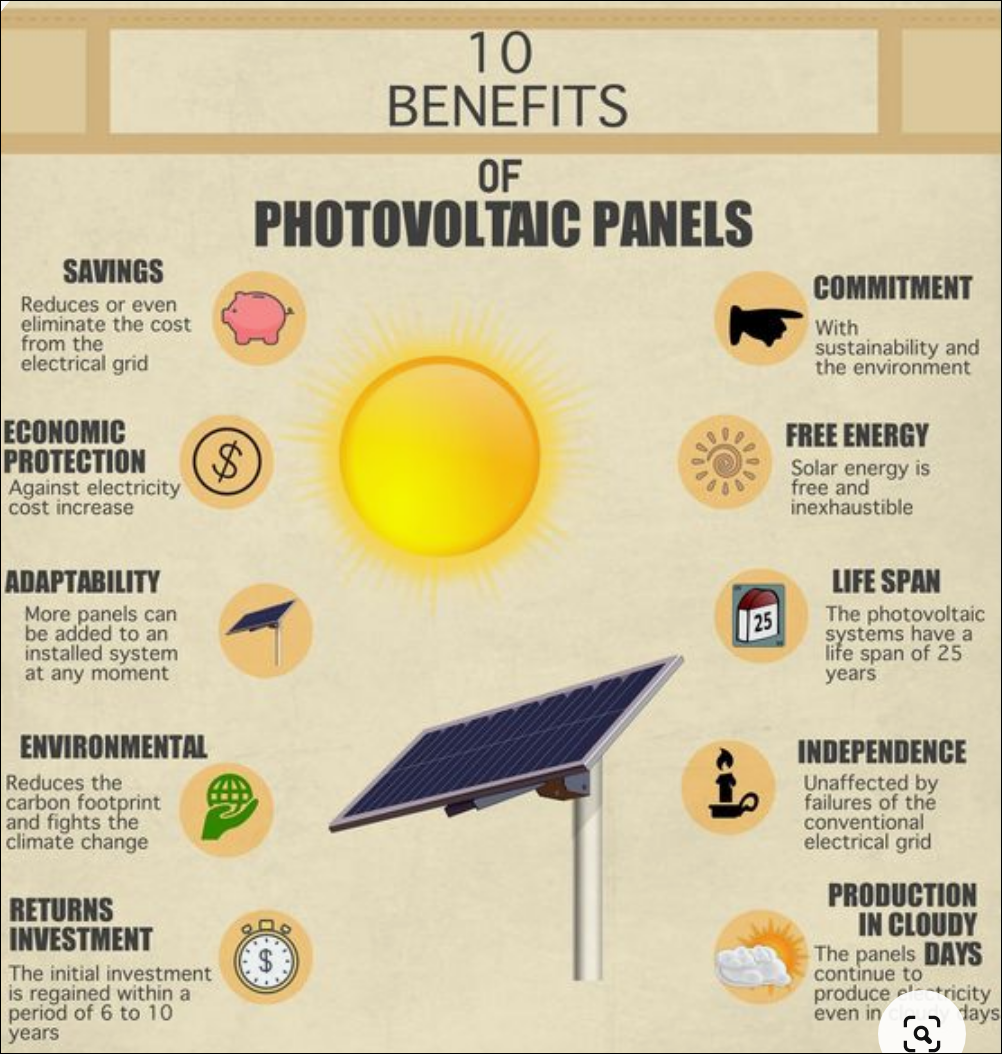
10 Benefits of Photovoltaic Panels. Credit– Pinterest

   The additional installed power capacity may free up the demand on the Boheco Genset.  The Genset may potentially be used to run a small desalination plant which will be under a study.

   The installation will also lead to the compliance of Boheco to the Renewable Portfolio Standards (off-grid) under the Renewable Energy Law. (Melody Mendoza Aguiba)

Proposed Philippine Corn Development Authority should restore aid to corn farmers “orphaned” by rice tarrification

November 15, 2021

Corn farmers are banking on the creation of a proposed Philippine Corn Development Authority so as to restore aid to the “orphaned” sector since the ratification of the Rice Tariffication Law (RTL).

   The corn sector used to have at least P1.6 billion Department of Agriculture (DA) budget, according to Philippine Maize Federation Inc. (PMFI) President Roger V. Navarro during the “Halalan sa 2022 Para sa Agrikultura” organized by the Philippine Chamber of Agriculture & Food Inc. (PCAFI).

   However, the budget, mainly through the DA-attached National Food Administration’s (NFA), has been eliminated with the passage of RTL.  The abolition of the functions of NFA consequently abolished government’s buying program  of farmers’ corn harvest.

   “The budget for corn before was only P60 million. Then the budget increased last to P1.6 billion.   But the industry is worth P100 billion.  There is a very big gap.  Then the RTL was passed, the RTL even became rice-centric,” Navarro said during the PCAFI Forum.

   Audience during the PCAFI Forum is Senator Francis N. Pangilinan, vice presidential candidate.

   Pangilinan, also Senate Committee Chairman on Agriculture, said he will look into the possibility of first drafting an executive order creating the government corn agency.  

   The EO will be a temporary instrument until creation of the corn agency becomes official through a congressional legislation.

   “We will study it.  We can issue an EO to  convene the corn development board and provide funding for it while the bill is being debated,” he said.

   There are many issues confronting the corn industry which should be addressed by a higher authority such as a corn development agency.

   For one, the local corn sector cannot grow to its maximum capacity as it is only allowed to import.  But it is not allowed to export and take advantage of seasonal high price of corn in the world market.

   “Corn was the first commodity to be liberalized under the WTO (World Trade Organization).    But it was only importation that was liberalized for corn and corn substitutes.  The  government has never really agreed to allowing us to export. (Even worse), they have plans to  make corn to have zero tariff,” he said.

     A serious concern for the corn sector is post harvest facilities which the Philippines lack.

   “There are two croppings for corn.  The first cropping has the biggest production of 65% for the (crop year)).  That is from August September October.  But since it is rainy, and  we don’t have the post harvest facilities, there is so much loss.  The February to March harvest is just fine because it can be dried on the highway.  But we need to save the first season harvest,” said Navarro.

   Unfortunately, while the Department of Public Works and Highways has a huge budget of P700 billion for infrastructure, its projects do not really involve post harvest facilities for the corn industry.

   The same absence of post harvest facilities compels government to have a program for buying corn. This program for buying all farmers’ harvest for the first cropping is already a practice in Thailand.

   “In Thailand, the government sequesters all corn production, and so you will see warehouses saying ‘Property of the Government of Thailand,’” Navarro said.

   A corn agency is also important since the Philippines needs to attend to many needs in order to be self reliant.  For one, there is hardly a local corn seed growing industry as many seed growers are multinational companies, Navarro said.

   Also, farmers find it difficult to supply the needed fertilizers for their crops since fertilizers’ cost is very high.   Navarro cited that government-owned fertilizer companies including the Philippine Phosphate and Atlas Fertilizer are no longer operating.

   He cited that the cost of fertilizers urea, potash, and Triple 14 is now very expensive at around P2,000 per bag. Thus farmers find them prohibitive to use.

   Pangilinan committed to support the corn industry, recognizing its unique role in the livestock sector.

   “Corn plays a very important role in feeds.  And feeds play an important role in livestock.  So we should really look after the needs of the corn sector,” Pangilinan said.

   PCAFI President Danilo V. Fausto said earlier cited the significance of the feed industry which is comprised substantially by corn and corn substitutes.

   Fausto said that the government should allocate a budget of at least P112.5 billion for livestock and poultry. And yet, feed also represents a big cost of input for livestock and poultry.

   “The feed industry is a P510-billion industry. Assuming two-thirds (67 percent) of feeds go to livestock and poultry, that represents P340 billion,” he said.

   Assistance in post harvest facilities is what will significantly improve farmers’ lives.

   “We make our farmers become mendicant. We don’t bring them respect.  But we will put dignity to the people as we elevate our assistance in infrastructure,” said Navarro.

   With post harvest facilities, the corn sector will be stabilized.

   “We will have a stable price, stable supply of corn, and stable income for farmers,” Navarro said. (Melody Mendoza Aguiba)

Philippines haggles for Least Developed Countries to seize bigger chunk of the Global Environment Facility Round 8

The Philippines has supported the interest of Least Developed Countries (LDC) and Small Island Development states (SIDs) to seize a significant chunk of the “green” funding from the Global Environment Facility (GEF) which is in its eighth round of funding replenishment.

As the pandemic has hit harder on LDCs and SIDs, the Philippine government, represented by the Department of Environment and Natural Resources (DENR) to the GEF talks, has supported the fund’s System for Transparent Allocation of Resources (STAR).

“On STAR, (Philippines recommends) general support for full flexibility, inclusion of the vulnerability index, and increased allocation for vulnerable countries, LDCs and SIDS,” according to  “GEF Asia Post Replenishment Debrief.”

The world has faced greater challenges these times as global temperature is estimated to be 1.1 degrees Centigrade above pre-industrial times.  As the world could cross the 2 degrees Centigrade threshold by 2050, GEF supports funding for projects that achieve global goals against global warming.

The GEF is a trust fund created 30 years ago to enable developing countries to address priorities such as deforestation, desertification, climate change, biodiversity loss, and ozone depletion.

The funding for green projects is estimated to reach $6.5 billion for this eighth round of replenishment.

For this cycle’s second meeting, Philippines-DENR’s Analiza Rebuelta-Teh  represented the GEF Asia Region being the Asia observer for GEF Asia GEF Operational Focal Point for the Philippines . 

The region includes Afghanistan, Bangladesh, Bhutan, Cambodia, Iraq, Jordan, Laos, Lebanon, Sri Lanka, Malaysia, Mongolia, Myanmar, Nepal, Pakistan, Philippines, Thailand, Viet Nam, Indonesia, Syria, and Yemen.

With a united stand, the Asian Region has brought to the consciousness of  GEF its support for the vulnerability index as a factor in the prioritization of  GEF funding of projects.

The vulnerability index under the System for Transparent Allocation of Resources (STAR) is important in determining the real economic issues of countries on the ground. 

This especially applies among LDCs and SIDS which need more assistance especially due to the pandemic.

DENR Secretary Roy A. Cimatu said the country also faces significant challenges in financing projects for  intensified environment protection against the pandemic and climate-related calamities.

“There is a need to mobilize more resources to finance climate action and intensified environmental protection amidst the Covid 19 pandemic.  GEF-8 is an opportunity that the countries should tap for this,” Cimatu said.

GEF-8’s next four-year cycle spans from July 2022 to June 2026.

GEF-8 can balloon to $6.5 billion given an increase in allocation for non grant instruments (NGI) and Small Grants Program (SGP). The allocation is meant to support private sector and civil society participation in NGI and SGP.

The GEF-8 $6.5 billion scenario allocates the biggest chunk for biodiversity, 34%, followed by climate change, 15%; chemicals and wastes, 14%; international waters, 12%; and land degradation, 11%. An allocation of $157 million is being made for SGI and $256 million for SGP.  

The following are among Asia’s other recommendations for GEF’s eighth round:

  1. Intensified support for countries in their blue (ocean) and green (forestry) recoveries with the pandemic recovery factored in the GEF strategy
  2.  Inclusion of fragile and conflict afflicted countries in the design and implementation of projects in these countries.
  3. Mobilization of private sector in the environment goals and the role of NGI and blended finance in this effort
  4. Inclusion of indicators on co-benefits of climate adaptation, private sector engagement and sustainability
  5. Criteria setting for participation of all GEF agencies in Integrated Programs; concrete measures to reduce transaction costs; provide analysis of GEF agencies administrative costs; explore and address why MDBs (multilateral development banks) receive less GEF funding.  (Melody Mendoza Aguiba)

Govt urged to counter WTO provisions that caused flooding of 440 million kilos of pork to the detriment of Filipino farmers, local hog sector

November 12, 2021

The government should have a way to defend Filipino farmers’ rights against excessive imports from trade agreements even as 440 million kilos of imported pork have already flooded the local market to the detriment of the local hog sector.

   Senator Francis N. Pangilinan, vice presidential candidate, said in a virtual forum on “Halalan 2022 Para sa Agrikultura” hosted by the Philippine Chamber of Agriculture and Food Inc. (PCAFI) said the food importation regime  should stop.

   “We should only import when needed. Importation should be a last resort.  All countries have a way of standing up against (trade agreement pressures).  What’s been happening is we choose to go blinded just following mandates. There are grey areas in trade agreements we can hold on to in order to defend our farmers,” said Pangilinan.

   Pork Producers Federation of the Philippines (Propork) President Edwin Chen said it is unfortunate that despite pleas from the local hog sector for a cessation on importation, the government has ruled against the local hog sector’s request.

   PCAFI President Danilo V. Fausto cited the Safeguard Measures Act should be invoked as section 13 provides for the protection of local farmers.  The law provides that importation should only happen in cases of extreme supply shortage.

   Propork also reiterated the sector’s petition for government to put up the first border inspection facility which should restrict the entry of infectious animals inflicted with the African swine flu, among others.

Pangilinan

   Chester Tan, president of the National Federation of Hog Farmers Inc., said the Philippines should repopulate its hog sector in order for the country not to depend on imports.

   “But the DA (Department of Agriculture) is using the World Trade Organization (WTO) provision to import from different countries,” said Tan.  “Our advocacy is to repopulate so we won’t have to depend on imports.”

Pangilinan also committed to support the creation of the Philippine Corn Administration which will take care of the welfare of corn farmers.

   Philippine Maize Federation Inc. (PMFI) President Roger V. Navarro said corn farmers have been orphaned after the passage of the Rice Tariffication Law (RTL).

   National Food Authority (NFA) used to have a corn buying program.  But when RTL was ratified, the corn buying program was  abolished as RTL just focused on rice.  

   Navarro said government’s aid to corn farmers should be in the form of post harvest facilities. The absence of dryers and storage facilities cause many losses to farmers at harvest time when farmers are forced to sell their corn at low prices.

   The government budget for corn is only P60 million even if the corn sector is worth  P100 billion, said Navarro.

   Pangilinan said an executive order can already be issued in order to convene the Corn Development Board, a multi-sectoral group that used to meet to discuss development of the corn industry. 

   PCAFI also proposed the following measures for the development of the agriculture sector:

  1. Full representation and participation of the private sector in the granting of import permits, first border inspections, road map preparation and review,and other agriculture policies and programs for agricultural development.

2. Creation of the Department of Fisheries and Aquatic resources

3. Return of the authority and supervision of the National Irrigation

Administration (NIA) to the DA

4.  Creation of the Bureau of Agriculture Cooperatives and Associations under

DA

5. Mandating LGUs (local government units) to provide appropriate funds for the establishment of agriculture extension services and to support

agriculture production and value and supply chain.

6.  Diversification of agriculture production giving more attention and

investments in commodities other than rice, i.e. horticultural and industrial

crops, poultry and livestock and fisheries, re-directing food production to

farming systems and multiple cropping.

7.  Passage of the Land Use Bill to preserve agricultural lands.

8. Ensure and prioritize provisions for post-harvest facilities for fisheries and

aquaculture, livestock and poultry, rice, corn, coconut and high value

crops.

9.  Convergence of DA (Department of Agriculture), DTI (Department of Trade and Industry)  and DOST (Department of Science and Technology) initiatives to promote food and beverage manufacturing both for domestic needs and exports.

10. Establishment of agro-industrial hubs and corridors

11.. Harnessing advances in science to raise productivity and competitiveness,

e.g. modern biotechnology, food science, automation, digitalization, IT

technologies. (Melody Mendoza Aguiba)

P41 B feeding program of DepEd, other NGAs urged to be spent for buying farmers’ produce

November 10, 2021

The P41 billion combined feeding program budget of the Department of Education (DepED) and other government agencies should be spent buying Filipino farmers’production as mandated in the Sagip Saka Act, Senator Francis Pangilinan, vice presidential candidate said.

   During a virtual forum “Halalan 2022 Para sa AGrikultura” hosted by the Philippine Chamber of AGriculture and Food Inc. (PCAFI), Pangilinan asserted it is time that government devotes itself supporting Filipino farmers.

   “Under the 2021 budget, the combined budgets of the DepEd, DSWD, DILG, DOH—not including local government units—for feeding programs or food related programs is P41 billion,” said Pangilinan. 

   That is many times bigger than the previous budget of NFA (National Food Authority) for buying farmers’ unmilled rice at P6 billion, he said.

   The Department of Social Welfare and Development’s budget for hot meals is P4.6 billion annually.

   “This should be spent directly for buying production of farmers and fishermen so that we will also get the best quality of farmers’ production.”

   This will shorten the supply chain—meaning middlemen’s cut will be eliminated while farmers can earn higher from the direct buying.

  Department of Health has many provincial hospitals and also has a feeding program.  The Department of Interior and Local Government maintains provincial jails that need buying agricultural products. 

   LGUs buy relief packs.

   “All of these should be bought directly from farmers and fishermen.  Sagip Saka provides for that.  There is no longer a need for public bidding.  Negotiated contracts and purchases will be the scheme for LGUs and national government agencies (NGAs).

   The government should continue to implement best practices in agriculture networking systems.

   For one,  before the pandemic, Jollibee and Nestlé participated in a successful experiment of buying the produce of onion and coffee farmers, making them their “big brother.

   “Kasama ang ating office at iba pang kumpanya, na ginawa ito para makatulong sa usapin ng cold-storage, transport at logistics, dagdag na kaalaman sa bookkeeping and the like,” said Pangilinan.

   The Kalasag Farmers Cooperative of San Jose City, Nueva Ecija as of 2008 only had 60 tons of onion harvest. With the marketing help, as of 2015, their onion production reached 500 tons

   Last year, almost P3 billion worth of agricultural goods was purchased by LGUs directly from farmers through his office’s network-marketing support, Pangilinan said.

   “Camarines Sur Multipurpose Cooperative, with 2,300 farmer-members, were able to sell rice to 13 LGUs in Camarines Sur in the middle of the pandemic. In 2019, the revenue of CamSur Multipurpose Cooperative from agricultural produce is P7 billion. But in 2020, with the purchase of the 13 LGUs, they earned P62 million.”

   This scheme brings higher income to farmers. For instance, the LGU of Arayat, Pampanga, Barangay San Juan, purchased directly from farmers. Instead of paying only P17 per kilo, they bought at P19 per kilo.

   In turn, milled rice price dropped to P38 to P37 per kilo because the LGU bought directly from farmers.

   :Sa halip na binili ng barangay sa palengke ng 44 or 45, nakatipid sya ng mga pitong piso kada isang kilo at dahil dito nakabigay pa, nakabili ng dagdag na tatlong kilo kada pamilya sa usapin ng lockdown dahil sa Sagip Saka Law.”  (Melody Mendoza Aguiba)

Philippines leads Asia in GEF-8 fund replenishment talks; GEF 8 ushers developing countries to meet environment goals amid pandemic

November 3, 2021

The Philippines has led the Asia Region in the Global Environment Facility (GEF)-8 Fund Replenishment talks that will usher developing countries to meet international environment goals amid recovery efforts from the pandemic.

   The GEF-8 second global meeting, held virtually from September 29 to October 1, comes at a crucial time as the world is in the COVID crisis recovery stage.

   Yet, global goals have to be attained while in the peak of new challenges on biodiversity, climate change, harmful chemicals, among other focal points of the multilateral trust fund.

   DENR Secretary Roy A. Cimatu said the country faces significant challenges in financing projects for  intensified environment protection against the pandemic and climate-related calamities.

   “There is a need to mobilize more resources to finance climate action and intensified environmental protection amidst the Covid 19 pandemic.  GEF-8 is an opportunity that the countries should tap for this,” Cimatu said.

   The Philippines, represented by DENR Undersecretary Analiza Rebuelta-Teh to the GEF-8 talks, looks forward to sustained funding for its environment projects from this next cycle.

   GEF-8’s next four-year cycle spans from July 2022 to June 2026.

   GEF-8 can balloon to $6.5 billion given an increase in allocation for non grant instruments (NGI) and Small Grants Program (SGP). The allocation is meant to support private sector and civil society participation in NGI and SGP.

   The GEF was created 30 years ago to enable developing countries to address priorities such as deforestation, desertification, climate change, biodiversity loss, and ozone depletion.

   For this cycle’s second meeting, Philippines-DENR’s Teh  represented the GEF Asia Region being the Asia observer for GEF Asia GEF Operational Focal Point for the Philippines . 

   The region includes Afghanistan, Bangladesh, Bhutan, Cambodia, Iraq, Jordan, Laos, Lebanon, Sri Lanka, Malaysia, Mongolia, Myanmar, Nepal, Pakistan, Philippines, Thailand, Viet Nam, Indonesia, Syria, and Yemen.

   With a united stand, the Asian Region has brought to the consciousness of  GEF its support for the vulnerability index as a factor in the prioritization of  GEF funding of projects.

   The vulnerability index under the System for Transparent Allocation of Resources (STAR)

is important in determining the real economic issues on the ground. 

   This especially applies among Least Developed Countries (LDCs) and Small Island Development States (SIDSs).

   The Philippines has brought to GEF’s attention the need to increase support for LDCs and SIDSs

   The GEF-8 $6.5 billion scenario allocates the biggest chunk for biodiversity, 34%, followed by climate change, 15%; chemicals and wastes, 14%; international waters, 12%; and land degradation, 11%. An allocation of $157 million is being made for SGI and $256 million for SGP.  

   The following are among Asia’s other recommendations:

1.      Intensified support for countries in their blue (ocean) and green (forestry) recoveries with the pandemic recovery factored in the GEF strategy

2.      Mobilization of private sector in the environment goals and the role of NGI and blended finance in this effort

3.      Inclusion of indicators on co-benefits of climate adaptation, private sector engagement and sustainability

4.      Criteria setting for participation of all GEF agencies in Integrated Programs; concrete measures to reduce transaction costs; provide analysis of GEF agencies administrative costs; explore and address why MDBs (multilateral development banks) receive less GEF funding

   In its most recent funding period, the GEF has provided about $1 billion a year for projects managed by 18 partner agencies alongside national governments.

   Addressing representatives of the GEF’s 184 member-governments, CEO and Chairperson Carlos Manuel Rodriguez made the case for an ambitious GEF-8 replenishment. 

   Such should match the goals of international environmental negotiations and dial back imminent risks to the world’s forests, landscapes, oceans, rivers, and remaining wild spaces.

   “The GEF is prepared to help deliver the political ambition that is emerging from your countries in the negotiations on biodiversity, chemicals, and climate change,” he said.    

   “Being bold and ambitious in what we aim for in GEF-8 is about impact – it is about results – on the ground and in the water,” Rodriguez said. “Our role is to provide donor countries with great opportunities to make an impact, and to provide recipient countries with great outcomes through well-designed projects that can be scaled.”

   The replenishment negotiation process serves as venue for the donor countries to discuss and negotiate financial allocation sharing for the upcoming GEF replenishment cycle.

    It also provides the opportunity to review GEF performance and evaluate progress, assess future funding needs of the member-countries, and to agree on the GEF financing framework.

   Replenishment meetings are attended by representatives from four clusters of non-donor recipient countries (regions of Africa, Asia, Eastern Europe and Central Asia), NGOs (non government organizations) and the private sector.

   World Bank Vice President of Development Finance Akihiko Nishio said the discussions were happening at a moment where it was clear that the world needed to shift from established patterns contributing to environmental harm.

   “GEF-8 comes at a challenging time with unprecedented environmental challenges ahead of us. Now more than ever, business as usual will not work,” Nishio said. “We have an opportunity with this replenishment process for the GEF to take bold, decisive action, and enable developing countries to tackle the world’s considerable environmental threats in a way that generates benefits beyond national borders.”

   Rodriguez said that meeting the goals of the Convention on Biological Diversity, the UN Framework Convention on Climate Change, the UN Convention to Combat Desertification, the Minamata Convention on Mercury, the Stockholm Convention on Persistent Organic Pollutants would require additional funding.

   GEF8 should provide greater outcomes under the GEF focal areas (biodiversity, climate change, land degradation, international waters, and chemicals and wastes) and the newly enhanced integrated programs.

   A key strategy to realize these goals is to intensify efforts to achieve better policy coherence, political consistency, and good governance.  GEF should bring together the government, the civil society, and the private sector leaders which have significant impact in addressing the roots of environmental degradation.

    The Third GEF-8 Replenishment Meeting will be held in February 2022 followed by the Fourth, and last Replenishment Meeting in April-May 2022.  (Melody Mendoza Aguiba)

DA targets unprecedented 1.2 to 1.3 million hectares of hybrid rice area for 2022 after several years of lull

October 28, 2021

The Department of Agriculture (DA) has targeted a hybrid rice area of an unprecedented 1.2 to 1.3 million hectares for crop year 2022 after a lull in hybrid planting as it aims to beef up food security amid the continuing Covid 19 pandemic.

   At least 700 hectares of hybrid rice are being readied for the bumper dry season of 2022. That leaves around 500 to 600 hectares for the less anticipated rainy season, but still a big area compared to previous years.

   “For our third year now, we have aggressively pursued hybrid rice planting.  That is the reason why we have been able to attain the highest level of rice production this year. With hybrid rice, you’re sure to automatically harvest an additional 1.52 metric tons per hectare versus inbred,” said Dr. Frisco M. Malabanan, DA rice program consultant.

   The Philippines posted a record rice harvest of 19.44 million MT in 2020 from 18.81 million MT in 2019.

   Yet, the DA budget for the food security program for 2022 has yet to be assured for the hybrid rice program to sustain.

   “The budget of DA for food security has yet to be approved. It’s still being discussed in the Senate,” said Malabanan.


Hybrid rice gives higher yield and net income. Credit– Pinoyrice

  Private seed growers have committed to supply DA the needed hybrid rice seeds. They are readying the rice area particularly involving DA’s rice clustering program. 

   The clustering program consolidates a hybrid rice area of at least 100 hectares  particularly in 15 priority provinces.

   “We assure government of our support for this public partnership program.  It will be the key to our goal for food sufficiency and food security,” said Rice Board President Recher Ondap.

   “We hope to be assured of the government’s budget allocation as many farmers have started land preparation for the dry season 2022.  Budgetary support should not only be for this rice clustering program but for the entire food sufficiency and resiliency program.”

   Out of the 15 priority provinces, five provinces already have identified locations.  These top five provinces are Bukidnon, Bicol, Nueva Ecija, Isabela, and Ilocos.

   DA has been successful in restoring the hybrid rice program after DA secured a budget for this in the last two years.

   “Secretary (William) Dar has been supported by the economic managers in the budget for hybrid rice.  Prior to this, our hybrid rice area was only at around 300,000 to 400,000 hectares,” Malabanan said.

   Under the hybrid rice program, DA allocated a seed subsidy of P5,000 per hectare.  This is with a fertilizer support of three vouchers per farmer equivalent to P1,000 per voucher.

   But these are not the only things needed for the DA rice program to take off. The programs on irrigation, fertilization, mechanization also have to be funded.

   DA also has a separate program for certified rice seeds under RCEP (Rice Competitiveness Enhancement Fund.

   DA envisions the Rice Clustering Program to be  a banner program for achieving a highly competitive status in rice sector.

   The Rice Clustering Program will be a model of best practices focused initially in the 15 priority provinces.  However, the model can be replicated in all of Philippines’ regions.

   The clustered area will be a model for the use of high yielding seeds, balanced fertilization, adequate irrigation, use of modern machines for land preparation and post harvest, availability of credit,  use of technology for various cultural practices, and market linkage.

   The clustered areas will no longer just be technology demonstration (techno-demo) or trial areas but will be sustaining commercial farms.

   The Rice Board has long been supporting DA’s hybrid rice program. In particular,

   Rice board’s private seed growers have consistently participated in the yearly National Rice Technology Forum (NRTF).  It is a competition for the highest rice yield administered by DA and the Philippine Rice Research Institute (Philrice).

  A total of 13 techno-demo trials had been carried out by the DA. local government units, and private sector under the NRTF in the last seven years as an effort to transfer hybrid rice technology to farmers. 

   The last one was held in Leyte.  Report on the trials came out last October 12, 2021.

   Under DA’s Memo Circular (MC) No. 11  issued June 2, 2021, these clustered hybrid rice farms should produce at least one metric ton (MT) higher yield than certified inbred seeds.  Or yield should be equivalent to at least 5 MT per hectare.

   The seed companies also provide the needed technical support to farmers and guide them on the proper management of their varieties.

   “The Rice Board adheres to this provision,” Ondap said. “In fact, seed companies are employing more technical people to better facilitate the transfer of hybrid rice technology to farmers.”

   As they are expected to churn out high yield, these hybrid rice farms should raise the country’s food self sufficiency. They should reduce rice imports now reaching to some two million MT yearly.  This program should also reduce production cost and increase the income of rice farmers.

   “Any country in the world, if it can produce its staple locally, it would do it because it’s difficult to be depending on the world market for your staple’s supply,” Malabanan said. (Melody Mendoza Aguiba)

DENR pushes for creation of mini bamboo forests in Ph’s 1,500 cities, towns; to export bamboo-based lumber

October 22, 2021

Department of Environment and Natural Resources Secretary Roy A. Cimatu is pushing for the creation of mini “bamboo forests” in all of Philippines’ more than 1,500 cities and municipalities in an aim to create a nature-friendly, export-oriented bamboo lumber industry.

   In a courtesy meeting made by the United Nations Development Programme (UNDP).Country Representative Dr. Selva Ramachandran, Cimatu said Philippines and UNDP can have a collaboration in the establishment of “community-based mini forest, bamboo plantation, urban forestry” project.

Sturdy and beautiful bamboo. Credit- LLDA

   Secretary Cimatu specifically requested UNDP if it can possibly design assistance for localities (not within DENR areas) to put up bamboo nurseries. All municipalities can have their “mini-forests”.

   Ramachandran made the courtesy call to the DENR secretary together with Edwine Carrie as UNDP’s deputy resident representative and Ms. Floradema Eleazar UNDP Team leader.

   Ramachandran said UNDP has received the same request for support for bamboo plantation establishment during his visits to Albay and Cagayan provinces.

   He also informed the DENR secretary that Vietnam has a thriving bamboo lumber industry– being a major exporter of bamboo to Canada. 

   Despite Vietnam’s reported huge bamboo export to Canada, the Philippines has the same opportunities in bamboo products.  This is considering the humongous $14 to $15 billion global bamboo trade, according to Agrideco Vietnam.

.     Bamboo has both the potential to create a profitable industry and to be a tool for controlling soil erosion and sequestering pollutant carbon dioxide (CO2).

   Bamboo prevents soil erosion to which riverbank communities have been predisposed to danger. 

   A hectare of bamboo retains 30,000 liter of water during rainy season.   Bamboo absorbs huge amount of pollutant CO2. A hectare of bamboo sequesters 12 tons of CO2.

   Bamboo plants are excellent cover for vegetating riverbanks to protect these from erosion.   These have a root system called “rhizomatous” and come in clumps.  This rooting system helps keep soil together.

  Another species used in riverbanks is the Iron bamboo Guada angustifolia .  It also grows on hilly grounds.

   The National Greening Program (NGP) listed bamboo as among the preferred species for reforestation.  Bamboo will help boost supply for food, products (timber, fiber, non-timber forest products), services, and provide aesthetic value to the environment. 

Philippines just like Vietnam can export high quality bamboo products. Credit–Agrideco Vietnam

    Bamboo, kawayan in Filipino, has been considered an excellent substitute for many raw materials in different industries. Its charcoal is used as organic fertilizer. Its tall, erect stems and petiolate leaf blades make for good ornamental plants. The specific specie is Arundia pygmae.  It decors the environment well with bonsai . 

   During UNDP’s courtesy call, possible future collaboration has been discussed on the following:

1.       The Small Grants Program of the Global Environment Facility (GEF-SGP);

2.      Green Climate Fund (GCF) and Climate Finance;

3.      Circular Economy, Plastics, and Marine Litter; and

4.      Resiliency and adaptation projects on landslide/flood prone areas, and capacity building of local government units (LGUs) on Environment and Natural Resources (ENR). (Melody Mendoza Aguiba)

Rice Board supports DA’s clustering program for 100 hectares of hybrid rice land in 15 provinces, presses for budget assurance

October 21, 2021

The private sector-led Rice Board has expressed support for the Department of Agriculture’s (DA) clustering program that consolidates at least 100 hectares of hybrid rice land in 15  provinces even as it pressed for an assurance of the DA national budget for food sufficiency program.

    The Public Private Partnership (PPP) of the Department of Agriculture (DA) will be supported by the Rice Board as the program requires the supply of high-yielding hybrid seeds.

   “We assure government of our support for this public partnership program.  It will be the key to our goal for food sufficiency and food security,” said Rice Board President Recher Ondap.

   “We hope to be assured of the government’s budget allocation as many farmers have started land preparation for the dry season 2022.  Budgetary support should not only be for this rice clustering program but for the entire food sufficiency and resiliency program.”

   Locations for five provinces out of the 15 priority provinces have already been identified. These rice farms are found in Bukidnon, Bicol, Nueva Ecija, Isabela, and Ilocos.

   The consolidated farms in 15 provinces will become a more permanent technology demonstration (techno-demo) site. 

   These hybrid rice clusters will also become regular commercial farms season after season.

   Techno-demo trials being held by government and the private sector under the National Rice Technology Forum (NRTF) are temporary. 

   The NRTF involves just one province with 100 hectares per season where the best of Philippines’ rice seed technologies are being demonstrated.

   A total of 13 techno-demo trials had been carried out by the DA. local government units, and private sector under the NRTF in the last seven years as an effort to transfer hybrid rice technology to farmers. 

   The last one was held in Leyte.  Report on the trials came out last October 12, 2021.

   Under DA’s Memo Circular (MC) No. 11  issued June 2, 2021, these clustered hybrid rice farms should produce at least one metric ton (MT) higher yield than certified inbred seeds.  Or yield should be equivalent to at least 5 MT per hectare.

   “Within the 15 provinces selected for hybrid rice planting and in the selected areas outside the 15 provinces, focus (should be) on areas where our last two field reports have indicated that hybrid rice has a yield advantage of 1 ton over the certified inbred seed and an average yield of 5 tons per hectare,” MC 11 said.

   Yield of the field reports is based on the harvest of 2020 Wet Season and 2021 Dry Season.

   DA and its attached Philippine Rice Research Institute (PhilRICE) used to provide subsidy for hybrid rice seed production and commercialization.

   Still, DA affirmed the private sector’s role in assuring hybrid rice seed supply for the rice productivity program to succeed.

   “The private seed companies’ role is recognized as crucial in attaining the hybrid varieties’ optimum performances and attainable yield. The companies can provide the needed technical support to farmers and guide them on the proper management of their varieties following the clustering approach, “ MC 11 noted.

   The Rice Board adheres to this provision, Ondap said. In fact, seed companies are employing more technical people to better facilitate the transfer of hybrid rice technology to farmers.

   As they are expected to churn out high yield, these farms should raise the country’s food self sufficiency.  This program should also reduce production cost and increase the income of rice farmers.

   Aside from the use of high-yielding hybrid seeds and crop protection products, these clustered rice farms will also demonstrate other farming technologies.

   These include best cultural practices, irrigation technology, use of machinery and drones for aerial seeding, pest/disease and nutrient management.

   Present hybrid rice area in the Philippines is placed at around one million hectares.  Of this, 600,000 hectares were under the DA’s hybridization program. The remaining areas  were put up under efforts of the private sector . 

   Any expansion is foreseen to significantly reduce imports of around two million MT yearly . (Melody Mendoza Aguiba)