Govt should consider investing in Automatic Identification System to track small boats used in smuggling, illegal tobacco trade

December 4, 2023

By Melody Mendoza Aguiba

The government should consider investing in Automatic Identification System (AIS), a vessel tracking method, in its fight against smuggling and illicit  tobacco trade which have grown  into gigantic proportion, making these not only economic, but a national security threat.

    Former Congressman Jericho “Koko” Nograles warned that agriculture smugglers and perpetrators of illegal tobacco trade have unbelievably become “bigger and bolder.”

   The magnitude of agriculture smuggling, illegal tobacco trade, and all related illegal trades leads to suspicions of their threat to national security. Illegal activities have even been linked to financing terrorism. 

   “The problem wasn’t as bad as now,” said Nograles during the Anti Illicit Trade Inter Agency Dialogue. “Then, barely two years ago,  the legitimate tobacco industry was just getting pinched.  Now it’s bleeding.”

   A serious victim of illegal tobacco trade is the consumer himself who is exposed to risks of adverse health effect brought about by unregulated tobacco manufacturing.

   “We are fighting illegal tobacco smuggling because it is posing serious health risks to consumers while the government suffers from foregone revenue in billions,” according to Department of Agriculture Undersecretary Deogracias Victor B. Savellano during the same dialogue.

   “With its complex nature, we need a whole-of-nation approach in this fight.   We should involve all agencies including DND (Department of National Defense) and the National Security Council,” he said.

   Tobacco smuggling’s impending victim also are legitimate tobacco manufacturers that are paying their tax dues.

   “If smuggling and illegal tobacco trade continues, the legitimate industry will close.  They will pack and go.  These will accelerate their decision making to say ‘it’s the end.’   That is goodbye to people who are willing and happy to pay taxes,”  said Nograles.

   Government should look into strengthening its border control while also investing in human resource training, automation, digitalization, and technology in the fight against smuggling, said Savellano.

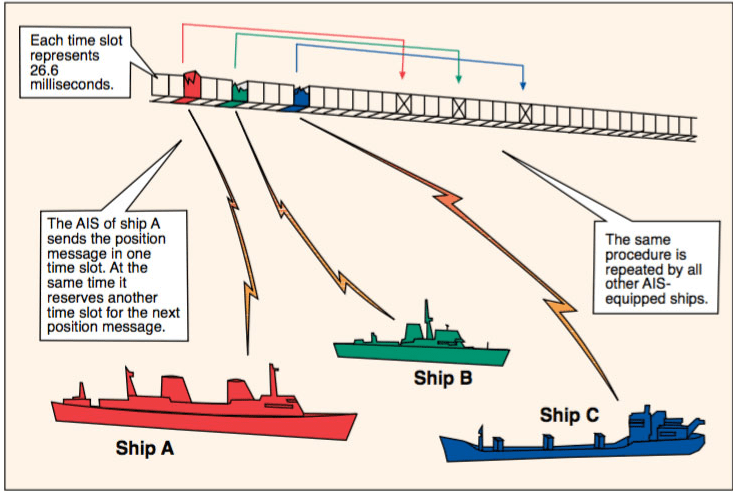
   Automatic identification system or AIS is a transponder system enables information exchange between ships and ship stations (Marine Online).

   As there are dotted gray lines between countries’ territories at sea, the question on which country has jurisdiction on policy enforcement over this area arises.

   An AIS system will enhance collaborative agreements between Indonesia, Malaysia, and Philippines on the  enforcement of anti-smuggling laws over these questionable areas.

   “These dotted gray lines have become a good business for smugglers,” said Nograles, explaining it must be another reason why illegal activities have been flourishing.

   As part of the AIS technology, a tracker of vessels, an app called “Marine Traffic,” is capable of identifying vessels including small boats that are now apparently being heavily used in smuggling. 

   The small boats, called “jongkong,” are able to dock on any small island which may have caused the huge growth in illicit trade activities.

   The AIS technology may be very expensive for small fishermen.  But if government shoulders the costs, its economic benefit  may turn out to be huge since the illegal trade problem is even causing huge economic losses to the country.

“The new Coast Guard has proposed it (AIS),  but it’s too expensive.  But we find ourselves in a situation now that is so absurd that the losses could actually pay for the solution,” said Nograles.

   Under prevailing practice, only vessels with huge capacity are required to acquire the system that enables their tracking at  sea.

   And jongkong boats are not required to install such system, making these untraceable, enabling tobacco smugglers to easily run away with their illegal trade.  

   If government invests in such system, Nograles suggested government may even find it easier to guard its territorial rights over West Philippine Sea.

PHOTO Automatic Identification System  Credit-Aeromarine SRT
DA-BAI to implement P850 million livestock dispersal among coconut farmers under RA 11524, the trust fund managing coconut levy

December 1, 2023

By Melody Mendoza Aguiba

The Department of Agriculture (DA) is implementing an P850 million livestock dispersal program for coconut farmers in partnership with the Philippine Coconut Authority (PCA).

   In accordance with the Coconut Farmers Industry and Trust Fund Act (CFI-TFA) under Republic Act 11524, DA will start dispersing chicken, native pigs, and goats perhaps toward the end of the year. 

   This is in support of coconut farmers, coconut industry in general, who are the intended beneficiary of the coconut levy fund that is now under the management of the Coconut Farmers Industry Trust Fun).

   Dr. Rene C. Santiago of the DA-Bureau of Animal Industry said during the Animal Health Congress that the budget for the livestock program stands at P166 million or thereabouts per year for five years. It totals to around P850 million over five years.

   “It is now under process with the procurement.  There is already a supplier for chicken, native pigs and goats,” said Santiago.

   The five-year program will make a significant difference in the lives of coconut farmers who own or tend not more than five hectares of coconut farms as per the CFI-TFA. 

   “We  in DA’s Livestock Group and with the leadership of Secretary (Francisco) Tiu Laurel all follow the same mission to help raise income of farmers among whom coconut farmers are the poorest.  Teaching them how to raise animals will make so much difference in their ability to earn income for their families,” said DA Undersecretary Deogracias Victor B. Savellano.

   Beneficiaries who are now being identified by PCA also include leaseholders or tenants who till coconut on not more than five hectares.

   Farm laborers, whether occasional or itinerant, who are harvesting coconuts or work in the processing of copra as a major means of livelihood are also beneficiaries.   

   Santiago said that since the program will be implemented by DA-BAI, the potential for successful adoption of animal raising technology even among coconut farmers is high.

   “We are already integrating training of coconut farmers on how to raise animals.  Farmers need to sign a form, and they need to declare that they have undergone trainings and seminars in order to start an animal raising business,” Santiago said.

   Local government veterinarians forming the Provincial, City, Municipal Veterinarians League of the Philippines (PCM-VLP)  have observed that many livestock dispersal programs of government have failed. 

   This is apparently due to the absence of support systems to help crop farmers run livestock and poultry businesses.

   “They should involve us provincial  veterinarians from the very beginning so we may hold trainings and seminars even before farmers start raising animals.  What has been happening is we are called when there is already a problem (animals get sick).  This is so that we won’t waste our resources when animals die before we come in,” said Dr. Mary Grace Bustamante during the Animal Health Congress.

   The livestock program is set now for just five years in line with the DA’s mandate to raise livestock production during the term of President Ferdinand R. Marcos Jr.  However,  the trust fund itself extends to 50 years. 

   As such, the trust fund could help sustain a long term livelihood enhancement program for farmers who may continue to integrate livestock raising in their coconut farming.  

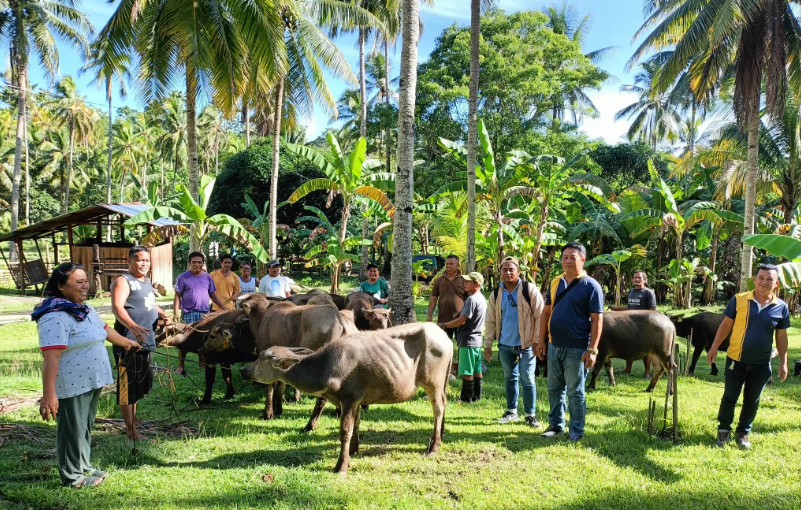
PHOTO Farmers receive carabao dairy under a Department of Agriculture program

DA throws support for Anti-Agricultural Economic Sabotage Act

November 30, 2023

The Department of Agriculture (DA) has thrown its support for the Anti-Agricultural Economic Sabotage Act as it sought collaborators in the fight against illegal tobacco trade that brings P25 billion yearly in foregone revenue for government.

   DA Undersecretary Deogracias Victor B. Savellano said Senate Bill 2432 should be immediately approved to help eliminate illegal trade and smuggling of tobacco and other agricultural produce.

   Illegal tobacco trade even has serious impact against the health of minors.

   “It may worsen the country’s problem on smuggling. Illicit tobacco trade reduces the effectiveness of public health policies designed to discourage smoking, with unregulated, substandard quality and non-compliant products.  It makes it easier for minors to access tobacco products and undermines the legitimate industry’s business,” according to SB 2432.

   The livelihood of thousands of Filipino farmers is adversely affected by illegal agricultural trade. 

   Among these are farmers belonging to Philippine Tobacco Growers Association (PTGA) and the National Federation of Tobacco Farmers Association and Cooperatives (NAFTAC) which are lobbying for the bill’s passage.    PTGA and NAFTAC has membership base of around 50,000 farmers.

   Speaking at the “Anti-Illicit Trade Interagency Dialogue: Protecting National Economic Interests through Greater Synergy and Cooperation,” Savellano said DA needs collaborators in this seemingly unsurmountable task of fighting illegal trade. 

   “Combating such highly organized crime requires substantial resources, specialized skills, effective inter-agency cooperation which can be difficult to coordinate and sustain,” he said.    

   “Illicit tobacco trade often involves the movement of products across international borders, making border coordination and cooperation within the country’s jurisdiction  essential.”

   Adequate investment in training programs, modern technology, and sufficient staffing levels is crucial to enhance the capacity of these agencies to combat illicit trade effectively.

   Senator Cynthia Villar, in her sponsorship of the Senate bill, cited Samahang Industriya ng Agrikultura or SINAG. The farmers’ group indicated that government loses P200 billion yearly in revenue due to smuggling.

   The Senate bill amends the Anti-Agricultural Smuggling Act of 2016 or Republic Act No. 10845.

   “With no conviction made seven years after the Anti-Agricultural Smuggling Act the, law is a failure at the hands of the Bureau of Customs (BOC). It’s been seven years and there is not a single conviction,” she said.

   “Smuggling brings about unfair competition for locally produced goods because it floods the market of cheaper agricultural products.  It puts undue risk to our consumer’s health.  It encourages corruption and threatens the rule of law.”

   Aside from tobacco, illegal trade involves sugar, corn, pork, poultry, garlic, onion, carrots, fish, and cruciferous vegetables, according to the Southeast Asian Regional Center for Graduate Study and Research in Agriculture.

   The Euromonitor reports that 16.7 percent or about 9.52 billion sticks of the total cigarette volumes sold in the Philippines comes from illegal sources as of 2022.

   “Most illicit cigarettes are shipped from Cambodia, Vietnam, and China, and enter through Sulu and Tawi-Tawi,” said Villar’s sponsorship statement.

   Illegal trade destroys tobacco industries in in Ilocos Norte, Ilocos Sur, Abra, La Union, Pangasinan, Isabela, Cagayan, Nueva Vizcaya, Quirino, Tarlac and Occidental Mindoro.

   It competes with the produce of at least 2.1 million people, including more than 430,000 farmers, farm workers and their family members.  (Melody Mendoza Aguiba)

LGU veterinarians pressed govt to resolve conflict between FDA, BAI on approving authority for vaccines

November 28, 2023

By Melody Mendoza Aguiba

Local government veterinarians have sought for the immediate resolution of the conflict on approving authority for African swine fever (ASF) and avian influenza (AI) vaccines as the immediate supply of vaccines will arrest a “national emergency” in meat and food security.


The Provincial, City, Municipal Veterinarians League of the Philippines (PCM-VLP) has expressed disappointment over the conflict between the Food and Drug Administration (FDA) and the Bureau of Animal Industry (BAI) on the approving authority for vaccines.


The conflict has been dragging the worsening ASF and AI infestation on hog and poultry sectors.
“We have long been waiting for this resolution,” said PCM-VLP President Dr. Mary Grace M. Bustamante during the Animal Health Congress last week.


The Department of Agriculture’s (DA) Livestock Group led by DA Secretary Francisco Tiu-Laurel will coordinate with the Office of the President with which a petition for resolution on the conflict has been filed.


“The spread of ASF is now a national emergency concern. There are provinces that have shortages of pork for their citizens. Prices are soaring at wet markets. We need to ensure food security especially for pork,” said DA Undersecretary Deogracias Victor B. Savellano.


“The approval of ASF vaccines by the FDA is critical to our food security. We have been waiting. I do not know how long we can wait as ASF eats up LGUs who have now been declaring states of emergency.”


DA has not procured any vaccines for ASF since there are no FDA-approved vaccines for ASF, he said.

Local government veterians are concerned that FDA lacks the resources and capability to fully undertake the task of approving veterinary vaccines. This, although an earlier memorandum of agreement (MOA) ordered FDA and BAI to collaborate on regulating such veterinary products.


“FDA has limited people to look after this function. BAI used to do this task as it does have the capability to test and approve (the safety and efficacy) of vaccines. If this conflict is cleared, (then we can work toward ASF-free and avian flu-free status),” said Bustamante.


There is an apparent lack of alignment in the present setup where FDA approves commercial release of the vaccine while BAI is the one testing it.


It has been assumed that since some animal drugs are also being prescribed to human, even vaccines and animal biologics should be approved by FDA.


However, Bustamante asserted that veterinarians precisely know that animal vaccines are only for animals. Veterinarians nor medical practitioners will never prescribe animal vaccines to human. This should not then be a concern for regulators.


“We know that antibitiocs for animals are only for animals. We know that these vaccines should only be for animals. So why is there a need for FDA to approve it? she said.


FDA Advisory 2022-0591 indicated that marketing authorization of veterinary drugs, vaccines, medical devices will be regulated by FDA’s Center for Drug Regulation and Research (CDRF).
This advisory was issued apparently during the time of high Covid infections. It was in compliance with FDA Circular 2021-025 or the “Guidelines for Appplication for Authorization at FDA in light of Extended Stare of Public Health Emergency dated 9 December 2021.”


An earlier Joint DA and DOH Administrative Order (AO 0026) in 2013 indicated that FDA “shall continue to register veterinary drugs in pharmaceutical dosage forms except those intended for feeds and license establishments manufacturing, distributing , importing exporting, selling the same.”


The AO was effective for five years until sooner terminated. A periodic review of a Technical Working Group should also be in order to recommend appropriate actions.


Under the same AO, BAI will regulate veterinary drugs and products including “veterinary vaccines, diagnostic kits and reagents, veterinary medical devices, and other biological products.”


The limited number of veterinarians is also a major concern if the Philippines is seeking after ASF-free and AI-free status. However, Bustamante said that under present laws, only provincial governments and first class municipalities are required to hire veterinarians.


“If a local executive doesn’t find the importance of having veterinarians, we really can’t do much about this problem. How about second, third class municipalities– where hiring of veterinarians is dependent on who the local authority is?”


Dr. Loida M. Valenzuela, provincial veterianarian of Ilocos Norte, told the same Animal Health Congress that veterinarians should have an independent authority in local government units (LGU). They should not be under provincial agriculturists, considering that veterinary medicine is an entirely distinct professional discipline.


Entry level compensation for veterinarians should also be upgraded, according to Valenzuela. This will encourage fresh passers of Veterinary Medicine board examination to take on local government jobs.


The LGU veterinarians were regretful of the low passing rate for takers of Veterinary Medicine board examination. It has been limiting the number of animal experts in local governments. It worsens the already brain drain experienced as veterinarians choose to work in higher-paying private companies, worse abroad.


“Something has to be done about this. This is not favorable for us,” said a veterinarian at the Animal Health Congress.


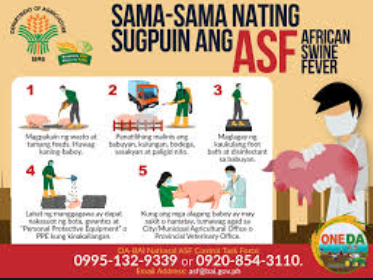
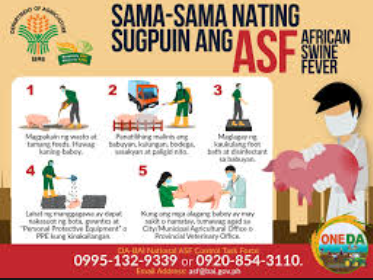
PHOTO Sama sama nating sugpuin ang ASF

DA warns against sale of “hazardous” frozen meat in the wet market, its adverse effect on local industry

Nov. 9, 2023

The Department of Agriculture (DA) has warned against the sale of frozen meat in the wet market as this can put human health at risk due to the absence of refrigeration facilities and a lack of know-how of vendors on handling frozen meat.

   DA Undersecretary Deogracias Victor B. Savellano said DA is collaborating with Department of Trade and Industry (DTI) so as to weed off public wet markets of health hazardous frozen products.

  DA also advised consumers to look for the seal of the National Meat Inspection Service (NMIS) to ensure food safety.

   “Delikado ito sa kalusugan ng tao. Hanapin ang papeles ng NMIS at katayan ng mga LGU (local government units). Walang problema ang imported na karne. Huwag lang ibenta na sariwa sa palengke.”

   (This is dangerous to health.  Look for the NMIS food safety seal and of LGU’s slaughterhouse documents.  Imported frozen meat is not the problem, but their handling as fresh food in wet markets.)

   DA Administrative Order 6-2012 prohibits frozen meat from being sold in the wet market.  Frozen meat should only be confined to hotels, restaurants, and supermarkets which have the refrigeration facilities and handling expertise. 

   Savellano said DA is also examining the price difference of poultry being sold in the market compared to farmgate prices.  While poultry’s price sold in the wet market has been increasing, farmgate price has actually been decreasing. 

   Ang mga nag-aalaga ng manok ay dumadaing sa mababang presyo na kuha sa kanila ng mga biyahero.

   (Poultry farmers have been complaining against the low price at which traders buy their produce.)

   DA believes the excessive dumping of frozen meat in the wet market may be the cause why farmgate price of poultry  has been decreasing to the detriment of farmers.

   Also, Savellano fears poultry farmers have been cutting maturity days for harvesting poultry—down to 27 or 28 days instead of 30 days.  This, as they try to meet poultry demand in time for the Christmas holidays.

   However, instead of increasing their income from increased production, they may be suffering from low farmgate price due to excessive frozen meat in the wet market.

   Savellano said DA’s objective is three-pronged, not just raise supply.  But it is to raise production, bring down price for consumers, and raise farmers’ income.

   DA’s strategy to meet these objectives is to increase feed production to lower price, reported Heaven Torres of DA Livestock.

   “Nagpapatanim na kami ng malalaking plantasyon ng mais para mapababa ang gastos ng mga nag aalaga at siya ding dapat ikababa sa merkado para sa lahat ng Pilipino.  Ang dapat na mababang presyo sa farm ay dapat maramdaman ng mga mamimili sa palengke.”.

   (DA is now expanding planting of corn so as to bring down feed costs of poultry farmers.  This should lead to lower price of chicken for Filipino consumers.  Filipinos should be able to feel the low price of chicken).

   DA has also asked Malacanang to grant it the authority to manage and administer African swine fever and avian flu vaccine. 

   As soon as it is granted this jurisdiction (with which it has conflict with Food and Drug Administration), it can then hasten processing of access of  vaccines to the industries. This is critical in preventing the fast spread of the diseases. Heaven Torres

Ilocos Region inaugurates first biosecure swine multiplier techno-demo farm as part of raising production, fighting ASF

October 29, 2023

By Aurelio Salvador

The first biosecure swine multiplier technology-demonstration farm has been launched in Ilocos Region as part of the Marcos Administration’s program to fight African swine fever (ASF), raise swine production, and give livelihood to small farmers.

   Department of Agriculture (DA) Undersecretary Deogracias Victor B. Savellano graced last October 24 the Swine Multiplier and Technology Demonstration (SMTD) farm in Natividad, Pangasinan.

   “We will repopulate our hog sector through these swine technology centers. We have put in place biosecurity measures that use a standard shelter design for hogs to keep small farms away from ASF,” said Savellano.

   The technology centers will be sites through which good swine genetics will be disseminated to farflung provinces.  Through farmers’ trainings on biosecurity measures, Philippines will be able to raise hog inventory and pork supply, Savellano said.

      “The facility will provide support to local raisers by making available breeders and breeding materials and by producing adequate and quality stocks to supply DA and other agencies’ needs for sustainability in production,” he said.

   A budget of P40 million has been allocated for four SMTDs in Ilocos Region.  A budget of P10 million per SMTD includes provision for tunnel vent type facility and 30 breeder sows and feeds. 

   The Natividad facility is the first.  Three others will be launched within the year.  The sites are Manaoag, Pangasinan and Candon and Vigan in Ilocos Sur.

   Local government units (LGU) provide the land for the swine facility as its counterpart support. Farmers are trained on biosecure hog raising prior to receiving their swine.

   DA’s National Livestock Program (NLP) has partnered with the International Training Center on Pig Husbandry (ITCPH) based in Lipa City, Batangas for the house design for the hogs, according to Agricultural Training Institute livestock focal person Krizel Joy Natividad.

   The SMTD has been introduced under DA-NLP’s Integrated National Swine Production Initiatives for Recovery and Expansion (INSPIRE) Program.  It is a hog repopulation program aimed at raising hog inventory following heavy ASF infestation, reported Aurelio Salvador of DA-Livestock

   Biosecurity measures in the swine program includes disinfestation process under which farm workers are required to bathe for disinfection before and after entering the swine facilities.  They also go through a 24-hour quarantine after entry to the facilities.

   The swine facility itself is air-conditioned and has curtains that keep the facility off infection.

   Present also during the launch were OIC-Provincial Veterinarian Dr. Arcely G. Robeniol (representing Pangasinan Provincial Governor Ramon V. Guico III); LGU-Natividad Municipal Mayor Hon. Rosita G. Rafael; Municipal Agriculturist Engr. John Christian M. Sioco; and ATI-RTC 1 Center Director Dr. Rogelio C. Evangelista.

   The event was also witnessed by the members of the Pagrang-ayan ti San Pedro Farmers Association, Municipal Agriculture and Fisheries Council (MAFC) Chairman Mr. Loujay S. Pagal, Sangguniang Kabataan Federated President Ms. Angelica D. Malaca, Municipal Local Government Operations Officer Ms. Hope Ordonio, and staff of the Municipal Agriculture Office.

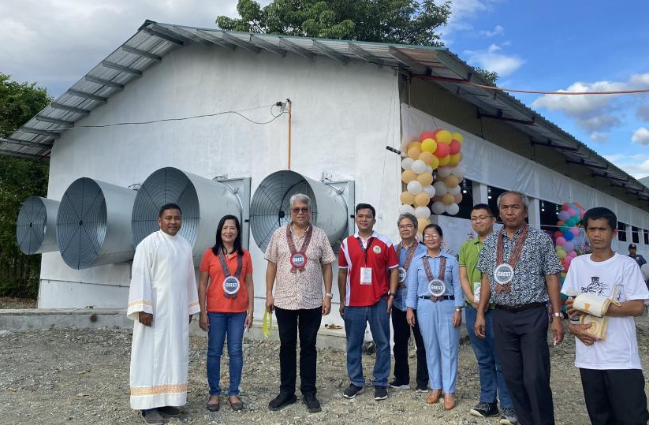
PHOTO DA Usec Deogracias Victor Savellano (third from leflt) leads launch of biosecure Swine Multiplier Techno-Demo Farm in Natividad, Pangasinan

DA-NTA negotiated higher floor price for Virginia tobacco; govt. to earn higher excise tax

October 27, 2023

The Department of Agriculture-National Tobacco Administration has negotiated a higher price for Virginia tobacco, up by an average of P9.90 per kilo for various grades, enabling farmers to enjoy higher income while raising for government excise tax that stands at P150 billion.

   DA-NTA has  successfully haggled for the higher tobacco price during the  tripartite conference last October 3 and 4 attended by farmers and tobacco buyers.

   DA Undersecretary Deogracias Victor B. Savellano expressed satisfaction over the NTA negotiation which is resulting in better income for farmers for trading years 2024 and 2025.

   “This is an unprecedented increase in the price of Virginia tobacco in at least 10 years of  trading history.  It  will surely benefit our farmers.  We also need to continue finding ways to help raise farmers’ income through intercropping and other alternative livelihood,” said Savellano.

   In the same forum, the increase in floor prices for a kilo of Burley tobacco and native-type tobacco are P5.90 and P3.90, respectively over the same trading years.

   DA-NTA reported earlier that for trading years 2022 and 2023, floor price per kilo for Virginia top grades was at P87.10 for Grade AA and P86.10 for Grade A.

   For Burley, the top grades A and B was at P75.10 and P72.10, respectively. The floor price for high grade of the native type was P77.10 per kilo. 

   The NTA Governing Board will release the full details of the 2024-2025 floor prices for various grades and their increases.

   NTA Administrator Belinda S. Sanchez initiated the successful negotiation.  The price increment is the second highest of such price difference brought about by NTA intervention.

   Records show the highest agreed increase on the floor price of Virginia tobacco was P10 a kilo.  It was also a result of a negotiation in a tripartite conference on December 10, 2007.

   “It was a time when the honorable DV (Deogracias Victor) Savellano also intervened when he was then governor of Ilocos Sur.  This is the second time Usec Savellano is intervening,” according to the NTA.

   The succeeding tripartite conferences after the 2007 forum brough an increase in floor prices of Virginia tobacco by a minimal P1 to P3 a kilo.

   The NTA convenes the tripartite conference every two years to review and fix reasonable tobacco floor prices.   Agreements on tobacco price consider factors including world market situations, production costs, and a reasonable margin of profit for farmers, dealers, manufacturers, and exporters.

   “The ultimate aim of our tripartite forum is to strengthen the tobacco industry as part of the directive of President (Ferdinand R.) Marcos for us to help raise income of farmers.  We will also increase our exports and reduce imports as we expand our production,” said Savellano.

   The tobacco industry generates huge tax revenue for government, reaching to P149.7 billion in excise tax in 2020.  It contributes at least P74 billion per year to the Universal Health Care program.

   “We aim to improve our industry while we help balance the tobacco industry’s contribution to the economy, being one of the highest contributors to the government coffer,” Savellano said.

   Tobacco-producing local government units (LGUs) got a P19 billion share from the national government’s 2020 excise tax revenue.  LGU share is being used for cities’ and municipalities’ implementation of priority programs.

   The industry provides livelihood to at least 2.1 million people, including more than 430,000 farmers, farm workers, and their family members.

PHOTO Agriculture Undersecretary Deogracias Victor B. Savellano leads a tripartite consultative conference in Ilocos Sur attended by farmers, traders

DA taps FAO for technical expertise on processing of seaweeds into feeds to lower costs of meat and poultry

October 26, 2023

Agriculture Undersecretary Deogracias Victor B. Savellano is eyeing the processing of seaweed through a technical cooperation with the Food and Agriculture Organization (FAO)  in order to produce nutrient-dense and cost-efficient feed to help lower costs of meat and poultry.    

   “We are tapping the expertise of Mr. Lionil Henri Valentin Dabbadie, country representative of the Food and Agriculture Organization (FAO) of the United Nations, to explore the processing of seaweeds as commercial feeds for farm animals and livestock,” said Savellano

   “This will relieve our local animal raisers from the high cost of commercial feeds in the market,” he said.

   Savellano, Department of Agriculture (DA)  undersecretary for livestock, said that the country has abundant seaweed resources that grow in its coastal waters whose length is one of world’s fifth longest. Seaweeds are relatively cheaper and are very rich sources of protein. 

   Savellano is also an oversight official for livestock and poultry feeds development and of the National Tobacco Administration (NTA) along with being alternate chairperson–designate to the NTA Governing Board.

   Seaweed is a sustainable source of macronutrients, particularly dietary fiber, and micronutrients for animal feeds.  It provides several antioxidants which can increase animals’ longevity and may lower the risk of infections.

   There are three main reasons to use seaweed in poultry feed.  These are improving animal immunity, decreasing microbial load in the digestive tract, and enhancing nutrient content of meat and eggs.

   Savellano said during the World Food Day celebration last October 17  that he is also looking at expanding the production of native pigs and native chicken which are easier to raise.  Native animals require commercial feeds at cheaper costs. 

   “We need to go back to the basics and the traditional way of raising our livestock so we can cut on our expenses for food for our family,” he said.

   Considering that corn accounts for  80% of feed formulation, DA is working on the planting of corn at the former sugarcane plantation in Batangas, he said.  This, after the closure of a Batangas sugar mill here.  As such, sugarcane farmers can take on a new livelihood and help supply requirements for animal feed ingredients of the livestock and poultry sector.

   According to Savellano, these ongoing initiatives are in in line with the three marching orders of President Ferdinand R. Marcos, Jr., also concurrent agriculture secretary.

 The orders are stated in an acronym VAM which means 1.  increasing Volume for export  of agricultural products; 2.  making price of food Affordable; and 3. increasing Margin or income of Filipino farmers.

   “These are some of our agency initiatives to achieve the ultimate goal of President Marcos Jr. of producing more foods at affordable for every Filipino consumer,” Savellano said.

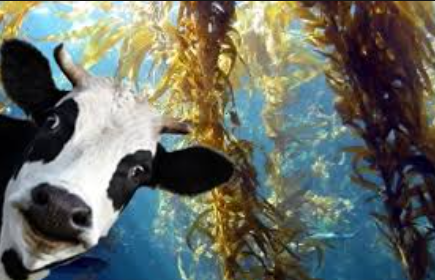
PHOTO Feeding cattle with seaweeds lessens greenhouse gas emission. Credit- Steemit.com

DA asks LGUs to supplement DA’s effort to curb ASF, compels them to report State of Calamity to access disaster funds

October 19, 2023

The Department of Agriculture (DA) has asked local government units (LGU) to supplement DA’s effort to curb African swine fever (ASF) and compelled them to declare a State of Calamity in order to access disaster program budget.

   DA Undersecretary Deogracias Victor B. Savellano said DA and its attached Bureau of Animal Industry (BAI) is strengthening biosecurity measures amid a State of Calamity declaration in Nueva Vizcaya.

   Dr. Arlene Vytiaco, BAI deputy director, said that under the NDRRMC (National Disaster Risk Reduction and Management Council) guidelines, provincial LGUs  are compelled to declare a State of Calamity if more than two of their municipalities have an outbreak. 

   “This (declaring a State of Calamity) will allow them to access disaster funds to combat ASF,” said Vytiaco.

   DA-BAI has already sent investigators, trained personnel and supplies to Nueva Vizcaya as soon as it declared a State of Calamity after its infected areas reached to nine municipalities.

   Savellano urged LGUs to supplement DA’s limited budget for ASF control. As the deliberated budget of DA for vaccines for 2024 just amounts to P1.5 billion, LGU’s accessing its own funds will be a significant move to control the disease.

   “Malaking bagay ang pag access ng LGU funds sa pakikipaglaban ng ASF.  Sa amin sa DA, biosecurity war na ito. Ang laban namin ay sitio kada sitio, bara-barangay, muni- munisipyo at probi-probinsiya.’ Ngayong wala pang aprubadong bakuna, pag iingat na di kumalat ang ASF ang ating ginagawa,” said Savellano.

   He also urged vaccine manufacturers to apply for commercialization with government.

   “We call upon vaccines companies to register and undergo testing and trials for the local market with the proper authorities,” he said.

   Savellano believes that as there is no approved vaccine yet, the P1.5 billion budget should also be made available for biosecurity efforts.

  In coordination with enforcement authorities, it is putting in place checkpoints to monitor movement of diseased hogs.

   There is also a need for a huge indemnification fund which will encourage hog raisers to report ASF as they will be compensated for reporting it. 

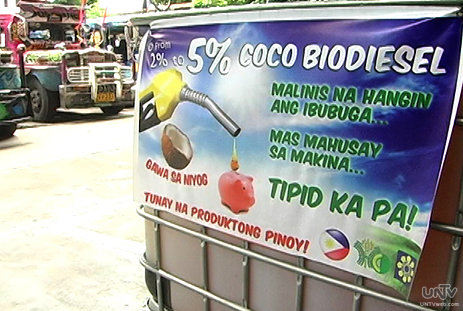
Govt urged to raise biodiesel mix to 5% to take advantage of P23.4 billion forex savings

October 14, 2023

Melody Mendoza Aguiba

The government should take advantage of the lower price of nature-friendly biodiesel by raising coconut methyl ester’s (CME) mix to diesel to 5% so as to generate huge foreign exchange savings equivalent to P23.4 billion yearly.

   Aside from enhancing the fuels’ ability to cut pollutant greenhouse gas emission, the increase in the biofuel will enable Philippines to displace a big amount of imported diesel, according to United Coconut Association of the Philippines (UCAP) Chairman Dean Lao Jr.

   “We are importing 13 billion liters of diesel (yearly).  From B2 (2% biodiesel) to B5 (5% biodiesel), we can displace an additional 390 million liters equivalent to P23.4 billion,” Lao told a press briefing hosted by the Philippine Chamber of Agriculture and Food Inc. (PCAFI).

   The Philippines was a pioneer in 2006 in adopting the biodiesel technology through CME, being itself then the biggest exporter of coconut oil.

   Having ratified Republic Act 9367 or the Biofuels Act of 2006, government subsequently implemented biodiesel mix of 2%.  Despite its early adoption, the Philippines has been overtaken by other Southeast Asian countries in maximizing use of the environment-friendly technology.

   “When we started in 2006, we were the pioneer. Now, we’re the laggard,” said Lao.

   Indonesia is now the leader in biodiesel with its mix reaching to 30% and even announced early this year a 35% blend.

   The country’s commercialization of biodiesel has stagnated since 2009, the last time that the biodiesel mix was raised from 1% to 2%.

  Along with the cheaper price now of biodiesel compared to fossil fuel-based diesel, the Philippines is missing on the other advantages of a higher biodiesel mix. These are improved vehicle mileage and the reduced pollutant carbon dioxide emission to the environment.

   Due to the slow uptake on the technology, several companies are not operating at present, incurring opportunity loss.

   The Philippines, in fact, has excess production of CME.

   “Do we have enough coconut?  There is enough coconut oil to supply biodiesel.  The infractructure is ready to supply the  increase from 2% to 5%.  The capacity is ready.  And It’s the simplest to implement,” said Lao.

   PCAFI, led by its president Danilo V. Fausto, recommended the increase of CME blend to B3 by January 2024; B4 after six months thereafter; then B5 by 2025.  

   “The National Biofuels Board (NBB) has not championed B5 despite its merits. Misinformed politicians campaign against biofuels,” according to PCAFI in a position paper.

   Pollutant emission from 100% biodiesel has been proven to be 74% lower than those from petroleum diesel, according to a life cycle analysis conducted by the Argonne National Laboratory.

   As it uses generally vegetable oils compared to the depleting petroleum resource, biodiesel is deemed a renewable and biodegradable fuel. 

   “Biodiesel meets both the biomass-based diesel and overall advanced biofuel requirement of the Renewable Fuel Standard,” reported the Department of Energy (DOE).

  DOE cites other benefits of biodiesel including clean burning and use of domestic production.

   “Using biodiesel as a vehicle fuel increases energy security, improves air quality and the environment, and provides safety benefits,” according to DOE. “Biodiesel in its pure, unblended form causes far less damage than petroleum diesel if spilled or released to the environment. It is safer than petroleum diesel because it is less combustible.”

   Vehicle engine operation is improved as biodiesel improves fuel lubricity and “raises the cetane number of the fuel.”

PHOTO Nature friendlier biodiesel at 5% mix Credit- UNTV