

Courtesy Call to DA Sec. William Dar
August 26, 2019
The private sector has pressed government to address import irregularities, especially of Customs Bonded Warehouse (CBW), that allows dumping of cheap poultry imports adversely affecting small producers as imports peaked to a record 310 million kilos (2018).
The United Broilers and Raisers Assn (UBRA) has asked newly-appointed Department of Agriculture (DA) Secretary William D. Dar to put in place system to systematically monitor imports, particularly that of CBW.
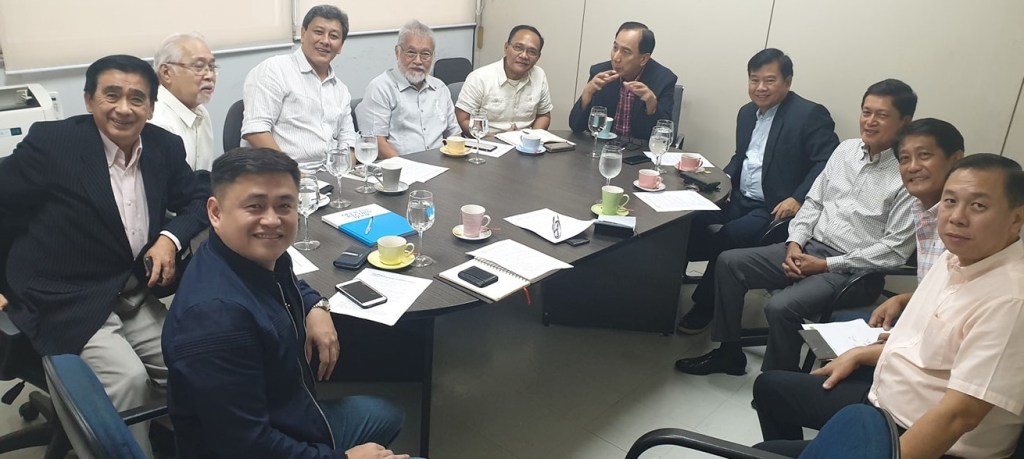
UBRA leaders, , together with Philippine Chamber of Agriculture and Food Inc (PCAFI) President Danilo V. Fausto, just met with Dar regarding reform recommendations in specific farm sectors.
The poultry raisers are asking DA to keep a data monitoring of CBW chicken imports.
“(In the past), DA has shown no institutional commitment to address unfair trade and smuggling. They can’t even present data on customs bonded importation,” said UBRA President Bong Inciong.
“It is so obvious that there’s irresponsibility on the part of the government. When you say customs bonded warehouse, you’re supposed to (use imports for manufacturing input)and re-export, but DA has no data showing what is being re- exported.”
Although 30% of these CBW imports are allowed to be distributed to local markets (supermarkets, wet markets), such volume has to be paid with tariffs.
“But there’s no record showing they pay tariffs. Here is where we find it hard to look up to government.
They have a mandate to develop local industries. How can you develop your industry if you don’t have data, how can you manage?” said Inciong. “They keep talking about competitiveness about addressing unfair trade, smuggling when they don’t even bother to organize data.”
Fausto said the poultry industry is a top priority in the agriculture sector as it is the sector generating the third highest revenue, following only rice and pork.
Philippine Statistics Authority (PSA) data showed gross value of poultry production as of the first quarter of 2019 was at P55.4 billion.
Inciong said there is a globally recognized system to monitor technical smuggling—that is comparing local import data compared to imports being reported from country of origin. But DA is not even adopting this system.
This absence of CBW monitoring record applies too with the Bureau of Animal Industry (BAI) and National Meat Inspection System (NMIS), UBRA said.
The poultry raisers are also raising the following problems with Dar:
“Government has the fondness for justifying imports. This is the opportunity that has high gov ernment support. Last year, inflation was high, they all panicked and removed safeguards for chicken. So in September 2018, we were (selling chicken at) below cost all the time. Our cost would be higher than the few years ago,” said Inciong.
“In July farmgate price was at (a very low) P81 per kilo. But market price was still high at P170. In July, farmgate price increased to P106 per kilo, and the retail price for consumers is still the same, at P170. Our position is imports do not benefit consumers. That’s true for rice, corn, chicken, and other agri products.”
In the past, there was an instance BOI gave incentives on the assumption there is a huge demand-supply gap for MDM mechanically deboned meat (MDM). This assumed this poultry classification renders the product useful for preparing chicken in the usual way (tinola, frying, turbo, etc). But MDM is really used as extenders in siomai or other processed meat.
“BOI invited the investor on the belief there’s massive shortage of chicken based on MDM data. But they just damaged the industry.”
Nevertheless, Inciong said Trade and Industry Secretary Ramon Lopez and DTI Undersecretary Ruth Castelo just met this month with UBRA regarding this concern of the sector.
PCAFI has also urged government to recognize huge trade subsidies being granted by other developed countries to their farmers, including poultry raisers, and similarly support Filipino farmers this way.
“Subsidies in one form or another have been the template for other countries with successful agricultural sectors. If we are to win the struggle for the future of agriculture, a more pragmatic approach as practiced by US and China should be the way forward,” said Fausto.
The United States Farm Bill as of 2018 placed farm support at $867 billion including huge trade support for making sure American farmers get a higher price for their produce even despite lower market prices.
Data monitoring of imports will be pivotal in helping raise small poultry raisers’ income amid global trade liberalization.
“The mindset of government is more imports, more local players will be forced to be competitive. But the government is the one that’s not competitive because it doesn’t provide the sector the amount of subsidy other governments provide their agri sector,” said Inciong. Chicken imports consistently rose from 135 million kilos in 2012, 141 million kilos, 2013; 177 million kilos, 2014; 198 million kilos, 2015; 232 million kilos, 2016; 244 million kilos, 2017; and 310 million kilos, 2018. (Melody M. Aguiba)
Think tank documents profit-sharing models of 9 successful agroforestry cooperatives including one in Mt Kitanglad, Bukidnon
June 8, 2019

Think Tank SEARCA is pushing for replication of 9 successful agroforestry cooperatives including the notable reforestation in Imbayao, Mt. Kitanglad, Bukidnon which is now under review for key profit sharing models.
The profit sharing models of 9 agroforestry cooperatives including one found over the 47,270 hectare Mt. Kitanglad Natural Park (MKNP) in Malaybalay City are being documented by think tank Southeast Asian Regional Center for Graduate Study & Research in Agriculture (SEARCA).
It is part of an aim to replicate the success models of these job-generating, export-earning forest farms all over Southeast Asia, according to SEARCA.
The 9 agroforestry cooperatives hold a Community Based Forest Management (CBFM) contract with the Department of Environment and Natural Resources.
CBFM is government’s instrument and strategy for sustainable forest management amid heavy denudation that decimated forest cover down to less than 24% from the original area in the 1900s.
For one, Mt. Kitanglad in Bukidnon, a declared protected area, suffered from a forest fire in 1983.
Fortunately, the Imbayao CBFM-People’s Organization (PO) in Mt. Imbayao, the most extensive lowland area in Mt. Kitanglad, has been instrumental in its agro-forestry development.
SEARCA is also looking into the benefit sharing models of (in Luzon) Tao Kalikasan Foundation of the Phils, Labo, Camarines Norte; LBN Multi-Purpose Cooperative (MPC) Vintar, Ilocos Norte; and Caunayan MPC, Pagudpud, Ilocos Norte.
In Visayas, SEARCA has identified the Nalundan United Farmers Association, Inc., (NUFA) Bindoy, Negros Oriental and Katilingban sang Pumuluyo nga naga-Atipan sang Watershed sa Maasin (KAPAWA), Maasin, Iloilo.
The rest in Mindanao are San Isidro Upland Farmers MPC (SIUFMUCO) Santiago, Agusan del Norte; Limatong Dalumangkom Bual Farmers Multipurpose Association, Pigcawayan, North Cotabato; Malakiba People’s Improvement MPC (MPI-MPC), Davao City.
SEARCA’s benefit-sharing study is funded by the ASEAN Working Group on Social Forestry.
It will come up with policy recommendations for DENR as it reviews CBFM’s aim on socioeconomic benefits to community (jobs, project profits, skills training, strengthening of social networks).
Ecological, biodiversity use
The agroforestry cooperatives play a significant role in ecological functions and biodiversity enrichment in the forests.
For one, the Mt. Kitanglad Natural Park (MKNP) plays a critical role in water supply as its watershed is the most important source of water in Bukidnon and and Misamis Oriental.
. It is home to bird species found only in higher mountains in Mindanao including the Mindanao Lorikeet, Mindanao Racquet-tail, Mindanao Scops-owl, Slaty-backed Jungle-flycatcher, Red-eared Parrotfinch and Apo Myna.
It is a habitat for a rich biodiversity, making it a birdwatching site. It is home to endemic but threatened bird species in Mindanao and Eastern Visayas—the endemic Philippine eagle included.
These are among Imbayao CBFM’s best practices:

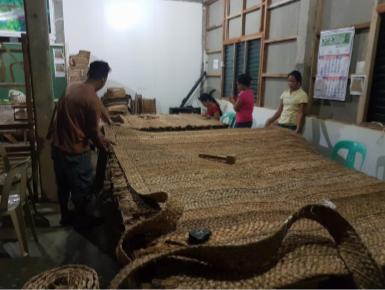
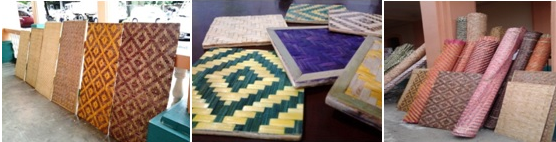
Abaca processing in SIUFMULCO
SEARCA’s documentation tools include key informant interview guide, guide questions for focus group discussion, video recording, and primer on benefit-sharing. Field documentation was already conducted in the two Visayas sites and the Davao City site.
The output of the SEARCA-ASRF project will be presented in a national workshop to further draw inputs from CBFM leaders, coordinators, and stakeholders, civil society organizations, non-government organizations, and the academe.
Tao Kalikasan, Caunayan, LBN
The Tao Kalikasan Forest Rehabilitation Project supplies seedlings of indigenous forest tree species and fruit trees to the forest plantation in Labo, Camarines Norte. It has its own nursery. It sells abaca fiber and other forest products like rags, eco-bags, and storage baskets, twine, and bakbak.
The Caunayan MPC (CMPC) operates in Caunayan, Pagudpud Ilocos Norte which forms part of a coconut plantation that will be the site of a future biodiesel plant that will source coconut from the area. The coconut methyl ester (CME) source is part of a huge 600,000 plantation are in Ilocos NOrte.
CMPC has so far been successful in developing 25 hectares of agroforestry farm.
The LBN MPC has a 448 hectare fuelwood production area in Vintar, Ilocos Norte.
Visayas agroforestry
In Visayas, the Katilingban sang Pumuluyo nga naga-Atipan sang Watershed sa Maasin (KAPAWA) in Maasin, Iloilo produces abaca, coffee, organic vegetables, and woven bamboo products from a 35 hectare CBFM.
These are marketed through the Tinukib Pasalubong Center, a known souvenir shop in the Visayas region.
The Nalundan United Farmers Assn. is also an abaca agro-forestry area in Bindoy, Negros Oriental
SIUFMULCO
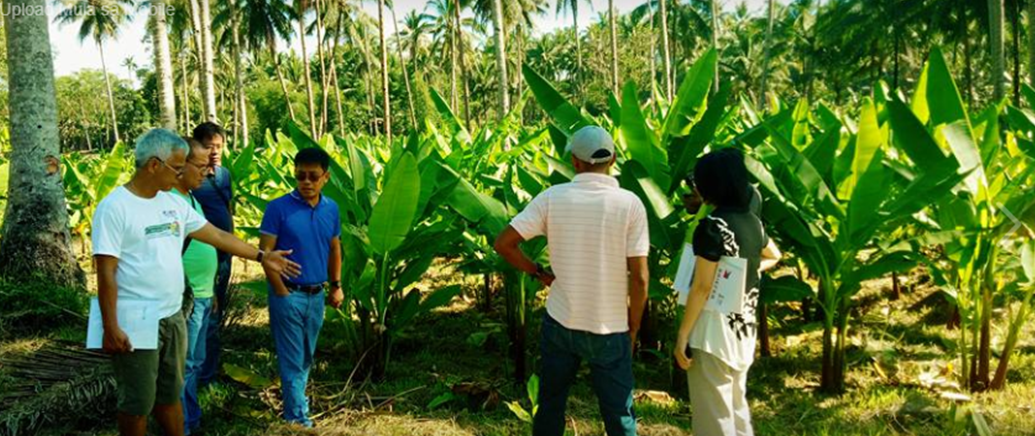
In Mindanao, the San Isidro Upland Farmers MPC (SIUFMULCO) is a producer of abaca and abaca products in Agusan del NOrte.
SIUFMULCO has a fast membership growth with more than 600 abaca farmers. It runs 5 abaca production clusters in Agusan del Norte –Santiago, Nasipit, RTR, Kitcharao and Cabadbaran City.
It has been supported by the government and the International Food and Agriculture Development through projects such as funding for provision of planting materials, organic fertilizer, nursery and stripping machines.
It has put up post harvest and processing facilities.

Abaca products and fresh produce in SIUFMULCO
Limatong Dalumangkom
The Limatong Dalumangkom Bual Farmers Association (LDBFA) in Pigcawayan, North Cotabato is engaged in fuelwood (charcoal) production which has become in demand due to the prohibitive cost of petroleum based fuel.
It is part of DENR’s project for growing fuelwood species in Region 12 including ipil-ipil (Leucaena glauca) and kakawate or madre de cacao (Gliricidia sepium).
The LDBFA has a CBFM deal covering 810 hectares now planted on rubber, cacao, abaca, coffee, mahogany, narra in Brgy. Kimarayag; Pigcawayan. It has 150 beneficiaries.
Malakiba
The Malakiba Peoples Improvement Cooperative (MAPICO) markets farm products such as Tangan-Tangan, peanuts, corn, cacao, coffee, and banana (latundan, binangay, and cardava) out of the produce of its CBFM in Davao City. It also runs a canteen and consumer store.
It also raises livestock –goat, carabao, and swine. It produces and sells seedlings– cacao, rubber, lawaan.
Its wood production are turned into furniture. It had total asset of P4.434 million as of 2012. It has 150 members. It has 176 hectares of area planted to abaca, cacao, fruit trees, and timber in Bantol, Marilog, Davao City. (Growth Publishing for SEARCA)
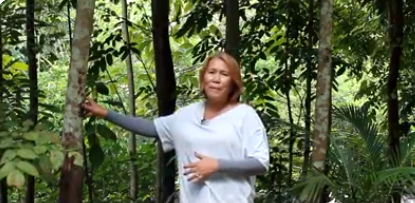
Hello! My name is Melody Aguiba. Writing has been my passion throughout life. To be able to help institutions grow in their missions, I opted to become a Public Relations person. Here’s what businessman and statesman Donald Trump said of the importance of PR:
“You can have the most wonderful product in the world, but if people don’t know about it, it’s not going to be worth much. You need to generate interest, and you need to create excitement. One way is to hire PR people…If the New York Times writes even a moderately positive one-column story about one of my deals, it doesn’t cost me anything, and its worth a lot more than $40,000.”
Of course PR has no cost if you do it for yourself. But even if you hire one, it’s still most cost effective. And the most important thing is its value is worth a lot more!
I hope you will get passionate too about the stories we write about—the products and causes we will share. We hope knowing about them will be valuable for you, your home, your job, and your world!
For I will make many interesting business and socio-economic development missions more meaningful, relevant to our world, and even exciting!

Farming entrepreneurs asked govt to allocate budget for palay buying in Central Luzon
May 28, 2019
For any questions or interview requests, please contact 0929-715-8669, 0917-102-6734 (Growth Publishing for PCAFI)
Farmer-entrepreneurs have asked government to allocate budget for the purchase of palay in Central Luzon as it is the farmers that have extended credit to DA for a buyer’s credit, rather than government lending to farmers.
Rather than the Department of Agriculture (DA) lending to farmers, it is farmers from the Federation of Central Luzon Farmers Cooperative (FCLFC) that have extended supply credit to government because DA’s National Food Authority (NFA) apparently does not have the budget for buying already sold palay (husked rice).
In a letter to DA Secretary Emmanuel F. Pinol last May 20, FCLFC asked for an adequate and uninterrupted funding for NFA.
“Magalang po naming hinihiling sa inyong tanggapan na mapagkalooban ng sapat at tuloy tuloy na pondo ang NFA Bulacan . (We kindly request you to grant sufficient and continuous funding for NFA Bulacan),” said FCLFC Chairman Simeon T. Sioson.
NFA has owed farmers for the purchased palay even before the May 13 national elections.
Sioson also said in a forum led by Philippine Chamber of Agriculture & Food Inc (PCAFI) President DAnilo V. Fausto that farmers are already losing significantly from the decline in palay price since the ratification of the Rice Tariffication Act (RTA).
Palay’s farmgate price in some parts of Central Luzon had already dropped to P11 to P13 or even P10 per kilo since RTA, Sioson said.
This brings farmers a loss of P5 to per kilo from the price of P18-P19 per kilo prior to RTA passage.
Fausto said that with the RTA’s Rice Competitiveness Enhancement Fund (RCEF), government should be able to strengthen credit to farmers – meeting whatever financing need to help them upgrade into becoming entrepreneurs.

PCAFI President Danilo V. Fausto
RCEF allocates P1 billion yearly for six years for a credit program to farmers called “Expanded Rice Credit Assistance” (ERCA).
ERCA fund will be equally managed by Land Bank of the Philippines and Development Bank of the Philippines.
It bears “minimal interest and with minimum collateral requirements.”
Fausto said the credit should be an integrated facility not only for financing rice farming, but agriculture-related activities that will raise farmers’ income and add value to their produce. It should include financing for livestock, poultry, and farming of fruits and vegetables.
In boosting credit supply to the agriculture sector in order to maximize its contribution to economic development,
Fausto said PCAFI is also urging government to strengthen implementation of the Bangko Sentral ng PIlipinas’s Agricultural Value Chain Financing (AVCF) Program.
Sioson said Central Luzon farmers are experiencing difficulty selling their entire rice produce to NFA.
“Nung ang bigas nasa 14.4 % moisture content, nireject nila kasi i-dry muna raw. Nung ibinalik namin at less than 10% ang moisture content, ni reject rin kasi overdried raw. (NFA rejected our rice (unhusked rice) when it was at 14.4% moisture content. So we dried it first. But when we returned at less than 10% moisture content, NFA also rejected it saying it’s overdried,” said Simeon.
Ironically NFA traditionally imports rice from Thailand and Vietnam whose quality has been mired with controversy due to pests (bukbok) infecting the imported rice due to their old stock nature.
“Ano ba kaibahan ng bigas na may bukbok na inisprayan ng insecticide na ini-import ng NFA dun sa mga palay ng magsasaka na di raw katanggap-tanggap. Kahit lugi kami ng P5 sa palay ok lang, pero bukbok at overdried, that’s unfair.”
(What’s the difference between NFA’s imported, pest-laden, and insecticide-sprayed rice from the rice produce of Filipino farmers that are said to be unacceptable? Even if we lose P5 per kilo from farmgate, that’s just ok. But to say that our rice should be rejected because it’s overdried, that’s unfair.).
Roger Navarro of the Phil. Maize Federation Inc during the PCAFI meeting that the same rejection in post harvest-related activities in corn has been experienced by farmers with NFA.
“NFA should rather adjust pricing, whether it’s at 14% moisture content or should compensate farmers with any equitable pay for drying instead of asking farmers to return their produce home,” said Navarro.
“Since NFA has its own drying facility, it should rather dry the ones with higher moisture so farmers will already be assisted in the sale of the grain.”(Growth Publishing for PCAFI)
May 24, 2019

The private sector expressed fear the Rice Tariffication Act will pour tons of poor quality, pesticide-sprayed imported rice and has so far stripped away P95 billion in income to Filipino farmers at a P5 per kilo farmgate loss.
Companies participating in a dialogue of the Philippine Chamber of Agriculture & Food Inc. (PCAFI) with Department of Agriculture Undersecretary Ariel T Cayanan disclosed the present reality of previous fears prior to RTA ratification.
“Before importation was only for buffer stocking. But now, importation is the rule. It becomes a permanent solution to the rice shortage. Rice from Thailand and Vietnam is not as good as local rice,” said an entrepreneur of Chen Yi Agventures which built Visayas’s most modern rice complex in Alang Alang, Leyte.
“We produce local rice; we do not mix with imports. It’s entirely good– much better quality than imported. But their rice has long been stocked in the warehouse, shipped for some time, and stocked again in local warehouses. Their rice is sprayed with pesticides because of bukbok (pests) and with artificial fragrance because it smells old.”
Frisco M. Malabanan, SL Agritech Corp. rice consultant, said at the prevailing price of palay (rice husk) at farmgate which declined by around P5 per kilo, Filipino farmers are deprived with as much as P95 billion in income.
It is based on the country’s local palay production of 19 million metric tons.

Dr. Frisco M. Malabanan
Palay’s farmgate price in some parts of Central Luzon had already dropped to P11 to P13 or even P10 per kilo since RTA, according to Federation of Central Luzon Farmers’ Cooperatives (FCLFC) Chairman Simeon Sioson.
This is from the previous P17 to P20 per kilo at farmgate.
In the market, imported rice looks new, shiny, fragrant (because of the pandan flavour spray) and nice as some of them appear to be whole grains and not broken rice (at times due to mixture with local rice).
But indeed, these are the poorest of all rice as Philippines imports the cheaper, broken rice, according to the Chen Yi investor.
Even the P10 billion Rice Competitiveness Enhancement Fund (RCEP) may not be effectively implemented.
This is as DA had failed to raise many farmers’ living levels even despite the ACEF (Agriculture Competitiveness Enhancement Fund).
PCAFI President Danilo V. Fausto said DA does not appear prepared (in technical, staff capability, administrative capability) to implement the P5 billion RCEP mechanization program.
PCAFI President Danilo V. Fausto
PCAFI President Danilo V. Fausto said DA does not appear prepared (in technical, staff capability, administrative capability) to implement the P5 billion RCEP mechanization program.
“As to the beneficiaries, how will you identify them? About 80% of cooperatives are non-compliant with CDA (Cooperatives Devt Authority) certification. If you deal with them, you will be dealing with non-existent institutions,” said Fausto.
DA-Philmech (Phil. Center for Postharvest Devt. & Mechanization) hardly has people and equipment to carry out distribution of P5 billion RCEF fund.
“Even Amtech (Agricultural Machinery Testing Evaluation Center) under the University of the Philippines’ Los Banos is not capable of such supporting that huge task of testing machines to support the RCEP mechanization program,” said Fausto.
He said machines should not be carelessly distributed to farmers if they do not have resources to at least maintain the machines – or these machines will just be sold or abandoned.
This is much as the Philippine Carabao Center does not just give away buffaloes to farmers who do not have the resources (land, feeding/milking facilities, etc) to raise them well .
Amtech is the agency tasked to test quality of imported machines. However, even its legal mandate is questionable in order to support DA.
Nevertheless, Cayanan, who represented DA Sec. Emmanuel F. Pinol during the PCAFI dialogue, said RCEF will tap resources of the DA Regional Field Units (RFO). Initial beneficiaries will be farmers in irrigators’ associations.
DA also started reviewing its beneficiary list after farmers’ benefit programs had been transferred from the Department of Social Welfare & Devt (DSWD) to DA due to the Napoles controversy, said Cayanan.
Chen Yi was concerned the RTA will sidetrack government’s focus on modernizing local agriculture.
“It will be very easy to get import permit. We’ll not work on productivity. We’re putting food security at risk. What happens if Thailand and Vietnam can longer supply us because they also have their own food security issues or if China or US will import more? They can pay more money.”
Chen Yi poured since 2014 a huge investment of P1.7 billion in an integrated rice complex in Alang Alang, Leyte in order to help uplift farmers from poverty after it was devastated by typhoon Yolanda.
The company was since alarmed on the Philippines’ rice situation since the 2008 crisis caused the country to import more than one million metric tons with some volume reaching a high price of $1,800 per metric ton.
With the financing of Land Bank of the Philippines, Chen Yi put up the rice operation engaged in growing seeds, planting rice, harvest, drying and processing, and distribution. Its aim is to cut production cost from P14 per kilo to P6 per kilo to be competitive with Thailand and Vietnam.
As to the training component of RCEP, Cayanan said Sec. Gen. Isidro Lapena (Technical Education & Skills Devt. Authority) committed to deploying trainers for farmers’ use of machines. (Growth Publishing for PCAFI)
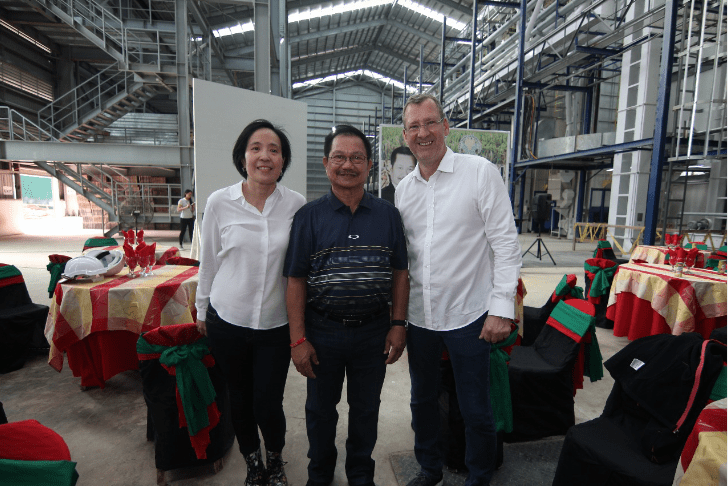
DA Secretary Emmanuel F. Pinol with Chen Yi investors
May 23, 2019
For any questions or interview requests, please contact 0929-715-8669, 0917-1026734; Growth Publishing for PCAFI)
The private rice sector has pressed the Department of Agriculture (DA) to partner with private enterprises on the implementation of the P10 billion Rice Fund and to unequivocally buy farmers’ palay as a commitment to local rice industry despite liberalization.
Enterprises participating under a Philippine Chamber of Agriculture & Food Inc. (PCAFI) forum asserted the private sector’s role in the effective implementation of the Rice Competitiveness Enhancement Fund (RCEF) as government may fail to properly implement it.
In a PCAFI dialogue with DA Undersecretary (Operations) Ariel T. Cayanan, Chen Yi Agventures, a company that built the most modern rice processing plant in Alang Alang, Leyte. asked DA to allow participation in 4 subsectors of rice operations.
These are mechanization, seeds distribution, lending and extension – where the private sector has expertise in.
The Federation of Central Luzon Farmers’ Cooperatives (FCLFC) also pressed DA to buy farmers’ palay—at a price based on quality offered, rather than reject these as rice farmers had disappointedly experienced.
The proposal of Chen Yi Agventures has been filed earlier with DA Secretary Emmanuel F. Pinol.
“As one from the private sector, we’re very grateful for Secretary Pinol’s help. He loves our program. He said we will work together to help implement the Rice Fund,” said a Chen Yi Agventures entrepreneur. “Our proposal is with the DA. We discussed it at length with Secretary Pinol. And it’s not a new dialogue.”
DA Secretary Emmanuel Pinol with Chen Yi Agventures investor
Providing these services (seeds supply, mechanization, lending, training & extension) on a large scale to farmers needs private enterprise.
“Implementation is something the government is not good at. But the private sector can teach farmers how to plant seeds and monitor these daily. It can own and maintain the machines, and teach farmers how to use these,” said the Chen Yi entrepreneur.
“Merely giving machines away to farmers is not the solution. The problem DA encountered is farmers just abandon or sell the machines because they don’t know how to use these.”
Chen Yi stressed the importance of raising rice farmers’ productivity.
“That rice price will go down due to the rice tariffication law is only one concern. The most basic question is not whether price will go down, but that the yield of farmers remains low. Even if palay price goes up, farmers’ income is low.”
“Their ability to get out of poverty is not dependent on price of rice, but on productivity. You think it’s not relevant, it’s very important. Productivity is what the Rice Fund should address.”
Chenyi put in P1.7 billion investment in a highly-mechanized, integrated rice plant in Leyte which uses the most advanced technology in Visayas and Mindanao. Its operation is from planting seeds to planting rice, harvesting, drying-processing, and distribution.
The program’s target is to lower production cost from P14 per kilo to P6 per kilo, competitive to Thailand and Vietnam. That uplifts Filipino farmers out of poverty through a contract farming scheme.
“We want Filipino farmers to experience how it is to have money in their hands. French farmers are so successful in making a lot of money. They have comfortable living because France is taking care of its farmers. Farming is abt food security,” said Patrick Renucci, Chen Yi French investor, said earlier on national television.
“France has changed its farming system a long time ago while the Philippines is so behind. That’s why we believe we have to change how people are framing because food is so important.”
PCAFI President Danilo V. Fausto said during the dialogue that DA has to beef up capability to implement RCEP considering the present limited budget and capable staff it has.
DA-Philmech (Phil. Center for Postharvest Devt. & Mechanization) hardly has people and equipment to carry out distribution of P5 billion RCEF fund.
“Even Amtech (Agricultural Machinery Testing Evaluation Center) under the University of the Philippines’ Los Banos is not capable of such supporting that huge task of testing machines to support the RCEP mechanization program,” said Fausto.
Amtech is the agency tasked to test quality of imported machines. However, even its legal mandate is questionable in order to support DA.
FCLFC Chairman Simeon T. Sioson also said during the PCAFI dialogue that poor rice farmers in Central Luzon have experienced several rejections from the DA-National Food Authority (NFA) when they sell their palay.
NFA had claimed that it buys farmers’ palay at a higher price when dried with a 14% moisture content, but still buy their produce if it’s not dried, only at a lower price.
However, Sioson said, Central Luzon farmers were compelled to dry their palay after initial NFA rejections. However, when moisture content went below 12%, NFA also rejected them.
It is unfair to poor Filipino rice farmers that NFA buys Vietnamese and Thai rice at whatever quality they’re in.
Even if these are old, long-stocked rice that need spraying for pesticide and bad smell, these are accepted by NFA, Sioson said, while rejecting newly-harvested rice from local farmers.
Also, Sioson said government still owes farmers in Central Luzon payment for accepted palay—instead of lending to farmers.
Farmer-leader Simeon T. Sioson on Maunlad na Agrikultura
“Magsasaka po kami ng San Miguel, Bulacan. Hindi po kami nababayaran ng NFA mula sa mga palay na ibinenta naming. May mga recibo po kami—bago pa mag halalan. Meron pa nga po na may 10 araw na ngayon, hindi pa nababayaran. Sana po mabigyan ng sapat at tuloy tuloy na pondo sa Bulacan.” (Growth Publishing for PCAFI)
PHOTO CAPTIONS
4;
May 14, 2019
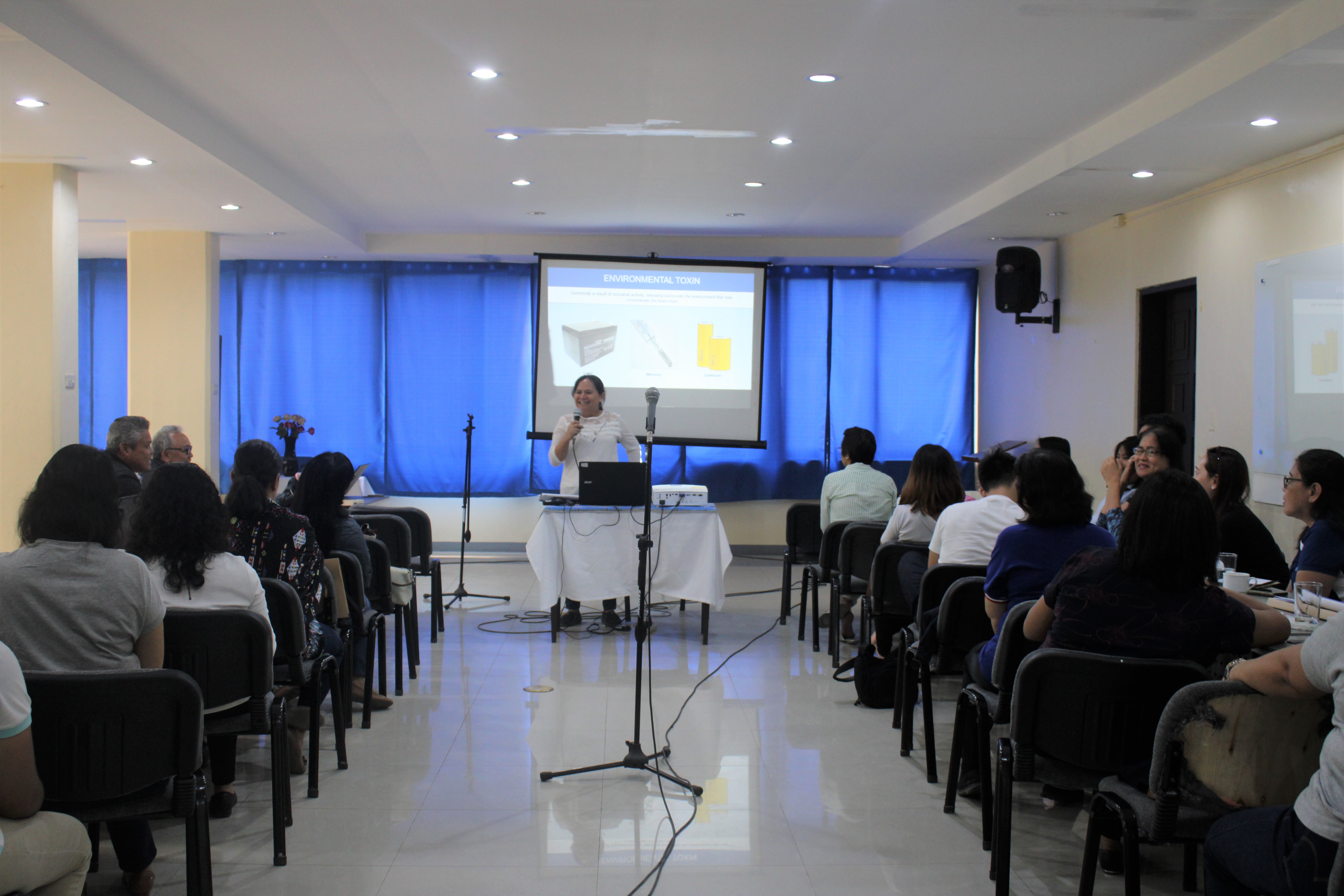
Cagayan de Oro City – The Department of Science and Technology-X trained the representatives from the Northern Mindanao Food Safety Regulation Coordinating Board (FSRCB-X) to become Food Safety trainers on April 29-30, 2019.
One of the purposes of the activity is to form a pool of Food Safety trainers who can be tapped by the industries and MSMEs in the region by using a harmonized training manual.
The training manual included topics about Food Safety Hazards, Basic Food Hygiene, and current Good Manufacturing Practices.
It also aims to capacitate stakeholders in the use of science and risk-based analysis in compliance with food safety regulations, promote food safety awareness, and address food safety issues and concerns in Northern Mindanao.
The trained Food Safety trainers are expected to conduct series of Food Safety trainings that are lined up for MSMEs, hotels, restaurants, street vendors, and other food handlers.
The primary objective of the FSRCB-X is to promote and enhance collaboration between the various government agencies, the local government units (LGUs), and the private sector in addressing food safety concerns and issues in the region per RA 1061.
To know more about Food Safety trainings, contact DOST-X through landline at (088) 858-3931 or through Facebook at facebook.com/dostregion10/. (Julie Anne H. Baculio, DOST-X)
About the picture (IMG_1224.jpg)
Participants observed the microbial results from samples obtained from their personal belongings and surroundings.

uploads by Maricar Aquino Bou
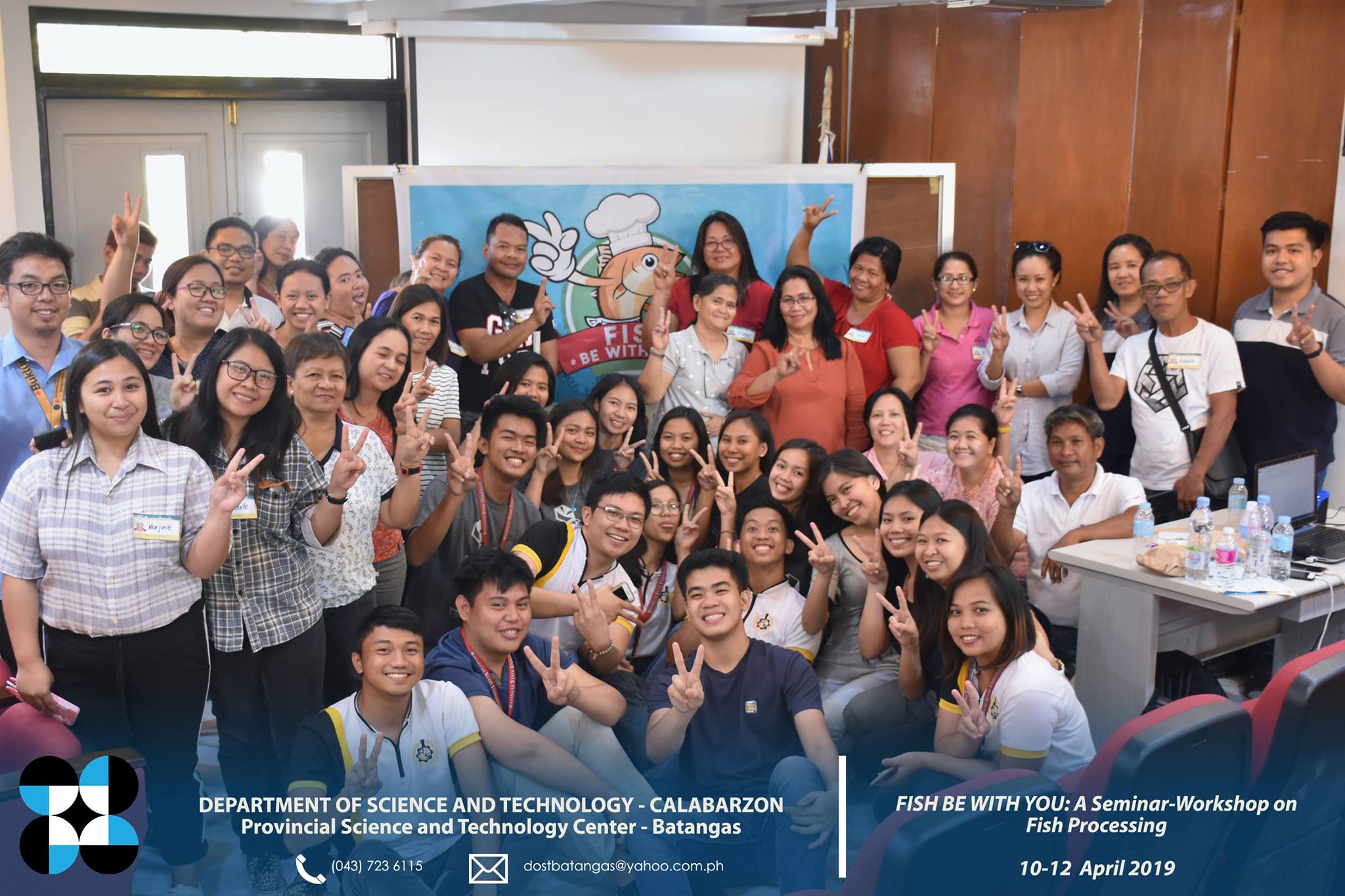
May 8,2019
In preparation for the Lenten Season, DOST Batangas held a three-day seminar workshop on fish processing entitled “FISH BE WITH YOU” in benefit of the fish processors in Batangas province in partnership with BatStateU’s Food Innovation Center (FIC), April 10-12.
Fish processing industry in the Batangas province has continuously developed over the years through innovation and technological advancement. Prominently known for sinaing na tulingan, tilapia, and various sardine products, Batangueños really take pride when it comes to fish processing.
Fish Be With You was a solution to the upgrading of Batangas processed fish products. This activity helped encourage fish processors to enhance further their manufacturing practices, upgrade their processed fish products, and comply with the food safety requirements. Students and faculty members from BatStateU also partook in the said activity showing a gesture of interest to learn and improve products processed in the FIC.
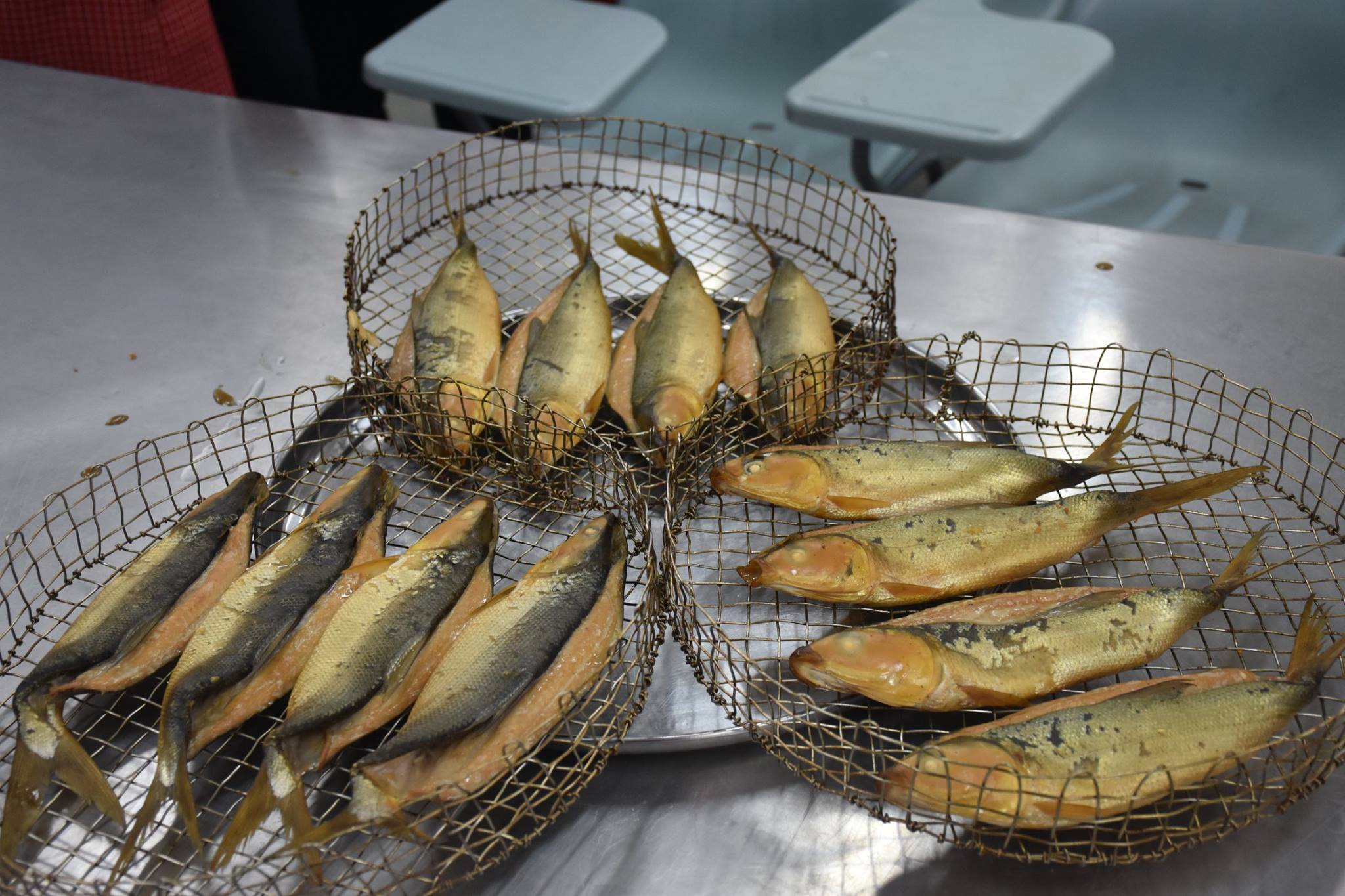
A Forum on Good Manufacturing Practices (GMP)and Hazard Analysis and Critical Control Points (HACCP) on Fish Processing was pursued on the first day of the activity. Ms. Ma. Lorelie Dorado, Science Research Specialist II of DOST CALABARZON, facilitated the discussion on GMP. The discussion prompted the participants to share and raise their concerns regarding technical problems experienced during food preparation and product handling.
Ms. Natividad Efondo, Chief-Fish Inspection Unit of BFAR IV-A, facilitated the discussion on HACCP and regulations in fish processing. The discussion provided the participants with the step by step procedures of the regulatory requirements needed to comply with HACCP standards. Moreover, market advantage of fish manufacturing firms with HACCP Certification was also detailed out by Ms. Efondo.
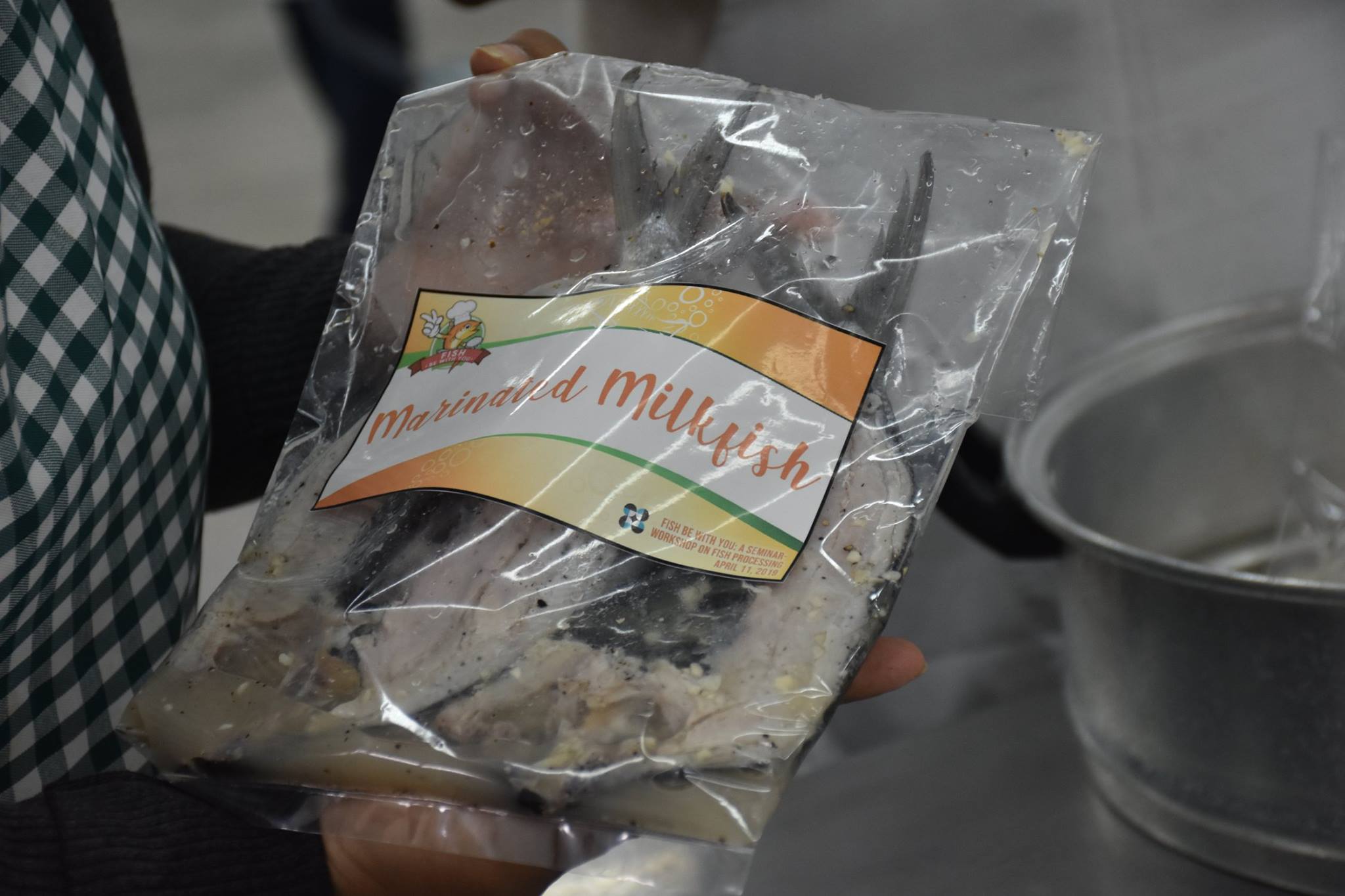
Meanwhile, fish processing training pursued on the second day of the activity. Dr. Ma. Josie Sumague of UPLB’s Institute of Food Science and Technology facilitated the said training which comprised the processing of five fish products such as sardines, bagoong, fishball, smoked and marinated milkfish.
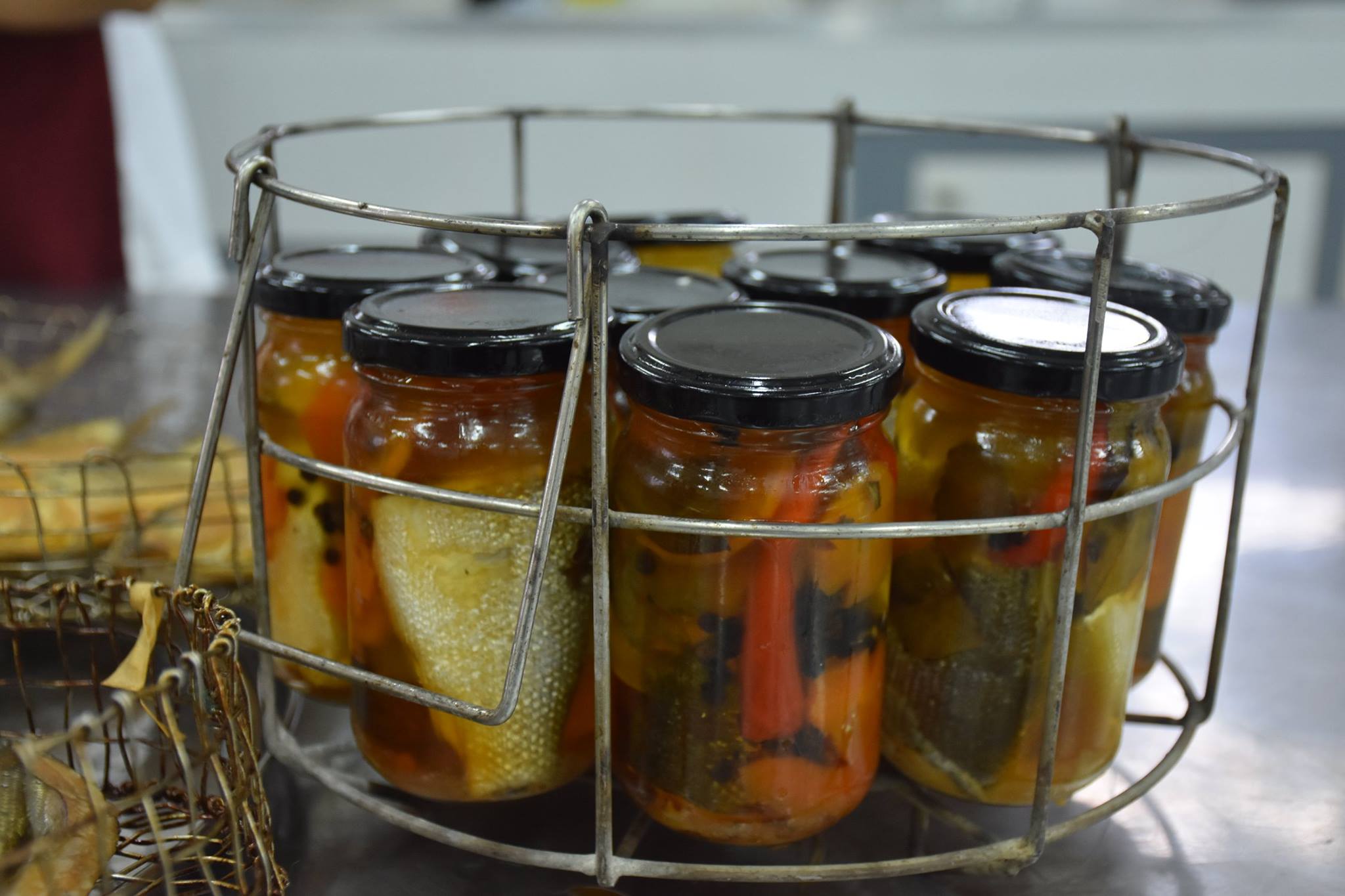
The last day of the activity was allocated for the project visit. DOST Batangas Team together with Dr. Sumague visited the processing facility of FilEntreps Multipurpose Cooperative in Lipa, Batangas, a GIA-CBP beneficiary of DOST, to provide them inputs in upgrading their fish processing business. The cooperative produces skipjack tuna or sinaing na tulingan and continuously market their products within Batangas province. Observation on each process from raw material preparation to packaging and labelling was done in order to specify problems and upgrade the quality of their fish products.
uploads by Maricar Aquino Bou
April 30, 2019
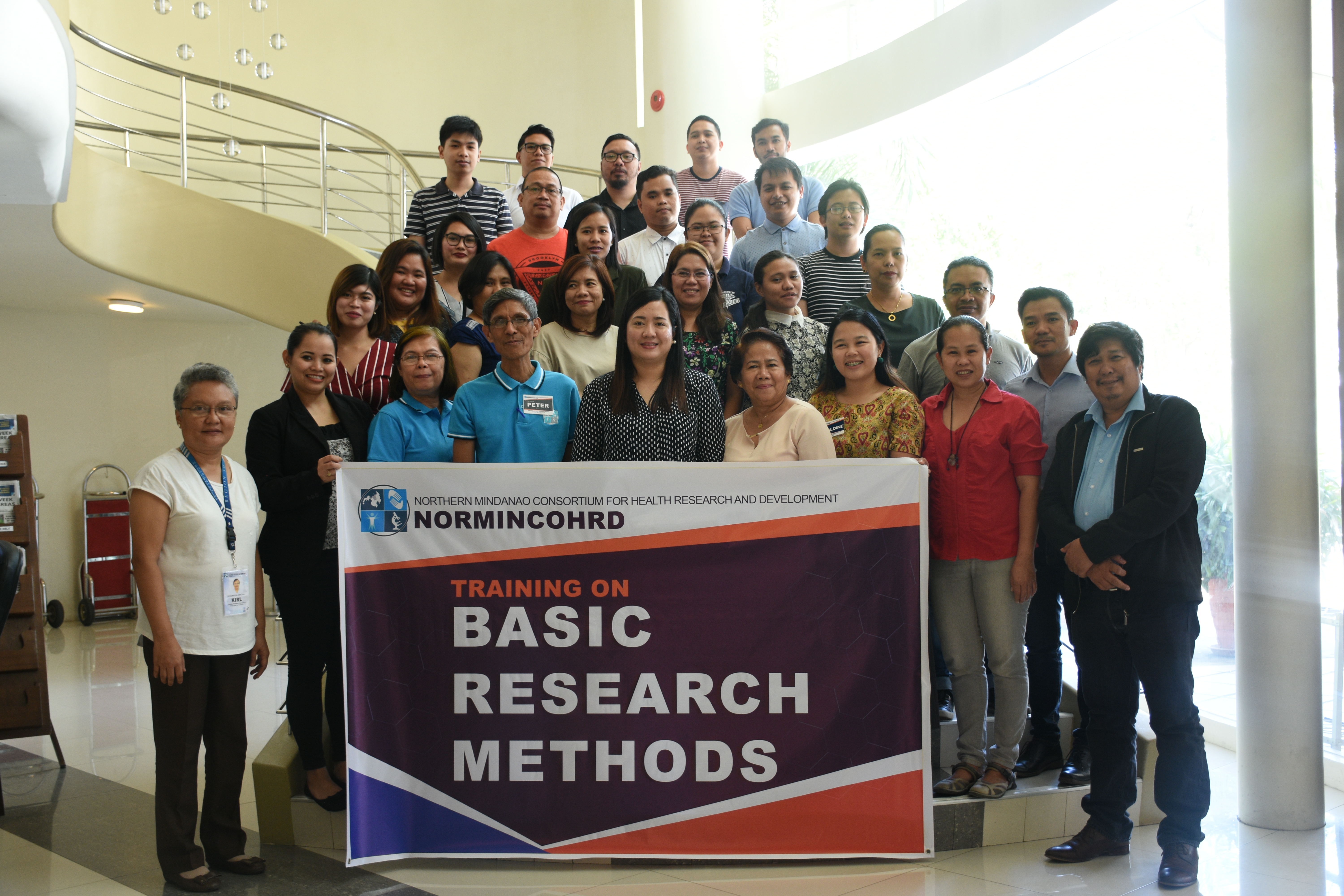
Twenty-five (25) junior researchers from different member-institutions of the Northern Mindanao Consortium for Health Research and Development (NorMinCoHRD) attended the Training on Basic Research Methods on April 10-12, 2019 at N Hotel, Cagayan de Oro City.
The training focused on enhancing the capacities of the young researchers in health research proposal preparation. A total of eleven (11) health research problems were identified and presented before the plenary and critiqued by the trainers during the three-day workshop. Among the research problems identified were prevalence of heterophyiasis, resilience in post-war, relapse after rehabilitation, breastfeeding practices, care of dementia patients, suicidal ideation, portable database for health information collection, mobile application for diabetic individuals’ data and information technology (IT) wearables.
Participants of the training were from Bukidnon State University (BukSU), Cagayan de Oro College – PHINMA (COC-PHINMA), Capitol University (CU), Central Mindanao University (CMU), Iligan Medical Center College (IMCC), Liceo de Cagayan University (LDCU), Mindanao State University – Iligan Institute of Technology (MSU-IIT), Xavier University (XU) and Northern Mindanao Medical Center (NMMC).
The trainers were the consortium’s very own officers/members, Dr. Peter R. Orbase of CMU, Dr. Ester L. Raagas of XU and Dr. Fidela B. Ansale of CU. They have been trained and completed the PCHRD-initiated Basic Research Methods Training of Trainers on December 11-13, 2018 at Davao City and the Research Proposal Critiquing Workshop on March 14, 2019 at Manila Manor Hotel, Manila.
uploads by Maricar Aquino Bou
 Growth Features