SEARCA redefines value chain ‘inclusivity’ for regional agricultural and rural economy

May 2,2019
To continually promote inclusivity and sustainability in the agricultural value chain development, the Southeast Asian Regional Center for Graduate Study and Research in Agriculture (SEARCA) offered its Value Chain Development Course for the second time last April 22-26.

Research and development professionals and practitioners representing the academe and government in Southeast Asia, including the Philippines, participated in the course.

In its second offering, the course looked through the agricultural value chain lens to analyze and design interventions to promote value addition for various players, especially the marginalized actors in the process, but this time integrating the gender element.

The course covered the fundamental frameworks, principles, components and processes of the value chain system, and their practical skills and application.

A more well-balanced facet of inclusivity was introduced through a session on gender mainstreaming in agricultural value chains and integrating gender in workshop discussions and outputs throughout the course.

SEARCA Governing Board Chair Fernando C. Sanchez, Jr., currently the University of the Philippines Los Baños Chancellor, shared that the vitality of capitalizing on social inclusion has been the core of SEARCA’s campaign for inclusive and sustainable rural development (ISARD) in support of Sustainable Development Goal (SDG) No. 8: “Promoting inclusive and sustainable economic growth, employment, and decent work for all.”

“The challenge therefore is for various institutions and stakeholders, especially smallholder farmers and small-scale rural entrepreneurs, to step up to the plate and maximize the benefits of borderless trade,” Sanchez said.

UPLB College of Public Affairs and Development (CPAf) professors served as resource persons and training facilitators of the training-workshop.

At the outset of the course, UPLB CPAf professor Wilfredo Carada stressed the imperative of developing an inclusive value chain to steer increased vibrancy and productivity for the overall improvement of the agriculture and rural sector in ASEAN countries.

He explained that inclusivity means bringing positive and desirable change in the activities in the agricultural value chain, wherein advanced competency and productivity would also create an enabling environment for marginalized smallholder farmers and fisherfolks, and increase their integration and opportunities to secure a fair share in the value chain process.

In the same vein, NEXUS Agribusiness Solutions Managing Director Nerlita M. Manalili, one of the course lecturers, pointed out that greater capacities for the farmers should always be accompanied with increased market access and opportunities for sustainable growth and food security down to the household level.

Dr. Manalili also enthused the participants to fully understand the value chain context, wherein she highlighted the need to add “value” on product transformation across the stages and processes of the value chain.

She noted, however, that challenges brought about by the changing mix and dynamism of existing market players, commodities should be addressed by ASEAN countries towards efficiency-driven market integration in the current globalization of agricultural production.

The course participants identified gaps and designed interventions on how inclusivity could be integrated, considering the current socioeconomic dynamism, production technologies, and government and market structures in both national and regional context across Southeast Asia.

Value chain analyses and interventions for cinnamon, rice, mango, high-value crops, and white potato were developed by participants organized into one group per commodity. Each intervention design included a sector situationer, value chain analysis and mapping, value chain development strategy, organizational and institutional arrangements for value chain development, and a monitoring and evaluation plan.
uploads by Maricar Aquino Bou
Eminent rice scientist and academician appointed new SEARCA Director

May 2, 2019

impatientoptimists.org

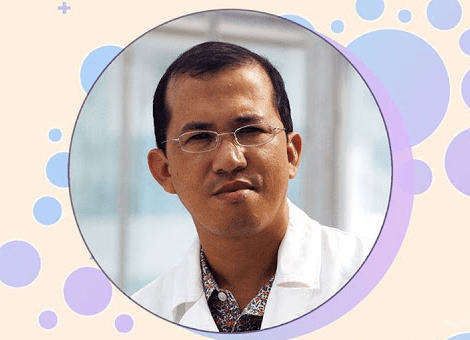
Dr. Glenn B. Gregorio has been appointed as new Director of the Southeast Asian Regional Center for Graduate Study and Research in Agriculture (SEARCA), an inter-government treaty organization hosted by the Philippine government on the campus of the University of the Philippines Los Baños (UPLB), for a three-year term and he assumed office on 1 May 2019.

Dr. Gregorio is the eleventh to hold the top SEARCA post since its establishment in November 1966 by the Southeast Asian Ministers of Education Organization (SEAMEO).

Dr. Gregorio is also an Academician at the National Academy of Science and Technology (NAST) of the Philippines and is currently a professor at the Institute of Crop Science of the UPLB College of Agriculture and Food Science.

A distinguished rice scientist, Dr. Gregorio served the International Rice Research Institute (IRRI) for almost 30 years, including a five-year stint as IRRI’s rice breeder in Africa based at Africa Rice Centre station at the International Institute of Tropical Agriculture in Nigeria from 2004 to 2009.

Throughout his career, Dr. Gregorio has bred more than 15 rice varieties, most of which are salt-tolerant varieties that have greatly helped farmers in Bangladesh, India, Nigeria, and the Philippines. He also led efforts to develop micronutrient-dense rice varieties to address anemia and malnutrition in Bangladesh, Indonesia, the Philippines, and Vietnam.

But rice breeding is not Dr. Gregorio’s only forte. Prior to his appointment as SEARCA Director, he also served as Crop Breeding Manager for Corn at the East-West Seed Company, Inc. from 2015 to 2018 where he was the global lead of the sweet corn and waxy corn breeding programs for South and Southeast Asia, the Latin Americas, and Sub-Saharan Africa.

Dr. Gregorio has been the recipient of numerous awards, including Outstanding Young Scientist Award (OYS 2004) and Outstanding Publication Award given by NAST; The Outstanding Young Men (TOYM 2004) in the field of Agriculture-Plant Breeding and Genetics; the Ho Chi Minh Medal Award for great contribution to the cause of agriculture and rural development in Vietnam; Ten Outstanding Youth Scientists (TOYS 1981) of the Philippines given by the Department of Science and Technology (DOST) of the Philippines; Honorary Scientist, Rural Development Administration (RDA), Korea; and other awards for his outstanding research and research management achievements.

He has authored and co-authored at least 90 articles published in various scientific journals, chapters on rice breeding in 14 books, and five scientific manuals and bulletins. He mentored and supervised 20 PhD and 27 MS graduate students and more than 40 BS students in plant breeding and genetics at UPLB and other universities in Asia, Africa, Europe and North America; and he continues to hone scientists and future scientists as a mentor and teacher.

Dr. Gregorio obtained his PhD in Genetics, MS in Plant Breeding, and BS in Agriculture at UPLB.
uplbgenews
uplbgenews
uploads by Maricar Aquino Bou

DOST highlights sustainable development at Luzon Regional Scientific Meeting

Luzon RSM
May 2,2019
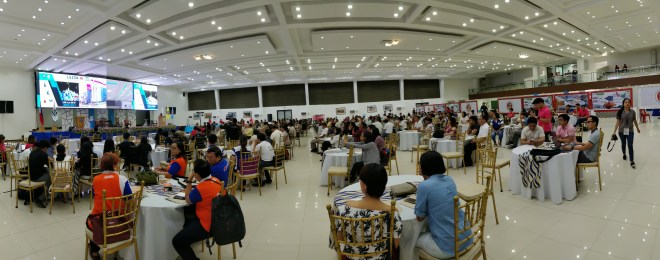
For its third year, the Luzon Regional Scientific Meeting (Luzon RSM) was attended by over 300 scientists, academicians, researchers, and private and public stakeholders held at Don Leopoldo Convention Center in Alaminos, Pangasinan last April 24-25.

With a theme of “Caring for the Country’s Carrying Capacity”, the two-day convention was filled with topics and discussions focusing on three United Nation’s Sustainable Development Goals (SDGs), namely: Goal 4 – Quality Education, Goal 12 – Responsible Consumption and Production, and Goal 14 – Life below Water.

Alaminos City Mayor Arthur F. Celeste welcomed the participants while DOST Secretary Fortunato T. de la Peña was represented by DOST Undersecretary for Regional Operations Brenda L. Nazareth-Manzano to deliver his message.

The scientific meeting was divided into four plenary sessions where experts from government, academe, and private sector gave a talk and discussed essentially about plastic waste, sustainable marine food security, sustainable education, talent development, and retention, and updates from the National Academy of Science and Technology – Philippines (NAST PHL).

More than 20 entries from higher education institutes (HEIs) and state universities and colleges (SUCs) joined in the scientific poster session. The team of Mr. Elfritszon Peralta from the University of Santo Tomas won the Best Scientific Poster for their study entitled “Life below water in the Anthropocene: Using ecological and isotopic approaches to trace human impacts in Laguna de Bay and its watersheds”.

Resolutions and policy recommendations were drafted and presented to be lobbied for possible legislation that will hopefully address the problems related to the SDGs.

This event was led by NAST PHL and co-organized by Department of Science and Technology (DOST) Luzon Cluster (NCR, CAR, Regions I, II, III, IV-A, IV-B, and V) with DOST 1 as this year’s host. Regional scientific meetings are conducted in preparation for this year’s NAST 40th Annual Scientific Meeting.
uploads by Maricar Aquino Bou

Media Advisory_DOST-PCHRD holds media conference on Diagnostics Program

May 3,2019
The Philippine Council for Health Research and Development (DOST-PCHRD) will be holding a Talakayang HeaRT Beat (Health Research and Technology) media and press conference which will highlight the accomplishment of the Council’s Diagnostic Program specifically on HIV.

WHEN: May 21, 2019, 11 AM to 2 PM
WHERE: Autumn Function Room, Luxent Hotel, Timog Ave., Quezon City

PCHRD Executive Director Dr. Jaime C. Montoya will lead the discussion along with other project leaders in the Diagnostics Program.

Attached is the press conference details along with the program.

2019 Edition Asian Scientist 100 lists DOST-ITDI’s Torres, Paglicawan

May 6,2019
In an early March 2019 article of the Asian Scientist Magazine, it announced that 2019 has a new list of 100 scientists who are outstanding in their fields.

Dr. Juliana Chan, founder and editor-in-chief of Asian Scientist Magazine and a Young Global Leader of the World Economic Forum herself, announced the names that qualified for inclusion in the 2019 Edition of the Asian Scientist 100. Asian Scientist 100 listed its first 100 scientists in 2016.

Gathered from diverse disciplines that covered from materials science to molecular biology and particle physics, the list named representatives from China, India, Japan, Malaysia, Singapore, South Korea, the Philippines, Taiwan, Thailand, and Vietnam.

These include 17 in Life Sciences, 15 in Biomedical Science, 12 in Engineering, 12 in Materials Science, 9 in Leadership, 8 in Chemistry, 8 in Environmental Sciences and Geology, 7 in Agriculture, 7 in Mathematics, and 5 in Physics.

At DOST, Drs. Rosalinda C. Torres and Marissa A. Paglicawan, both of the Industrial; Technology Development Institute, are joined by six others from the Philippines.
uploads by Maricar Aquino Bou

Torres, who is Scientist I and Chief of the Standards and Testing Division, qualified under Chemistry for her research on the larvicidal ability of Philippine medicinal plants. Paglicawan, also Scientist I and Head of the Advanced Materials Section at the Materials Science Division, qualified under Materials Science for her research on turning Manila hemp or abaca into an engineering material.

Japanese researchers dominate both disciplines.

Others from the Philippines are Artemio Salazar of the University of the Philippines (UP) Los Baños for Agriculture; Rody Sy of UP Manila for Biomedical Science; Ricardo Balog of the University of Sto. Tomas and Elmer Dadios of De La Salle University for Engineering; Gay Jane Perez of UP Diliman for Environmental Sciences and Geology; and Charissa Marcaida Ferrera of UP Diliman for Life Sciences.

These “100 outstanding thinkers and innovators from Asia who are pushing the envelope with their research” are making Asia the striking center of radical research and development efforts.

The Asia Scientist Magazine reports that this is so because Asia currently supplies the world a quarter of its publications written by Asians now numbering a third of all scientific researchers worldwide. It added that the 2010 U.S. National Science Foundation Key Science and Engineering Indicators reported that these represented a shift in the world’s scientific research center of gravity to Asia.

Furthermore, it cited the Science and Engineering Indicators 2012 released by the US National Science Board, which recorded that, the largest global science and technology gains in recent years occurred in “Asia-10″ which consists of China, India, Indonesia, Japan, Malaysia, Philippines, Singapore, South Korea, Taiwan, and Thailand.

In comparison, US’ share in global R&D efforts between 1999 and 2009 dropped from 38 to 31 percent; Asia’s share grew from 24 to 35 percent during that period.

Fish Be With You gathers Batangas Fish Processor

Fish Be With You_01
May.8,2019
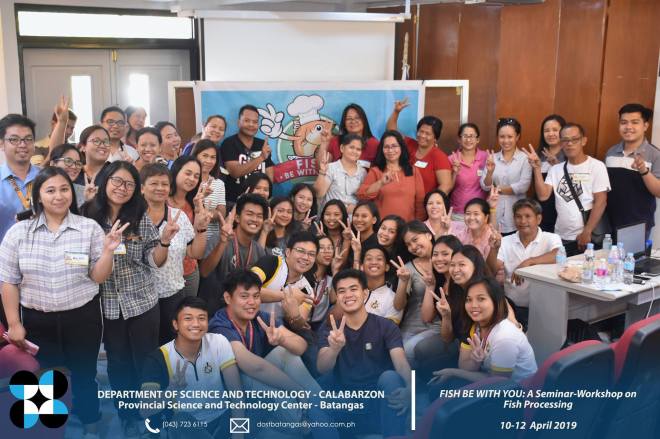
In preparation for the Lenten Season, DOST Batangas held a three-day seminar workshop on fish processing entitled “FISH BE WITH YOU” in benefit of the fish processors in Batangas province in partnership with BatStateU’s Food Innovation Center (FIC), April 10-12.

Fish processing industry in the Batangas province has continuously developed over the years through innovation and technological advancement. Prominently known for sinaing na tulingan, tilapia, and various sardine products, Batangueños really take pride when it comes to fish processing.

Fish Be With You was a solution to the upgrading of Batangas processed fish products. This activity helped encourage fish processors to enhance further their manufacturing practices, upgrade their processed fish products, and comply with the food safety requirements. Students and faculty members from BatStateU also partook in the said activity showing a gesture of interest to learn and improve products processed in the FIC.
Fish Be With You_02

A Forum on Good Manufacturing Practices (GMP)and Hazard Analysis and Critical Control Points (HACCP) on Fish Processing was pursued on the first day of the activity. Ms. Ma. Lorelie Dorado, Science Research Specialist II of DOST CALABARZON, facilitated the discussion on GMP. The discussion prompted the participants to share and raise their concerns regarding technical problems experienced during food preparation and product handling.

Ms. Natividad Efondo, Chief-Fish Inspection Unit of BFAR IV-A, facilitated the discussion on HACCP and regulations in fish processing. The discussion provided the participants with the step by step procedures of the regulatory requirements needed to comply with HACCP standards. Moreover, market advantage of fish manufacturing firms with HACCP Certification was also detailed out by Ms. Efondo.

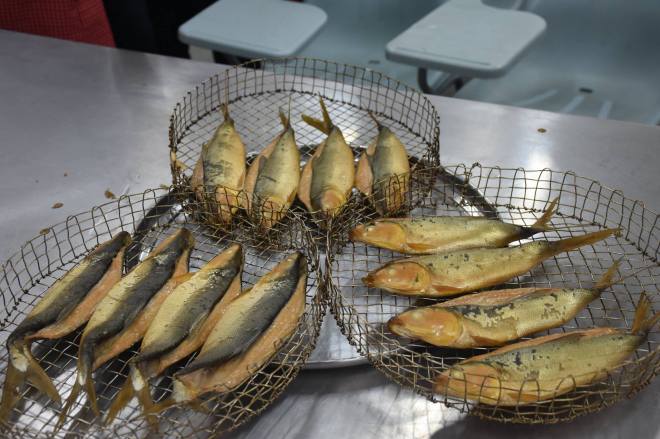
Meanwhile, fish processing training pursued on the second day of the activity. Dr. Ma. Josie Sumague of UPLB’s Institute of Food Science and Technology facilitated the said training which comprised the processing of five fish products such as sardines, bagoong, fishball, smoked and marinated milkfish.

Fish Be With You_03

The last day of the activity was allocated for the project visit. DOST Batangas Team together with Dr. Sumague visited the processing facility of FilEntreps Multipurpose Cooperative in Lipa, Batangas, a GIA-CBP beneficiary of DOST, to provide them inputs in upgrading their fish processing business. The cooperative produces skipjack tuna or sinaing na tulingan and continuously market their products within Batangas province. Observation on each process from raw material preparation to packaging and labelling was done in order to specify problems and upgrade the quality of their fish products.
Fish Be With You_04
uploads by Maricar Aquino Bou
Eminent rice scientist and academician appointed new SEARCA director

May 2, 2019

impatientoptimists.org

Dr. Glenn B. Gregorio has been appointed as new Director of the Southeast Asian Regional Center for Graduate Study and Research in Agriculture (SEARCA), an inter-government treaty organization hosted by the Philippine government on the campus of the University of the Philippines Los Baños (UPLB), for a three-year term and he assumed office on 1 May 2019.

Dr. Gregorio is the eleventh to hold the top SEARCA post since its establishment in November 1966 by the Southeast Asian Ministers of Education Organization (SEAMEO).

Dr. Gregorio is also an Academician at the National Academy of Science and Technology (NAST) of the Philippines and is currently a professor at the Institute of Crop Science of the UPLB College of Agriculture and Food Science.

A distinguished rice scientist, Dr. Gregorio served the International Rice Research Institute (IRRI) for almost 30 years, including a five-year stint as IRRI’s rice breeder in Africa based at Africa Rice Centre station at the International Institute of Tropical Agriculture in Nigeria from 2004 to 2009.

Throughout his career, Dr. Gregorio has bred more than 15 rice varieties, most of which are salt-tolerant varieties that have greatly helped farmers in Bangladesh, India, Nigeria, and the Philippines. He also led efforts to develop micronutrient-dense rice varieties to address anemia and malnutrition in Bangladesh, Indonesia, the Philippines, and Vietnam.

But rice breeding is not Dr. Gregorio’s only forte. Prior to his appointment as SEARCA Director, he also served as Crop Breeding Manager for Corn at the East-West Seed Company, Inc. from 2015 to 2018 where he was the global lead of the sweet corn and waxy corn breeding programs for South and Southeast Asia, the Latin Americas, and Sub-Saharan Africa.

Dr. Gregorio has been the recipient of numerous awards, including Outstanding Young Scientist Award (OYS 2004) and Outstanding Publication Award given by NAST; The Outstanding Young Men (TOYM 2004) in the field of Agriculture-Plant Breeding and Genetics; the Ho Chi Minh Medal Award for great contribution to the cause of agriculture and rural development in Vietnam; Ten Outstanding Youth Scientists (TOYS 1981) of the Philippines given by the Department of Science and Technology (DOST) of the Philippines; Honorary Scientist, Rural Development Administration (RDA), Korea; and other awards for his outstanding research and research management achievements.

He has authored and co-authored at least 90 articles published in various scientific journals, chapters on rice breeding in 14 books, and five scientific manuals and bulletins. He mentored and supervised 20 PhD and 27 MS graduate students and more than 40 BS students in plant breeding and genetics at UPLB and other universities in Asia, Africa, Europe and North America; and he continues to hone scientists and future scientists as a mentor and teacher.

Dr. Gregorio obtained his PhD in Genetics, MS in Plant Breeding, and BS in Agriculture at UPLB.
uplbgenews
uplbgenews

Farm tourism sites boosted Ph’s tourism potential, foreign visitor arrivals growing by 10.24%

PHOTO Gapuz Grape Farm
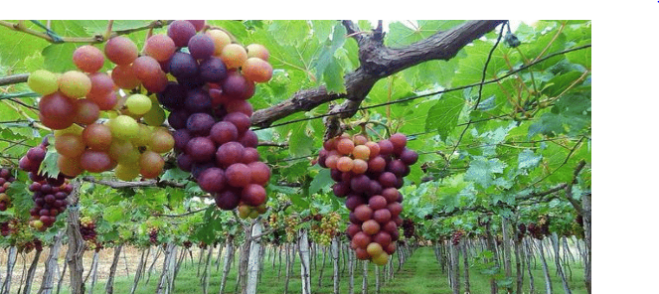
Gapuz Grape Farm, La Union
April 26, 2019

Farm tourism sites have boosted Philippines’ tourism potential as the country is now a top agri-tourism destination with foreign visitor arrivals growing by 10.24%, hitting all-time high of 732,506 arrivals in a single month in 2018.

The country is now among top agri-tourism destinations in the world, Rose H. Libongco of the Hotel Sales & Marketing Assn Int. (HSMA) said during a Global Farm Tourism Summit co-hosted by the Southeast Asian Regional Center for graduate Study & Research in Agriculture (SEARCA).

PHOTO La Union FArmer Field Schools
La Union Farmer Field Schools

Other top agri-tourism destinations are Taiwan, Hawaii, Tuscany, Grenada, Mallorca, California, and Brazil. As of January to May 2018, foreign visitor arrivals totalled 3.177 million, a 10.24% growth from the same period in 2017.

The Philippines, according to Libongco, is highly suitable as an agri-tourism destination considering these factors:

.It is an agricultural tropical country rich in natural resources and biodiversity in land, air, and sea
•Its farming heritage is reflected in folk songs such as Bahay Kubo
•Filipinos have innate hospitality and openness that make transition from pure farming to welcome visitors easy.

PHOTO Lotus Farm, La Union
Lotus Farm La Union

The country’s tourists come from Korea, 22.2% share; Japan, 8.68%; Australia, 3.79%; Canada, 3.43%; Taiwan, 3.19%; United Kingdom, 2.83%; Singapore, 2.39%; Malaysia, 1.92%.

SEARCA has supported farm tourism promotion in the country as the sector creates multiple revenue streams for farmers, improving profitability of small and medium enterprises (SME).

In order to market farm tourism sites, Libongco advised farm owners to put up websites through which global tourists look for places to visit.

“Online availability is important in this social media era. People will find you first online. A website establishes your credibility as a business,” she said.

Local government units (LGUs) have started promoting local tourism, recognizing its contribution to jobs creation.

In La Union, a 25% growth (591,432 tourists in 2017) in tourist arrivals has been noted as the province is also known as the country’s surfing capital, according to La Union Gov. Francisco Emmanuel Pacoy R. Ortega III during the same SEARCA-organized summit.

PHOTO Malagos Garden REsort
Malagos Garden, Davao City

There are 23 farm tourism sites in La Union including grape farms in Bauang and family farms including Rocapor’s Farm, Fer-gie Navarro Farm which is a certified Good Agricultural Practice (GAP) vegetable farm, Lomboy Farm, and Lotus Farm. Tourism gives jobs to 100 locals and 50 household members.

Average income of farm tourism sites is P25,000 to P60,000 per month. There were 18,000 visitors to its farm tourism sites in 2017, growing from 7,000 in 2016.

The La Union Investment Program is also supporting overall economic development with a P25.2 billion budget from 2018 to 2022. It extends assistance to tourism SMEs through provision of equipment, farm machinery, post harvest facilities, and organic farming and construction of provincial roads and other infrastructure.

Organic farms, nature-friendly farms, and health and wellness farms are among the top farm tourism destinations in the PHIlippines.

Villa Socorro

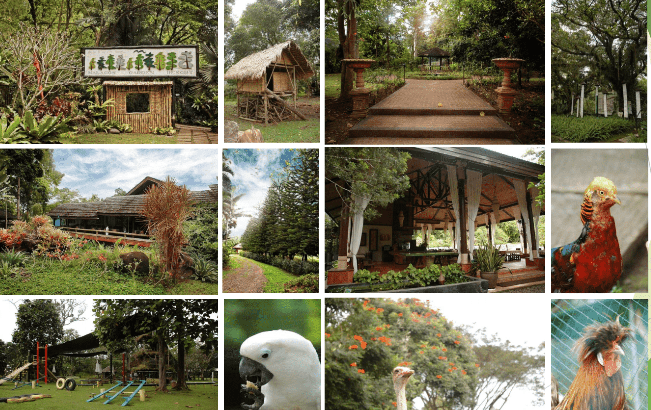
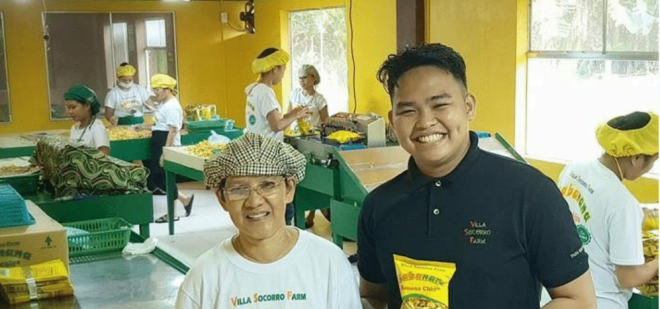
For one, the Villa Socorro Farm in Laguna is an agri-eco village that grows native saba bananas. Its offer is to visit its plant to pack site within 24 hours. Tourists are able to take home farm products—corn pops (wasabi shoyu), banana crisps in caramelized sugar, “Sabanana” cider vinegar, “atsarampalaya” pickled bitter melon, and Ilocos bagnet chicharon.

The farm adopts best green business practice and is participant to the Global Green Growth Institute. It practices rain water harvesting. Its vision is to create a community of empowered farmers with living with pride and dignity.

PHOTO Villa Socorro Farm
Villa Socorro Farm

Malagos Farm

The Malagos Farm in Davao started with the durian and coffee farm in Tagakpan. This was followed by lanzones, pomelo and orchid farms in Cabantian. It then constructed in 1994 a small restaurant and swimming pool and in 1997 an overnight accommodation and resort facilities.

It offers agriculture training—daily module, cacao module, and solid waste management.
It planted narra trees for the bees and bignay to give habitat to birds. It offers a showcase of cultural events and experience tourism including tractor ride around the farm, Malagos farm fair,and interactive bird show. Tourists are able to bring home farm products—orchids, funghi marinate, tableya from cacao, virgin coconut oil, bignay wine, and dairy goat and cow products.

It has further grown as it obtained certification from the Department of Tourism (DOT), Department of Agriculture, and Food and Drug Administration. Among its best practices are environmental planning, use of vermicomposting, and solid waste management.

Nurture Wellness

The Nurture Wellness Village is a DOT-accredited wellness resort. It focuses on producing nutritious superfoods such as the kale and essential oils that help give jobs to depressed communities. It has holistic, medically-supervised programs that include relaxation practices, exercises, acupuncture, lectures, and therapeutic massage.

It offers barangay organic farming training. It has bokashi kitchen waste recycling, grey water recycling, production of vermicomposts, natural pesticides and fertilizers, and use of old wood.
(Melody Mendoza Aguiba-Growth Publishing for SEARCA)

PHOTO Nurture Wellness promotes food as medicine
Nurture Wellness promotes food as medicine

Uploads by Maricar Aquino Bou
Marawi IDPs get livelihood intervention from DOST

IMG_0761
April. 24, 2019

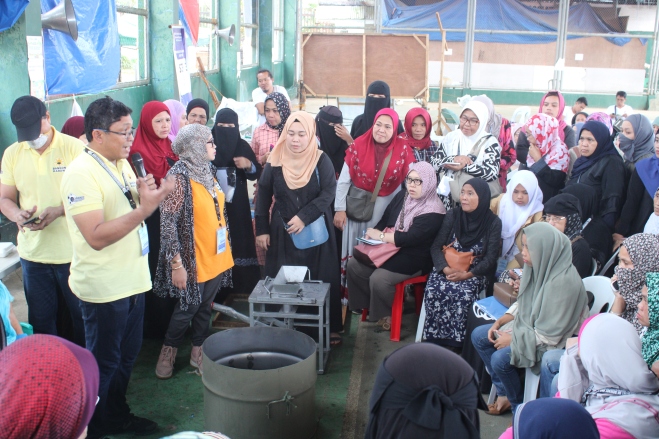
Three technologies from the Department of Science and Technology-Industrial Technology Development Institute (DOST-ITDI) were handed over to the Maranao People Development Center, Inc. (MARADECA, Inc.) for the livelihood and development of the Marawi siege victims on April 10-11, 2019 at the Provincial Capitol, Marawi City.

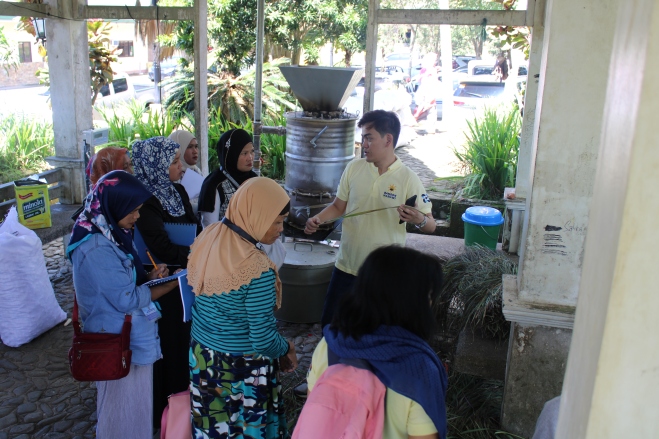
One of the technologies was the Essential Oil Extractor which extracts essential oils from Citronella Grass and other plant materials that are abundant in Marawi City.

Essential oils are the aroma-giving constituents of aromatic plants. These oils are water-insoluble organic liquids or solids.

The second was the Charcoal Briquetting Equipment which was made up of ITDI Modified Drum Carbonizer, Crusher, Mixer, and Manual Briquettor.

Briquetting is a process of molding or compacting materials such as charcoal fines of biomass or coal, with or without binder under pressure.

The other technology was the Tea Bag Processing Equipment. The participants were trained on herbal processing from the collection of plant materials to Herbal Tea and Herbal Capsule production.

The Marawi IDPs were able to processed Moringa Herbal Tea and Turmeric Herbal Tea out of the collected Moringa and Turmeric plant materials.

The three equipment are now available anytime for the use and livelihood of the Marawi IDPs.

Aside from the turned-over equipment, DOST-ITDI also trained the Maranaos on Personal and Home Care products wherein the participants were able to produce Dishwashing Liquid, Hand Wash, and different kinds of soap.

The conduct of the activity was in collaboration with DOST, DOST-ITDI, Task Force Bangon Marawi, NDRRMC, The Ethne Essence Project, LGU-Marawi, and the Province of Lanao del Sur.

Together, they expected an impact of improved living quality of Maranaos through sustainable livelihood programs using their natural resources.
IMG_0819
uploads by Maricar Aquino Bou

DOST Misamis Occidental brings Enhanced Packaging to Awezamiz Complementary Food

IMG_0956-2 (1)
April. 17, 2019

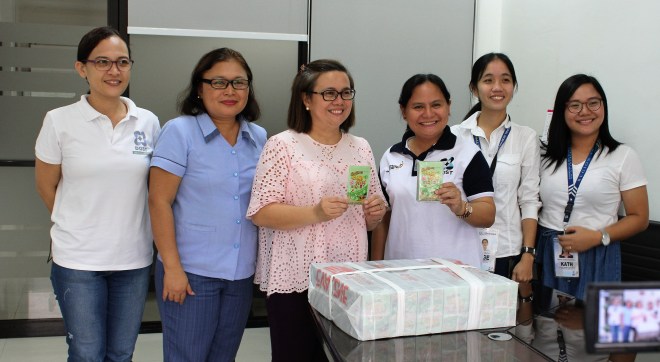
Words of gratitude and glee filled the City Mayor’s Office of Ozamiz City as the Supervising Administrative Officer of the Local Government Unit, Ms. Maria Lucy R. Cabalit together with the Ozamiz City Complementary Food Production Facility (CFPF) Head, Ms. Lelita G. Navarez received the 60,000 pieces of Rice Mongo Sesame (RMS) Baby Food Blend packaging material last 08 April 2019.

In 2016, LGU Ozamiz City was one of the beneficiaries of the DOST-Food Nutrition Research Institute (FNRI) project on the roll-out of complementary food production facility to address malnutrition of young children ages 6 to 59 months old. Ozamiz City CFPF is capable of producing RMS baby food blend for 6 to 24 months old toddlers and Rice Mongo (RM) Crunchies for 25 to 59 months old children.

To continually improve and hasten production of these complementary food products, DOST Region 10 through the Provincial Science and Technology Center of Misamis Occidental headed by Ms. Eufresnie Ann D. Simbajon extended additional support to the facility amounting to more than P300,000.00. Mechanical bean roaster and electric double deep fryer were turned over last 11 February 2019.

To compete with the existing commercial brands of baby food products in the market, DOST also provided assistance on the packaging and labelling design and initial execution of the RMS baby food blend. “Naa na gyud maka compete sa commercial brand (RMS baby food blend can now compete with the commercial brands)” Ms. Cabalit said.

To support waste management, Ms. Navarez eagerly said that discounts will be given to the next purchase of the customers who will return the used packaging materials. These will then be utilized to produce eco bags, wallets and other novelty materials.
uploads by Maricar Aquino Bou