Govt asked to cut onerous 26-27% agri insurance tax that hinders entry of cash-rich private sector investors

April 2, 2021                                                                                                                   

The government should slash the onerous tax of 26-27% on non-life and agriculture insurance premium that blocks entry of cash-rich private sector investors that can significantly accelerate rural farm activity through financing.

  The misery of Filipino farmers is often blamed on the dearth of facilities on micro-financing and its constant aid micro-insurance.

   But agri-finance expert Dr. Jaime Aristotle Alip asserts in a webinar hosted by the Southeast Asian Regional Center for Graduate Study & Research in Agriculture (SEARCA) that cutting tax on insurance premium will significantly raise the number of private insurance offerings. 

   Alip is  chairman emeritus and pioneering founder of  the country’s largest microfinance firm CARD MRI (Center for Agriculture & Rural Development Inc.-Mutually Reinforcing Institutions).

   He said tax on non-life insurance, including those for crop or agriculture insurance, should be around the rate of life insurance which is only at a minimal 2%.  Other non-life insurance with high tax he cites are disaster insurance and health insurance.

   “If you want private sector participation, you must level the playing field.  You should lower down non-life premium tax (including tax for crop or agriculture insurance). I think there will be many private sector players (given this),” said Alip during SEARCA’s microinsurance forum.

   SEARCA held the virtual forum “Agricultural Investment Risks:  Empowering Smallholder Farmers through Micro-Insurance” as part of its thrust toward Accelerating Transformation Through Agricultural Innovation (ATTAIN).

   Government does need to subsidize agri insurance because the regime will be market-driven.

   “It will be the law of numbers and the law of efficiency (that will work).  The gap must be addressed.  Lawmakers should make non life insurance affordable,” Alip said.

   Alip, a Ramon Magsaysay awardee (2008), stressed micro-insurance plays a significant role in boosting private sector investment in micro-financing or in extending loans to small farmers.

     Once there is insurance or a guarantee program for farmers’ loans, banks are automatically willing to lend even to small farmers, Alip said.

   CARD pays insurance claims fast — precisely because there has already been a pre-deposited insurance premium for the disaster, calamity, or typhoon.

Ramon Magsaysay Awardee Dr. Jaime Aristotle Alip pioneers micro-financing in the Philippines

   “Within 8 hours we’ll pay.  If there’s an issue (problems) involved, in 48 hours we will pay.  The speed of payment shows how serious you are.   Microinsurance should be believable.  It should just be  like a  deposit when there’s a claim.  You pay it right away,” he said.

   Insurance or a loan guarantee is critically important in financing the marginalized farmers, in enabling them to get out of poverty.

   If farmers are paid right away, they will be able to re-invest in agriculture again after a misfortune.

   “Insurance is an important safety net so that the poor will not slide back to poverty.  If we’re able to pay farmers right away, their loyalty and affinity to insurance will be there,” he said.

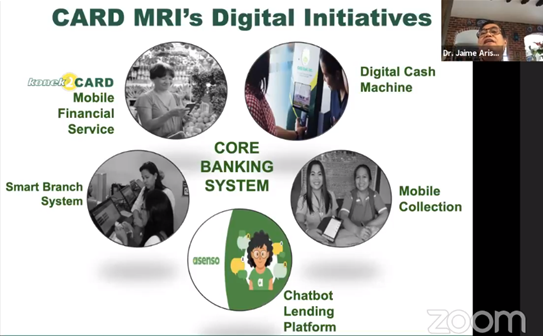
   Because of digitization, CARD accelerated its payment systems.  It now pays  through mobile means (celfone).

   With the Covid 19 pandemic’s lockdowns, its clients do not need to go to its offices.  They can make payments, deposit, and withdraw online.

   CARD was put up in December 1986.  It has grown into a group of 23 mutually reinforcing institutions (MRI).

   “My vision was for a bank owned and managed by the poor.  I believe the reason why poor people are poor is not because of lack of access to resources.  It is the lack of control over resources,” he said.

   “After 10 years, we put up the first microfinance institution in the country, the CARD Bank, owned by its members.  We completely turned banking system upside down.”

   CARD Bank cut all bureaucracy in lending.  It releases loans just two days from application.

   It does not require collateral from borrowers.

CARD’s digital initiatives enable it to pay insurance claims fast.

   Instead of requiring small borrowers financial projections or feasibility studies and numerous documents, it just requires a one-page form for loan application. 

   Now it has spin-off companies engaged in lending in both rural areas and urban areas.

   It has the CARD MBA (mutual benefit association) owned by members and a non life insurance business linked with Pioneer Group

   “All policies, all regulations within the standard of the Insrance Commission, are implemented by the owners. What is our value proposition for these companies? Since they own it, we have a very small premium,” he said.

  Overhead cost of the company is only 1-2% while some insurance companies incur 40-60% overhead cost.

   CARD now has 3,482 offices in 85 provinces covering 1,577 municipalities and cities and 40,440 barangays.

   “The last frontier of the country is in Tawi Tawi, in Sitangkay.  We are present there,–

30 minutes away from there by pumpboat, you are in Malaysia.”

   It is in Balut Island in South Cotabato; 45 minutes to 1 hour from there, you are in Indonesia. It is also in Batanes, right near Taiwan.

    It has 17,157 full-time staff.  It has offices for OFWs (overseas Filipino workers) in HOngkong, Myanmar, Laos, Thailand, Cambodia, Indonesia, and Vietnam.

      “This is how we are exporting the technology of CARD in micro-financing and micro-insurance.”

   As of January 2021, it has so far served 7.43 million clients; insured 27.219 million individuals; has outstanding loan of P30.77 billion; savings of P28 billion; operational efficiency, 117.1%; financial sufficiency, 114.89%, number of stockholders, 120,252.

   It accounts now for 20% percent of the entire microfinance industry in the country.

   It has extended 14,761 scholarships; 9,783 graduate scholarships; and 4.693 million with access to its health services.

   It accounts for around 80% of entire insured Filipinos.  Those it insures are mostly in the poverty level who are given the chance to bounce back economically in times of difficulty and loss.

   Its repayment rate before the pandemic was 99.9 percent.  It faltered a bit due to the pandemic and is now recovering in repayment rate to a more stable 93-95%.

   “   “We’re not just in the business of microfinance and imicroinsurance. Were in the business of poverty eradication,” said Alip. “Our major focus is on very poor women.  If you’re able to help poor women to do business, their priority will always be the family, food for the children, education for the children.”

  These are among its functions:

  1. It owns hospitals, clinics and keeps doctors and nurses.  It has a pharmacy company that supports clients with affordable and generic medicine.
  2.    It has a marketing support for farmers and businesses engaged in cottage products  to help these expand and grow.
  3. It has a school on microfinance and microinsurance. 
  4. It has health insurance and hospitalization insurance
  5.    It has training programs and a school for college courses offering Entrepreneurship, Accountancy, Information Technology, and Tourism. (Melody Mendoza Aguiba)

India proposes bilateral exchange on agritech, fintech, intelligent financing with Philippines

March 30, 2021

The Indian government has proposed a bilateral exchange with the Philippines involving agricultural technology and fintech (financial technology) believing that vital technologies revolutionizing small farms in India can benefit Filipino farmers.

   On top of initially extending a $50,000 to the corn sector, Indian Ambassador to the Philippines Shambhu S. Kumaran said India can exchange technologies with the Philippines that are in the forefront of improving how small farms operate.

   “We like to invite you to a discovery of India’s agritech ecosystem.  We’ll look at a bilateral workshop so you will see this vibrancy in India.  And India will see the positive developments in agri-tech in the Philippines.  This will be a two-way street,” said Kumaran at  a Philippine Chamber of Agriculture and Food Inc. (PCAFI) business meeting.

   The bilateral meeting which may be co-organized by PCAFI and Indian Embassy may be held “sometime later this year.”

   Philip L Ong, PCAFI chairman, this fintech venture with India may involve PCAFI’s own Agrifood Hub Project.  The Agrifood Hub is also involved in technology that links farmers with the market.

PCAFI Chairman Philip L. Ong reports 37,343 farmers linked to the Agrifood Hub Project.

   Since its launch in July 2020, it has so far linked 37,343 farmers and 315 farmer groups, primary traders, and cooperatives to markets involving 109 municipalities. 

   It had posted over the internet through its website, www.agrifoodhub.com and hotline 09178215408, a total of 980 food and crop requirements and matched these requirements with 924 sellers.  It has received 56 information requests and generated 55 active buyers per month, Ong reported.

   Kumaran said the Indian government has already touched based with Philippines’ Finance Secretary Carlos Dominguez for a possible agritech and fintech exchange.

   “An Indian company allows banks to use geospatial data, satellite data to make informed lending decision.   You have the software, the tool which gets all data in a region.  It allows banks to cut the risk and understand where and when credit dispersal is viable. They will have constant stream of data,” Kumaran said.

Indian Ambassador to the Philippines Shambhu S. Kumaran proposes a bilateral meeting for digital technology, agriculture technology

   Because of this agri technology, an e-bank raised “half a billion dollar using this tool that brings about the revolutionary changes that I talked about.”

   Indian fintech companies are not big, but they address the critical gaps in technology.

   “We offer to Philippines the possibility that DBP (Development Bank of the Philippines) could have this tool without having to procure it.  It will be free-of-charge.  The revenue model allows that the creditors and software companies, all have the benefit from using the technology.”

     Right now banks are afraid to lend to agriculture activities as they don’t have mitigation strategies and risk assessment tools to determine what is viable.  But this software makes that possible.

   From only a few agritech startups in 2013, India had 1,000 agri-tech startups as of 2020.
   These agritech startups are engaged in projects like addressing water stress and crop stress in farm production. They advise farmers on what crops to use.

   The possible replication of an Indian financing system called “Viability Gap Fund” (VGP) has also been proposed by the Philippine Maize Federation Inc.  This is to finance post harvest facilities critical to storing the corn production of farmers, according to PMFI President Roger V. Navarro.

   The VGP was put up in India to fund viable projects by “unviable” proponents, meaning small and medium farmers.

   Navarro said that the fund may come from the fund that form penalties from the Agri-Agra Law.  The penalties, he said, amount to billions coming from penalizing banks that do not allocate 10 or 15 percent of their loanable amount for agriculture or agrarian reform funding as mandated.

   As of 2019, given compliance of all banks, this agri-agra law fund would have been P1.384 trillion, according to the Department of Agriculture (DA).

   Kumaran affirmed the need for the VGF in the country.

   “We should have smart public policies.  Food security is an absolute non-negotiable. We have lots of small and marginalized farmers in India. They find it hard to access common assets, so government needs to come in,” he said.

   Kumaran said the bilateral meeting will have technical engagements, presentations, and contact building.  It will create platforms for conversation.

   Kumaran noted that while having been import-dependent for food in the 1960s, 1970s, now India is the largest producer of food grain. In addition to feeding its 1.3 billion population, it also exports some surplus.

   These are India’s other proposals:

  1. A partnership on training of skills where India may conduct “pilot projects for modest funding from india.”
  2. Strong dialogue on market access considering Philippines is a big garlic importer, while India is a garlic producer.
  3. Solar energy production.  A lot of irrigation canals in India are now used as areas for lake solar panels.  These supply of energy is used for farmers’ needs, and any excess electricity goes to the national grid.
  4. Exchange in integrated farming strategies. Here, waste generated from farming is used for other farming processes  (energy generation).  This helps in combatting climate change and its adverse effects.
  5.  Partnerships in organic food production. (Melody Mendoza Aguiba)

At least 10% of local government budget should be allocated for agriculture—PCAFI

March 26, 2021

At least 10% of the internal revenue allotment (IRA) of local government units (LGU) should be allocated for food security and agriculture to ensure rural development once national budget is devolved locally under President Duterte’s proposed executive order (EO).

   The Philippine Chamber of Agriculture and Food Inc. (PCAFI) has reiterated its call for government to raise the budget for agriculture.

   This is in consideration of agriculture’s big contribution of 9 to 10%  to the Philippines’ gross domestic product (GDP). 

   PCAFI President Danilo V. Fausto said a minimum of 10% of the IRA of LGUs should be made mandatory allocation for agriculture if national government fund will be devolved to local governments.

    “This is just proper since agriculture accounts for 10% of the GDP.  Budget for agriculture should increase, rather than decrease,” said Fausto.


Senator Juan Miguel F. Zubiri speaks at PCAFI membership meeting

   Senator Juan Miguel F. Zubiri, guest speaker of the PCAFI’s virtual membership meeting Friday, said given an increase in budget for agriculture, the proposed EO will play a significant role ensuring farmers’ welfare and agricultural production.

   “Some of our LGU leaders are lawyers or doctors.  That’s why it’s important to elect leaders who have the heart for agriculture,” said Zubiri.

   Fausto has been stressing that the agriculture sector gets barely 2% of the total national budget while contributing 9-10% of the GDP. With the P4.5trillion 2021 budget, DA should get at least P405 billion in the national budget, he said.

   Duterte’s draft EO ordering some executive functions’ transfer to local government supports implementation of the Supreme Court ruling on the Mandanas-Casas cases in 2022.

   Zubiri said he is pushing for other important agriculture policies to be legislated in order to advance growth of the farm sector.

   He noted that the proposed expansion of the minimum access volume (MAV) by eight times will cause a collapse of the local hog industry.  This should not be allowed if the local hog industry has to recover from the devastation of the African swine flu in say 3 to5 years.

   HE also supports an amendment to the Cabotage Law in order to allow entry of international players in the domestic shipping industry. 

   “It is cheaper to ship goods from New Delhi to the Philippines than to ship this from Bukidnon to Manila,” he said. 

   This shipping restriction must be one of the reasons why agricultural products such as pork and poultry products in Mindanao  cannot be easily shipped to where the market is in Metro Manila.

   In credit access, Zubiri said government will continue to prod Land Bank of the Philippines and Development Bank of the PHIlippines to minimize requirements for loans.  This is for easier access to credit of the smallest of farmers who rather resort to borrowing from loan sharks that charge onerous interest of 20% per month.

   Zubiri advised organic food producers to organize and establish a formal policing organization against unscrupulous food producers that claim to produce organic food that are not authentically organic certified.


Senator Juan Miguel F. Zubiri, Indian Ambassador Shambhu Kumaran, PCAFI President Danilo Fausto, PCAFI Director Ernesto Ordonez (clockwise from lower left)

   Fausto said livestock and poultry should get at least P112.5B billion from the national budget.

   Poultry and livestock plays a highly significant role in the economy as it has important multiple effect in many other sectors.

   “The feed industry is a P510 billion industry.  Assuming two-thirds (67%)  of feeds go to livestock and poultry, that represents P340 billion,” said Fausto.

   Fausto also said DA does not really need to raise imports of meat and poultry given adequate distribution nationwide of the supply. 

   The supply is enough to fill the local demand.  The need is to channel poultry and meat production, particularly from Visayas and Mindanao where these are produced, to where these are needed—Metro Manila and other cities. 

   Poultry and livestock plays a highly significant role in the economy with its multiplier effect in many other sectors.

   “The feed industry is a P510 billion industry.  Assuming two-thirds (67%)  of feeds go to livestock and poultry, that represents P340 billion,” said Fausto.

   The Supreme Court ruling was based on a petition of Batangas Gov. Hermilando Mandanas and former Bataan Gov. Enrique Garcia Jr. to base LGU’s IRA on 40% of the collection of all national taxes.  These include those collections of Bureau of Customs and Bureau of Internal Revenue. (Melody Mendoza Aguiba)

Former talahiban, now an eight-tonner rice producing land

March 18, 2021

A formerly wild grassland in Brgy. Sampot, Paniqui, Tarlac has turned into a productive  eight tonner rice producer that ushers Philippines towards a rice farming with reduced labor.

   The previous “talahiban” dryland employed a mechanized farming system, particularly for seeding and  harvesting.

   The fact that this piece of land has been barren for a long time did not deter it from yielding satisfactorily.  The drone broadcasting has made planting fairly stable on the ground and more uniformly spread.

   “Unlike the human hand which can differ in broadcasting strokes, such as when it is already tired, the machine made seed spreading more uniform in plant gaps,” said Aaron Cano, BCS new business activation manager. “It appears wind pressure from the drone also helped firmly establish the seed on the ground.”

   The use of this land for rice creates a windfall profit as this has never been considered useful for rice as there is no irrigation in the area.

Grain-filled harvest from Arize 8433 hybrid rice

   “We just used two pumps, so the land never received the water it needed.  It is a very marginal area in terms of water supply and land preparation, never been tilled or fertilized but we still got a good yield from the trial,” he added.      

   Danny Tongol of BCS’s Bayer Learning Center said Bayer’s planting protocol called “Bayer Much More Rice”  makes a big difference in yield compared to farmers’ practice.

   “The eight tons yield in Paniqui could not have been achieved under usual farmers’ practice. For some farmers, if there is around 20% weed occurrence in the farm, that is considered acceptable to them. For us and our “Bayer Much More Rice” recommended package of technology, we aim to maximize yield output and this includes effective weed control” said Tongol.

   From the start, all Arize seeds have inherent resistance to Bacterial Leaf Blight, which is a common problem during the wet season.     

   The recommendations include sufficient fertilization, control of weeds and plant diseases using of herbicide, fungicide, insecticide, and related crop protection solutions.

   The Carlos O. Cojuangco Foundation Inc. (Cocfi) has linked up Tarlac farmers with drone supplier New Hope Corp  (NHC) and the Bayer Learning Center to come up with the successful technology demonstration farm.

     “We should advocate the use of these technologies so that we can at least catch up with our neighbors who are now ahead of us in farming mechanization,” said Robert Randolph Moulic of Cocfi.

Former ‘talahiban’, now an eight-tonner rice producing land

   While only a small 2,000 square meter land, the model farm yielded 28 cavans at 57.5 to 58 kilos per cavan.  Converted into a hectare, this is equivalent to a potential yield of 8.055 tons (8,055 kilos).

   High yield is primarily attributed to the use of hybrid rice Arize 8433 DT which is resistant to Bacterial leaf blight and Brown plant hopper.

  The yield stands out significantly compared to the average three tons per hectare rice yield in the country.

   More important, planting of rice has been done through “direct seeding” with the use of drone technology. 

   Traditionally, direct seeding has been considered less productive yield-wise compared to the transplanted seeding since transplanting maximizes space or land area.

   Nevertheless, through the use of drone, no space has been wasted as the machine systematizes spread of the seeds/seedlings.

   Given yield potential of the mechanized rice farm, gross earnings may reach around P150,000 per hectare in one season, at P19 per kilo. Deducting about P50,000 production cost per hectare, net profit could reach a whopping P100,000 per hectare per season.

   Cost already includes P3,500 for direct seeding service using drone and P850 per hectare for mechanized crop protection spraying. Both mechanized activities are supported by Bayer through the service provider.

Mechanized harvesting of Arize 8433 hybrid rice seeds

   As the same land in Brgy. Sampot will be used again this rainy season,  Tongol said the Bayer Learning Center hopes harvest next time will be higher with the added rain water.  Rain could supply what has not been provided for by the two water pumps installed last season.

   The drone seeder is being received enthusiastically by Filipino farmers in Central Luzon as it substantially cuts labor and cost of direct seeding.

   Typically, labor cost for transplanting rice ranges around P11,000 to P13,000 per hectare. (Melody Mendoza Aguiba)

Private sector pressed PPA to approve location for First Border Control to stop foreign entry of ASF-infected meat, livestock

March 4, 2021

PCAFI President Danilo V. Fausto, DA Sec. William D. Dar, PMFI President Roger Navarro (2nd from right to left)

The private sector has pressed the Philippine Ports Authority (PPA) to approve the location of the  First Border Control (FBC) facility in to arrest massive spread of African swine fever (ASF)-infected meat and livestock that wreaks havoc on farmers’ livelihood.

   The Chamber of Agriculture and Food Inc.(PCAFI)  and member group Philippine Maize Federation Inc. (PMFI) have re-asserted their petition after the Department of Agriculture (DA)  promised to put up the FBC facility in July last year.

   “ASF as we know comes from outside of our country.  We are very strict and compliant with all protocols in our movements from within our soil.  Yet we failed in the First Border on what is coming into our country,” said PMFI President Roger Navarro.

   Navarro said reports indicate the delay in the FBC construction is due to the delay in the approval of the location where the facility should be put up.

   “We are told there are obstacles to implement the First Border Control facility due to pending approval from the Philippine Ports Authority to give the area.  So we are calling on PPA and the Department of Transportation and Communication (DOTC)  to cooperate and help,” said Navarro.

   Danilo V. Fausto, PCAFI president, said government seemed to have allowed wayward spread of ASF with the delay in the FBC construction and the absence of systematic and organized hog vaccination program.

    PCAFI urges government to implement all-out all measures to spread ASF through massive vaccination.

   DA and Bureau of Animal Industry (BAI)   should get vaccine from Vietnam to stop ASF similar to how vaccination program for Covid 19 is being accelerated.

   Fausto said the Central Luzon State University (CLSU) has developed rapid test kits for the early detection of ASF in hogs.

   “This use of CLSU’s rapid test kits must be coming in too late after ASF’s discovery  in 2019, but it’s better late than never,” he said.

   Navarro said even if it is not its direct concern, PPA-DOTC should be pressed on the critical importance of the FBC.

   “While we are experiencing the devastation of ASF from the consumers, piggery owners down to the lowly corn farmers, authorities that need to help seems to be asleep and does not care. DOTC should wake up. This is the time we need you on rescue mode and be partakers to save our country and farmers,” said Navarro.

   PCAFI has also been petitioning before Congress long term development plans for the hog, poultry, and livestock sectors, not just short-term solutions to crises like ASF.

   It is unfair that poultry and livestock gets only an average of 3% from the budget of DA while it contributes an estimated 35% in total agricultural production revenue. On the other hand, palay gets the whopping 40% of budget despite contributing only 22% in production revenue.

   Moreover, livestock and poultry actually accounts for a significant 2.5% of the Philippines’ total Gross Domestic Product (GDP) revenue generation.   That makes it a critical mover in national development.

   Agriculture sector gets barely 2% of the total national budget, while contributing 9-10% of the GDP. With P4.5trillion 2021 budget, DA should get at least P405B in the national budget, livestock and poultry with at least P112.5B from the national budget.

   Poultry and livestock plays a highly significant role in the economy as its condition has multiple effect in many other sectors.

   “The feed industry is a P510 billion industry.  Assuming two-thirds (67%)  of feeds go to livestock and poultry, that represents P340 billion,” said Fausto.

   Fausto also said DA does not really need to raise imports of meat and poultry given adequate distribution nationwide of the supply. 

The supply is enough to fill the local demand.  The need is to channel poultry and meat production, particularly from Visayas and Mindanao where these are produced, to where these are needed—Metro Manila and other cities. Melody Mendoza Aguiba

Govt urged to standardize operations of day care centers proliferating nationwide

Manipulative devices in Match; Source: weareteachers.com;

March 2, 2021

The government should standardize the curriculum and operation of day care centers, ensure training of teachers of  Madrasah (religious school for Islam), and promote technology use if it has to further make a success of K-12 early education.

   Top education research center Philippine Normal University (PNU) asserts that  standardization of operations of day care centers should be legislated has to be even as day care centers have proliferated  in the country. 

   Day care centers have sprung up, and these do not have to keep up with any government quality standards.

   The emergence of many day care centers indicate positive attitudes of parents and the society  toward their young children’s education. 

   Still, children should be assured of learning outcomes in day care centers.

   “The Department of Education (DepEd) should mandate how the operations of these day care centers should be, what learning services they should offer, and how these can be carried out,” according to the PNU research compiled by Dr. Edna Luz Raymundo-Abulon in “Policy Implications for Basic Education”  

   Facilities in day care centers should be adequately provided.  Moreover, teachers’ training in instructing very young children is a unique competence that must be honed and developed

   “More formal training needs to be given to teachers who work in day care centers.  While early childhood education courses may prepare teachers to handle preschool children, the children in day care centers are much younger and are in a different developmental stage,” said Abulon.

   PNU”s report is a compilation of researches from 2010 to 2020. It covers a total of 89 published researches in recognized refereed scientific journals  and 38 research reported to the Educational Policy Research and Development Center (EPRDC).      

   The report supports PNU’s mandate under Republic Act 9647 which designated PNU as the country’s  National Center for Teacher Education (NCTE).  It made PNU a center  on innovations and alternative systems and their utilization and application to teacher training and development.

    The report indicated an important need for more trained teachers in Madrasah. 

   The study of Madrasah among Muslim Filipinos has been integrated into the K-12 basic education curriculum.    

   However, teachers of Madrasah have been found to have limited training on pedagogic skills (teaching methods and styles).

   Furthermore, as the pandemic Covid 19 has prompted an abrupt change in the school paradigm, the PNU study also revealed technology has been found to be very useful in 21st century teaching. The crisis made even basic education institutions resort to online learning even among young children and young adults.

   The PNU research compilation also noted that institutional or administrative problems continue to hound the basic education sector.  These are among the problems:

  • There is inadequacy or absence of qualified teachers in private madaris (teachers who provide lessons from the Qur’an and Arabic Language) for the Muslim K-12 program.
  • Integration of environmental education in elementary and secondary schools (Trinidad & Garancho, 2017) should be carried out more intensively. 

   For instance, while a study (Camacho, 2012) found out that student-respondents were knowledgeable on the general water code provisions of the Philippines,  implementation of policies needs to be reviewed (such as on disposal of dirty water or of waste to rivers).

Day care center; Source: iStock
  •    Delay in the release of allowance of salary of teachers continues.
  • There was an observed lack of clear guidelines in hiring and retention of teachers in basic education.
  • There is mismatch between training and educational attainment of teachers.

   Despite some problems in early learning and basic education, PNU acknowledged important programs that may be replicated to improve early learning or K-12 basic education in the country.

  1. PNU teachers have developed manipulative devices for teaching Math and Science, micro lab kits for Chemistry  and Physics, and content area reading materials for K-12.

   “Teachers in basic education should be encouraged to develop creative and innovative instructional materials that would capture their students’ interests. Trainings/workshops that would provide teachers with skills and opportunities on doing innovative instructional materials are also suggested,” said Abulon.

Science graphics for K-12; Source: wileyonlinelibrary

2. The Headstart Program in Isabela for gifted and talented pre-schoolers is an excellent program to hone children’s intelligence at an early age. Administrators, teachers, and parents expressed their positive views about the program (Leaño & Malano, 2019).

“Children’s gifts and talents must be honed and supported early, and programs such as Headstart (Leaño & Malano, 2019) can be an exemplar in realizing this goal. Policies must be enacted to support the development and implementation of such programs,” noted Abulon.

3. A science teaching strategy called “Predict-Observe-Explain” or POE has been excellent in showing how immediate observations are good techniques in teaching the physical and material world (Physics).  

   “POE can be used for finding out students’ initial ideas; providing teachers with information about students’ thinking; generating discussion; motivating students to want to explore the concept; and generating investigations,” according to Assessment Resource Banks.

The PNU research concluded that the “predict-observe-explain approach intended to promote positive attitude and achievement among students (Garnale, 2015).A culturally-sensitive curriculum improves early learning among cultural minorities. Using the native language of indigenous people (IP)  as learning tool makes learning easier and homey for IPs. This prevents dropout among early IP learners..

4. An analytic scoring framework– rubric, transmutation table– was developed by PNU teachers as tool for scoring pupils’ school performance.  Such rubrics enable a standard for rating students’ performance.  Its use in early education should be promoted.

    “The development and application of methods that could facilitate proper assessment of students’ performance (e.g., Nivera, 2012) should be encouraged.”

5. Early learner teachers should have more training on teaching by observing pupils’ behaviors.  Behaviors of young pupils may determine whether they are having difficulty in learning.  For example, reading difficulty of Grade 1 learners have been noticed through their irregular behavior such as “hand, armhand,  shoulder-waist, and waistfoot; approximate behaviors”  

          Detecting pupils’ difficulty in learning through their behaviour and then helping out these pupils make very young children cope with the stresses of learning. Melody Mendoza Aguiba

Bayer delivers robust performance despite pandemic –foundation laid for future growth

Leverkusen, February 25, 2021 – The Bayer Group delivered robust operational performance in 2020. “Our operational strength in these turbulent times shows just how resilient our businesses are, even during the pandemic,” said Werner Baumann, Chairman of the Board of Management, on Thursday during the company’s Financial News Conference.

“We also used the past year to lay the foundation for future growth. We continued to drive forward our company’s transformation, advanced our product pipelines and invested in new technologies across all our business units,” Baumann said. For 2021, Bayer expects to achieve solid operational growth and stable earnings at constant currencies.

In the pharmaceuticals business alone, Bayer entered into more than 25 acquisition or collaboration agreements in 2020, with the largest acquisition being biotech company Asklepios BioPharmaceutical, Inc. (AskBio).

“With AskBio and BlueRock Therapeutics, we are building a platform for cell and gene therapy and are further consolidating our emerging leadership in this highly promising and fast-growing field,” explained Baumann. Bayer also systematically invested in innovation in other areas in 2020, such as personalized nutrition, with the company taking a majority stake in Care/of for its Consumer Health business, he said. In addition, Crop Science launched its new short-stature corn Vitala™ in Mexico as part of a pilot project, Baumann noted.

Since the beginning of the pandemic, Bayer has introduced extensive protective measures across all of its sites and has supported employees working from home.

“Our primary focus has of course always been on our responsibility toward our roughly 100,000 employees around the globe – and especially on providing what are in some cases essential products and services to customers, patients and farmers,” said Baumann, who also highlighted the commitment shown by the company’s workforce. “Our employees have displayed great initiative in doing what they can to help since the pandemic began,” he said. Bayer has also entered into an extensive partnership with biopharmaceutical company CureVac N.V., Germany, as part of efforts to combat
COVID-19.

“Our initial focus is on supporting the clinical studies and approval process for CureVac’s vaccine,” Baumann explained. “At the same time, preparations are underway in Wuppertal and across our global production network so that we can help with vaccine manufacture, too, as soon as possible.”

Group sales level with prior year (Fx & portfolio adj.)

Group sales amounted to 41.400 billion euros in 2020. Adjusted for currency and portfolio effects (Fx & portfolio adj.), sales were level year on year (plus 0.6 percent). At 11.461 billion euros, EBITDA before special items also came in at the prior-year level (minus 0.1 percent).

Currency effects diminished sales by 1.941 billion euros and EBITDA before special items by 741 million euros. EBIT amounted to minus 16.169 billion euros (2019: plus 4.162 billion euros) after net special charges of 23.264 billion euros (2019: 2.813 billion euros). The special charges particularly comprised provisions for the agreements reached in the glyphosate, dicamba, PCB and Essure™ litigations.

Other special items mainly included impairment charges at Crop Science. Net income came in at minus 10.495 billion euros (2019: plus 4.091 billion euros), while core earnings per share from continuing operations were level with the prior year, at 6.39 euros (plus 0.2 percent).

“If you factor out the negative currency effects, core earnings per share would have been just under seven euros, which is almost the level we had been targeting before the pandemic spread,” Baumann said.

The Board of Management and Supervisory Board of Bayer AG will propose to the Annual Stockholders’ Meeting on April 27, 2021, a dividend payment for fiscal 2020 of 2.00 euros (fiscal 2019: 2.80 euros) per share entitled to the dividend. The company is thus upholding its dividend policy of distributing 30 to 40 percent of core earnings per share, with this year’s proposed dividend being at the lower end of this corridor, as previously announced. With 982.42 million shares entitled to the dividend, the total dividend payment would amount to 1.965 billion euros (fiscal 2019: 2.751 billion euros).

Free cash flow in 2020 was impacted by payments of just under 4 billion euros to resolve litigations and amounted to 1.343 billion euros (2019: 4.214 billion euros). Furthermore, Bayer reduced its net financial debt by 11.8 percent year on year to 30.041 billion euros. Thanks to strong operational cash generation, the company’s performance on these two indicators was better than projected in the revised outlook.

Crop Science registers higher sales (Fx & portfolio adj.) thanks to growth in Latin America and Asia/Pacific

In the agricultural business (Crop Science), Bayer increased sales by 1.3 percent
(Fx & portfolio adj.) to 18.840 billion euros.

The businesses in the Latin America and Asia/Pacific regions contributed to the increase, while declines occurred particularly in North America. Sales growth was particularly strong at Fungicides (Fx & portfolio adj. 8.5 percent) and Environmental Science (Fx & portfolio adj. 11.5 percent), with these businesses expanding in all regions. At Fungicides, Bayer posted sales gains in Latin America thanks to Fox Xpro™, which was launched in 2019. Sales also rose at Soybean Seed & Traits (Fx & portfolio adj. 2.3 percent).

Greater market penetration in Latin America had a positive effect, while business in North America saw lower selling prices and volumes, mainly due to increased competition. At Corn Seed & Traits, sales remained at the prior-year level (Fx & portfolio adj. minus 0.5 percent). In North America, shifts in demand into 2019 and 2021 had a negative impact, while sales moved ahead in all the other regions. Sales at Herbicides declined by 1.0 percent (Fx & portfolio adj.), particularly because the company lost registrations – in some cases only temporarily – in the Europe/Middle East/Africa and North America regions.

EBITDA before special items at Crop Science decreased by 3.8 percent to 4.536 billion euros. Business was particularly impacted by negative currency effects of 537 million euros, while the decline in sales in North America due to shifts in demand was also a key factor. By contrast, earnings benefited from the realization of cost synergies as the company progresses with the integration of the acquired business.

As regards the glyphosate litigation in the United States, the company announced in early February 2021 that it had reached an agreement with plaintiffs’ counsel on a class plan intended to manage and resolve future Roundup™ cases, and plaintiffs’ counsel filed a motion for preliminary approval of the class agreement. Both parties have worked diligently to address questions the court raised after their first settlement proposal for future Roundup™ cases last summer. The new agreement is now subject to court approval. The class plan is intended to be one part of a holistic solution designed to provide further closure to the Monsanto Roundup™ litigation. Approximately 90,000 current claims in the Roundup™ litigation overall are covered by settlement agreements, or did not meet the settlement program eligibility criteria. The company continues to negotiate with plaintiffs’ counsel to reach agreements in the remainder of current cases.

Pharmaceuticals grows earnings despite decline in sales

Sales at Pharmaceuticals declined by 1.5 percent (Fx & portfolio adj.) to 17.243 billion euros. The decrease was driven by global COVID-19 restrictions, which particularly in the first half of the year led to a reduced number of nonurgent treatments, especially in the ophthalmology and women’s health businesses. The situation in doctor’s offices and hospitals began to normalize at mid-year. In the radiology business, stricter hygiene measures slowed down patient processing throughout the year, leading to a decline in sales. In addition, the implementation of new tender procedures in China weighed heavily on sales of Glucobay™ and Avelox™.

Sales of the oral anticoagulant Xarelto™ increased by 12.4 percent (Fx & portfolio adj.) due to a marked increase in volumes in China as well as substantial growth in Europe. Stivarga™ was also among the products recording a substantial increase in sales
(Fx & portfolio adj. 18.6 percent), especially in China and the United States. The increase was partly due to this cancer drug’s oral administration, which enables treatment to continue outside of hospitals and doctor’s offices during the ongoing pandemic. Sales of the ophthalmology drug Eylea™ were level year on year (Fx & portfolio adj.
plus 0.2 percent), with the decline in business seen in the first half being offset in the latter
part of the year. The effects of the pandemic also weighed on business with the Mirena™/Kyleena™/Jaydess™ intrauterine systems (Fx & portfolio adj.
minus 8.7 percent) – due to a reduced number of procedures – and the cancer drug Xofigo™ (Fx & portfolio adj. minus 11.6 percent), which registered a particularly marked decline in the United States.

EBITDA before special items at Pharmaceuticals advanced by 2.6 percent to 6.016 billion euros, with stringent cost management and a milestone payment for the pulmonaryhypertension treatment Adempas™enabling earnings to grow despite the slight decline in sales and negative currency effects of 132 million euros.

Consumer Health posts growth (Fx & portfolio adj.) in all regions

Sales of self-care products (Consumer Health) increased by 5.2 percent (Fx & portfolio adj.) to 5.054 billion euros. The division’s performance was ahead of market, with all regions reporting growth. The greater focus on health and prevention in connection with the COVID-19 pandemic generated substantial growth in demand, especially in the Nutritionals category, which saw sales advance by 22.6 percent (Fx & portfolio adj.). Sales were also up in the Pain & Cardio, Dermatology and Digestive Health categories. At the same time, increased protection and hygiene measures led to a decline in sales of cough and cold products, with the Allergy & Cold category recording a decline of
4.1 percent (Fx & portfolio adj.).

EBITDA before special items at Consumer Health declined by 2.5 percent to 1.114 billion euros. Currency effects of 69 million euros, the absence of contributions from the businesses divested in 2019, and increased costs in connection with the COVID-19 pandemic had a negative impact. Earnings primarily benefited from the significant increase in sales (Fx & portfolio adj.) and the contributions from the efficiency program initiated in late 2018.

Progress made on sustainability targets

With regard to the non-financial Group targets, Bayer has reported on the progress made in 2020 toward meeting its ambitious sustainability goals for 2030. These are centered around the health of people and the planet, with a particular focus on climate protection. The company’s Sustainability Report, which was also published on Thursday, looks at these aspects in detail. Last year, Bayer drew up a roadmap based on the United Nations’ Sustainable Development Goals and took steps to implement it. The independent Science Based Targets initiative reviewed Bayer’s climate protection goals and confirmed that, by reducing its own emissions, the company is helping to limit global warming to 1.5°C and fulfill the Paris Climate Agreement. For example, Bayer has now switched to 100 percent green electricity in Spain and Mexico. As part of its efforts to protect the climate, the company has also initiated a pilot project in the United States and Brazil to help farmers adopt climate-friendly practices and utilize carbon capture and storage for their commercial benefit.

In line with its goals of reaching more people on low incomes, the company has launched the “Better Farms, Better Lives” program, for example. Under this program, the company has, for instance, provided more than 1.5 million smallholder farmers with access to modern crop protection products. In collaboration with The Challenge Initiative, Bayer is also providing support for solutions in the area of family planning and reproductive health for women and girls in Africa.

The establishment of the external Sustainability Council marked another important step. Furthermore, attainment of the sustainability targets has been incorporated into the long-term variable compensation of members of the Board of Management and other managers with a 20 percent weighting in the success factors starting in 2021. This highlights the importance of these targets for the company.

Outlook: Bayer targeting sales growth (Fx & portfolio adj.)

Bayer has issued the following currency-adjusted outlook for 2021: The company expects to post sales of approximately 42 billion to 43 billion euros, which corresponds to an increase of about 3 percent (Fx & portfolio adj.). The company expects to generate an EBITDA margin before special items of around 27 percent. This would correspond to EBITDA before special items of 11.2 billion to 11.5 billion euros. Bayer plans to generate core earnings per share of approximately 6.10 to 6.30 euros. Free cash flow is expected to come in at between minus 3 billion and minus 4 billion euros. This figure takes into account an anticipated negative impact of around 8 billion euros from payments to resolve litigations. The company also expects net financial debt to be approximately 36 billion to 37 billion euros as of December 31, 2021.

Based on the exchange rates on December 31, 2020, Bayer expects in 2021 to post sales of approximately 41 billion euros, an EBITDA margin before special items of approximately 26 percent and thus EBITDA before special items of between 10.5 billion and 10.8 billion euros, and core earnings per share of approximately 5.60 to 5.80 euros. On this basis, the company anticipates a free cash flow of minus 3 billion to minus 4 billion euros and net financial debt of 35 billion to 36 billion euros.

Notes to editors:

The following tables contain the key data for the Bayer Group and its divisions

for the full year and the fourth quarter of 2020.

The complete Annual Report 2020 is available on the internet at:

www.bayer.com/annualreport

The Sustainability Report 2020 is also published on the internet at:

www.bayer.com/sustainability-report

The speech given by Werner Baumann and Wolfgang Nickl to the media along with the charts will be available online from around 10 a.m. CET at: www.bayer.com/speeches

Live broadcast of the news conference call from around 10 a.m. CET and recording available from around 2 p.m. CET at: www.bayer.com/live-mc

Additional information for investors and access – from around 2 p.m. CET – to the live broadcast of the investor conference call at: www.bayer.com/live-ic

Print-quality photos can be found online at: www.bayer.com/photo-footage

Contact for media inquiries:

Christian Hartel, phone +49 214 3047686

Email: christian.hartel@bayer.com

Tino Andresen, phone +49 214 30-66048

Email: tino.andresen@bayer.com

Contact for investor inquiries:

Bayer Investor Relations Team, phone +49 214 30-72704

Email: ir@bayer.com

https://www.bayer.com/en/investors/ir-team

For more information go to www.bayer.com.

tia                   (2021-0039E)

Forward-Looking Statements

This release may contain forward-looking statements based on current assumptions and forecasts made by Bayer management. Various known and unknown risks, uncertainties and other factors could lead to material differences between the actual future results, financial situation, development or performance of the company and the estimates given here. These factors include those discussed in Bayer’s public reports which are available on the Bayer website at http://www.bayer.com. The company assumes no liability whatsoever to update these forward-looking statements or to conform them to future events or developments.

Bayer Group Key Data, Fourth Quarter and Full Year 2020

(Continuing operations – prior-year data are restated.)

Bayer Group (EUR million)Q4 2019Q4 2020Change (%)FY 2019FY 2020Change (%)
Sales10,7509,995-7.0 +2.6*43,54541,400-4.9 +0.6*
EBITDA before special items2,4762,392-3.411,47411,461-0.1
EBITDA margin before special items23.0%23.9%26.3%27.7%
EBIT3891,5154,162-16,169
Special items-92267-2,813-23,264
EBIT before special items1,3111,448+10.56,9757,095+1.7
Net income**1,414308-78.24,091-10,495
Earnings per share (EUR)**1.440.32-77.84.17-10.68
Core earnings per share (EUR)1.291.32+2.36.386.39+0.2
Free cash flow**1,692-5034,2141,343-68.1
Number of employees***103,82499,538-4.1103,82499,538-4.1
Crop Science (EUR million)Q4 2019Q4 2020Change (%)FY 2019FY 2020Change (%)
Sales4,6524,176-10.2 +4.3*19,83218,840-5.0 +1.3*
EBITDA before special items849594-30.04,7144,536-3.8
EBITDA margin before special items18.3%14.2%23.8%24.1%
EBIT-47291514-18,629
Special items-59654-1,418-20,420
EBIT before special items12437-70.21,9321,791-7.3
Pharmaceuticals (EUR million)Q4 2019Q4 2020Change (%)FY 2019FY 2020Change (%)
Sales4,6824,476-4.4 +0.5*17,96217,243-4.0 -1.5*
EBITDA before special items1,4011,539+9.95,8616,016+2.6
EBITDA margin before special items29.9%34.4%32.6%34.9%
EBIT1,0601,308+23.44,6863,467-26.0
Special items-729-137-1,565
EBIT before special items1,1321,299+14.84,8235,032+4.3
Consumer Health (EUR million)Q4 2019Q4 2020Change (%)FY 2019FY 2020Change (%)
Sales1,3371,250-6.5 +3.1*5,4625,054-7.5 +5.2*
EBITDA before special items299258-13.71,1421,114-2.5
EBITDA margin before special items22.4%20.6%20.9%22.0%
EBIT381352-7.6794992+24.9
Special items162174-16199
EBIT before special items219178-18.7810793-2.1

Sales changes on a currency- and portfolio-adjusted basis (Fx & portfolio adj.), EBIT(DA), special items, core earnings per share and free cash flow are not defined in the International Financial Reporting Standards and should therefore be regarded only as supplementary information. For the definition of these indicators, see the current annual report at www.bayer.com.

Online learning, new pedagogies (teaching methods) a must in Ph’s long term “brain gain”—education think-tank

February 7, 2021

Blended learning (online to support offline) has been warmly accepted by young learners in higher education institutions (HEI) and should be explored along with new pedagogies (teaching methods) that over the long term will result in Philippines’ “brain gain.”

   A study of education think-tank Philippine National University (PNU) indicated the use of technologies—internet-based learning and use of laptops-tablets —has been effectively delivering learning goals.

   However, more should be done to make local “brain gain” flourish.  Enhanced use of technology and new teaching methods that reach out to the financially underprivileged and minorities (indigenous groups), and aid to public school teachers should all be done.

   This, while Filipino teachers continue to find greener pastures abroad to be part of the “brain drain” phenomenon that has been on-going for decades.  

   “Blended learning, standard templates, class schedules, and online rules must be developed (Mancao et al., 2015),” according to the PNU report.

   “In any new or innovative strategy to be implemented, it must first be determined if there are enough resources.  Instructors must be properly trained, and students must be involved in ensuring that these pedagogies are properly applied.”

   PNU”s study led by Dr. Edna Luz Raymundo-Abulon is a compilation of 89 published researches in recognized refereed scientific journals  and 38 research reported to the Educational Policy Research and Development Center.  The researches were authored by PNU teaching professionals and conducted from 2010 to 2020.

   The PNU teacher-researchers are among those that instruct the country’s learners in grade school, high school, college (HEIs), and school teaching leaders and administrators.  They are also the teachers in more difficult subjects under STEAM (Science, Technology, Engineering, Agriculture, and Mathematics).

   The use of technology in (via blended modality) in higher education has been proven to be effective.  This was especially true for teaching Learning Management Systems—a software for administering of educational or training programs (Balagtas et al. 2018).

  “The use of low-cost tablets were implemented in a Teacher Education Institution.  It was piloted for a semester.  It was found out that learning became enjoyable with the tablet because of the many useful apps that could optimize learning (Cacho et.al, 2017).

   Technology can also be used to manage a university’s research – such as the one established in PNU to compile all its researchers as reference for future teachers and leaders.

   “A web-based research portal that was developed and provided a fast, systematic, and organized research management system of a university’s research records and activities (Morales et al., 2017).”

   Yet, the PNU studies indicated Philippine schools have to invest more in facilities or equipment, trained teachers, graduate education, and efficient systems.

   As the national government has been zeroing in on improved education on STEAM courses among college students, recognizing STEAM expertise is critical in innovations and economic development, a PNU research found out that STEAM education in the country is apparently “archaic”.

   “A newly developed pedagogical model (for STEAM subjects) that focuses on learning as learner-empowerment and a life-long learning process is much needed (Anito & Morales, 2019).”

Critical thinking

   There are essential skills that Filipino teachers themselves should be honed in order to be even more effective teachers.  Studies showed teacher education students recorded below average scores on critical thinking (Obias, 2015) and metalinguistic knowledge (Munalim & Raymundo, 2014) are quite alarming.

   “Being in a profession where the primary task is to impart, evaluate, and create new knowledge, critical thinking is a very important characteristic a teacher must have. Likewise, metalinguistic knowledge is very important among English majors who are expected to teach English grammar to their students,” stressed Abulon.

   The report is part of PNU’s mandate under Republic Act 9647, designating PNU as the country’s  National Center for Teacher Education (NCTE).  It makes PNU a center  on innovations and alternative systems and their application to teacher training and development.

   Interestingly, many development policies have to be put in place to improve the public school system’s operations in order to make the teaching profession not only more effective but dignified.   

   A mentoring program for beginning teachers is one of these. Training of new methods for teachers to learn to teach large classes is another.  Apparently, some pedagogies are more effective in teaching large classes –  such  as Lakbay Diwa, peer-team teaching, use of video clips, energizers, and debates.

   “Whereby large classes are inevitable, new, innovative, and effective pedagogies must be researched on (Reyes & Dumanhug, 2015).”

   While these pedagogical innovations show potential, more research are required in terms of standardizing these methods, the extent of their effectiveness, and whether it would be feasible to implement these in certain schools or laboratories.

   “Pedagogies that have to be taught to teachers include include the IDEA (inclusion of prior kfnowledge, dissection of concepts, experiential episodes, and authentic assessment) model for professional education (Sigua, Tuga, Bautista, & Aggarao, 2014) .

   Another excellent teaching technique is POE (predict-observe-explain) for science education (Gernale, Arañes, & Duad, 2015).

Graduate studies

   Teachers likewise have to be helped in completing graduate studies (Rungduin & Miranda 2018) while working as teachers. For they face many difficulties—finances, duties at home or in the family, time management—that hinder graduate education.

   Future school administrators-leader should also be developed.

    “The preferred type of school leader is one who is concerned about the professional growth of teachers and knowledgeable in the use of data in improving leadership practices (Ancho 2010).”  

  Teachers need professional development on content knowledge and pedagogy along the following strands: content knowledge and pedagogy, positive use of ICT or information communication technology, strategies for developing critical and creative thinking, higher order skills, research-based knowledge and principles of teaching and learning; personal development training is also needed (Guiab, Ganal & Sario 2017).

Online Learning. Source FIPP

   These are other notable researches of PNU in the last 10-11 years:

1. Internationalization of teacher education will uplift Philippines’ teaching-learning standards. One study led to the development of a tool consists of a rubric of indicators of internationalization which Philippine TEIs may use to assess their current standing in this aspect of development compared to other countries’ (Balagtas, Papango, Reyes, Ubiña, & Atweh, 2012).

2.  Schools should review the cost-sharing and cost-recovery issues of its tuition fee policies to determine its efficiency and sustainability (Ferrer, Hermosisima, & Abulencia, 2014). Sometimes, a moderate increase in schools’ tuition fees result in tremendous improvement in operations.

3. How teacher education program is managed and the environment provided to teachers matter in their performance.   

   Administrators and principals should have a well-defined management plan to improve or sustain their school climate and strengthen teachers’ organization commitment (Simbre and Ancho (2019). Principals or school heads must be trained in management. 

   It is not enough that they are good teachers.  Their positions require additional skills. TEIs must consider these in their graduate programs.

4.  The university canteen must be aware of the nutritional needs of the students. Policies with regard to providing only healthy foods must be made (Mancao et al., 2014).

5.  Disaster education programs must be part of the curriculum. Programs that aim to develop competencies of students, faculty members, and staff in dealing with disasters must be implemented (Garcia et al., 2015).

6.  “The issue of teachers leaving the Philippines to find work abroad is nothing new. Nevertheless, it would be good to pay attention to their experiences (abroad) in order to address possible brain drain in the country,” said ABulon. 

   Arviola et al. (2019) found that teachers leave mainly due to low wages in the Philippines and difficulty of acquiring teaching plantilla.   When provided enough financial and career support, they are still willing to get reintegrated in the teaching profession in the Philippines (Sario 2019).

7.  To improve higher education curriculum, it is important to benchmark, such as demonstrated in the study by Ganal (2017) with other countries.

8. Exploring the outcomes of curriculum for indigenous groups abroad (such as one conducted in Canada) may be useful for the country to follow as model its IP groups.

   The University of Ottawa’s curriculum for indigenous groups is now useful in the development of a local IP education program (Ganal, 2017)

   Another study on IP education indicated IP students feel more discriminated when placed in a separate section.  However, this system also showed strength in handling bulling of minorities.

   Policies should also take into account not just the problems and challenges but also the strengths of indigenous people students (e.g., Reyes, 2018).

9. The importance of addressing issues related to gender is also salient in research in higher education.  Gender education and programs should be included in higher education curriculum.   

   Valencia and Reyes (2018) disclosed that the process of transformative methodology in women-teacher studies showed the value that many women have contributed to world events and positive developments.

   Rungduin (2019) explored the life stories of women whose lives were changed through their participation in university-designated extension programs.  These women became advocates of change in terms of empowerment.  And this led to their male partners seeing them as equals.

10. It is important to find out how to better facilitate learning for students living in poverty.

   A model that emphasizes the need for teachers to adapt for low income students without forgetting or sacrificing the needs for students who are not economically disadvantages was proposed.

  “A context-sensitive and responsive (CSR) Model of Pedagogical Strategies for Poor Students was developed (Reyes, Rungduin, David & Bayten 2018).”

11. Since there is minority population—the LGBT (lesbians and gays) — whose importance in national skills cannot be undervalued, a study was also conducted to uncover the factors related to the emergence of sexual orientation from a Filipino perspective. (Arcilla 2019)

   “There could be a general sexual identity realization process that LGBT individuals go through—from awareness of difference from gender-typical peers, to self-consciousness and adoption of preferred sexual identity.

13.   Policies must be developed with regard to ensuring that the curriculum is updated and responsive to the current needs of the learners, and that archaic ways which no longer serve their purpose must not be retained (e.g., Anito & Morales, 2019). This could also be done by making sure that results or information on researches on the curriculum are well distributed.

It’s no surprise online learning is on the rise. Source- Instructure

16. Studies revealed that tertiary students have adapted certain learning modes– sensing, sequential, visual, and reflective type of learners (Oxiño, 2010). This information can be useful in determining what teaching-learning approaches can be used for them.

17.    Sabate (2019) assessed middle-level managers of SUCs (state universities and colleges) found Filipino value-bound management functions.  These are important school functions leaders have to the skills to implement– educational leadership for school development, curriculum management for student learning, school environment, staff management, resource management, and community building.

   “This information provides insight as to what educational managers value and their priorities for the development of the higher education sector.”

18. Scholarships and financial assistance is a way universities can provide help in educating deserving but financially challenged students.  Therefore, they should be properly administered.

19.  The library is an important part of knowledge management in schools.  Antonio et al. (2019) conducted an assessment of a university library and identified students’ needs.

   “There is a need for the university library to embark on new programs, activities, and services that would enhance user satisfaction and increase the frequency of visits to the library.”

   The Library and Information Science Programs should also improve (Antonio and Porteza 2017).  There is a need to improve the marketing of such program, encourage its graduates to take licensure exams for teachers, and enhance the ICT and writing skills of its

students. Likewise, the facilities should  be enhanced.

20.  There are also studies focusing on teachers’ financial status (Ferrer, 2017; 2018). These show the poor financial status of teachers.

   Being in debt is a common challenge to them as most teachers belong to the lowest teacher rank with insufficient earning capability and the lack of financial literacy. Another study concerns the common malpractices in the educational system. These include corruption and misconduct  Ancho et al. (2019) and Ferrer (2018).

   Salary grades (Ferrer, 2017; 2018) need to be reviewed since there is a call for uplifting the standards and qualifications of teachers. Their compensation must be commensurate to the roles and expectations put upon them. 

21.   The role of the university encompasses that of research and education but should also involve active participation in making positive change in the community.

   Osborne et al. (2019) explored the relationship between rhetoric engagement and resilience  particularly of migrants and refugees in universities in the Philippines and Italy.  The research provides insights regarding the community engagement role of universities.  (Melody Mendoza Aguiba)

Bayer transforms pharma business through breakthrough innovation in healthcare

January 14, 2020

• Emerging leadership in field of cell and gene therapies 

• Accelerating breakthrough innovation for patients 

• Innovation in field of digital health solutions to become key pillar of Bayer’s  pharmaceutical business empowering patients with Integrated Care offerings • Promising development portfolio with more than 50 projects in clinical development  phases

   At its virtual Pharma Media Day, Bayer presented  exciting progress in transforming its pharmaceutical business with breakthrough  innovation in healthcare that will significantly help patients suffering from conditions that  are currently still difficult to treat. The company has recently heavily invested in external  innovation with an unprecedented number of more than 25 collaboration agreements and  acquisitions. 

“The biomedical and technological revolution that is transforming healthcare at an  unprecedented pace is taking place now. Our company is at the forefront of the wave of  innovation in cell and gene therapy as well as digital health,” said Stefan Oelrich, Member  of the Board of Management, Bayer AG and President of Bayer’s Pharmaceuticals  Division. “We are driving this transformation and growing our promising development  portfolio together with our partners. Our joint goal is to bring breakthrough treatments to  patients and make healthcare systems more sustainable in the mid- and long-term.” 

At its virtual Pharma Media Day, speakers from Bayer, its partners and leading experts demonstrated under the theme “Transforming Healthcare. Transforming Bayer” how the  company is committed to transforming patient health by fulfilling its strategic ambition in  

the areas of cell and gene therapy, digital health and by driving forward the company’s  promising development portfolio. 

Cell and Gene Therapy: Accelerating breakthrough innovation for patients 

Cell and gene therapies offer for the first time the possibility to address the root cause of  disease, providing options for conditions considered intractable or where the current  standard of care only addresses symptoms to different degrees. Bayer’s increasing  investments in the field are consolidating the company’s emerging leadership and confirm  its strategic significance as a growth-driver for its pharmaceutical business. 

Bayer has just established a new Cell and Gene Therapy Platform. This platform steers  Bayer’s strategy in the area and orchestrates all activities along the value chain providing  an innovation ecosystem for all partners, including BlueRock Therapeutics and Asklepios  BioPharmaceutical (AskBio), two companies fully owned by Bayer but independently  operated. Bayer’s development portfolio of cell and gene therapies already comprises  seven advanced assets in different stages of clinical development. These are focused on  multiple therapeutic areas with high unmet need, such as neurodegenerative,  neuromuscular and cardiovascular indications, with leading programs in Pompe disease,  Parkinson’s disease, hemophilia A, and congestive heart failure. With over fifteen  preclinical assets in the cell and gene therapy field, the pipeline is expected to grow  steadily year by year. 

“Cell and gene therapies hold the promise to significantly impact patients’ lives by moving  from treating symptoms to potentially curative approaches,” said Wolfram Carius,  Executive VP and Head of Cell and Gene Therapy at Bayer. “Together with our partners,  we want to accelerate innovation at its source and along the whole value chain to ensure  a fast translation of science into therapies for patients who have no time to wait.” 

BlueRock Therapeutics recently announced that the U.S. Food and Drug Administration  (FDA) has cleared their Investigational New Drug application to proceed with a Phase I  study in patients with advanced Parkinson’s disease. This will be the first trial in the  United States to study pluripotent stem cell-derived dopaminergic neurons in patients with  Parkinson’s disease and a big step forward for the stem cell field.

Digital Health: Empowering patients through Integrated Care 

Digital healthcare offerings have become an important pillar of modern healthcare. The  combination of conventional healthcare approaches with innovative digital technologies  makes it possible to offer efficient solutions addressing the needs of a person in his/her  specific environment. Bayer is developing Integrated Care concepts which offer individual  

support of patients. This personalized approach addresses complex and interconnected  health challenges within the individual circumstances.  

Integrated Care is a key element of Bayer’s digital business strategy in pharma. In  collaboration, Bayer and the digital health company Informed Data Systems Inc. (IDS/One  Drop) are expanding their business based on IDS’s existing diabetes management  platform. This solution was downloaded more than 3 million times. Together, the  companies are now creating new health offerings to address the needs of patients in the  areas of cardiovascular diseases, women’s health and oncology. Experts from both  companies are jointly working on the first two modules, which are to become available  within a year. 

“By focusing on the individual patient, not their disease, Integrated Care is the path to  truly inclusive and personalized healthcare,” said Jeanne Kehren, Senior VP of Digital &  Commercial Innovation and Member of the Pharmaceuticals Executive Committee of  Bayer AG. “We are determined to make Integrated Care solutions a major pillar of our  company’s pharmaceutical business. Building on our expertise in the pharmaceutical  sector, we can bridge the gap between tech and healthcare. In the next ten years, we  expect digital health offerings to significantly contribute to our revenues.” 

Growing a robust pipeline: New approaches for unmet medical needs 

Bayer is continuing to build a strong development pipeline advancing more than 50  projects through the clinic with a focus on cardiovascular diseases, oncology and  women’s health. The company highlighted two promising pipeline programs in mid-stage  development demonstrating medical innovation at Bayer. 

As an innovation leader in cardiovascular diseases with deep disease understanding and  a long history of successful drug development, Bayer is particularly strong in the field of 

Anticoagulation. Heart attack and stroke still represent a major health burden and new,  more effective treatment options in thrombosis prevention are needed. The company is  advancing a promising mid-stage program of Factor XI (FXI)-targeting compounds, a new  class of anticoagulants, comprising of three investigational assets. A small molecule oral  FXIa-inhibitor has commenced a Phase IIb program (PACIFIC), planning to enroll more  than 4,000 patients in total. In addition, an anti-FXIa antibody and a FXI-ligand-conjugated  antisense oligonucleotide (FXI-LICA), which Bayer is developing under exclusive license  from IONIS Pharmaceuticals, have recently started Phase II trials, in patients with end stage kidney disease. FXI-pathway inhibition may offer protection from thromboembolic  events without increased risk of bleeding. This may provide a treatment option to patients  for whom currently no suitable therapeutic options are available. 

With its P2X3 multi-indication program, Bayer highlighted another important candidate in  mid-stage development. At Bayer, the promise of P2X3 antagonists was first identified for  endometriosis within the company’s strategic research alliance with Evotec, a Germany based drug discovery and development company. Endometriosis is a clinical condition  affecting approximately 10 percent of women in reproductive age, many of whom experience severe chronic pain with debilitating effects on their professional, personal and  social lives. P2X3 also has a prominent role in several other medical conditions  associated with pain and neurogenic hypersensitivity such as chronic cough, overactive  bladder and neuropathic pain. Although these diseases are not life-threatening, they  severely impact the quality of life for a very large number of patients – and P2X3  antagonists could potentially offer a new treatment approach and relief to these patients. For its development strategy, Bayer decided to explore a novel path in research and  development pursuing not one but multiple possible indications early on and in parallel in  the clinic. As of today, Bayer has entered Phase IIb clinical trials for refractory and/or  unexplained chronic cough, with a trial in endometriosis soon to follow. In addition, Phase  IIa clinical studies have commenced for overactive bladder and diabetic neuropathic pain. 

“Our research in the fields of Factor XI inhibitors and P2X3 antagonists are just two  promising examples of mid-stage programs that demonstrate our ongoing commitment to  building and advancing a strong development pipeline,” said Stefan Oelrich. “Positioning  Bayer as a leader in the highly dynamic space of healthcare innovation, we will continue  to lead the field in bringing new solutions to patients who need them.”

At the same time, the company is also successfully delivering on its late-stage pipeline in  the areas of oncology and cardiovascular disease including also a number of potential  blockbuster products. In the area of oncology, for example, darolutamide (jointly  developed with Orion Corporation), a differentiated treatment option that extends survival for men with non-metastatic castration-resistant prostate cancer who are at high risk for  developing metastatic disease (nmCRPC), and shows a favorable safety profile. The  product has received regulatory approval in several markets, including the U.S., the  European Union (EU), Brazil, Canada and Japan. The Phase III study ARASENS in the  indication of metastatic hormone sensitive prostate cancer (mHSPC) is expecting data  read-out in 2021. Larotrectinib is a first-in-class precision oncology treatment designed to  treat patients with solid tumors harboring a Neurotrophic Tyrosine Receptor Kinase  (NTRK) gene fusion1. The product is approved in more than 40 countries, including the  U.S. and countries of the EU. It was the first treatment in the EU to receive a tumor agnostic indication.  

Finerenone is an investigational first-in-class treatment for patients with chronic kidney  disease (CKD) and type 2 diabetes (T2D), a condition of high unmet medical need and  limited treatment options. Finerenone has been submitted for marketing approval in the  

US and in the EU based on Phase III data from the FIDELIO-DKD trial. The Phase III  program with finerenone in CKD in T2D is the largest Phase III clinical trial program to  date in CKD and T2D. It comprises two studies, evaluating the effect of finerenone versus  placebo on top of standard of care on both renal and cardiovascular outcomes. The  second Phase III trial in patients with CKD in T2D, FIGARO-DKD, is still ongoing.  Vericiguat, which is being jointly developed with MSD (a tradename of Merck & Co., Inc.,  Kenilworth, NJ, USA), is currently under development for the treatment of patients with  chronic heart failure and reduced ejection fraction (HFrEF). It could offer a specific  mechanism of action to restore the functioning of a critical pathway, so far not addressed  by current therapies. Vericiguat has been submitted for marketing authorization in the  U.S., EU, Japan and China as well as multiple other countries. In July 2020, the FDA  granted MSD’s application the status of priority review for the approval of vericiguat. 

In the field of women’s healthcare, Bayer recently added a highly attractive asset to its  development portfolio through the acquisition of KaNDy Therapeutics. BAY-342 (formerly   

1 Larotrectinib is the first precision oncology therapeutic of its kind to treat adult and pediatric patients with  solid tumors that display an NTRK gene fusion, who have a disease that is locally advanced, metastatic or  where surgical resection is likely to result in severe morbidity, and who have no satisfactory treatment  options.

NT-814) is a first in class, non-hormonal, once-daily, oral neurokinin-1,3 receptor  antagonist for the treatment of vasomotor symptoms (hot flashes and night sweats) during  menopause, planned to start Phase III development in 2021.  End

About Cell and Gene Therapy 

Talks: 

Emile Nuwaysir, CEO and President at BlueRock Therapeutics 

The future of cellular medicine: Could stem cells engineer lost function? 

Sheila Mikhail, Co-founder and CEO at Asklepios BioPharmaceutical 

Advancing genomic medicine through AAV-based gene therapy 

What are cell and gene therapy? 

In cell therapy, functioning cells are delivered into a patient’s body in order to achieve a  medicinal effect – to prevent, manage or cure a certain illness or to repair and regenerate  damaged cells. These cells are either taken out of the patient’s body and given back to the  same patient after treatment (in which case we talk about autologous therapies), or be standardized cells that can be used for multiple patients (allogeneic therapies). Cells can be  either pluripotent (able to transform into all cell types of the body, with the exception of the  extra-embryonic tissue like the placenta), multipotent (able to transform a limited number of  cells in a particular lineage), or differentiated (a fixed cell type). The kind of cells introduced  depends on which disease they are supposed to address.  

Gene therapy aims to treat or cure a disease by delivering genetic material into a patient’s  cells. This way, cells which have been lacking the correct instructions to work properly  receive the genetic information that will allow them to restore their function. The genetic  information delivered to the person’s cells (either by adding a missing gene sequence or  correcting or deleting a faulty one) changes how these cells produce proteins, for example  by reducing the production of proteins that are causing a disease or producing new proteins  that have been missing.  

Why do cell and gene therapy matter? 

Genetic diseases are caused by faulty genes that are present in almost every cell in the  body of a patient suffering from the disease, making them nearly impossible to tackle via  traditional medicines. For patients suffering from genetic disorders, this meant that treatment  was limited to alleviating the symptoms that came with their condition. Cell and gene  therapies have the potential to shift the paradigm of disease treatment to cure – with  potentially enormous effects for patients’ lives. 

Gene therapy has already demonstrated the potential to restore blood clotting in people with  hemophilia, restore the visual cycle in patients with Leber’s congenital amaurosis (a rare  form of inherited blindness) and to improve outcomes with regards to survival and motor  function in babies suffering from spinal muscular atrophy.

Cell therapy, likewise, offers a wide variety of applications: approaches like blood  transfusions and the regeneration of bone marrow via stem cells already have a long history  of success. Induced pluripotent stem cells (or iPSCs) are uncovering promising new  avenues in stem cell therapy, such as the restoration of motor function in patients suffering  from Parkinson’s Disease or the regeneration of heart tissue damaged after myocardial  infarction. 

Cell and Gene Therapy at Bayer 

Bayer is strongly committed to leading the field of cell and gene therapies, an area that  represents the next wave of medical innovation and an attractive growth opportunity. 

In order to consolidate this leadership, Bayer is strengthening its internal capabilities while at  the same time, pursuing external strategic collaborations, technology acquisitions and  licensing. The goal is to build robust platforms with broad application across different  therapeutic areas. Bayer’s newly established Cell and Gene Therapy Platform strategically  steers all of the efforts in the area, coordinating the activities of the different partners that  integrate the Platform, such as BlueRock Therapeutics and Asklepios BioPharmaceutical  (AskBio). 

In 2016, Bayer and Versant Ventures established BlueRock Therapeutics, which was fully  acquired by Bayer in 2019. BlueRock Therapeutics is an engineered cell therapy company  working to develop regenerative medicines for intractable diseases. BlueRock’s technology  seeks to restore tissue function in diseases with significant cell loss and diminished self repair potential, with an initial focus on neurological and cardiovascular conditions, among  others.  

In 2020, Bayer acquired AskBio, a biopharmaceutical company specialized in the research,  development and manufacturing of gene therapies across different therapeutic areas.  

AskBio’s development portfolio includes investigational pre-clinical and clinical stage  candidates for the treatment of neuromuscular, central nervous system, cardiovascular and  metabolic diseases. 

Bayer’s development portfolio of cell and gene therapies already comprises seven advanced  assets in different stages of clinical development, with leading programs in Pompe disease,  Parkinson’s disease, hemophilia A, and congestive heart failure. With over fifteen preclinical  assets, the pipeline is expected to grow steadily year by year.  

Contact: 

Dr. Nuria Aiguabella Font 

nuria.aiguabellafont@bayer.com 

+49 30 468193131

Description: https://lh6.googleusercontent.com/IuWUqxfz8U3rCyctklgWCdzl05DN1cMkMemKV_XdLJkl3sWmQ_ygAG-gGHBM3eH2_oRE9zxulI1P9UPGGyw5YWpiu327ozgP7bdd-1BS7mbBYAgiwjEF_6f7kYJlmY1lPlMD0xvpAbout Digital Health & Integrated Care  

Talks: 

Jeff Dachis, Founder & CEO of Informed Data Systems Inc.(One Drop)  

How data-driven solutions deliver true patient-centricity 

Prof. Dr. Martin C. Hirsch, Philipps University Marburg 

AI in Medicine: Why should we trust the ‘black box’? 

What is Digital Health? 

In recent years, Digital Health has grown to become an important pillar of modern  healthcare. The combination of conventional healthcare approaches with digital technologies  makes it possible to better help patients by offering solutions that are more efficient and  increasingly tailored to their individual circumstances and able to fit with their lives. 

Industry experts are expecting digital products and services to make up a market share of 12  percent within the healthcare sector by 2025, with worldwide spending on digital health going  up to EUR 979 billion.1 

What is Integrated Care? 

Integrated Care is an application of digital health that aims at developing coordinated  concepts of care, supporting patients throughout their lives, accounting for multi-morbidity,  and offering the support they need, whenever and wherever.  

Integrated Care aims to empower the patient. Digital solutions allow them to track and  manage their own health in every moment of their daily lives, taking the concept of care  beyond the doctor’s office into the realm of everyday life. Using artificial intelligence,  machine learning, and vast amounts of data, they enable people to gain control of their  health through predictive, proactive and actionable insights. With Integrated Care, healthcare  will move from treating (chronic) diseases towards managing one’s health and staying  healthy. 

Why does it matter? 

Medical conditions never exist in a vacuum. Patients suffering from a disease may have co morbidities with other illnesses, to the effect that the different conditions influence and  1 Morris Hosseini, Thilo Kaltenbach, Ulrich Kleipaß, Karsten Neumann, Oliver Rong: 

Future of Health 2 – The Rise of Healthcare Platforms

impact each other. Beyond that, individual circumstances influence disease progression and  the ability to implement treatment and advice – every health journey is unique.  

This is a reality that the pharmaceutical industry’s traditional approach of “single issue”  treatment has had difficulties addressing in the past. The holistic approach of Integrated  Care puts the patient, not the disease, front and center in the healthcare process, allowing  support offerings to be tailored to fit each patient’s unique needs.  

Through this approach, we are changing the perception on health and disease, from discrete  observations during interactions with the healthcare system to a continuous description. This  will create new perspectives for our approaches to treatments. 

Integrated Care at Bayer 

Bayer Pharma is aiming to be a key player in digital healthcare, building on its expertise and  scientific know-how to create solutions and enabling access, thereby helping patients and  making healthcare systems more efficient. 

Integrated Care is a key element of Bayer Pharma’s digital business strategy. Bayer and the  digital health company Informed Data Systems, Inc. (One Drop) are building on One Drop’s existing diabetes management platform, which has been downloaded more than 3 million  times since 2016. Building on One Drop, Bayer Pharma and IDS will jointly develop and  evolve an integrated digital health platform offering solutions that help patients in the areas  of Cardio-Renal Diseases, Women’s Health and Oncology. Experts from both companies are  jointly working on the first two modules, which are expected to be released within a year. 

Contact: 

Silke Lengemann 

About FXI-Targeting Drugs 

Talk: 

So-Young Kim, MD, Head of Thrombosis and Vascular Diseases, Bayer 

Factor XI: Targeting a paradigm shift in anticoagulation 

What are Factor XI-targeting drugs? 

Factor XI-targeting drugs are a new class of drug compounds currently under development  primarily in the area of anticoagulation that function by inhibiting Factor XI. Factor XI is a  naturally occurring enzyme that is part of the coagulation cascade which, as evidence  suggests, plays a key role in the formation of pathological blood clots, and consequently,  thrombosis. 

The significance of Factor XI inhibition in fighting thrombosis was discovered by studying  ethnic groups who have a lower risk of suffering from strokes and blood clots. In this process, it was found that Ashkenazi Jews show an above average presence of inherited  FXI deficiency. While FXI deficiency can be associated with a mild tendency to bleed,  carriers do not usually suffer from strong spontaneous bleeding events. At the same time,  however, people with FXI deficiency have lower risks of deep-vein thrombosis and stroke than the general population, showing that inhibiting the production of Factor XI might be a  promising way to prevent the formation of blood clots while maintaining normal hemostasis. 

Why does it matter? 

Anticoagulants have been used in the prevention and treatment of thrombosis since the  early 20th century. Early anticoagulants necessitated precise coagulation monitoring, making  out-of-hospital therapies difficult. And while modern anticoagulants have managed to  overcome this to a certain extent, a certain risk of bleeding may remain, especially in  patients with comorbidities. 

This leads to some eligible patients either not receiving antithrombotic therapy or lower-than ideal doses of anticoagulants, leaving them at higher risk of strokes. In addition, certain  patient groups are not eligible for the current anticoagulation treatments available. Therefore,  there remains a medical need for a novel class of anticoagulants. Factor XI inhibition could  potentially offer a novel safety and efficacy profile that would make it possible to treat  millions of cardiovascular patients who are currently underserved.

The Factor XI program at Bayer 

Bayer is currently exploring novel approaches targeting Factor XI-pathway inhibition with  three investigational assets are in Phase II clinical development: a small molecule FXI(a) – inhibitor and an anti-FXI(a) antibody (osocimab), which are both targeting the activated form  of coagulation factor XI (FXIa), as well as a FXI-ligand-conjugated antisense oligonucleotide  (FXI-LICA, in-licensed from IONIS Pharmaceuticals). For the small molecule FXIa-inhibitor,  Bayer initiated a comprehensive Phase IIb program (PACIFIC) in Q1/2020 to evaluate the  safety and efficacy of the candidate in three distinct indications: stroke prevention in patients  with atrial fibrillation, secondary stroke prevention after an acute non-cardioembolic stroke,  and prevention of major adverse cardiac events after an acute myocardial infarction. Under  the name PACIFIC, the program plans to enroll more than 4.000 patients in total. For  osocimab and the FXI-LICA, Phase IIb studies (CONVERT & RE-THINC) in end stage  kidney disease patients were recently started.  

Contact: 

Pamela Cohen 

pamela.cohen@bayer.com 

+49 30 468-192038

Description: https://lh3.googleusercontent.com/iK3nhzNTR3eV_dUwo_SbNyLWi2rUxzjndFJOX1mYGrnrINvHcDCI7TCOod7yILc9gi5PJatv1cih43AtjCz3cYWjiSbOoF59oNMYMk_qCM3EYRjpY9_mTysmz5X2cCLQ82XKMVo6About P2X3 Antagonists 

Talks: 

Oliver Martin Fischer, Principal Scientist Reproductive Health, Bayer 

P2X3: Driving multi-indication programs forward 

What are P2X3 Antagonists? 

P2X3 is a protein, which is mainly expressed on sensory nerve fibers. It is one of many  receptors activating afferent nerve signaling, meaning axonal projections that arrive at  particular regions of the brain in response to internal and external stimuli. Studies have  shown that P2X3 plays an important role as natural mediator of pain and nerve  hypersensitivity in peripheral pain responses, and it functions as inducer of neurogenic  inflammation. Under normal circumstances, activity of P2X3 signaling is modest, whereas  under conditions of chronic inflammation, signaling activity through P2X3 is significantly  enhanced. As a result, chronic inflammation renders peripheral nerve fibers hypersensitive,  to the point where they are activated without external stimuli, trapping patients in a vicious  circle of pain and inflammation. 

P2X3 antagonists block the receptor with the aim to decrease peripheral nerve fiber  sensitivity. At Bayer, the class of P2X3 antagonists as potential new treatment option for  patients affected by conditions with nerve hypersensitivity and pain was first identified within  the company’s strategic research alliance with Evotec SE in connection to their joint  endometriosis research. But P2X3 also seems involved in several other diseases  characterized by painful neurogenic hypersensitivity including refractory or unexplained  chronic cough, overactive bladder and neuropathic pain. 

.  

Why does it matter? 

Worldwide, approximately 10 percent of all women in reproductive age suffer from  endometriosis, a condition causing uterine cells grow outside of the uterine cavity, leading to lesions in the lower abdomen. Women with endometriosis often experience severe chronic  pain that has debilitating effects on their professional, personal and social lives; infertility is another recognized symptom. Medical treatments are associated with limitations and in  many cases, surgical removal of the lesions is necessary to reduce symptoms. There is  substantial need for novel medical treatment options that are non-hormonal and effective and suitable for long-term use. Refractory or unexplained chronic cough (RUCC) affects 1-5  percent of all people worldwide. RUCC has a debilitating effect on patients’ lives, causing  them to cough between 10 to 100 times per hour without any external trigger, with phases  often lasting for months or even years. Treatment options available for chronic cough are  limited, with no treatment approved in the indication RUCC. Overactive bladder (OAB) is a  highly prevalent chronic condition that affects approximately 12 percent of adults worldwide 

and becomes more frequent in the elderly population. For many people living with OAB, their  symptoms have a direct negative effect in most activities outside of their homes, and  

patients commonly experience anxiety, depression and sleep disturbances. Neuropathic  

pain is a severe pain condition that is caused by damaged nerves and is often long-lasting. It  is present in 7-10 percent of the general population. Chronic neuropathic pain is more  

challenging to treat than other types of pain and, thus, is often poorly managed. A high  

unmet need remains for more efficacious treatment with better safety and tolerability.  

Although these diseases are not life-threatening, they severely impact the quality of life for a  very large number of patients. P2X3 antagonists could potentially offer new treatment  

approach and relief to these patients. 

The P2X3 multi-indication program at Bayer 

Based on an in-depth biochemical understanding of the role of P2X3 in chronic inflammation,  Bayer decided to explore a novel path for its clinical development strategy: pursuing not one  but multiple possible indications in parallel early on, although this may also lead to  

indications outside Bayer’s current strategic therapeutic area of focus.  

The company’s investigational P2X3 receptor antagonist is currently being evaluated in a  Phase IIb dose-finding study in patients with RUCC, which will enrol more than 200 patients.  Previously, in a Phase IIa study, proof-of-concept was achieved and all study endpoints  regarding safety and efficacy were met, including observation of only low rates of mild taste related adverse events. In the indication endometriosis-related pain, another Phase IIb  clinical study is expected to start soon. Two clinical Phase IIa proof-of-concept studies have  recently been initiated in the indication OAB and diabetic neuropathic pain and are ongoing. 

What began as a research project trying to find a better treatment for just one condition, has  transformed into a multi-indication program that now has the potential to provide meaningful  therapeutic options for patients suffering from a series of similar yet very different diseases. 

.  

Contact: 

Dr. Julia Schulze 

julia.schulze@bayer.com 

Typhoon Ulysses affected families, even farming families, aided by Bayer

December 21, 2020

Bayer is supporting communities impacted by Typhoon Ulysses in Luzon with a cash donation of Php 4 million to the Philippine Red Cross (PRC). The contribution will be utilized by PRC to address the needs of families in evacuation centers and typhoon-affected areas.

“We recognize how this tragic event left thousands of families homeless and, for some, their source of income from farming stripped away. The support could add to PRC’s current efforts in distributing food & medicine and help communities get back to their normal lives,” said Vinit Jindal, Managing Director for Bayer Philippines, Inc.

The PRC is one of the key organizations actively aiding families whose homes were either partially or totally damaged by flooding from the typhoon.

“On behalf of the staff and volunteers of the Philippine Red Cross, we thank Bayer for the humanitarian aid. We will make sure that this goes directly to the most vulnerable families who are still recovering from Typhoon Ulysses,” said PRC Chairman and CEO Senator Richard Gordon. “This act of generosity from Bayer clearly shows how the private sector is going beyond merely doing business by helping people in need during their challenging times.”

As a life science company, Bayer provides solutions in pharmaceuticals, consumer health, and in agriculture. “As our company vision is ‘health for all, hunger for none’, this effort is closely linked to what we desire to achieve both as an organization and as individuals,” added Jindal.

Bayer has been active in the farming sector with its seed and crop protection products and technical assistance to help improve farm productivity & incomes. Company representatives witnessed how farmers’ livelihood were wiped out by severe flooding in Cagayan Valley, Central Luzon, and Bicol regions. Bayer employees came up with their own donation drive for selected towns and they provided essential needs to bring hope for farming families situated there. On top of the Php 4 million donation from the company, employees were able to contribute more than Php 160,000 through its own fund campaign.