
Private sector fears threat of massive buyout of farm land due to REIT revisions

March 16, 2020

The private sector has expressed fear over imminent threat of massive buyout of farm land arising from the revisions in the Real Estate Investment Trust Act (REIT) that could leave more farmers jobless.

   Despite envisioned intensified economic development to be brought by the revised REIT Act of 2009, the Philippine Chamber of Agriculture and Food Inc. (PCAFI) has expressed fear over imminent destruction of agricultural lands.  These can be the cheapest land up for sale for developers.

   “The REIT is a mode of floating in the stock market shares of properties. The (revised) law is now reducing public ownership of a REIT to 33 percent (enabling increased control of private companies).  Therefore all developers – Ayala, Megaworld, Vistaland, Robinson’s Land—everybody is now up to develop more lands,” said PCAFI President Danilo V. Fausto.

   “You will see massive acquisition of land— (possibly even including big farm lands) in Central Luzon.  Where will they get the land? From farmers losing in rice.”

Private agriculture sector leaders led by PCAFI President Danilo V. Fausto (second from left) push for agro-industrial development with Trade Secretary Ramon Lopez (leftmost) as audience.

   Incidentally, the Rice Tariffication Act (RTA) implemented last year appears to be supporting REIT as it has rendered many rice Filipino farmers bankrupt.

   “What is happening is there will be malls inside a vast track of land. In the next century, there will no more be land for food,” he said.

   The revised REIT IRR took effect last February 7. The law, as of 2011, was imposing upon REITs to offer shares to public a minimum of 40 percent of the outstanding capital stock for the first year.  This minimum public ownership (MPO) should be raised to 67 percent within three years from listing.

   However, this high MPO discouraged land developers as they would barely have control over the venture with a measly 33 percent.

   But the revision now encourages massive real estate development. However, this makes a despicable picture for farms.

   Therefore, PCAFI is pressing government to offer a compromise by raising investments in farm development.

   Fausto said government should give agriculture a similar support since it is the backbone of the economy and is a source of raw materials for industrial development.

   Particularly, government should pour money into guarantee for farm production in order to encourage banks and investors to lend to agriculture.  

   “The government should also develop farm lands (along with real estate lands). You look at the housing sector.  It receives P180 billion in guarantee.  But how much is the guarantee for agriculture? Only P5 billion. So, I’m asking them (policymakers), ‘Can you eat concrete walls?’”

   While government is investing huge amount for Build Build Build including farm-to-market roads, this will just lead to massive conversion of farm lands into residential-and commercial lands without the support for farm production.

   “Farm-to-market roads accelerate delivery of produce to market.  But if you do not have goods to deliver, you will just accelerate sale of farm lands to real estate developers,” said Fausto.

   “The REIT  is a massive accumulation of capital to develop lands. We can’t stop that anymore.  But why don’t we have a balance? Let’s develop lands, but also develop agriculture production so you can feed people in call centers,” he said.

   PCAFI is also pushing for the immediate passage of the Land Use Act which will prevent massive conversion of agricultural lands into residential-commercial areas.  

   Conversion is feared even of irrigated areas where government already put in huge investments.

   Unfortunately,even irrigated areas are subject to threat of  conversion into residential-commercial areas just by the passage of an ordinance by local government officials.

   Fausto said the Land Use Act will solidify the presence of investors in agriculture.

   “Our investors will have stability with Land Use Act. They’re putting in millions and billions in investments.  But at the end of the day, their land may be converted because we don’t have a proper land use law.  Lands that are perfectly productive should remain producing food for our country,” said Fausto.

   Without the Land Use Act, farm companies that invest huge amount for poultry or livestock farms and processing facilities may suffer losses from land conversion ordinances recklessly issued by influential government officials.  Melody Mendoza Aguiba

Corn hybrids resistant to corn borer also fights newly emerged fall armyworm

March 8, 2020

For any questions or interview requests, please contact 09297158669, 09171026734 (Growth Publishing for Bayer)

North Luzon farmers have found a hybrid corn variety originally developed to fight the highly devastating Asiatic corn borer to be similarly resistant to the just emerging fall armyworm that is now infesting Philippines’ corn farms.

   A relatively new pest in the Philippines that has already invaded Southeast Asia from its

origin in America, fall armyworm has become a major concern for the industry as the

extent of actual damage to corn crops is feared from trivial to significant.

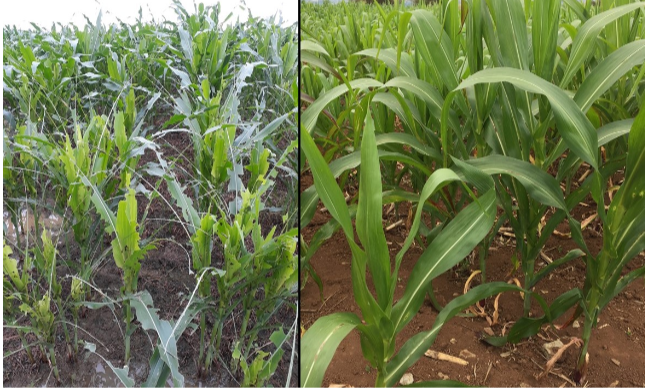
Corn hybrids Dekalb VT Double Pro (RIGHT) withstand fall armyworm leaf damage versus non-resistant hybrids

   The VT Double PRO Dekalb hybrids, which has a biotechnology trait that controls lepidopteran pest Bacillus thuringiensis (TB), is reportedly also bringing resistance to the

newly emerged fall armyworm, farmers claimed.

   The VT Double Pro of Bayer has a dual mode of action for protection against fall armyworm, corn borer, corn earworm, and other above-ground pests notorious for wreaking havoc on corn crops leading to huge yield losses.

   “We observed that some corn hybrids had around 13 to 17 percent damage due to fall

armyworm, but the Dekalb VT Double Pro hybrids planted at the same time had less than 3 percent damage,” according to Rolex Martinez, a farmer in Barangay Swan, Pudtol, Apayao.

   He planted the VT Double Pro Dekalb hybrids in 7 hectares during the previous season.

   These Dekalb hybrid corn seeds are currently the only seed product certified by the Fertilizer and Pesticide Authority (FPA) as plant-incorporated protectant for control of fall armyworm

   With other hybrids not having the technology, corn farmers were not as lucky as they tried

to apply different types of insecticides to no avail.

   The fall armyworm has become a major concern for corn farmers since it emerged just in June 2019.

   “Some say that the damage of fall armyworm is not yet very big. Let’s not wait for the damage to turn huge until help to farmers is extended. We are waiting for government to immediately download to farmers whatever solution has been found effective,” said PMFI President Roger Navarro.

   Many farmers are clueless on how to control fall armyworm, considering it is just a new pest.  An old pest, though, known only as “armyworm” before was said to be already existing in the Philippines in the last decades.

   “We are confused on what to do. We don’t know how to control this pest.  We have tried all kinds of pesticides—the strongest ones. We found these useless. We hope the government will recommend to us whatever is best to control this pest,” said Martinez.

   In Barangay Duminit, Cauayan City, Isabela, Art Cacal, a farmer and barangay chairman

who grows white glutinous corn, experienced huge damage from fall armyworm from his latest harvest.

   “Fall armyworm destroyed 100 percent of our harvest because the pest ate up all the leaves,”

said Cacal.

Fall armyworm feed on and damage corn leaves that have no Dekalb VT Double Pro resistant-traits

   Similar to the situation of Martinez, corn farmers in Cauayan City also tried using different

types of insecticides just to combat the pest.  But none of them was able to prevent the

damage to their crops. Cacal mentioned that there were several farmers who had up to 50

percent yield loss at harvest time due to the corn pest.

   On the other hand, Cacal added that farmers who planted the Dekalb corn hybrids last

season did not encounter the same damaging fate.

   The Department of Agriculture gave away fertilizers to farmers in Cauayan City in order to

counter destruction of fall armyworm.

   “We received a total of 149 bags in fertilizer for our entire barangay because DA gave 3 bags of fertilizer per hectare, but it didn’t have much good result for fall armyworm,” said Cacal.

   White glutinous corn is preferred to be planted by some farmers in Cauayan City since it

is a short two-month crop compared to yellow corn’s four-month planting duration.

   Cropping may reach up to five times a year leading to quicker cash turnover. Traders or

buyers of white corn used as food (grilled corn) intentionally travel to Cauayan City just to haul white corn when Nueva Ecija supply gets depleted.

   However, the growing concern from fall armyworm infestation is making farmers growing white corn to shift to planting yellow corn. 

   They are likely to use the Dekalb VT Double Pro corn hybrid varieties due to their resistance to this emerging key corn pest.

   “Our team in the field has observed numerous cases of fall armyworm damage in major

corn growing areas all over the country.  And we feel sorry for our farmers who had the

yields and income reduced significantly due to this corn pest,” said Erwin Vibal, head of

marketing for Bayer CropScience.

   “Fortunately, we are able to address this key concern with our lineup of Dekalb corn hybrids that have proven built-in resistance against fall armyworm.”

   Based on the current list of Fertilizer and Pestcide Authority (FPA) for registered products

to control fall armyworm, Bayer’s VT Double PRO is the only Plant-Incorporated

Protectant in the approved registry while the rest are insecticide application.

   “We are looking forward to the coming season because our Dekalb seeds provide much

more convenience and assurance to our corn farmers from fall armyworm.  We also

ensure that the agronomic characteristics of our hybrids are adaptable to different growing

conditions leading to high yields and income,” added Vibal. 

   Aside from their corn hybrid varieties, Vibal mentioned that Bayer is also launching Yeoval

next month, which is a crop protection product that can help address the concern for farmers planting white glutinous corn or sweet corn. Melody Mendoza Aguiba and Bryan P. Rivera

Filipino farmers to benefit from drones as Bayer pushes AI farm technologies

Calamba City, February 26, 2020 – Filipino farmers will soon have access to drones that intelligently map farms or collect crop growth information via remote sensing as Bayer partners with XAG of China on AI (artificial intelligence) farm technologies.

   The use of drones will tremendously raise efficiency in small Filipino farmers’ production. 

   A strategic partnership on digital farming technology in the Philippines and Southeast Asia was forged under a Memorandum of Understanding between Bayer and XAG which claims to be world’s largest drone supplier.

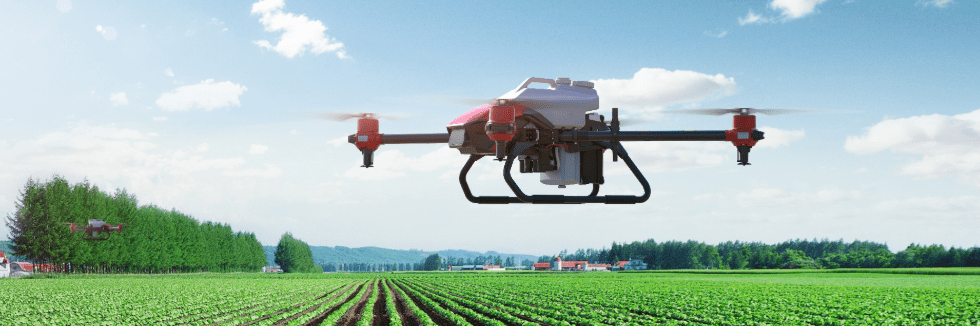
   XAG’s drones, specifically the granule spreading system, is used in seeding, fertilization, and plant protection in an arial way accurately through AI techniques.

Drones intelligently used in seeding, fertilization, and plant protection

   Bayer was represented by Andre Kraide, the company’s head for its CropScience division in Southeast Asia and Pakistan. XAG was represented by its Co-founder, Justin Gong.

   The technology will enable farmers to overcome farming challenges including labor shortage, water availability, product stewardship and safe use, and most importantly, allowing them to grow more with less.

   “It is estimated that around 500 million smallholder farmers produce 80 percent of the

food consumed in the developing world,” said Kraide.

   “We know that we need to double food production to feed 10 billion people by 2050.  But we also know that we will not get more land or resources to do so. This is where digital farming comes into the picture.”

   “As the leader in agriculture, Bayer is committed to enabling smallholder farmers access

to digital technology and solutions. We look forward to working closely with XAG, our

channel and value chain partners, as well as the governments and other key stakeholders

in the countries to leapfrog the smart agricultural movement in Southeast Asia and

Pakistan from farm to table,” he added.

   The partnership involves distribution of XAG products through Bayer’s channels.  It will jointly promote and develop markets through partnerships with local distributors.

   “XAG has grown from a drone manufacturer based in Guangzhou, China, to the world’s

leading agriculture technology company with a 20 million-hectare crop protection service

record. Our product portfolio includes survey and spray drones, agricultural utility

vehicles, and IoT (Internet of Things) equipment such as weather stations and farm cameras,” said Justin Gong, co-founder of XAG.

Filipino farmers’ key to food security

   The Philippines has been striving towards self-sufficiency in rice and corn through the

Department of Agriculture and part of the government’s focus has been on agriculture

modernization and mechanization.

   “At a glance, we are seeing scarcity of labor and improper application of crop protection products as concerns that can be solved right away by using drones,” said Iiinas Ivan Lao, country commercial lead for Bayer CropScience in the Philippines.

   “Farmers would be able to optimize their usage of farm inputs such as seeds and fertilizers since this technology promotes precision agriculture, hence would

lead to reduced production costs while improving yield output and income,” claimed Lao. Rex Bryan P. Rivera

Hybrid corn of agriculture leader Bayer Crop Science posts record-high 14.85 MT yield, more Filipino farmers anticipated to grow corn

Hybrid corn of agriculture leader Bayer Crop Science posts record-high 14.85 MT yield, more Filipino farmers anticipated to grow corn

February 5, 2020

Two corn Dekalb corn hybrids of agriculture leader Bayer Crop Science have come out as topnotchers in a government-led corn competition in in three Mindanao sites, posting a record high for the region with a computed yield of 14.85 metric tons (MT) per hectare.

   A four-month planting program co-hosted by the Department of Agriculture (DA) and municipal agricultural offices in Compostela Valley, Davao City, and Sarangani have exhibited the highest potential yield of the hybrids, given optimum growing conditions and proper crop management.

   In Compostela Valley, Dekalb 8719S came out a first place with 14.85 MT per hectare. Its yield was 14.12 MT in Davao City, also the highest yield in the province.

   In Davao City, the second place was garnered by another Bayer corn hybrid, Dekalb 8899S with 13.38 MT per hectare.

New Dekalb 8719S int he field ready for harvest

   Samuel B. Ontic, DA Malungon municipal corn coordinator, said the government anticipates more farmers will be encouraged to plant corn as the new corn varieties offer bigger profitability potential for corn planting.

   “That is really our objective in putting up these technology-demo sites—to show farmers the best hybrid corn varieties suitable in their areas,” said Ontic. “Varieties perform best depending on the location and this activity demonstrates which corn hybrids are most ideal for their farm.”

   The computed yield from Bayer’s products are highly significant in the Philippines where the average corn yield is only at 3.1 MT per hectare based on Philippine Statistics Authority records.     

   The corn derby in DA Malungon was conducted in MTDC – Integrated Communal and Research Garden, Sitio Basak, Malandag, Malungon, Sarangani Province during the September 2019 to January 2020 cropping season.

   As part of the competition protocol, two different types of fertilizers were applied to all the competing hybrid corn varieties. This way, farmers would have the opportunity to determine which fertilizer and fertilization level to use for optimum plant growth.

   “We recognize the importance of having a sustainable corn industry in Mindanao to meet

demand and we’re excited to have new corn hybrid varieties in the pipeline that farmers here may consider in the coming season,” claimed Erwin Vibal, head of marketing for Bayer Crop Science. “The corn derby results show an achievable scenario on the potential yield and income that Mindanao farmers can get with the right inputs and sound crop management practices.”

Farmers’ Perspective

   Edwin Ligahon, a corn farmer in South Cotabato, said Dekalb 8899S is indeed a “super” variety among all corn hybrids. “A few hybrid corn varieties can get double ears per plant, but for 8899S, most of the plants have two ears that can be harvested with both being heavy,” said Ligahon.

   From the two hectares that he planted with Dekalb 8899S, he reaped 312 cavans. Shelling recovery is high which he estimates to be more than 80 percent. With his highly satisfactory harvest, he plans to expand planting of 8899S to five hectares by the next planting season.     

   It even helps that Ligahon is a resourceful farmer as he runs his own feed processing business. With the value chain in place, his costs for producing feeds are reduced since he grows his own raw materials.

   Mar Nacional, a farmer who tilled Dekalb 8899S, claimed that applying fertilizers at the right time is essential for good harvest. He added that proper cultivation of the soil aids moisture and nutrient retention which are vital for the crop.

   “First and foremost, it’s the right choice of hybrid corn variety that makes the difference if you want to reach the optimum yield potential,” said Nacional.

   Adaptability Across Mindanao

   Ontic claimed that the biggest advantage of the new corn varieties from Bayer is their adaptability in both uplands and lowlands of Mindanao region.    

   “Some corn varieties that have tall plants cannot be grown in hilly or sloping areas, only on flat land. These new hybrids may be grown even on uplands because of their short height,” he said. “Shorter plants with strong stalks are more resistant to lodging, thus surviving strong winds or even some typhoons that destroy plants just before harvest.”

   Bayer’s hybrid corn Dekalb 8899S, launched in late 2019, was bred to have a stable yield performance under drought conditions. Across high and low elevation corn areas in Mindanao, it has shown consistently high shelling recovery at 82%. It also has good resistance against Diplodia ear rot, Phaeosphaeria Leaf Spot (PLS) and other foliar diseases which are critical for the high disease pressure areas in Mindanao. Maturity ranges from 105 to 120 days, depending on the elevation level and season.

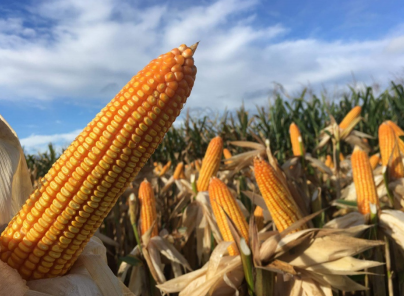
Mindanao corn farmers showing off ears of Dekalb 8719S and 8899S in farm activity

   Another Bayer hybrid corn variety, Dekalb 8719S, will be launched this coming season. It boasts of good resistance against Gibberella ear rot, more known by farmers as ‘lipstick’ because of the purpling of the corn ear near the top during the later stage of the crop.

   Having bold orange kernels adds to its attractiveness and potential for grains to be sold at a premium. The plant of 8719S has a stay green quality which can last until harvest period so it is able to absorb more nutrients for better ear development. (Melody Mendoza Aguiba)

Ears of 8899S during a harvest festival in Mindanao

.

First-of-its kind urban farm in bustling Taguig City put up by Bayer, Conrad Manila buys the produce

January 24, 2020

A first-of-its-kind urban farm has been put up in Taguig City by Germany-based Bayer as a showcase of a sustainable farm that has a captured market in Hilton hotel chain Conrad Manila.


At a launch in Pamayanang Diego Silang in Brgy. Ususan Taguig, the 200 square meter urban garden called “Bayer Kubo” aims to be part of contributing to meeting certain United Nations goals. The site is nearly along expressway C-5.


A major one under the Sustainable Development Goals of the United Nations is “zero hunger.”

Vinit Jindal, Bayer Philippines Inc managing director, said the urban garden in Taguig City contributes to this goal and, depending on the availability of suitable land and other partners, the Bayer Kubo concept may be replicated in other urban areas “where it will have significant positive impact.”


“With the Philippines’ growing population, urban agriculture will be important in food security,” said Jindal.
Conrad Manila General Manager Laurent Boisdron said the hotel traditionally sources its supply of vegetables and herbs from the local market.


“We will now buy our vegetables from this farm. Yes we know the produce will be of high-quality with this partnership with Bayer and the community,” said Boisdron in the same launch Thursday.


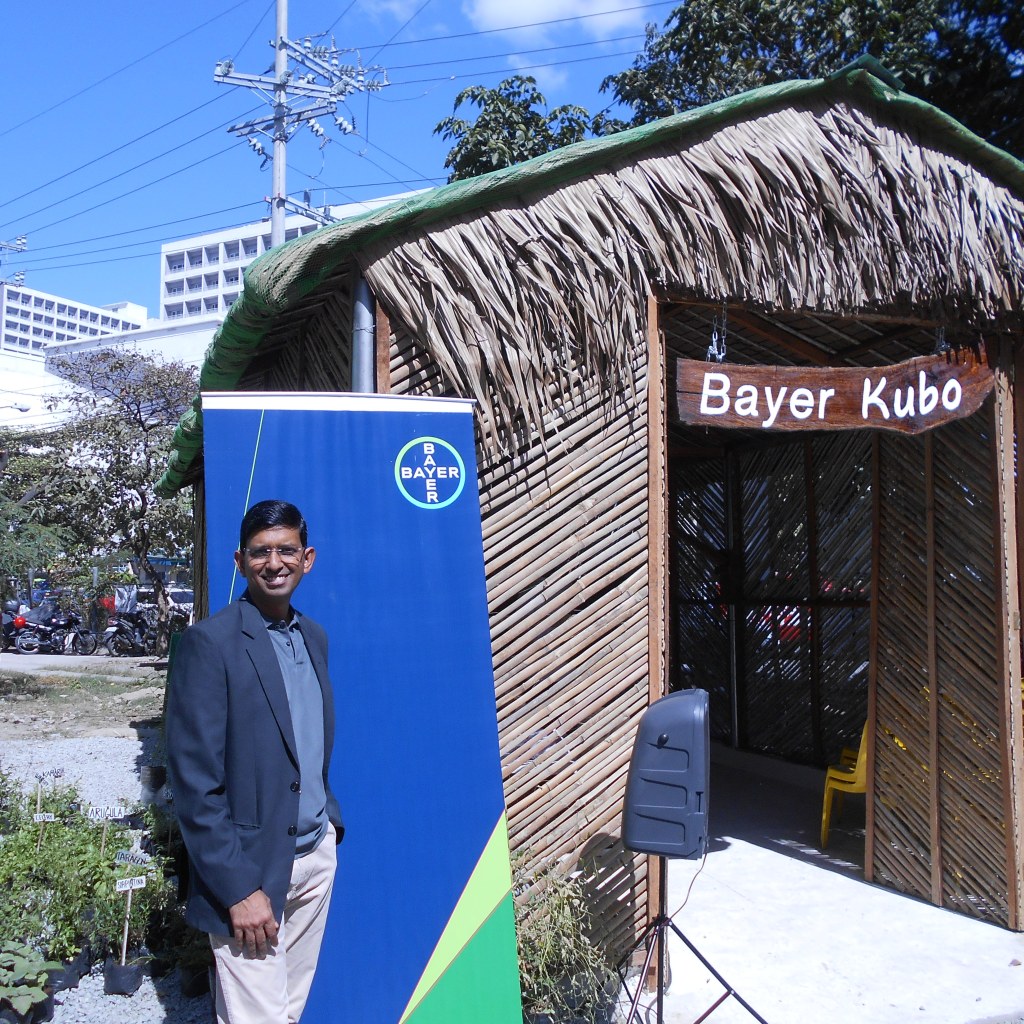
Bayer Philippines Managing Director Vinit Jindal at the Bayer Kubo with the high-rise buildings rising behind along C5 expressway, Taguig City


The project’s memorandum of agreement also includes Taguig local government unit (LGU) and civic group Rise Against Hunger.


Jomar Flores, Rise Against Hunger executive director, said some urban farms are just launched and later on abandoned. But two major factors will contribute to sustainability of Bayer Kubo.


Direct participation from the Pamayanang Diego Silang and the presence of a direct market in Conrad Manila are major factors to sustainability, said Flores. The BCDA housing community has 2,800 units with 62 buildings.


“We put up our first Food Bank (food storage centers for free distribution to urban poor) in Taguig City. Food banks will only succeed if it’s in an urban area, not rural. The food manufacturers are there (as food supply sponsors),” said Flores.


While it is difficult to organize scattered people in the boondocks, urban areas have the human density, the urban poor consumers, who need food and jobs.


Rise Against Hunger has 12 day care centers in Taguig City where it regularly feeds children and has 500 member-families in its food bank.


Bayer is supplying all the needs of the urban farm—seeds, technical-agronomic assistance, training of people in financial-business operation.


Earwin A. Belen, licensed agriculturist of Rise Against Hunger, said the Bayer Kubo program is using organic practices in the vegetable and herbs farm.


“We’re using organic practices. We use vermicast as fertilizer from worm (waste). We are training the resident-farmers on how to grow vegetables together with the DA (Department of Agriculture,” said Belen.


Bayer Kubo program will also train the 30 registered volunteers from Pamayanang Diego Silang on preparing organic concoctions, fermented fruit juice as plant growth enhancers.


The aquaponics system that Bayer Kubo program is using is also efficient in both fish and vegetable production. It uses a one cubic meter tank to grow lettuce producing 75 heads per cycle (5-6) weeks.


The vegetables are supplied with nutrient by the waste of the fish from the same tank that can grow 30 kilos of tilapia at a time.


Vegetables and herbs now planted in the Bayer Kubo facility here are eggplant, tomato, pepper, medicinal plants roselle, taheebo, gotu kola, tarragon, gotu kola, serpentine, basil, lemongrass, and Thai garden tea.


Registered farmer-volunteers in the urban farm are 30 Pamayanang Diego Silang residents in medium-rise building community in BCDA Housing, mostly senior citizens or retirees.


A multi-sectoral partnership supports success of the program even as Taguig City itself has long been known to sustain its large tracts of profitable farm land despite urbanization.


“We have large tracks of land– hundreds of hectares for farm that have long been farm areas. We have a big production of melon in Taguig. We have kept our rice farms,” said Felix Catigay Taguig City environment officer.


Taguig City naturally has urban greenery program—containerized fruit-bearing trees and urban gardens – in idle areas identified by the city assessor’s office.


What makes the program more holistic is Bayer is making Bayer Kubo, particularly referring to a sawali-bamboo structure conference center, an urban poor multi-program center.


The consumer health and pharmaceutical divisions of Bayer Philippines is also supplying medicines, contraceptives and related products to the community that will support health and population control here.


It will provide training on family planning where Bayer has long involved in successful community work even in other countries where it operates. (Melody Mendoza Aguiba)
PHOTO

Bayer Philippines Managing Director Vinit Jindal at the Bayer Kubo with the high-rise buildings behind rising C-5 expressway, Taguig City

Corn-rice mix answer to food security, malnutrition amid rice supply threats due to China’s dams in Mekong River

December 30, 2019

Food security perils resulting from threats of severe drought in rice-exporting countries due to dams being built in  Mekong River should prompt Philippines to introduce corn grits into daily rice meal.

   The mix of rice and corn as staple may still be new to most Filipinos, particularly Luzon natives.

   However, the rice-corn mix endorsed as staple by the Department of Agriculture (DA) should be consumed more now amid threat of declining supply of rice in the world market, according to experts at the Institute of Plant Breeding (IPB).

   The Mekong River recorded in July 2019 an all-time low water level in 100 years, causing drought among rice-exporting countries. 

   This should prompt government leaders to adopt  the program of using nutritious Quality Protein Maize (QPM) as a well-suited mix to rice, according to Jaia Gabrielle L. Lapiz,IPB research associate.

   The Mekong River is recognized as the most important river in Southeast Asia.  Its water irrigates agricultural lands throughout China, Myanmar, Thailand, Laos, Cambodia, and Vietnam.

   It is foreseen that droughts may turn worse as some 300 dams are reportedly being built or proposed in China and Laos.

   “Why would the drought in the Mekong River be of concern to the citizens of the Philippines? Because we get 91% of our imported rice from the countries (mainly Thailand, Vietnam) sitting on the Mekong River,” said the IPB researcher.

   IPB of the University of the Philippines-Los Banos (UPLB) has repeatedly proven viability of the rice-corn mix as a palatable substitute to the regular rice on the Filipino table.

   “Eating corn grits in not an unfamiliar topic. When the Marcos Administration was hit with a rice crisis that almost depleted the national stock, they had to add corn grits to the mix just to continue the supply,” said Lapiz.

Corn grits and corn grit recipes. Image credit: www.featurepics.com, http://www.taste.com.au, www.sidechef.com, www.howtofeedaloon.com

   “Today, eating corn grits is only unfamiliar to Luzon dwellers. Filipinos in Visayas and Mindanao continue to eat corn grits as their staple food.”

   Artemio M. Salazar, IPB rogram leader, said IPB has a seed production program to produce the QPM seeds in greater quantity.

   “Farmers in the uplands will most benefited.   IPB Var 6 gives a yield that is nearly comparable to commercial yellow corn’s yield,” said Salazar. 

  Based on a previous test, the yield of IPB Var 6 in Luzon was at an average of 5.84 metric tons (MT) per hectare; in Visayas, 5.45 MT per hectare, and in Mindanao, 4.47 MT per hectare.

  “ These seeds are distributed to DA’s regional offices.  IPB is tasked to produce foundation and registered white corn seeds which will be mass-propagated in the regions.

   “We aim to bring this technology to the uplands the boondocks where there are many people who don’t have anything to eat,” said Salazar.

   Lysine, tryptophan

   A unique nutrition advantage of the IPB Var 6 is its high quality protein.  It has high content of essential amino acids lysine and tryptophan.

    Unlike rice, white corn has low glycemic index (GI).  Low GI makes white corn slower to digest thereby releasing glucose gradually into the bloodstream.  Thus, the risk of diabetes, now among top 10 killer diseases in the country, is lessened.

   It has more dietary fiber found to enable the body to fight cancer risks.  It has more minerals and more antioxidants than rice.

Kwashiorkor

   The high protein in QPM becomes a solution to a nutritional case called “kwashiorkor” (African).  It is a protein deficiency problem that leads to brain use impairment.

   Lysine is an essential amino acid that plays a big role in muscle building and the body’s production of hormones, enzymes, and antibodies.  This white corn is also rich in tryptophan, another essential amino acid.

   Intake of a 3 piece of  20-gram IPB corn pan de sal with 20% corn grit supplies 25 percent of a two-year old child’s daily nutritional requirement out of the required 44-64 milligrams per one kilo of weight.

   Lysine contributes to the production of carnitine which helps lower cholesterol. It is important for the absorption of calcium and the formation of collagen needed in building bones and connective tissues.

Agronomic advantages

   Growing corn likewise has huge implications in agriculture.

   Corn has what is known as the “C4” biochemical photosynthetic pathway. That enables it to more efficiently collect energy from sunlight that is converted to biomass.  Rice has the less efficient C3 biochemical photosynthetic pathway.

   “The Holy Grail in rice breeding is genetically transforming the photosynthetic pathway of rice from C3 to C4 in order to increase grain yields,” said IPB Founder Dr. Emil Q. Javier

   Corn also requires less water to grow, bearing higher drought tolerance with its more efficient water use.

   “Corn requires much less water to produce a kilogram of grain compared with rice. Corn therefore is the better alternative in farms without irrigation which constitute the majority of our arable lands,” he said.

  What is good about corn is it does not need capital-intensive irrigation facilities, unlike rice.  For corn grows wherever there is rainfall. UPLB and IPB have also developed a corn mill that may be portably taken to upland areas for processing of the QPM.

     The white corn variety used is an open pollinated variety.  That means seeds can be repeatedly used by farmers for free. The OPVs, developed by IPB, yield a relatively high four metric tons (MT) per hectare, still higher than most OPVs yielding two to three MT.

   The availability of the portable corn mill is expected to encourage farmers to plant  white corn,.

   “If there’s a small machine, farmers have an assurance of a market for corn,” said Salazar.

    At approximately just P100,000 per unit, its benefit to the rural poor will be immense.

Supply problems

   As corn grits are hardly available in Luzon, government (a function used to be with the National Food Authority) may take on tasks of  grain purchasing, storage, milling and distribution of white corn grits and rice-corn grit mixtures.

   DA has been funding the seed production of the  QPM.  

      An earlier proposal of the Philippine Maize Federation Inc. (PMFI) is for government’s initial release to market of 300,000 MT of rice-corn blends for 5 years.

   It will be consumed by constituents of subsidized food at the Bureau of Jail Management and Penology,

   It will also be used for the school/nutrition feeding of the Department of Education, Department of Social Welfare and Development, Department of National Defense, and Department of Health.

Taste tests

   Based on tests, a mix of 70:30 (rice-corn) has been found by nutritionists at UPLB to be acceptable to common rice consumers in Luzon.

   The corn grit part to the blend may be raised as soon as consumers get used to the texture and taste.

Malnourished

   The last 2008 National Nutrition Survey (NNS) of the Food and Nutrition Research Institute indicated that underweight children aged 0-5 affected numbered 3.35 million, an increase of 26.2 percent from the last NNS held every five years.

   For aged 6-10, underweight prevalence also rose from 22.8 percent to 25.6 percent, affecting 2.6 million kids.

Pan de sal

   As corn may be mixed with rice, corn may also be used as substitute for wheat flour up to 20 % based on an IPB bread program.

   Salazar said Philippines can save P5 billion yearly if it can replace wheat flour by just 20 percent.  IPB Var6 has been used on commercial scale production of pandesal in a community in Calauan, Laguna led by the Salesians of Don Bosco.

African program

   IPB Var 6 is a corn variety developed for local growing conditions by a team of IPB breeders led by Salazar.

   Its original parental lines came from a program of CIMMYT meant to aid Africa to feed malnourished children with QPM. Since corn has been a staple in Africa, it wasn’t too difficult to introduce QPM there.

   “Actual nutrition trials in Ghana and several other countries have demonstrated that

children fed with QPM corn were healthier, suffered fewer fatalities and had better growth rates

than those fed with normal corn,” said Javier.

   The same was true with parallel tests with animal feed rations. Tests in El Salvador

showed that as much as 50% of the soybean meal can be replaced with QPM corn resulting in

savings of 3–5% of feed cost.

   These were the foundation genetic materials out of which Dr. Artemio Salazar and his

team at IPB developed a Filipino version adopted to Philippine growing conditions and tolerant to prevailing pests and diseases. Melody Mendoza Aguiba

SEARCA pushes for favourable biotechnology regulations amid calls for Golden Rice permit revocation

Pro Vitamin A-rich Golden Rice. Image credit: International Rice Research Institute

December 30, 2019

ASEAN’s farm research center SEARCA is boosting support for  favourable agri-biotechnology regulatory policies amid local calls for the revocation of the commercial permit of pro-Vitamin A-rich Golden Rice.

   Believing agri-biotechnology will be key to food security and upliftment of farmers’ lives,   the Southeast Asian Regional Center for Graduate Study and Research in Agriculture said it has

 partnered with three expert groups for this program to boost expert knowledge in regulations on Living Modified Organisms (LMOs).   LMOs include farm products more known to be the controversial GMOs (genetically modified organisms).

   This is through the opening of the program “Second Asian Course on Agribiotechnology.”

   Despite safety questions on these biotechnology products, SEARCA deems it important to harness the fully potential of agri-biotechnology through “effective communication and science-based regulatory frameworks.”

   SEARCA Director and National Academician Glenn B. Gregorio, highlighted SEARCA’s important role in advancing science-based innovations to address poverty and food security.

   “We stand behind products of agribiotechnology that increase agricultural productivity to feed a growing population in the midst of dwindling natural resources and erratic changes in climate,” Gregorio said. 

   “Due attention must be given to our resource-poor farmers by providing them access to information, best practices, and new technologies that gives them a fighting chance to cope with the many challenges they face and to open up better opportunities for them and their families so that they can have better quality lives,” said Gregorio. 

   According to Dr. Mahaletchumy Arujanan, ISAAA Global Coordinator, “we organized this training program to bring our Asian stakeholders updated information and hands-on experience on agribiotechnology, exercises on food/feed safety assessment, and tips on strategic communication, and risk management and communication.” 

   This year’s Asian Short Course on Agribiotechnology gathers 25 participants from both public and private sectors of eight countries. These are China, Indonesia, Malaysia, Pakistan, the Philippines, Taiwan, Thailand, and Vietnam.  

   SEARCA’s partnership is with the International Service for the Acquisition of Agribiotech Applications (ISAAA), Malaysian Biotechnology Information Center, and Monash University.    

   The program focuses on Agribiotechnology, Biotechnology Regulation, and Communication. 

   While government has just approved permit for use for food, feed, and processing of Golden Rice, Greenpeace  has reportedly filed a petition for the permit’s revocation.

   Golden Rice has been questioned by interest groups due to the technology that inserted a gene into the grain that enables the staple to produce increased Vitamin A, helping reduce massive Vitamin A-deficiency (VAD).

    It is targeted at preventing blindness that develops in around 500,000 people, mainly children, yearly, reported the Golden Rice Humanitarian Board (GRHB)

   “Nearly nine million children die of malnutrion every year. Vitamin A deficiency (VAD) severely affects their immune system, hence it is involved in many of these children’s deaths in the guise of multiple diseases. Malaria deaths in children under five years of age has been linked with deficiencies in the intake of protein, vitamin A and zinc,” said the board.

   The rice technology will have huge economic impact for poor farmers as they no longer have to invest more into the seed.  The technology is being offered for free by humanitarian groups that helped its development. 

   Developers include Sygenta, the Philippine Rice Research Institute and International Rice Research Institute, among others.

   “The technology is built into each and every harvested seed, and does not require any additional investment. Let’s consider the potential of a single Golden Rice seed: a single plant will produce in the order of 1,000 seeds; within four generations or less than two years, that one plant will have generated seeds (amounting to more than 10to the twelfth power)”.

   “This represents up to 28-thousand metric tons of rice, which would be already sufficient to feed 100-thousand poor people for one year,” said the GRHB. Melody Mendoza Aguiba
Economists, rice leaders: Sustain rice tariffication, but guarantee farmers’ support, correct trade imbalances– rice hoarding, illegal trading, pricing; form farmer alliances

Dr. Glenn B. Gregorio (fifth from left), SEARCA director, leads forum on Rice Tariffication Law

December 4, 2019

Economists and rice sector leaders have pushed for mixed policy recommendations in light of the rice tarification law (RTL) — pressing for sustained implementation yet strong and “guaranteed” farmer support, or the RTL may turn to be “disastrous.”

   Safety nets for the protection of farmers are of prime importance as these apparently have not been installed as evidenced by farmers’ poor plight from palay’s collapsing price.    

   This has been raised during the “Regional Implications in the Philippines’ RTL” forum organized by the Southeast Asian Regional Center for Graduate Study and Research in Agriculture (SEARCA). 
   “The challenges we always face every cropping season relative to systemic barriers to farmers’ income  were not addressed head on in the RTL,” said Cresencio C. Paez, director of Asian Farmers Association for Rural Sustainable Development.

   “Safety nets for the protection of the farmers and consuming public were not taken into account concretely and strongly. A lot is said about promises. (But there is a need for) ‘guarantee’ of protection.”

   The challenges waiting to be addressed, Paez said,  amid the RTL’s implementation are “price volatility, land productivity, climate change’s effects, market power which involves cartel (traders hoarding rice) resulting in market abnormalities, governance, corruption, weak government agencies, and faulty extension delivery.” 

   “The RTL, if not well calibrated in its implementation, will be disastrous, and it is now happening this early,” said Paez at the SEARCA forum.

   SEARCA, in its mandate to help upgrade graduate education in agriculture in South East Asian countries, believes the vision toward a common ASEAN (Association of Southeast Asian Nations) market is steering farms to form regional alliances. 

   That leads to“promoting and strengthening intra-ASEAN trade.” A liberalized rice sector under the RTL regime readies Philippines   in such globalized trade,

   Dr. Glenn B. Gregorio, SEARCA director, said government should have a system by which the
“right price of the right rice” can be determined. 

   This has significant implication for both the farmers and consumers, Gregorio said.

   Farmers depend on the right price of rice for their income and livelihood.  Consumers likewise depend on the right price of rice for their economical consumption of the staple as an important factor in keeping a desirable standard of living.  

   The ASEAN Plus Three Emergency Rice Reserve (APTERR), designed to beef up food security in emergencies in among ASEAN countries, should be sustained, although threatened, with the RTL.

   Jansinee Kankaew of the APTERR Secretariat, said the National Food Authority (NFA)’ s function has been altered as a result of the RTL.  This may adversely affect implementation of APTERR. 

   Thus, the APTERR program should be maintained for emergency purposes amid the RTL, Kankaew said at the SEARCA forum.

   APTERR is a reserve fund of 787,000 metric tons (MT) contributed by ASEAN members for emergency use .  Philippines contributes 12,000 MT of rice for this reserve.

   Jerry E. Pacturan International Fund for Agricultural Development country program officer, said the RTL is in track in supporting rural transformation and modernization. 

   “It will foster better use of resources, higher productivity, farm consolidation, mechanization of the rice sector, and improved focus on suitable rice areas,” he said at the SEARCA forum.

   Nevertheless, government should have a “more responsive strategy” so that vision toward diversification of the agriculture sector will be a reality.  With diversified agriculture, farmers will be able to shift or add growing of more profitable high value crops—fruits and vegetables–  and earn higher income.

   “If resources are managed properly and government focuses equal attention on other high value crops that the country has competitive advantage in,  a highly productive, quality-oriented, product-differentiated, and modernized rice industry will improve agriculture performance,” said Pacturan.

   The country may even be able to export specialty and heirloom rice from upland farms, he said.

   Dr. Ramon L. Clarete of the UP School of Economics said that there has been initial shock as Philippines appears imported rice this year at a higher 10% of  total consumption.

   That is a significant jump compared to just 5-7% imports in previous years. 

   Yet this import percentage will likely no longer exceed 15%, Clarete said.

    This is as the rice sector steps up to demands of competitiveness as a result of the RTL

   “The import liberalization may cause higher productivity to local rice farms and efficiency along its local rice value chains– milling and logistics. We will retire those inefficient and marginal rice farms, and what’s left would be the efficient farms. Old rice mills would have to go.  Like Cambodia the remaining rice millers invest in modern rice mills and much larger storage and other post-harvest facilities,” he said.

   Clarete’s policy recommendation is for government to help facilitate alliances of farms in order to boost productivity.  This will help small farms to commonly achieve economies of scale.

   “The one-hectare farm household or so can still be part of the industry. The farm can actually boost its productivity if it joins an alliance of several others and get their aggregated farm managed professionally.” (Melody Mendoza Aguiba)

ASEAN-SEARCA-supported Grow Asia grew to benefit 117,000 Filipino smallholders in coconut, coffee, corn

SEARCA Director Glenn B. Gregorio

November 23, 2019

ASEAN arm SEARCA has supported the development of organized and skilled farmers that now form part of Grow Asia, a farm production partnership platform that’s benefitting 117,000 smallholders in coconut, coffee, corn, fisheries, and vegetables.

   The Southeast Asian Regional Center for Graduate Study and Research in Agriculture (SEARCA) reported that Grow Asia, through its Philippines Partnership for Sustainable Development (PPSD), has become a successful farm partnership model.

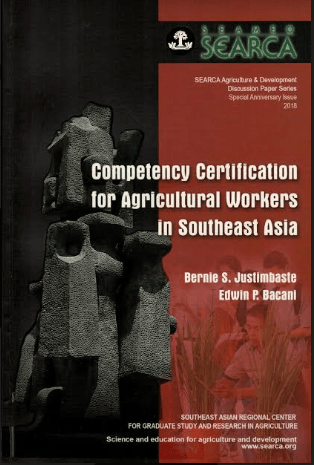
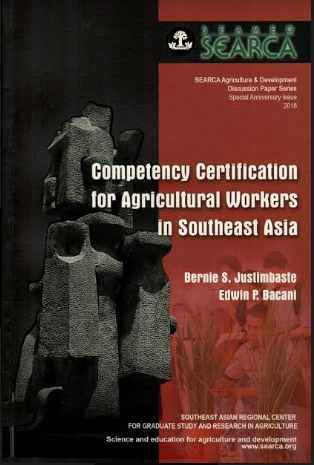
   Bernie S. Justimbaste and Edwin P. Bacani reported in the SEARCA-published “Competency Certification for Agricultural Workers in Southeast Asia” that Grow Asia has demonstrated farming models that now integrate small farm owners into the big ASEAN value chain.

   ASEAN (Association of South East Asian Nations) co-founded Grow Asia with the World Economic Forum.

   Grow Asia-PPSD has built synergies between different value chain players in agriculture.  It facilitates delivery of many interventions including agricultural and technical-vocational (Tech-Voc) skills training in the production of these farm products:

  • Coconut– Grow Asia-PPSD is providing a Mindanao-based program multiple interventions in farmers’ production of coconut water:  development of skills and know-how in coconut intercropping, replanting, and market access. Partners in this program are Unilever, Friends of Hope, and KFI Center for Community Development.
  • Coffee—Ten cooperatives in Tagbina, Surigao del Sur are being helped by a Nestle project through technical assistance, intercropping know-how, provision of quality planting materials (Robusta coffee), and establishment of market.  Macnut Philippines is also involved in contract growing and buy-back of Arabica coffee. This project has 15 other partners including the Philippine Coffee Alliance.
  • Corn-  Farmers in Zamboanga del Norte have been connected through ZMDC Grains Inc. to a hog farmers’ cooperative in Batangas (to buy corn).  Aside from skills training, interventions include credit and post-harvest technologies. Partners here are Pioneer, and 8 other agencies including Philippine Maize Federation Inc.
  • Fisheries—A hatchery for mudcrab for export has been constructed that is supporting 1,000 farmers.  Interventions are working capital credit, know-how on the development of loan products and business development, and technical assistance via the Zamboanga Peninsula-wide baseline and performance indicators system.  The project has 8 other partners including Dipolog School of Fisheries.
  • Vegetables—Interventions in this Zamboanga program include design of vegetable supply chain from quality seeds to the sale of vegetables to supermarkets. Other interventions are credit, post harvest facility, and a water management system.  Partners are East West Seed, Jollibee, and Zamboanga local government unit.

   SEARCA has supported the replication of such farm production model as that of Grow Asia. 

  This, as Grow Asia-PPSD has proven to foster skills capability building of agriculture human resource, a major SEARCA function being ASEAN’s graduate education and research center.

Competency Certification for Agricultural Workers in Southeast Asia

   This mandate involves not only development of academic or entrepreneurial agriculture skills but also Tech-Voc farm skills to help improve the labor force in ASEAN agriculture.

   SEARCA has actively supported Tech-Voc Education and Training (TVET) since it was tapped by  ASEAN education ministers (SEAMEO) to lead a research on competency certification for agricultural workers in Southeast Asia.

   SEARCA Director Glenn B. Gregorio said a common competency certification system among ASEAN countries will enable freer exchange of farm workers between countries.

   ASEAN countries are working toward one ASEAN Qualifications Reference Framework (AQRF) in order to allow this matching of farm skills and competencies between countries.       

   Gregorio said the AQRF recognizes both non-formal and informal learning in assessing farm workers’ skills level and qualifications.

   “The AQRF would benefit agricultural workers as they acquire skills and knowledge largely through non-formal and informal learning modes provided mostly by agriculture extension services systems,” said Gregorio.

   ASEAN countries have been concerned about the status of skills among agricultural workers as they acknowledge that “competitiveness, productivity, and economic growth largely depend on the ability to acquire and use knowledge, as well as to attract the best talents.’”

   As ASEAN aspires to have a “single market and production base”, the AEC (The ASEAN Economic Community) Blueprint has called for a “free flow of skilled workers” between ASEAN states.

   ASEAN leaders from ministries of education, labor, and vocational training,  met last Sept. 9-10, 2019 in Brunei to develop strategies on the adoption of AQRF in ASEAN.

    The Philippines’ delegation include those from Department of Education, Technical Education and Skills Development Authority (TESDA), and SEARCA.

    Gregorio said that as part of a SEARCA study, SEARCA has recommended that partnerships and alliances (such as that in Grow Asia-PPSD) should be encouraged in ASEAN countries.

   Partnerships under Grow Asia-PPSD is seen by 2020 to involve 10 million smallholder farmers in Southeast Asia.

   “Currently, it has reported to have collectively reached nearly 500,000 smallholder farmers through 26 value chain initiatives,” said Justimbaste and Bacani.

   “The private sector can play a crucial role in spreading lifelong and reskilling opportunities among agricultural workers, while innovating on methods of education and training delivery that fit the prevailing non-formal and informal learning and skills development in the agricultural and rural areas,” said SEARCA authors said.

  “The driving strategy to scale up these opportunities is to put in place a competency certification system.” (Melody Mendoza Aguiba)

  1.  SEARCA Director Glenn B. Gregorio
  2. Competency Certification for Agricultural Workers in Southeast Asia