Bayer comes out superior with a 12.36 metric tons (MT) per hectare yield in DA-administered corn derby in Malaybalay, Bukidnon
Bayer Crop Science (BCS) Philippines is restoring its Mindanao operations with aggressive market enthusiasm armed with new multiple pest-resistant hybrid corn varieties that toppled other seeds in a Department of Agriculture-administered corn derby.
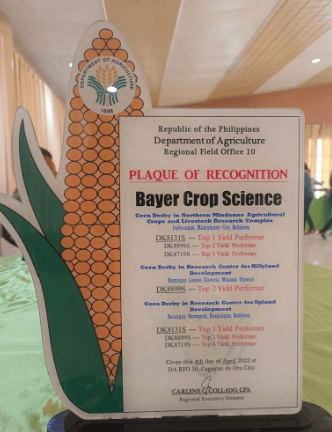
Coming out superior from the DA Region 10 Field Office (RFO) corn competition is Bayer’s DEKALB 8131S with a top yield of 12,36 MT per hectare. It bested other entries from seven seed companies.
Incidentally, two other DEKALB hybrid corn varieties, ranked Top 2 and Top 3 in the DA RFO 10 corn derby. DEKALB 8899S gave a yield of 10.9 MT per hectare and DEKALB 8719S at 10.06 MT per hectare.
DA RFO 10 reported that the hybrid corn varieties were showcased in two research centers in Region 10. The first is at the Northern Mindanao Agricultural Crops and Livestock Research Complex (NMACLRC) in Dalwangan, Malaybalay City with an altitude of 800 meters above sea level. The other competition site is at Research Center for Upland Development (RCUD) in Barongcot, Dangcagan, Bukidnon (600 meters above sea level) on March 3-4, 2022.
“Our aim is to assess the productivity and profitability of these different hybrid corn varieties and component technologies appropriate for specific locations,” said RFO 10 Executive Director Carlene C. Collado.
Erwin Vibal, Head of Grower Marketing at Bayer CropScience Philippines, said DEKALB’s strong performance in the competition signals revival of operation in MIndanao. The company experienced a lull in its Mindanao operation in three to four years. It just began restoring operation in 2020 with its new DEKALB superior corn varieties.
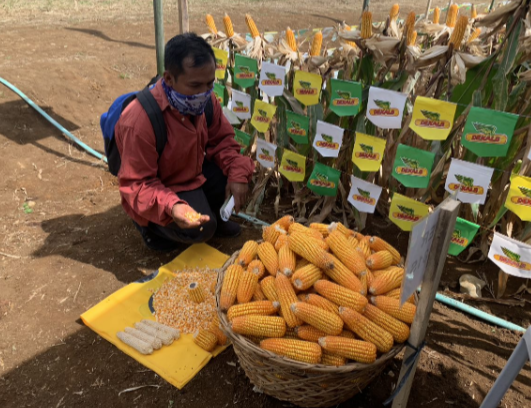
Grain-filled Dekalb 8131S corn cob
“We pulled back in Mindanao from 2016 to 2017 since we had to rethink our strategies. Now we’re confident to be back to Mindanao because of the excellent performance of our product offerings that beat competition by miles away,” said Vibal.
Mindanao corn farmers found the DEKALB corn varieties highly profitable owing to its VT Double Pro that has resistance to four virulent pests. VT Double Pro has dual mode of action that protects corn plants from Asiatic corn borer, Fall Army Worm (FAW), earworm, and cutworm.
It is the only hybrid corn variety certified by the Fertilizer and Pesticides Authority (FPA) for its resistance against FAW.
FAW has been heavily infesting corn farms nationwide, bringing losses of 80 to 100% to farmers.
“The disease pressure in Mindanao is very high. But farmers have a choice. Do they want to use seeds and use pesticide sprays, or do they want DEKALB hybrid corn seeds that have built-in resistance against pests?” said Vibal.
Evangeline S. Mayantao, a farmer of Malaybalay City said (originally in Filipino), “This derby helps us farmers a lot in giving us information on what corn seeds give a high yield and on technologies that will help us grow our farms.”
Regional Technical Director for Operations Carlota S. Madriaga recognized the sustained effort of the seed companies in developing high yielding corn varieties appropriate in different agro-climatic conditions.
Among the provinces in the region, Bukidnon has the largest corn production in the region with more than 100 hectares.
The third leg of corn derby and field day was held on March 10 at the Research Center for Hillyland Development (RCHD) in Lanise, Claveria, Misamis Oriental.
The activity was supported by the PLGU Bukidnon through its Provincial Agriculture Office, respective Municipal Agriculture Offices, DA-10’s Research Division and Provincial Operations Center for Bukidnon and farmer associations.
The results of the derby were presented to the attending corn farmers together with their assigned agricultural technicians, coming from the towns of Magsaysay, Lagonglong, Balingasag, Claveria, Jasaan, Villanueva, Tagoloan and Opol, and the city of El Salvador, MisOr; and the municipality of Malitbog, Bukidnon.
Collado said in a statement that results from the corn competition will also form part of the agency’s procurement, factoring in the local government units and farmers’ requests.
Collado also urged the corn farmers to form into clusters, being one of DA’s key strategies to boost the country’s agriculture sector. This will optimize any assistance from the government that would enable farmers to significantly cut their cost of operations, achieve bountiful yields, and reap an increase of incomes.
“If you have volume, we encourage you to form a cluster, as we can make arrangements with different feed millers, to ensure you enjoy stable or even higher prices for your corn harvest,” he said. Melody Mendoza Aguiba
A Joint Memorandum Circular between the Department of Environment and Natural Resources (DENR) and two other state agencies is expected to strengthen the establishment of marine protected area networks (MPAN), restore damaged coastal ecosystems, and enrich coral reefs and marine habitats.
This policy mandates collaboration between DENR, the Department of Agriculture (DA), and Department of Interior and Local Government (DILG) in improving the coastal and marine environment through cooperation.
“The eventual approval of the joint (DA-DENR-DILG) policy guidelines on the establishment and management of MPANs will be valuable in biodiversity conservation efforts,” according to Dr. Vincent V. Hilomen, SMARTSeas PH national project manager.
The JMC ensures that biodiversity conservation is given priority equally along with economic development.
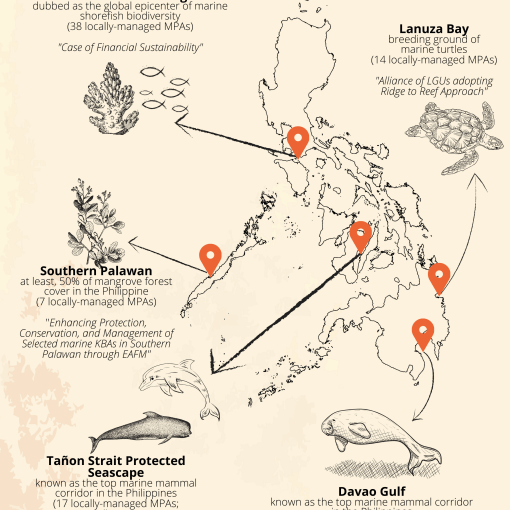
DENR-SMARTSeas Marine Protected Areas-Networks
“There will be a value for a government policy that places conservation as equally important to development and progress. Many of the degraded coastal and marine habitats resulted from the relentless push for development and progress with little afterthought of the higher costs to the environment,” said Hilomen.
A joint effort of DENR, DA, and DILG will help government hurdle the difficulties of putting up Marine Protected Areas (MPA) and MPA Network (MPAN) amid coastal residents’ usual opposition against these.
MPAN is a collection of individual MPAs or reserves operating cooperatively and synergistically under the SMARTSeas.
“One of the greatest challenges that we are experiencing in establishing MPANs is still the acceptance of the community. There are several instances where the communities resist to set aside a portion of their waters for protection purposes because they think that access to their fishing areas will be limited,” said Hilomen.
It is imperative that government capacitates its MPA/MPAN workforce to empower them in harnessing cooperation from communities in establishing the MPA/MPANs.
“A thorough discussion of the benefits from protection and consultation with the community from the onset is a must. The involvement of the community in protection is critical.”
The DENR’s SMARTSeas PH project or Strengthening Marine Protected Areas to Conserve Marine Key Biodiversity Areas in the Philippines is funded under a $28.53 million co-financing scheme between government and the Global Environment Facility (GEF). It also received a GEF grant of $8 million.
The SMARTSeas PH has so far capacitated at least 70 key DENR regional and field staff through online distance learning.
This is the first-ever of its kind capacity building activity in the DENR. The increased competencies included identification and approaches to resolving threats to the marine environment.
The establishment of three MPANs led to the development of nearly 90 management bodies of MPAs and MPANs that have demonstrated increased competencies for management effectiveness.
SMARTSeas has also developed a better monitoring and evaluation system for MPAs and MPANs which provided an important guide to monitor management progress across the country. Protection of coastal ecosystems under the MPA includes patrolling, surveillance of habitats, conduct of direct activities and repair of signages, other facilities, gears and equipment. Melody Mendoza Aguiba
About SMARTSeas (Reference: Paglayag)
The DENR-SMARTSeas PH Project was a six-year initiative of the DENR-BMB. With support from the United Nations Development Program (UNDP) and the Global Environment Facility (GEF), the project aimed to accelerate the establishment of MPA and MPANs to include more marine key biodiversity areas (KBAs) in order to reduce and arrest the rapid degradation of marine and coastal habitats.
The project established biodiversity friendly enterprises (BDFEs) for people’s organizations (POs) who manage their MPAs and established a co-management model as a revenue mechanisms from impact investments to sustain and cover management costs; and enabled a policy where science-based conservation strategies of marine biodiversity are ensured.
The project was piloted in five sites in the country – Verde Island Passage (VIP), Southern Palawan, Tanon Strait Protected Landscape (TSPS), Lanuza Bay, and Davao Gulf.
The uniqueness of each site as a marine KBA resulted to different storylines, but aiming at achieving the same goal.
During the implementation, the project facilitated the establishment of three MPANs, adding 1.8 million hectares of the sea under a form of protection and enclosing an additional 17 marine KBAs.
The project established 33 BDFEs in accordance with the DENR guidelines — 21 of which were provided with Low Value Grant support to POs, capacitated and deputized 220 Bantay Dagat through the Bureau of Fisheries and Aquatic Resources (BFAR).
It also leveraged at least P 2.9 billion worth of support from the private sector and local government units, and enabled institutionalization of a more inclusive and integrated MPA and MPAN framework through local and national policies.
Dairy farmers have vehemently opposed a proposed Department of Education (DepEd) policy to source from multinational corporations – instead of from Filipino farmers– the milk for its School Based Feeding Program (SBFP).
The Dairy Confederation of the Philippines, in a letter to DepEd Secretary Leonor Magtolis-Briones, said Filipino milk farmers stand to lose P250 million from the policy.
Besides, RA 11037 “states unequivocally that as far as practicable,” milk for the SBFP shall be sourced from local farmers and processors.
“This is in violation of the purpose and spirit of RA 11037,” said DCP Director Danilo V. Fausto in the letter. RA 11037 institutionalizes the National Feeding Program for Undernourished Children in Public Day Care Center, Kindergarten, and Elementary Schools to Combat Hunger and Undernutrition.
The latest policy is for implementation from April to June 2022.
“We strongly deplore and object to this sudden and unilateral program implementation schedule for the 2022 GAA (General Appropriations Act) . The schedule will unfairly prevent the local farmers, cooperatives and local milk processing plants from supplying the milk requirements of the SBFP under the 2022 GAA,” Fausto said.
Filipino-produced fresh milk-Gatas ng Kalabaw by DVF Dairy
The local dairy farmers, processors and cooperatives started serving the SBFP during GAA 2019 in the last quarter of 2020 and continued on to GAA 2020 and then to GAA 2021 which is currently ongoing.
“They cannot possibly be expected to supply the GAA 2022 milk in the sudden and unilateral imposition of an April 2022 to June 2022 period within which to supply milk because the 2021 GAA is still ongoing. And the milk is still being produced and delivered,” Fausto said.
The milk feeding for 2021 is still ongoing because of the pandemic and will finish by June 2022. DepEd wants to implement 2022 starting April to June this year, overlapping the ongoing milk feeding using the budget for 2021.
This will in effect allow foreign multinationals to come in since “we will have to finish first the 2021 up to June, thus, local dairy farmers cannot supply the April to June request of DepEd.”
DepEd is now asking NDA (National Dairy Authority) and PCC (Philippine Carabao Center) to sign a certification that local dairy farmers cannot supply the milk to allow the entry of foreign multinational dairy companies, dislodging the local dairy farmers for the GAA budget 2022.
“The very spirit why RA11037 was created…to give livelihood and income opportunities for our local farmers. Local dairy farmers can supply the milk required under the program.”.
DepEd wants to implement the milk feeding program only for 16 days, while the recommendation of the National Food and Nutrition Council is 90-120 days to have real and meaningful impact on the health of school children.
Furthermore, majority of the local dairy farmers and cooperatives have reinvested their earnings to expand their capacities.
“And now they will be shut out and excluded under the program, consequently resulting in losing millions of pesos for these dairy cooperatives, turning their expansion to white elephants,” said Fausto.
“If they allow multinationals to enter, the rest of 2022 beginning July to December, the local dairy farmers & cooperatives will be shut out and excluded. The multinationals will advantage of the milk feeding program funded by tax payers’ money.”
DepEd does have a commitment on fund utilization with the Department of Budget and Management, DCP admitted. But this unilateral decision to implement starting April 2022 effectively excludes local dairy farmers and milk processing plants.
The policy will double multinationals’ share to the milk feeding program in 2022 to 41.89% equivalent to 442.692 million from 19.07% in 2021. (Melody Mendoza Aguiba)
Bayer is building on the power of emerging new technologies to create a sustainable and resilient food system and help farmers produce more with fewer resources while reducing emissions and removing carbon from the atmosphere. “Bayer’s R&D (research and development) investment of 2 billion euros annually in our Crop Science division is unparalleled in the industry, leading to a robust innovation pipeline spanning seeds and trait technologies, crop protection and digital solutions valued at up to 30 billion euros peak sales potential over the next two decades – with approximately half accounting for incremental growth,” said Rodrigo Santos, Bayer AG Board member and Crop Science president. On the basis of a technology called RNAi, Bayer recently launched the first-ever biotech defence against corn rootworm, enabling farmers to control a pest that costs around 1 billion euros annually in crop damage while reducing the need for crop protection. With its short-stature corn, planned to launch as part of Bayer’s newly introduced Smart Corn System in 2023, Bayer is going to bring a more weather resistant plant to the market. Short-stature corn is able to withstand extreme conditions emerging from climate change, thus reducing the risk of crop loss and contributing to food security. Leveraging its unparalleled digital farming platform, Bayer is a leading force in the decarbonization of agriculture. The Bayer Carbon Initiative incentivizes farmers to embrace the use of climate smart practices such as no-till or cover crops.
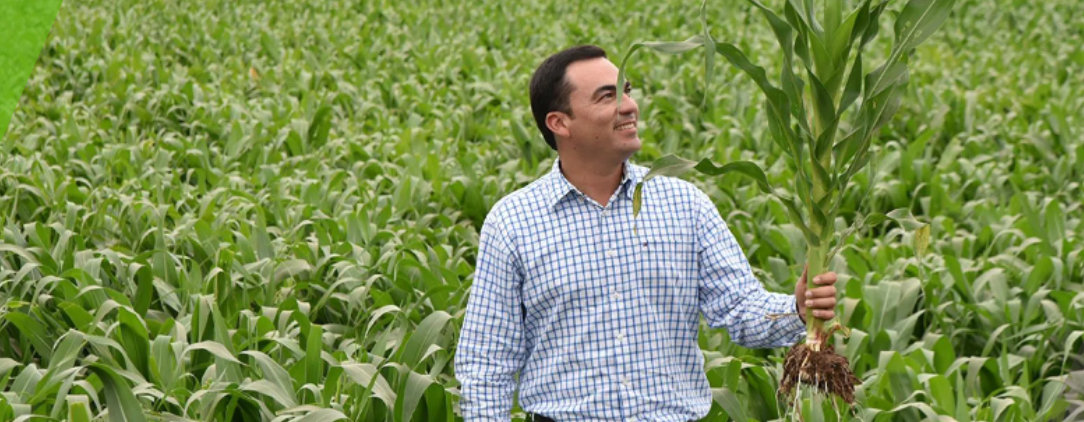
Short stature corn weathers climate change
It uses next-generation technology to quantify and track the impact of these practices, underlining Bayer’s pioneering role and its unique position in advancing digital capabilities for the food, feed, fuel, and fiber value chain. Bayer held last April 1 its first ever Breakthrough Innovation Forum. In conjunction with the event, Bayer announced that it is accelerating its investment in its Leaps by Bayer impact investment unit with more than 1.3 billion euros funding until end of 2024. “We stand at the dawn of a new age of innovation in the Life Sciences,” said Werner Baumann, Bayer AG chairman of the Board. “Our ability to tackle some of the greatest challenges is increasing rapidly. From providing answers for incurable diseases, equipping people with preventive tools to live healthier, better and longer lives, to producing more agricultural output whilst significantly reducing inputs and respecting the planetary boundaries. This ability is particularly driven by the accelerating confluence of biology, chemistry, advanced computing, data analytics and artificial intelligence.” Leaps by Bayer follows a unique approach aimed at tackling ten of humanity’s biggest challenges such as curing cancer or reducing the environmental impact of agriculture. “Over the past seven years, we have invested more than 1.3 billion euros across a portfolio comprising more than 50 companies – all geared towards shifting core paradigms in the sectors of Health and Agriculture,” said Jürgen Eckhardt, Head of Leaps by Bayer.
Pioneer hybrid rice producer SL Agritech Corp. (SLAC) has become the Philippines’ first private corporation issuer of a social finance instrument with a P2 billion corporate note considered a “sustainable” or “social” financing owing to its socio-economic benefits.
Issuance to be managed and arranged by MIB Capital Corp., the social finance instrument will support SLAC’s continuing expansion which has become critical as it pursues Philippines’ food security goals.
“We are very proud to be the first receiver of a social finance instrument in the Philippines,” said SLAC Chairman Henry Lim Bon Liong in an investors’ meeting Wednesday.
SLAC’s financing has merited the approval of DNV Business Assurance Pty. Ltd., according to Thomas Leonard of DNV during the same investors’ meeting.
DNV made a second party opinion assuring such fund will enable to raise capital for a project that has “social” benefits. The funds will be drawn in one or more tranches over three years.
DNV affirmed that “SLAC currently meets the criteria established in its Eligibility Assessment Protocol (that is) aligned with the stated definition of social bonds and loans.”
Konsintr Puongsophol, Asian Development Bank (ADB) financial sector specialist, said that there has been a steadily increasing demand for sustainable bonds such as SLAC’s social finance instrument. He said during the investors’ meeting that global sustainable bonds doubled to $1,478.6 billion in 2021 from $745.4 billion in 2020.
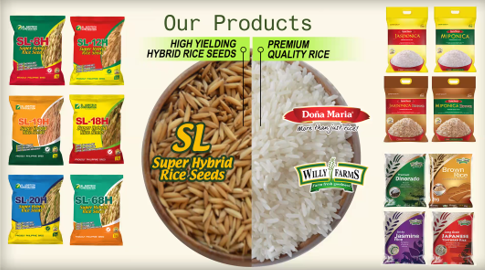
SL Agritech’s Dona Maria rice, SL hybrid rice seeds
“Globally the volume of labelled sustainable finance products is not keeping up with investor demand. All deals are seeing oversubscription and more favorable issuance,” said Puongsophol.
ADB extends technical assistance to support issuers of sustainable bonds. The bonds should be issued in the local currency, Philippine peso, of ASEAN Plus 3 markets.
SLAC has engaged in a continuing expansion every two years. Its hybrid rice plant production and seed processing sites including expansion sites are in Talavera, Nueva Ecija; Banay Banay, Davao Oriental; Victoria, Tarlac; and Matanao, Davao del Sur.
“Through our plant expansion program, we are able to help more farmers and provide employment to those in the agricultural sector. We are contributing to the economic growth in the target locations and nearby rural communities,” said Lim.
Lim stressed the significance of Philippines’ pursuing food sufficiency especially at the height of today’s crisis.
“Both oil and food are very important for us. Right now, during this Russia war, the price of wheat and food has risen. There is a good opportunity for farmers to plant and yield more for us to be self-sufficient. In this season, we have to be self-sufficient in food,” he said.
A review and finalization of the terms of the note will be done from April 18 to 27, 2022. Signing of the financing facility will be on May 2. The social financing instrument will be made available to a limited number –19 primary institutional lenders.
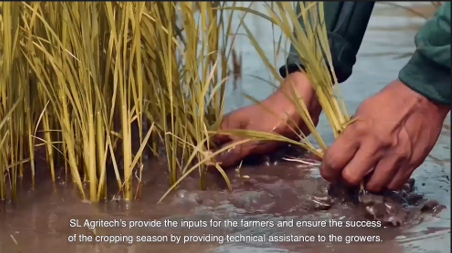
SL Agritech provides inputs to farmers to ensure best yield
SLAC has recently established its Social Finance Framework (SFF) and Corporate Social and Sustainability Committee to oversee socio-economic development projects.
Its SFF is aligned with International Capital Market Association Social Bond Principles (ICMA SBP) and ASEAN Capital Markets Forum ASEAN Social Bond Standards (ASBS), said Thomas Leonard of DNV.
The following are SLAC’s socially eligible projects :
1. Contract growing program for rice and hybrid seeds (Buyback Scheme for Rice and Seeds). SLAC provides farmers in advance with inputs, tools, and technology – seeds, fertilizers to ensure good harvest. SLAC buys back farmers’ harvest at prevailing price plus a premium at assures net income of farmers.
2. Hybrid Rice Technology Demonstration Program. This is a nationwide farmers’ education program that guides farmers on implementing farming technology using hybrid seeds from planting to harvesting.
3. Research and development of hybrid seed varieties. This is a continuous program for improving seed varieties in terms of yield, good tasting quality, and pest resistance to ensure a sustainable food system.
4. Harvest Performance Award (Harvest Festivals) to motivate farmers to raise yield and productivity. The Masaganang Ani 300 provides social recognition and financial rewards for farmers if they meet the potential optimum yield of hybrid seeds set at 300 cavans per hectare.
5. Plant Expansion Programs aimed at generating more employment for farmers and agricultural sector, promoting economic growth in rural communities. (Melody Mendoza Aguiba)
Bayer Pharmaceuticals has unveiled a new first-of-its-kind guideline for the early diagnosis and treatment of endometriosis, more popularly known for the symptom “dysmenorrhea.”
The guideline is a consensus among obstetrician-gynecologists and related medical experts in Asia. Endometriosis is known to affect 6-10% of Filipino women.
The guideline aligns with the latest 2022 guidelines published by European Society of Human Reproduction and Embryology (ESHRE), which details the best practices of caring for women with endometriosis.
Both works emphasize the importance of non-invasive procedures in early diagnosis and treatment to allow for patient-centred care.
For instance, symptom recognition is recommended before utilising laparoscopy for diagnosis. One of endometriosis’s symptoms is dysmenorrhea, the medical term for painful menstrual period caused by uterine contractions. Other symptoms, according to a Bayer primer, are non-cyclic pelvic pain, dyspareunia (painful intercouse), dysuria (pain when urinating), dyschesia (obstructed defecating syndrome), fatigue, and subfertility.
Medical treatments are recommended for the management of pain post-surgery.
For treatment, the consensus recommends hormonal treatment for patients with no immediate pregnancy desires.
These treatments should be individually tailored by considering women’s presentation and therapeutic need. Medical treatment such as the use of GnRHa and progestin are also recommended for early treatment, and management of pain post-surgery.
“While the consensus is useful in guiding healthcare providers to recommend patient-centric treatment options, there is also a need for us to leverage the right platforms to educate women on endometriosis, empowering them to voice out their pain and seek treatment early by making informed decisions about their condition.
“These efforts are testament to our long-standing commitment to support our healthcare providers and patients, and ultimately improve women’s health,” added Catherine Donovan, Vice President Head of Medical Affairs Asia-Pacific, Bayer Pharmaceuticals Asia-Pacific.
Angela Aguilar, Past President of the Philippine Society for Reproductive Medicine and co-author of the “Clinical Diagnosis and Early Medical Management for Endometriosis: Consensus for Asia” said, “This is a huge progress in the management of endometriosis.
“Through this consensus, early diagnosis and better treatment options will be made available for women to help them achieve an overall improvement in quality of life. Healthcare providers will be more equipped to deliver patient-centric care and help alleviate the burden brought about by this condition.”
The consensus serves as a summation of deliberations by clinicians with expertise in the diagnosis and treatment of endometriosis, where they convened in 2019 to critically evaluate evidence, international guidelines and consensus reports around the clinical diagnosis and early medical management of endometriosis in Asia.
Besides proposing an algorithm that utilizes both clinical diagnosis and early medical therapy which will require further evaluation to assess its effectiveness in diagnosis and patient outcomes, the work also provides guidance on clinical diagnosis and early empiric treatment.
Similar to ESHRE’s 2022 guidelines, the consensus suggests that laparoscopy is no longer considered the diagnostic gold standard. Instead, it proposes focusing on patient history and clinical examination to decrease diagnostic delay, especially in low resource settings.
Non government organization Kids Who Farm KWH) has started luring the youth into agriculture using hydroponics technology which produces vegetables prolifically without requiring much pesticide and can grow “soil-less.”
During a “Pista ng Pagkain at Kabataang Pinoy” festival held by the Southeast Asian Regional Center for Graduate Study and Research in Agriculture (SEARCA), KWH Founder Muneer Hinay said that households can significantly contribute to solving Philippines’ food security concern.
“I realized that even a small child can actually propose solutions to the pressing problems of food security,” said Hinay.
That has been true for his family as his daughter Raaina jointly put up KWH’s micro urban garden in her school, Catalina Vda de Jalon Memorial School in Brgy Tumbaga, Zamboanga City. She was only nine years old then – three years ago.
Now KWH not only has a joint urban farming project with Raaina’s school. But its partnership is with a host of other institutions who have the like mind to entice the youth that agriculture is a profitable venture. As an incentive to kids, they are able to bring home and eat what they produce and also get a commensurate pay for their efforts.
Aside from its partnership with the Department of Education’s “Gulayan sa Paaralan,” KWH has micro farming project with Department of Social Welfare and Development (DSWD Region 9, iVolunteer and Google.
It had urban farming lectures for Haven for the Children and Haven for Women facilities, Rotary Interact Clubs from different universities in Zamboanga, Isabela City Youth Organization, and the Special Forces Battalion in Basilan.
With its advocacy, it has so far trained more than 400 youths in urban farming.
Hinay, project manager for sustainable food system at the World Wide Fund for Nature (WWF), believes his own home province should be food self-sufficient.
“There’s a big opportunity to really make Zamboanga city food secure. At present it is 40% self-sufficient in vegetables. As a city which is the third largest in the Philippines in land area, it’s very ironic that we import 60% of our food as far as from Baguio,” Hinay told the SEARCA seminar.
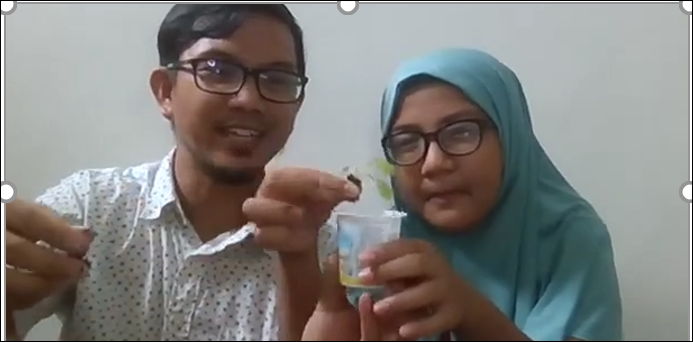
Muneer and Raaina Hinayduring the SEARCA hydroponics demonstration
SEARCA aims to popularize farming technologies as part of its contribution to transforming food systems to better achieve food security.
Obviously, it is important for households to have easy a nearby access to their source of food—making it fresh and nutritious, Hinay stressed. And what a better way to have a nearby urban farm, no matter how small, than through the hydroponics technology.
“When we talk about urban agriculture, a big challenge is on space. But the truth is when you have a small space, then what you need is a big mindset,” he said.
Hydroponics, which has been proven productive long ago from the Hanging Garden of Babylon to the Aztecs’ floating garden, comes from the Greek words “hydro” or water and “ponos” or work. That is working or cultivating plants with water.
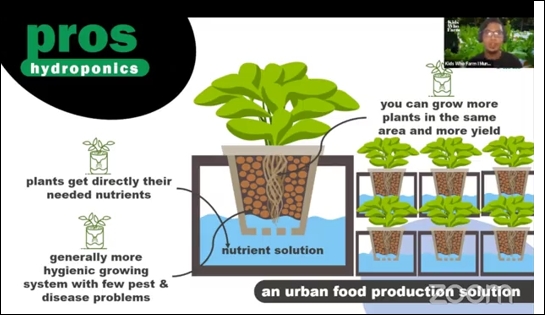
“In hydroponics, the plant roots absorb balanced nutrients dissolved in water that meet all the plant development requirements. The basic setup is you have a container or grow box, water inside with nutrient solution, and an air space so the container is not filled with water,” said Hinay.
The plants are in a growing media such as coconut coir or coconut peat– instead of soil. The plants get their nutrients from air and water—macronutrients, micronutrients—vitamins and minerals.
Among the plants that can be grown via hydroponics are lettuce, pechay, kangkong, bell pepper, tomato, and herbs like basil.
While the sizable portion of food production is still soil-based, 95%, producing food from hydroponics offers advantages. Among these are its modular setup (vertical or horizontal), ability for monocropping season after season, and nearly pest-free nature.
“There isn’t so much waste. There is no leaching (contamination of the water table since plants are in a contained area). Generally, it is hygienic, and there’s no emergence of pest and diseases. It is very rare that hydroponics setup gets pests.”
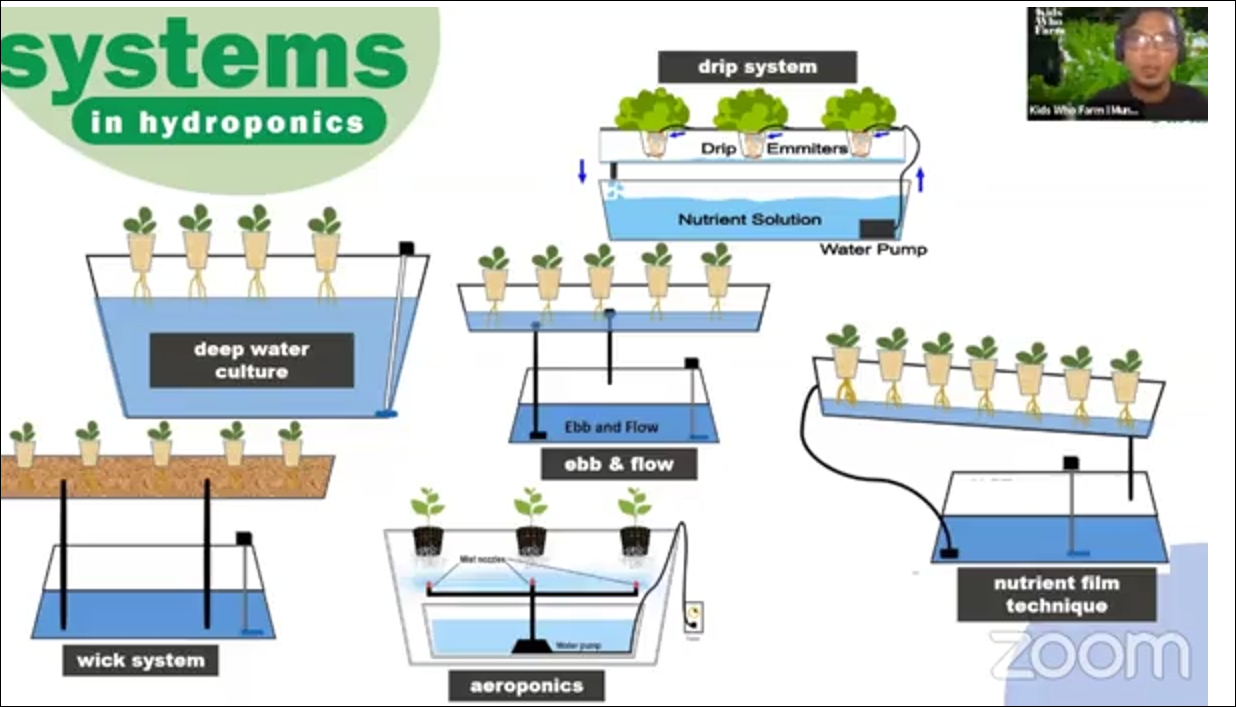
There are different types of hydroponics—wick system, ebb and flow which uses submersible pumps for irrigation, and nutrient film technique which also uses submersible pump. The drip system has continued slowly-releasing irrigation.
The deep water culture is a passive system without pump as the plant is submerged in the water. Aeroponics uses misting, or roots of plants are sprayed with water or mists using high-pressure pumps.
The easiest type to use and requires less startup money may be the deep water culture, particularly the Kratky method.
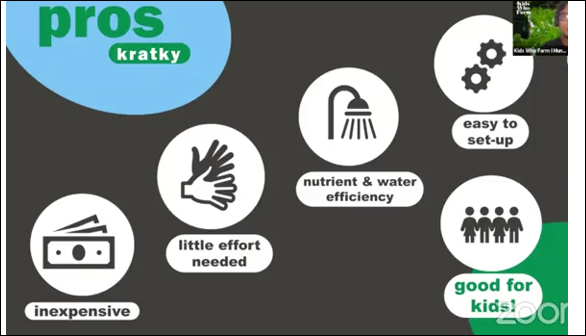
Developed by University of Hawaii’s Dr. Bernard Kratky, the method requires less effort to set up and is nutrient and water-efficient, Hinay said.
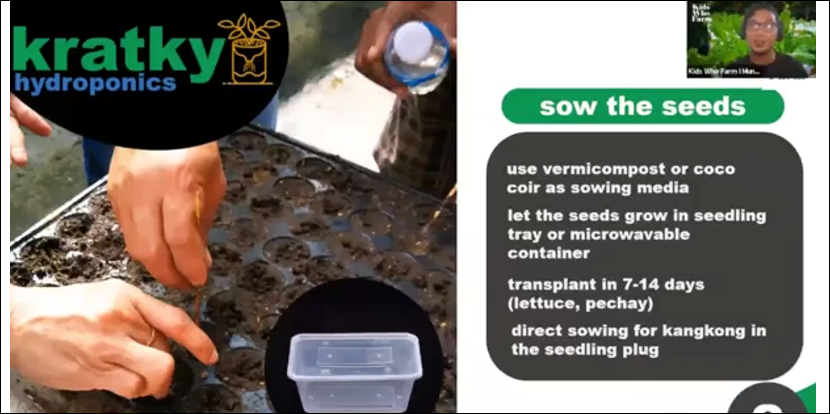
What is needed are a growbox, hydroponic nutrient solution (nutrients and fertilizer), a seedling plug (where you put or transplant the seedling ), and a growing media. Instead of soil, the media uses coconut coir, coconut peat, or foam.
For the seedling plug, styro cups, plastic cups, and many other waste materials can be used.
The steps in Kratky are 1. Make the growbox (using styrobox used as fruit containers), 2. Transplant the seedlings (seeds should first be sown in a separate sowing medium like a seedling tray). The upper box, which has holes, is where the seedling is placed. 3. Make the lower box where you put the water and nutrient solution. It should be well-sealed. 4. Grow and maintain (make sure the nutrient solution does not run out of water), and 5. Build a greenhouse.
Soon, the roots can be observed, and the plants are soon harvestable—lettuces can be harvestable 22 to 25 days from transplanting.
In cases when pesticide should be used, KWH recommends a simple biopesticide. It is just a mixture of chopped garlic (1 bulb), onion (1 medium), 5 to 6 chilli peppers, dishwashing liquid (1 tablespoon), and water (1 liter). This is used as spray on plants early in the morning or late afternoon.
With Kratky hydroponics, learning how to grow plants will not be discouraging for beginners since it is easy to experience success with it.
“Within a short period of time, you can have immediate success or yield, so you will be encouraged to grow more,” said Hinay. (Melody Mendoza Aguiba)
While pursuing research to find new treatment options for gynecological diseases with a high unmet medical need, Bayer is also working on addressing women’s health needs during menopause.
For more than 50 years, Bayer has supported educational programs and rights-based family planning in more than 130 countries, particularly by increasing access to modern forms of contraception.
In 2019, Bayer pledged to provide 100 million women in low-and-middle-income countries with access to family planning by 2030.
This initiative is part of Bayer’s comprehensive set of sustainability measures and commitments and in line with the United Nations Sustainable Development Goals (UN SDGs) .
“We believe every girl and woman deserves the chance to determine her own future. That’s why Bayer is partnering with local and international organizations, such as the United Nations Population Fund and the United States Agency for International Development, to empower women to make informed decisions about family planning,” said Mildred Nadah Pita, Head of Global Healthcare Programs/Sustainability Middle Africa at Bayer.
“With Bayer’s commitment to provide 100 million women in low- and middle-income countries with access to modern contraception by 2030, we are making an important contribution to achieving the UN Sustainable Development Goals by improving the health, rights and economic status of women around the world, which is a fundamental prerequisite for greater equality, education and prosperity for all.”
As part of this commitment, Bayer recently announced an investment of over €400 million in new production facilities for long-acting reversible contraceptives, including the construction of a new production site in Alajuela, Costa Rica and the expansion of production capabilities in Turku, Finland.
Shaping women’s health from menarche to menopause
Elinzanetant, a non[1]hormonal development compound, is currently being investigated in the Phase III clinical development program OASIS for the treatment of vasomotor symptoms during menopause.
“Every year 47 million women enter menopause, a period where women are at the peak of their life’s activity, personally and professionally. With increased longevity, maintaining functional ability and good quality of life is extremely relevant from both a healthcare and a socio-economic perspective. Unfortunately, menopause remains a taboo topic, leaving many women untreated,” said Cecilia Caetano, MD, Head of Medical Affairs Menopause at Bayer.
“With our strong heritage and deeply rooted expertise in women’s health, we continue to focus on providing innovative science, solutions and education to support the individual health need of women.”
Berlin, Germany. At its annual Pharma Media Day 2022, Bayer presented the latest developments in the ongoing transformation of its pharmaceuticals business, which is aimed at delivering long-term, sustainable business growth by bringing forward new options for patients.
“We are taking bold steps into the future of drug development, investing strongly in areas at the forefront of the biomedical and technological revolution.
“Our leadership in cardiology, radiology and women’s health is recognized worldwide, and we are expanding our presence in oncology, working tirelessly to bring forward new approaches that can change the treatment paradigm for patients,” said Stefan Oelrich, Member of the Board of Management, Bayer AG and President of Bayer’s Pharmaceuticals Division.
Bayer’s research and development pipeline continues to grow as the company is building on its existing competencies, such as the expertise around small molecules, while expanding into new modalities, including cell and gene therapies.
The company is advancing around 50 projects in ongoing clinical trials across a range of potential therapeutic modalities and indications, with a focus on oncology, cardiovascular and women’s health.
Strong pipeline with robust late-stage development program and broad potential across indications
In the area of cardiovascular disease, Bayer is delivering on its late-stage pipeline including recent launches of Finerenone (as KerendiaTM or FirialtaTM depending on country and region) and Vericiguat (Verquvo™).
The heart and the kidneys are closely linked in health and disease. Chronic kidney disease (CKD) in type 2 diabetes (T2D) is the leading cause of end-stage kidney disease with many patients at advanced stages needing dialysis or a kidney transplant to stay alive.
Patients are also three times more likely to die from a cardiovascular event than those with T2D alone, so early diagnosis and treatment is important to slow CKD progression and prevent poor patient outcomes.
It is estimated that CKD affects more than 160 million people with T2D worldwide. At the Pharma Media Day, Bayer presented recent advancements for Finerenone, developed for patients living with CKD associated with T2D.
In this field, Bayer has a strong scientific and clinical base for Finerenone, including the largest Phase III cardiorenal outcomes clinical trial program to evaluate the occurrence of progression of kidney disease as well as fatal and nonfatal cardiovascular events in more than 13,000 patients with CKD and T2D.
Additionally, Finerenone is being investigated beyond the current indication in heart failure as well as non-diabetic kidney disease as further potential indications.
Finerenone was approved under the brand name Kerendia® by the United States (U.S.) Food and Drug Administration (FDA) and as FirialtaTM in other countries and regions.
Finerenone was just recently granted marketing authorization in the European Union and has also been submitted for marketing authorization in China, as well as multiple other countries worldwide and these applications are currently under review.
Heart failure is a devastating disease affecting more than 60 million people worldwide, who are in need of treatment options.
Bayer’s symptomatic chronic heart failure treatment Vericiguat (Verquvo™) provides a specific approach to managing chronic heart failure patients following a recent decompensation event, also known as a worsening heart failure event.
A worsening heart failure event can mark the start of a downward spiral of disease progression and repeated hospitalizations.
In fact, 56% of patients are back in hospital within 30 days.
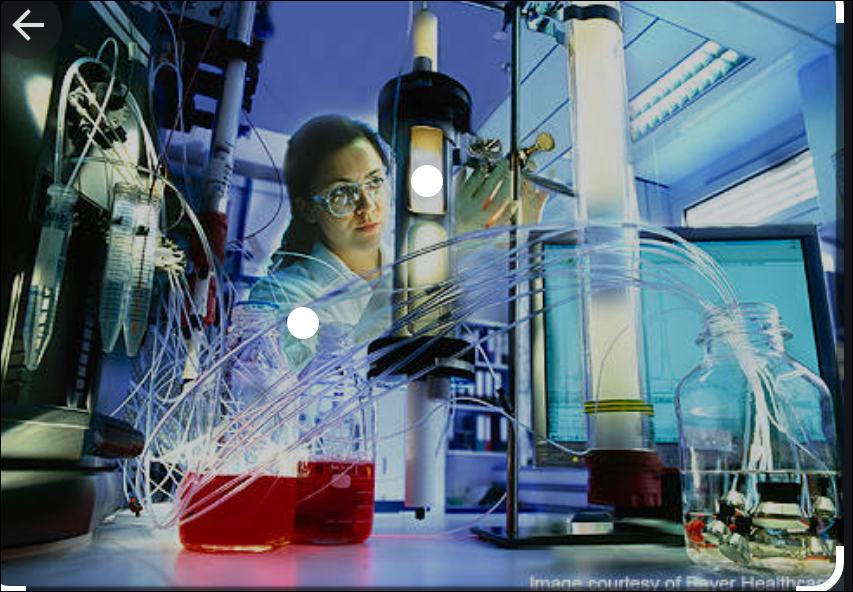
Bayer Healthcare and Cell Biology Center
Vericiguat works in conjunction with existing approaches through a different mode of action. It restores the deficient NO-sGC-cGMP pathway, which plays a critical role in the progression of heart failure, aggravating its symptoms.
Vericiguat is jointly developed by Bayer and MSD (a tradename of Merck & Co., Inc., Kenilworth, NJ, USA), known as Merck in the U.S., and has been approved by the U.S. Food and Drug Administration (FDA), the European Commission and the Ministry of Health, Labour, and Welfare (MHLW) in Japan among other countries.
Vericiguat has also been submitted for marketing authorization in China as well as multiple other countries worldwide.
“We are currently in the remarkable position to launch several important new medicines in parallel, and we are unlocking the full potential of our assets through systematic data generation, multi-indication approaches as well as building on new digital business models,” said Christian Rommel, Member of the Executive Committee of Bayer’s Pharmaceutical Division and Head of Research and Development.
“Our scientific leadership in the area of cardiovascular diseases advances our mission to provide better treatment options for patients in need.”
Re-imagining Radiology
Bayer is strongly positioned in the fast-growing medical imaging artificial intelligence (AI) market, combining a long-term expertise in radiology with a deep understanding of patients’ and physicians’ needs across a broad range of diseases, from oncology to cardiovascular, resulting in the ability to provide know-how and solutions from diagnosis to care.
In times of limited resources in healthcare systems, growing as well as aging populations and changing lifestyles contribute to an increase in chronic conditions such as cardiovascular disease and cancer.
As a result, the need for tools delivering improved diagnostic information while helping save costs and time is increasing. Tackling this challenge with advanced technologies and products, radiology is a key enabler to transform healthcare, expanding personalized medicine and improving outcomes for patients.
In particular, AI bears vast potential for advancing radiology.
Bayer is developing a platform through which healthcare professionals can centrally manage AI-enabled medical imaging and imaging workflow applications.
These solutions are being developed by Bayer as well as third parties, and aim to support the complex decision-making processes of healthcare professionals in their task to provide a clear direction from diagnosis to care for their patients.
“One of the most pressing concerns in medical imaging today is the exponential growth of imaging data and its complexity due to an increase in radiology examinations, and the shortage of experienced medical staff to handle it,” said Zuzana Jirakova Trnkova, MD, PhD, Head of Medical Affairs and Clinical Development Radiology at Bayer.
“Artificial intelligence can be a valuable tool that, when complementing the human expertise of radiologists and clinicians, offers vast potential to the healthcare industry and radiology in particular. This is why Bayer strives to be a key digital innovator in this area, with the ultimate goal of improving outcomes for patients and supporting their physicians.”
Shaping women’s health from menarche to menopause
Bayer has a long-standing commitment to delivering solutions to meet women’s needs across the different stages of their lives. While pursuing research to find new treatment options for gynecological diseases with a high unmet medical need, the company is also working on addressing women’s health needs during menopause.
Elinzanetant, a non[1]hormonal development compound, is currently being investigated in the Phase III clinical development program OASIS for the treatment of vasomotor symptoms during menopause.
“Every year 47 million women enter menopause, a period where women are at the peak of their life’s activity, personally and professionally. With increased longevity, maintaining functional ability and good quality of life is extremely relevant from both a healthcare and a socio-economic perspective. Unfortunately, menopause remains a taboo topic, leaving many women untreated,” said Cecilia Caetano, MD, Head of Medical Affairs Menopause at Bayer.
“With our strong heritage and deeply rooted expertise in women’s health, we continue to focus on providing innovative science, solutions and education to support the individual health need of women.”
Increasing access to modern contraception
For more than 50 years, Bayer has supported educational programs and rights-based family planning in more than 130 countries, particularly by increasing access to modern forms of contraception.
In 2019, Bayer pledged to provide 100 million women in low-and-middle-income countries with access to family planning by 2030.
This initiative is part of Bayer’s comprehensive set of sustainability measures and commitments and in line with the United Nations Sustainable Development Goals (UN SDGs) .
“We believe every girl and woman deserves the chance to determine her own future. That’s why Bayer is partnering with local and international organizations, such as the United Nations Population Fund and the United States Agency for International Development, to empower women to make informed decisions about family planning,” said Mildred Nadah Pita, Head of Global Healthcare Programs/Sustainability Middle Africa at Bayer.
“With Bayer’s commitment to provide 100 million women in low- and middle-income countries with access to modern contraception by 2030, we are making an important contribution to achieving the UN Sustainable Development Goals by improving the health, rights and economic status of women around the world, which is a fundamental prerequisite for greater equality, education and prosperity for all.”
As part of this commitment, Bayer recently announced an investment of over €400 million in new production facilities for long-acting reversible contraceptives, including the construction of a new production site in Alajuela, Costa Rica and the expansion of production capabilities in Turku, Finland.
Pinamunuan ng Pilipinas ang rehiyon ng Asya sa ikawalong usapin ng pampuno ng pondo ng Global Environment Facility o GEF.
Ang mga usaping pinansyal na ito ay makakatulong upang maisakatuparan ng mga umuunlad na bansa ang kanilang pangako sa pandaigdigang layunin na pang-kalikasan. Yan ay sa kabila ng mga balakid na dulot ng pandemya na Covid 19.
Ang pangalawang pagtitipon sa usaping GEF8 na ginawa ng online noong Setyember 29 hanggang Oktubre 1 ay napakahalaga. Ito ay sa dahilang ang Covid 19 ay nagdulot ng krises na dapat lang malampasan ng bawat bansa.
Ang krises na yan ay hindi dapat makapigil upang ang mga suliranin sa biodiversity, pagbabago-bago ng klima o climate change, polusyon mula sa kemikal at iba pang mga bagay na sentro ng atensyon ng GEF ay ma-resolba.
Sinabi ni Kagalang-galang na Roy A. Cimatu, kalihim ng Department of Environment and Natural Resources (DENR), na ang bansa ay humaharap sa mga mahalagang suliranin na nangangailangan ng probisyong pinansyal.
“Kailangan nating mapondohan ang mga hakbang hinggil sa pagtugon sa suliranin sa klima, sa pangangalaga ng kalikasan, at sa pandemya. Ang GEF8 ay nagbibigay ng oportunidad sa mga bansa na malutas ang mga prublemang ito,” ani Cimatu.
Ang Pilipinas, na lumahok sa usaping GEF8 sa pamamagitan ni DENR Undersecretary Analiza Rebuelta-Teh, ay umaasang mapopondohan ang kanyang mga proyektong pang-kalikasan sa pamamagitan ng susunod na cycle ng GEF.
Ang apat na taong cycle ng GEF-8 ay magsisimula mula July 2022 at magtatapos sa June 2026.
Ang pondo ng GEF-8 ay maaring umabot sa $6.5 na bilyon. Yan ay possible kung maitataas ang alokasyon para sa mga programang tinatawag na “Non-Grant Instruments” (NGI) at Small Grants Program (SGP).
Ang mga alokasyon ng pondo para sa mga ito ay naglalayon na tulungan ang pribadong sektor at mamamayang sibil upang makilahok sa mga proyektong NGI at SGP.
Ang GEF ay itinayo tatlumpung (30) taon na ang nakalilipas upang tulungan ang mga umuunlad na bansa na tugunan ang mga pangunahing suliranin hinggil sa pagkasira ng mga kakahuyan, pagdami ng disyerto, pagbabago-bago ng klima, pagkawala ng biodiversity, at pagkasira ng ozone na ating proteksyon sa atmospera.
Si Teh ay naging “Asia observer” hindi lamang ng Pilipinas kundi ng rehiyong Asya sa GEF8 sa kadahilanang sya ang Operational Focal Point person ng GEF Asya.
Ang rehiyon na ito ay kinalalahukan ng Afghanistan, Bangladesh, Bhutan, Cambodia, Iraq, Jordan, Laos, Lebanon, Sri Lanka, Malaysia, Mongolia, Myanmar, Nepal, Pakistan, Philippines, Thailand, Viet Nam, Indonesia, Syria, at Yemen.
Sa kanyang nag-kaisang paninindigan, naibahagi ng rehiyong Asya sa GEF ang kanyang suporta sa “vulnerability index.” Ang index na ito ay nagiging basehan kung ano ang uunahin ng GEF na pondohan na mga proyekto.
Ang vulnerability index ay isang paraan sa tinatawag na System for Transparent Allocation of Resources (STAR) na nagtutukoy kung ano ang pinakamahalagang programang pang-kalikasan ayon sa aktwal na pangangailangan ng mga bansa at kanayunan.
Ito ay tumutugon lalo na sa mga pangangailangan ng malilit at pinaka nangangailangang bansa o Least Developed Countries (LDC) at ng mga maliliit na pulo-pulong bansa o Small Island Development States (SIDSs).
Ipinahatid ng Pilipinas sa GEF ang pangangailan na suportahan ng higit ang mga LDC at SIDC.
Ang malaking parte ng $6.5 bilyong pondo ng GEF8 ay ilalaan para sa biodiversity, 34%. Ang susunod na pinakamahalagang pondohan ay ang mga proyektong may kinalaman sa pagbabago-bago ng klima, 15%, sinundan pa ng kemikal at patapon na materyal, 14%.
Ang pan-daigdigang karagatan ay tumatanggap ng pondo na umaabot sa 12% ng GEF cycle. At ang pagkasira ng mga lupain naman ay tumatanggap ng 11% na alokasyon. Ang para sa NGI na pondo ay umaabot sa $157 milyon at ang para sa SGP ay $256 milyon.
Ang mga sumusunod ang mga mungkahi mula sa rehiyong Asya sa nagaganap na usaping GEF8:
Pinaigting na suporta para sa mga bansa sa kanilang pang-karagatan at pang-kakahuyan na pangangailangan
Pagpapalawig ng paglahok ng pribadong sektor sa mga layuning pang-kalikasan at ang ginaganap na tungkulin ng NGI at “blended finance” (kumbinasyon ng paraan ng pag-pondo) sa ganitong layunin
Pag-balangkas ng mga basehan kung sino ang dapat makinabang sa mga proyektong may kinalaman sa pagtugon sa pagbago-bago ng klima. Ito rin ay may kinalaman sa pag-suporta ng pribadong sektor na makapag-dudulot ng pang-matagalang implementasyon ng mga ganitong proyekto.
Ayon sa paninindigan ng rehiyong Asya, mahalaga rin na maglagay ng criteria sa paglahok ng mga ahensya ng GEF sa mga Integrated Programs (mga programa na kinasasangkutan ng dalawa o mahigit pang bansa); mga paraan upang mabawasan ang gastos sa transaksyon; at mapag aralan ang gastos na pang administrasyon ng mga ahensya ng GEF.
Mahalaga rin na mapag-aralan at matugunan ang dahilan bakit ang nga MDBs (multilateral development banks) ay tumatanggap ng mas mababang pondo sa GEF.
Nitong huling GEF cycle, naglaan ang GEF ng $1 bilyon para sa proyektong pinapatakbo ng 18 na partner na mga ahensya kasama na rin ang mga pambasang gobyerno.
Sinabi ni Chairperson Carlos Manuel Rodriguez sa 184 miyembrong-gubyerno ng GEF na mataas ang ambisyon ng cycle na ito ng GEF8.
Dapat lamang na maisa layunin na sugpuin ang mga suliranin ng kakahuyan sa mundo, at tugunan ang mga pagkasira ng karagatan, ng mga ilog, kakahuyan, kalupaan, kagubatan, at pandaigdigang negosasyon.
“Handa ang GEF 8 na makamit ang mataas na ambisyon mula sa mga bansa sa mga negosasyon sa biodiversity, kemikal, at pagbago bago ng klima,” ayon kay Rodriguez.
“Ang pagiging matapang at ambisyoso ay minimithi natin para sa GEF8. Ito ay magkakaroon ng resulta sa kalupaan man o sa karagatan, ” sabi ni Rodriguez. “Ang ating tungkulin ay bahaginan ang mga donor countries—ang mga bansang nagkakaloob ng yaman—ng mga dakilang oportunidad upang makapag likha ng mga pagbabago. Minimithi rin natin na ang mga bansang tumatanggap ng tulong pinansyal ay magkaroon ng mga dakilang proyekto na mapapalawig pa sa ibang lugar sa buong mundo.”
Ang usaping GEF8 ay paraan rin upang ang mga donor countries ay makapag negosasyon ukol sa sharing ng alokasyong pinansyal para sa mga proyekto.
Oportunidad rin ito upang mapag aralan ang performance ng GEF at ng kanyang paglago, at mapag aralan ang pangangailangang pinansyal ng mga bansa at ng paraan kung paano ito matutugunan ng GEF.
Ang mga usaping pampuno ng pondo ng GEF ay kinalalahukan ng mga representatives ng apat na clusters ng mga non-donor na bansa. Ito ay mula sa rehiyon ng Africa, Asia, Eastern Europe at Central Asia, NGOs (non government organizations) at pribadong sektor.
Sinabi ni World Bank Vice President of Development Finance Akihiko Nishio na sadya ngang kailangan na baguhin ang mga diskusyon upang matugunan ang pangkasalukuyang suliranin na nakakasira ng kalikasan.
“Napakaraming hinaharap na suliranin ngayon ng kalikasan na dapat tugunan ng GEF-8. Ang ‘business as usual ay hindi na epektibo,” sabi ni Nishio. “Kailangan nating maging matapang at mabilis sa pagde-desisyon. Kailangang tulungan ang mga lumalagong bansa upang mabawasan ang mga masamang banta sa kalikasan. Ito ay makakatulong para sa lahat ng bansa.”
Sinabi ni Rodriguez, nangangailangan ngayon ng higit na pondo ang mga proyekto upang makamit ang mga pangako sa Convention on Biological Diversity, United Nations Framework Convention on Climate Change, the UN Convention to Combat Desertification, Minamata Convention on Mercury, at ang Stockholm Convention on Persistent Organic Pollutants. (Melody Mendoza Aguiba)
Ang isang mahalagang istratehiya upang makamit ang mga pangakong ito as paigtingin ang maayos nap ag babalangkas ng mga polisiya, pag aayos ng political na pagpapatupad ng mga proyekto, at maayos na pagpapatakbo ng gubyerno.
DApat lang na ang GEF ay maiayos ang pagkakaisa para sa isang layuning ng mga gubyernor, civil society, at pribadong sector upang mabigyan ng solusyon ang mga ugat ng prublema ng kalikasan at pagkasira nito.
Gaganapin ang ikatlong GEF8 sa Pebrero 2022 at susundan pa ng ikaapat at huling usaping pampuno ng pondo sa April-May 2022. (Melody Mendoza Aguiba)













 Growth Features