Philippines haggles for Least Developed Countries to seize bigger chunk of the Global Environment Facility Round 8

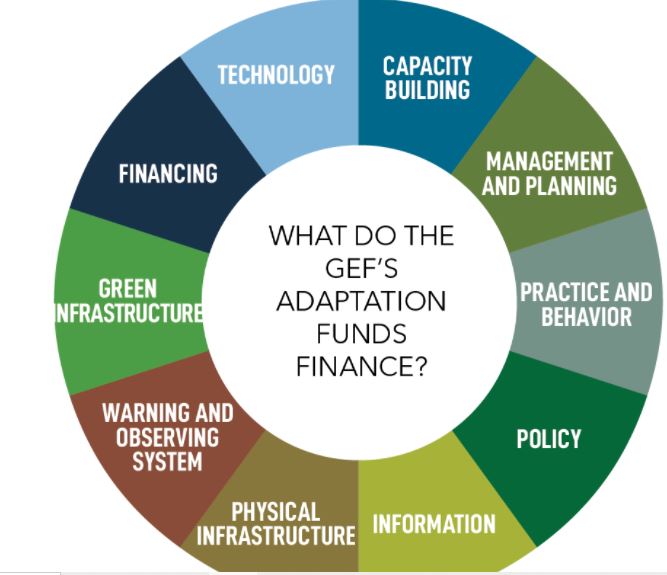
The Philippines has supported the interest of Least Developed Countries (LDC) and Small Island Development states (SIDs) to seize a significant chunk of the “green” funding from the Global Environment Facility (GEF) which is in its eighth round of funding replenishment.

As the pandemic has hit harder on LDCs and SIDs, the Philippine government, represented by the Department of Environment and Natural Resources (DENR) to the GEF talks, has supported the fund’s System for Transparent Allocation of Resources (STAR).

“On STAR, (Philippines recommends) general support for full flexibility, inclusion of the vulnerability index, and increased allocation for vulnerable countries, LDCs and SIDS,” according to  “GEF Asia Post Replenishment Debrief.”

The world has faced greater challenges these times as global temperature is estimated to be 1.1 degrees Centigrade above pre-industrial times.  As the world could cross the 2 degrees Centigrade threshold by 2050, GEF supports funding for projects that achieve global goals against global warming.

The GEF is a trust fund created 30 years ago to enable developing countries to address priorities such as deforestation, desertification, climate change, biodiversity loss, and ozone depletion.

The funding for green projects is estimated to reach $6.5 billion for this eighth round of replenishment.

For this cycle’s second meeting, Philippines-DENR’s Analiza Rebuelta-Teh  represented the GEF Asia Region being the Asia observer for GEF Asia GEF Operational Focal Point for the Philippines . 

The region includes Afghanistan, Bangladesh, Bhutan, Cambodia, Iraq, Jordan, Laos, Lebanon, Sri Lanka, Malaysia, Mongolia, Myanmar, Nepal, Pakistan, Philippines, Thailand, Viet Nam, Indonesia, Syria, and Yemen.

With a united stand, the Asian Region has brought to the consciousness of  GEF its support for the vulnerability index as a factor in the prioritization of  GEF funding of projects.

The vulnerability index under the System for Transparent Allocation of Resources (STAR) is important in determining the real economic issues of countries on the ground. 

This especially applies among LDCs and SIDS which need more assistance especially due to the pandemic.

DENR Secretary Roy A. Cimatu said the country also faces significant challenges in financing projects for  intensified environment protection against the pandemic and climate-related calamities.

“There is a need to mobilize more resources to finance climate action and intensified environmental protection amidst the Covid 19 pandemic.  GEF-8 is an opportunity that the countries should tap for this,” Cimatu said.

GEF-8’s next four-year cycle spans from July 2022 to June 2026.

GEF-8 can balloon to $6.5 billion given an increase in allocation for non grant instruments (NGI) and Small Grants Program (SGP). The allocation is meant to support private sector and civil society participation in NGI and SGP.

The GEF-8 $6.5 billion scenario allocates the biggest chunk for biodiversity, 34%, followed by climate change, 15%; chemicals and wastes, 14%; international waters, 12%; and land degradation, 11%. An allocation of $157 million is being made for SGI and $256 million for SGP.  

The following are among Asia’s other recommendations for GEF’s eighth round:

  1. Intensified support for countries in their blue (ocean) and green (forestry) recoveries with the pandemic recovery factored in the GEF strategy
  2.  Inclusion of fragile and conflict afflicted countries in the design and implementation of projects in these countries.
  3. Mobilization of private sector in the environment goals and the role of NGI and blended finance in this effort
  4. Inclusion of indicators on co-benefits of climate adaptation, private sector engagement and sustainability
  5. Criteria setting for participation of all GEF agencies in Integrated Programs; concrete measures to reduce transaction costs; provide analysis of GEF agencies administrative costs; explore and address why MDBs (multilateral development banks) receive less GEF funding.  (Melody Mendoza Aguiba)
Philippines leads Asia in GEF-8 fund replenishment talks; GEF 8 ushers developing countries to meet environment goals amid pandemic

November 3, 2021

The Philippines has led the Asia Region in the Global Environment Facility (GEF)-8 Fund Replenishment talks that will usher developing countries to meet international environment goals amid recovery efforts from the pandemic.

   The GEF-8 second global meeting, held virtually from September 29 to October 1, comes at a crucial time as the world is in the COVID crisis recovery stage.

   Yet, global goals have to be attained while in the peak of new challenges on biodiversity, climate change, harmful chemicals, among other focal points of the multilateral trust fund.

   DENR Secretary Roy A. Cimatu said the country faces significant challenges in financing projects for  intensified environment protection against the pandemic and climate-related calamities.

   “There is a need to mobilize more resources to finance climate action and intensified environmental protection amidst the Covid 19 pandemic.  GEF-8 is an opportunity that the countries should tap for this,” Cimatu said.

   The Philippines, represented by DENR Undersecretary Analiza Rebuelta-Teh to the GEF-8 talks, looks forward to sustained funding for its environment projects from this next cycle.

   GEF-8’s next four-year cycle spans from July 2022 to June 2026.

   GEF-8 can balloon to $6.5 billion given an increase in allocation for non grant instruments (NGI) and Small Grants Program (SGP). The allocation is meant to support private sector and civil society participation in NGI and SGP.

   The GEF was created 30 years ago to enable developing countries to address priorities such as deforestation, desertification, climate change, biodiversity loss, and ozone depletion.

   For this cycle’s second meeting, Philippines-DENR’s Teh  represented the GEF Asia Region being the Asia observer for GEF Asia GEF Operational Focal Point for the Philippines . 

   The region includes Afghanistan, Bangladesh, Bhutan, Cambodia, Iraq, Jordan, Laos, Lebanon, Sri Lanka, Malaysia, Mongolia, Myanmar, Nepal, Pakistan, Philippines, Thailand, Viet Nam, Indonesia, Syria, and Yemen.

   With a united stand, the Asian Region has brought to the consciousness of  GEF its support for the vulnerability index as a factor in the prioritization of  GEF funding of projects.

   The vulnerability index under the System for Transparent Allocation of Resources (STAR)

is important in determining the real economic issues on the ground. 

   This especially applies among Least Developed Countries (LDCs) and Small Island Development States (SIDSs).

   The Philippines has brought to GEF’s attention the need to increase support for LDCs and SIDSs

   The GEF-8 $6.5 billion scenario allocates the biggest chunk for biodiversity, 34%, followed by climate change, 15%; chemicals and wastes, 14%; international waters, 12%; and land degradation, 11%. An allocation of $157 million is being made for SGI and $256 million for SGP.  

   The following are among Asia’s other recommendations:

1.      Intensified support for countries in their blue (ocean) and green (forestry) recoveries with the pandemic recovery factored in the GEF strategy

2.      Mobilization of private sector in the environment goals and the role of NGI and blended finance in this effort

3.      Inclusion of indicators on co-benefits of climate adaptation, private sector engagement and sustainability

4.      Criteria setting for participation of all GEF agencies in Integrated Programs; concrete measures to reduce transaction costs; provide analysis of GEF agencies administrative costs; explore and address why MDBs (multilateral development banks) receive less GEF funding

   In its most recent funding period, the GEF has provided about $1 billion a year for projects managed by 18 partner agencies alongside national governments.

   Addressing representatives of the GEF’s 184 member-governments, CEO and Chairperson Carlos Manuel Rodriguez made the case for an ambitious GEF-8 replenishment. 

   Such should match the goals of international environmental negotiations and dial back imminent risks to the world’s forests, landscapes, oceans, rivers, and remaining wild spaces.

   “The GEF is prepared to help deliver the political ambition that is emerging from your countries in the negotiations on biodiversity, chemicals, and climate change,” he said.    

   “Being bold and ambitious in what we aim for in GEF-8 is about impact – it is about results – on the ground and in the water,” Rodriguez said. “Our role is to provide donor countries with great opportunities to make an impact, and to provide recipient countries with great outcomes through well-designed projects that can be scaled.”

   The replenishment negotiation process serves as venue for the donor countries to discuss and negotiate financial allocation sharing for the upcoming GEF replenishment cycle.

    It also provides the opportunity to review GEF performance and evaluate progress, assess future funding needs of the member-countries, and to agree on the GEF financing framework.

   Replenishment meetings are attended by representatives from four clusters of non-donor recipient countries (regions of Africa, Asia, Eastern Europe and Central Asia), NGOs (non government organizations) and the private sector.

   World Bank Vice President of Development Finance Akihiko Nishio said the discussions were happening at a moment where it was clear that the world needed to shift from established patterns contributing to environmental harm.

   “GEF-8 comes at a challenging time with unprecedented environmental challenges ahead of us. Now more than ever, business as usual will not work,” Nishio said. “We have an opportunity with this replenishment process for the GEF to take bold, decisive action, and enable developing countries to tackle the world’s considerable environmental threats in a way that generates benefits beyond national borders.”

   Rodriguez said that meeting the goals of the Convention on Biological Diversity, the UN Framework Convention on Climate Change, the UN Convention to Combat Desertification, the Minamata Convention on Mercury, the Stockholm Convention on Persistent Organic Pollutants would require additional funding.

   GEF8 should provide greater outcomes under the GEF focal areas (biodiversity, climate change, land degradation, international waters, and chemicals and wastes) and the newly enhanced integrated programs.

   A key strategy to realize these goals is to intensify efforts to achieve better policy coherence, political consistency, and good governance.  GEF should bring together the government, the civil society, and the private sector leaders which have significant impact in addressing the roots of environmental degradation.

    The Third GEF-8 Replenishment Meeting will be held in February 2022 followed by the Fourth, and last Replenishment Meeting in April-May 2022.  (Melody Mendoza Aguiba)
DENR pushes for creation of mini bamboo forests in Ph’s 1,500 cities, towns; to export bamboo-based lumber

October 22, 2021

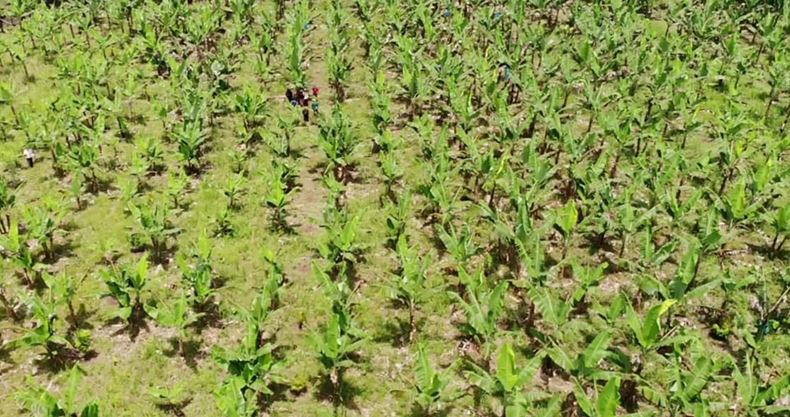
Department of Environment and Natural Resources Secretary Roy A. Cimatu is pushing for the creation of mini “bamboo forests” in all of Philippines’ more than 1,500 cities and municipalities in an aim to create a nature-friendly, export-oriented bamboo lumber industry.

   In a courtesy meeting made by the United Nations Development Programme (UNDP).Country Representative Dr. Selva Ramachandran, Cimatu said Philippines and UNDP can have a collaboration in the establishment of “community-based mini forest, bamboo plantation, urban forestry” project.

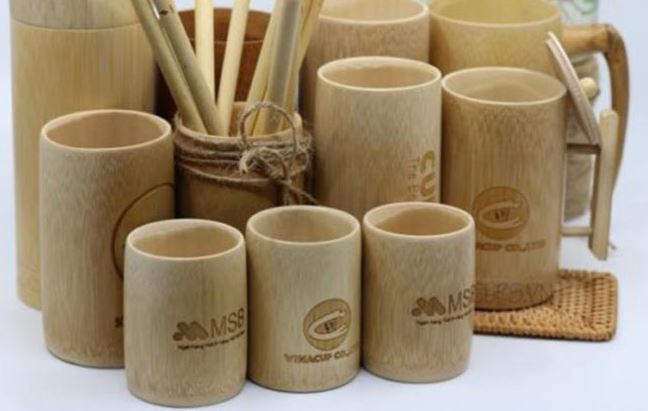
Sturdy and beautiful bamboo. Credit- LLDA

   Secretary Cimatu specifically requested UNDP if it can possibly design assistance for localities (not within DENR areas) to put up bamboo nurseries. All municipalities can have their “mini-forests”.

   Ramachandran made the courtesy call to the DENR secretary together with Edwine Carrie as UNDP’s deputy resident representative and Ms. Floradema Eleazar UNDP Team leader.

   Ramachandran said UNDP has received the same request for support for bamboo plantation establishment during his visits to Albay and Cagayan provinces.

   He also informed the DENR secretary that Vietnam has a thriving bamboo lumber industry– being a major exporter of bamboo to Canada. 

   Despite Vietnam’s reported huge bamboo export to Canada, the Philippines has the same opportunities in bamboo products.  This is considering the humongous $14 to $15 billion global bamboo trade, according to Agrideco Vietnam.

.     Bamboo has both the potential to create a profitable industry and to be a tool for controlling soil erosion and sequestering pollutant carbon dioxide (CO2).

   Bamboo prevents soil erosion to which riverbank communities have been predisposed to danger. 

   A hectare of bamboo retains 30,000 liter of water during rainy season.   Bamboo absorbs huge amount of pollutant CO2. A hectare of bamboo sequesters 12 tons of CO2.

   Bamboo plants are excellent cover for vegetating riverbanks to protect these from erosion.   These have a root system called “rhizomatous” and come in clumps.  This rooting system helps keep soil together.

  Another species used in riverbanks is the Iron bamboo Guada angustifolia .  It also grows on hilly grounds.

   The National Greening Program (NGP) listed bamboo as among the preferred species for reforestation.  Bamboo will help boost supply for food, products (timber, fiber, non-timber forest products), services, and provide aesthetic value to the environment. 

Philippines just like Vietnam can export high quality bamboo products. Credit–Agrideco Vietnam

    Bamboo, kawayan in Filipino, has been considered an excellent substitute for many raw materials in different industries. Its charcoal is used as organic fertilizer. Its tall, erect stems and petiolate leaf blades make for good ornamental plants. The specific specie is Arundia pygmae.  It decors the environment well with bonsai . 

   During UNDP’s courtesy call, possible future collaboration has been discussed on the following:

1.       The Small Grants Program of the Global Environment Facility (GEF-SGP);

2.      Green Climate Fund (GCF) and Climate Finance;

3.      Circular Economy, Plastics, and Marine Litter; and

4.      Resiliency and adaptation projects on landslide/flood prone areas, and capacity building of local government units (LGUs) on Environment and Natural Resources (ENR). (Melody Mendoza Aguiba)
DENR adopts National Plan of Action for prevention and reduction of marine litter toward “zero waste” Philippine waters by 2040

November 8, 2021

The Department of Environment and Natural Resources (DENR) has adopted a National Plan of Action for the prevention and reduction of marine litter (NPOA-ML) toward “zero waste” Philippine waters by 2040.

   DENR Undersecretary for Policy, Planning and International Affairs Jonas R. Leones said the adoption of the NPOA-ML through Memorandum Circular (MC) 2021-10 will serve as guidance to enhance efforts in resource and waste management in the country’s waterways and marine environment. 

   Considering that marine life and biodiversity can only well survive within clean waters, the implementation of MO 2021-10 has become critical for Philippines, being a country of many islands.

   “This initiative is timely as the country has been named by external studies as one of the main sources of plastic leakages into oceans.  It also presents opportunities to revisit current efforts in municipal solid waste management, particularly reduce-reuse-recycle or 3Rs approaches, and eventually help localize the NPOA-ML,” he said.

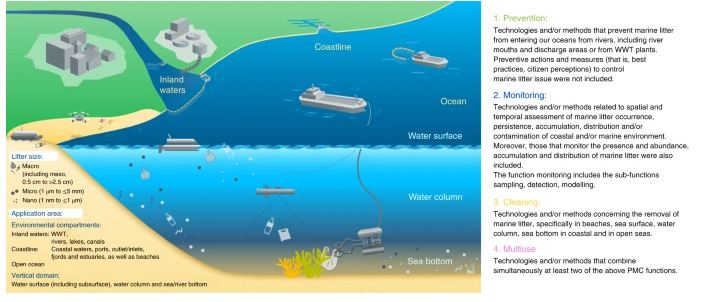
Innovative solutions to marine litter reduction. Credit- Nature

   Leones took note of MO 2021-10 as the globe celebrates World Habitat Day in the first week of October.  It is a reminder to each citizen and local government units (LGU) of their contribution to waste management, climate change mitigation and sustainable development goals.     

   The World Habitat Day  is supported by the Healthy Oceans and Clean Cities Initiative (HOCCI). It is funded by Japan government to enable local governments to strengthen capacity to  implement  reduction of marine litter. The Philippines heads the Project Advisory Committee (PAC) of the HOCCI.

   “This will bring the focus of marine litter to marine management and biodiversity issues,” Leones said.

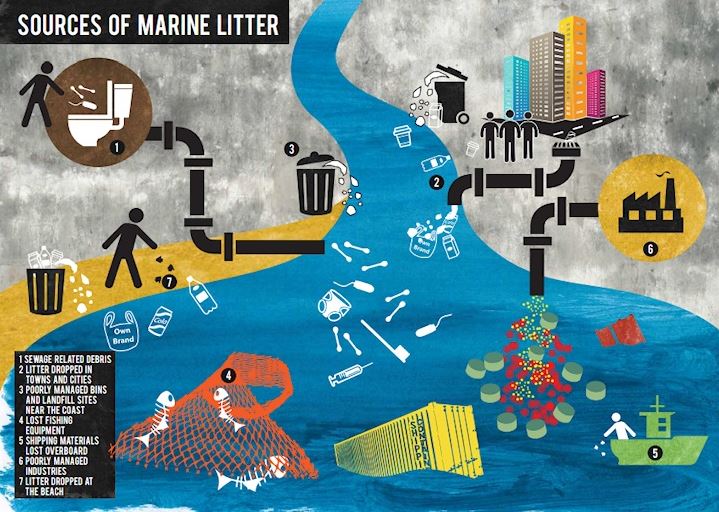
Sources of marine litter. Credit- Surfer Today

   He also took note of the ratification of the Philippine Green Jobs Act (Republic Act 10771) which promotes a green economy. It provides “incentives to enterprises that provide green goods and services, green jobs, green technologies and sustainable development.”

   Green jobs refer to employment that restores the environment’s clean quality especially in the agriculture, service, and industry sectors.  Examples are jobs in water conservation, sustainable forestry, biofuels, geothermal energy, environmental remediation, energy audit, recycling, electric vehicles, solar power, and wind energy.

   It is also important that the Philippines adopts programs on climate change mitigation and adaptation since it is one of the world’s climate vulnerable countries, Leones said. Disaster risk reduction is a very important goal for the country.  It is plagued with around 20 tropical cyclones yearly and daily seismic tremors being in the Pacific Ring of Fire. (Melody Mendoza Aguiba)
Tackling marine debris. Credit- National Academies Press

DENR partners with German economic agency for security of land tenure in Mindanao to encourage investments, economic development

October 3, 2021

The Department of Environment and Natural Resources (DENR) has entered into a partnership with The German Federal Ministry for Economic Cooperation and Development towards achieving the sixth of the 10 Socio-Economic Agenda that ensures security of land tenure, encourage investments, and address bottlenecks in land titling.

   This DENR project is also part of the  “Ambisyon Natin 2040.”  It is a 25-year visioning led by the National Economic Development Authority that seeks Filipinos’ enjoyment of  a“strongly rooted, comfortable, and secure life.” 

   The sixth of the 10 Socio-Economic Agenda states that government’s aim is to “ensure security of land tenure to encourage investments and address bottlenecks in land management and titling.”

   The project titled “Responsible Land Governance in Mindanao” aims to orient local governments and communities including indigenous cultural communities in Misamis Oriental (Region 10), Davao del Sur (Region 11), and Agusan del Sur (Region 13-CARAGA) on management of public lands. 

   The effective management of lands is believed to have ripple effect– benefitting the economy as government taxation process also becomes effective. 

   Moreover, investors needing land may find it easier to invest with better land identification and titling processes.

GIZ Conflict Sensitive Resource & Asset Management Project Achievements

   The vision takes into consideration sustainability and conflict sensitivity among ethnic groups and indigenous people on effective land management.

   To date, a study on the Land Sector Development Framework (LSDF) was conducted. 

   It is a 10-year roadmap for the land sector for effective administration that will usher Philippines to economic development.

   “This shall provide direction towards the achievement of a highly efficient and effective land sector whose potential is so great to contribute in the economic growth of our country,” according to the Land Management Bureau.

GIZ Conflict Sensitive Resource & Asset Management Project Achievements

   The project also aims to support mitigation of conflicts within selected areas in Mindanao.     

   A study on the operations of the DAR-DENR-LRA-NCIP Joint Administrative Order No. 1 in Regions 10 and 13-CARAGA was conducted to determine if joint committees are functioning on the ground.

   The JAO (Joint Administrative Order) clarifies and restates the functions of each land titling agency. 

   It provides guidelines in resolving land conflicts in both the national and regional level.

   Functions of these various land agencies used to overlap with each other, creating conflict or confusion.  The JAO resolves this problem even as there are instances when various land uses conflict with each other. For instance, mining areas may overlap within ancestral domain or Indigenous People’s lands.

Land use mapping using unmanned aerial vehicle (AUV) in Bgy. Kapatagan, Digos City, Davao del Sur

.  DAR stands for Department of Agrarian Reform, LRA for the Land Registration Authority, and the NCIP for National Commission on Indigenous Peoples. 

   Laws and policies also serve as an enabling environment for responsible land administration and management.

   RLGM initiated studies to clarify the definition of terms and frequently asked questions for lands, and review land-related laws and policies on tenure.

   Partner agencies and local government units were re-oriented on national policies such as the enhanced Comprehensive Land Use Plan (CLUP) guidelines.  GIS (Geographic Information Service)  application for land titling is also being explored. 

   The project also offered capacity building activities to LGUs in using Unmanned Arial Vehicles (UAV) for land use planning.

Aerial view of a geographic area that helps determine land uses

   Future activities are being eyed as potential activities for the project.

   The DENR is proposing a review of alternative dispute resolution mechanisms and a unified map to identify existing tenurial (land titling) instruments.

   The unified map would make it easier for national and local government units to access data to carry out their own mandates. (Melody Mendoza Aguiba)

DENR taps abaca exporter Newtech Pulp to buy abaca fiber of 3 forest communities in Lake Lanao

September 19, 2021

The Department of Environment and Natural Resources (DENR) has linked forest communities in Lake Lanao with abaca exporter Newtech Pulp Inc. , bringing hope of sustained livelihood while conserving the watershed that is the largest hydroelectric source in Mindanao.

    Three people’s organizations (PO) are now partners of Newtech Pulp in the supply of abaca fiber.  Newtech Pulp has an abaca pulp manufacturing plant in Maria Cristina Balo, Lanao del Norte

   The POs are   Sunrise Producer Association, Wato Balindong Farmers Cooperative and Sania Farmers Association.  These POs operate in Piagapo, Balindong, and Maguing all in the Province of Lanao del Sur.

   Newtech Pulp is sourcing abaca fiber from an estimated 200 hectares of abaca plantation that are under DENR’s Integrated Natural Resources and Environmental Management Project (INREMP).

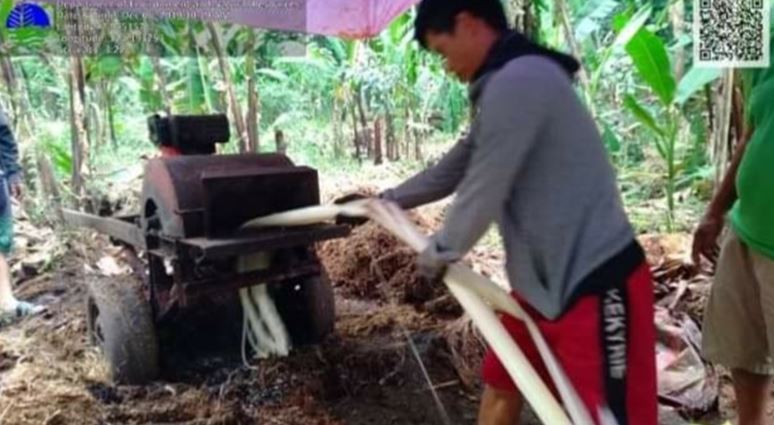
Abaca stripping at the Lake Lanao River Basin project

   “These people’s organization used to harvest (rice and other crops like abaca, and banana) just once a year.  Their production in abaca is being sustained because they are now supplying directly to Newtech Pulp Inc.,” said Samsodin Taha, operations manager at INREMP’s Lake Lanao River Basin (LLRB).

   The LLRB within the Bangsamoro Autonomous Region of Muslim MIndanao (BARMM) is the largest lake in Mindanao. It is also known to be one of 15 ancient lakes of the world.

   Lake Lanao’s hydroelectric facilities provide 65%  of Mindanao’s power demand.

   However, Lake Lanao’s watersheds have been confronted with  deforestation, unsustainable farming, limited economic opportunities, and limited development projects.  All of these further worsen natural resources degradation and poverty.

   INREMP has integrated a Maranao Ethnic Development Plan in its natural resources program in LLRB.  The Maranaos have kept their own culture in keeping with the environment under the Al Khalifa Islamic concept  of people as stewards of nature.  

   However, due to pervasive poverty, some residents have resorted to illegal resource extraction and conversion of forests into farm lands.

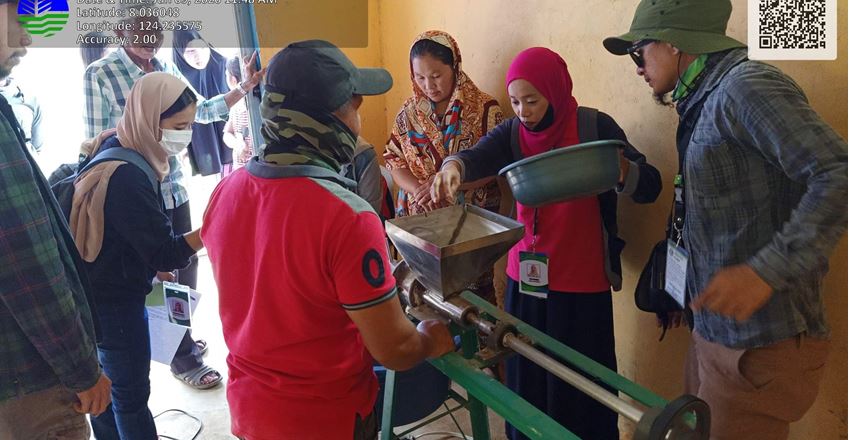
Turmeric processing at the Lake Lanao River Basin project of DENR

   This is why DENR has carried out extensive natural resource management or NRM in LLRB.

   As of the end of May, NRM  includes reforestation area of 145 hectares and agroforestry area of 1,300 hectares.

   Commercial tree plantation covers 527 hectares; and  conservation farming, 110 hectares.

   Forest trees planted under CTP are the following:  Falcata and Mahogany.    For conservation farming, the trees include fruit trees such as Durian, Rambutan, Lanzones, forest trees such as Falcata and Mahogany, together with cash crops and root crops. 

   Agroforestry areas are planted with rice, corn, banana, and palapa or white dallion (a root crop used as appetizer) and fruit trees and forest trees.     Reforestation areas are planted with Narra and Lauan.

   The NRM at Lake Lanao has a total of P78 million budget.

   DENR is looking further in partnering with the Ministry of Agriculture, Fisheries and Agrarian Reform (MAFAR-LDS), Ministry of Environment, Natural Resources and Energy (MENRE-LDS), and  Department of Agriculture (DA) for a future expansion of the abaca plantation. 

   If these three agencies will infuse investment into the abaca project, the LLRB abaca area  can expand by three times more in the future,  Taha said. 

Natural Resource Management projects at the Lake Lanao watershed

   INREMP covers rehabilitation of six subwatersheds in LLRB These are the subwatersheds of Marawi-Saguiaran, Ramain, Malaig, West, Taraka, and Gata.

   INREMP is jointly funded by the Asian Development Bank and the Philippine government.

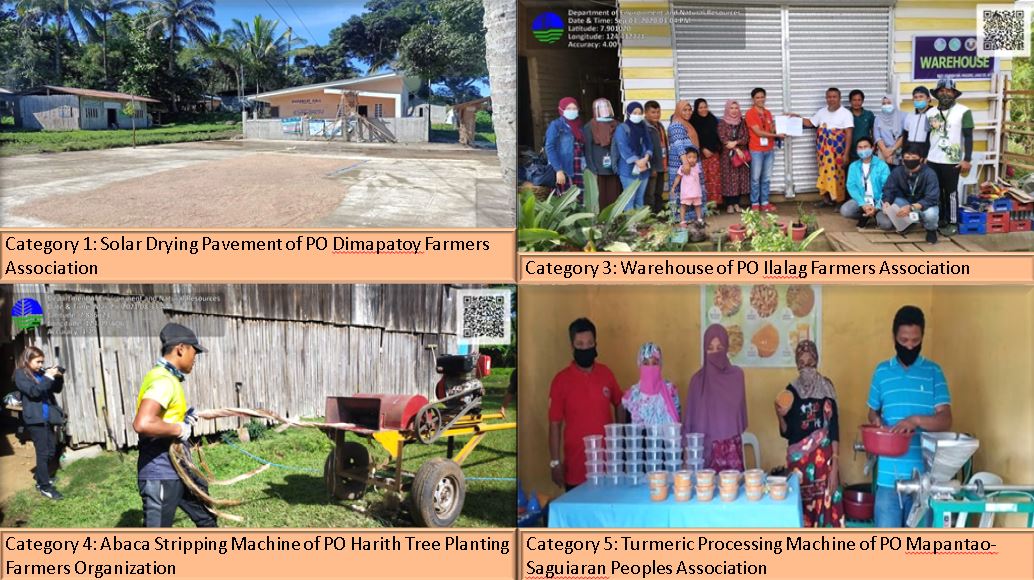
   INREMP’s livelihood enhancement includes provision of turmeric processing machine for the Mapantao-Saguiaran People’s Organization and its mini warehouse.

   A solar drying pavement has been put up for Dimapatoy Farmers Association.

   An abaca stripping machine has been provided for the Harith Tree Planting Farmers Association.

   There are six rural infrastructure projects in the LLRB site and 29 Livelihood Enhancement  Support projects.  Beneficiaries are a total of  41 people’s organizations involved in NRM.

. Rural  infrastructure has a total of P97 million budget

Lilivehood Enhancement Support project at the Lake Lanao River Basin project of DENR

   An ADB project profile indicated that the rural Infrastructure projects include access roads, farm-to-market access facilities, and potable water supply.

   INREMP provided small irrigation systems in forest lands  that do not have access to National Irrigation System and Communal Irrigation System.  (Melody Mendoza Aguiba)
Healthcare waste management to be implemented by DENR to address increasing infectious waste problem from Covid 19

September 7, 2021

A Philippine Healthcare Waste Management Project (PHCWMP) will be implemented by the government to address the huge waste problem brought about by the pandemic Covid 19 that consequently has adverse health impact on the population.

   The Department of Environment and Natural Resources (DENR) is concerned about the increasing generation of healthcare wastes particularly due to the Covid 19 pandemic that just came about in late 2019.

   As such, the healthcare waste management project was approved for funding by DENR’s partner Global Environment Facility (GEF) for $4.65 million.

Healthcare waste. Credit-SPREP

   The healthcare waste management work will involve four components. The first is the reduction of unintentionally-produced POPs’ (persistent organic pollutants) release to the environment.

   Management of mercury-added products  and mercury wastes from the healthcare sector will also be addressed as these can have important adverse effect on human health once released to the environment.

   “We  need to strengthen the management of non-pathological infectious healthcare  wastes generated from the healthcare system brought about by Covid 19.   These wastes should be properly treated and disposed of to prevent further spread of the virus,” said DENR’s Environmental Management Bureau (EMB) Director William P. Cuñado.

   “The project will also demonstrate a low cost and non-combustion treatment of wastes suitable for small scale and remote hospitals.  This will be implemented in a cluster of healthcare facilities.  The project upgrade the capacity of waste service providers with best available technologies, techniques, and practices.  

   It will also link local governments  to public and private investments.

   DENR is mandated to reduce the use and release to the environment of mercury under its obligation as a party to the Minamata Convention. 

   Human exposure to mercury has been linked to disorder of the central nervous system resulting in incognitive motor skill, kidney failure, and anomalies or birth defects.

   The Philippines is also committed to the elimination of POPs under the Stockholm Convention.

   The project will be implemented by the United Nations Industrial Development Organization (UNIDO)  and EMB as the ​lead executing agency.

    The DOH’s Healthcare Waste Management Manual (4th Edition) indicated that Infectious waste ​is most likely to contain pathogens (bacteria, viruses, parasites, or fungi) in sufficient concentration or quantity to cause diseases in susceptible hosts.

   ​Aside from infectious wastes, ​there are other types of ​hazardous healthcare  wastes health authorities are concerned of which are the following

1. ​Pharmaceutical wastes ​includes expired, split, and contaminated pharmaceutical products, drugs, vaccines and sera that are no longer usable and needs to be disposed of appropriately.  This also includes discarded items used in handling of pharmaceuticals, such as bottles, vials and ampoules, or boxes with residues, gloves, masks and connective tubing.

2.Sharp wastes must be managed with utmost care because of the double danger it poses such as accidental pricks, cuts, or punctures that can potentially spread infection through these injuries.

3.       Chemical wastes consists of discarded solid, liquid, and gaseous chemicals used in diagnostic and experimental work and in cleaning, housekeeping, and disinfecting procedures. (Melody Mendoza Aguiba)
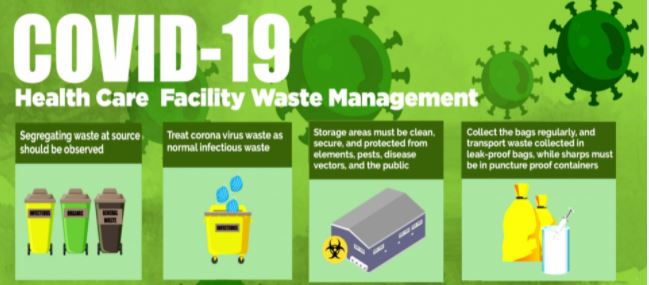
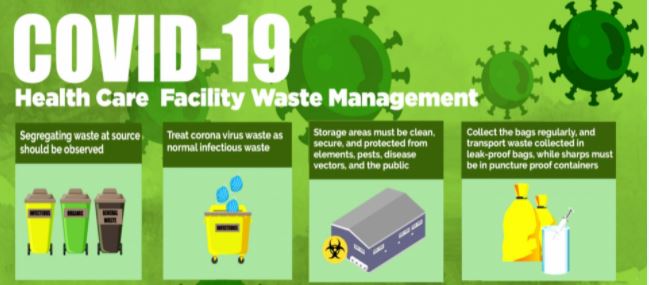
Two rice mills, VCO facility, solar dryer put up in Wahig Inabanga River, Bohol, uplifting livelihood of poorest watershed dwellers

August 31, 2021

At least two rice mills, a virgin coconut oil facility, and a multi-commodity solar dryer have been put up in the Wahig Inabanga River Basin  in Bohol, uplifting the livelihood among Philippines’ poorest upland communities.

   The Department of Environment and Natural Resources (DENR) has put up the rice mills as part of a project protecting the watershed around Wahig Inabanga River. 

   Water Inabanga is the largest and most important river in Region 7 (Bohol, Cebu, Negros Oriental, Siquijor).  It is recognized as a watershed reservation under Proclamation No. 468. 

Inabanga River, Bohol. Credit-Wikipedia

   It has a huge potential source of water for agricultural, commercial, industrial, and household uses.  The National Irrigation Administration has constructed a dam to provide irrigation to about 5,000 hectares of agricultural land in four valley towns here (Sierra Bullones, Pilar, Dagohoy, and San Miguel).

   The dam also supplies the domestic water needs of 637,097 households.

   The rice mills are now managed by the people’s organization (PO) of DAFA and MVEGEGRO (Matinao Vegetable Growers Association).

   A separate all-weather dryer facility has been put up for the KUFFARD (Kauswagan United Farmers for Forest and Agro-Forest Resources Development)  and the multi-commodity solar tunnel dryer for COMASFARMA (Confraternity of Mayana Small Farmers).

   Since these facilities have been constructed, around 2,700 beneficiaries have enjoyed their production of nearly 450,000 kilos of palay, corn, cassava, and assorted fish.

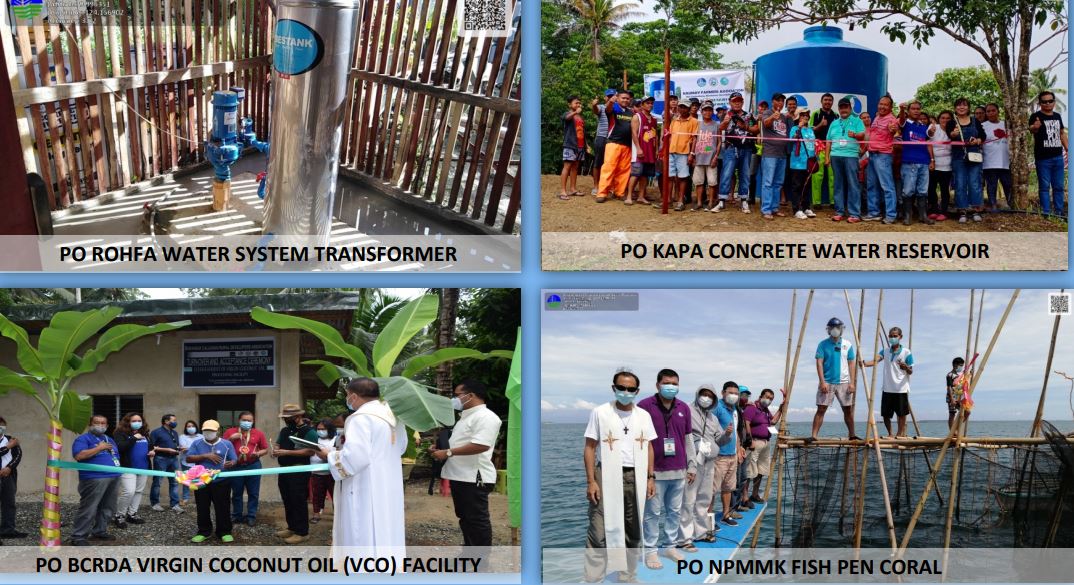
   The DENR project — Integrated Natural Resource and Environmental Management Program (INREMP) — has also put up a virgin coconut oil facility to enhance the livelihood source of the communities. For the fishing residents, a fish pen coral in the area has been constructed.

Natural Resource Management-Reforestation Inabanga, Bohol

   INREMP has allocated P17.7 million for these livelihood projects totaling to 66 units. These have a total of 52 people’s organization beneficiaries.

   For their water supply, a concrete water reservoir and a water system transformer have been constructed.

   While the upland communities are helping the government in natural resource management (NRM) as they protect the forests and mountains, INREMP provided them with the farm-to-market road (FMR). 

   These FMRs   are desperately needed by the upland communities in order to transport their agricultural goods to the market from the watershed areas.

Farm-to-market road

   Such roads, among around 15 rural infrastructure projects, have been constructed with the help of local government units (LGU) in the towns of Danao, Inabanga, Trinidad, San Miguel, and Talibon, among others.

   INREMP is funded by the Asian Development Bank with a counterpart fund from the Philippine government.

   As the project nears completion, a total of 4,316.67 hectares  of forestland has been been properly put under NRM. 

   This consists of the following:

  • 758 hectares of reforestation with a contract cost of P19.169 million, benefitting 24 POs 
  • 1,439 hectares of agroforestry area, with a contract cost of P43.684 million, benefitting 47 POs; and
  • 1,644 hectares of Assisted Natural Regeneration area with a contract cost of P46.625 million, benefitting 30 POs.
  • There is also a conservation farming area of 331 hectares with a contract cost of P19.8 million and 30 PO beneficiaries. 
  • A total of 134 hectares of commercial tree planting area has been put up, benefitting five POs. (Melody Mendoza Aguiba)
Virgin coconut oil facility

48-household bamboo community in Occidental Mindoro registers intellectual property right for distinct bamboo crafts

August 18, 2021

A bamboo community in Occidental Mindoro has filed with the Department of Trade and Industry (DTI) for intellectual property right  (IPR) over their distinct bamboo crafts that have raised their income opportunities.

   The IPR is expected to  protect the business interest of the Ansiray Tree Planters Development Assn Inc. (ATPDAI) as they developed their own products and designs.

   The Department of Environment and Natural Resources (DENR) implemented the “Handicraft Industry for Sustainable Community Development and Environmental Protection” in San Jose, Occidental Mindoro.

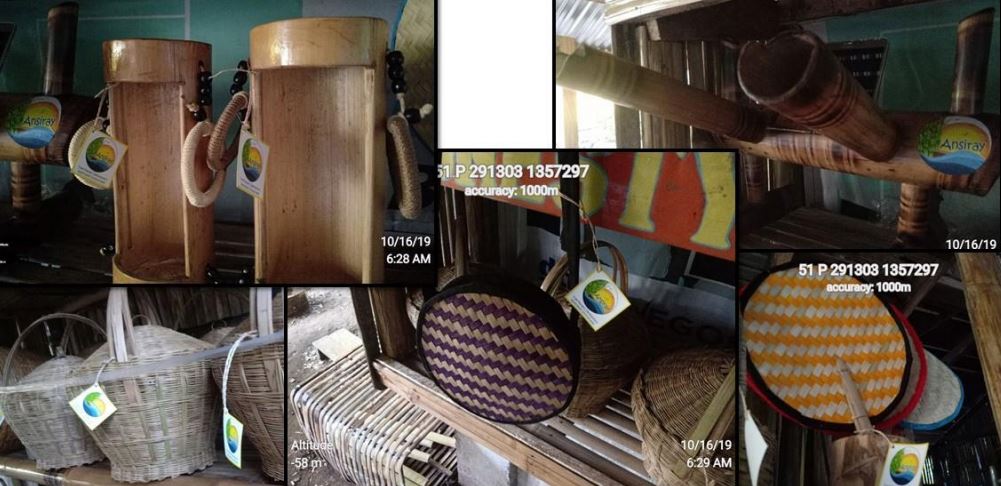
   As the DENR project helped maximize their production of bamboo, ATPDAI was able to produce 31 types of bamboo products. 

    These are four  types of lampshades, two types of wine holders, two types of centerpiece table, placemats, hamper, mobile speaker, tower racks, curtains, pitcher, cup, necklace, earrings, bracelet, key chains, ballpen holder, and tray.

   There are also two types of baskets, accessory organizer, Chinese design bamboo sala set, bilao, television rack, modern crib, modern style sala set, mugs, and pitcher.

   The government is promoting the use of bamboo as a substitute to wood as it is as durable as any wood, and it contributes to reforestation.

Ansiray community files for intellectual propetry right (IPR) over their own designs of bamboo crafts

   The Ilin island in San Jose, Occidental Mindoro  has abundant natural stands of bamboo. Ansiray, one of the island’s barangays, has been known for its bamboo furniture-making community.

   More than 30 households have furniture making skills.  Eighteen households are engaged in bamboo production.

   DENR’s project, costing P868,000, included capacity building,enterprise development and marketing, operations management, and project management.

   The project generated a product trademark and label that qualify for IPR and a business plan for the bamboo enterprise operations.

   The local government unit (LGU) of San Jose, Occidental Mindoro provided an area in San Jose población to be used by ATPDAI as display area to showcase their bamboo products.

   The San Jose LGU has also been planning to establish a bamboo eco-park in Ilin island.  It has been committing to engage in a project on diversification of the use of bamboo.

  Another collaborator, the Divine Word College of San Jose-Occidental Mindoro, is extending training for the community’s financial and technical literacy.

  DENR’s attached agency, Ecosystems Research and Development Bureau (ERDB), is training the Ilin islanders on bamboo propagation and best practices in bamboo farming.

   Bamboo has huge benefits to the environment – one major function is fighting soil erosion, along with carbon sequestration.

   Bamboo can be used for  posts, roofs, walls, floors, beams, trusses and fences.   It is also a raw material for mats, baskets, tools, handles, hats, toys, musical instruments and furniture. Bamboo shoots are  considered a delicacy in some communities.

   Most bamboo species are fast-growing. But its use has not been increasing in the same pace.   

Lack of investment, weak institutional framework, and limited skilled people in the bamboo craft are among the reasons blamed for the slow growth of the bamboo industry.

   The absence of reliable raw material source also discourages investments in bamboo processing.

   Barangay Ansiray has a total of 224 households with an average of 8 members per household with a usual income per capita of P 3,000 per month. With the DENR project, the households have been observed to have raised their income.

   Almost 60-70% of Barangay Ansiray’s agricultural area are planted with bamboo.

   DENR is promoting sustainable kind of forest management in  Occidental Mindoro  as the forests are heavily threatened with illegal human activities such as charcoal making and kaingin.  These result in degradation of soil and forest destruction.

   ATPDAI  has a tenure over 382.15 hectares of forestland under DENR’s Community-Based Forest Management Agreement (CBFMA).  They have 152 hectares of bamboo plantation that are now under the management of the National Greening Program.

   DENR’s city environment and natural resources office (CENRO) in San Jose has conceived the bamboo project as the community’s income from beds and sala set, their traditional products, are not enough to sustain their livelihood.

   DENR is asking assistance from other government agencies in maximizing business opportunities of ATPDAI.  Department of Science and Technology (DOST) can lend assistance in machineries and product design. 

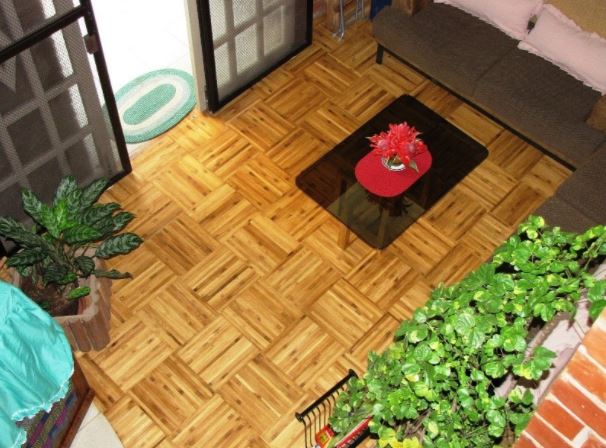
   Bamboo is a very versatile construction material that some experts have developed “engineered, laminated bamboo.” It is beautiful design of wood finishing for flooring and walling that can command a high price in the market.  


Beautiful Filipino engineered bamboo for finishing for flooring or walling.  Credit-DOST

   Infrastructure should also be improved in Ansiray as their production area is in an island.  As such, they need a boat for the efficient transportation of their products.  (Melody Mendoza Aguiba)
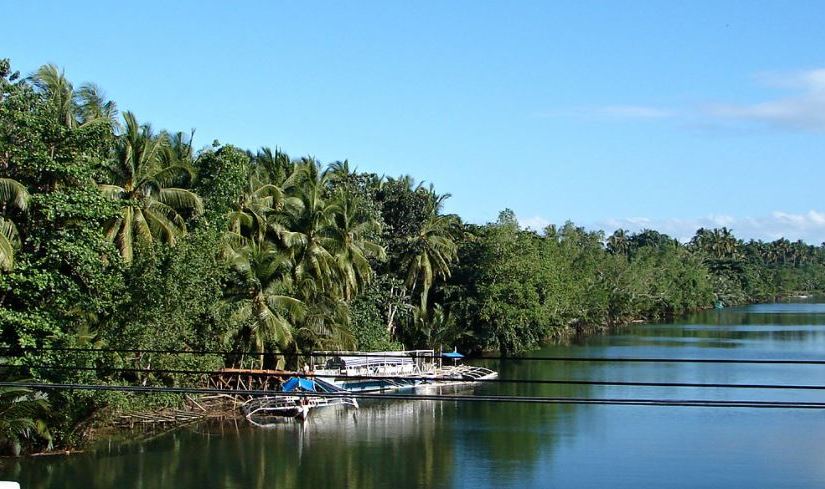
DENR implements healthcare waste management as medical waste pours at 280 tons per day since Covid 19 outbreak

August 14, 2021

The Department of Environment and Natural Resources (DENR) will be implementing a healthcare waste management project in light of the huge waste problem brought about by the Covid 19 pandemic that can cause detrimental effects to human health.

   It may not have been earlier predicted, but medical waste brought about by the Covid 19 pandemic is now estimated to be accumulating by 280 metric tons (MT) per day.

   This has prompted DENR to cooperate with international agencies including governments from developing countries Laos, Cambodia, Myanmar, and Nepal.

   The project will be financed by China’s  South South Cooperation Fund,   Floradema C. Eleazar., United Nations Development Program team leader said in a launch of the project Friday (August 13).

   China International Development Cooperation Agency (CIDCA) is co-funding the project.

   Eleazar said two waste treatment facilities will be put up in the Philippines.

   One treatment facility will be put up in cooperation with the Pasig local government unit (LGU) where several hospitals (Pasig City General Hospital, Rizal Medical Center) are run by the government.

Covid 19 waste management  Credit-  SPREP

   Pasig City Mayor Vico Sotto said during the project’s launch that the waste management project will bring about expertise in medical waste management in Pasig.

   “The problem has reached critical level.  The city government  does not have a capacity to deal with this infectious waste (that has been piling up) in the past few months. It is an urgent concern that seeks to be addressed,” Sotto said.

   “We look forward to the exchange of information, transfer of technology, technical support, , and training of people.  We look forward to the use autoclave shredder to process and treat up to 50 kilo per hour of waste.”

   Samuel C. Sumilang, chief nurse of Dr. Jose Rodriguez Memorial Hospital and Sanitarium in Tala, Caloocan City, also expressed gratitude for having been chosen as pilot site for the project.

   The waste management project will emulate the success experienced by China in its response to the Covid 19 medical waste problem.

   A UNIDO publication indicated that Infectious waste refers to medical waste that “carries pathogenic microorganisms and has the hazard of leading to the spread of infectious diseases.

Pasig City Mayor Vico Sotto

   Infectious waste mainly includes articles contaminated by patients’ blood, body fluid or excrement; and household garbage generated by isolated infectious patients or suspected infectious patients treated by medical institutions.”

   There are other types of medical waste health authorities are concerned of which are the following

1.      Drug waste

2.      Injury waste refers to discarded sharp medical instruments that could stab or cut human body. Injury waste mainly includes: medical needles, suture needles, scalpels, surgical knives, skin preparation knives, surgical saws, glass slides, glass test tubes, and glass ampoules.

3.      Chemical waste refers to waste chemical articles that are toxic, corrosive, flammable and explosive. Chemical waste mainly includes: discarded chemical reagents from medical imaging department, pathology department and laboratories, discarded chemical disinfectants such as peroxyacetic acid and glutaraldehyde, as well as discarded medical instruments and articles containing heavy metals such as mercury sphygmomanometer and mercury thermometer.

4.      Pathogen culture medium and specimens, preservation solution of strains and virus seed discarded by pathogenic microorganism laboratories, as well as various discarded medical specimens; discarded blood and serum; used disposable medical supplies and disposable medical devices. (Melody Mendoza Aguiba)