
Bayer partners with Temasek of Singapore for vegetable seed distribution in Ph in light of urban farming trend due to COVID 19

August 14, 2020

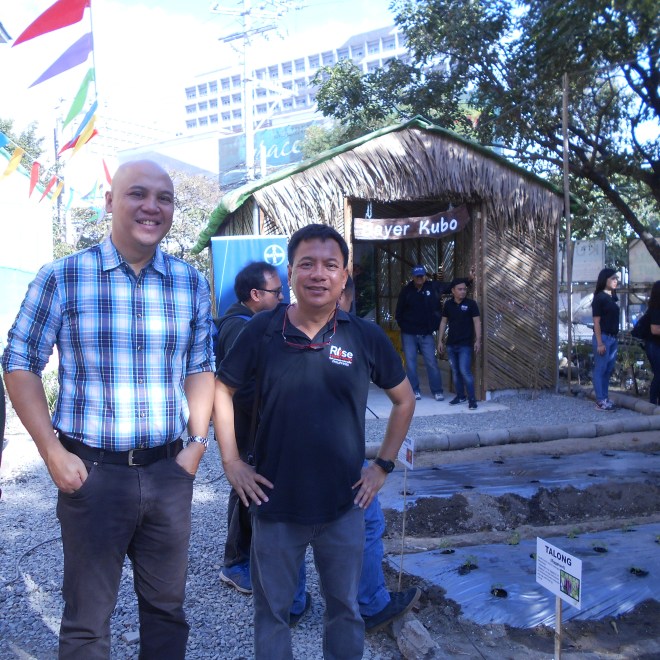
With an existing commitment to promote urban agriculture through its Bayer Kubo project in Taguig, Bayer is exploring new opportunities to grow food in limited urban spaces to bring food closer to consumers.

Leaps by Bayer, the impact investment arm of Bayer AG and Temasek, a global investment company headquartered in Singapore, recently announced a joint investment and formation of a new company, Unfold. The new venture will focus on innovation in vegetable varieties with the goal of lifting the vertical farming space to the next level of quality, efficiency and sustainability.

While most start-ups in the vertical farming market are focusing on the development of more efficient infrastructure, Unfold is the only company with unparalleled assets to unlock the genetic potential of vertical farming. By utilizing the seed genetics from vegetable crops, Unfold will focus on developing new seed varieties coupled with agronomic advice tailored for the unique indoor environment of vertical farms.

Unfold raised USD 30 million in the initial funding round and entered into an agreement for certain rights to germplasm from Bayer’s vegetable portfolio.

“Innovation that offers sustainable solutions for agriculture is one of the 10 areas of engagement and investment that Leaps by Bayer is focused on,” said Jürgen Eckhardt, Head of Leaps by Bayer, which was built to drive fundamental breakthroughs in the fields of health and agriculture through new technologies. “The investment in Unfold is a great example of a transformative, creative approach to developing agricultural products that meets the needs of consumers, farmers and the planet by increasing access to fresh fruits and vegetables, supporting sustainably grown, hyperlocal production and addressing food security challenges faced by growing urban populations.”

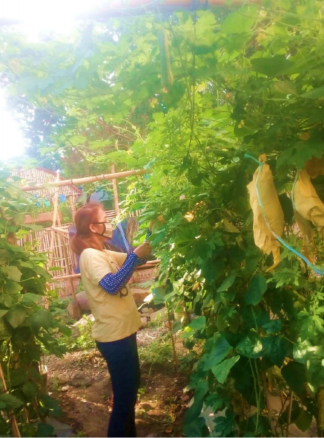
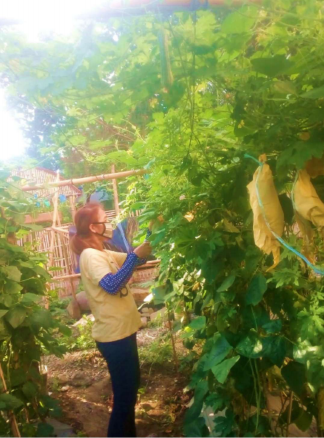
Meanwhile, Bayer Crop Science in the Philippines had introduced urban agriculture in a densely populated community in Barangay Ususan, Taguig City early this year as its current local contribution to food and sustainable livelihood during the pandemic. Its 300-square meter Bayer Kubo may still be the traditional ‘horizontal’ urban farm, but it provides the opportunity for residents there to make productive use of their time in growing vegetables such as eggplant, tomato, pechay, sili, and different herbs.

“We’re fortunate that the community in Barangay Ususan continues to enjoy making their own food with the urban farm set up right inside their residential area,” said Iiinas Ivan Lao, Country Commercial Lead for Bayer Crop Science. “Filipino consumers have preference for fresh vegetables and this initiative caters to them. Obviously, vertical farming has the potential to increase food output in very scare areas for planting within highly urbanized cities.”

These urban farming investments align with Bayer’s vision of “Health for All, Hunger for None”, a commitment to the Sustainable Development Goals the United Nations has set for 2030, especially the goals of assuring healthy lifestyles and putting an end to hunger. 

Vertical farms, also known as indoor farms or plant facilities with artificial light (PFAL), utilize indoor growing facilities that leverage artificial light, reduce dependency on synthetic chemistry and other crop inputs, optimize water use and allow food growth in challenging environments with limited arable land. Vertical farms help crops grow more quickly, enabling the reliable growth of fresh, local produce anywhere, anytime utilizing less space and fewer natural resources while reducing the need for food logistics and transportation. Unfold will support the hyperlocal production of consumer-pleasing vegetables while also addressing the increasing need for a reliable and safe supply of sustainably grown produce, especially in food deserts and in times of crisis such as the COVID-19 pandemic.

Investment in the vertical farming market has increased significantly in recent years mainly due to decreasing arable land, increasing market demand for local, sustainable produce and migration towards mega-cities.

Singapore, where Temasek is headquartered, is one of many mega-cities experiencing an increasing demand for fresh, sustainable and locally grown produce that has a smaller environmental footprint, using fewer resources to grow and ship, offering peak freshness and flavor.

“The global food challenges we increasingly face require us to rethink traditional farming practices. We need to ensure secure farm-to-fork supply chains in urban settings while we also work to reduce the overall environmental impact of farming. Reducing food waste and improving the safety, traceability and nutritional value of food are all the more important as populations grow and demands for food expand,” said John Vaske, Head of Agribusiness at Temasek. “Investments in companies such as Unfold allow us and our partners to support innovative, sustainable solutions that will benefit all of us over the long term.”

Led by CEO John Purcell, Unfold will be a U.S. entity headquartered in the Davis, Calif. area with commercial and research and development operations in both California and Singapore.

“What sets Unfold apart is its unparalleled investment in germplasm and crop growth models best suited for vertical farming environments, an area currently largely underserved,” said Purcell. “As a company fully focused on the vertical farming industry, Unfold will combine leading seed genetics with the best agtech experts in order to dramatically advance productivity, flavor and other consumer preferences. We look forward to serving the market through partnerships with vertical farming operators, technology providers and others across the produce supply chain.”
Registration obtained for crop protection against notorious Fall armyworm, pest feared to creep into rice & vegetables

August 5, 2020

Bayer Crop Science (BCS) has recently obtained registration from the Fertilizer and Pesticide Authority (FPA) for a crop protection product that controls Fall armyworm (FAW) even as the highly prevalent pest is feared to creep into destroying rice and other high value crops.

   Authorities fear FAW which is “cannibalistic” in nature may inflict other crops after destroying at least 8,000 hectares of corn crop nationwide in this last season.

   “Infestation of Fall armyworm has brought farmers big problems, so we are fortunate that the Fertilizer and Pesticide Authority released a conditional registration for Yeoval,” said John Fajardo, BCS Agronomic System Manager for Corn in Southeast Asia and Pakistan. “There is also a risk that FAW may potentially reach other crops such as rice and vegetables.”

   The Department of Agriculture (DA) said earlier FAW has already spread throughout 47 provinces nationwide. It has fast spread in just one year after detection in June 2019.

   Its destruction in the recent harvest includes 4,214 hectares in Cagayan Valley. In Mindanao, it destroyed 1,730 hectares in Socksargen (South Cotabato, Sultan Kudarat, Saranggani, General Santos), 882 hectares in Northern Mindanao (Bukidnon, Lanao del Norte and Misamis provinces), and 665 hectares in Zamboanga Peninsula.

   FAW reproduces quickly with female adults laying 2,000 eggs in a single instance. Its dispersion is fast as it can fly at night over a 100-kilometer distance and up to 500 kilometers with the aid of wind.

   It is estimated that the number of hectares destroyed by FAW in Region 2 only includes those that have been validated.

   “If you go around corn areas in the region, the actual damage may even be bigger,” said Mindaflor Aquino, DA Region 2 senior science research specialist.

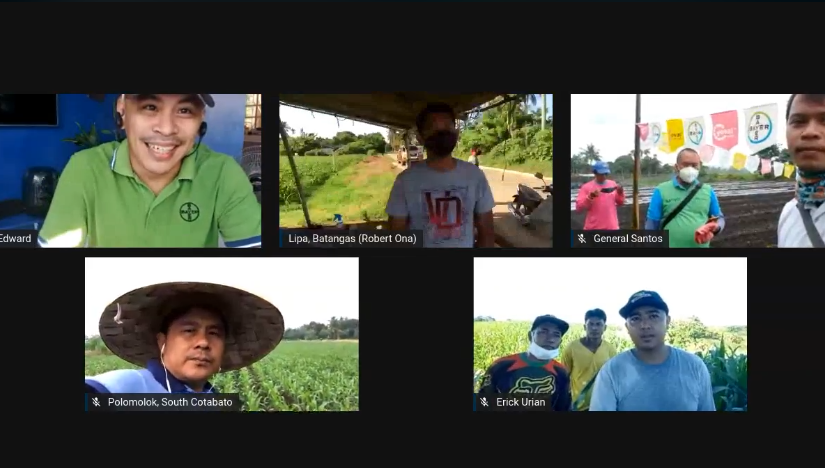
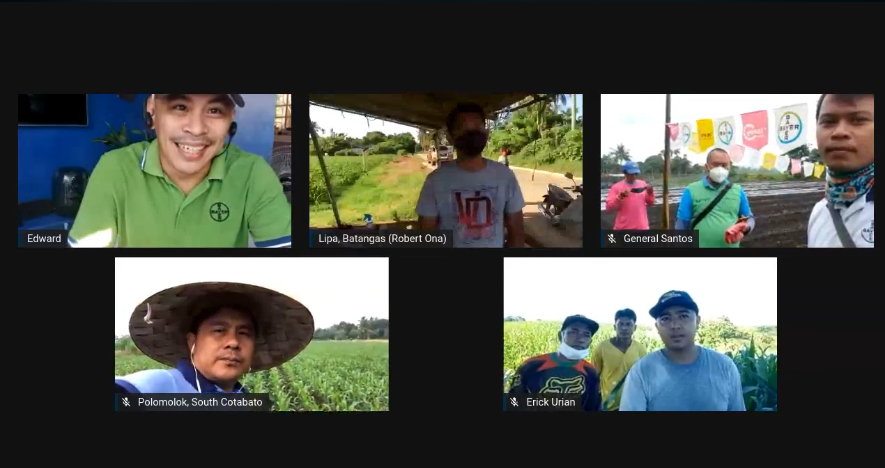
Bayer representatives and corn farmers sharing their feedback from different locations—Isabela, Laguna, Batangas, and South Cotabato.

   Even worse about this pest is once the corn plant is left without leaves upon devouring the leaves, the worms begin to eat each other because of their cannibalistic nature.

   Another characteristic of FAW is it able to survive on different crop types.

   “FAW is polyphagous which means it feeds on different kinds of food,” said Fajardo. “It has been observed to feed on rice, sugarcane, vegetables, sorghum, and millet.”

   In some cases where farmers have access to Bayer’s Dekalb corn hybrid seeds with VT DoublePro and the FAW is not able to infest the corn, the pest has been observed to even eat grass.

   Being able to eat anything at hand enables the FAW to increase in population at exponential rate and travel to far distances, destroying farmers’ harvest, according to Fajardo.

   In corn provinces Isabela, Batangas, and South Cotabato where BCS just held technology demonstrations last season, farmers reported virtually minuscule damage.

   Infestation incidence was placed at just 2-3% on crops due to the use of the FAW-resistant Dekalb varieties. The same insignificant damage was observed with the use of new crop protection product Yeoval for non-resistant varieties.

   Yeoval is a newly released insecticide with an excellent mode of action against the pest. Its active ingredient is tetraniliprole.  It controls the pest by transmitting the poison via the xylem route of the plant where water is also transported throughout the plant. The xylem route enables Yeoval transmission through the leaves and stem. Once a small part of the leaf is eaten, the FAW gets paralyzed and eventually dies.

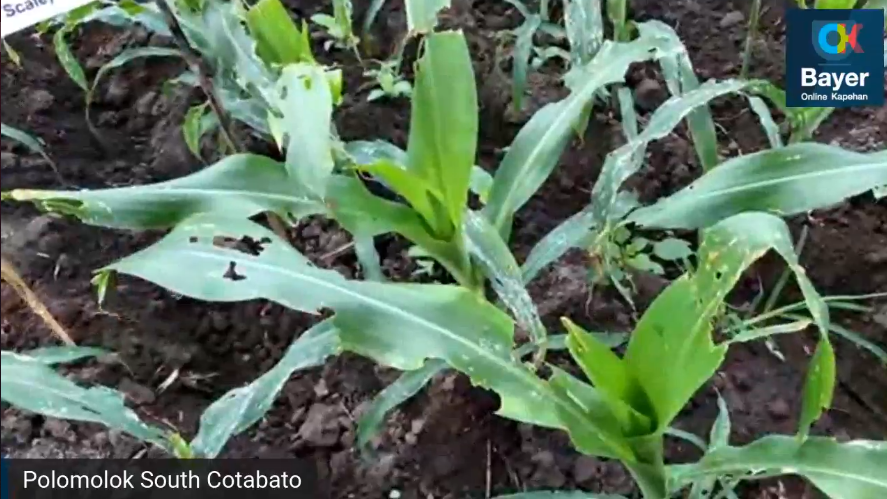
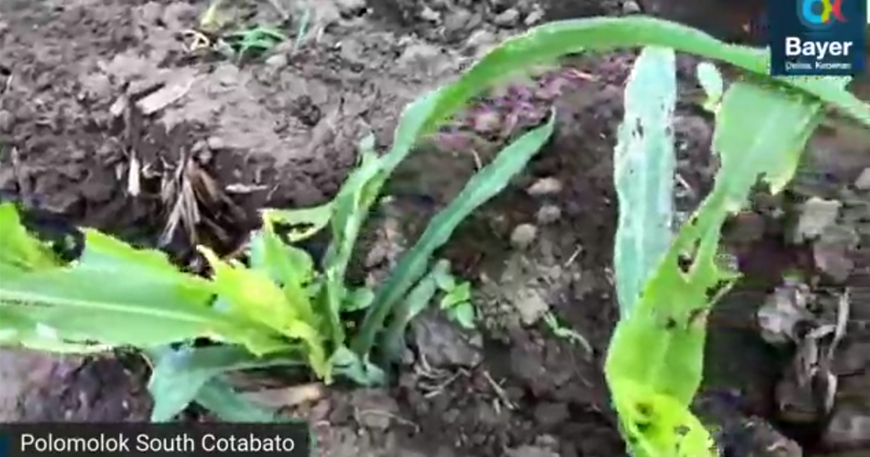
FAW damage clearly seed in a field trial in Polomolok, South Cotabato.

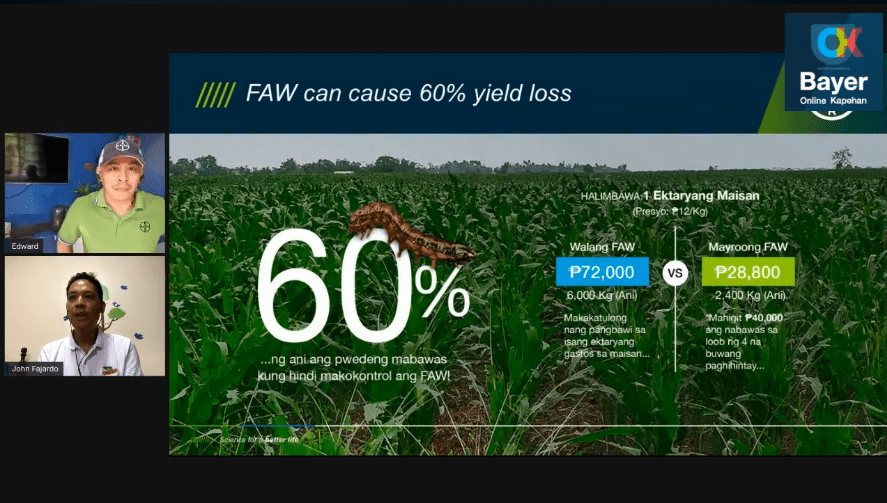
   FAW, which has become a major insect pest in the country, is estimated to bring potential damage between 60% to 80% if corn crops are not managed properly during infestation.

   “It’s only now that I’ve experienced growing corn where worms penetrate deeply into the plants, not just the leaves,” according to Jaime Acedo, a farmer based in Aurora, Isabela. “We are seeing nearly all plants damaged and we don’t expect any yield from this level.”

   With Dekalb VTDoublePro, given the proper climatic condition, cultural management, and a growing period of 115 to 120 days depending on the variety, Dekalb corn varieties can yield as much as 13-15 metric tons (MT) per hectare, according to JV Cruz, BCS Grower Marketing Manager for Corn.

   In another trial plot in Polomolok, South Cotabato, Dekalb 8719S only had a low pest incidence of 2% based on field observations done 22 days after planting.  The field observation was aired over BCS’ live Facebook webinar “Online Kapehan”.

   “We observed that the leaves and stems of the corn plant did not have any holes,” said Jonel Caberto, BCS Market Development Manager in Mindanao. “Once the FAW seeps into the plant and tries to feed on it, it will stop and eventually perish due to the effectiveness of the VT DoublePro technology.”

   All Dekalb varieties with VT DoublePro have 5% refuge in a bag. This government requirement is part of the Insect Resistance Management (IRM) strategy of the industry.  It is aimed at minimizing the risk of a resistant population of the target insect pests to grow. With this approach, farmers are assured of the longevity of the technology value to support their livelihood.

   In the Philippines, FAW was first observed in March 2019 in Piat, Cagayan. “It was first identified morphologically by the FAO (Food and Agriculture Organization). From Piat, Cagayan, it was then seen in Gonzaga, Sta. Ana, and other municipalities until it reached the provinces of Isabela, Nueva Vizcaya, and Quirino,” said Aquino.

   “In Brazil, they experience 70% field loss from Fall armyworm. If the plant is neglected, when it hits the seedling stage, damage may be 100% because the pest is difficult to manage. Its behavior is it is cryptic—camouflaging in leaves. At daytime, the worm may hide under the soil and far deep into the leaves of corn,” added Aquino.

Edward Limon and John Fajardo of Bayer talk about the potential damage and income loss from Fall armyworm (FAW) infestation

   Where farmers plant sweet corn or other varieties not resistant to FAW, BCS recommends Yeoval for protection against FAW.

   New BCS technologies enable farmers to minimize use of pesticides. For one, a one hectare of corn farm only needs 200 milliliters (mL) of Yeoval to protect the crop from infestation.

   “Before we thought it’s good that there are very few farmers in Region 2 that still use OPV (open pollinated variety). In Cagayan Valley, we are the highest in the use of Bt corn,” added Aquino. “Unfortunately, this season, we have also seen FAW infestation in Bt corn.”
   Monitoring of the growth of the plants significantly help in saving corn. “We are still thankful that in Region 2, the government has so much support for corn growing. We are just continuing to monitor the plants because based on our experience, the plants can be saved with early monitoring.”

   FAW was first found infesting farms in Africa in 2016. It had spread all over Africa in just one year. Afterwards, it was found in India, devastating 60 to 80% of farm harvest in some areas. It was in 2019 when it reached Pakistan, Thailand, Vietnam, and the Philippines. (Melody Mendoza Aguiba)

Corn farmers in Isabela, Cotabato successfully avoid 80% potential damage from FAW pest with DEKALB varieties

July 30, 2020

Corn farmers in key corn-growing provinces of Isabela and South Cotabato have successfully controlled the Fall armyworm (FAW) using resistant varieties, including DEKALB corn hybrids.

   FAW, which has become a major insect pest in the country, is estimated to bring potential damage between 60% to 80% if corn crops are not managed properly during infestation. In Region 2, up to 80% damage was seen in at least 3,000 hectares in the current season. A fast-reproducing pest that had swiftly spread over Africa, Middle East, and Asia, FAW has brought huge losses to many Filipino corn farmers in previous seasons and appears to continue impacting farms until today.

   “It’s only now that I’ve experienced growing corn where worms penetrate deeply into the plants, not just the leaves,” according to Jaime Acedo, a farmer based in Aurora, Isabela. “We are seeing nearly all plants damaged and we don’t expect any yield from this level.”
   However, farmer cooperators of Bayer Crop Science (BCS) have witnessed a clear advantage of using FAW-resistant varieties, eliminating the need for manual pest control. According to Acedo, DEKALB VT DoublePro varieties only had 2-3% damage in their field trials, owing to its built-in resistance to multiple lepidopteran insects like Asian corn borer, corn earworm, common cutworm, and the notorious FAW.

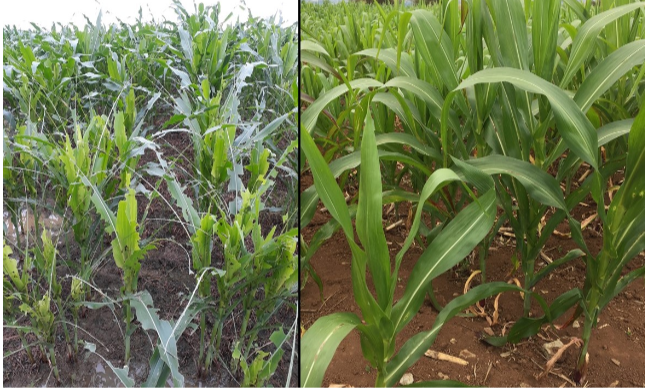
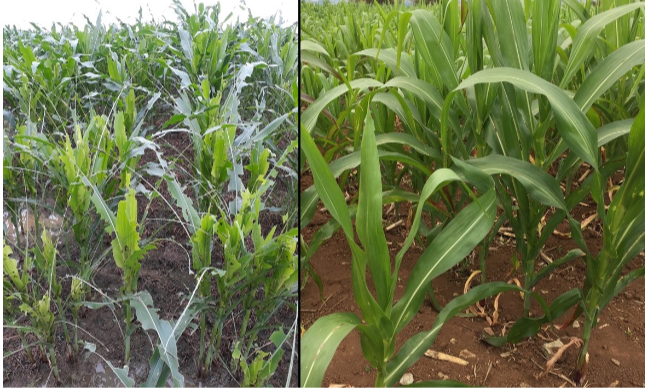
Fall armyworm-infested corn plant
Dekalb corn unscathed by Fall armyworm

   Farmers continue to seek help from the government as the FAW is feared to infest even other crops. “FAW is polyphagous, which means it feeds on different kinds of food,” said John Fajardo, BCS Agronomic System Manager for Corn in Southeast Asia and Pakistan. “It has been observed to feed on rice, sugarcane, vegetables, sorghum, and millet.”

   In another trial plot in Polomolok, South Cotabato, DEKALB 8719S only had a low pest incidence of 2% based on field observations done 22 days after planting, which was aired over a live Facebook webinar.

   “We observed that the leaves and stems of the corn plant did not have any holes,” said Jonel Caberto, BCS Market Development Manager in Mindanao. “Once the FAW seeps into the plant and tries to feed on it, it will stop and eventually perish due to the effectiveness of the VT DoublePro technology.”

   All DEKALB varieties with VT DoublePro have 5% refuge in a bag. This government requirement is part of the Insect Resistance Management (IRM) strategy of the industry aimed at minimizing the risk of a resistant population of the target insect pests to grow. With this approach, farmers are assured of the longevity of the technology value to support their livelihood.

   Region 2 has suffered serious damage from FAW this season, totaling 3,700 hectares, according to Mindaflor Aquino, Department of Agriculture (DA) Region 2 senior science research specialist. “We only include areas that have been validated, but if you go around corn areas in the region, the actual damage may even be bigger,” said Aquino.

   In the Philippines, FAW was first observed in March 2019 in Piat, Cagayan. “It was first identified morphologically by the FAO (Food and Agriculture Organization). From Piat, Cagayan, it was then seen in Gonzaga, Sta. Ana, and other municipalities until it reached the provinces of Isabela, Nueva Vizcaya, and Quirino,” said Aquino.

   FAW reproduces quickly with female adults laying 2,000 eggs in a single instance. Its dispersion is fast as it can fly at night over a 100-kilometer distance and up to 500 kilometers with the aid of wind. The insect pest has not spared even some varieties of Bt (Bacillus thuringiensis) corn with single mode of action, which has been known to be resistant only to the Asiatic corn borer.

   “Before we thought it’s good that there are very few farmers in Region 2 that still use OPV (open pollinated variety). In Cagayan Valley, we are the highest in the use of Bt corn,” added Aquino. “Unfortunately, this season, we have also seen FAW infestation in Bt corn.” (Melody Mendoza Aguiba)

Virtual rice & corn field tours ushers in Ph agriculture digitalization accelerated by COVID 19 crisis


July 15, 2020

An innovative nationwide simultaneous virtual field tour was introduced by Bayer Crop Science (BCS) to current and emerging farm entrepreneurs as part of the digitalization trend in agriculture long advocated by agri stakeholders and now accelerated by the COVID19 crisis.

Featured in the Facebook page of BCS and called Online Kapehan, the field tour brought farmers on a journey to different locations across the country from their smart phones and computers—spanning from Isabela all the way to Zamboanga del Sur. The sites included Alicia & Angadanan, Isabela; Talavera, Nueva Ecija; Naujan, Oriental Mindoro; Trento, Agusan del Sur, and Tambulig, Zamboanga del Sur.

On its first wide-reaching virtual field event, Bayer featured its newly developed pre-emergent herbicide Council Complete, a revolutionary herbicide that has shown in trials to be highly effective in weed control while being safe to rice, applied during the early stages of the crop.

The digitalization of agriculture has been envisioned by experts in the belief that it will be the key to scaling production in order to meet the increasing demand for food for the projected more than 9 billion population by 2050.

Virtual field tour in Tambulig, Zamboanga del Sur (lower left) and Alicia, Isabela (lower right) brings farmers to rice fields that test new herbicide Council Complete

The Food and Agriculture Organization (FAO) estimates food production should increase by 70% in order to ensure food security particularly for the growing Asian population. This propels the need for novel crop protection and rice production techniques.

Farmer-cooperators in the field trials affirmed the efficacy of the new herbicide in controlling highly-pestering weeds including the known resistant ones, consequently averting loss for farmers and ensuring good harvest. Emman Serame in Nueva Ecija said Council Complete enabled growth of rice plants without having to compete in nutrients with weeds and made the rice fields “completely clean.”
Council Complete is recommended to be used on rice plants 2 to 4 days after transplanting or at 0 to 1 leaf stage of the plant. It should be used with the fields irrigated with water at 3 to 5 centimetre level in order to best control weeds. Even when flooding occurs, farmers should not worry that the herbicide’s effectivity may lessen for as long water level does not overflow the paddy field.

“Council Complete gives the rice plant the headstart it needs to grow without competition in nutrition with space or with weeds and other plants,” said Allan Velilla, BCS head of its Southeast Asia Agronomic Technological Center in Calauan, Laguna. “It has gone through long-term studies and its ingredients have been selected from the best compounds. With a new mode of action and better efficacy, the product is safe for rice plants and effective in selecting only targeted weeds.”

It is even suitable for farmers now to use it as they do not need to go back to the fields repeatedly to spray amid present government prohibitions for unnecessary outdoor stay due to the COVID19 pandemic. Farmers only spray once, and they should no longer worry that weeds will infest their fields. As a broad-spectrum herbicide, it prevents the growth of many grasses–Palay Palay, Tres Cantos, Balbas Kalabaw, Ulang, Kahoy Kahoy, according to a farmer in Naujan, Oriental Mindoro.

In Andanganan, Isabela, farmer Danny Taguba said, “It killed all the pest grasses—Walis Walis, Tres Cantos, Malapalay.” The herbicide has also been known to kill other weeds – Lopo Lopo and Lato Lato in Tambulig, Zamboanga del Sur. Taguba said an advantage with the new herbicide is it may be used together with snail control spray Bayluscide.

 “You save on labor because you only have to spray once. Council Complete and the snail control product may be mixed and sprayed together,” he said.

Ruben dela Cruz, farmer in Tambulig, Zamboanga del Sur, said he found the herbicide excellent as weed control. “I am impressed with the performance of Council Complete. Some leaves of rice plants in usual farmers’ practice become droopy when sprayed with other herbicides. But Council Complete doesn’t have a bad effect on the rice plant.  The leaf is erect,” said dela Cruz.

Council Complete has two active ingredients—triafamone and tefuryltrione– selected as the best from numerous studies. It can control a variety of grasses, sedges and broadleaves including echinocloa crus-galli, echinocloa colona, ludwigia octovalvis, sphenoclea zeylanica, cyerpus iria, cyperus difformis and fimbristylis milliacaea.

Council Complete is recommended for lowland rice planting and is registered with the Fertilizer and Pesticides Authority (FPA) for rice only. (Melody Mendoza Aguiba)

Second generation antihistamines now mainstay in treating allergies not only due to fast action but non-sedative effect critical in labor productivity

July 2, 2020

Second generation antihistamines have become the mainstay in treating allergies not only due to their fast action but for their non-sedative effect critical in the labor productivity of working people.

   Developed in the 1980s to counter the effect of antihistamines that cause sleepiness, second generation antihistamines have become a major advancement in allergy treatment.   

   This, even with the advantage that it is also a treatment for children, according to Dr. Natividad A. Almazan, in an inaugural webinar “Live with Clarity.” Almazan  is head of the Research and Development Office at the Manila Central University College of Medicine & Hospital and a fellow of the Philippine Society of Otolaryngology.

   The webinar aims to  address the high prevalence of allergies, particularly allergic rhinitis, which affects 1 in 5 Filipinos and around 400 million worldwide, according to the World Health Organization (WHO).

   The advantage of anti-allergies not causing one to fall asleep is of primary significance as first generation antihistamines cause much impairment in one’s ability to perform daily tasks.

   “The residual effects of poor sleep, including impairment of attention, vigilance, working memory, and sensory motor performance, are still present in the next morning.  This is especially problematical with drugs with a long half-life,” according to Martin Church and Diana Church in the “Pharmacology of Anthistamines.”

   “The detrimental central nervous system (CNS) effects of first-generation H1-antihistamines on learning and examination performance in children and on impairment of the ability of adults to work, drive and fly aircraft have been reviewed in detail.”  

   Second generation antihistamines are now also a treatment for children.  They have to be more strictly monitored, though, than adults, as expected.

   “Both may take the same meds,  but the dosage is  different.  And  children should be monitored more,” said Almazan.  She said children are 47% likely to have allergic rhinitis when both parents suffer from the allergy.

   Allergic rhinitis is common, affecting all age groups, between 10-30% of adults and up to 40% in children & adolescents.  This prevalence is higher than skin allergies and asthma.

   Patients may experience mild to moderately severe symptoms such as runny nose, nasal obstruction, sneezing, and itchiness that makes it very bothersome.

   However, allergic rhinitis can be aggravated by co-morbidities such as asthma, atopic dermatitis, conjunctivitis, sinusitis, polyposis, upper respiratory tract infection, and otitis media, which may render a person unable to conduct daily life normally. As a consequence, this may lead to poor quality of life, sleep disorders, and learning and attention impairment.

   The “Live With Clarity” webinar series also provides awareness on common allergens that trigger allergic rhinitis and how to reduce the risk of exposure from them. Pollens are among the ubiquitous allergens with their presence in grasses and flowers, while dust mites are another common type found at home.

   Environmental pollution caused by vehicles running on fossil fuels emit carbon dioxide, nitrous oxide, and sulfur dioxide that increase the level of toxins in the air.

   Pet animals like dogs or cats may be a trigger for some. Types of seafood, spicy food, cosmetics, and topical products could also cause allergy. Family history also contributes to chances of people getting allergic rhinitis.

   How can you tell if you have allergic rhinitis or something else?

   According to Dr. Almazan, only specialists can properly diagnose whether a patient is suffering from allergic rhinitis or not. This is typically done by conducting a standard skin prick test done on the patient’s arm. Sterile needles are used to introduce suspected allergens and then the doctor evaluates the skin reaction after 15-30 minutes.

   Dr. Almazan stressed that the first step to the treatment of allergic rhinitis is avoidance of triggers.

   Also, as a habit, people prone to allergic rhinitis should observe general sanitation—ensuring regular house cleaning and changing of beddings and draperies to prevent dust mites from accumulating. Often, the cause of asthma is the same as that of allergic rhinitis.

   For a long time, patients who take oral antihistamines to manage allergic rhinitis feel drowsy or groggy after a short period due to the sedative effects of this medication, which is a common side effect from first or older generation antihistamines.

   In most cases, whether intermittent or persistent allergic rhinitis, the main stay treatment is second-generation oral antihistamines. These are considered as non-sedating medication that can be taken in the morning and will not cause drowsiness for an average person who starts the day heading to work.

   “Based on a survey on preference for treatment of allergic rhinitis, people prefer the medication targets the symptoms that accompany the condition, has fast action relief, minimal adverse effects, non-habit forming, and long lasting,” says Dr. Almazan. Claritin is a second-generation antihistamine that meets the criteria on what medication is preferred by patients.

   Depending on the severity of the allergy, the doctor may prescribe other medications like intranasal corticosteroids (INCS), leukotriene receptor antagonist, decongestants, and immunotherapy.

   Dr. Almazan stressed though that all this information should not replace consultation with doctors.

   “These medications and treatment approaches have to be monitored, so you have to consult with your doctor and avoid self-diagnosis.”

   The “Live With Clarity” series will continue with sessions to focus on allergies in the elderly on July 3 and children & adolescents on July 13. Those interested can check out their schedules at Claritin Philippines’ Facebook page at https://www.facebook.com/claritinphilippines/. (Melody Mendoza Aguiba)

Seed producer Bayer Crop Science targets 100,000 farmers by 2021 to migrate to highly-profitable hybrids resistant to diseases

June 22, 2020

Rice and corn seed producer Bayer Crop Science (BCS) is targeting by 2021 to reach 100,000 Filipino farmers who will migrate to using highly profitable hybrid seeds resistant to diseases so as to enjoy yield gain of 50 to 130%, grossing P200,000 per hectare for rice.

   Through partnerships with the Department of Agriculture (DA) in technical training of farmers and with others stakeholders (farmers’cooperatives, seed distributors, financiers), BCS believes the target is  reasonable. 

   The number is an increase from the 60,000 farmers it has so far helped to step up to using the high-yielding seeds since its first launch of its online agriculture training site Bayer Agricademy.

   The hybrid business is part of its aim to contribute to the United Nations’ Sustainable Development Goals.  These include “zero hunger” (Goal 2) as one in 9 people in the world are undernourished. The other goal is “no poverty” (Goal 1)—providing everyone healthcare, security, and education.

   “In the Philippines, the average landholdings for farming is less than 2 hectares and it could barely support the needs of a family of five, which is also the national average,” according to BCS.

   Given the technology and financial aid they need to succeed in rice and corn farming, it is foreseen that mostly family-run farming businesses will contribute significantly to economic growth from the grassroots, from the countryside. 

   “Of the estimated, 550 million smallholder farmers worldwide, it’s estimated that 97 percent work on farms that are smaller than 10 hectares and produce more than 80 percent of the food in developing countries. These farms are often family-run businesses that have a long history in the communities where they live.”

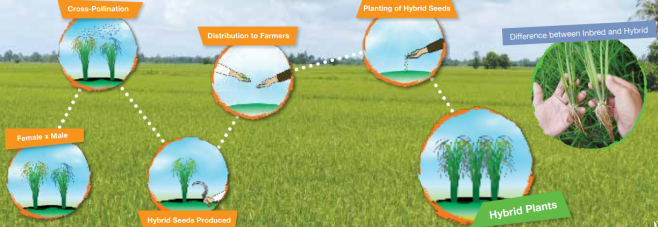
   Hybrid seeds can substantially raise yield and income attributable to traits such as disease resistance from Asiatic corn borer and the now emerging fall armyworm (FAW)  in corn farms nationwide.

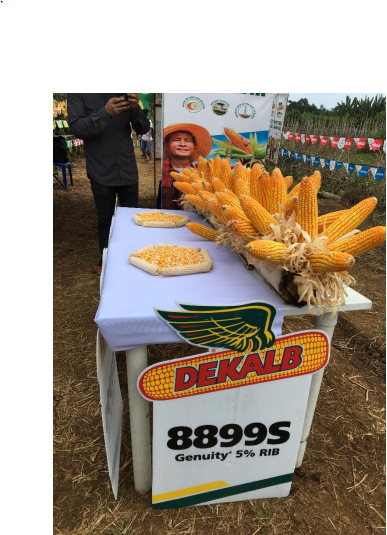
13-tonner Dekalb 8899S is resitant to Asiatic corn borer and fall armyworm

   From the usual three to five metric tons (MT) per hectare, BCS’s FAW resistant corn variety Dekalb 8919S has posted an all-time record high harvest of 14.85 MT in a hectare.  It was specifically in a yield competition co-administered by the DA in Compostela Valley.

   Another Bayer superior corn variety, the  Dekalb 8899S, recorded 13.38 MT per hectare in the same competition in Davao City.

   For the Arize Bigante hybrid rice, farmers have been experiencing up to 2x increase in yield from the average four MT per hectare from inbreds to at least seven to eight MT per hectare from hybrids.  It enables farmers to double gross earnings from P100,000 to P200,000.

  While encouraging many farmers to step up to learning hybrid seed farming, BCS parent firm Bayer Philippines Inc. also has a crop relief programs to famers all over the world.

   Through this initiative, Bayer plans to help up to two million smallholder farmers that provide food security to tens of millions of families in vulnerable communities.

   Through its new “Better Farms, Better Lives” initiative, Bayer will complement its current commitment to support smallholder farmers in key countries by donating seeds and crop protection inputs. It will provide farmers assistance with market access and support for health and safety needs.  

   The donations help boost food security by supporting up to two million smallholder farmers facing increased challenges as a result of the on-going COVID-19 pandemic

   “To assist smallholder farmers in Asia, Africa and Latin America who are facing additional challenges resulting from COVID-19, Bayer, as part of its societal engagement activities.”

   “Better Farms, Better Lives” is in line with Bayer’s overall aspiration to help build a world where there is Health for All, Hunger for None.

   “Smallholder farmers are essential to providing food security to billions of people, but the on-going COVID pandemic is placing extra challenges on their ability to produce food for their communities and beyond,” said Liam Condon, President of Bayer’s Crop Science Division.

   “In this critical time, our hope is that our Better Farms, Better Lives initiative, additional support and partnerships with local and global NGOs will not only result in resiliency for smallholders but will also ensure this current health and economic crisis does not turn into a hunger crisis.”

   The COVID pandemic has caused logistical issues for many farmers globally due to enforced lockdowns which has limited access to seeds, crop protection inputs and labor. As a result of disruptions to food supplies, consumers may ultimately see higher food prices, ironically at a time when many farmers are seeing reduced incomes due to disruptions in the supply chain and the subsequent lack of market access.

   Bayer is committed to helping more than 100 million smallholder farmers in developing countries by 2030. The immediate COVID-19 response through the “Better Farms, Better Lives” initiative complements on-going smallholder support which will aid in mid-term recovery as well as long-term resilience.

   Additionally, in collaboration with others and to ensure the greatest successful impact for smallholders, Bayer will work and expand its partnerships with governments, internationally recognized NGOs (non-government organizations) and local organizations; create a Smallholder Center of Excellence for sharing successes; provide accelerated access to digital farming tools to increase capabilities; scale up existing and new value chain partnerships and further expand value chain partnerships across Asia-Pacific countries.

   The Better Life Farming Care Packages will be tailored to specific local needs and may include seeds for crops such as tomatoes, peppers, rice and corn to sustain livelihoods, crop protection products, personal protective equipment and safety and training materials.   For more information on Bayer’s “Better Lives, Better Farms” initiative and its commitment to smallholder farmers, visit http://www.bayer.com. Melody Mendoza Aguiba/Bryan B. Rivera

Bayer to provide crop relief to two million smallholder farmers impacted by COVID-19

  • Through its new “Better Farms, Better Lives” initiative, Bayer will complement its current commitment to support smallholder farmers in key countries by donating seeds and crop protection inputs
  • The donations help boost food security by supporting up to two million smallholder farmers facing increased challenges as a result of the on-going COVID-19 pandemic

Calamba City, June 17, 2020 – To assist smallholder farmers in Asia, Africa and Latin America who are facing additional challenges resulting from COVID-19, Bayer, as part of its societal engagement activities and through its new “Better Farms, Better Lives” initiative, is providing seeds and crop protection inputs as well as assistance with market access and support for health and safety needs.  

“Better Farms, Better Lives” is in line with Bayer’s overall aspiration to help build a world where there is Health for All, Hunger for None. The initiative focuses on providing smallholder farmers with the assistance needed to address the additional challenges they may be facing as a result of the coronavirus pandemic.

“Smallholder farmers are essential to providing food security to billions of people, but the on-going COVID pandemic is placing extra challenges on their ability to produce food for their communities and beyond,” said Liam Condon, President of Bayer’s Crop Science Division. “In this critical time, our hope is that our Better Farms, Better Lives initiative, additional support and partnerships with local and global NGOs will not only result in resiliency for smallholders but will also ensure this current health and economic crisis does not turn into a hunger crisis.”

The COVID pandemic has caused logistical issues for many farmers globally due to enforced lockdowns which has limited access to seeds, crop protection inputs and labor. As a result of disruptions to food supplies, consumers may ultimately see higher food prices, ironically at a time when many farmers are seeing reduced incomes due to disruptions in the supply chain and the subsequent lack of market access.

In the Philippines, Bayer has been supporting Filipino farmers through its Bayer Agricademy program. Since its launch in 2018, Bayer has guided more than 60,000 rice farmers to increase their yields ranging from 50-130%. It plans to scale up the program to directly assist at least 100,000 rice & corn farmers by 2021. It intends to partner with the Department of Agriculture and local stakeholders.

Bayer is committed to helping more than 100 million smallholder farmers in developing countries by 2030. The immediate COVID-19 response through the “Better Farms, Better Lives” initiative complements on-going smallholder support which will aid in mid-term recovery as well as long-term resilience. Additionally, in collaboration with others and to ensure the greatest successful impact for smallholders, Bayer will work and expand its partnerships with governments, internationally recognized NGOs and local organizations; create a Smallholder Center of Excellence for sharing successes; provide accelerated access to digital farming tools to increase capabilities; scale up existing and new value chain partnerships and further expand value chain partnerships across Asia-Pacific countries.

Through this initiative, Bayer plans to help up to two million smallholder farmers, that provide food security to tens of millions of families in vulnerable communities. The Better Life Farming Care Packages will be tailored to specific local needs and may include seeds for crops such as tomatoes, peppers, rice and corn to sustain livelihoods, crop protection products, personal protective equipment and safety and training materials.

Of the estimated, 550 million smallholder farmers worldwide, it’s estimated that 97 percent work on farms that are smaller than 10 hectares and produce more than 80 percent of the food in developing countries. These farms are often family-run businesses that have a long history in the communities where they live. In the Philippines, the average landholdings for farming is less than 2 hectares and it could barely support the needs of a family of five, which is also the national average.

For more information on Bayer’s “Better Lives, Better Farms” initiative and its commitment to smallholder farmers, visit http://www.bayer.com. Bryan B. Rivera

Webinar series launched for awareness drive and management of allergic rhinitis which affects 1 in 5 Filipinos

Webinar series launched for awareness drive and management of allergic rhinitis which affects 1 in 5 Filipinos

June 17, 2020

A webinar series on allergies and allergic rhinitis was launched to support those suffering from a common nasal allergy, allergic rhinitis, which affects 1 in 5 Filipinos, according to a study by the World Health Organization (WHO).

   The sessions are aimed at providing clarity on the causes of allergy and how it can be properly managed, hence the event name “Live With Clarity”.

   The first of a three-part series started on June 5 with Dr. Natividad A. Almazan, the Head of the Research and Development Office at the Manila Central University College of Medicine & Hospital and a fellow of the Philippine Society of Otolaryngology.

   Allergic rhinitis is common, affecting all age groups, between 10-30% of adults and up to 40% in children & adolescents.

   This prevalence is higher than skin allergies and asthma.

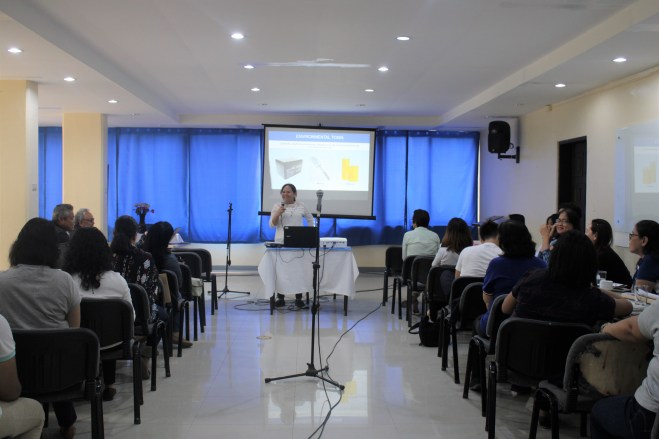
“Live with Clarity” webinar on allergies by Dr. Natividad Almazan and Magic 89.9 Radio host Gino Quillamor

   The WHO reported that around 400 million people worldwide suffer from allergic rhinitis. Patients may experience mild to moderately severe symptoms such as runny nose, nasal obstruction, sneezing, and itchiness that makes it very bothersome.

   However, allergic rhinitis can be aggravated by co-morbidities such as asthma, atopic dermatitis, conjunctivitis, sinusitis, polyposis, upper respiratory tract infection, and otitis media, which may render a person unable to conduct daily life normally. As a consequence, this may lead to poor quality of life, sleep disorders, and learning and attention impairment.

   The “Live With Clarity” webinar series also provides awareness on common allergens that trigger allergic rhinitis and how to reduce the risk of exposure from them. Pollens are among the ubiquitous allergens with their presence in grasses and flowers, while dust mites are another common type found at home.

   Environmental pollution caused by vehicles running on fossil fuels emit carbon dioxide, nitrous oxide, and sulfur dioxide that increase the level of toxins in the air.

   Pet animals like dogs or cats may be a trigger for some. Types of seafood, spicy food, cosmetics, and topical products could also cause allergy. Family history also contributes to chances of people getting allergic rhinitis.

   How can you tell if you have allergic rhinitis or something else?

   According to Dr. Almazan, only specialists can properly diagnose whether a patient is suffering from allergic rhinitis or not. This is typically done by conducting a standard skin prick test done on the patient’s arm. Sterile needles are used to introduce suspected allergens and then the doctor evaluates the skin reaction after 15-30 minutes.

   Dr. Almazan stressed that the first step to the treatment of allergic rhinitis is avoidance of triggers.

   Also, as a habit, people prone to allergic rhinitis should observe general sanitation—ensuring regular house cleaning and changing of beddings and draperies to prevent dust mites from accumulating. Often, the cause of asthma is the same as that of allergic rhinitis.

   For a long time, patients who take oral antihistamines to manage allergic rhinitis feel drowsy or groggy after a short period due to the sedative effects of this medication, which is a common side effect from first or older generation antihistamines.

   In most cases, whether intermittent or persistent allergic rhinitis, the main stay treatment is second-generation oral antihistamines. These are considered as non-sedating medication that can be taken in the morning and will not cause drowsiness for an average person who starts the day heading to work.

   “Based on a survey on preference for treatment of allergic rhinitis, people prefer the medication targets the symptoms that accompany the condition, has fast action relief, minimal adverse effects, non-habit forming, and long lasting,” says Dr. Almazan. Claritin is a second-generation antihistamine that meets the criteria on what medication is preferred by patients.

   Depending on the severity of the allergy, the doctor may prescribe other medications like intranasal corticosteroids (INCS), leukotriene receptor antagonist, decongestants, and immunotherapy.

   Dr. Almazan stressed though that all this information should not replace consultation with doctors.

   “These medications and treatment approaches have to be monitored, so you have to consult with your doctor and avoid self-diagnosis.”

   The “Live With Clarity” series will continue with sessions to focus on allergies in the elderly on July 3 and children & adolescents on July 13. Those interested can check out their schedules at Claritin Philippines’ Facebook page at https://www.facebook.com/claritinphilippines/.

PHOTO

  1. Live with Clarity webinar on allergic rhinitis with Dr. Natividad Almazan, Magic 89.9 Radio Host Gino Quillamor
  2.  Live with Clarity webinar on allergic rhinitis with Dr. Natividad Almazan
  3.  

POPCOM intensifies family planning as COVID-19 feared to cause a poverty-worsening ‘baby boom’

June 7, 2020

Taguig City, June 3, 2020 – The Commission on Population and Development (POPCOM) has intensified family planning (FP) and responsible parenthood programs as the COVID 19 crisis is feared to cause poverty-worsening, economy-debilitating population boom.

A historically observed social phenomenon, a population boom has been noted to follow a crisis. Regardless of the reasons behind this trend, POPCOM took measures to strengthen its family planning programs and distribution of contraceptives.

“We saw in the past during the lifetime of our parents or grandparents the significant increase in birth rate after a major adverse event,” according to Dr. Juan Antonio Perez III, POPCOM Executive Director. “This is the reason why family planning is even more important during our current COVID-19 crisis.”

Dr. Perez stressed the importance of family planning during his participation in a live Facebook session organized by Bayer Philippines. The online channel, Ask Mara PH, intends to provide relevant information to women about reproductive health and contraceptive options.

“While it is more difficult now to provide important information about family planning & reproductive health issues, we appreciate initiatives such as Ask Mara where people can just log on to ask questions about these topics and get answers right away, said Dr. Perez.

According to Dr. Perez, POPCOM gives priority to communities that are vulnerable to further socio-economic deterioration as a result of unplanned pregnancies. “Nearly one-third of a typical Filipino household budget is used up to cover the cost of pregnancy. It leads to many families having to do with less because they have more mouths to feed. This has an aggregate impact in the economy.” POPCOM brought its FP programs to their target communities during the lockdown when people were compelled to stay at home.

“The government continues to reach out to families through its dedicated health workers,” added Dr. Perez. “Even in this pandemic, health services like family planning should continue because life goes on.”

Three out of every 10 pregnancies are unplanned or unintended, according to a Philippine Statistics Authority (PSA) survey. The United Nations (UN) Population Fund also reported that even if some 214 million women worldwide want to avoid pregnancy, they risk getting pregnant. This is due to lack of access to FP methods or absence of support from partners and communities. Similarly, the National Demographic and Health Survey shows roughly one in 10 women aged 15-19 have begun childbearing and 17% of women aged 15-49 want to practice FP but do not have access to said FP methods. This hinders women to reach their full potential to contribute more for themselves and their families.

Sustainability in Family Planning

The United Nations through the United Nations Population Fund (UNFPA) and the Philippines, through POPCOM stress that sexual and reproductve health and rights, including Family Planning is a fundamental right of every human being and that it is a major step toward breaking the cycle of poverty—both for women and their families and for the countries where they live.

In support of the UN’s Sustainable Development Goal on good health and well-being, Bayer announced its sustainability target of enabling family planning for 100 million women in low and medium-income countries by 2030. This includes a recent appointment of an independent sustainability council to examine the progress made by Bayer in the implementation of its sustainability targets and oversee the advancement of social innovations.

Priority by Population Density

With the current COVID 19 crisis requires non-pharmaceutical intervention, but instead minimum health standards such as social distancing and proper hygiene, POPCOM gives more attention to areas based on population density.

“Out of 42,000 barangays, we analyze based on population density and availability of facilities, said Dr. Perez. “We work with barangays and mayors, and we share our recommendations on vulnerable areas that should be given more resources to maintain health services.”

Even if health services are made available to those in need, Dr. Perez added that it still boils down to responsible parenthood. “Before thinking about raising a family, the couple must think through a lot of considerations. Based on their earning capacity and increasing cost of living, how many children can they provide for? How would they ensure the best for their children—physically, mentally, and spiritually?”

POPCOM has established help lines to provide more support through information sharing and guidance. They have people manning the stations almost 24/7 to answer questions on family planning, adolescent sexuality, COVID-19, and even gender-based violence. They are available in Metro Manila and in POPCOM’s regional offices and details are found in their website and Facebook page. Melody Mendoza Aguiba

Former AFP soldier now highest yielder of Arize hybrid rice

May 29, 2020

General Santos City, May 29, 2020 – A former Armed Forces of the Philippines (AFP) military man was recognized by government for the highest yield of 313 cavans in Region 12 with Arize Bigante Plus hybrid rice planted on 1.7 hectares in Brgy. Ligaya, General Santos.

   Edgar Romupal, 50, felt encouraged and happy for having turned to farming, the livelihood of his parents. Leveling up this time, he adopted hybrid rice technology to increase his yield and income.

Former AFP soldier Edgar Romupal beams with hope amid pandemic and Rice Tarrification, hurdling trials via double-yielding Arize Bigante hybrid rice

   The the Department of Agriculture (DA) held the 2019 Arize Mindanao 10K Project in partnership with Bayer Crop Science to encourage farmers to plant hybrid rice and earn higher while DA generates information on the best crop management using this technology.

   The Arize 10K program is enabling farmers to upgrade to higher living levels, overcoming poverty.

   True enough, Romupal demonstrated that even those new to hybrid rice farming can successfully attain high yields.

   This is just his second opportunity to plant hybrids, and his first one didn’t go as planned but served as a learning experience.

   “My parents have long been rice farmers.  So farming was first in my mind as I was able to save a little after retiring from military service,” said Romupal.

   He took on a 1.7-hectare rice land offered to him as mortgage using his small capital from AFP benefits and learned the ropes. His entry to the Arize Mindanao 10K recorded a harvest of 204 cavans in 1 hectare, with 63 kilos per cavan.

   Traditionally, inbred rice just produces around 100 cavans per hectare.  With 303 cavans,  Romupal’s yield is nearly double or a whopping 100% growth.  He earned a gross of P250,000, more than double the traditional P100,000 from inbreds.

   A good development this year is the increase in the farm gate price of palay (unmilled rice) which is reaching close to P20 per kilo. It bounced back from a depressed price of P12 per kilo or less in the previous year, which Romupal and other farmers pointed to the Rice Tarrification Act as the cause of this drop.

   There were imports of around 2.5 million metric tons during this period. Even then, at 63 kilos per cavan, totaling 19,719 kilos (at 313 cavans), price per kilo for his produce was P12.68 per kilo at the trading time.  It is still a low price for palay at farmgate compared to P17 to P20 per kilo in the previous years.  

   With a combination of technical assistance from the DA Region 12 and Bayer Crop Science in the 10K program, Romupal and many farmers enjoyed a yield boost the last season.

   Both institutions deployed field technicians to give enough time and attention to the farmers participating in the program, with Bayer implementing a season-long training program through its Bayer Agricademy. This included topics on pest & disease management and recommended irrigation practices.

   The 10K program was conducted in the provinces of North Cotabato, South Cotabato, Sarangani, and Sultan Kudarat, targeting 10,000 hectares.

   After a successful season, Romupal plans to continue using Arize hybrid rice even if the local government decides to remove its seed subsidy program. He feels it as an easy decision after doubling his yields versus inbred rice varieties.

  Aside from rice, he separately grows corn and selected vegetables a 1-hectare farm. He has set an example as a model farmer for other farmers to follow crop diversification.  That enables them to earn higher from higher value crops and escape poverty.

   Bayer Crop Science believes that farmers who adopt modern farming technologies, like Romupal, will prosper in rice production and contribute to food security.

   Given the increasing population and the ongoing pandemic that is slowing down food supply chains, farmers remain as the main contributors in food production and should be given the right level of support to sustain our food requirements. Melody Mendoza Aguiba