AI-driven drone revolutionizes PH rice farming; Bayer demonstration in Paniqui, Tarlac completed

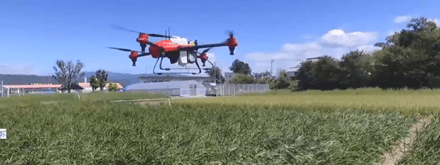
November 27, 2020 – Artificial intelligence-driven drone has started revolutionizing Philippines’ rice farming n as Bayer Crop Science (BCS) completed a “drone seeding” demonstration in Paniqui, Tarlac that is significantly eliminating costly and time-consuming labor in rice planting.

A technology demonstration completed by BCS in Brgy. Sampot last November 20 has shown the success of using drone to broadcast (‘sabog tanim’) rice seeds. Sabog tanim or direct seeding is a method of sowing rice seeds.

The drone seeder is being received enthusiastically by Filipino farmers in Central Luzon as it substantially cuts labor and cost of direct seeding. The drone seed spreading service fee is being placed at only P3,000 per hectare for Bayer Arize farmer-customers.

Labor cost for transplanting rice traditionally costs P11,000 to P13,000 per hectare.

Instead of a whole day to do direct seeding in one hectare, drone seeding for the same area can be completed in only 30 minutes. Based on the conducted trial, seeding rate is 20 to 25 kilos of hybrid rice seeds per hectare, which is far less than the 40-50 kilos seeding rate in the manual sabog tanim, indicating effective seed distribution.

“We are preparing farmers for a complete package of smart technology. We can now use the drones to support agriculture modernization. Other countries in Southeast Asia have started to use drones in farming, including Thailand, Indonesia, and Vietnam. Meanwhile, It’s already used extensively in China,” said Aaron Cano, BCS new business activation manager during the technology demonstration. “This is the future of farming. We are opening an opportunity for the youth to get interested in farming.”

BCS has started setting up a “one-stop-shop” for farmers to bring a complete service of hardware, apps, and inputs—high yielding Arize hybrid rice seeds and crop protection products.

“We’re developing that model right now—a complete service that goes beyong distribution of farm inputs. Down the road, we’ll also look at other hardware and applications that collect relevant data on climate, weather, and plant health to be provided regularly to farmers,” said Cano.

New Hope Corp. (NHC) Founder/Director Anthony Tan said NHC, which distributes drones in the Philippines, has already been licensed by the Fertilizer and Pesticide Authority (FPA) to use drones for spraying application. However, approvals for specific crop protection products that can be applied using drones have yet to be realized. This is where BCS is working to ensure regulatory compliance with FPA guidelines for priority products and crops.

Bayer holds technology demonstration on drone seeding in Paniqui, Tarlac

A sprayer, much as the broadcaster, is an attachment of the drone that enables farmers to conveniently spray pesticides or other granulated materials on their plants.

The Department of Agriculture (DA), particularly Region 3 under Director Crispulo G. Bautista, has already adopted a drone technology program. “We are scheduled to have a technology demonstration in mid-December in Candaba, Pampanga. We are also providing other venues for demo. Those who want to request us to hold demo in their place may just contact us,” said Shiela Hipolito DA Region 3 Rice Program Manager.

Cano added that BCS is introducing a web-based app called Agrolink. Bayer Arize rice seeds users just have to sign up an account to access Agrolink. Through this integrated Smart Farming program, farmers are given points from purchases that they can acculmuate to get discounts and likely include the drone services.

“All the data we’re going to get will be part of an integrated agriculture—a complete, integrated solution for smallholder farmers is what we’re aiming for to boost their yields and incomes,” said Cano.

For now, Tan said the drone’s seed broadcasting service will initially be carried out in partnership with Bayer’s Arize seeds. “We’ve been successful in testing the technology with Bayer’s Arize rice seeds. We find comfort in this partnership since we have been testing this for two years,” Tan said.

“Any new technology goes through trial and error stage,” Tan added. “That is what the drone technology has hurdled under the partnership between NHC and BCS. The collaboration successfully proved that Arize hybrid seeds can be utilized efficiently using drones in certain soil types. 

First, farmers have to prepare Arize hybrid rice seeds by soaking in water for 12 to 18 hours with Gaucho seed treatment. Next, the seeds are incubated for 18 hours. Afterwards, the rice seeds are loaded on drones for aerial distribution and seeding. The seeds shouldn’t have shoots so it can freely be dropped to the soil by the drone. Seed treatment with Gaucho prevents birds and other pests like preying on the seeds for up to 30 days.

The drone, registered with the Civil Aviation Authority of the PHilippines (CAAP), has a weight of 25 kilos and a rice seed loading capacity of 10 kilos. Drone pilots are also registered by CAAP.

Good seeding has also been observed when land preparation has been done properly. For now, the introduction of the drone seeding service will be focused in Central Luzon, Philippines’ rice granary.

“We want to put farmers at ease with the technology. A lot of farmers in Iloilo have been pressing us on the supply of the drones, but these have to be scheduled,” Tan said. While direct seeding has been known to be less productive than transplanting (producing seedling first then transferring these to permanent locations), transplanting is laborious, costlier, and takes a longer time to complete.

“You can’t expect different results from doing the same thing. With drones, we do things very differently. First, the seeds should be quality seeds. The choice of farmer is to transplant hybrid seeds, but now, there’s a new hope with Bayer’s proposition on automated drone technology,” said Tan.

Within just one day, 20 hectares may be planted with the seeds using drones versus 1 hectare if done manually. The drone distributes rice seeds aerially from an altitude of 2.5 meters at a speed of one meter per second. 

As a single drone would cost around P1 million which are out of reach for most farmers, NHC plans to provide the service at a reasonable fee for farmers within selected communities.

The Tarlac government is also supporting the supply of drones to its farmers. “Rep. Charlie Cojuangco wants average rice yield of Tarlac farmers to increase to more than five tons per hectare. We just finished just one techno-demo first, and maybe we will add more techno demos to introduce the technology to farmers,” said Ar-ar Molic, Carlos O. Cojuangco Foundation project manager. Melody Mendoza Aguiba
P20 billion economic loss seen for crop year due to Fall armyworm corn pests, yield down by 1.6 M t

October 27, 2020

The government foresees a P20 billion economic loss for corn’s crop year due to the highl-infesting Fall armyworm (FAW), affecting 1.6 million metric tons (MT) of harvest on a total of 2.5 million hectares of corn area.

   On top of making life more difficult for corn farmers, the infestation has a negative domino effect on the cost efficiencies of feed millers, food processors, livestock and poultry raisers, traders and consolidators, and finally consumers.

   Department of Agriculture’s (DA) FAW Crisis Management Team Chief Dr. Lorenzo M. Caranguian reported government is intensifying strategies against FAW as loss is foreseen to be worsened by the incoming dry season planting.

   “As we approach the dry season, this November to December planting up to harvest in March to April (2021), mostly likely FAW will peak.  That is a period when we’re really expecting harvest to be bountiful,” said Caranguian in a  FAW forum co-hosted by Bayer Philippines Inc.

Lorenzo M. Caranguian, DA Region 2 director, reports foreseen P20 billion corn output loss due to Fall armyworm

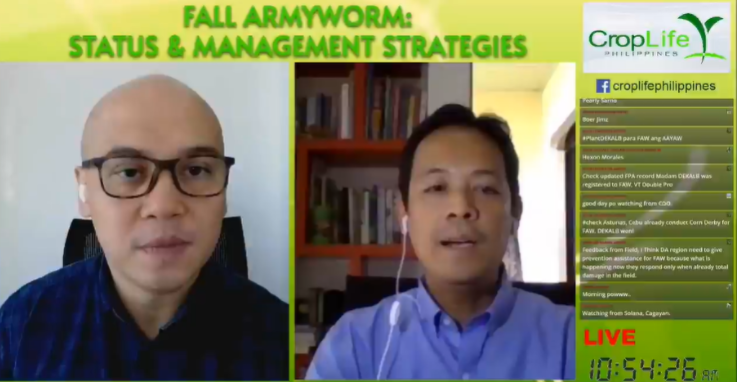
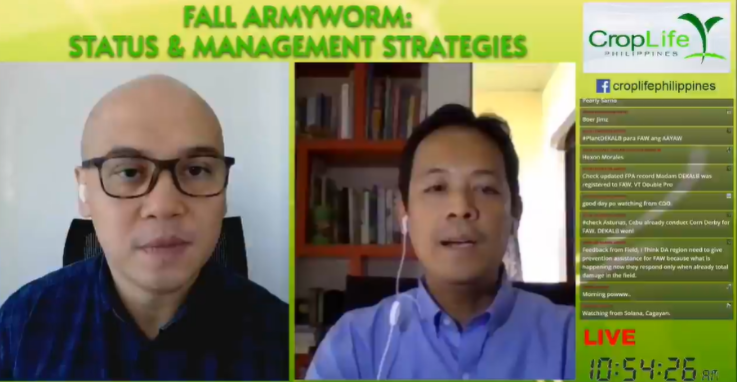
   DA has already adopted an FAW Integrated Pest Management (IPM) protocol.  Under this, corn farmers are advised to detect presence of the pest at the earliest stages and apply three actions against the pest, according to Brueau of Plant Industry Crop Protection Chief Wilma Cuaterno , also resource person at the “FAW:Status & Management Strategies.”.

   These are use of trap crops (planting legumes 20 days prior to corn planting); field inspection (observe feces, egg masses, larvae that indicate FAW presence); and use pest attractants –organic bait trap such as molasses with vinegar; and use of commercial pheromones as traps and lures).

   DA has released a P150 million quick response fund for the program.  It has also allocated another P100 million to intensify pest control .  This P100 million is part of the P470 million alloted from the national government’sBayanihan 2.

  Caranguian said government is also studying corn varieties claimed to be resistant against FAW, particularly the Dekalb VT Double Pro.

   “DA will conduct a nationwide corn derby where all corn varieties claiming resistance against FAW will be grown and tested for their pest resistance and yield. It will be multi-locational in order for farmers to see for themselves varieties suitable to them,” Carangian said.

   Field studies have shown the Dekalb VT Double Pro corn plants have withstood FAW in the last dry season.

   The biotechnology-bred corn variety has a multiple Mode of Action (MOA) against the pest.  Multiple MOA) has enabled corn plants to combat infestation, according to John Fajardo, Bayer Philippines Agronomic System Corn & Knowledge Transfer manager.

Bayer’s Communications Head Bryan Rivera and Agronomic System and Knowledge Transfer Manager John Fajardo lead FAW forum

   Some Bacillus thuringiensis (Bt) seeds, also biotechnology-bred, only has one MOA which is against Asiatic corn borer.  As such, some Bt corn plants have been destroyed by FAW.

   HOwever, Dekalb VT Double Pro corn plants sustained only 2-3% damage in the last dry planting.

   With Dekalb VT DoublePro, given the proper climatic condition, cultural management, and a growing period of 115 to 120 days depending on the variety, corn can yield as much as 13-15 metric tons (MT) per hectare.

   As a rather auspicious development, Caranguian said FAW has not been observed to infest rice plants which is possible based on the pest’s polyphagous (feeds on various food) nature.

   “Corn is their favorite. It is more palatable to them,” he said.

   However, it has been observed to hurt some sugarcane crops in Region 2.

   Cuaterno said DA-BPI has also adopted under the FAW Protocol three actions for prevention of the infestation. 

   These are crop diversification (planting different crops or alternate crops after corn), synchronous planting (so that plants, particularly those in vegetative stage, can avoid the pest), and field sanitation (weeding and plowing under of stubbles).

   DA is also using natural enemies or biocontrol agents (predators) as natural pesticide against FAW.

   “It is better to use natural enemies because that is sustainable  management.  For high population of pests, we use organic pesticide, and then we apply inorganic pesticide,” she said.

   FAW infestation has already adversely affected corn harvest in 57 out of 81 provinces covering 288 out of 1,488 towns and cities. Average degree of damage in surved areas is 44.43%, DA records showed. Destruction is severe in Cagayan Valley, 5,428 hectares; Zamboanga Peninsula, 1,154 hectares; SOCKSARGEN( South Cotabato, Sultan Kudarat, Saranggani, General Santos), 1,703 hectares.

   Other serious incidence has been found in  Northern Mindanao, 1,191 hectares and Bicol, 533 hectares.

   FAW reproduces quickly with female adults laying 2,000 eggs in a single instance. Its dispersion is fast as it can fly at night over a 100-kilometer distance and up to 500 kilometers with the aid of wind.

   Being able to eat anything at hand enables the FAW to increase in population at exponential rate and travel to far distances. By flying, it can travel 100 kilometers per night.

   All Dekalb varieties with VT DoublePro have  a 5% refuge in a bag. This government requirement is part of the Insecticide Resistance Management (IRM) strategy of the industry.  It is aimed at minimizing the risk that corn varieties resistant to FAW will one day become ineffective in killing the pest.

   Fajardo said members of Croplife Philippines, a group of bioscience companies developing corn varieties resistant to pests, are collaborating on coming up with a common IRM.  It will ensure corn farmers will enjoy the use of FAW-resistant seeds as the Dekalb VT Double Pro for a long time.

   In the Philippines, FAW was first observed in March 2019 in Piat, Cagayan. “It was first identified morphologically by the FAO (Food and Agriculture Organization). From Piat, Cagayan, it was then seen in Gonzaga, Sta. Ana, and other municipalities until it reached the provinces of Isabela, Nueva Vizcaya, and Quirino.

   FAW was first found infesting farms in Africa in 2016. It had spread all over Africa in just one year. Afterwards, it was found in India, devastating 60 to 80% of farm harvest in some areas. It was in 2019 when it reached Pakistan, Thailand, Vietnam, and the Philippines.  (Melody Mendoza Aguiba)

UN-inspired “carbon credits” launched by Bayer as incentive to “climate-smart” practising farmers

October 17, 2020

By Melody Mendoza Aguiba

Bayer’s Crop Science division reinforced its commitment to nature-friendly and sustainable food systems amid COVID-19 with its launch of the Bayer Carbon Initiative (BCI).

BCI provides farmers incentives for adopting climate-smart practices.

As part of the company’s Future of Farming Dialogue virtual event series, Liam Condon, president of the Crop Science division of Bayer, emphasized the importance of the company’s sustainability commitments it set in 2019.

Condon addressed how the impact of COVID-19 and the resulting economic instability reinforced the need to intensify the focus on agricultural innovation. Innovation should help make agriculture part of the solution to climate change while continuing to ensure food security for all.

“The agricultural industry is no stranger to adversity—from flooding to drought to pest infestations. And COVID-19 is yet another stark reminder of the need to create a more sustainable and resilient food system to ensure food security,” said Condon.

“Innovation is key to not only solving the pandemic but also the present and future challenges facing farmers.”

The COVID-19 pandemic has caused economic instability and a food crisis among many nations, especially for developing countries. Agriculture must become a pivotal part of the solution to address this challenge, including climate change.

Photo credit: viridis.energy

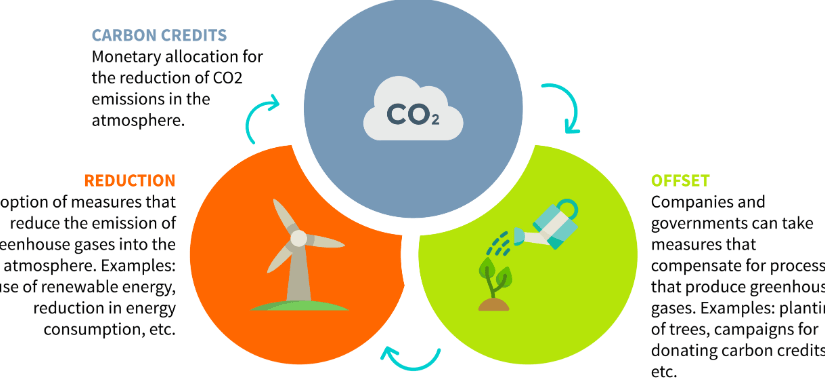
The Bayer Carbon Initiative intends to help farmers generate revenue for adopting specific climate-smart practices.

It was derived from the successful “carbon credit” model of the United Nations Framework Convention on Climate Change.

One example is the use of no-till farming which has been proven to reduce use and cost for fuel, labor, and equipment. It also improves soil structure, combats erosion as more surface soil is retained, and minimizes soil compaction.

In a statement, Bayer mentioned that it is paving the way towards a carbon-zero future for agriculture through this innovative, science-based and collaborative pilot program, and that it can deliver unmatched value to many more farmers through expansion in other countries.

The Future of Farming Dialogue features a variety of internationally renowned speakers and stakeholders from academia, industry and media. The focus of discussion is how to build more resilient food systems, accelerate sustainable-driven innovations and develop new business models that can reward farmers for their services to the ecosystem.

Condon commented on Bayer’s sustainability commitments: “Especially in challenging times, it’s our responsibility to help ensure food security and reduce our environmental footprint. We also need to help farmers do the same by providing the products, services and technologies needed to produce enough food while using less resources and caring for the environment. The key to this is innovation and this is what we continue to drive forward.”

In the Philippines, Bayer has experience in the company’s “Better Life Farming” initiative for remote agricultural areas where both farming and technical expertise are highly underdeveloped.

The intention is to introduce farming know-how, inputs, and market access for smallholder rice farmers to improve their yields and income. One such project is their concept store in Alicia, Bohol where rice farmers are guided on the right crop management technologies. The Bohol farmers are now able to use the recommended inputs for their farm production.

Bayer also provided seeds and crop protection inputs along with market assistance and support for health and safety needs due to COVID-19 for smallholder farmers in Asia, Africa and Latin America.

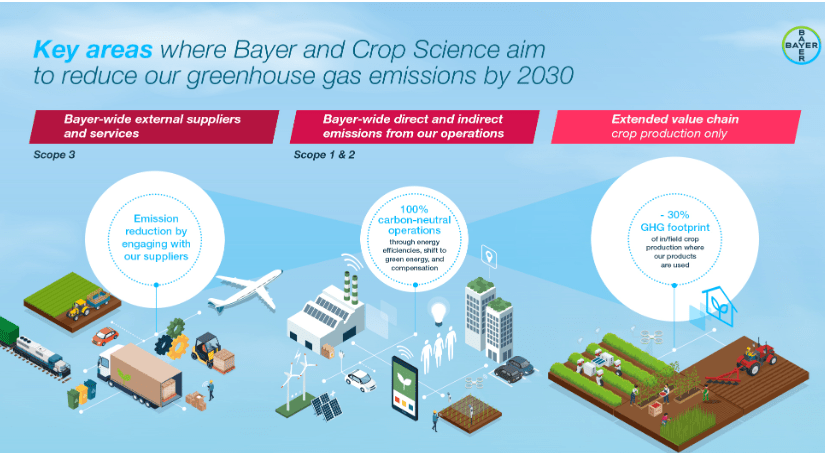
These efforts are already helping Bayer fulfill its commitments to empower 100 million smallholder farmers through access to technology, agronomic knowledge, tools and partnerships. These reduce field greenhouse gas emissions produced by key crops in major agricultural markets by 30 percent; and reduce the environmental impact of crop protection 30 percent by 2030.

“By integrating sustainability into our core business, we are able to not only help ensure food security, but also transform agriculture so that it can become part of the solution for climate change,” added Condon.

Bayer will continue to host its Future of Farming Dialogue in a virtual series throughout 2020 and into 2021. Melody Mendoza Aguiba

Ph posts high mortality ratio of 111 maternal deaths per 100,000

October 17, 2020

The Philippines has recorded a relatively high mortality rate of 111 maternal deaths per 100,000 women giving birth, prompting health authorities to step up to help achieve the United Nations Sustainable Development Goal of reducing the mortality ratio to 70 per 100,000 live births by 2030.

Heightened focus on helping poor families cope with a further worsening poverty situation due to COVID-19 has prompted the government to maximize the use of digital platforms to deliver family planning services as part of efforts to curb this high maternal death rate.

“The large number of unmet need for family planning in the country still translates to around 2,000 women dying of maternal related causes,” said Undersecretary Juan Antonio Perez III, MD, MPH, Commission on Population and Development (POPCOM) executive director, at Bayer’s Asia Pacific Virtual Forum on Women’s Health, Empowerment, and Progress (VHEP). “Our maternal mortality ratio is at around 111 per hundred thousand women giving birth.”

While the country has achieved success in reducing unmet family planning need early this decade from 2013, such success is being eroded by the limited access by the poor.

According to the National Demographic and Health Survey 2017, the unmet need for family planning has already decreased to 17%. This accounts for  2 million Filipino women who have difficulty accessing family planning and contraceptive methods due to financial means or other hindrances. Current movement limitations on transportation and health services due to the pandemic is again raising this rate of unmet family planning need.

“What we’ve seen on the ground is that because of lockdowns and restrictions, there is limited public transport, particularly in Metro Manila and in nearby regions,” added Dr. Perez during the Bayer-hosted forum. “The less fortunate rely heavily on this mode of transportation to get the services they need.”

Limitations: Women across Asia Pacific are experiencing difficulties accessing family planning services due to the global crisis. However, the worst is being felt by developing countries like the Philippines with its already large population at 109 million.

“Among higher-income countries and territories such as Singapore, Hong Kong and Taiwan, women have long enjoyed great access to sexual reproductive health. They have seen smaller family sizes and low levels of fertility,” Dr. Ashish Bajracharya, South East Asia Population Council Deputy Director also said during the same virtual forum. “For lower- and middle-income countries, it continues to be a challenge for women to access sexual reproductive health and family planning services. There are higher rates of unplanned pregnancies, particularly for vulnerable groups such as adolescents.”

COVID-19 has also caused budget restrictions, as focus is now on testing, treatment, and quarantine measures. Dr. Perez commented, “We have a lot in place for which we have prioritized resources, but because of the constraints due to our situation, we may have to bring down the budget a bit for next year, and that is a concern for [us at POPCOM].”

Online help: Prior to the pandemic, the number of women using family planning has doubled from 4 to 8 million, according to the POPCOM chief. “Our gap is now only at 2 million women—the last mile, you might say. But with COVID-19 restrictions, we had to set up help lines and social media platforms. Women can call a number and arrange for a meeting between the midwives who can deliver the service. They can access such by visiting http://www.popcom.gov.ph. We also have active chat facilities in our Facebook pages: @OfficialPOPCOM and @UsapTayoSaFamilyPlanning.”

He further stated, “POPCOM health workers are going the extra mile of delivering contraceptives to the homes of poor women who are quarantined within their communities.”

Dr. Perez mentioned that they are looking to other channels to augment their efforts: “Digital means of delivering family planning services will still be one of our priorities. Women and their maternal health are priorities of great importance in our health plans.”

“Women take on many burdens. They work at home and they take on income-generating tasks, which makes them an important facet for the household economy,” remarked the undersecretary. “An unplanned pregnancy will lead to economic deprivation and an untimely use of savings. With this, women should have a choice when it comes to reproductive health to maintain that status of contributing to the economy. Melody Mendoza Aguiba

Philippines sends agripreneurs to virtual training on safe use of crop protection, Bayer to cut greenhouse gas emissions by 30%

The Philippines has sent its budding agripreneurs to a virtual training mission on the proper use of more environment-friendly crop protection tools, supporting a Bayer goal to cut 30% of greenhouse gas emissions (GHG) in its serviced cropping systems globally by 2030.

A training program on the safe use of crop protection has been put up by Bayer for the last few years. This is to prevent any untoward effect of pesticides and herbicides on human health and the environment.

The International Panel on Climate Change (IPCC) noted that 23% of human GHG emission comes from agriculture forestry, and other land uses. The online Bayer Safe Use Ambassador (BSUA) program brought together more than 2,000 various stakeholders from 14 countries, including university scientists, researches, students, regulatory officials, ministries, and farmers. Students from Philippines’ state universities and colleges (SUCs) — University of the Philippines – Los Baños, Central Luzon State University, Mindanao State University, and others who were part of the previous training programs – attended the virtual training.

“By laying down the foundation of farm safety among young students, we can be assured that the next generation of farmers will embrace the need for safety and product stewardship,” said Iiinas Ivan Lao, country commercial lead for Bayer Crop Science. “This would help farming become more enticing to more Filipinos and promote it as a safe and sustainable means of livelihood.”

The BSUA traditionally holds a competition on potential participants’ opinion on safe crop protection practices. The winners are sent to Bayer’s agriculture headquarters in Monheim, Germany where they are exposed to theoretical and actual sustainable farming practices.

Jane Mae Navasquez, a third year agriculture student from Mindanao State University, was one of the competition winners sent to Germany in the past, the first coming from the Philippines. She was one of the speakers during this year’s virtual conference.

“My eagerness to know more about the various aspects of agriculture and help farmers motivated me to join the competition,” said Navasquez. “It was a great opportunity for me as a Filipino student to impart these learning to our Filipino farmers.”

More than a million farmers across the world were trained in 2019 by Bayer on the safe use of crop protection products. Training was focused on countries with no statutory certification requirements for the products’ handling.

Bayer also trained 4 million farmers in 82 countries in collaboration with CropLife International.

Since 2017, the BSUA program has trained more than 500 university and college students in the Philippines on how crop protection products should be used in a safe and sustainable manner.

Aside from control on disposal of chemicals to counter pests and diseases, BCS promotes use of biological remediation system (Phytobac) to farmers. This prevents “water contamination with residues of chemicals generated during the filling and cleaning of spraying devices or the disposal of residual liquids”

Bayer has a long term goal of zero emissions of GHG which are believed to be the culprit in the two-degree Celsius rise in temperature, causing the known hazards—global warming and climate change.

These are some sustainable practices for Bayer’s zero GHG emission goal, according to Bayer’s “Carbon Zero Future Agriculture”:

  • No-till farming: by not tilling the soil, soil health improves, allowing it to better store carbon, nutrients, and water; and by not disturbing the soil, the carbon captured remains in the ground
  • Crop protection technologies, including biologics, are important to preserving and enhancing yield potential of crops (and help in no-till farming or cover crops
  • Innovative crop genetics (e.g. in Bt corn) require less inputs like fertilizer and crop protection agents and allow growers to pursue no- and low-till farming
  • Digital tools: data-driven tools ensure proper seed placement and that the right amount of fertilizers and crop protection is applied in the right place at the right time, preventing over-fertilization while also requiring fewer tractor passes in the field
  • Water use: precision irrigation systems improve energy use and reduce the amount of water used on crops
  • Equipping growers to capture carbon from the atmosphere with solutions such as: Cover crops: selected crops planted off season in fields maximizes the amount of carbon that stays in the soil, preventing it from being released into the atmosphere while also enriching with nutrients potentially reducing the need for fertilizer
  • Dry seeding of rice: a technique that reduces methane emissions from flooded rice paddies

The BSUA is also being implemented in Indonesia, Malaysia, India, Bangladesh, Pakistan, China, Vietnam, Egypt, Jordan, Turkey, Brazil, and Peru. (Bryan Rivera, Melody Mendoza Aguiba)

47 million women lose access to contraception due to Covid 19 restrictions, 7 million unplanned pregnancies seen-UN

World Contraception Day 2020:

Campaign calls for women to prioritize family planning, health despite COVID-19
·   COVID-19 is posing an urgent threat to women’s health and empowerment by limiting access to family planning and healthcare services.

#HerHero campaign rallies key stakeholders across Asia Pacific to call for a wider support network of everyday heroes to champion and help women overcome the barriers in prioritizing their health

Representatives from the Population Council, the National Population & Family Planning Board of Indonesia (BKKBN), the Commission on Population and Development of the Philippines (POPCOM), the Federation of Obstetric Gynecological Societies of India (FOGSI), United Women Singapore (UWS), the Garden of Hope Foundation Taiwan, Doctor Anywhere and Bayer jointly pledged their commitment to empower women in making informed choices about family planning and their health  

September 25, 2020 – This World Contraception Day, healthcare professionals, policymakers, non-governmental organizations (NGOs) and women influencers in Asia Pacific rally together to call for women to prioritize their health and their family planning needs, even during the pandemic. With COVID-19 posing an urgent threat to women’s health and ability to plan their families, Bayer today launched the #HerHero campaign to support women in taking action to prioritize their health and take charge of their lives. Women’s influencers and representatives from key organizations in Asia Pacific came together today at the #HerHero Virtual Forum on Health, Empowerment and Progress and jointly pledged their commitment to be ‘HerHeroes’, those who support and empower women in their communities to help them make informed choices. They also called for wider public support to join in the pledge and give voice to women’s health needs and empowerment.

The #HerHero virtual forum, organized by Bayer in collaboration with the Population Council, Doctor Anywhere, UWS and media partner Clozette, also marks the 60th anniversary of the contraceptive pill. It was attended by women’s advocates and family planning leaders including Dr. Ashish Bajracharya, Deputy Director, Country Strategy & Regional Representative, South & East Asia, Population Council, Dr. (H.C.) dr. Hasto Wardoyo, Sp.OG(K), Chairperson, BKKBN, Usec. Juan Antonio Perez III, Executive Director, POPCOM, Dr. Shobha Gudi, Chairperson of the Family Welfare Committee, FOGSI, Ms. Georgette Tan, President, UWS and Ms. Ping Rong Chen, representative of the Garden of Hope Foundation Taiwan.

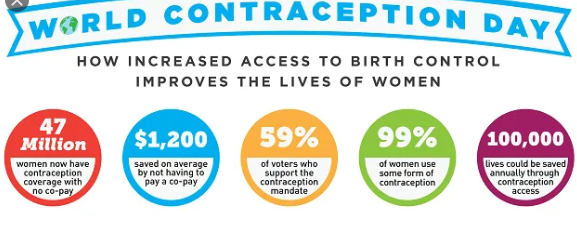
World Contraception Day

Photo Credit: PharmaTimes

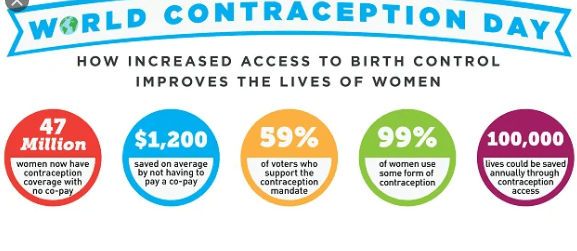
Despite the progress made in empowering women’s lives over the last 60 years, barriers still exist today, made worse by the current pandemic. Many women worldwide are losing access to health and family planning services due to COVID-19 restrictions, and are putting off face-to-face medical consultations for seeking professional advice due to fear of contracting the virus. The UN projects that more than 47 million women could lose access to contraception, leading to 7 million unplanned pregnancies in the coming months[1]. These have lifelong health and socio-economic impact on women and their families.

“As the world responds to the COVID-19 crisis, women’s reproductive health and rights must be carefully safeguarded. We must continue to collaborate, innovate and work to ensure women have access to modern contraception and resources that enable them to make informed decisions about their futures,” said Ashish Bajracharya, Ph.D., Deputy Director, Country Strategy & Regional Representative, South & East Asia, Population Council.

Women’s health and family planning topics are not openly discussed in Asia, and women can find it hard to make informed decisions. The #HerHero campaign celebrates the everyday heroes – such as family, friends, pharmacists and doctors – who support women with a safe space to talk about such topics, and calls for the wider public to commit to also being ‘HerHero’ to the women in their networks. Amid the pandemic, digital platforms offer a new way for women to reach out to their heroes. Telemedicine is fast becoming a safe and convenient option for seeking medical consults on health and family planning matters, especially for individuals with COVID-19 safety concerns. The strong uptake of telemedicine in Asia Pacific in the recent months is here to stay, with consumers expecting to make greater use of digital health services in the next five years[2].

“Our commitment to women’s health drives us to empower women to make informed decisions about their health and family planning, with our innovative contraceptive portfolio and digital health initiatives targeted at improving contraception education,” said Catherine Donovan, Head of Medical Affairs, Bayer Pharmaceuticals Division Asia Pacific. “Our new #HerHero campaign, which also commemorates 60 years since the invention of the contraceptive pill, underscores our efforts to safeguard and prioritize women’s health and needs, even during the pandemic. By sparking conversations about these issues and celebrating the people that empower women each day, we hope to rally support for women in caring for their health.”

Bayer is constantly innovating to find new ways to engage everyday women in taking control of their lives. By developing chatbots in Asian countries with a high unmet need in family planning education, and promoting engagement with the public on social media platforms, Bayer aims to bridge knowledge gaps by providing women easier access to reliable information on contraceptive options and reproductive health.

Across Asia Pacific, Bayer has been collaborating with governments and organizations to introduce initiatives that promote greater contraception awareness and education. This include its partnerships with the BKKBN in Indonesia, the POPCOM in the Philippines, the Department of Health’s Bureau of Reproductive Health in Thailand, and the Family Planning and Women’s Union (FPWU) and Government Office of Family Planning (GOPFP) in Vietnam. With the goal of achieving its “Health for all, Hunger for none” vision, Bayer will continue to invest in multi-stakeholder aid programs, with the ultimate goal of providing 100 million women in low- and middle-income countries with access to modern contraception methods by 2030.


  1. United Nations Population Fund. 28 April 2020. Press release: New UNFPA projections predict calamitous impact on women’s health as COVID-19 pandemic continues. Available at: https://www.unfpa.org/press/new-unfpa-projections-predict-calamitous-impact-womens-health-covid-19-pandemic-continues (Last accessed: 20 September 2020)

.

Ph sends mission to Germany to train amateur agripreneurs on crop protection safe use, aid in boosting food production, security

September 17, 2020 – More and more students taking up agriculture are encouraged to orient farmers on the safe use of crop protection products. Bayer Philippines had recently launched its first ever virtual safe use ambassador conference for the purpose of increasing farmer awareness and adoption of the proper use of agricultural chemicals for their own safety.

The online conference brought together more than 2,000 various stakeholders from 14 countries, including university scientists, researches, students, regulatory officials, ministries, and farmers. Students from Philippine universities and colleges invited were University of the Philippines – Los Baños, Central Luzon State University, Mindanao State University, and others who were part of the previous training programs.

Since 2017, the Bayer Safe Use Ambassador program has trained more than 500 university and college students in the Philippines on how crop protection products should be used in a safe & sustainable manner. The session includes both a classroom and field demonstration portion so that students may see for themselves the right way of applying these products to protect both the farmer and the crops. Aside from the Philippines, the program is also being implemented in other countries around the world, including Indonesia, Malaysia, India, Bangladesh, Pakistan, China, Vietnam, Egypt, Jordan, Turkey, Brazil, and Peru.


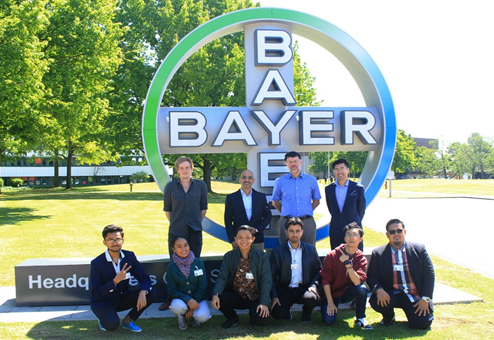
Jane Mae Navasquez, seated second from left, from Mindanao State University in her visit to Bayer Crop Science headquarters in Monheim, Germany as one of the competition winners

“By laying down the foundation of farm safety among young students, we can be assured that the next generation of farmers will embrace the need for safety & product stewardship,” said Iiinas Ivan Lao, country commercial lead for Bayer Crop Science. “This would help farming become more enticing to more Filipinos and promote it as a safe & sustainable means of livelihood.”

In a survey conducted with university scientists and researchers before the conference, most responses confirmed our understanding that the industry along with governments, academia, and farming communities play a key role in ensuring safe use of crop protection products.

To encourage the students to teach farmers on safe use of agriculture products, Bayer holds an annual competition wherein students can send in their essay and videos on their experience in training farmers. Those selected are invited to Bayer’s agriculture headquarters in Monheim, Germany and engage with leaders and stakeholders on how safe use programs can be further enhanced in all countries.


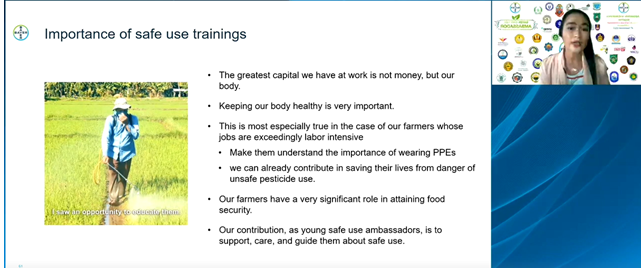
Jane Mae Navasquez sharing her views during the virtual conference on why farmers should get into safe use trainings when applying crop protection products in their livelihood

Jane Mae Navasquez, a third year agriculture student from Mindanao State University, was one of the competition winners and the first coming from the Philippines. She was one of the participants in the safe use ambassador training sessions held by Bayer and became inspired to help farmers in her town. Navasquez was one of the speakers during the virtual conference.

“With my eagerness to know more about the various aspects of agriculture and help farmers in return motivated me to join the competition,” said Navasquez. “It was a great opportunity for me as a Filipino student to impart these learnings to our Filipino farmers.”

Navasquez felt the responsibility to share her newly gained information about safe use of crop protection products. She was worried that traditional farmers still do not adopt the recommended practices, which included wearing personal protective equipment (PPEs), and the potential negative impact on their health.


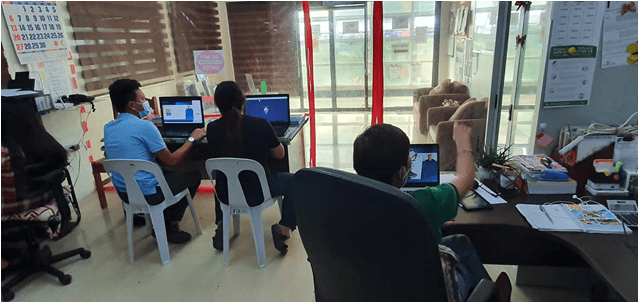
Representatives of the Fertilizer & Pesticide Authority (FPA) in Region 12 participated in the Bayer Safe Use Ambassador virtual conference

The students and farmers establish an emotional relationship beyond that achievable by any institution. Bayer intends to extend the program to more countries in order to expand the outreach of safe use of these agricultural products.

“There is still a long way to go when you talk about knowledge transfer to farmers on the right way to use crop protection products,” added Lao. “However, we believe that we should do it both ways—teaching farmers through our regular engagement activities and building that foundation among future farmers who will produce food for us in the succeeding years.” Bryan Rivera

POPCOM sees family planning education, more options as vital to counter unplanned pregnancies during pandemic

September 12, 2020

The Commission on Population and Development (POPCOM) recently launched its new Facebook live series aimed at reaching out to more Filipinos and communicate the importance of family planning during the current crisis.

Entitled “Usap Tayo sa Family Planning,” the show features Usec. Juan Antonio Perez III, POPCOM Executive Director and called “Doc Jeepy”.

“During this pandemic, it is still very difficult to go to the barangays for a face to face discussion and talk about family planning,” said Usec. Perez. “We realize the need to be more creative in tapping other channels such as social media so that we can inform more Filipinos on family planning and health to uplift their well-being.”

In support of POPCOM’s thrust on family planning education, Bayer has partnered with the government organization through its own platform, Ask Mara PH. Ask Mara is a social media channel that provides awareness on different contraceptive options for modern Filipino women. Since its launch in October 2019, Ask Mara PH has been an instrumental sdsyytool in sharing such relevant information. Anyone with internet connection can easily access Ask Mara through its Facebook page and even get questions answered instantly through the chatbot feature in Messenger.

For many decades, Bayer has dedicated itself to providing reliable family planning to women throughout the world, and thus reducing the number of unplanned pregnancies. Part of this approach involves providing education on contraceptive methods and principles. The company is involved in numerous educational initiatives to provide consumers with information, including World Contraception Day and the associated “Your Life” campaign. “Your Life” is aimed at 13- to 25-year-olds and is supported by a host of non-profit organizations. It is also part of the commitments listed under the UN movement “Every Women Every Child” (EWEC). Together with its partners, Bayer launched the annual highlight of the campaign, World Contraception Day, in 2007, which is celebrated around the world on September 26 every year.

“While educating Filipinos on family planning, we highlight the different contraceptive options available that would suit their needs,” added Usec. Perez. “This includes the contraceptive pill, which has been around for 60 years to support women’s health.”

Almost six decades ago, the first contraceptive pill enabled women to gain control over their own bodies at a previously unprecedented level. For the first time, they were able to prevent pregnancy by taking a hormonal preparation. This revolutionary method of family planning became a turning-point for society and a key driver of emancipation. The UN estimates that today 151 million women all over the world aged between 15 and 49 use the pill as their contraceptive method of choice.

“The pill was the first time that women had been able to take control of major life decisions, especially family planning,” said Dr. May Pagunsan, Country Medical Director for Bayer Philippines.

From a 2018 published report on abortion worldwide entitled “Uneven Progress and Unequal Access,” there were around 99 million unplanned pregnancies between 2010 and 2014, over half of which (56 percent) ended in abortion. In another study which tracked unintended pregnancy and its outcomes from 1990 to 2014, experts estimate that around 44 percent of all pregnancies are unplanned; this rises by 20 percentage points in developing economic countries compared to developed countries (65 percent compared to 45 percent). 

According to the United Nations Population Fund (UNFPA), there are 214,000 unplanned pregnancies projected this year. For 2021, the number of unplanned pregnancies will increase to 740,000 unplanned pregnancies, almost a 50% increase. Moreover, three out of every 10 pregnancies are unplanned or unintended, based on a Philippine Statistics Authority (PSA) survey. The UNFPA also reported that even if some 214 million women worldwide want to avoid pregnancy, they risk getting pregnant. This is due to lack of access to family planning methods or absence of support from partners and communities. Similarly, the National Demographic and Health Survey shows that 9% women aged 15-19 have begun childbearing and 17% of women aged 15-49 want to practice family planning but do not have access to said methods. This hinders women to reach their full potential to contribute more for themselves and their families.

“Numbers of unplanned pregnancies are still high here in the Philippines,” added Dr. Pagunsan. “Bayer is seeking to change this by providing a broad range of different contraceptive products and methods, strengthening and supporting women in the life decisions they take.”

In addition to its educational activities, Bayer continues to invest in multi-stakeholder aid programs and has set a new goal to provide 100 million women in low- and middle-income countries with access to modern contraception methods by 2030.

“Ultimately, one of our objectives at POPCOM is to reduce the level of poverty in the country by engaging with women and men so that more Filipino families to take control of their health and capability to support children,” said Usec. Perez. “If there are more family planning options that are affordable, acceptable and accessible, it will be easier for families to manage what they can and enhance their standard of living.” End

About Bayer

Bayer is a global enterprise with core competencies in the life science fields of health care and nutrition. Its products and services are designed to benefit people by supporting efforts to overcome the major challenges presented by a growing and aging global population. At the same time, the Group aims to increase its earning power and create value through innovation and growth. Bayer is committed to the principles of sustainable development, and the Bayer brand stands for trust, reliability and quality throughout the world. In fiscal 2019, the Group employed around 104,000 people and had sales of 43.5 billion euros. Capital expenditures amounted to 2.9 billion euros, R&D expenses to 5.3 billion euros. For more information, go to http://www.bayer.com.

Bayer, Jardine seals partnership to serve more farmers, enhance food security through wider crop protection distribution

September 11, 2020

Bayer Crop Science (BCS), Jardine Distribution Inc. (JDI) and its subsidiary Taipan Brand Farm Inc. (Taipan) have agreed on a milestone partnership for distribution of selected Bayer brand crop protection products to increase farmer accessibility to these agricultural inputs.

In a joint letter to its distribution channels, the companies mentioned that despite ongoing challenges facing the agriculture sector, they believe that farmers should continue to receive support from all stakeholders as they are vital for our country’s food security and resiliency efforts.

Through the new collaboration, JDI will be handling marketing, distribution, and demand creation initiatives for Bayer’s Hedonal herbicide brand. Meanwhile, Taipan will distribute Confidor, Previcur N, Hoestick, and Bayfolan crop protection brands.

“We are excited with this new partnership between Bayer and Jardine, along with Taipan, given that both are reputable in agriculture and trusted by millions of Filipino farmers,” said Iiinas Ivan Lao, Country Commercial Lead for BCS. “This will allow us to focus on our core products so that we can better serve our farmers with the right technologies and recommendations.”

“Our team is looking forward to add on Bayer’s products in our wide portfolio offering to farmers,” said Edwin Hernandez, President for both JDI and Taipan. “We have an established channel network that would support product access for our farmers so that they could boost their yield & profitability.”

The companies emphasized that they are confident that the new partnership would benefit its distribution channels and would increase patronage from farmers who rely on the crop protection solutions included in the deal.

About Jardine Distribution

Jardine Distribution, Inc. is a wholesale distributor of various agricultural products, applied construction chemicals and household consumer items. Jardine is a member company of the Jardine Matheson Group and works within the framework of Jardine Engineering Corporation, a company headquartered in Hong Kong and operates throughout Asia.

About Taipan Brand Farm

Taipan Brand Farm, Inc. is a member of the Jardine Distribution family of companies. Product distribution through Taipan Brand Farm is accomplished through a wide network of authorized distributors and dealers nationwide, and market coverage is achieved via a highly trained sales force and technical support team.

About Bayer

Bayer is a global enterprise with core competencies in the life science fields of health care and nutrition. Its products and services are designed to benefit people by supporting efforts to overcome the major challenges presented by a growing and aging global population. At the same time, the Group aims to increase its earning power and create value through innovation and growth. Bayer is committed to the principles of sustainable development, and the Bayer brand stands for trust, reliability and quality throughout the world. In fiscal 2019, the Group employed around 104,000 people and had sales of 43.5 billion euros. Capital expenditures amounted to 2.9 billion euros, R&D expenses to 5.3 billion euros. For more information, go to http://www.bayer.com.

Growth Publishing 0929-715-8669, 0917-102-6734, email growthpublishing@outlook.com, aquinobou@gmail.com

Bayer partners with Temasek of Singapore for vegetable seed distribution in Ph in light of urban farming trend due to COVID 19

August 14, 2020

With an existing commitment to promote urban agriculture through its Bayer Kubo project in Taguig, Bayer is exploring new opportunities to grow food in limited urban spaces to bring food closer to consumers.

Leaps by Bayer, the impact investment arm of Bayer AG and Temasek, a global investment company headquartered in Singapore, recently announced a joint investment and formation of a new company, Unfold. The new venture will focus on innovation in vegetable varieties with the goal of lifting the vertical farming space to the next level of quality, efficiency and sustainability.

While most start-ups in the vertical farming market are focusing on the development of more efficient infrastructure, Unfold is the only company with unparalleled assets to unlock the genetic potential of vertical farming. By utilizing the seed genetics from vegetable crops, Unfold will focus on developing new seed varieties coupled with agronomic advice tailored for the unique indoor environment of vertical farms.

Unfold raised USD 30 million in the initial funding round and entered into an agreement for certain rights to germplasm from Bayer’s vegetable portfolio.

“Innovation that offers sustainable solutions for agriculture is one of the 10 areas of engagement and investment that Leaps by Bayer is focused on,” said Jürgen Eckhardt, Head of Leaps by Bayer, which was built to drive fundamental breakthroughs in the fields of health and agriculture through new technologies. “The investment in Unfold is a great example of a transformative, creative approach to developing agricultural products that meets the needs of consumers, farmers and the planet by increasing access to fresh fruits and vegetables, supporting sustainably grown, hyperlocal production and addressing food security challenges faced by growing urban populations.”

Meanwhile, Bayer Crop Science in the Philippines had introduced urban agriculture in a densely populated community in Barangay Ususan, Taguig City early this year as its current local contribution to food and sustainable livelihood during the pandemic. Its 300-square meter Bayer Kubo may still be the traditional ‘horizontal’ urban farm, but it provides the opportunity for residents there to make productive use of their time in growing vegetables such as eggplant, tomato, pechay, sili, and different herbs.

“We’re fortunate that the community in Barangay Ususan continues to enjoy making their own food with the urban farm set up right inside their residential area,” said Iiinas Ivan Lao, Country Commercial Lead for Bayer Crop Science. “Filipino consumers have preference for fresh vegetables and this initiative caters to them. Obviously, vertical farming has the potential to increase food output in very scare areas for planting within highly urbanized cities.”

These urban farming investments align with Bayer’s vision of “Health for All, Hunger for None”, a commitment to the Sustainable Development Goals the United Nations has set for 2030, especially the goals of assuring healthy lifestyles and putting an end to hunger. 

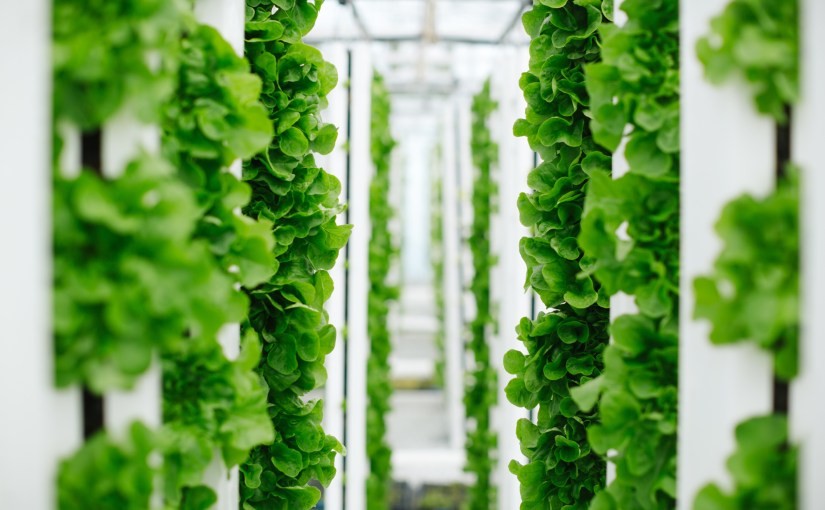
Vertical farms, also known as indoor farms or plant facilities with artificial light (PFAL), utilize indoor growing facilities that leverage artificial light, reduce dependency on synthetic chemistry and other crop inputs, optimize water use and allow food growth in challenging environments with limited arable land. Vertical farms help crops grow more quickly, enabling the reliable growth of fresh, local produce anywhere, anytime utilizing less space and fewer natural resources while reducing the need for food logistics and transportation. Unfold will support the hyperlocal production of consumer-pleasing vegetables while also addressing the increasing need for a reliable and safe supply of sustainably grown produce, especially in food deserts and in times of crisis such as the COVID-19 pandemic.

Investment in the vertical farming market has increased significantly in recent years mainly due to decreasing arable land, increasing market demand for local, sustainable produce and migration towards mega-cities.

Singapore, where Temasek is headquartered, is one of many mega-cities experiencing an increasing demand for fresh, sustainable and locally grown produce that has a smaller environmental footprint, using fewer resources to grow and ship, offering peak freshness and flavor.

“The global food challenges we increasingly face require us to rethink traditional farming practices. We need to ensure secure farm-to-fork supply chains in urban settings while we also work to reduce the overall environmental impact of farming. Reducing food waste and improving the safety, traceability and nutritional value of food are all the more important as populations grow and demands for food expand,” said John Vaske, Head of Agribusiness at Temasek. “Investments in companies such as Unfold allow us and our partners to support innovative, sustainable solutions that will benefit all of us over the long term.”

Led by CEO John Purcell, Unfold will be a U.S. entity headquartered in the Davis, Calif. area with commercial and research and development operations in both California and Singapore.

“What sets Unfold apart is its unparalleled investment in germplasm and crop growth models best suited for vertical farming environments, an area currently largely underserved,” said Purcell. “As a company fully focused on the vertical farming industry, Unfold will combine leading seed genetics with the best agtech experts in order to dramatically advance productivity, flavor and other consumer preferences. We look forward to serving the market through partnerships with vertical farming operators, technology providers and others across the produce supply chain.”