Agriculture Secretary William D. Dar was asked by a 58-signatory farmers’ groups to hold consultation with farmers and not come up with its own plans which has rendered failure in implementing two-decade-old Agriculture and Fisheries Modernization Act (AFMA).
In a letter received on November 4 by DA, Dar was also asked by the 58 farmer-leaders to explain why the Department of Agriculture (DA) refuses to implement trade remedies allowed by the World Trade Organization (WTO) and local laws addressing import surges and price depressions.
DA’s failure to consult farmers is precisely the reason why there is “misallocation and misuse” of DA funds.
“The absence of consultations is at the heart of misallocations and misuse of funds by DA,” said the United Broilers Raisers Assn, Philippine Chamber of Agriculture and Food, Samahang Industriya ng Agrikultura (SINAG), and more than 50 other farmer-leaders.
“DA’s plans, given the results, are certainly not for the stakeholders. The law mandates that stakeholders be consulted in the formulation and implementation of AFMA.”
Consultation should include budget requests which should be subject to transparency.
The farmers’ groups lamented the non-implementation of Sections 38 to 45 of AFMA. These are among the provisions DA failed to implement:
Provision of responsive business information and trading services that link farmers to market
Creation of a national marketing umbrella to generate highest income to farmers
National Information Network (NIN) to be set up one year from AFMA’s enactment in 1997.
The NIN should provide industry data, similar to that being produced extensively by the United States DA (USDA). USDA extensively studies and reports even Philippines’ industry data.
“The NIN shall provide information and marketing services related to agriculture and fisheries which shall include the following: supply; demand; price and price trends; product standards for both fresh and processed agricultural and fisheries products; directory of, cooperatives, traders, key market centers, processors and business institutions.”
The NIN should also provide research information and technology generated from research institutions; international, regional and local market forecasts; and resource accounting data.
“The NIN shall likewise be accessible to the private sector engaged in agriculture and fisheries enterprises,“ according to Section 45.
On Dar’s battlecry that DA has to engage in “New Thinking,” DA should now look into why other countries (Thailand, Vietnam, Malaysia) thrived despite their World Trade Organization (WTO) membership, the farmer-leaders said.
On the other hand, Philippine agriculture reels into further poverty as imports flood the market and kill farmers’ livelihood.
The farmers’ groups said that DA’s plans in 2001-2004, 2011-2017, and 2018-2023 have not been consulted with the agriculture sector.
“We have only come to know these AFMA programs upon discovery of counsel as part of due diligence in preparation of a case,” the 58 farmers’ group confessed.
DA’s plans all the years were made simply as “paper compliance” with the requirement of the Department of Budget and Management.
In professional budget management, the farmer-leaders said budgets should have “clear performance targets and quantifiable and verifiable impact indicators and conduct of up-to-date monitoring.”
Absence of data is another reason why there is disconnect between farmgate and retail prices. This happens for instance in rice where farmgate price is now down to P10 per kilo. But consumers still pay for a high P38 to P45 per kilo in wet markets.
“How can DA effectively plan without a data and information system? What will be the basis for its plans? How can stakeholders plan investments base on the realities of the supply and demand in an industry?”
The farmer-leaders lamented that AFMA’s other major provisions have not been implemented:
Strategic Agriculture and Fisheries Development Zone
Agro-industry Modernization and Credit Financing Program
Irrigation and Agriculture and Fisheries INfrastructure Support SERvices
Trade and Fiscal Incentives
DA also did not receive at all the P20 billion initial AFMA allocation and P17 billion yearly at least for 6 years since AFMA’s enactment.
“You have spoken of rebooting the industry. The first step is to follow the law and implement AFMA,” said the 56 farmer-groups to Dar in a letter. “That is the only way to effectively gain the trust and respect of stakeholders.” Melody Mendoza Aguiba
A former vice president of banana-exporting multinational Unifrutti has pleaded for help for poorer corn farmers who are being “killed” by illegal smugglers and importers even as price plunged to an all-time high P9 per kilo.
Rodolfo Pancrudo, farmer-owner of Pancrudo Farm in Manolo Fortich, Bukidnon, has asked
government not to allow the killing of corn farmers.
This may be the ultimate plight of farmers since they do not enjoy corn support price, supposedly expected before from the National Food Administration (NFA). Nor do they have post harvest facilities by which to dry and store their corn.
Mechanical dryers and storage facilities should enable them to hold their sale of corn and wait until prices become more profitable.
“Traders haggle for the lowest price and tell farmers, ‘Your corn is of low quality.’ That’s why farmers are forced to sell their corn even at only P9 per kilo because they need money. Otherwise the harvest will just go to waste since there are no post harvest facilities,”said Pancrudo.
While he is more fortunate because he is a retiree of Unifrutti, one of the world’s largest producer-exporters of fresh produce, more farmers are poor.
“I am just more fortunate since I am more of an entrepreneur. I have an integrated farm. It’s a kind of sustainable farming. But I see farmers having a very difficult life. They are in a hand-to-mouth existence,” he said.
Pancrudo Farm also has a piggery. The farm uses hogs’ dung to feed a biogas facility and uses it for fertilizer. It also grows papaya as Pancrudo is a sub-contractor of also multinational Del Monte.
“I hope other corn farmers may also become entrepreneurs. But most of them are not learned. When I retired from my company (Unifrutti), I went into farming just to practice my being an agriculture engineer. But many farmers run to me for these problems. I have to speak for them.”
Farmer-entrepreneur Rodolfo ‘Opong’ Pancrudo
The Philippine Chamber of Agriculture and Food Inc. (PCAFI) with its president, Danilo V. Fausto, has been seeking an audience from the Department of Agriculture (DA) regarding the plight of farmers in light of the Covid 19 food crisis. PCAFI asked for least an increase in tariff of farm commodities—mainly rice – so as to support local farmers.
For corn, DA should at least prohibit imported corn to coincide with the harvest.
However, PCAFI member and Philippine Maize Federation Inc. (PMFI) President Roger V. Navarro feared DA’s inaction on the plummeting corn price forebodes a collapse of the sector. Worse, DA appears to be attempting to hide the problem of farmers experiencing low corn price.
“To my mind, this is not a good indication. (DA’s trying to cover up the truth) tries to tell the people to keep quiet as it intentionally tries to hide the problem and the reality,” said Navarro.
“We cannot hide the trutht that we have a problem in agriculture. In effect DA is building a high wall. But the crack on the wall runs down that it may suddenly collapse—shattered and badly broken. I don’t want to see that happen.”
PMFI has also asked government to investigate possible corn smuggling. Bureau of Plant Industry (BPI) Director George Y. Culaste reportedly claimed that no permit has been issued for incoming importations of corn.
“This leads us to assume that this coming corn is smuggled,” Navarro said.
Expected to arrive soon are the following corn shipments: 6,000 metric tons (MT) for General Santos arrival; 20,000 MT, Cagayan de Oro; 50,000 MT, Bicol; and 30,000 MT, Iloilo.
“We reported this to DA Secretary (William) Dar, and we are awaiting his action. These corn shipments will strike the fatal blow to the corn farmers who painstakingly harvested a huge 3.5 million tons, wet season crop,” Navarro said.
Pancrudo said farmers will hardly be able to make money from gross earnings of just around P30,000 per hectare. This is against production cost of P35,000 to P40,000 per hectare.
Support for fertilizers and good seed varieties is also an important intervention Filipino farmers do not get, unlike farmers in neighboring countries as Thailand.
“There will come a time Filipinos will no longer have (locally-produced) food. All will be imported,” said Pancrudo. “Even a small amount of support for fertilizer will already be a (significant) help in raising yield. But there is no such support.”
Navarro invoked the implementation of prevailing laws that should help farmers during this Covid 19 crisis.
These nationally sanctioned policies will not require much budget:
.These are Republic Act (RA) 8800, the Safeguard Measures Act; RA 7607, Empowering Smallholder Farmers in their Economic Endeavors,” and RA 8435 or Agriculture and Fisheries Modernization Act.
“From the recent articulation of Congressman (Rodante) Marcoleta, he was saying DA should look outside the box, away from traditional structured intervention mindset that makes agriculture development restrictive,” said Navarro.
“There are non-funding interventions that need to be reformed or made new. RA 7607 upholds farmers’ rights to price support especially for corn. RA 8435 mandates banks to give loans to farmers. The best policy is derived from good consultation.”
The perennial problem of lack of storage and drying facilities will forever hinder farmers’ becoming more profitable – unless these are invested in.
“We need storage to (stretch shelf life of) surplus harvest that cannot be absorbed by the demand from industries. Without this infrastructure support, we will be the same year in and year out.”
“DA is trying to rally farmers to increase production, but when harvest comes, DA can’t help them.”
Amid the threats of Covid-19, malunggay and ‘dilis’ is turning out to be a “go to” for nutrition as the Southern Luzon State University (SLSU) has developed a highly marketable Malunggay Powder and Dilis Flour (MPDF).
The SLSU in Tagkawayan, Quezon has developed the MPDF which is now a product deemed as highly marketable under the Technology and Investment Profiles (TIP) monograph series published by Southeast Asian Center for Graduate Study and Research in Agriculture (SEARCA). The project is funded by the Bureau of Agriculture Research (BAR).
Results showed that the malunggay products have met the parameters for each tool to be identified as a financially viable investment project.
The SEARCA- feasibility study of MPDF used cash flow analysis, net present value, benefit-cost ratio, and financial internal rate return.
SEARCA Director Glenn M. Gregorio said that SEARCA is now actively promoting technology-based innovations among local enterprises. This is under SEARCA’s 11th Five-Year Plan focused on Accelerating Transformation Though Agricultural Innovation (ATTAIN) program.
The experts said MPDF technology can be used as food ingredient in many dishes and as flavoring to various food delicacies including ham, longganisa, tapa, sausage, pork-fish siomai, kropek, macaroni soup, porridge, polvoron, squash cake, ensaymada, pizza pie, toge, tart, and hotcake, among others. With this, it aims to increase home consumption of inexpensive yet highly nutritious food.
The project was led by Dorris N. Gatus, project leader; Veronica Aurea A. Rufo, project coordinator; and Nemia C. Pelayo, technical adviser.
It also targets to create livelihood opportunities for residents and non-residents of Tagkawayan, Quezon, Philippines
The authors of the TIP said that the technology’s market and use extends from feeding programs of school children, bakers from five municipalities in Quezon Province with high incidence of malnutrition (i.e., Tiaong, Catanuan, Dolores, Quezon, and Mulanay), and local restaurants.
Its target consumers include other institutional buyers (e.g., bakeshops, eateries, restaurants, hotel establishments, and hospitals); entrepreneurs who are engaged in food processing business enterprises; households, particularly those with lactating mothers and malnourished children; vegetarians, especially those suffering from anemia; and government agencies implementing feeding programs.
Many times richer in vitamin-C, malunggay (Moringa oleifera) is being touted as “better than cure” as it may help prevent many other diseases. It has been known that fresh malunggay leaves haves seven times the vitamin C of orange, 4 times the vitamin A of carrots, and 4 times the calcium of milk.
This popular vegetable is part of the Filipino diet for generations. ‘Tinolang manok’, chicken cooked in papaya will not be complete without malunggay leaves. For Ilocanos, the leaves of the malunggay and its pods are perfect when cooked with other vegetables and fish. Those who know this often has a malunggay tree beside their house.
Some are now using malunggay powder to fortify the all-time favorite pan de sal. Malunggay’s use has been promoted by the World Health Organization (WHO) as a low-cost health enhancer in poor countries around the globe.
Millions of Filipinos, particularly children, are suffering from undernourishment and malnutrition not just because of hunger and poverty, but also because of poor diet and eating habits. Access to nutritious food has also been identified as the reason for this alarming health concern.
Meanwhile, dilis or Philippine anchovy, more known in its dried fish form, is abundant in the market. While they are quite popular among the older generation, they are not a hit to the young ones.
Like malunggay, dilis—a small, common saltwater forage fish—has been identified as rich in protein and other minerals and vitamins with high levels of polyunsaturated fatty acids. Specifically, anchovies are a good source of minerals, including calcium, potassium, iron, phosphorus, magnesium, zinc, and sodium. Moreover, anchovies are rich in vitamins such as B vitamins (B1, B2, B3, B6, B9, and B12), vitamins A, C, E, and K.
Dilis, according to BAR, paper, can is a flavouring for “sauces, salad dressings, pasta, and pizza.” It is also a snack for the native Filipino.
SLSU Professor Doris Gatus said sensory analysis and consumer acceptability studies have already been conducted for the MPDF. The product has also been tested in
school feeding activities to supplement children’s nutritional requirement and intake.
Recommended ratio for the product mix (maluggay to dilis) is 1:1, 3:1, and 3:2 (depending on the use)
“One kilogram of fresh malunggay leaves can produce 300g malunggay-powder and 1kg. dilis (utilizing the fleshy part) can likewise produce 100g dilis powder,” said Gatus.
Through the program, Filipinos in rural areas are hoped to improve their productivity and while increasing home consumption of the highly-nutritious yet inexpensive MPDF.
“For every 100 grams of dilis flour fortified with malunggaypowder, the following nutritional values can be achieved: carbohydrates (3 percent), protein (5 percent), vitamin A (40 percent), vitamin C (2 percent), calcium (40 percent), and iron 10 (percent),” said Gatus.
A Technical Panel for Agriculture has been reconstituted by the government as part of an emerging trend to put agriculture as a preeminent policy tool in poverty reduction and economic growth that begins by massively hitching up intellectual capital.
The Commission on Higher Education (CHED) has appointed Dr. Glenn B. Gregorio, director of ASEAN agency Southeast Asian Regional Center for Graduate Study and Research in Agriculture (SEARCA) as chairperson of its Technical Panel for Agriculture (TPA).
“The reconstitution of technical panels is anchored on the need to align higher education to standards, priorities and needs in international, regional, and national settings. The experts from academe, government and industry will assist the Commission in policy formulation,” said CHED Chairman J. Prospero E. De Vera III.
As agriculture remains a major engine of economic development in most Southeast Asian countries, Gregorio reiterated the strategic position of higher education (HEIs) to pursue initiatives on food and nutrition security.
Development economists have long been proposing a reform in the country’s agriculture education as rural poverty has prevailed along with wealth distribution inequalities.
Not only has interest among the youth to take a career on agriculture declined. This has adversely affected innovation and technology development in the agriculture sector.
“Agricultural modernization is essential in the Philippines’ strategy for inclusive growth. The mandate of many public sector higher education institutions is to create a pool of skilled workers to increase the competitiveness of our agriculture and fisheries sector,” according to Philippine Institute of Development Studies (PIDS) President Gilberto Llanto.
As early as in 2007, economists proposed to former Philippines President Gloria Macapagal Arroyo three major components of the agriculture education reform. These are
policy research, institutional capacity enhancement for entrepreneurship, and support to agri-enterprise building in SUCs (state universities and colleges).
“This program came about at a time when pressing issues on spiraling food prices, food security, climate change, and environmental degradation brought agriculture to the limelight. These have prompted calls to rethink development efforts in agriculture,” they said.
“The support to this program recognizes that universities have a crucial role to play. Apart from being the knowledge and resource base in their localities, the SUCs should be able to churn out graduates as champions in fueling development and sustainability in the countryside.”
Llanto said the decline in skilled labor force arising from a decrease in Agriculture, Forestry, and Natural Resources (AFNR) enrolment makes Philippines’ future prospect in agriculture questionable.
The proposal to Arroyo was supported by experts both from PIDS and the Philippine Council for Agriculture, Aquatic, and Natural Resources Research and Development (PCAARRD).
“Now is the most opportune time to implement the long overdue rationalization of SUCs to allow them to offer agri-oriented Technical Vocational Education and Training programs, focusing on agribusiness-oriented agriculture,” according to Dr. Patricio Faylon in “Higher Education in Agriculture, Trends, Prospects, and Policy Directions.
The country’s agility in designing curricular and extension programs (technology transfer from the hands of scientists to farmers) to produce professionals who can engage in achieving food and nutrition security goals is critical, Gregorio said.
The diversification of the agriculture sector and AFNR-related programs will significantly address the changing needs of the local and global economic environment in employment and better income.
“Agriculture diversification, agribusiness promotion, and investment in rural and market-related infrastructure should be pursued,” said Faylon, a former PCAARRD executive director and five other co-authors in a separate position paper on “State and Future Supply and Demand for Agriculture, Forestry and Natural Resources Graduates in the Philippines.”
A major component of the reform is the provision of venues for students to have practical training on entrepreneurship and technology business incubation.
HEIs and SUCs must supply the needs of business and industry for skilled labor which consequently will prop up demand for agriculture graduates.
“SUCs might need to reinvent themselves as producers of a new breed of students and graduates like agribusiness entrepreneurs engaged in lucrative enterprises. When wage employment prospects are dim, graduates can opt to employ themselves through their self-run agricultural businesses.”
Faylon’s co-authors are Ruperto S. Sangalang, Albert P. Aquino, Melvin B. Carlos, Richard B. Daite, and Ernesto O. Brown.
The students themselves should have “adequate immersion” in managing and operating actual enterprises.
This includes introducing new modes of training through Educational Income Generating Projects (E-IGPs), Technopreneurial Learning Projects (TLPs),Technology-Based Enterprise Development (DATBED), and Technology Business Incubators (TBIs), according to Faylon’s group.
The proposal to Arroyo envisioned AFNR graduates as professional entrepreneurs capable of “exploring and exploiting business opportunities in AFNR.”
The PIDS and PCAARRD experts stressed, “Economic theory suggests that formal education is a productive investment in human capital, an important determinant of economic growth (quoting other economic theorist Schultz, 1971 and Becker, 1975).”
“Education is deemed to increase the productivity and efficiency of the work force, thereby facilitating higher output, and consequently stimulating economic growth. At the micro-level, investment in education increases the potential for employment and enhances earnings of individuals ((Mincer 1958).”
PIDS research experts said the role of agriculture and environment sectors in economic development has been placed in the backseat in favor of manufacturing and services.
“More so is the importance of education and human resources development in the AFNR sea mctor itself,” said Roehlano M. Briones, PIDS senior research fellow.
Dr. Glenn B. Gregorio
Gregorio said reforming the agriculture curriculum in the country’s HEIs is critical in making labor competencies more relevant to future job markets.
Other members of the TPA from the academe are Dr. Candida Adalla and Dr. Domingo Angeles, former College of Agriculture deans from the University of the Philippines-Los Banos, and Dr. Danilo Abayon from Aklan State University. Representatives from the industry are Nikole Ma. Nimfa Alicer, farmer and founder of Kalipayan Farms. Melody Mendoza Aguiba
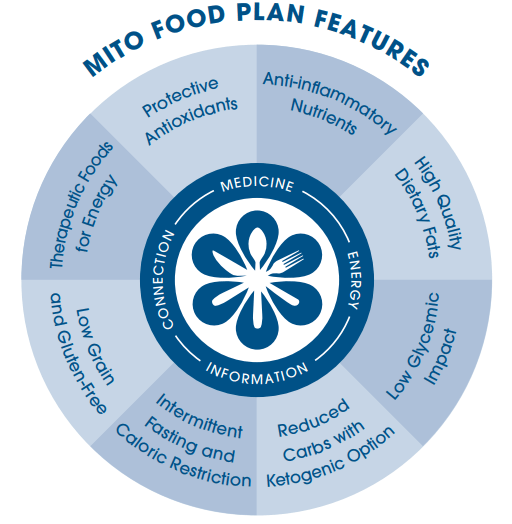
The virgin coconut oil introduced to the world by Filipinos 20 years ago has become part of the “Mito Food Plan,” an anti-inflammatory, therapeutic diet that boosts energy for chronic disease patients and anyone health-conscious.
The Mito (mitochondria) Food Plan (MFP) is now prescribed to patients going through treatment in Functional Medicine. This is a twentieth century medical field that claims to address root causes of complex diseases.
That appears to be conflicting with modern medicine, a discipline more focused on finding symptoms and treating such symptoms. But in fact, Functional Medicine supports modern medicine.
A Filipino Functional Medicine specialist revealed VCO now significantly accounts for the essential fatty acid component in MFP.
VCO is from coconut oil which is abundant in the Philippines where Dr. Raymond Yee Escalona, co-founder of the Life Science Center, practices Functional Medicine.
Yes VCO is fat. But isn’t fat bad?
After several decades when some advocates of the sugar industry promoted fat as bad and carbohydrates as good, now scientific evidences show otherwise.
This fat, VCO, is a now a major component too of the ketogenic diet, a more popular nutrition plan that is similarly high in fat as the MFP.
Mito Food Plan-Institute of Functional Medicine
However, the good news about MFP is it may be the more appropriate diet for more people to boost the immune system, stay healthy, and maintain high level of physical and mental energy.
It may be used for the long term, whereas the ketogenic diet can just be apt for a shorter term, after achieving a certain goal.
With MFP, patients have kept normal blood sugar, blood pressure, triglycerides, and other health parameters with the body’s production of ketones as energy source in the diet.
As an alternative fuel to generate energy, ketones improve health better compared to glucose, the fuel produced from the intake of carbohydrates.
Functional Medicine
Functional medicine involves a combination of many treatment-related activities– diagnostics, detoxification, treatment of fungi, yeast, and harmful microorganisms, identifying cause of inflammation due to patient’s genetics, lifestyle, and environment. It involves fixing hormonal imbalance, and supplementation of macronutrients and micronutrients from food as medicine.
VCO has a unique role in MFP. It has the needed macronutrient fatty acid found to facilitate speedy production of ATP (adenosine triphosphate), the unit of stored energy in the body.
Food’s 50% role
Food, particularly in MFP, plays up half of the role in the treatment of patients, said Escalona.
“And it’s the most powerful medication in the planet (accounting for) 50% (treatment ) of patients. That nutritionally balanced plates, with whole live, unprocessed, toxin-free, culturally and locally available food is where we should be leading our patients,” said Escalona in his World Coconut Congress paper on “Twentieth Century Medicine.”
Mitochondria, the powerhouse of the cell, has more presence in important organ systems of the body that need energy—muscle, liver, and brain.
“What we know is that to produce energy in the mitochondria, we need these fatty acids. Coconut comes into the fatty acid macronutrient,” said Escalona.
VCO contains around 60% MCT (medium chain triglyceride)– fatty acid molecules that are absorbed more easily into the bloodstream from the gastrointestinal tract.
“Coconut oil, a brain-healthy saturated fat that contains medium-chain triglycerides (MCTs), supports mitochondrial function and may help to improve cognition and modulate inflammation,” according to the Institute of Functional Medicine.
“All organic and unprocessed coconut-based foods (oil, milk, water, grated, flour) have benefits, but caution should be used with sweetened versions. The oil, however, has more of the high quality fats we are striving for.”
MCT has smaller and lighter molecular weight.
They “do not require bile or pancreatic enzymes, are directly absorbed into portal circulation bound to albumin, and do not require carnitine for transport into the mitochondria. (Shah, et al).”
Medium chain fatty acids (MCFA) in the body are absorbed directly from the intestinal lining into the portal vein and sent into the liver for oxidation and used as energy source.
“Where glucose metabolism is believed to be impaired, and energy demand is high, alternative ketones from ketogenic diet and MCFAs can be taken up. They bypass the channel,” said Escalona.
Mito Food Plan
The Institute for Functional Medicine (IFM) described the Mito diet as an “anti-inflammatory, low-glycemic, gluten-free, low-grain, high-quality fats approach to eating.”
Raymond Y. Escalona, MD, Life Science Institute founder
Under MFP, the use of MCT oil has to go with feeding the body with every micronutrient it needs.
“The body needs all the micronutrients and antioxidants –magnesium and carnitine;
iron and glutathione; Vitamin B2 and manganese; Vitamins B1, B5, B6, Vitamin C, and other nutrients to boost energy,” Escalona asserts.
The MFP uses a “whole food,” plant-based diet –raw or cooked food at their most natural form– as cure or prevention for disease. Intake of processed, preservatives-laden salty foods is discouraged.
Functional medicine considers in its treatment epigenetic (non-genetic) factors in the patient– nutrition, infection, toxic exposure . These factors contribute to the development of chronic diseases such as diabetes and hypertension.
Functional medicine even looks into the environment the child was into while in conception.
“We have differences in short and long term development. By pre-programming genetics, we can have a good environment upon conception, we can pre-program health, said Escalona.
“(With) poor environment upon conception, maladies are preprogrammed – affecting development of the brain, metabolic system, and development of chronic disease,” said Escalona.
The practice starts with a comprehensive look into the lifestyle, eating, exercise, work habits, and stress factors surrounding the patient.
Genome sequencing
Functional medicine developed as the genome wide association sequencing genome (GWAS) technology came up in 2003 when the human genome was mapped.
“All the scientists in the world hugged this genome sequencing machine and decided to sequence everything in the human body.”
Scientists sequenced the DNA, RNA, protein metabolites, and specific macronutrients carbohydrates, fats, and proteins.
The Functional Medicine concept relates that genetics takes up about 20% of the blame for the disease, and the environment, 80%.
Life Science Center, Makati City
Cell-level treatment
When the treatment goes down to the cellular level, when genetic factors are considered, then the condition of mitochondria, the center of production of ATP, is targeted.
“At cellular level, we’re looking more into mitochondrial dysfunction—fatigue, low energy in the cell. We’re looking into high loads of immune response, toxin overload (mercury, aluminun, antimony), and hormonal imbalance, food sensitivities, infractions in the breath (oxygen in the body) and sleep,” said Escalona.
Stimulation of the brain cells is also important.
“We need to stimulate the neurologic system to exercise brain function. The moment you stop is the moment you start losing brain cells.”
Glucose, in the form of sugar intake, should be regulated. Sugar consumption should not be excessive so as to avoid ups and downs of glucose level that causes loss of energy when it is in the down level.
Health restored
Escalona himself has seen MFP restore patients’ health.
One of his patients confesses significant health recovery after a year and a half of treatment under Functional Medicine, “Some days I wake up, and I feel I never had been sick in the first place. I’ve been to more than 10 doctors. And with Functional Medicine, I’m now able to drive. I’ve also started going back to the office—one to two days a week. The other day I was able to walk in front of my house for the first time in three years.”
In MFP, doctors approach patients’ treatment at the cellular level.
“We’re trying to create more synaptic integrity, more neural networks. We’re trying to create more bioenergy. We’re trying to reduce the toxin loads or reactive oxygen species. And that’s settled in this neuroprotection. (We facilitate) mitochondrial resuscitation because every cell in our body has mitochondria,” he said.
Along with enough supply of macronutrients (proteins, fats, carbohydrates), MFP provides one with ample amount of B vitamins, coenzyme Q10 (CoQ10), and antioxidants.
The right food includes a combination of phytonutrient-rich vegetables and fruits, fats and oils.
The following is a guide on the Mito diet by IFM.
Certain vegetables, spices, and quality proteins enables one to obtain important antioxidants such as glutathione, vitamin C, and N-acetyl cysteine.
“The more you can use a variety of spices and phytonutrients (nutrients from plants) in your diet, the more you enhance the production of glutathione and other antioxidants that are critical for cell protection from destructive free radicals.”
2. Eating 8–12 servings daily of whole, colorful vegetables and fruits guarantees a generous supply of anti-inflammatory phytonutrients, minerals, and vitamins, without added sugars.
“Vegetables should be the primary focus, especially the bitter foods in the cruciferous family (broccoli, watercress and arugula) that have strong anti-inflammatory effects.”
2. Eating polyphenol-rich foods such as blueberries, strawberries, and walnuts have been found to sharpen cognitive function and decrease inflammation.
These help in the prevention of Parkinson’s Disease and Alzheimer’s Disease.
“The spice turmeric contains the powerful anti-inflammatory substance curcumin.
People who eat curry, which contains turmeric, score better on cognitive tests.
3. Higher cognitive function has also been observed in people whose diet have a variety of high quality dietary fats such as DHA (docosahexaenoic acid). This quality fat is found in seaweed, egg yolks, and cold-water fish such as salmon, mackerel, cod, and sardines.
“Consuming adequate omega-3 fats, critical to the support of the brain’s mitochondria helps in burning fat to produce cellular energy. DHA also assists with communication between neurons and decreases inflammation, necessary for optimal brain health.”
4. Eating food with low calories also strengthens nerves.
“Eating fewer calories than required by your basal metabolic rate (BMR) allows the brain to make new neurons by decreasing free radicals, enhancing the ability to generate ATP for energy, and increasing the number of mitochondria present.” Melody Mendoza Aguiba
Private stakeholders anticipate President Rodrigo Duterte’s new promise to the farm sector in his July 27 State of the Nation Address (SONA) in light of closures of micro small and medium enterprises (MSME) and poverty-worsening impact of COVID 19 to 4.1 million rural poor.
The Philippine Chamber of Agriculture and Food Inc. (PCAFI) and the Agri Fisheries Alliance (AFA) said they hope Duterte will consider alternative means of rescuing the entire agriculture value chain from the pandemic’s impact.
That is even as agriculture’s economic significance has been undervalued for decades despite its huge potential as a gateway for industrialization and economic recovery.
“Most of the MSMEs that are closing down due to the pandemic are in the countryside, adversely affecting farmers,” said PCAFI President Danilo V. Fausto.
PCAFI stresses that now that government’s financial resource is in dearth, it seeks support that does not necessarily require any budget but is extremely crucial just to tide the sector over.
“There are immediate executive actions that could be undertaken by the current administration that do not require budget. But it can immediately bring respite to the ailing agricultural sector. These are remedial steps that don’t go against our WTO (World Trade Organization) agreement,” Fausto said.
This refers to trade remedies sanctioned by WTO and government rules, particularly Safeguard Measures Act (2000), Anti-Dumping Act of 1999, and Countervailing Act of 1999. Philippines itself ratified such laws to uphold its farmers’ welfare amid trade liberalization.
“In the WTO agreement, there are winners and losers. Other countries have supported, protected, and subsidized their losing sectors. This is not true with the Philippines. The losing sector was advised to swim on their own and left to drown as local farmers and fishers cannot compete with the highly-subsidized imported agricultural products,” said Fausto.
“Imported products help more the farmers of importing countries to the detriment of our local farmers and fishers.”
Department of Agriculture has just rejected the poultry sector’s petition to stop issuance of import permit for chicken imports that caused chicken price to collapse to P30 per kilo during the COVID 19 lockdown.
PCAFI led by Danilo V. Fausto, president (bottom row, fifth from left).
Fausto said there are 26 instances of countries regulating their imports during this pandemic as reported to the WTO. But the Philippines has not acted on even one import regulation.
“Other countries have prohibited importation of chicken from Brazil citing as a reason that their dressing plants and manufacturers have COVID-19. The same could be made as an excuse to suspend importation of meat coming from the United States, New Zealand and Australia,” Fausto said.
Even if possible protest may arise from these countries if Philippines suspends chicken importation, this will have huge benefits to saving the poultry sector.
“A few months of suspension while negotiation is on-going could give enough elbow room for local producers to breathe, stay alive, and recover from the losses from the pandemic.”
AFA stressed Duterte must now prioritize agriculture amid the pandemic as it is a primary hope for economic recovery with its tremendous potential for growth.
“Agriculture contributes 33% to our GDP. It has an additional 10% contribution in food manufacturing and 15% in agriculture-allied services,” said AFA National Coordinator Ernesto Ordonez.
“The great majority of our poor is found in agriculture where our rural poverty is 25%, double Indonesia’s 13% and triple Thailand’s 8%. But our average agriculture growth rate over the last 9 years has been a disappointing 1.4%, compared to industry’s 6.6%.”
Ordonez said agriculture has always been a low priority in previous SONAs.
“During this critical pandemic time, agriculture must now be given its proper priority. We hope President Rodrigo Duterte’s 2020 SONA will reverse this downward trend.”
AFA is composed of five coalitions: Alyansa Agrikultura (AA) representing farmers and fisherfolk; PCAFI; Coalition for Agriculture Modernization in the Philippines (CAMP) representing science and academe; Pambansang Kilusan ng Kababaihan sa Kanayunan (PKKK) representing rural women; and Agri Fisheries 2025 (AF2025) representing multi sectors.
AFA President Arsenio Tanchuling said that though construction and agriculture have been identified as the most important sectors to address during this pandemic. But agriculture gets a very small percentage of resources as compared to construction.
CAMP Chairman Emil Javier decries the 28-year delay in the release of the coco levy funds.
PKKK president Luz Bador said, “Specially during this crisis, rural women’s role should be appropriately recognized. They should get as much access as men to livelihood and support services.”
PCAFI lamented that DA does not solve rampant smuggling, either technical, undervaluation or misdeclaration, of agricultural products imported from other countries like frozen chicken parts, pork, rice and even corn, cannot be stopped.
“DA’s solution is to appeal to businessmen-importers not to commit smuggling rather than undertake concrete and immediate measures to catch these smugglers with the assistance of other law enforcement agencies and penalize them with the full force of the law,” said Fausto.
PCAFI said the worst impact of COVID 19 crisis will be on farmers who were recorded as of 2018 to be in the highest subsistence level.
Farmers consist 11.5% of the Philippine population. Those in the highest subsistence incidence also include fishers, 8.3% and individuals residing in rural areas, 8%.
The already food-poor people as of 2018 totals to 4.1 million rural residents, 3.2 million children, and 2.7 million women.
PCAFI noted that the nominal wage rate in agriculture was P276.03 per day as of 2018. But adjusted for purchasing power due to inflation, this is equivalent to a real wage of just P191.69 per day. End
“Agriculture constitutes the foundation and basis for food and nutrition security and provide raw materials for industrialization. These are important factors that allow progress to take place in a society.” Melody Mendoza Aguiba
The government was urged to tap “intellectual capital” of Higher Education Institutions (HEI) to boost food security and economic recovery by fostering a “knowledge economy” amid the COVID 19 crisis.
An eight-point recommendation has been pushed by experts at the Southeast Asian Regional Center for Graduate Study and Research in Agriculture (SEARCA) who believe developed countries have put up incentives for a “knowledge economy” (KE).
This is to meet their people’s needs. KE accelerates economic growth objectives.
Top 10 countries in 2008 that have high knowledge economic index (KEI) based on a criteria of the World Bank Institute are Denmark, Sweden, Finland, Netherlands, Norway, Canada, Switzerland, United Kingdom, United States, and Australia. Philippines ranked 79.
KEI measures the conduciveness of an environment to use knowledge for economic development.
It maximizes use of human capital to enrich productivity and aid in food production and manufacturing and services industries.
“A country like the Philippines needs an adequate cadre of researchers who appreciate the need to shorten the gap between research productivity and its translation to economic development,” according to “Food Security Amid the COVID 19 Pandemic” (FSACP).”
“Various modalities of Academe-Industry-Government interconnectivity models need to be explored.”
The FSACP recommendations are being pushed by Glenn B. Gregorio, SEARCA director, and Rico C. Ancog who is also with the University of the Philippines Los Banos (UPLB).
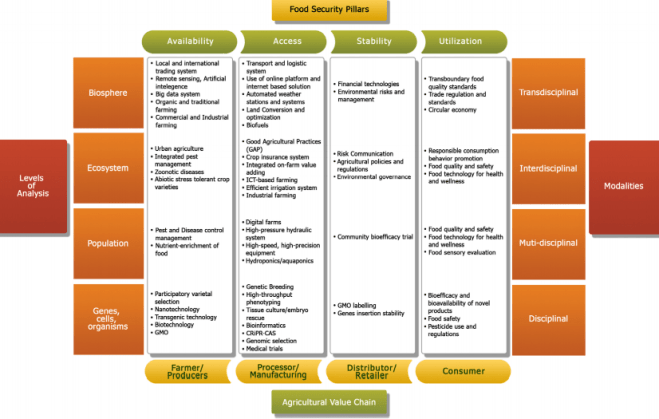
Their recommendation is for HEI’s human capital to contribute to the development of the following priority areas relevant to four pillars of food security:
Food availability— (incomplete list) commercial and industrial farming, organic farming, Big Data system, remote sensing, and artificial intelligence; urban agriculture; integrated pest management; pest and disease control, nutrient-enrichment of food; biotechnology (genetically modified food production);
Access to food —Transport and logistics (to bring food from producer to consumers), use of online and internet based solution, automated weather stations (predicting weather for more stable food production);
Stability of food supply—financial technologies; agricultural policies and regulations (e.g. a ban on GM food restrains food security); and GM food labelling
Utilization of food for nutrition, health and safety—transboundary food quality standards, trade regulation and standards; responsible consumption, food quality and safety, and food technology for health and wellness; bioefficacy and bioavailableit of novel products, and pesticide use and regulations.
Key priority areas for “Knowledge Economy” enhancement in agriculture
To foster this advanced KE economic phase, incentives must be given so that the intellectual capital in HEIs (faculty, researchers) can generate commercialization tools that will meet Filipinos’ imminent needs–food security, in particular, amid the pandemic.
Many agencies considered HEIs are also administered by the government –State Universities and Colleges (SUC). These institutions offer not only college courses but master’s and Ph.D. As part of the academic activities, considered output in HEIs are researches.
Now, such researches must not be done just for academic exercise. But these should reach out to the needs of society— produce food, solve hunger and malnutrition, help farmers develop into profitable entrepreneurs.
While agriculture HEIs in the Philippines have long been established, these institutions need to partner with the government that provides policies and funding for initiatives in technologies.
And their partnership should be with the private sector which has know-how in sustaining economic activities through business and commercial tools.
Agricultural researches should have a “reorientation as seen from business perspective
to afford systemic change of the agriculture sector,” said Gregorio and Ancog.
These are among their eight-point recommendations under an Academe-Industry-Government (AIG) collaborative setup:
Provide incentives so HEIs’ human capital will stimulate generation of more revenue-producing economic activities. The incentives are to be given based on “profit” and four other P’s – people, partnerships, patents, and product.
Re-orient HEIs’ human capital so that they will generate tools in commercialization used in businesses. These are patents in technology (for instance, food and medicine products) and other intellectual property assets (utility model, trademarks—for instance, consumer health, cosmetics, and nutrition products).
HEI human capital’s reorientation must also include expertise on technology transfer systems (business models) and technology business incubation (starting new businesses).
These incentives empower them to partner with venture capitalists, financiers, investors and investment houses that offer IPOs or initial public offerings, and startups/entrepreneurs so their technology will be sold to consumers or end users.
Provide HEIs’ human capital with all they need – grants, financial assistance, conducive policies for them to legally partner with private companies, the industry, and all enterprise stakeholders.
These partnerships should enable them to tap the entire “supply chain” – from production of goods and services, packaging, storage, distribution, logistics, marketing, and retailing to end consumers.
Provide HEI human capital all they need to produce innovative and technologically advanced goods and services. Such production of innovative goods usually come from teams and partnerships of multi-discipline experts. Such partnerships should be encouraged.
“(We should) provide the enabling environment for faculty members and researchers to be encouraged in mutual-learning and co-learning through the establishment of multi-and interdisciplinary research laboratories, centers, and institutes,” said Gregorio and Ancog.
KEI of the World Bank Institute is based on 4 pillars:
a regime that provides incentives for the use of knowledge and in enhancing entrepreneurship;
an educated/skilled population that uses knowledge;
an innovation system of “firms, research centers, universities, consultants that tap a stock of knowledge to meet people’s needs and create technology;” and
use of information and communication technology to share and process information.
KE, also called “post-industrial economy” and related to “information” and “digital” economy, is a migration from the agrarian age and manufacturing (industrial) and service phases of economic development. It taps not just the basic factors of production—labor, capital, land—but largely human intellectual capital.
These are Gregorio-Ancog’s other suggested initiatives that should be under the Academe-Industry-Government collaborative projects:
Resource sharing both in human and financial capital to facilitate strengthened linkage between basic and applied researches with the industry needs.
Designing and implementing digital agriculture infrastructure and open-systems innovation systems across the agricultural supply chains.
“For universities and research organizations managing scientific journals, investment towards real-time online publications or advanced online publication is a must to be relevant in this time where researchers need to publish their research results as early as possible and make it readily accessible to all.”
KE evolved from the tenets of economists particularly Harvard Business School’s Michael Porter who believe that competitive advantage lies in continual innovation arising from technical knowledge. Usually referred to here are knowledge in STEM (Science, Technology, Engineering, and Mathematics) and relevant multi-disciplines practiced by biotechnologists, chemists, biologists, among others.
Models of knowledge economies prevail in “Silicon Valley in California; aerospace and automotive engineering in Munich, Germany; Biotechnology in Hyderabad, India; electronics and digital media in Seoul, South Korea; and petrochemical and energy industry in Brazil,” according to Sanna Ojanpera and co-authors of the “Engagement in the Knowledge Economy: Regional Patterns of Content Creation with a Focus on Sub-Saharan Africa.”
“The need to ensure that research efforts would have significant societal impacts is a philosophy that must be widely upheld. Various modalities of Academe-Industry-Government interconnectivity models need to be explored so it can be customized to their specific needs,” said Gregorio and Ancog. (Melody Mendoza Aguiba)
The Philippine government’s strong import policy has displaced Filipino farmers’ potential broiler sales of a whopping P37 billion for eight years, P14.086 billion in broiler feed, P15.18 billion in “ihaw ihaw” sales, P4.2 billion in logistics, P8 billion in dressing plant operations, and P3.38 billion in jobs loss.
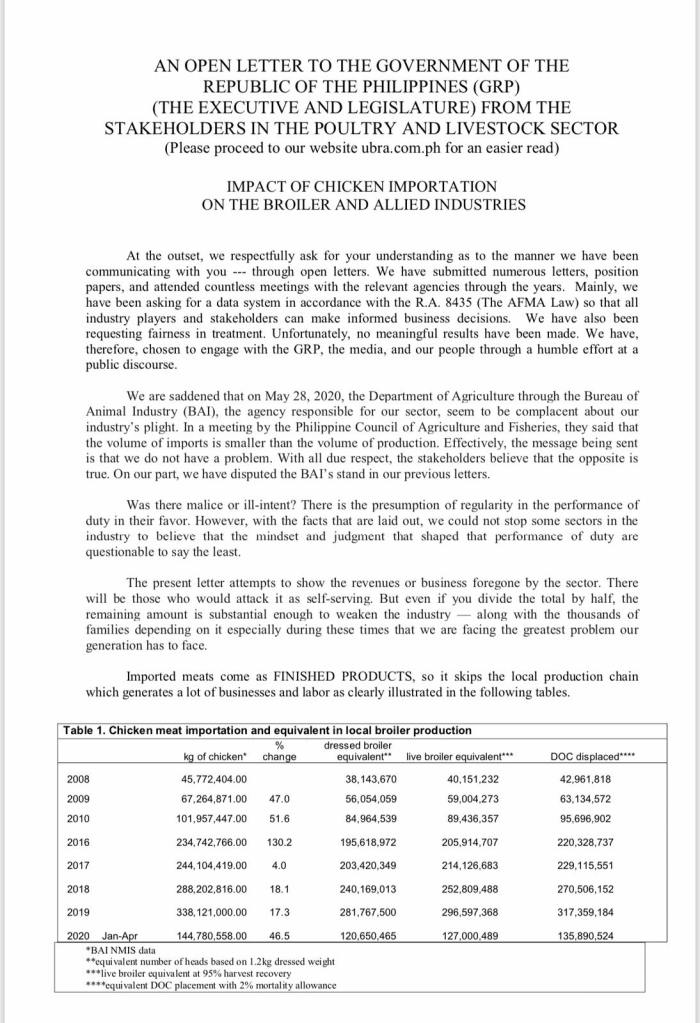
In an open letter desperate for public support, the United Broilers and Raisers Association (UBRA) and the Philippine Chamber of Agriculture and Food Inc. (PCAFI) said they have been compelled to present evidence-based quantifiable data amid recent Department of Agriculture (DA) response to its pleadings against imports.
“We are saddened that on May 28, 2020, the DA through the Bureau of Animal Industry (BAI), the agency responsible for our sector, seems to be complacent about our industry’s plight. In a meeting with PCAF, they said that the volume of imports is smaller than the volume of production,” said Lawyer Jose M. Elias Inciong, UBRA president.
Also signatories to the letter are PCAFI President Danilo V. Fausto and a growing number of nearly 50 other private agriculture association leaders. PCAF stands for Philippine Council of Agriculture and Fisheries, a public-private group hosted by DA.
“The message being sent is that we do not have a problem. The stakeholders believe the opposite is true.”
Sacrificed jobs are huge as “imported meats come as finished products, so it skips the local production chain which generates a lot of businesses and labor.”
These are the import volume in chicken meat and broiler equivalent: 45.77 million kilos, 2008; 67.26 million kilos, 2009; 101.96 million kilos, 2010; 234.74 million kilos, 2016; 244.104 million, 2017; 288.2 million kilos, 2018; 338.12 million kilos, 2019; and 144.78 million kilos, 2020 (January to April).
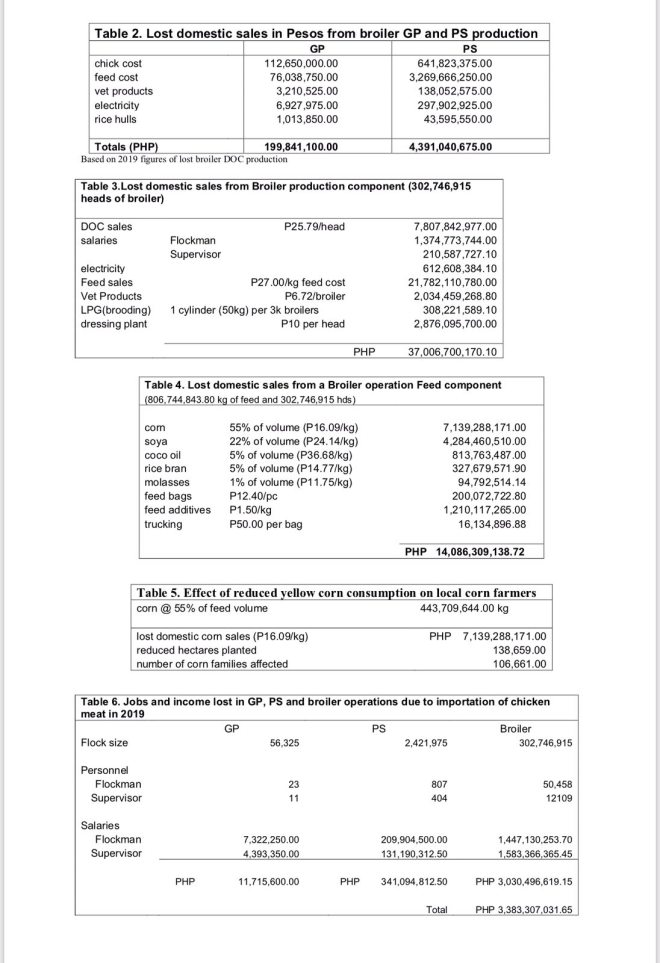
Lost sales from broiler production is broken down into P21.78 billion, feed sales; P7.8 billion, day old chick; P2.88 billion, dressing plant at P10 per head; P2.034 billion, veterinary products; P1.58 billion, salaries; P612.6 million electricity; P308 million, LPG (brooding).
Here are feed components of lost domestic sales from broiler operation: P7.139 billion, corn: P4.284 billion, soya; P1.2 billion, feed additives; P813.76 million, coconut oil; P327.68 million, rice bran; P200 million, feed bags; P94.79 million, molasses; and P16 million, trucking.
Lost domestic sales for corn, P7.139 billion affecting 106,661 Filipino families. Reduced number of hectares of corn land is equivalent to 138,659.
Other authorities, mainly DA officials themselves, continue to question UBRA’s claim on the significance of import volume in order to obliterate the Filipino poultry sector.
“But even if you divide the total by half, the remaining amount is substantial enough to weaken the industry—along with the thousands of families depending on it especially during these times that we are facing the greatest problem our generation has to face.”
Lost income from sales of ihaw ihaw stalls is accounted for by isaw, P5.75 billion; chicken feet or adidas, P2.88 billion; head and neck, P4.31 billion; and betamax or dugo, P2.88 billion.
Reduced dressing operations of 287.61 million heads totaled to a loss of P2.88 billion and by product, P5.18 billion.
Logistics revenue lost consists of hauling, P2.847 billion; delivery, P806.74 million; egg vans to hatchery, P302.75 million; and chick vans, P71.9 million.
Jobs lost represents broiler flock size of 302.742 million affecting 50,458 flockman and 12,109 supervisors with salaries of P1.447 billion for fllockman and P1.583 billion for supervisor.
Another UBRA-PCAFI petition as sanctioned by Republic Act 8435 or the Agriculture and Fisheries Modernization Act (AFMA) is a data system that will enable stakeholders to make informed decisions. Melody Mendoza Aguiba
The private sector lamented government’s lack of fund to finance a P2.8 trillion proposed stimulus package that worsens COVID 19 crisis’s economic impact, sending yearend GDP to a negative growth of 4-6%, further adversely affecting 4.1 million food-poor rural people.
After having hit a negative 0.2% GDP (gross domestic product) in the first quarter, the economy is projected to further decline by a negative GDP growth of 8-10% in the second quarter, 4-6% in the third quarter, and 2-4% in the fourth quarter – putting the economy into a state of recession
“My rough estimate is we will have a negative 4-6% percent GDP growth for the whole year of 2020. Assuming a negative 5% growth due to COVID 19 plus the 7% lost (original GDP growth projection without COVID 19), we will have lost 12% less in GDP,” said PCAFI President Danilo V. Fausto in a webinar hosted by the Procurement and Supply Institute of Asia (PASIA).
Such GDP loss is equivalent to P2 to P2.2 trillion based on the Philippine Statistics Authority’s (PSA) $356.8 billion GDP as of 2019 at P50 to P51 to a dollar conversion, said Fausto, an economist and entrepreneurial founder of DVF Dairy Inc.
Unfortunately, the worst impact will be on those recorded even as of 2018 to be of the highest subsistence level –farmers consisting of 11.5% of the Philippine population. Those in the highest subsistence incidence also include fishers, 8.3% and individuals residing in rural areas, 8%.
The already food-poor people as of 2018 totals to 4.1 million rural residents, 3.2 million children and 2.7 million women.
PCAFI noted that the nominal wage rate in agriculture was P276.03 per day as of 2018. But adjusted for purchasing power due to inflation, this is equivalent to a real wage of just P191.69 per day.
In response to COVID 19’s economic impact, Congress proposed a P2.8 trillion stimulus package consisting of the P1.3 trillion Accelerated Recovery and Investment Stimulus for the Economy of the Philippines (ARISE) and P1.5 trillion for Economic Reduction and Economic Stimulus (CURES).
“Apparently, this cannot be funded since economic managers can only allow a maximum of 9% on the deficit this year, and the current deficit of P1.613 trillion is already equivalent to 8.4% of GDP,” said Fausto.
Fishery wastage observed at fish ports of Bulan in Sorsogon, Masbate Pass, Masbate Bay, Ticao Pass, Burias Pass, and Sibuyan Sea due to COVID 19 lockdown
Nevertheless, PCAFI looks forward to sustained positive impact of some reforms in agriculture implemented particularly the easing of credit access for small farmers by the Land Bank of the Philippines (LBP).
This easier credit access enabled LBP to raise agriculture lending to P236.31 billion in 2019 compared to only P183.4 million in 2017.
Fausto noted LBP’s reforms including simplification of loan application form to one document from 3 documents that are now easier to be filled up through tick boxes.
LBP also cut requirements to only the filing of loan application form and barangay clearance. It shortened loan processing from 10 days to 1 day. It has expanded loan workforce, recruiting more than 1,000 credit specialists deployed throughout towns to directly help farmers.
Still, many banks failed to comply with the Agri-Agra law that mandates banks to allocate 15% of loan portfolio to agriculture and 10% for agrarian reform-related projects.
This deprives the agriculture sector of P734 billion in mandated accessible loan.
Even government’s guarantee program is very limited, making the figure a minuscule 5% compared to the P180 billion guarantee for the real estate sector under the Home Guarantee Corp.
Here are concerns in agriculture that should be addressed in order to raise production and uplift livelihood levels of farmers:
Address farm size fragmentation by managing small farms into larger operating units to overcome liability of “smallness” from land preparation to sourcing of inputs, product processing and transport, and marketing.
Achieve economies of scale through strengthening of farmers’ associations and irrigators’ associations, expanding contract growing, and raising success of agrarian reform.
“With contract growing, the corporate integrator programs the production schedule, be assured of his raw materials, and the farmer gets to sell all the produce he was contracted for at a fair market price,” Fausto said.
Address lack of productivity by enhancing linkages of primary producers to markets that will solve these problems.
“Supermarkets, fast food outlets, and convenience stores are taking business away from the traditional wet markets, carinderias, and sari sari stores,” said Fausto.
These similar problems should be resolved– seasonality of farm produce (the bulk comes to the market at the same time, sending price to collapse); lack of prior marketing arrangements between farmers and buyers; lack of agronomic practices (for flowering, harvesting) to make harvest year-round; and poor schedule of seeding, fertilization and irrigation in order to meet market timing needs.
Fisheries sector also faces huge development deficiencies.
“We have 220 million hectares of territorial waters including our exclusive economic zone (EEZ), 750,000 hectares of inland waters (lakes, rivers, reservoirs), and a coastline of 17,460 kilometers,” said Fausto.
The Department of Agriculture (DA) proposed a P280 billion budget for 2021, a 333% jump from the P64.7 billion in 2020.
It includes budget for Plant Plant Plant, rice buffering by the National Food Authority, upscaling of Kadiwa ni Ani at Kita, distribution of seeds and fertilizer, enhancing livestock and poultry subsectors and of small ruminant, increased white corn production for snack and supplemental food, expansion of coconut production, coconut replanting, development of fisheries ( aquaponics, aquaculture, fish cages), and urban farming and gulayan in schools and barangay.
I also includes a cash for work program and P20 billion for food logistics and food market even as supply and logistics disruption occurred due to the COVID 19 crisis and lockdown.
However, even the proposed budget appears to be just a “wish list.”
The agriculture sector has been plagued by food movement and transportation problems resulting in huge losses from throwing away of rotting vegetables from Benguet and other provinces and of wasted fish production from fish ports of Bulan in Sorsogon, Masbate Pass, Masbate Bay, Ticao Pass, Burias Pass, and Sibuyan Sea.
The logistics problem has even been worsened by inability to transport animal and meat products from Visayas and Mindanao to Luzon due to the African swine fever (ASF) quarantine restrictions. (Melody Mendoza Aguiba)
The private sector has elevated to President Duterte, Senate and Lower House a pleading against the Department of Agriculture’s (DA) “alacrity” to give in to massive imports to “feign empty concern for consumers” and abject refusal to find World Trade Organization (WTO)-sanctioned “trade remedies.”
With an expanding number of agriculture sector advocates for reforms, the United Broilers and Raisers Association (UBRA), along with 25 signatories, advanced their open letter to Malacanang and the legislature. This amid DA’s silence to eight radical reforms that will uplift not only consumers’ welfare, but also Filipino farmers’.
It is counterintuitive that DA uses consumer protection to rationalize surging imports.
Illogically, it fails to address the flagrant disconnect between price of chicken in supermarkets and wet markets and the farmgate price received as compensation of farmers.
As chicken farmgate price reeled down to P30 per kilo during the lockdown, price of chicken reaching consumers remained high at P150 to P170 per kilo during the Covid 19 ECQ (enhanced community quarantine). It indicates traders and importers are the ones taking advantage of windfall profit from price difference. It is neither consumers, nor farmers.
Unfortunately, this case applies even to other agricultural commodities such as rice.
“This behavior (alacrity to import) is always couched in a supposed concern for consumers. The DA, however, has never effectively addressed the disconnect between farmgate prices and retail prices. Thus, it is an empty concern,” said UBRA in its letter to President Duterte.
UBRA testifies to this alacrity to import via a recorded video on a meeting with DA-Bureau of Animal Industry (BAI) on May 27, 2020 (link attached).
With the Covid 19 crisis, revenue sources the Philippines depends upon—Overseas Filipino Workers (OFW) and business process outsourcing (BPO)—are proving to be unstable.
It is thus urgent to prioritize agriculture.
“For decades, OFW remittances, BPO revenues, and tourism have propped up our economy at great sacrifice by the young men and women, especially millennials, who work in these fields. These are now challenged not only by Covid 19 but also by trends that may undermine its sustainability,” according to UBRA.
“Other countries are seeking to provide work for their own people. BPOs are threatened by digitalization which includes artificial intelligence, and robotics. Tourism’s horizon is murky in the near and medium term. A resilient economy with a population our size needs agriculture and manufacturing.”
Desperate about the neglect of agriculture for many years, the UBRA officials led by Gregorio A. San Diego Jr, chairman, and Lawyer Elias Jose M. Inciong, president, said DA never had a “long term commitment” to the sector.
It has never at all implemented the Agriculture and Fisheries Modernization Act (AFMA, RA 8435 of 1997).
“The institution supposed to lead the sector to success, the DA, has only resorted to what Mckinsey & Company calls ‘short termism,’” said San Diego and Inciong.
“Unlike other countries which have had success in agriculture as members of the WTO, the DA has consistently used our trade commitments as an excuse to stand aside and let stakeholders be damaged by imports from countries with heavily subsidized agricultural systems.”
In a sigh of hopelessness, the poultry raisers asked, “How come DA has never shown interest in finding out how other countries managed to protect their agricultural sector for the long term? Every administration has committed to develop the sector but the results have been dismal.”
Knowing Filipino farmers are poor, government must act speedily in implementing trade remedies once world market points to dumping of cheap, bulkier volume of imports that render more farmers impoverished. Instead, it speedily resorts to importation.
Trade remedies such as special safeguards measure (SSG) are sanctioned by WTO and the Safeguard Measures Act (RA8800) to “protect domestic industries …from increased imports which cause or threaten to cause serious injury to domestic industries.”
“The DA, must be able to intervene especially in extreme cases of oversupply brought about by Covid 19 pandemic or (when there is) abnormally low international commodity prices,” said UBRA.
“The government acts with alacrity when supply is tight by resorting to importation. In times of oversupply, should not the government act just as fast by stopping importation or reducing supply by some other mechanism?”
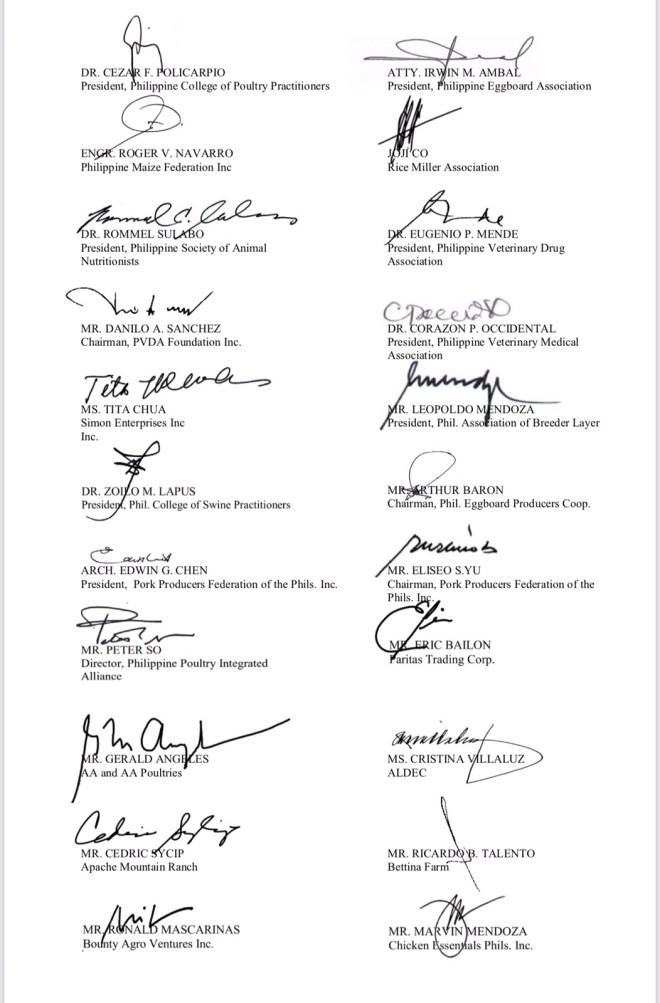
Signatories to the letter to Malacanang include Phil. Chamber of Agriculture and Food Inc (Danilo V. Fausto); Nat’l. Federation of Hog Farmers (Chester Warren Y. Tan); Phil. Assn of Feedmillers Inc. (Stephanie Nicole S. Garcia); Phil Maize Federation Inc. (Roger V. Navarro); Phil. College of Poultry Practitioners (Dr.Cesar F. POlicarpio); Phil. Veterinary Drug Assn (Dr. Eugenio P. Mende); Phil Eggboard Assn (Atty. Irwin M. Ambal); PVDA Found Inc. (Danilo A. Sanchez); and Phil. Veterinary Medical Assn (Dr. Corazon P. Occidental).
The rest are Simon Enterprises INc. (Tita Chua); Phil. Assn of Breeder Layer Inc (Leopoldo Mendoza); Phil. Eggboard Producers Coop (Arthur Baron); PROPORK (Edwin G. Chen); Phil. Poultry Integrated Alliance (Peter So); Paritas Trading Corp. (Eric Bailon); ALDEC (Cristina Villaluz); Apache Mountain Ranch (Cedric Sycip); Bettina Farm (Ricardo B. Talento); Bounty Agro Ventures Inc. (Ronald Mascarinas); Chicumi Farms (Ricardo C. Clarin Jr); and Chicken EssentialsPhils Inc (Marvin Mendoza).
Here are their eight-point “Call for Reforms by the Stakeholders in the Poultry and Livestock Sectors to the Executive and Legislature:”
1. The urgent need for decentralization of functions. There should be check and balance. Everything is lodged with the BAI. Department of Trade and Industry (DTI) should be involved in the issuance of Sanitary and Phytosanitary Import Clearance (SPS IC). Agencies like the Department of Science and Technology and the Philippine Statistics Authority should do gathering, analysis, and publication of data so that stakeholders can make informed business decisions. Presently, everyone is blind, especially the government, in terms of both local and international data.
2. Reformattting of the SPS IC to simplify and facilitate collection of tariffs and duties and their reporting.
3. Address under-evaluation through WTO-allowed methods and the regular comparison and publication of the composition and volume of exports by country of origin as against the data of BAI and Bureau of Customs. This minimizes misdeclaration of products.
4. Conduct studies on trade remedies not only for poultry and livestock but for the entire agri-fisheries sector. What did other countries do which encouraged a commitment for the long term from government and stakeholders?
5. Establish confidence in the trading system of chicken meat by addressing the alleged abuses in Customs Bonded Warehouse (CBW) 0% tariff privileges. The BAI and NMIS (National Meat Inspection System) have not presented any data on this for years. UBRA has just asked DTI this data.
6.Construct cold-chain-ready quarantine facilities at the Customs border so that inspection can be done before the payment of tariffs and duties. The current so-called 2nd Border Control does not work. The system is below international standards and has allowed the entry of diseases such as ASF (African swine flu), bird flu, and the smuggling of prohibited pork and poultry products from China.
7. Support the corn sector to enable poultry and livestock sectors’ access to affordable yellow corn for feeds when there are no corn harvests.
8. Address the disconnect between farmgate and retail prices either through a more effective enforcement of the Price Act and a program of consumer subsidies similar to the program provided in the series of Farm Bills in the United States.
“The reform agenda is necessary to avoid a drastic and involuntary cut in production caused by heavy losses. There will be a domino impact on the feed milling industry, corn farmers, rice farmers by way of their rice bran, producers of coco oil, molasses, fish meal, suppliers of soya bean meal, mineral sources, and veterinary products.”
The same malevolent effect will be on the “agri-processing of the value chain such as cutting and marination all the way to agriservices like food service outlets, groceries, cold storage, transportation, warehousing, packaging, and financing.” (Melody Mendoza Aguiba)

















 Growth Features
