Emergency trading centers in barangays urged to be put up by govt to to ensure consumers healthful food amid Covid 19

March 30, 2020

As vegetables and other farm produce are left wasted due amid Covid 19 lockdown, the private sector urged government to put up “emergency” trading centers down to the barangay to ensure consumers supply of healthful food.

   The Philippine Chamber of Agriculture and Food (PCAFI) said the establishment of emergency testing centers is “urgent” as vegetables in Benguet are getting wasted away as many roads in barangays have been blocked due to Covid 19.

   Food producers should also be allowed to take the lead in this supply system so as to widen participation in the distribution of needed goods—ensuring food security. 

   “Emergency trading centers  in barangays and subdivisions nearest to consumers will give people access to the food they need while enhanced community quarantine is in effect. Mobile and rolling stores should be immediately dispatched. The agribusiness sector, unhampered, must take the lead,” said PCAFI President Danilo V. Fausto.
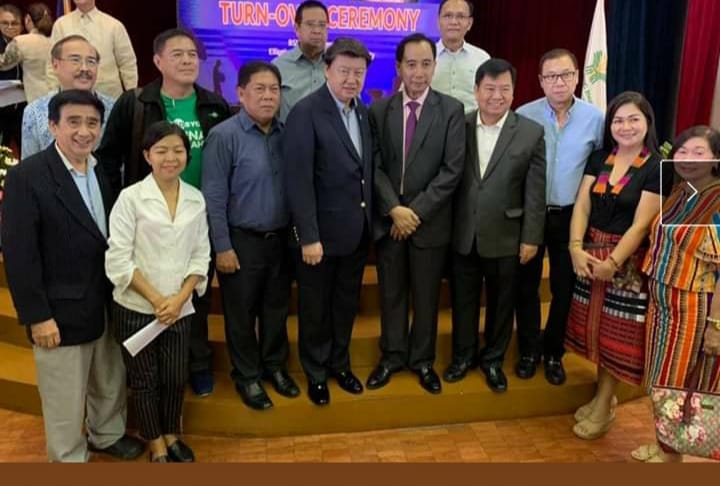
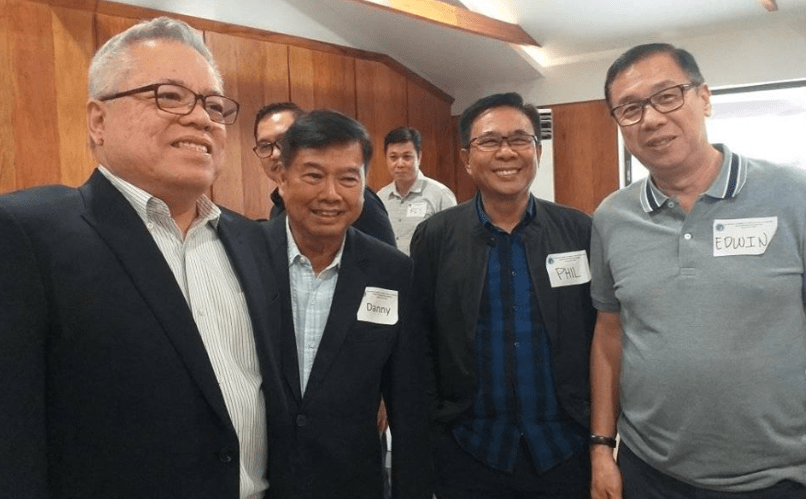
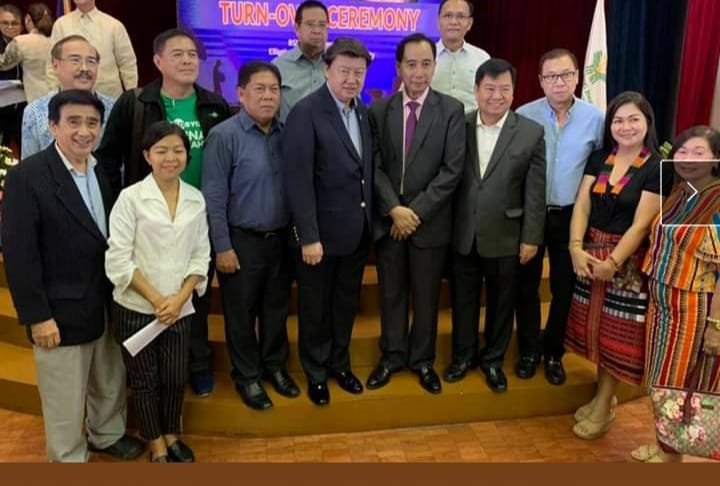
PCAFI led by Danilo V. Fausto, president, together with Department of Agriculture Secretary William D. Dar

The trading centers will supply more nutrients to Filipino consumers than just what is available in canned goods which are what is being distributed by barangays.

   The emergency trading centers will also spare farmers from further impoverished situation amid Covid 19. The same trading centers will also be used as place for sorting, packaging, marketing, and delivery of farm produce whenever found in food-producing areas.

   “Marketing, distribution and delivery efforts should be augmented with the help of government, the LGUs, and even by the military to ensure that food reaches the consumers and market of the farmers’ produced is assured.”

   Amid the consequential crisis from the pandemic,   PCAFI also stressed the nation should not forget existing quarantine measures against the African swine fever (ASF), among others, as this may be neglected.

    “Complications on quarantine protocol: ASF for swine, Avian Flu for poultry and Fall army worm for corn could be left unattended due to the pandemic on COVID-19.

   “Some local government units (LGUs) are defiant to the executive orders and laws that were promulgated to ensure safety and availability of food for their constituents. LGUs should be forced, with the help of the police and military to let go of their excess food produced in their area in order to ensure their availability to other parts of the country.”

   These are other concerns PCAFI urged to be implemented:

  1. The value chain should be left unhampered. Production and agribusiness should be protected and supported and their operations encouraged to normalize and allow free flow of goods and services to feed the people
  2.  Value chain requires the needed manpower in the supermarkets like drivers and helpers, merchandisers. They should not be blocked at the checkpoints. Factories producing the packaging materials should be allowed to operate.
  3. Production inputs like chicks, piglets, fingerlings, seeds, feeds, fertilizer and irrigation should be made available and its delivery to the farmer producers assured this coming production and planting season. Failure to do this, there will be no new planting and production for the next season and will result in shortage of food for the next semester and Christmas season.
  4. The food flow should start from the community or barangay to feed the people in the particular barangay. Any excess from the production in the barangay, it should be exported to the other barangays, municipalities, city or province, and make the farm produce available to areas where there are none.
  5. Ready market should be provided to the current farm harvest and income should be guaranteed for the farmer producers. If markets and income will not be assured, farmers will stop producing for the next cropping season (both for rice, vegetables, meat, poultry and fish).
  6. Farm produce should be able to reach the consumers. In the absence of traders to bridge the gap between the producers and consumers, the government should intervene to provide logistical requirements, delivery system and marketing support for the producers. Melody Mendoza Aguiba

National Taiwan University scholarship for aspiring agri technocrats-entrepreneurs

Taiwan tea farm. Credit: Tripstation

March 28, 2020

Aspiring Filipino agriculture technocrats or entrepreneurs have been granted a scholarship opportunity to hone skills at the National Taiwan University (NTU) in a country venue that leads  Asia  in agriculture modernization,-tourism, and technology.

   The Southeast Asian Regional Center for Graduate Study in Agriculture (SEARCA), in collaboration with NTU, has opened application for scholarship on an inaugural course, Master Program in Global Agriculture Technology and Genomic Science (ATGS).

   Dr. Glenn B. Gregorio, SEARCA Director., said the NTU-SEARCA Joint Scholarship Program for Global ATGS aims to cultivate agricultural professional talents, encourage academic excellence, and promote the research and development of agriculture within Southeast Asia.”

“The program also provides an opportunity for internship and field visits in line with NTU’s efforts to connect with industries and promote hands-on training. The program’s curriculum is interdisciplinary to develop global bio-agricultural talents that are responsive to the needs of the agriculture sector and with advanced knowledge and practical skills on contemporary agriculture,” said Dr. Maria Cristeta N. Cuaresma, SEARCA Program Head for Graduate Education and Institutional Development.

    Offered by the NTU International College, Dr. Cuaresma said the Global ATGS aims to provide a deeper understanding on smart farming technology, genome science research, and breeding science and technology.

   She added that keystone courses include global agriculture technology foresight, mathematical method for life science, and scientific writing.

   Under Digital Agriculture Technology, students will explore the application of blockchain technology in agriculture, process control for smart farming, plant factory, smart technology applied to livestock production, and agriculture waste treatment engineering.

   In Genome Science, discussions will be on genetics and genomics, crop genomic breeding, advanced plant molecular biology, core biotechnology: DNA, RNA, and protein, special topics in poultry production, and medicine and products processing.

   For Breeding Science and Technology, studies will be on the agriculture of Taiwan, introduction to bioinformatics, crop modeling, and plant phenotyping.

   The program is offered in English. It requires students to finish their thesis and at least 24 credits of coursework which includes 12 credits of compulsory courses and 12 credits of elective courses to earn the degree.

   Dr. Gregorio said prior to collaborating on this joint scholarship, SEARCA and NTU have worked together in other academic activities under the auspices of the Southeast Asian University Consortium for Graduate Education in Agriculture and Natural Resources (UC).

   SEARCA initiated the UC in 1989 and has since served as its secretariat, while NTU is a UC associate member.

   The opportunity is also open to other ASEAN (Association of Southeast Asian Nations) nationals– nationals of Brunei Darussalam, Cambodia, Indonesia, Laos, Malaysia, Myanmar, Singapore, Thailand, Timor-Leste, and Vietnam.

Agri think tank strengthens partnerships on School +Home Garden needed in crises like Covid 19

Agri think tank strengthens partnerships on School +Home Garden needed in crises like Covid 19

March 26, 2020

An agricultural think-tank has strengthened its partnerships on its “School Plus Home Garden Project” (S+HGP) as farming is evidently  a pressing need in light of crises like Covid 19 that poses critical food security concerns especially in urban areas.

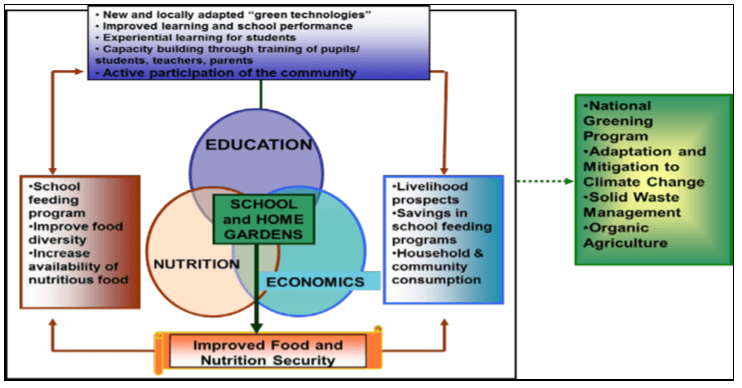
   While old school garden programs used to focus on just “educating” children on agriculture, the S+HGP of the Southeast Asian Regional Center for Graduate Study and Research in AGriculture (SEARCA) also stresses nutrition and economic and overall welfare of learners.

   Thus, its application includes homes even in urban areas that are faced with food security problems particularly in crises as the lockdowns. 

   Incidentally, lockdowns—when people could hardly go out of their homes just to buy food–  are implemented globally may lengthen indefinitely for a period of time.

   SEARCA is now replicating its S+HGP through partnerships, primarily with the Department of Education (DepEd).

   And this is open to other institutions even in urban areas that find it critically important to keep their own food gardens for food, sustainability—and many other purposes.

School+Home Garden model together with Department of Agriculture, DepEd, and LGUs

   In its pilot work on S+HGP in six schools in Laguna, SEARCA found out even parents of schoolchildren learned the multiple importance of home gardens.”

   “More than just establishing home gardens, the parents developed a greater sense of responsibility to ensure good nutrition for their children, while also saving on food expenses. It highlighted the multi-functionality of school gardens,” according to Blesilda M. Calub, Leila S. Africa, and Bessie M. Burgos—SEARCA resource persons.

   Such “multi-functionality” of great significance includes home gardens’ use to promote environmental sustainability, organic agriculture, edible landscaping, learning about climate change, and solid waste management (use of agricultural wastes as organic fertilizer).

   The S+HGP easily expanded. From the 6 pilot schools in Laguna, S+HGP is also now in 2 adopted schools, 23 sister schools, and 3 brother schools, according to the SEARCA officials, along with team members Henry M. Custodio, Shun Nan Chiang, Ann Gale C. Valles, Elson IanNyl E. gAling, and Maria Katrina R. Punto

   The S+HGP also stresses the important role in the local economy of local government units (LGU) that can provide funds for a more unified, LGU wide home gardening.

   “Plus in S+HGP promotes year-round production of nutritious food from both the school and home gardens… and (involving) LGUs to allocate funds, providing capacity building initiatives and services to maintain the school gardens or helping parents establish home gardens,” said SEARCA.

   SEARCA Director Dr. Glenn B. Gregorio said an important function of home and school gardens is in opening minds of the youth in making them appreciate farming or agri-preneurship as a potential career, business, or profession.

  Gregorio has pushed for SEARCA’s partnership with DepEd on including an agriculture subject or course into DepEd’s K-12 curriculum, particularly in senior high school, where youngsters are trained on technical-vocational skills.

   Under the pilot study, the SEARCA program aimed to increase diversity and availability of food to meet the nutritional needs of children, increase knowledge and improve skills of students, teachers, and parents on food production and nutrition, reduce food expenses, create savings, and provide an alternative source of income for families to alleviate poverty.

Multi functions of Home+School Garden Program

Pilot program results

   Under the pilot program, teachers learned to prepare cropping calendars, the sequence of plant specific crops based on good timing so harvest can be year-round. The top 10 most produced crops were mustard, pechay, okra, radish, lettuce, kulitis (amarathn), papaya, upo, patola, and talinum.

   These are other positive results of the program, according to SEARCA report:

  • The improved supply quality of fresh vegetables in the school-year studied had an estimated aggregate yield of 1,396 kilos valued at P42,559. Harvest per school ranged from 87-465 kilos depending on garden area with 19 to 77 percent used for school feeding, 0.5-36 percent shared with pupils and parent helpers, and 1-45 percent sold to other parents and teachers or cooked in class.
  • There were significant increases in height, weight, and Body Mass Index (of participating students), translating to 33 percent rehabilitation rate from wasted to normal nutritional status among the pilot elementary schools and 44 percent rehabilitation rate in the secondary school.
  •  There was an increase from 49 to 55 percent in the proportion for studetns who ate vegetables.
  •  The program became a venue for learning environmental sustainability. Topics included producing organic fertilizer from segregated biodegradable wastes, and mulching to protect soil from erosion, conserve soil moisture, control weeds, and increase soil organic matter for soil carbon build up. The mini-greenhouse provided by the project was designed with a rainwater collection system to showcase a simple climate-smart strategy to adapt to climate change.
Grade school pupils are able to eat nutritious vegetables, learn farming, and find work fulfillment from the School + Home Garden Program

Garden tools

   The S+HGP provided its participants garden inputs and tools,  a mini greenhouse with rainwater collection system for schools, garden inputs, and tools. From these, the schools produced vegetable seedlings year-round.

   “This used to be a major constraint because their practice of direct seeding exposed the seeds to too much rain, sunlight, or to insect pests. Capacity building for teachers included training on garden planning, edible landscaping, organic vegetable production and pest management, and vermicomposting,” SEARCA reported.

    In Alaminos, the pilot school was provided by the LGU with a vermicomposting shed.

   The S+HGP was funded by SEARCA and the Asian Development Bank-Japan Fund for Poverty Reduction through the SEAMEO College.

   Meanwhile, SEARCA’s K-12 curriculum program already prepares youngsters for a more in-depth professional agri-preneurship career.

   “The programs include faculty development — offering graduate scholarships in agriculture and allied degrees, short courses on agribusiness and agri-entrepreneurial mindset and education, and continuing education and professional licensure exams review services,” Gregorio said.

“The program shall embed upgraded agri-business context and examples in the K to 12 curriculum”.

   DepEd Secretary Leonor M. Briones said the DepEd will explore urban-based gardening for schools in urban areas like gardening on rooftops and pots.

“Make agriculture sexy like grafting. That is very interesting, kasi may (application) ng science iyan (Science has an application on that). Hindi ka lang nagtatanim at gumagawa ng (You are not just planting and making) organic fertilizers,” she added.

   Briones reported that there are existing schools with little farms and school sites bigger in size and even have tilapia farms.

   Gregorio said the Southeast Asian population is young — providing their respective countries many benefits because “they can become good leaders and the catalyst for economic, social, and cultural development” Melody Mendoza Aguiba

Private sector fears threat of massive buyout of farm land due to REIT revisions

March 16, 2020

The private sector has expressed fear over imminent threat of massive buyout of farm land arising from the revisions in the Real Estate Investment Trust Act (REIT) that could leave more farmers jobless.

   Despite envisioned intensified economic development to be brought by the revised REIT Act of 2009, the Philippine Chamber of Agriculture and Food Inc. (PCAFI) has expressed fear over imminent destruction of agricultural lands.  These can be the cheapest land up for sale for developers.

   “The REIT is a mode of floating in the stock market shares of properties. The (revised) law is now reducing public ownership of a REIT to 33 percent (enabling increased control of private companies).  Therefore all developers – Ayala, Megaworld, Vistaland, Robinson’s Land—everybody is now up to develop more lands,” said PCAFI President Danilo V. Fausto.

   “You will see massive acquisition of land— (possibly even including big farm lands) in Central Luzon.  Where will they get the land? From farmers losing in rice.”

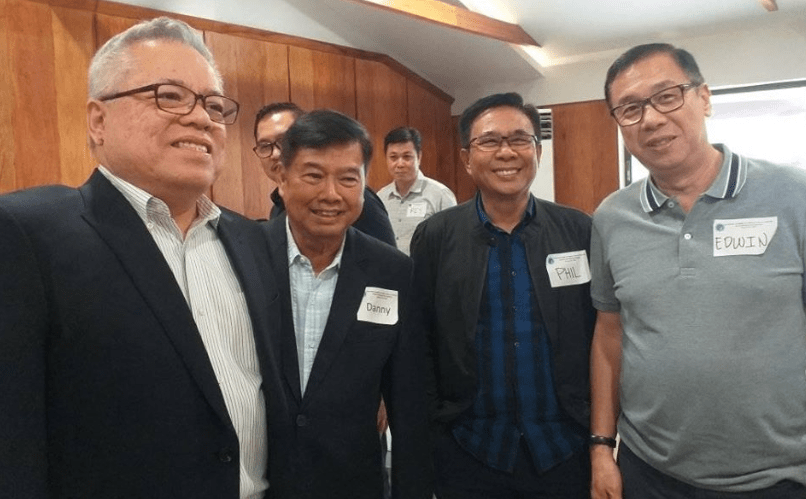
Private agriculture sector leaders led by PCAFI President Danilo V. Fausto (second from left) push for agro-industrial development with Trade Secretary Ramon Lopez (leftmost) as audience.

   Incidentally, the Rice Tariffication Act (RTA) implemented last year appears to be supporting REIT as it has rendered many rice Filipino farmers bankrupt.

   “What is happening is there will be malls inside a vast track of land. In the next century, there will no more be land for food,” he said.

   The revised REIT IRR took effect last February 7. The law, as of 2011, was imposing upon REITs to offer shares to public a minimum of 40 percent of the outstanding capital stock for the first year.  This minimum public ownership (MPO) should be raised to 67 percent within three years from listing.

   However, this high MPO discouraged land developers as they would barely have control over the venture with a measly 33 percent.

   But the revision now encourages massive real estate development. However, this makes a despicable picture for farms.

   Therefore, PCAFI is pressing government to offer a compromise by raising investments in farm development.

   Fausto said government should give agriculture a similar support since it is the backbone of the economy and is a source of raw materials for industrial development.

   Particularly, government should pour money into guarantee for farm production in order to encourage banks and investors to lend to agriculture.  

   “The government should also develop farm lands (along with real estate lands). You look at the housing sector.  It receives P180 billion in guarantee.  But how much is the guarantee for agriculture? Only P5 billion. So, I’m asking them (policymakers), ‘Can you eat concrete walls?’”

   While government is investing huge amount for Build Build Build including farm-to-market roads, this will just lead to massive conversion of farm lands into residential-and commercial lands without the support for farm production.

   “Farm-to-market roads accelerate delivery of produce to market.  But if you do not have goods to deliver, you will just accelerate sale of farm lands to real estate developers,” said Fausto.

   “The REIT  is a massive accumulation of capital to develop lands. We can’t stop that anymore.  But why don’t we have a balance? Let’s develop lands, but also develop agriculture production so you can feed people in call centers,” he said.

   PCAFI is also pushing for the immediate passage of the Land Use Act which will prevent massive conversion of agricultural lands into residential-commercial areas.  

   Conversion is feared even of irrigated areas where government already put in huge investments.

   Unfortunately,even irrigated areas are subject to threat of  conversion into residential-commercial areas just by the passage of an ordinance by local government officials.

   Fausto said the Land Use Act will solidify the presence of investors in agriculture.

   “Our investors will have stability with Land Use Act. They’re putting in millions and billions in investments.  But at the end of the day, their land may be converted because we don’t have a proper land use law.  Lands that are perfectly productive should remain producing food for our country,” said Fausto.

   Without the Land Use Act, farm companies that invest huge amount for poultry or livestock farms and processing facilities may suffer losses from land conversion ordinances recklessly issued by influential government officials.  Melody Mendoza Aguiba

SEARCA pushes for favourable biotechnology regulations amid calls for Golden Rice permit revocation

Pro Vitamin A-rich Golden Rice. Image credit: International Rice Research Institute

December 30, 2019

ASEAN’s farm research center SEARCA is boosting support for  favourable agri-biotechnology regulatory policies amid local calls for the revocation of the commercial permit of pro-Vitamin A-rich Golden Rice.

   Believing agri-biotechnology will be key to food security and upliftment of farmers’ lives,   the Southeast Asian Regional Center for Graduate Study and Research in Agriculture said it has

 partnered with three expert groups for this program to boost expert knowledge in regulations on Living Modified Organisms (LMOs).   LMOs include farm products more known to be the controversial GMOs (genetically modified organisms).

   This is through the opening of the program “Second Asian Course on Agribiotechnology.”

   Despite safety questions on these biotechnology products, SEARCA deems it important to harness the fully potential of agri-biotechnology through “effective communication and science-based regulatory frameworks.”

   SEARCA Director and National Academician Glenn B. Gregorio, highlighted SEARCA’s important role in advancing science-based innovations to address poverty and food security.

   “We stand behind products of agribiotechnology that increase agricultural productivity to feed a growing population in the midst of dwindling natural resources and erratic changes in climate,” Gregorio said. 

   “Due attention must be given to our resource-poor farmers by providing them access to information, best practices, and new technologies that gives them a fighting chance to cope with the many challenges they face and to open up better opportunities for them and their families so that they can have better quality lives,” said Gregorio. 

   According to Dr. Mahaletchumy Arujanan, ISAAA Global Coordinator, “we organized this training program to bring our Asian stakeholders updated information and hands-on experience on agribiotechnology, exercises on food/feed safety assessment, and tips on strategic communication, and risk management and communication.” 

   This year’s Asian Short Course on Agribiotechnology gathers 25 participants from both public and private sectors of eight countries. These are China, Indonesia, Malaysia, Pakistan, the Philippines, Taiwan, Thailand, and Vietnam.  

   SEARCA’s partnership is with the International Service for the Acquisition of Agribiotech Applications (ISAAA), Malaysian Biotechnology Information Center, and Monash University.    

   The program focuses on Agribiotechnology, Biotechnology Regulation, and Communication. 

   While government has just approved permit for use for food, feed, and processing of Golden Rice, Greenpeace  has reportedly filed a petition for the permit’s revocation.

   Golden Rice has been questioned by interest groups due to the technology that inserted a gene into the grain that enables the staple to produce increased Vitamin A, helping reduce massive Vitamin A-deficiency (VAD).

    It is targeted at preventing blindness that develops in around 500,000 people, mainly children, yearly, reported the Golden Rice Humanitarian Board (GRHB)

   “Nearly nine million children die of malnutrion every year. Vitamin A deficiency (VAD) severely affects their immune system, hence it is involved in many of these children’s deaths in the guise of multiple diseases. Malaria deaths in children under five years of age has been linked with deficiencies in the intake of protein, vitamin A and zinc,” said the board.

   The rice technology will have huge economic impact for poor farmers as they no longer have to invest more into the seed.  The technology is being offered for free by humanitarian groups that helped its development. 

   Developers include Sygenta, the Philippine Rice Research Institute and International Rice Research Institute, among others.

   “The technology is built into each and every harvested seed, and does not require any additional investment. Let’s consider the potential of a single Golden Rice seed: a single plant will produce in the order of 1,000 seeds; within four generations or less than two years, that one plant will have generated seeds (amounting to more than 10to the twelfth power)”.

   “This represents up to 28-thousand metric tons of rice, which would be already sufficient to feed 100-thousand poor people for one year,” said the GRHB. Melody Mendoza Aguiba

Economists, rice leaders: Sustain rice tariffication, but guarantee farmers’ support, correct trade imbalances– rice hoarding, illegal trading, pricing; form farmer alliances

Dr. Glenn B. Gregorio (fifth from left), SEARCA director, leads forum on Rice Tariffication Law

December 4, 2019

Economists and rice sector leaders have pushed for mixed policy recommendations in light of the rice tarification law (RTL) — pressing for sustained implementation yet strong and “guaranteed” farmer support, or the RTL may turn to be “disastrous.”

   Safety nets for the protection of farmers are of prime importance as these apparently have not been installed as evidenced by farmers’ poor plight from palay’s collapsing price.    

   This has been raised during the “Regional Implications in the Philippines’ RTL” forum organized by the Southeast Asian Regional Center for Graduate Study and Research in Agriculture (SEARCA). 
   “The challenges we always face every cropping season relative to systemic barriers to farmers’ income  were not addressed head on in the RTL,” said Cresencio C. Paez, director of Asian Farmers Association for Rural Sustainable Development.

   “Safety nets for the protection of the farmers and consuming public were not taken into account concretely and strongly. A lot is said about promises. (But there is a need for) ‘guarantee’ of protection.”

   The challenges waiting to be addressed, Paez said,  amid the RTL’s implementation are “price volatility, land productivity, climate change’s effects, market power which involves cartel (traders hoarding rice) resulting in market abnormalities, governance, corruption, weak government agencies, and faulty extension delivery.” 

   “The RTL, if not well calibrated in its implementation, will be disastrous, and it is now happening this early,” said Paez at the SEARCA forum.

   SEARCA, in its mandate to help upgrade graduate education in agriculture in South East Asian countries, believes the vision toward a common ASEAN (Association of Southeast Asian Nations) market is steering farms to form regional alliances. 

   That leads to“promoting and strengthening intra-ASEAN trade.” A liberalized rice sector under the RTL regime readies Philippines   in such globalized trade,

   Dr. Glenn B. Gregorio, SEARCA director, said government should have a system by which the
“right price of the right rice” can be determined. 

   This has significant implication for both the farmers and consumers, Gregorio said.

   Farmers depend on the right price of rice for their income and livelihood.  Consumers likewise depend on the right price of rice for their economical consumption of the staple as an important factor in keeping a desirable standard of living.  

   The ASEAN Plus Three Emergency Rice Reserve (APTERR), designed to beef up food security in emergencies in among ASEAN countries, should be sustained, although threatened, with the RTL.

   Jansinee Kankaew of the APTERR Secretariat, said the National Food Authority (NFA)’ s function has been altered as a result of the RTL.  This may adversely affect implementation of APTERR. 

   Thus, the APTERR program should be maintained for emergency purposes amid the RTL, Kankaew said at the SEARCA forum.

   APTERR is a reserve fund of 787,000 metric tons (MT) contributed by ASEAN members for emergency use .  Philippines contributes 12,000 MT of rice for this reserve.

   Jerry E. Pacturan International Fund for Agricultural Development country program officer, said the RTL is in track in supporting rural transformation and modernization. 

   “It will foster better use of resources, higher productivity, farm consolidation, mechanization of the rice sector, and improved focus on suitable rice areas,” he said at the SEARCA forum.

   Nevertheless, government should have a “more responsive strategy” so that vision toward diversification of the agriculture sector will be a reality.  With diversified agriculture, farmers will be able to shift or add growing of more profitable high value crops—fruits and vegetables–  and earn higher income.

   “If resources are managed properly and government focuses equal attention on other high value crops that the country has competitive advantage in,  a highly productive, quality-oriented, product-differentiated, and modernized rice industry will improve agriculture performance,” said Pacturan.

   The country may even be able to export specialty and heirloom rice from upland farms, he said.

   Dr. Ramon L. Clarete of the UP School of Economics said that there has been initial shock as Philippines appears imported rice this year at a higher 10% of  total consumption.

   That is a significant jump compared to just 5-7% imports in previous years. 

   Yet this import percentage will likely no longer exceed 15%, Clarete said.

    This is as the rice sector steps up to demands of competitiveness as a result of the RTL

   “The import liberalization may cause higher productivity to local rice farms and efficiency along its local rice value chains– milling and logistics. We will retire those inefficient and marginal rice farms, and what’s left would be the efficient farms. Old rice mills would have to go.  Like Cambodia the remaining rice millers invest in modern rice mills and much larger storage and other post-harvest facilities,” he said.

   Clarete’s policy recommendation is for government to help facilitate alliances of farms in order to boost productivity.  This will help small farms to commonly achieve economies of scale.

   “The one-hectare farm household or so can still be part of the industry. The farm can actually boost its productivity if it joins an alliance of several others and get their aggregated farm managed professionally.” (Melody Mendoza Aguiba)

ASEAN-SEARCA-supported Grow Asia grew to benefit 117,000 Filipino smallholders in coconut, coffee, corn

SEARCA Director Glenn B. Gregorio

November 23, 2019

ASEAN arm SEARCA has supported the development of organized and skilled farmers that now form part of Grow Asia, a farm production partnership platform that’s benefitting 117,000 smallholders in coconut, coffee, corn, fisheries, and vegetables.

   The Southeast Asian Regional Center for Graduate Study and Research in Agriculture (SEARCA) reported that Grow Asia, through its Philippines Partnership for Sustainable Development (PPSD), has become a successful farm partnership model.

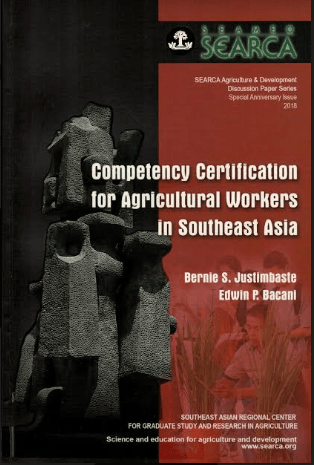
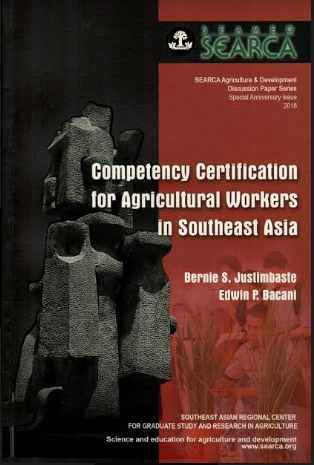
   Bernie S. Justimbaste and Edwin P. Bacani reported in the SEARCA-published “Competency Certification for Agricultural Workers in Southeast Asia” that Grow Asia has demonstrated farming models that now integrate small farm owners into the big ASEAN value chain.

   ASEAN (Association of South East Asian Nations) co-founded Grow Asia with the World Economic Forum.

   Grow Asia-PPSD has built synergies between different value chain players in agriculture.  It facilitates delivery of many interventions including agricultural and technical-vocational (Tech-Voc) skills training in the production of these farm products:

  • Coconut– Grow Asia-PPSD is providing a Mindanao-based program multiple interventions in farmers’ production of coconut water:  development of skills and know-how in coconut intercropping, replanting, and market access. Partners in this program are Unilever, Friends of Hope, and KFI Center for Community Development.
  • Coffee—Ten cooperatives in Tagbina, Surigao del Sur are being helped by a Nestle project through technical assistance, intercropping know-how, provision of quality planting materials (Robusta coffee), and establishment of market.  Macnut Philippines is also involved in contract growing and buy-back of Arabica coffee. This project has 15 other partners including the Philippine Coffee Alliance.
  • Corn-  Farmers in Zamboanga del Norte have been connected through ZMDC Grains Inc. to a hog farmers’ cooperative in Batangas (to buy corn).  Aside from skills training, interventions include credit and post-harvest technologies. Partners here are Pioneer, and 8 other agencies including Philippine Maize Federation Inc.
  • Fisheries—A hatchery for mudcrab for export has been constructed that is supporting 1,000 farmers.  Interventions are working capital credit, know-how on the development of loan products and business development, and technical assistance via the Zamboanga Peninsula-wide baseline and performance indicators system.  The project has 8 other partners including Dipolog School of Fisheries.
  • Vegetables—Interventions in this Zamboanga program include design of vegetable supply chain from quality seeds to the sale of vegetables to supermarkets. Other interventions are credit, post harvest facility, and a water management system.  Partners are East West Seed, Jollibee, and Zamboanga local government unit.

   SEARCA has supported the replication of such farm production model as that of Grow Asia. 

  This, as Grow Asia-PPSD has proven to foster skills capability building of agriculture human resource, a major SEARCA function being ASEAN’s graduate education and research center.

Competency Certification for Agricultural Workers in Southeast Asia

   This mandate involves not only development of academic or entrepreneurial agriculture skills but also Tech-Voc farm skills to help improve the labor force in ASEAN agriculture.

   SEARCA has actively supported Tech-Voc Education and Training (TVET) since it was tapped by  ASEAN education ministers (SEAMEO) to lead a research on competency certification for agricultural workers in Southeast Asia.

   SEARCA Director Glenn B. Gregorio said a common competency certification system among ASEAN countries will enable freer exchange of farm workers between countries.

   ASEAN countries are working toward one ASEAN Qualifications Reference Framework (AQRF) in order to allow this matching of farm skills and competencies between countries.       

   Gregorio said the AQRF recognizes both non-formal and informal learning in assessing farm workers’ skills level and qualifications.

   “The AQRF would benefit agricultural workers as they acquire skills and knowledge largely through non-formal and informal learning modes provided mostly by agriculture extension services systems,” said Gregorio.

   ASEAN countries have been concerned about the status of skills among agricultural workers as they acknowledge that “competitiveness, productivity, and economic growth largely depend on the ability to acquire and use knowledge, as well as to attract the best talents.’”

   As ASEAN aspires to have a “single market and production base”, the AEC (The ASEAN Economic Community) Blueprint has called for a “free flow of skilled workers” between ASEAN states.

   ASEAN leaders from ministries of education, labor, and vocational training,  met last Sept. 9-10, 2019 in Brunei to develop strategies on the adoption of AQRF in ASEAN.

    The Philippines’ delegation include those from Department of Education, Technical Education and Skills Development Authority (TESDA), and SEARCA.

    Gregorio said that as part of a SEARCA study, SEARCA has recommended that partnerships and alliances (such as that in Grow Asia-PPSD) should be encouraged in ASEAN countries.

   Partnerships under Grow Asia-PPSD is seen by 2020 to involve 10 million smallholder farmers in Southeast Asia.

   “Currently, it has reported to have collectively reached nearly 500,000 smallholder farmers through 26 value chain initiatives,” said Justimbaste and Bacani.

   “The private sector can play a crucial role in spreading lifelong and reskilling opportunities among agricultural workers, while innovating on methods of education and training delivery that fit the prevailing non-formal and informal learning and skills development in the agricultural and rural areas,” said SEARCA authors said.

  “The driving strategy to scale up these opportunities is to put in place a competency certification system.” (Melody Mendoza Aguiba)

  1.  SEARCA Director Glenn B. Gregorio
  2. Competency Certification for Agricultural Workers in Southeast Asia

Legal regime for rice sector, special safeguards duty, pushed as import suspension is “illegal”

The private sector has stood pat in its support for a “legal” regime in rice sector via issuance of special safeguard duty (SSG) on imports despite import suspension’s temporary relief from influx of imported rice.

   The Philippine Chamber of Agriculture and Food Inc (PCAFI) asserted the SSG measure, with the benefit of being sanctioned by Republic Act 11203, the Rice Tarrification Act, still needs to be implemented by January or February 2020.

   This is to ensure imports will not coincide with harvest by dry season  in March to April 2020, the peak harvest of the 2-season crop.  It will help support farmgate price of palay (unhusked rice) to at least P17 per kilo.

   “It takes 30 to 60 days to implement the law.  So it should be issued January-February.  A suspension is against the prevailing law on ‘no QR’ (quantative restriction),” said PCAFI President Danilo V. Fausto,” a dairy entrepreneur who also plants rice.

   As the SSG is ideally issued just for that dry harvest window, the SSG may also be immediately lifted once harvest is finished.

   The benefit of SSG, aside from being sanctioned by section 10 of RA 11203, is it automatically puts a cap on imports as price of imported rice becomes at parity with local prices, making Filipino farmers’ rice competitive.

   PCAFI has maintained the needed duty on imported rice is 70%. At rice’s world market price of $360 per metric ton, imported rice’s landed cost stands at P17 per kilo which makes it hit a P32-P34 per kilo retail price, just matching domestic produce, when added with 70% duty and traders’ margin.

   With imported price just matching domestic rice produce, traders will opt to rather defer importation as imports lose price advantage of the locals.

   While worried about its inflationary effect, PCAFI brushed aside such fear of inflation amid SSG implementation.

   Even if domestic rice price inches up a little due to a little higher rice price for consumers, inflation may just hit just 1.3%.  This is much within government’s targeted 2-4% limit.  Yet this will do a huge help of rescue for Filipino farmers, said Fausto.

   Section 10 of RA 11203 states  “In order to protect the Philippine rice industry from sudden or extreme price fluctuations, a special safeguard duty on rice shall be imposed in accordance with R.A. No. 8800, otherwise known as the ‘Safeguard Measures Act’ and its implementing rules and regulations.” (Melody Mendoza Aguiba)

Govt to face court suits for abandoning safeguards amid Hitlerian reasoning it’s to benefit 108 million Filipinos vs “only” 10 million farmers

October 20, 2019

The private sector has warned government of possible lawsuits for “illegally” refusing to enforce the “mandated” safeguards against rice imports in Nazi-like reasoning that it is a choice between “105 million Filipinos versus 10 million farmers.”

   The Philippine Chamber of Agriculture & Food (PCAFI) said the Department of Agriculture (DA) and government’s economic managers are committing an “illegal act” for deliberate abandonment of its poorest sector despite claims of “inclusive” development.

   It is explicitly indicated in Section 10 Republic Act 11203 (Rice Tarrification Law ) Section 10 that “in order to protect the Philippine rice industry from extreme price fluctuations, a special safeguard duty—SSG– on rice shall be imposed.”

   As such it is incumbent upon government to enforce the safeguards legal mandate.

   “Although it is not their (DA and economic managers) intention, but the argument that we should choose 105 million Filipinos as against 10 million farmers (psa.gov.ph, 2018)  is like Hitler justifying the killing of six million German Jews to save the German Aryan nation.

   “They have yet to effectively implement the Rice Competitiveness Enhancement Fund, but they led them to slaughter,” said Lawyer Elias Jose M. Inciong, PCAFI director.

   PCAFI President Danilo V. Fausto said granting farmers an additional P3 billion cash assistance in place of implementing SSG on rice imports is tantamount to “violating the law” itself.

   This may subject government authorities to court suits.

“That is a clear analogy that like the German Nazi and Hitler, you are willing to slaughter 10 million farmers to save 105 million consumers. But farmers are also consumers. That’s why inflation is just at 0.9 percent because farmers don’t have the money to buy. Demand is low,” said Fausto.

   The DA and economic managers are misleading the public by claiming implementing SSG is inflationary.

   “This is a diversionary tactic to protect those who benefited from this law which are importers. The ones favored by this law are not consumers, much more not farmers, but importers.  They’re trying to divert us from the fact that so far the importers are the beneficiaries of the law,” said Inciong.

   It is utterly unfair that government is insulting its own farmers by giving a cash consolation of P3 billion (as earlier announced by DA) in place of the safeguards mandate. 

   “The government really looks down on farmers.  It is in bad faith to even argue that safeguards are inflationary.  They’re in bad faith for refusing to implement the law,” said Inciong.

   “The law mandates Section 10 of RA 11203, meaning the executive has no choice but to impose it.  The meaning of impose is to establish the mechanism,” said Inciong, a lawyer and also president of the United Broiler Raisers Association some of whose farmer-members are planting rice.

  Government should start having a new perspective on farmers.

   “Farmers don’t plant to save the agriculture industry.  They plant to sustain their livelihood, to have income.  The government should now see farmers not as welfare beneficiaries, but as a business sector that needs to profit,” Fausto said.

   Inciong said government’s task under the law is simply to come up with a mechanism implementing the SSG based on either price or volume triggers. 

   If, for instance, the trigger price is set at P35 per kilo and the landed price of imported rice hits below P35, an SSG should automatically be implemented. The lower it is from the trigger price, the bigger the duties to be imposed.

   “The only thing DA has to do is to issue an order requesting the Commissioner of Customs through the Department of Finance. It is in bad faith to say it is inflationary because they can suspend the SSG anytime.  That claim has no credence,” said Inciong.

   Unfortunately, DA is apparently refusing to even come up with this mechanism.

   “The way the law was crafted and in practice, when you say impose, you establish the mechanism. The mechanism is to find out what is the trigger– when to apply the special safeguard, either price or volume trigger”

   So far, the indicative volume trigger of rice imports must have already been hit as “we only need 1.9 million tons of imports, but our importation has already hit 3 million tons according to (DA Secretary William) Dar himself,” said Fausto.(Melody Mendoza Aguiba)

Sugar supply stabilization, not import liberalization, sought by food/agriculture processors, 105,000 MT allocation asked

October 14, 2019

Food and agriculture processors have asked for a sugar import allocation of an estimated 105,000 metric tons (MT) annually to stabilize their manufacturing input and raise their global competitiveness with heftily lower cost.

   The Philippine Chamber of Agriculture & Food Inc (PCAFI) and member  Philippine Food Processors &  Exporters Organization (Philfoodex) is asking Agriculture Secretary William D. Dar to grant a maximum of 10% sugar import allocation.

   This is out of the country’s annual sugar production placed at 2.1 million MT.  However, even just half of this amount, or 105,000 MT will be good enough to significantly raise food processors’ global competitiveness.

   It will cut sugar cost for food manufacturing from P55-P60 per kilo locally to P28-P30 per kilo in other South East Asian countries, particularly Thailand.

   PCAFI President Danilo V Fausto said this petition of PCAFI and PHilfoodex for an import allocation will be accompanied by an implementation mechanism to ensure it does not adversely affect local sugar farmers’ plight.

   “We’ll issue a petition to be submitted to Secretary Dar and President (Rodrigo) Duterte. We will also propose an implementation mechanism that will ensure this allocation will not go to the retail market but rather help our food producers become competitive,” said Fausto.

   Philfoodex President Roberto C. Amores said not even the entire 10% of production will be asked by processors.

   Initially, only 50% of each company’s sugar requirement based on its production program is proposed to be granted to the company.

   “We’re not talking about even 10% of the 2.1 million.  We’re not requesting for liberalization. We’re requesting for import allocation for stabilization for the cause of processors,” Amores said.

   “As a processor, you will submit your requirements based on your production program and sales. And you will be given only 50% of your requirement (not 100%).”

   This initial allocation per processor will establish credibility of the processor. 

   The processor should  guarantee that the sugar import will be used solely as input for its food manufacturing, not for retail to the domestic market (adversely affecting sugar farmers’ income).

   Dr. Rolandy Dy, Center for Food & Agribusiness (University of Asia & the Pacific) chief and PCAFI member, said the sugar import allocation for local food processors is necessary.

   “We’re not competitive.  Never mind (if we’re not competitive in) softdrinks which is not exportable because softdrinks are heavy. The problem is we’re not competitive in products like biscuits, candies,” said Dy.

   Filipino food processors can hardly compete with ASEAN biscuit manufacturers.

   “I’m talking about those 4,500 food processors who are paying P55 versus P28. When Apollo biscuits from Malaysia (or Indonesia) arrive here, it’s only P10. Pero pag gumawa si Mang Pandoy ng Apollo biscuits nya, P15 ang puhunan nya,” said Amores.

   (If Filipino businessman Mang Pandoy produces his own Apollo biscuit, his cost is at P15).

   Some groups have opposed such allocation due to past experiences when some imports for manufacturing input have been diverted to the domestic market. 

   This concerns not only sugar, but other imports such as carabeef (carabao meat from India).

   But a proven effective mechanism to control such diversion is to make the food manufacturers themselves to police their ranks, PCAFI said.

   Fausto said members of PCAFI, Philfoodex, and the Philippine Chamber of Commerce and Industries (PCCI) may be tasked to monitor if the import allocation is being diverted to the market.

   Amores stressed food processors’ import need is not for liberalization.

   “I would like to correct the impression that this is liberalization. The sugar industry in Negros has been writing all over the news that the private sector led by me is espousing liberalization. It’s not,” he said.

   “We all know that since our sugar sector is not competitive, we can’t be self-sufficient in sugar as sugar area is declining.  But we have to admit some traders are riding on this issue in the guise of protecting farmers.”

   Also, it is initially proposed that the state-owned Philippine International Trading Corp (PITC) be the one to do the importation.

   Philfoodex lamented that while the Sugar Regulatory Administration (SRA) had once approved sugar importation for 170,000 MT, this volume has not benefited food processors.

   Since SRA issued a memorandum allowing this volume to be designated as “reserve,” some of this sugar found their way into the domestic market since reserve sugar is allowed to be released domestically.

   “But we have not benefitted from this allocation,” said Amores. (Melody Mendoza Aguiba)