Shrimp farmers cut costs by 38.5%, contributing potential to $600 million export

Shrimp farmers cut costs by 38.5%, contributing potential to $600 million export

May 18, 2020

Shrimp farmers have significantly cut costs by 38.5% from health practices that avert shrimp diseases and mortality, enabling them to potentially seize opportunities in Philippines’ shrimp export reaching to $600 million a year.

   A package of technology including a water treatment probiotic of Bayer Philippines Inc. has cut farmers’ shrimp cost from P180 to P130 per kilo  while feeding shrimp efficiently.  The cost savings also includes electricity cost.

   The water treatment raises aeration and water exchange in ponds, cleaning the water, and enabling shrimp to maximize feeding capacity. Feed and power costs are the top two production cost indicators in aquaculture growing.  

   Feed cost is determined through FCR (feed conversion ratio)  which is computed as Total Feeds Consumed / Total Harvest Biomass. The lower the FCR, the more efficient the production leading to cost savings and higher returns.

   The cost-effective practise uses a microbial solution, the PondPlus which provides better balance of phytoplankton and beneficial microbes in shrimp pond water.  It maintains naturally healthful water conditions needed to maximize yield.

   Farm trials have been conducted in Bohol in April 2018 in the use of PondPlus and PondDtox, a unique bacteria, Paracoccus pantotrophus. PondDtox enables anaerobic conversion of toxic hydrogen sulphide into sulphate in pond sediments. 

   “The result is an improvement in the oxygenation and nutrition level of shrimp and other crops.  When used in conjunction with good farm management practices, PondPlus ensures good algal balance and pond color. The result is reduced stress and improved shrimp yields,” according to Bayer aquaculture experts.

   From Bayer products, the FCR of shrimp farmers was reduced from 1.3 to 1.1.

   Although there was a noted increase in health product cost from P5/kg to – 3/5 – P10/kg, this was well covered by the reduction of feed and power cost, said Rex Bryan B. Rivera, Bayer Philippines public affairs and sustainability head.

   Feed cost went down from P78 per kilo to P66 per kilo.  Power cost was cut from P40 per kilo to P20 per kilo.

   For a medium-scale farmer with 5,000 square meters for shrimp production, that equated to an additional P220,000 savings that went straight to the bottom line (net profit).    

Shrimp export

   Bayer Philippines has prioritized helping solve farmers’ problems on aquaculture, shrimp in particular, with its huge export opportunities. Markets are Japan, United States, Korea, and Europe.

  The Board of Investments (BOI)-supported Industry.ph reported the Philippines posted a $558 million shrimp export as of 2013.  Exported are frozen, head-on or headless, and un-shelled or shelled shrimp.

   Shrimp is a priority sector under BOI’s IPP (Investments Priority Program), given tax  holidays and other incentives.

   The International Trade Centre reported that Philippines’ shrimp export rose from 8,278 metric tons (MT) in 2013 to 10,124 MT in 2017.  Exports to the US jumped from 2,793 MT in 2013 to 3,273 MT in 2017 in the form of various shrimp species. It exported up to 300 MT of shrimp to Europe , mostly France, over the same period.

   “With the recently awarded GSP+ (Generalized System of Preference, a tariff reduction program)  status, exports to the European Union are likely to increase even further,” reported Seafood-tip.com

Water Pollutant

   The presence of hydrogen sulphide in pond water causes reduced shrimp growth and mortality.  It consequently decreases feed conversion efficiency.  

  Hydrogen sulphide is a result of decomposition of organic material including leftover feed, dead vegetation, microalgae, and cyanobacteria.  It can cause mortality in shrimp up to 100%, but PondPlus and PondDtox address these water pollution problems.

   Chris Mitchum Ganancial, Bayer Animal Health aquaculture portfolio and key account manager, said Bayer has introduced a program, “Be in Control.” It aims to help farmers address problems on survival rate and solving problems of high feed costs arising from toxic pond water.

   The farm trials of PondPlus and PondDtox proved these are effective in reducing mortality rate from diseases owing to toxic pond water.

   On top of field trials, forums have been carried out on trial results, that educated farmers in Bacolod, Cebu, General Santos City, Batangas, Butuan City, and Zambales.

   “Majority of Filipino shrimp farmers still adopt old, traditional practices and generally perceive health products as unnecessary add-on costs. Despite large-scale operations by some, farmers don’t realize that they can be more efficient and profitable,” Rivera said.   “The value of using these health solutions far outweigh the investment.”

   University professors, chemists, and public and private researchers and business partner suppliers have been involved in the forums.

   Bayer has also trained farmers on using Virkon Aquatic, a disinfectant used in sanitizing water (continuous water sterilization) and disinfecting equipment.  Deocare Aqua similarly addresses mortality rate concern brought about by diseases and toxic gases.

   Stomi, another health solution, addresses low minerals to help harden the shells of shrimp and increase their disease immunity.

    “Be in Control” was recognized globally by Bayer Animal Health as a model in impact and distinctiveness that helped farmers achieve the profit they desire from shrimp growing.

Shrimp pioneer

   The Philippines is a pioneer in culturing several prawn and shrimp species, according to Seafood-tip.com  

   Using the species Penaus monodon (black tiger shrimp), disease has widely devastated cultured shrimp growing in the Philippines in the 1990s.  It is still among the most cultured seafood species in the Philippines.

   This is despite the fact that many farmers abroad have successfully shifted to the use of Litopenaus vannamei (whiteleg shrimp).

   There is an estimated 1,500 aquaculture operators in the Philippines including small and medium enterprises and large companies, reported Seafood-tip.com.

   “By controlling the supply chain, these (large, export-oriented) companies are able ensure traceability and quality standards needed to export to demanding markets like the European Union. This is important because (shrimp ponds close to urban areas may be contaminated)

with pathogens.”

Shrimp producers

   Filipino shrimp manufacturers are located in Manila, Bohol, Butuan, and General Santos City. Other processed export shrimp are pasteurized bottled sautéed shrimp, fresh frozen black tiger or white shrimp, shrimp powder, and frozen block shrimp.

   Shrimp production for export requires food safety certification, Good Manufacturing Practice (GMP), ensuring quality. Rex Bryan B. Rivera/Melody Mendoza Aguiba

PHOTO- Bayer Animal Health showcasing “Be in Control” during the 12th Philippine National Shrimp Congress in Bacolod City. Chris Mitchum Ganancial with Mr. Hubert Malinao of Marcela Farms in Bohol “Be in Control” technical forums were conducted in various shrimp-growing provinces targeted by Bayer Animal Health

Online Agri Academy launched by Bayer Crop Science targeted at young farm entrepreneurs and aspiring farm technocrats

May 10, 2020 

  Recognizing the need to keep farmers up-to-date on best practices on the latest technology in growing rice and corn to maximum yield and profitability, Bayer Crop Science (BCS) has introduced the Bayer Agri Academy. 

   BCS finds it timely to popularize online agriculture learning considering the intensified need to produce more food even light of an impending food security crisis due to the pandemic from Covid 19.

   New generations of farmers and farming investors are also foreseen to emerge due to the realization of imminent food shortage.

   “Bayer Crop Science ramped up its digital efforts. Aside from posting technical information on its products for farmers planting rice, fruits, and vegetables, the team actively addresses queries on pest control, crop management, and where they could access farming products,” according Rex Bryan B. Rivera,  Bayer Philippines Inc., Public Affairs and Sustainability head.

   BCS is also targeting farmers in Mindanao who are now battling against pervasive Fall Armyworm (FAW) in corn that can severely cut yield but which finds solution in Dekalb VT double Pro.

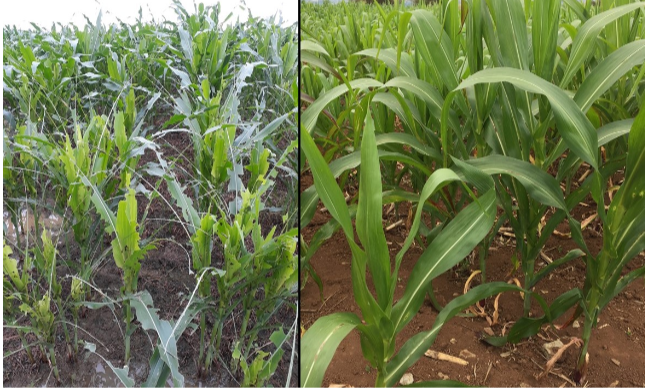
Dekalb hybrid corn plant (right) hardly touched by pests compared to non-Dekalb corn (left)

   Farmers nationwide have been taken aback by FAW infestation.  North Luzon  farmers have tried using even banned,  environmentally-degrading pesticides just to combat FAW because of their absence of knowledge on new technologies. But farmers that planted Dekalb VT double Pro, mostly participants to BCS’s corn derby planting and government farm technicians,  have evaded FAW infestation.

    Going beyond sharing practical information on farming, Bayer created an online platform, via a Facebook group,  where technical experts and farmers exchange ideas and experiences to gain insights on boosting and sustaining farmer productivity.

    BCS takes advantage of online learning interest among young farming entrepreneurs, technocrats and investors as individual field visits have become restricted due to the Covid 19 lockdown.  

   In Agricademy, the team introduced Bayer Online Kapihan, which are live sessions to

directly engage with farmers.

   Topics covered in the first meetings were on new DEKALB hybrid corn varieties suited for Mindanao and the portfolio of solutions for Arize hybrid rice farming.

   Edward Limon, Market Development Manager for Crop Science, hosts the program and gets support from his fellow experts in running the learning program.  They keep it highly interactive. Access the site via https://www.facebook.com/groups/BayerAgricademy/Rex Bryan B. Rivera

Personal Protective Equipment, isolation gowns, support for new facilities extended to COVID 19 “war zone” hospital Lung Center

April 21, 2020

A reinforcement in the supply of isolation gowns, personal protective equipment (PPE), and financial support to the new function as COVID 19 “war zone” at the Lung Center of the Philippines (LCP) has been extended by Bayer Philippines.

   With the rising of cases in the current pandemic, LCP had to expand its ICU (intensive care unit) complex to accommodate a lot more patients suffering from severe and critically ill COVID-19.

   Designated by the Department of Health as COVID-19 Referral Center for Severe and Critical Cases, the Lung Center of the Philippines (LCP) functions as a tertiary referral center in the country specialized in chest and lung diseases.

   It has the necessary equipment capable of providing advanced respiratory support to patients with complicated respiratory conditions.

   Dr. Norberto A. Francisco, LCP chief of Clinical Trials and Research and spokesperson for COVID-19 Incident Command System, said that the hospital has had a similar preparation in the past for isolation ICUs (intensive care unit)  in a unit detached from the main building during the eras of SARS (Severe Acquired Respiratory Syndrome) and MERS (Middle East Respiratory Syndrome) -COV, albeit in a much smaller scale.

   For COVID-19, LCP started preparations as early as mid January, two months before the Metro Manila-wide community quarantine was imposed on March 12.

   At that time, the center was already managing PUI (persons under investigation) cases and had isolated these patients from the main building to avoid infecting non COVID-19 patients, Dr. Francisco recalls.

   Right now, cash and PPE donations have been pouring in from individuals, companies, and the government.

   “We sincerely thank the people at Bayer for their kind hearts to help us and our fellow health care workers here at the Lung Center of the Philippines while we care for our patients,” Dr. Francisco gratefully said.

   LCP has converted their new open-air outpatient building into a triage or receiving area for COVID-19 related patients.

   They have also designated “red zone” areas dedicated to suspect or confirmed COVID-19 patients including wards, isolation rooms, ICUs, hallways, elevators and specific routes for transport, for the safety and protection of all.

   Four out of six of their regular wards were dedicated to COVID-19 isolation rooms and one whole wing was converted into an all-ICU isolation rooms to augment their two existing ICU units already dedicated to COVID-19 cases, Dr. Francisco B added.

   The LCP is even planning to set up more facilities which includes putting up tents in their parking lot that will serve as a field hospital capable of caring for as much as 100 patients hooked on a ventilator.

   The People in the War Zone

   Dr. Francisco likens the pandemic at LCP as a war zone where they constantly deal with numerous challenges in front of them while ensuring everyone’s safety, security and protection.

   With a total employee workforce of more than 600, there are only less than 200 active health workers who are provided with housing within the hospital or in nearby hotels.

   Many prefer not to go home because of fear of transmitting the SARS-CoV 2 virus to their loved ones, or transportation issues brought about by the lockdown.

   On top of this, there are around 25 active consultants and 20 fellows managing the patients.    

   Although each patient is given the attention and care that they need, much of their added work during this COVID-19 Incident Command System is on operations, logistics, planning, safety & security, to ensure the hospital can put up with the challenges imposed by this health crisis.

   For the health care workers, their typical 8-hour shift was increased to 12 hours due to limited workforce.

   Describing how they are handling the tasks at hand, Dr. Francisco said their multi-tasking work is about 5 times more than what they used to do before this health crisis.

Lung Center of the Philippines now a COVID 19 “war zone”

   PPE Support Still Needed

   A complete set of Personal Protective Equipment (PPE) includes a mask, goggles, face shield, isolation gown, cover all, gloves, and shoe cover.

   This is used by the doctors, nurses, radiology technicians, physical therapists, nursing aides or anyone having contact with the COVID-19 cases or those working in the danger zones.

   While some of the PPE component items can be reused, on average, they consume around 600 isolation gowns per day.

   During the crisis, there was a time when LCP was faced with a severe shortage of PPEs that could only last for a few days.

   The doctors didn’t have a choice but to get from their own pockets so that they could immediately purchase the needed PPEs.

   “Their contribution goes a long way in support of our country’s battle against COVID-19 to save the lives of our fellowmen.”

   While they are grateful for the generosity of all donors, LCP acknowledges that support must be sustained. For them to keep up with its level of operations over the next 2 weeks, they would need about 10,000 isolation gowns.

   Aside from supporting LCP, Bayer also donated PPEs and product samples to other selected hospitals in Metro Manila heavily engaged in managing COVID-19 patients. Bryan B. Rivera

Taguig urban farmers sustain livelihood and nutritious food despite lockdown due to Covid 19

April 17, 2020

Farm technologies found between high-rise buildings have led to a more reliable food source and year-round livelihood to urban residents facing job and food challenges due to the Covid 19 lockdown.

   The 30-member volunteer farmer residents of the Good Food Farm in Barangay Ususan, Taguig are more grateful than ever for partnering with Bayer Philippines and being trained on how to grow vegetables and herbs under its Bayer Kubo project.

   This includes supplying the seeds to be planted, regular monitoring, and technical assistance provided by Rise Against Hunger and Urban Agriculture Philippines.

   The 300-square meter Bayer Kubo farm is literally just a few steps away from their residences at Pamayanang Diego Silang in medium-rise BCDA Housing. Some of the technologies are made using available resources, such as fermented fruit juice (FFJ) and fermented plant juice (FPJ) used as growth enhancers and pest deterrents for their crops.

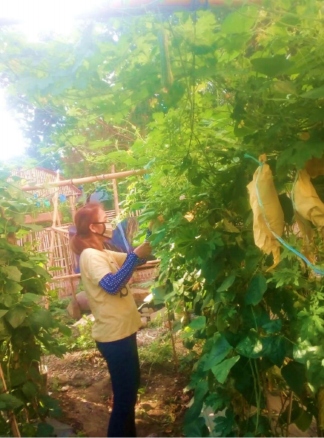
Good Food Farm representative looking after crops at the Bayer Kubo in Barangay Ususan, Taguig City

Blessing during the Covid Crisis

   Since its launch in January this year, the community has not sold much of its produce as the newly trained farmers were still learning the ropes.

   However, when the enhanced community quarantine was imposed in mid-March, the project became a blessing for the residents because it was a sustainable source of food when people became worried about the lockdown.

   Taguig urban farmers sustain livelihood and nutritious food with Bayer Kubo despite lockdown.

   “Our farmer volunteers are very happy because they are harvesting fresh and healthy vegetables everyday,” said Jerimy Soronel of Rise Against Hunger (RAH). In the farm plots, there were different varieties of vegetables, including tomatoes, okra, eggplant, sitaw, mustard, pechay, bitter gourd, lettuce, and bell pepper.

   Aside from the usual vegetables, they also harvested herbs and spices like basil, tarragon, oregano, roselle, taheebo, gotu kola, serpentine, and lemongrass.

Hunger for More Knowledge

Malou Furio, Good Food Farm president and one of the residents, said they are set to replant this next season and are expecting vegetable seeds from the Department of Agriculture which has allotted funding for urban agriculture projects.

   “We don’t want to neglect our farm,” said Furio. “It is good that we are able to continue being productive during this lockdown.”

   The community is eager to learn more about increasing their output from vegetable farming so that they can turn the farm into a business venture.

   However, some of these learning activities were delayed.

   “Because of the quarantine, some of the scheduled trainings were postponed, but we still managed to maintain the existing crops and apply what we already know,” added Furio.

   “We rely on our farmers to continue tilling the land so that we can have food on our tables in the next few months,” said Bryan Rivera, head of communications, public affairs, and sustainability for Bayer Philippines.

   “Having an opportunity to create food where it’s not usually grown is a worthwhile experience that Barangay Ususan residents are truly enjoying.”

Training being conducted among farmer residents on how to produce organic fertilizers

Attention Shift to Agriculture

   The Department of Agriculture has called on all sectors to support agriculture during this crisis to prevent food shortage. Particularly, the agency met with the Philippine Seed Industry Association (PSIA) to lead its urban agriculture promotion in Metro Manila by working with DA and the local government units.

   “In our current quarantine measures, aside from our frontline health workers and need for sustained food distribution, agriculture has been given the attention it deserves,” added Rivera.    “Incidentally, our Bayer Kubo project is also getting more support from the people managing the vegetable crops since it is a fundamental source of food.”

More than just a Farm

   Interestingly, the Bayer Kubo urban farm is a holistic venue not only for growing food. It plans to serve the community on concerns related to health.

   “We consider Bayer Kubo as providing a wider scope of benefits to enhance and strengthen urban communities. This includes increasing awareness and appreciation of urban agriculture, promote health & wellness, and introduce other practical topics that would benefit the residents,” said Rivera.

   Even likely to be critical in the future, as the population increases and climate change renders more farms to be less productive, farmers will need more opportunities and technologies to counter a decline in harvest.

   When countries slowly transition to aging populations, more people will consequently turn to health solutions to care for themselves and their loved ones. Melody Mendoza Aguiba/Bryan B. Rivera

Bayer deploys high-yielding hybrid rice seeds, supports DA Plant Plant Plant to counter COVID 19 effects to the economy

Calamba City, April 13, 2020 –

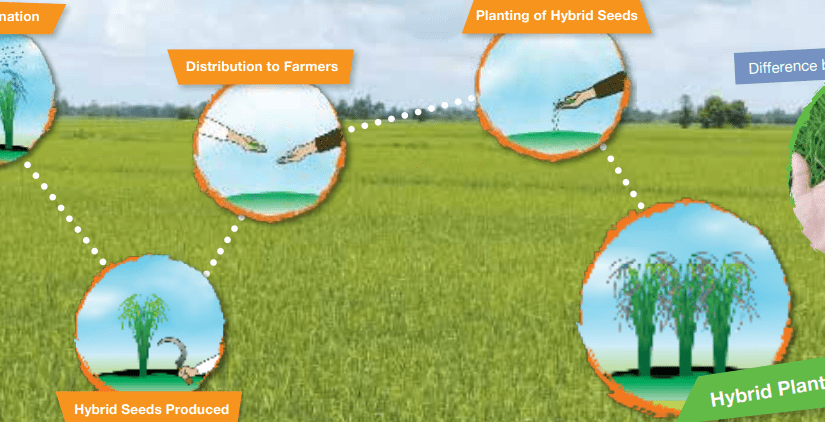
Breeding of 2 superior varieties produce high yielding rice plants with heavier panicles, full-packed grains

Bayer has continued its seed processing and distribution operations in its Calamba, Laguna and Pulilan, Bulacan plant facilities in a bid to support the government’s food resiliency program, particularly the ALPAS Kontra COVID-19 or Plant, Plant, Plant Program.

   As the business sector is adversely affected by the Luzon-wide enhanced community quarantine extension, the Department of Agriculture reaffirmed the importance of unhampered movement of food and agricultural products.

   This includes home quarantine exemptions for agribusiness personnel and those involved in processing and logistics of agricultural inputs.

   With these guidelines in place, Bayer has responded by mobilizing its product supply and logistics teams to prepare hybrid rice and hybrid corn seeds for timely delivery to its channels.

    “We are looking at having bulk of our Arize® hybrid rice seeds and DEKALB® hybrid corn seeds available to farmers before end of April,” said Bayer Crop Science Country Commercial Lead Iiinas Ivan Lao.

   “We appreciate the commitment given by the Department of Agriculture to help our farmers and for recognizing early on that farmers need good performing seeds if we expect to sustain our food production capabilities.”

   Bayer is expecting more corn farmers to plant their DEKALB hybrid corn seeds having built-in resistance against Fall Armyworm, which has been a significant insect pest concern for farmers in the previous planting seasons.

   Bayer’s intensified supply of rice and corn seeds is in response to the Department of Agriculture’s call to support farm inputs in light of early planting aimed at countering the effects of COVID 19 lockdown.

   The program is called “Ahon Lahat, Pagkaing Sapat (ALPAS) Kontra COVID-19″ or also known as the Plant, Plant, Plant Program.

   For its Arize® hybrid rice seeds, Bigante Plus is one of the most popular products in the market and recommended for wet season planting with bacterial leaf blight or BLB tolerance.    

   The Department of Agriculture aims to provide financial assistance to farmers in the form of cash subsidy and inputs to encourage them to plant & harvest early in order to maintain the country’s inventory level of rice in the succeeding months. Support was also committed for corn farmers.

   “While we want to serve the needs of our corn and rice farmers, safety remains a top priority for all our employees,” said Lao.

   “We have established stringent safety measures at our plant facilities to minimize the risk of COVID-19 infection among our employees and agencies.”

   As part of its commitment to safety, Bayer deployed a skeletal workforce in its plant facilities and set up protocols involving proper hygiene and social distancing.

   These steps cover the entire operational cycle from transportation of its workers to and from the site and all the activities being done to process the seeds and ship them to agriculture distributors across the country.

   “Since we’re expecting less face to face interaction with customers and farmers due to the quarantine, we encourage them to interact with us via text message or through our local Facebook page,” added Lao. Bayer’s text messaging service, called Bayer TXT Connect, aims to address any inquiries about its agriculture products. Farmers can send their name, location, and message to 21586727 for Globe/TM or 225656727 for Smart/TNT/Sun. Alternatively, they can also visit their Facebook page http://www.facebook.com/BayerCropSciencePH/ for inquiries via Messenger.Bryan P. Rivera

Bayer drives agricultural innovation with year 2020 pipeline projects

Short-stature corn stands several feet shorter than standard variety in Bayer’s Jerseyville, Illinois demonstration plot. Credit: Bob Reiter/Bayer
April 4, 2020                                   

Bayer of Germany has announced year 2020 pipeline projects for Crop Science including the launch of short stature corn after delivering in 2019 55 key projects aligned with an aim of cutting carbon footprint in light of imminent climate change.   

Providing farmers around the world with more than 450 newly commercialized hybrids and varieties of corn, soybeans, cotton and vegetables. Bayer’s annual investment is 2.3 billion euros in crop science Research & Development (R&D).  
 
Bayer continually converts its R&D investment into innovative products that match the complexities farmers, consumers and the planet are anticipated to face.

   “At Bayer, we are driven to help solve some of the world’s toughest challenges. This means helping feed the world without starving our planet. Farmers with operations of all sizes need innovation not only to grow enough nutritious food, but also to do this in a sustainable manner that respects planetary boundaries,” said Liam Condon, Bayer Crop Science president and board member of Bayer based in  Monheim, Germany.   

“Our employees are united around this goal, and our unrivaled pipeline is delivering against it.”  

Short stature corn

   Bayer’s short stature corn is expected to provide environmental sustainability benefits through a transformational shift in crop management flexibility.   

Because it is several feet shorter than today’s hybrid field corn (6-7 feet versus 10-11 feet), the product concept allows farmers to have better in-season crop access for precision applications of inputs, such as nitrogen, which can be made when the plant needs them most.      
 
Some short stature corn hybrids can also be planted closer together, enabling the production of more corn on the same amount of land and potentially reducing requirements for land and water.   

Shorter stature will also help improve standability, including better green snap and stalk lodging tolerance, helping reduce crop loss from challenging environmental conditions such as high winds from extreme weather (that destroy corn plants).   

Both the breeding and biotechnology approaches to create short stature corn are advancing to Phase 3.  Bayer also unveiled a third pathway to short stature corn, a Discovery Phase project that has achieved proof of concept through gene editing.   

According to Bob Reiter of Bayer, these are other advantages farmers can expect from short stature corn—given commercialization:

1. You can plant short stature corn seeds more closely together, producing more crops on the same amount of land.

2. Under limited water conditions, plants with the native trait have shown reduced signs of stress.

3. You can access short stature corn fields with farm equipment much later in the growing season, making it possible to more precisely and efficiently apply needed nutrients and fungicides.   

Bayer also announced a new herbicide molecule:  the new post-emergence mode of action for broad acre weed control in 30 years. Multiple MOAs (mechanism of action) for weed control are important for managing herbicide resistance and enabling practices that help to sequester greenhouse gases, like no-till farming.   

Discovering new herbicide MOAs has been a challenge for the industry, but Bayer’s continued investment, leading compound library and advanced screening capabilities have enabled a breakthrough.   

Bayer announced a molecule in Phase 2 of early development which has demonstrated effective control of key resistant grasses in early research.   

The work demonstrates progress toward Bayer’s long term commitment to investing approximately 5 billion euros in additional methods to combat weeds over the next decade.       

Discovery of this molecule is being complemented by a discovery-phase program to identify and develop a corresponding biotechnology trait to convey herbicide tolerance and initial approaches are under evaluation.  

Making best-in-class, better

   XtendFlex® soybeans, the next generation of weed control for soybeans, is advancing to launch phase this spring in the U.S., pending regulatory approvals.

This product builds on the foundation of Roundup Ready 2 Xtend® soybeans and adds tolerance to another herbicide, glufosinate.   

Beyond Xtendflex,  Bayer advanced both fourth- and fifth-generation soy herbicide tolerant traits, leading the industry with tolerances to six herbicide classes expected to be launched by 2030.

Converting R&D into tailored, value-added solutions for farmers

   There’s no one-size-fits-all when it comes to farming. Every combination of products must be tailored to meet the needs of each customer’s field. Digital tools deepen understanding of those needs, accelerating Bayer’s ability to help farmers with individualized challenges.

   The Climate FieldView™ digital agriculture platform, now available in more than 20 countries, continues to lead the industry with its comprehensive, connected suite of tools that help farmers make data-driven decisions to increase their productivity.   

Adoption of the platform has quickly accelerated due to the value farmers around the globe find in the technology, and FieldView’s™ innovation in turning data into actionable insights has led farmers to connect more than 95 million acres globally of their farm data to the platform, making it the leader in data connectivity.

   The first offering of its kind, Seed Advisor enables better decision making with a predictive model that combines the industry’s largest proprietary seed genetics library with regional seed performance data to help predict the best performing hybrids for each of a farmer’s fields.
Performance testing from 2017-2019 demonstrated a consistent 6-9 bushel per acre yield advantage in farmer field trials. Planned pre-commercial expansions for 2021 include an additional three states vastly growing the number of U.S. corn acres.

   In South America, Advanced Seed Prescriptions are unlocking yield potential using a farmer’s historical field data or field health imagery, combined with Bayer proprietary field-testing results, to provide variable rate corn density planting prescriptions tailored to their unique yield or profitability goals.

Recent trials have demonstrated an average yield benefit of 3.2 bushels per acre across Brazil and Argentina.
   Bayer’s breeding advantage is the product of sophisticated breeding techniques, data science, and digital analytics platforms in concert with the world’s largest germplasm library.

Novel applications of machine learning and artificial intelligence continue to improve the speed and scale at which we can arrive at the best products to meet each grower’s needs.   

Identifying the best possible products earlier in the pipeline enables more extensive field testing in diverse conditions and more valuable product insights collected over the course of product development.   

This data supports the success of the new hybrids and varieties we deliver to farmers each year. In corn, this has translated to Bayer’s leading position in five of the six key corn geographies worldwide.

   Bayer views investment in innovation as investment in more sustainable agriculture for the next generation.   

Bayer innovation focuses on producing more on each acre, reducing the environmental impact of farming, and enabling better-informed decisions through data. The company’s commitment to sustainability also includes making innovation available and applicable to farmers with operations of all sizes, all over the world.
 
  Bayer’s ThryvOn™ Technology, a trait for lygus and thrips control in cotton, is expected to launch in 2021, pending regulatory approval. ThryvOn TM Technology is predicted to provide immense value to farmers by supporting healthy plant growth and helping protect yield potential against pests that, until now, couldn’t be managed through a biotech trait.       

Advancements in insect-protection traits reduce the need for foliar insecticide applications and improve productivity per acre.

   Today’s crop protection solutions include safer and more effective chemistries through Bayer’s decades-long commitment to evolving the company’s portfolio – including advanced formulations, stricter safety standards and greater efficacy.   

An example is iblon™ technology, a novel new fungicide for cereals. Wheat treated with iblon™ exceeded market standards by on average 2.2 percent higher yields, allowing farmers to be more efficient and sustainable at all levels of their business.

   “We are converting R&D into solutions for farmers that enhance productivity, create new value and reduce the use of inputs necessary to produce a crop,” said Bob Reiter, head of R&D for the Crop Science Division. “Thanks to our leading positions across technology platforms, Bayer is best positioned to discover, combine and tailor solutions – serving unmet needs and imagining new ways to farm – and that’s a win for farmers, consumers and our planet.”


Short-tall corn comparisons shown with short stature corn (Left) before the equipment against conventional corn (Right), credit- The Furrow

First Anti-coagulation Experts Summit held as new rivaroxaban to reduce adverse cardiovascular disease cases


March 10, 2020 – Filipino patients suffering from coronary artery disease or peripheral artery disease (CAD/PAD) may no longer need to look further to reduce their risk of major adverse cardiovascular events as a lower dosage of rivaroxaban has been introduced in the country for the new indication along with aspirin. This development is a major highlight presented by the Team Xarelto of Bayer  Pharmaceuticals during the first successful Anti-coagulation Experts’ Summit at the Peninsula Manila. The summit was culminated by Dr. Christopher Hammett’s presentation of the COMPASS study showing that combined treatment of rivaroxaban (approved by the Food and Drug Administration) 2.5 mg twice daily and acetylsalicylic acid (aspirin) 100 mg once daily resulted in a significant reduction in major cardiovascular events, including myocardial infarction, stroke, and cardiovascular death. It demonstrated lower risk of occurrence of such incidents compared to taking rivaroxaban alone or acetylsalicylic acid by itself. It is notable that the COMPASS study was stopped 1 year ahead of expectations in February 2017 due to overwhelming efficacy from the said combined treatment.

New indication for coronary and peripheral artery disease launched during doctors‘ summit ·

     First-ever Anticoagulation Experts’ (ACE) Summit organized by Bayer Pharmaceuticals to launch rivaroxaban and aspirin indication for patients diagnosed with CAD/PAD  

Team Xarelto of Bayer Pharmaceuticals after the first successful Anti-coagulation Experts’ Summit in the Philippines

Taguig City, April 3, 2020 – Filipino patients suffering from coronary artery disease or peripheral artery disease (CAD/PAD) may no longer need to look further to reduce their risk of major adverse cardiovascular events as a lower dosage of rivaroxaban has been introduced in the country for the new indication along with aspirin. This indication was approved by the Food and Drug Administration (FDA) last year and now made available starting this month.

To celebrate this milestone, Bayer Pharmaceuticals division recently organized the 1st Anticoagulation Experts’ Summit at The Peninsula Manila Hotel, which was attended by 126 top caliber vascular cardiologists, interventional cardiologists, and neurologists from different health institutions across the country.

A lineup of speakers was fielded to discuss the highlights and different benefits of rivaroxaban across different indications, and this was culminated by Dr. Christopher Hammett’s presentation of the COMPASS study showing that combined treatment of rivaroxaban 2.5 mg twice daily and acetylsalicylic acid (aspirin) 100 mg once daily resulted in a significant reduction in major cardiovascular events, including myocardial infarction, stroke, and cardiovascular death. It demonstrated lower risk of occurrence of such incidents compared to taking rivaroxaban alone or acetylsalicylic acid by itself. It is notable that the COMPASS study was stopped 1 year ahead of expectations in February 2017 due to overwhelming efficacy from the said combined treatment.

Dr. Hammett is an interventional cardiologist at the Royal Brisbane and Women’s Hospital in Australia. He is a Fellow of the Royal Australasian College of Physicians and the Cardiac Society of Australia and New Zealand. He has been involved in all the landmark trials of low-dose rivaroxaban.

Other doctor experts who presented in the evening event were Dr. John Añonuevo and Dr. David Raymund Salvador, while the program was moderated by Dr. Myla Gloria Supe.

In 2017, deaths attributed to coronary heart diseases totaled 84,120, representing 15% of total deaths in the Philippines. On the other hand, mortality from cerebrovascular diseases was pegged at 59,774 in the same year. This included stroke, which further puts patients at risk of recurrence, making stroke a top health burden. People at risk for cardiovascular disease or stroke are prescribed with a non-Vitamin K antagonist anticoagulant (NOAC) as a preventive approach.

The newly launched CAD/PAD indication for rivaroxaban puts it in a unique position in the Philippines since currently, no other NOAC in the market can claim for this same benefit to Filipino patients.

Team Xarelto of Bayer Pharmaceuticals after the first successful Anti-coagulation Experts’ Summit in the Philippines

Corn hybrids resistant to corn borer also fights newly emerged fall armyworm

March 8, 2020

For any questions or interview requests, please contact 09297158669, 09171026734 (Growth Publishing for Bayer)

North Luzon farmers have found a hybrid corn variety originally developed to fight the highly devastating Asiatic corn borer to be similarly resistant to the just emerging fall armyworm that is now infesting Philippines’ corn farms.

   A relatively new pest in the Philippines that has already invaded Southeast Asia from its

origin in America, fall armyworm has become a major concern for the industry as the

extent of actual damage to corn crops is feared from trivial to significant.

Corn hybrids Dekalb VT Double Pro (RIGHT) withstand fall armyworm leaf damage versus non-resistant hybrids

   The VT Double PRO Dekalb hybrids, which has a biotechnology trait that controls lepidopteran pest Bacillus thuringiensis (TB), is reportedly also bringing resistance to the

newly emerged fall armyworm, farmers claimed.

   The VT Double Pro of Bayer has a dual mode of action for protection against fall armyworm, corn borer, corn earworm, and other above-ground pests notorious for wreaking havoc on corn crops leading to huge yield losses.

   “We observed that some corn hybrids had around 13 to 17 percent damage due to fall

armyworm, but the Dekalb VT Double Pro hybrids planted at the same time had less than 3 percent damage,” according to Rolex Martinez, a farmer in Barangay Swan, Pudtol, Apayao.

   He planted the VT Double Pro Dekalb hybrids in 7 hectares during the previous season.

   These Dekalb hybrid corn seeds are currently the only seed product certified by the Fertilizer and Pesticide Authority (FPA) as plant-incorporated protectant for control of fall armyworm

   With other hybrids not having the technology, corn farmers were not as lucky as they tried

to apply different types of insecticides to no avail.

   The fall armyworm has become a major concern for corn farmers since it emerged just in June 2019.

   “Some say that the damage of fall armyworm is not yet very big. Let’s not wait for the damage to turn huge until help to farmers is extended. We are waiting for government to immediately download to farmers whatever solution has been found effective,” said PMFI President Roger Navarro.

   Many farmers are clueless on how to control fall armyworm, considering it is just a new pest.  An old pest, though, known only as “armyworm” before was said to be already existing in the Philippines in the last decades.

   “We are confused on what to do. We don’t know how to control this pest.  We have tried all kinds of pesticides—the strongest ones. We found these useless. We hope the government will recommend to us whatever is best to control this pest,” said Martinez.

   In Barangay Duminit, Cauayan City, Isabela, Art Cacal, a farmer and barangay chairman

who grows white glutinous corn, experienced huge damage from fall armyworm from his latest harvest.

   “Fall armyworm destroyed 100 percent of our harvest because the pest ate up all the leaves,”

said Cacal.

Fall armyworm feed on and damage corn leaves that have no Dekalb VT Double Pro resistant-traits

   Similar to the situation of Martinez, corn farmers in Cauayan City also tried using different

types of insecticides just to combat the pest.  But none of them was able to prevent the

damage to their crops. Cacal mentioned that there were several farmers who had up to 50

percent yield loss at harvest time due to the corn pest.

   On the other hand, Cacal added that farmers who planted the Dekalb corn hybrids last

season did not encounter the same damaging fate.

   The Department of Agriculture gave away fertilizers to farmers in Cauayan City in order to

counter destruction of fall armyworm.

   “We received a total of 149 bags in fertilizer for our entire barangay because DA gave 3 bags of fertilizer per hectare, but it didn’t have much good result for fall armyworm,” said Cacal.

   White glutinous corn is preferred to be planted by some farmers in Cauayan City since it

is a short two-month crop compared to yellow corn’s four-month planting duration.

   Cropping may reach up to five times a year leading to quicker cash turnover. Traders or

buyers of white corn used as food (grilled corn) intentionally travel to Cauayan City just to haul white corn when Nueva Ecija supply gets depleted.

   However, the growing concern from fall armyworm infestation is making farmers growing white corn to shift to planting yellow corn. 

   They are likely to use the Dekalb VT Double Pro corn hybrid varieties due to their resistance to this emerging key corn pest.

   “Our team in the field has observed numerous cases of fall armyworm damage in major

corn growing areas all over the country.  And we feel sorry for our farmers who had the

yields and income reduced significantly due to this corn pest,” said Erwin Vibal, head of

marketing for Bayer CropScience.

   “Fortunately, we are able to address this key concern with our lineup of Dekalb corn hybrids that have proven built-in resistance against fall armyworm.”

   Based on the current list of Fertilizer and Pestcide Authority (FPA) for registered products

to control fall armyworm, Bayer’s VT Double PRO is the only Plant-Incorporated

Protectant in the approved registry while the rest are insecticide application.

   “We are looking forward to the coming season because our Dekalb seeds provide much

more convenience and assurance to our corn farmers from fall armyworm.  We also

ensure that the agronomic characteristics of our hybrids are adaptable to different growing

conditions leading to high yields and income,” added Vibal. 

   Aside from their corn hybrid varieties, Vibal mentioned that Bayer is also launching Yeoval

next month, which is a crop protection product that can help address the concern for farmers planting white glutinous corn or sweet corn. Melody Mendoza Aguiba and Bryan P. Rivera

Filipino farmers to benefit from drones as Bayer pushes AI farm technologies

Calamba City, February 26, 2020 – Filipino farmers will soon have access to drones that intelligently map farms or collect crop growth information via remote sensing as Bayer partners with XAG of China on AI (artificial intelligence) farm technologies.

   The use of drones will tremendously raise efficiency in small Filipino farmers’ production. 

   A strategic partnership on digital farming technology in the Philippines and Southeast Asia was forged under a Memorandum of Understanding between Bayer and XAG which claims to be world’s largest drone supplier.

   XAG’s drones, specifically the granule spreading system, is used in seeding, fertilization, and plant protection in an arial way accurately through AI techniques.

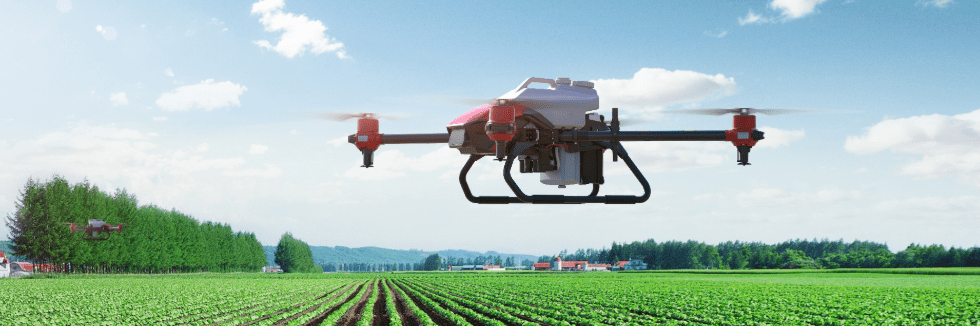
Drones intelligently used in seeding, fertilization, and plant protection

   Bayer was represented by Andre Kraide, the company’s head for its CropScience division in Southeast Asia and Pakistan. XAG was represented by its Co-founder, Justin Gong.

   The technology will enable farmers to overcome farming challenges including labor shortage, water availability, product stewardship and safe use, and most importantly, allowing them to grow more with less.

   “It is estimated that around 500 million smallholder farmers produce 80 percent of the

food consumed in the developing world,” said Kraide.

   “We know that we need to double food production to feed 10 billion people by 2050.  But we also know that we will not get more land or resources to do so. This is where digital farming comes into the picture.”

   “As the leader in agriculture, Bayer is committed to enabling smallholder farmers access

to digital technology and solutions. We look forward to working closely with XAG, our

channel and value chain partners, as well as the governments and other key stakeholders

in the countries to leapfrog the smart agricultural movement in Southeast Asia and

Pakistan from farm to table,” he added.

   The partnership involves distribution of XAG products through Bayer’s channels.  It will jointly promote and develop markets through partnerships with local distributors.

   “XAG has grown from a drone manufacturer based in Guangzhou, China, to the world’s

leading agriculture technology company with a 20 million-hectare crop protection service

record. Our product portfolio includes survey and spray drones, agricultural utility

vehicles, and IoT (Internet of Things) equipment such as weather stations and farm cameras,” said Justin Gong, co-founder of XAG.

Filipino farmers’ key to food security

   The Philippines has been striving towards self-sufficiency in rice and corn through the

Department of Agriculture and part of the government’s focus has been on agriculture

modernization and mechanization.

   “At a glance, we are seeing scarcity of labor and improper application of crop protection products as concerns that can be solved right away by using drones,” said Iiinas Ivan Lao, country commercial lead for Bayer CropScience in the Philippines.

   “Farmers would be able to optimize their usage of farm inputs such as seeds and fertilizers since this technology promotes precision agriculture, hence would

lead to reduced production costs while improving yield output and income,” claimed Lao. Rex Bryan P. Rivera