Kids Who Farm lure youth into agriculture using hydroponics that is less susceptible to pests and is “soil-less”

March 21, 2022

Non government organization Kids Who Farm KWH) has started luring the youth into agriculture using  hydroponics technology which  produces vegetables prolifically without requiring much pesticide and can grow “soil-less.”

   During a “Pista ng Pagkain at Kabataang Pinoy” festival held by the Southeast Asian Regional Center for Graduate Study and Research in Agriculture (SEARCA),  KWH Founder Muneer Hinay said that households can significantly contribute to solving Philippines’ food security concern.

   “I realized that even a small child can actually propose solutions to the pressing problems of food security,” said Hinay. 

   That has been true for his family as his daughter Raaina jointly put up KWH’s micro urban garden in her school, Catalina Vda de Jalon Memorial School in Brgy Tumbaga, Zamboanga City.  She was only nine years old then – three years ago.

   Now KWH not only has a joint urban farming project with Raaina’s school.  But its partnership is with a host of other institutions who have the like mind to entice the youth that agriculture is a profitable venture. As an incentive to kids, they are able to bring home and eat what they produce and also get a commensurate pay for their efforts.

   Aside from its partnership with the Department of Education’s “Gulayan sa Paaralan,” KWH has micro farming project with Department of Social Welfare and Development (DSWD Region 9, iVolunteer and Google.

   It had urban farming lectures for Haven for the Children and Haven for Women facilities, Rotary Interact Clubs from different universities in Zamboanga, Isabela City Youth Organization, and the Special Forces Battalion in Basilan. 

   With its advocacy, it has so far trained more than 400 youths in urban farming.

   Hinay, project manager  for sustainable food system at the World Wide Fund for Nature (WWF), believes his own home province should be food self-sufficient.

    “There’s a big opportunity to really make Zamboanga city food secure.  At present it is 40% self-sufficient in vegetables.  As a city which is the third largest in the Philippines in land area, it’s very ironic that we import 60% of our food as far as from Baguio,” Hinay told the SEARCA seminar. 
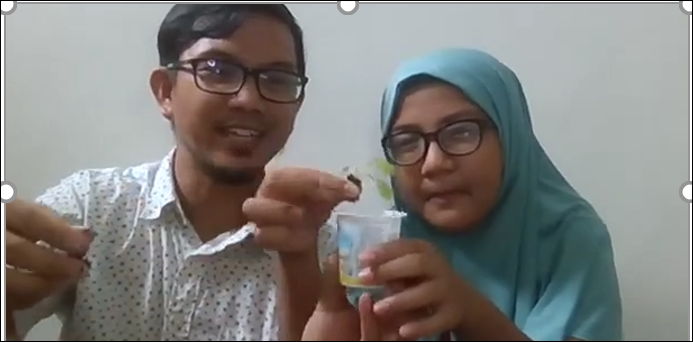
Muneer and Raaina Hinay during the SEARCA hydroponics demonstration

   SEARCA aims to popularize farming technologies as part of its contribution to transforming food systems to better achieve food security.

    Obviously, it is important for households to have easy a nearby access to their source of food—making it fresh and nutritious, Hinay stressed.  And what a better way to have a nearby urban farm, no matter how small, than through the hydroponics technology.

   “When we talk about urban agriculture, a big challenge is on space.  But the truth is when you have a small space, then what you need is a big mindset,” he said.

   Hydroponics, which has been proven productive long ago from the Hanging Garden of Babylon to the Aztecs’ floating garden, comes from the Greek words “hydro” or water and “ponos” or work.  That is working or cultivating plants with water.

 “In hydroponics, the plant roots absorb balanced nutrients dissolved in water that meet all the plant development requirements. The basic setup is you have a container or grow box, water inside with nutrient solution, and an air space so the container is not filled with water,” said Hinay.

   The plants are in a growing media such as coconut coir  or coconut peat– instead of soil.   The plants get their nutrients from air and water—macronutrients, micronutrients—vitamins and minerals.

   Among the plants that can be grown via hydroponics are lettuce, pechay, kangkong, bell pepper, tomato, and herbs like basil.

    While the sizable portion of food production is still soil-based, 95%, producing food from hydroponics offers advantages.  Among these are its modular setup (vertical or horizontal), ability for monocropping season after season, and nearly pest-free nature.

   “There isn’t so much waste. There is no leaching (contamination of the water table since plants are in a contained area).  Generally, it is hygienic, and there’s no emergence of pest and diseases.  It is very rare that  hydroponics setup gets pests.”

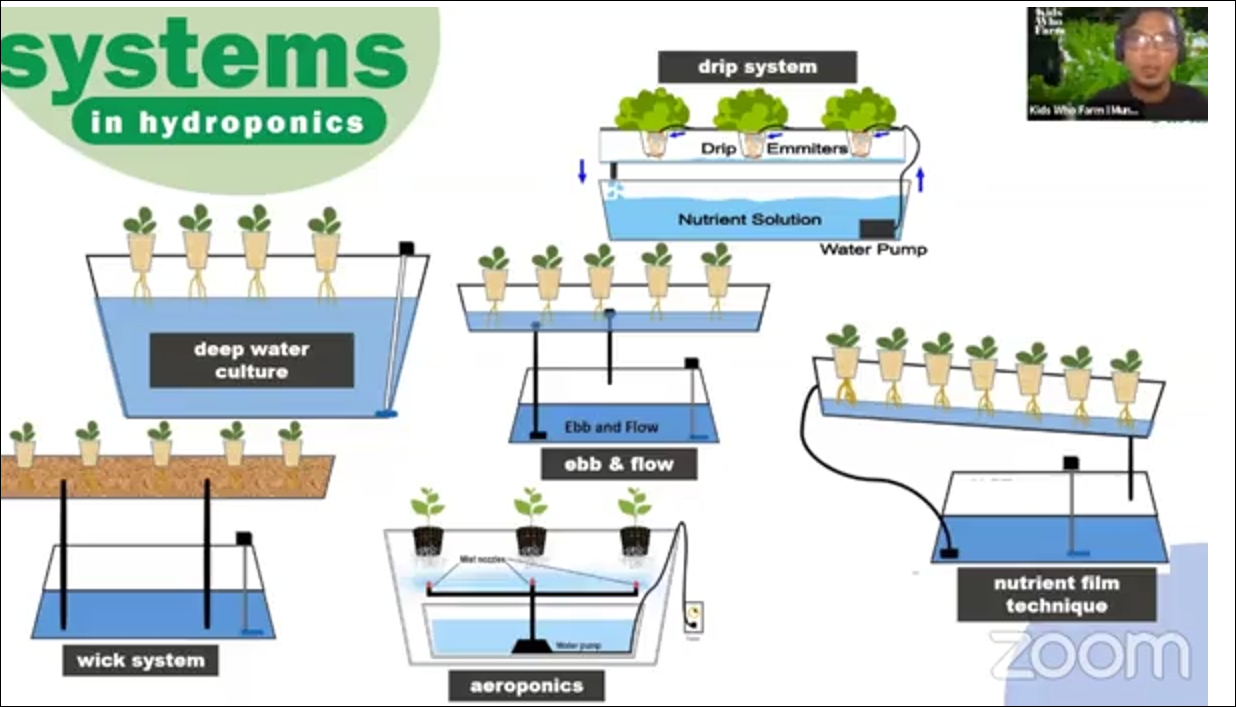
   There are different types of hydroponics—wick system, ebb and flow which uses submersible pumps for irrigation, and nutrient film technique which also uses submersible pump.  The drip system has continued slowly-releasing irrigation.

  The deep water culture is a passive system without pump as the plant is submerged in the water. Aeroponics uses misting, or roots of plants are sprayed with water or mists using high-pressure pumps.

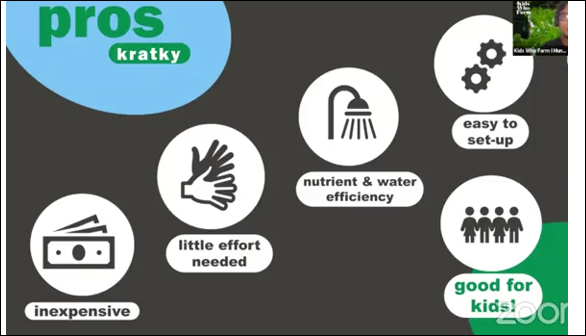
   The easiest type to use and requires less startup money may be the deep water culture, particularly the Kratky method. 
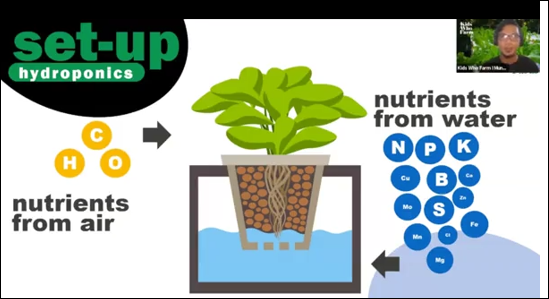
   Developed by University of Hawaii’s Dr. Bernard Kratky, the method requires less effort to set up and is nutrient and water-efficient, Hinay said.
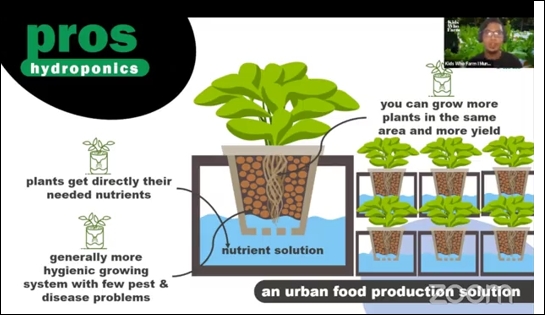
   What is needed are a growbox, hydroponic nutrient solution (nutrients and fertilizer), a seedling plug (where you put or transplant the seedling ), and a growing media.  Instead of soil, the media uses coconut coir, coconut peat, or foam.

   For the seedling plug, styro cups, plastic cups, and many other waste materials can be used.

   The steps in Kratky are 1.  Make the growbox (using styrobox used as fruit containers),  2.  Transplant the seedlings (seeds should first be sown in a separate sowing medium like a seedling tray).  The upper box, which has holes, is where the seedling is placed. 3.  Make the lower box where you put the water and nutrient solution.  It should be well-sealed. 4. Grow and maintain (make sure the nutrient solution does not run out of water), and 5. Build a greenhouse.
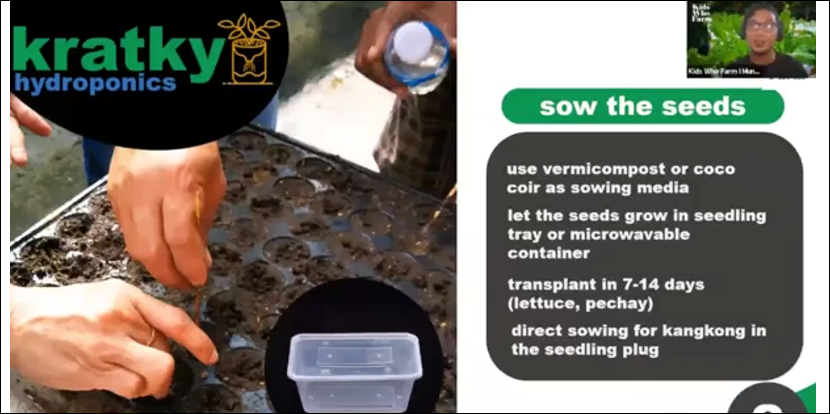
   Soon, the roots can be observed, and the plants are soon harvestable—lettuces  can be harvestable 22 to 25 days from transplanting.  

   In cases when pesticide should be used,  KWH recommends a simple biopesticide.  It is just a mixture of chopped garlic (1 bulb), onion (1 medium), 5 to 6 chilli peppers, dishwashing liquid (1 tablespoon), and water (1 liter).  This is used as spray on plants early in the morning or late afternoon.
    With Kratky hydroponics, learning how to grow plants will not be discouraging for beginners since it is easy to experience success with it.
   “Within a short period of time, you can have immediate success or yield, so you will be encouraged to grow more,” said Hinay. (Melody Mendoza Aguiba)

Bayer increases women’s access to modern contraception, promotes benefits of less cases of maternal deaths, unwanted pregnancies, child mortality

March 15, 2022

While pursuing research to find new treatment options for gynecological diseases with a high unmet medical need, Bayer is also working on addressing women’s health needs during menopause.

   For more than 50 years, Bayer has supported educational programs and rights-based family planning in more than 130 countries, particularly by increasing access to modern forms of contraception.

   In 2019, Bayer pledged to provide 100 million women in low-and-middle-income countries with access to family planning by 2030.

    This initiative is part of Bayer’s comprehensive set of sustainability measures and commitments and in line with the United Nations Sustainable Development Goals (UN SDGs) .

   “We believe every girl and woman deserves the chance to determine her own future. That’s why Bayer is partnering with local and international organizations, such as the United Nations Population Fund and the United States Agency for International Development, to empower women to make informed decisions about family planning,” said Mildred Nadah Pita, Head of Global Healthcare Programs/Sustainability Middle Africa at Bayer.

   “With Bayer’s commitment to provide 100 million women in low- and middle-income countries with access to modern contraception by 2030, we are making an important contribution to achieving the UN Sustainable Development Goals by improving the health, rights and economic status of women around the world, which is a fundamental prerequisite for greater equality, education and prosperity for all.”

   As part of this commitment, Bayer recently announced an investment of over €400 million in new production facilities for long-acting reversible contraceptives, including the construction of a new production site in Alajuela, Costa Rica and the expansion of production capabilities in Turku, Finland.

Shaping women’s health from menarche to menopause

  Elinzanetant, a non[1]hormonal development compound, is currently being investigated in the Phase III clinical development program OASIS for the treatment of vasomotor symptoms during menopause.

   “Every year 47 million women enter menopause, a period where women are at the peak of their life’s activity, personally and professionally. With increased longevity, maintaining functional ability and good quality of life is extremely relevant from both a healthcare and a socio-economic perspective. Unfortunately, menopause remains a taboo topic, leaving many women untreated,” said Cecilia Caetano, MD, Head of Medical Affairs Menopause at Bayer.    

   “With our strong heritage and deeply rooted expertise in women’s health, we continue to focus on providing innovative science, solutions and education to support the individual health need of women.”

Bayer delivers  medical innovation fueling transformation of pharma business

March 3, 2022

Berlin, Germany. At its annual Pharma Media Day 2022, Bayer presented the latest developments in the ongoing transformation of its pharmaceuticals business, which is aimed at delivering long-term, sustainable business growth by bringing forward new options for patients.

   “We are taking bold steps into the future of drug development, investing strongly in areas at the forefront of the biomedical and technological revolution.

   “Our leadership in cardiology, radiology and women’s health is recognized worldwide, and we are expanding our presence in oncology, working tirelessly to bring forward new approaches that can change the treatment paradigm for patients,” said Stefan Oelrich, Member of the Board of Management, Bayer AG and President of Bayer’s Pharmaceuticals Division.

   Bayer’s research and development pipeline continues to grow as the company is building on its existing competencies, such as the expertise around small molecules, while expanding into new modalities, including cell and gene therapies.

   The company is advancing around 50 projects in ongoing clinical trials across a range of potential therapeutic modalities and indications, with a focus on oncology, cardiovascular and women’s health.

Strong pipeline with robust late-stage development program and broad potential across indications

   In the area of cardiovascular disease, Bayer is delivering on its late-stage pipeline including recent launches of Finerenone (as KerendiaTM or FirialtaTM depending on country and region) and Vericiguat (Verquvo™).

   The heart and the kidneys are closely linked in health and disease. Chronic kidney disease (CKD) in type 2 diabetes (T2D) is the leading cause of end-stage kidney disease with many patients at advanced stages needing dialysis or a kidney transplant to stay alive.

  Patients are also three times more likely to die from a cardiovascular event than those with T2D alone, so early diagnosis and treatment is important to slow CKD progression and prevent poor patient outcomes.

   It is estimated that CKD affects more than 160 million people with T2D worldwide. At the Pharma Media Day, Bayer presented recent advancements for Finerenone, developed for patients living with CKD associated with T2D.

   In this field, Bayer has a strong scientific and clinical base for Finerenone, including the largest Phase III cardiorenal outcomes clinical trial program to evaluate the occurrence of progression of kidney disease as well as fatal and nonfatal cardiovascular events in more than 13,000 patients with CKD and T2D.

   Additionally, Finerenone is being investigated beyond the current indication in heart failure as well as non-diabetic kidney disease as further potential indications.

   Finerenone was approved under the brand name Kerendia® by the United States (U.S.) Food and Drug Administration (FDA) and as FirialtaTM in other countries and regions.    

   Finerenone was just recently granted marketing authorization in the European Union and has also been submitted for marketing authorization in China, as well as multiple other countries worldwide and these applications are currently under review.

    Heart failure is a devastating disease affecting more than 60 million people worldwide, who are in need of treatment options.

   Bayer’s symptomatic chronic heart failure treatment Vericiguat (Verquvo™) provides a specific approach to managing chronic heart failure patients following a recent decompensation event, also known as a worsening heart failure event.

   A worsening heart failure event can mark the start of a downward spiral of disease progression and repeated hospitalizations.

   In fact, 56% of patients are back in hospital within 30 days.

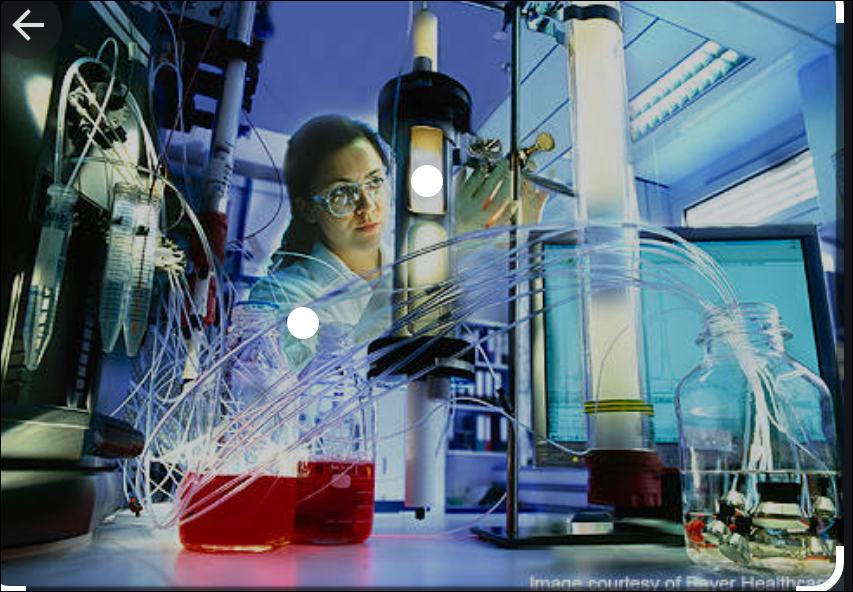
Bayer Healthcare and Cell Biology Center

   Vericiguat works in conjunction with existing approaches through a different mode of action. It restores the deficient NO-sGC-cGMP pathway, which plays a critical role in the progression of heart failure, aggravating its symptoms.

   Vericiguat is jointly developed by Bayer and MSD (a tradename of Merck & Co., Inc., Kenilworth, NJ, USA), known as Merck in the U.S., and has been approved by the U.S. Food and Drug Administration (FDA), the European Commission and the Ministry of Health, Labour, and Welfare (MHLW) in Japan among other countries.

   Vericiguat has also been submitted for marketing authorization in China as well as multiple other countries worldwide.

   “We are currently in the remarkable position to launch several important new medicines in parallel, and we are unlocking the full potential of our assets through systematic data generation, multi-indication approaches as well as building on new digital business models,” said Christian Rommel, Member of the Executive Committee of Bayer’s Pharmaceutical Division and Head of Research and Development.

   “Our scientific leadership in the area of cardiovascular diseases advances our mission to provide better treatment options for patients in need.”

Re-imagining Radiology

   Bayer is strongly positioned in the fast-growing medical imaging artificial intelligence (AI) market, combining a long-term expertise in radiology with a deep understanding of patients’ and physicians’ needs across a broad range of diseases, from oncology to cardiovascular, resulting in the ability to provide know-how and solutions from diagnosis to care.

   In times of limited resources in healthcare systems, growing as well as aging populations and changing lifestyles contribute to an increase in chronic conditions such as cardiovascular disease and cancer.

   As a result, the need for tools delivering improved diagnostic information while helping save costs and time is increasing. Tackling this challenge with advanced technologies and products, radiology is a key enabler to transform healthcare, expanding personalized medicine and improving outcomes for patients.

   In particular, AI bears vast potential for advancing radiology.

   Bayer is developing a platform through which healthcare professionals can centrally manage AI-enabled medical imaging and imaging workflow applications.

   These solutions are being developed by Bayer as well as third parties, and aim to support the complex decision-making processes of healthcare professionals in their task to provide a clear direction from diagnosis to care for their patients.

   “One of the most pressing concerns in medical imaging today is the exponential growth of imaging data and its complexity due to an increase in radiology examinations, and the shortage of experienced medical staff to handle it,” said Zuzana Jirakova Trnkova, MD, PhD, Head of Medical Affairs and Clinical Development Radiology at Bayer.

   “Artificial intelligence can be a valuable tool that, when complementing the human expertise of radiologists and clinicians, offers vast potential to the healthcare industry and radiology in particular. This is why Bayer strives to be a key digital innovator in this area, with the ultimate goal of improving outcomes for patients and supporting their physicians.”

Shaping women’s health from menarche to menopause

Bayer has a long-standing commitment to delivering solutions to meet women’s needs across the different stages of their lives. While pursuing research to find new treatment options for gynecological diseases with a high unmet medical need, the company is also working on addressing women’s health needs during menopause.

  Elinzanetant, a non[1]hormonal development compound, is currently being investigated in the Phase III clinical development program OASIS for the treatment of vasomotor symptoms during menopause.

   “Every year 47 million women enter menopause, a period where women are at the peak of their life’s activity, personally and professionally. With increased longevity, maintaining functional ability and good quality of life is extremely relevant from both a healthcare and a socio-economic perspective. Unfortunately, menopause remains a taboo topic, leaving many women untreated,” said Cecilia Caetano, MD, Head of Medical Affairs Menopause at Bayer.    

   “With our strong heritage and deeply rooted expertise in women’s health, we continue to focus on providing innovative science, solutions and education to support the individual health need of women.”

Increasing access to modern contraception

   For more than 50 years, Bayer has supported educational programs and rights-based family planning in more than 130 countries, particularly by increasing access to modern forms of contraception.

   In 2019, Bayer pledged to provide 100 million women in low-and-middle-income countries with access to family planning by 2030.

    This initiative is part of Bayer’s comprehensive set of sustainability measures and commitments and in line with the United Nations Sustainable Development Goals (UN SDGs) .

   “We believe every girl and woman deserves the chance to determine her own future. That’s why Bayer is partnering with local and international organizations, such as the United Nations Population Fund and the United States Agency for International Development, to empower women to make informed decisions about family planning,” said Mildred Nadah Pita, Head of Global Healthcare Programs/Sustainability Middle Africa at Bayer.

   “With Bayer’s commitment to provide 100 million women in low- and middle-income countries with access to modern contraception by 2030, we are making an important contribution to achieving the UN Sustainable Development Goals by improving the health, rights and economic status of women around the world, which is a fundamental prerequisite for greater equality, education and prosperity for all.”

   As part of this commitment, Bayer recently announced an investment of over €400 million in new production facilities for long-acting reversible contraceptives, including the construction of a new production site in Alajuela, Costa Rica and the expansion of production capabilities in Turku, Finland.

Pilipinas namuno sa ikawalong usaping pampuno ng pondo ng Global Environment Facility

November 13, 2021

Inilathala ni Melody Mendoza Aguiba

   Pinamunuan ng Pilipinas ang rehiyon ng Asya sa ikawalong usapin ng pampuno ng pondo ng Global Environment Facility o GEF. 

   Ang mga usaping pinansyal na ito ay makakatulong upang maisakatuparan ng mga umuunlad na bansa ang kanilang pangako sa pandaigdigang layunin na pang-kalikasan.  Yan ay sa kabila ng mga balakid na dulot ng pandemya na Covid 19.  

   Ang pangalawang pagtitipon sa usaping GEF8 na ginawa ng online noong Setyember 29 hanggang Oktubre 1 ay napakahalaga.  Ito ay sa dahilang ang Covid 19 ay nagdulot ng krises na dapat lang malampasan ng bawat bansa.

   Ang krises na  yan ay hindi dapat makapigil upang ang mga suliranin sa biodiversity, pagbabago-bago ng klima o climate change, polusyon mula sa kemikal at iba pang mga bagay na sentro ng atensyon ng GEF ay ma-resolba.

   Sinabi ni Kagalang-galang na Roy A. Cimatu, kalihim ng Department of Environment and Natural Resources (DENR), na ang bansa ay humaharap sa mga mahalagang suliranin na nangangailangan ng probisyong pinansyal.

   “Kailangan nating mapondohan ang mga hakbang hinggil sa pagtugon sa suliranin sa klima, sa pangangalaga ng kalikasan, at sa pandemya.  Ang GEF8 ay nagbibigay ng oportunidad sa mga bansa na malutas ang mga prublemang ito,” ani Cimatu.

   Ang Pilipinas, na lumahok sa usaping GEF8 sa pamamagitan ni DENR Undersecretary Analiza Rebuelta-Teh, ay umaasang mapopondohan ang kanyang mga proyektong pang-kalikasan sa pamamagitan ng susunod na cycle ng GEF.

   Ang apat na taong cycle ng GEF-8 ay magsisimula mula July 2022 at magtatapos sa June 2026.

   Ang pondo ng GEF-8 ay maaring umabot sa $6.5 na bilyon.  Yan ay possible kung maitataas ang alokasyon para sa mga programang tinatawag na “Non-Grant Instruments” (NGI) at Small Grants Program (SGP).

   Ang mga alokasyon ng pondo para sa mga ito ay naglalayon na tulungan ang pribadong sektor at mamamayang sibil upang makilahok sa mga proyektong NGI at SGP.

   Ang GEF ay itinayo tatlumpung (30) taon na ang nakalilipas upang tulungan ang mga umuunlad na bansa na tugunan ang mga pangunahing suliranin hinggil sa pagkasira ng mga kakahuyan, pagdami ng disyerto, pagbabago-bago ng klima, pagkawala ng biodiversity, at pagkasira ng ozone na ating proteksyon sa atmospera.

   Si Teh ay naging “Asia observer” hindi lamang ng Pilipinas kundi ng rehiyong Asya  sa GEF8 sa kadahilanang sya ang Operational Focal Point person ng GEF Asya.

   Ang rehiyon na ito ay kinalalahukan ng Afghanistan, Bangladesh, Bhutan, Cambodia, Iraq, Jordan, Laos, Lebanon, Sri Lanka, Malaysia, Mongolia, Myanmar, Nepal, Pakistan, Philippines, Thailand, Viet Nam, Indonesia, Syria, at Yemen.

   Sa kanyang nag-kaisang paninindigan, naibahagi ng rehiyong Asya sa GEF ang kanyang suporta sa “vulnerability index.” Ang index na ito ay nagiging basehan kung ano ang uunahin ng GEF na pondohan na mga proyekto.

   Ang vulnerability index ay isang paraan sa tinatawag na System for Transparent Allocation of Resources (STAR) na nagtutukoy kung ano ang pinakamahalagang programang pang-kalikasan ayon sa aktwal na pangangailangan ng mga bansa at kanayunan.

   Ito ay tumutugon lalo na sa mga pangangailangan ng malilit at pinaka nangangailangang bansa o Least Developed Countries (LDC) at ng mga maliliit na pulo-pulong bansa o Small Island Development States (SIDSs).

   Ipinahatid ng Pilipinas sa GEF ang pangangailan na suportahan ng higit ang mga LDC at SIDC.

   Ang malaking parte ng  $6.5 bilyong pondo ng GEF8 ay ilalaan para sa biodiversity, 34%.  Ang susunod na pinakamahalagang pondohan ay ang  mga proyektong may kinalaman sa pagbabago-bago ng klima, 15%, sinundan pa ng kemikal at patapon na materyal, 14%.

   Ang pan-daigdigang karagatan ay tumatanggap ng pondo na umaabot sa 12% ng GEF cycle.  At ang pagkasira ng mga lupain naman ay tumatanggap ng 11% na alokasyon.  Ang para sa NGI na pondo ay umaabot sa $157 milyon at ang para sa SGP ay $256 milyon.

   Ang mga sumusunod ang mga mungkahi mula sa rehiyong Asya sa nagaganap na usaping GEF8:

  1. Pinaigting na suporta para sa mga bansa sa kanilang pang-karagatan at pang-kakahuyan na pangangailangan
  2. Pagpapalawig ng paglahok ng pribadong sektor sa mga layuning pang-kalikasan at ang ginaganap na tungkulin ng NGI at “blended finance” (kumbinasyon ng paraan ng pag-pondo) sa ganitong  layunin
  3. Pag-balangkas ng mga basehan kung sino ang dapat makinabang sa mga proyektong may kinalaman sa pagtugon sa  pagbago-bago ng klima. Ito rin ay may kinalaman sa pag-suporta ng pribadong sektor na makapag-dudulot ng pang-matagalang implementasyon ng mga ganitong proyekto.

   Ayon sa paninindigan ng rehiyong Asya, mahalaga rin na maglagay ng criteria sa paglahok ng mga ahensya ng GEF sa mga Integrated Programs (mga programa na kinasasangkutan ng dalawa o mahigit pang bansa); mga paraan upang mabawasan ang gastos sa transaksyon; at mapag aralan ang gastos na pang administrasyon ng mga ahensya ng GEF. 

   Mahalaga rin na mapag-aralan at matugunan ang dahilan bakit ang nga MDBs (multilateral development banks) ay tumatanggap ng mas mababang pondo sa  GEF.

   Nitong huling GEF cycle, naglaan ang GEF ng $1 bilyon para sa proyektong pinapatakbo ng 18 na partner na mga ahensya kasama na rin ang mga pambasang gobyerno.

   Sinabi ni Chairperson    Carlos Manuel Rodriguez sa 184 miyembrong-gubyerno ng GEF na mataas ang ambisyon ng cycle na ito ng GEF8.

   Dapat lamang na maisa layunin na sugpuin ang mga suliranin ng kakahuyan sa mundo, at tugunan ang mga pagkasira ng karagatan, ng mga ilog, kakahuyan,  kalupaan, kagubatan, at  pandaigdigang negosasyon.  

   “Handa ang GEF 8 na makamit ang mataas na ambisyon mula sa mga bansa sa mga negosasyon sa biodiversity, kemikal, at pagbago bago ng klima,” ayon kay  Rodriguez.    

   “Ang pagiging matapang at ambisyoso ay minimithi natin para sa GEF8. Ito ay magkakaroon ng resulta sa kalupaan man o sa karagatan, ” sabi ni Rodriguez. “Ang ating tungkulin ay bahaginan ang mga donor countries—ang mga bansang nagkakaloob ng yaman—ng mga dakilang oportunidad upang makapag likha ng mga pagbabago.  Minimithi rin natin na ang mga bansang tumatanggap  ng tulong pinansyal ay magkaroon ng mga dakilang proyekto na mapapalawig pa sa ibang lugar sa buong mundo.”

   Ang usaping GEF8 ay paraan rin upang ang mga donor countries ay makapag negosasyon ukol sa sharing ng alokasyong pinansyal para sa mga proyekto.

   Oportunidad rin ito upang mapag aralan ang performance ng GEF at ng kanyang paglago, at mapag aralan ang pangangailangang pinansyal ng mga bansa at ng paraan kung paano ito matutugunan ng GEF.

   Ang mga usaping pampuno ng pondo ng GEF ay kinalalahukan ng mga representatives ng apat na clusters ng mga non-donor na bansa. Ito ay mula sa rehiyon ng Africa, Asia, Eastern Europe at Central Asia, NGOs (non government organizations) at pribadong sektor.

   Sinabi ni  World Bank Vice President of Development Finance Akihiko Nishio na sadya ngang kailangan na baguhin ang mga diskusyon upang matugunan ang pangkasalukuyang suliranin na nakakasira ng kalikasan.

   “Napakaraming hinaharap na suliranin ngayon ng kalikasan na dapat tugunan ng GEF-8. Ang ‘business as usual ay hindi na epektibo,” sabi ni Nishio. “Kailangan nating maging matapang at mabilis sa pagde-desisyon.  Kailangang tulungan ang mga lumalagong bansa upang mabawasan ang mga masamang banta sa kalikasan.  Ito ay makakatulong para sa lahat ng bansa.”

   Sinabi ni  Rodriguez, nangangailangan ngayon ng higit na pondo ang mga proyekto upang makamit ang mga pangako sa Convention on Biological Diversity, United Nations Framework Convention on Climate Change, the UN Convention to Combat Desertification, Minamata Convention on Mercury, at ang Stockholm Convention on Persistent Organic Pollutants. (Melody Mendoza Aguiba)
    Ang isang mahalagang istratehiya upang makamit ang mga pangakong ito as paigtingin ang maayos nap ag babalangkas ng mga polisiya, pag aayos ng political na pagpapatupad ng mga proyekto, at maayos na pagpapatakbo ng gubyerno.

   DApat lang na ang GEF ay maiayos ang pagkakaisa para sa isang layuning ng mga gubyernor, civil society, at pribadong sector upang mabigyan ng solusyon ang mga ugat ng prublema ng kalikasan at pagkasira nito.

    Gaganapin ang ikatlong GEF8  sa Pebrero 2022 at susundan pa ng ikaapat at huling usaping pampuno ng pondo sa April-May 2022.  (Melody Mendoza Aguiba)
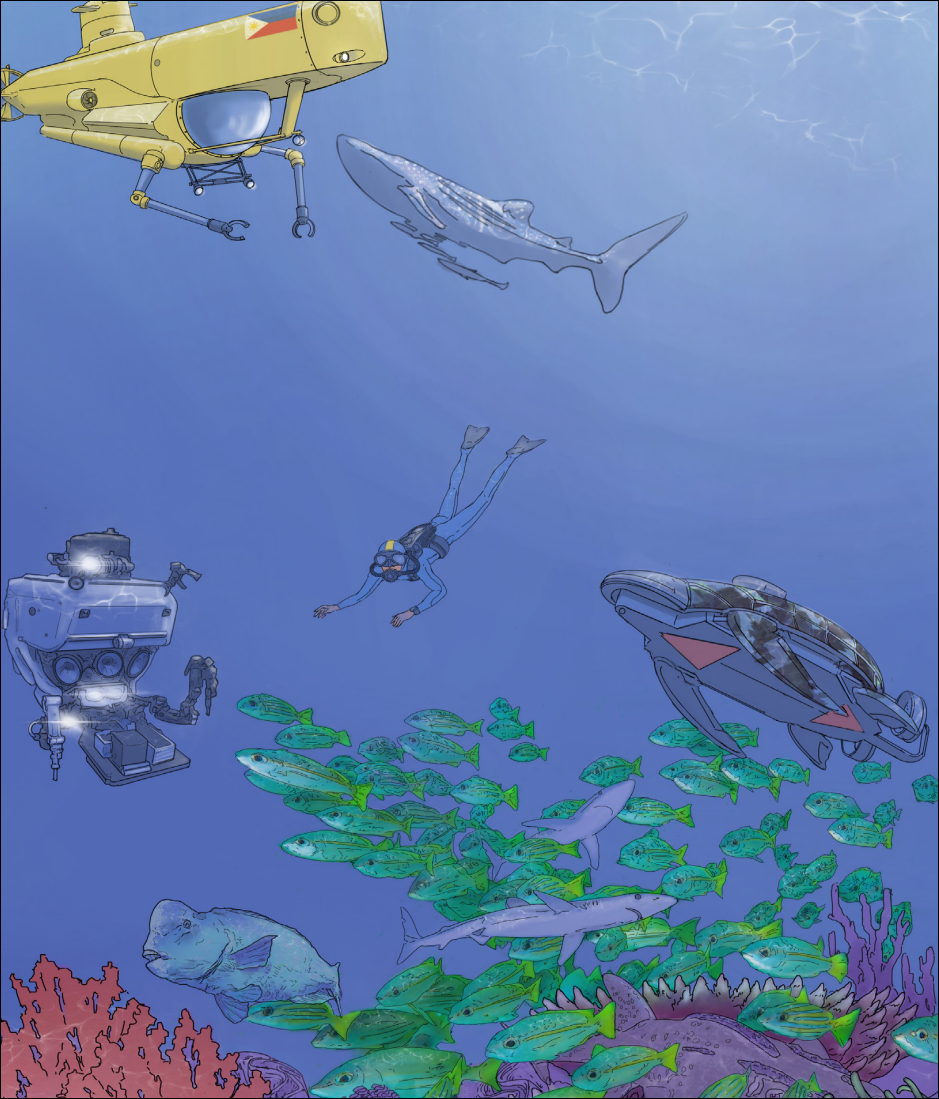
Pagtanaw sa 2050 nangangarap gawing dakilang pang-karagatang bansa ang Pilipinas

1 Pebrero 2022

Inilathala ni Melody Mendoza Aguiba

Nagpahayag si senatorial candidate Risa Hontiveros ng pagsuporta sa vision  na kung tawagin ay “Pagtanaw sa 2050” na naglalayong pangarapin na ang Pilipinas ay maging isang tunay na dakilang pang-karagatang bansa. 

   Ang taglay nitong pulu-pulong heograpiya ay magiging pinaka-importanteng asset o kayamanang na pang-ekonomiya ng Pilipinas.

   Sa isang online forum na tinawag na “Halalan Para sa Agrikultura 2022” na inorganisa ng Philippine Chamber of Agriculture and Food Inc. (PCAFI), nagpahayag ng paniniwala si Hontiveros na higit sa anumang katangian, ang pag-hinang ng kayamanang pang-karagatan ang mag-aangat sa ekonomiya ng Pilipinas. 

   Ang importansya nito ay higit pa sa anumang kayamanang pan-lupa o likas na yaman.

   “Naalala ko ang mga adbokasiya na naglalayong ang ating kasaysayang pang-karagatan ay dapat na ituro sa ating mamamayan.  Iyan ay mahalaga sapagkat ang ating karagatan ay mas malawak kaysa sa ating kalupaan,” sabi ni Hontiveros.

   “Kaya nga’t aking kinikilala kayong mga nag-balangkas ng ‘Pagtanaw sa 2050.’  Mas hinigitan pa ninyo ang ‘Ambisyon 2040,’” ayon kay Hontiveros  sa online forum na pang-agrikultura. 

   Ang ambisyon na ito ay maaring isama na mungkahi sa lehislatura para na rin suportahan ang mga Pilipinong mangingisda at lahat ng mga Pilipinong may ipinaglalabang karapatan sa kayamanang pang-enerhiya sa West  Philippine Sea, sabi ni Hontiveros.

   Ang kayamanang pang-karagatan ng Pilipinas ay dapat na laging ipagmalaki maging sa lokal man na  usapin o pang-daigdigan, sabi niya.

   “Dapat itong malaman ng bawat isang Pilipino, ng bawat mag-aaral.  Dapat isapuso ang ganito nating pagkatao.  At dapat tayong mamuhay ayon sa ganito nating taglay na katangian sa rehiyonal o pang-daigdigang kalagayan,” aniya.

   Ang forum na pinamunuan ng pangulo ng PCAFI na si Danilo V. Fausto ay kapwa inorganisa rin ni Alyansa Agrikultura Convenor Ernesto M. Ordonez, Pambansang Syentista na si Emil Q. Javier,  Federation of Free Farmers Chairman Leonardo Q. Montemayor, at Rice Watch President Hazel Tanchuling.

   Ang pangangarap sa Pagtanaw sa 2050,  na pinamunuan ng National Academy of Science and Technology o NAST ng Pilipinas, ay nagsaad na ang ating industriyang pang-karagatan ay magbubunga ng $3 trillion na kita. 

Hinahangad ng “Pagtanaw sa 2050” na ang Pilipinas ay maging dakilang pang-karagatang bansa

   Ito raw ay ayon sa projection na ulat ng Overseas for Economic  Cooperation and Development o OECD.

   Sinabi ni  Javier na ang Pagtanaw sa 2050 ang magbubunsod ng modernisasyon ng agrikultura ng Pilipinas. 

   At dahil dito, mahalagang maitayo ang isang Department of Fisheries.  Ito ay hiwalay sa kasalukuyang Department of Agriculture kung saan napapaloob ang Bureau of Fisheries and Aquatic Resources bilang isang maliit na unit.

   Ang tinatawag na “Blue Economy” ay ang uri ng ekonomiya na nagdudulot ng kayamanan mula sa karagatan sa paraang maka-kalikasan at sa paraang sustenable o nananatili sa pang-matagalan.

   Ito ay isang hakbang tungo sa pagyaman ng ekonomiya na kinakailangan upang matutustusan ang pangangailangan ng bawat Pilipino sa hanap-buhay, kaseguruhan ng pagkain, at paglalaan ng raw material para sa mga industriya.

   Kinakailangan lamang na maglaan ng puhunan para sa pangkaragataang transportasyon, turismong pang-ekonomiya, pangangalaga ng kalikasan, at maayos na pagpapatakbo ng mga pasilidad ng tubig at iba pang infrastructure.

   Para sa mga Pilipinong naninirahan sa mababang baitang ng mga lugar malapit sa baybaying dagat, magkakaroon ng maraming oportunidad sa turismo. 

   Ito ay magbibigay ng kabuhayan sa 5.71 milyong mangggagawa sa mga resorts. 

   Ito rin ay magbibigay ng hanap-buhay mula sa pag-aayos ng baybaying dagat, pangingisda, at aquaculture (1.6 milyong mangggagawa).

   Para sa industriya sa baybaying dagat, 300,000 na manggagawa ang magkakaroon ng hanap-buhay.  Magkakaroon rin ng hanap-buhay mula sa pagpapatakbo ng pantalan, industriya ng barko at pangkaragatang transportasyon, pang-karagatang enerhiya, pagmimina ng langis sa dagat, bio-teknolohiyang pang-karagatan at parmasyutiko, at serbisyong pang-kalikasan.

   Mapagsisilbihan na ng Blue Economy ang pangangailangan sa diet para sa protina ng mga Pilipino na ang kuwarentang bahagdan (40%)  ay mula sa pangisdaan. 

   Matutustusan na ang pangangailan ng 30 milyung Pilipino na umaasa sa karagatan para sa kanilang kabuhayan.

   Uusbong ang mga bagong industriya at teknolohiya mula sa Blue Economy.  Kasama na rito ang bio-enerhiya sa pamamagitan ng produksyon ng algal biofuel, mga gamot, kosmetiko, pagkain, pagkain ng mga hayop, produkto ng inumin, at multi-trophic aquaculture (produksyon ng hipon, tahong, talaba, sea cucumbers, sea urchins.)

    “Ang ambag ng pangkaragatang industriya sa ekonomiya ay magiging napakahalaga lalo na sa pagpapalawig ng trabaho,” ayon sa Pagtanaw sa 2050.

   Noong 2010, ito ay tinataya sa $1.5 trilyon o 2.5 bahagdan (2.5%) ng pan-daigdigang gross value added (GVA).  Ang pang-karagatang industriya rin ay magbibigay ng direktang hanapbuhay sa 31 milyong katao, ayon sa Pagtanaw sa 2050.

   Dahil agrikultura ang pinag uusapan, sinabi rin ni Hontiveros na ang repormang agraryo ay dapat na maisa-katuparan ng lubusan.   

   Gayunpaman, mahalaga rin na i “cluster” ang mga lupa o malawakang pagsama-sama samahin upang makamit ang tinatawag na “economies of scale.” Ang layunin ng repormang agraryo at pag-oorganisa ng mga kalupaan ay hindi salungat sa bawat isa, ayon kay Hontiveros.  

   Sinabi ni Fausto na hindi makakamit ang economies of scale kung hiwa-hiwalay ang mga lupa sa Pilipinas. 

   “Dapat magkaroon ng win-win na solusyon para magwagi ang bawat isa.  Ang  Department of Agrarian Reform ay may proyekto na ang tawag ay ‘Split’ na pinopondohan ng World Bank. Ang isa nitong layunin ay ipamahagi ang mga lupa sa isang banda, at sa isang banda naman ay i-organisa ang mga agrarian reform beneficiaries upang lumawak ang kanilang kabuuang mga lupain bilang cluster.  Ito ay magpapababa sa gastos sa produksyon ng pagkain at iba pang produktong pang-agrikultura,” sabi ni Hontiveros.

    “Wag po nila gawing prublema ng agrikultura yung isang kasing-halaga na programa ng repormang agraryo. May win-win na solusyon po talaga kung ikakambal at ituturing nilang magkapatid yung dalawang programa.  May iba’t ibang modelo po iyon,” ani Hontiveros.

   Mahalaga na palakasin ang kapasidad ng mga agrarian reform beneficiaries, kahit sa unang award sa kanila ng lupa o kahit pa ipamana na sa kanilang mga anak ang maliliit na parsel ng lupa.  Pero dapat rin na may programa talaga ang gobyerno kasama ang  pribadong sektor (para sa repormang agraryo.  (Melody Mendoza Aguiba)

Pinaigting — kampanya na iligtas ang nagbabantang pagkawala ng Tamaraw at ng Mt. Iglit-Baco

29 Abril 2021

Iniulat ni Melody Mendoza Aguiba

Pina-igting ng gubyerno ang kampanya upang iligtas ang Tamaraw na isang “critically endangered” na hayop na ipinangangambang mawala o maging extinct kasama na ang kanyang tirahan, ang Mt. Iglit-Baco National Park (MIBNP).

   Ang MIBNP ay isang ASEAN Heritage Site. Ang pagkasira nito ay pinangangambahan lalo na’t nabawasan ang pondo para sa kanyang preserbasyon dahil sa pandemyang Covid 19.

   Sa kabutihang palad, ipinag-patuloy ng Department of Environment and Natural Resources (DENR), kasama ang Biodiversity Finance Philippines (Biofin), ang programa upang i-preserba ang Tamaraw (Bubalus mindorensis). 

   Yan ay sa kabila ng paglawig ng aktibidad ng mga ilegal na paghuli at pagpatay sa hayop.  Sila ay nagsasamantala sa sitwasyon upang bihagin ang mga Tamaraw.

   Ang Tamaraw ay isang kakaibang dwarf buffalo (apat na talampakan lamang ang taas mula sa balikat).  Ito ay matatagpuan lamang sa pulo ng Mindoro.   

   Ang pag-kaunti ng populasyon ng Tamaraw ay naging kagulat-gulat simula ng mga 1990.   Isa ang Tamaraw sa labing-isa (11) na lamang na wild cattle species sa buong mundo.

   Ang Mt. Iglit-Baco naman na syang tirahan ng Tamaraw ay nakaranas rin ng matinding pagkawala ng kanyang mga puno.  Ang natitirang pangunahing kagubatan nito (primary forest) ay tinatayang kulang pa sa tatlong bahagdan (3%) ng kanyang kabuuang nasasakupan.

   “Nakakalungkot na sa ngayon, dalawampu’t tatlo (23) na lamang ang natitirang TCP (Tamaraw Conservation Program) rangers  at tatlong (3) MIBNP wardens na lamang ang nag pa-patrol sa core area na 2,500 ektarya sa loob ng 106,655 ektaryang MIBNP, “ ayon sa DENR.

   “Ang MIBNP ay nagbibigay tirahan sa natitirang 600 Tamaraw sa buong mundo,” ayon sa DENR.

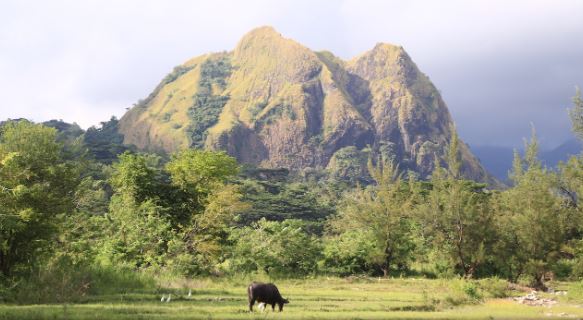
Ang Tamaraw ng Mindoro. Credit– Outoftownblog.com

   Ang programang “Together for Tamaraw” ay kampanyang sinusuportahan ng United Nations Development Programme (UNDP).  Ito rin ay sinu-suportahan ng upisina ng DENR sa MIMAROPA (Mindoro, Marinduque, Romblon, Palawan) at ng Biodiversity Management Bureau, ahensya rin ng DENR.

   Inilagay ng International Union for the Conservation of Nature (IUCN) ang Tamaraw  sa klasipikasyon na “critically endangered species.” Ito ang pinakamataas na baitang ng pagbabanta sa populasyon ng pine-preserbang flora at fauna (mga hayop at halaman).

   Mula sa populasyon na 10,000 Tamaraw noong  1900,  ang populasyon ng buffalo na ito ay naitalang bumaba sa 120 noong 1975. Ito ay isinisisi sa ilegal na panghuhuli at pagpatay sa hayop at illegal na pangangalakal.

   Sa pamamagitan ng mga programang pang konserbasyon, ang kanyang populasyon ay tumaas sa 370 noong 1987 at sa kanyang pangkasalukuyang populasyon na 600.

   Ang nauubos na buffalo ay nakinabang sa paglawig ng kanyang populasyon nang maisama ito sa pangdaigdigang listahan ng mga critically endangered species.

   Ang mga bansang lumagda sa Convention on International Trade in Endangered Species (CITES) ng pangkagubatang fauna at flora ay nakatulong sa pagsugpo ng ilegal na pangangalakal ng Tamaraw.

   Binansagan ang Tamaraw sa pangalang “mindorensis.” Ito ay sa dahilan na likas ang kanyang pamumuhay sa mindorensis ng Pilipinas. Ang “ensis” ay buhat sa salitang Latino na nangangahulugang nabibilang ito sa pulo.

   Inihayag ng DENR  na tatlumpu’t limang (35) bansa ang tumulong sa pag-pondo ng “Together for Tamaraw” na ginawa sa pamamagitan ng  online na kampanya.

   Sa ngayon ay mayroon nang  programang pang sampung (10) taon para sa preserbasyon na tinawag na Protected Area Management Plan para sa Mt. Iglit-Baco. 

   Isinasama ng planong ito ang paglahok ng mga katutubong tao o indigenous people (IP) sa programang preserbasyon.  Isinasama na rin dito ang kultural na tradisyon ng mga IP sa pag pre-preserba ng Tamaraw.

   Bahagi na rito ay siguruhin ang karapatan ng mga IP sa kanilang ninunong lupa o ancestral domain na mga protektadong lupa ng gubyerno.  

   Pinapalakas nito ang karapatan ng mga IP na protektahan ang mga bundok at ang kanyang endangered na flora at fauna. Ito ay lumalaban sa pagra rancho ng mga bull at panghu-huli at pagpatay sa mga hayop ng kagubatan.

   “Ang natural na park ay sumasakop sa malawak na ninunong lupa ng mga Tau-buid at Buhid na likas na tribo sa lugar.  Ginagawa silang mga pangunahing taga-pakinabang o stakeholder na gumaganap sa pagde-desisyon sa pagpapatakbo ng kabundukan, “ ayon sa Global Wildlife Conservation (GWC).

   Ang Tau-buid at Buhid Indigenous People ay lumahok sa zoning, pagpa-plano ng management, at mga workshops sa Population at Habitat Viability Assessment (pagsusuri ng populasyon at tirahan ng mga Tamaraw) o PHVA. Ito ay para sa konserbasyon ng Tamaraw at MIBNP. (Melody Mendoza Aguiba)

Batas upang isa institusyon ang online learning isinulong ng isang think tank na pang edukasyon

10 Abril 2021

Melody Mendoza Aguiba

   Isinulong ng isang think tank sa edukasyon na gawing pormal na institusyon ang “online” o “blended” na pamamaraan ng pag-aaral.

   Sa pag uudyok na rin ng sitwasyon dulot ng pandemyang Covid 19,  napilitan ang mga paaralan sa Pilipinas na yakapin ang online na paraan ng pag-aaral.

   Mula sa resulta ng mga pananaliksik ukol sa online learning, isinulong ng  Educational Policy Research and Development Center (EPRDC) ang isang lehislatura na naglalayong gawing pormal na institusyon ang online na edukasyon o ang tinatawag na pinaghalo o “blended” na edukasyon.   

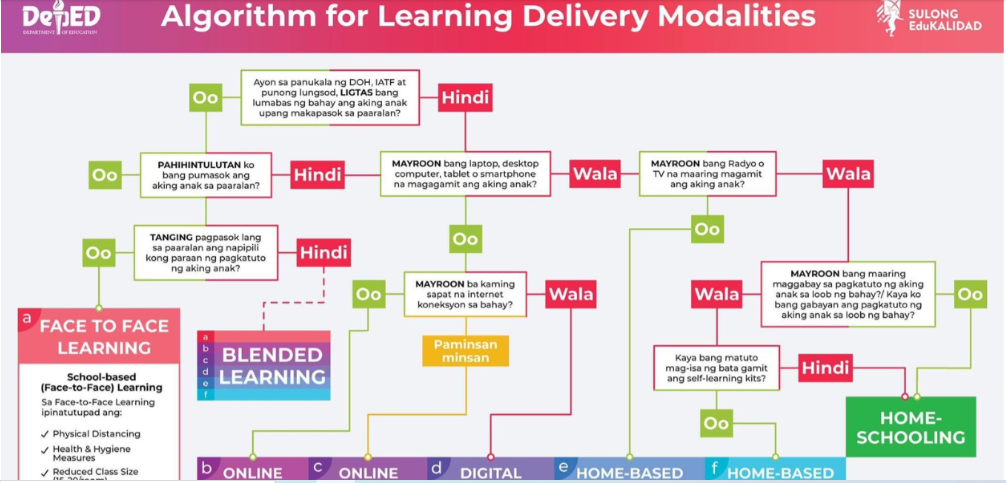
   Ayon sa Department of Education (DepEd), ang blended learning ay parehong niyayakap ang tradisyonal na personal na harapan na pag-aaral (face-to-face learning) at ang pag-gamit ng radyo at telebisyon sa pag-aaral.

   At ngayon ay kasama na rin sa mga medium na ito ang mga internet platforms o online na medium.

   Sinabi ng EPRDC na mula sa ekstensibong pag aaral ng Philippine Normal University (PNU), napag alaman na ang online na edukasyon ay “nagbubunga ng pina-igting na pagiging masigasig sa pag-aaral sa mga batang mag-aaral sa halos lahat ng baitang.”

   Ang pananaliksik na ito ng EPRDC-PNU ay napag obserbahan sa loob ng sampung (10) taon. Ang pag aaral ay pinag sama-sama ni Dr.  Edna Luz Raymundo-Abulon.

Blended Learning. Hango sa Let’s Learn English

   Inihayag pa nang may diin ng EPRDC-PNU na maaring mapaglabanan ng Pilipinas ang phenomenon na “brain drain” sa pamamagitan ng ganitong bagong teknolohiya.  Ang brain drain ay ang pagkaubos ng mga Pilipinong skilled na piniling mag abroad.

   “Ang brain drain phenomenon — kung saan ang mga Pilipinong guro ay pinipili na mag-trabaho sa ibang bansa kaysa dito — ay dulot ng mababang sahod.  Ito rin ay dahil sa kakulangan ng oportunidad sa paglago ng propesyon sa Pilipinas,” ayon sa think tank.

   Ang pananaliksik ng PNU ay napapaloob sa walumpu’t sya (89) na nai-lathalang pag aaral.  Ito rin ay kinikilala ng mga refereed scientific journals o kinalalahukan ng mga batikang siyentista.  Sakop nito ay tatlumpu’t walong (38) proyektong pananaliksik. 

   Ito ay isinagawa ng mga propesyunal na guro ng PNU na nagsimula pa noong 2010 hanggang 2020.

   Ang pagaaral ni Balagtas et al. (2018), halimbawa na, ay nagpakita na ang teknolohiya sa pamamagitan ng blended modality sa mataas na paaralan sa kolehiyo ay napatunayang epektibo.  Ito ay partikular na sa pagtuturo sa Learning Management Systems (LMS).   

   Ang LMS ay isang programa sa computer o software para patakbuhin ang isang programang pang edukasyon na ang layon ay magturo ng skills o ng trabahong pang-kabuhayan o kakayahan.

   Sa pag aaral naman ni Sarmiento at Prudente, napag-alaman na isang praktikal na gamit ng MyOpenMath, isa ring software o programa sa computer, ay pigilan ang pangongopya ng mga mag aaral sa sagot o homework ng iba.

   Sa isa pang pag aaral sa PNU (nila Mancao, Morales, Abulon, Ermita at David), ipinakita na ang mga mag aaral ay may positibong perception o pananaw  sa pag gamit ng online na pagtuturo kahalo ang pagtuturo sa silid-paaralan (classroom). 

DepEd Blended Learning Mode

   Naniniwala ang mga mag aaral na ang blended learning  ay isang epektibo at mahusay na paraan na matuto ng mga kursong pang kolehiyo.

   Masaya at nakaka-aliw ring paraan para matuto ang online learning, ayon sa isang pananaliksik mula sa sa isang klase ng Teacher Education Institution (TEI).  Ang TEI ay may layon na mag hubog ng skills ng mga guro.

   “Ang pag gamit ng low-cost tablets (portable computers) – online o offline man – ay isinagawa ng isang semester sa isang TEI.  Napag alaman rito na ang online learning ay naging masayang paraan para matuto gamit ang tablet at mga apps (Cacho et. Al., 2017.”

   Ang pag gamit ng smartphones, sa loob man ng klase o pagkatapos ng klase, ay sinubukan ng mga pre-service na guro (Cacho 2017).

“Ini-ugnay ng pag aaral na ito ang mabisang pag-gamit ng mga apps sa android phones sa epektibong pag-alam ng mga mag aaral ng mga mahalagang kaalaman o heneral na impormasyon.   May pagkakaisa ang mga mag-aaral sa mga aktibidad na nangangailangan ng  collaborative o pagtulung-tulong sa pagaaral.”

   Subalit sa kabila ng masidhing pagnanais ng mga mag-aaral sa kolehiyo sa pag-gamit ng ganitong teknolohiya, ang nagiging balakid ay ang kawalan ng mga qualified na guro na may kasanayang gumamit ng mga software at hardware.

   Kasama na rin  nito ang prublema sa kakulangan ng mga gadgets at koneksyon sa internet na isa sa mga pangunahing balakid.

   Ang pag-aaral ni Mancao et al. noong 2015 ay nagsabi, “Kailangan ng angkop na tulong ng mga unibersidad sa pagsasagawa ng ganitong pedagohiya o bagong pamamaraan ng pagtuturo.   Kailangan na magkaroon ng mga standard templates, class schedules, at mga alituntunin sa online learning.“

   “Sa bawat makabagong istratehiya, kailangan muna ang sapat na pasilidad at mga guro na may kaalaman at mastery.  Dapat rin lumahok ang mga mag-aaral upang ang mga alintuntunin ay masunod.“

   Maari rin matugunan ng blended learning ang suliranin sa kakulangan ng mga silid paaralan.  Ang ideyal na size ng klase ay dalawampu (20) hanggang tatlumpu (30).

   Sa kabila nito, hindi kakaiba na makakita ng klase na may apatnapung (40) mag-aaral sa mababang paaralan.

   “Isang pagaaral ang nagsuri  ng pamamaraan ng pagtuturo na epektibo sa malaking klase (Reyes & Dumanhug, 2015).   Ito rin ay may kinalaman sa blended learning,” sabi ni Abulon.

   Ang isa pang mahalagang pasilidad sa pag-aaral sa mataas na paaralan ay ang online library, ayon kay Abulon.

   Ang PNU mismo ay may web-based research management system.  Ito ay bahagi ng research portal ng PNU. Mayroon itong mabilis at may sistemang paraan sa pagmo-monitor ng lahat ng sipi ng mga pananaliksik ng PNU.

   Nanawagan rin ang EPRDC-PNU na siguruhin ng gubyerno na ang curriculum sa mataas na paaralan ay tumutugon sa pangkasalukuyang pangangailangan ng mga mamamayan.

   Sinabi raw ni Anito and Morales sa isang report na, “Ang archaic (o makalumang) paraan ay hindi na tumutugon sa kanyang mga hangarin.” (Melody Mendoza Aguiba)
Investments in cold storage, amendment of Rice Tariffication Law, promotion of agri among young people to be pushed by Escudero, Cayetano

February 22, 2022

Investments in cold storage facilities, amendment of the Rice Tariffication Law, and promotion of agriculture among young people will be pushed by aspiring senatorial candidates Francis Escudero and Alan Peter Cayetano once reelected.

   During the online forum Halalan 2022 Para sa Agrikultura organized by the Philippine Chamber of Agriculture and Food Inc. (PCAFI), Alyansa Agrikultura and three other organizations, the two senatorial reelectionists also said agriculture’s budget increase will be top of their agenda.

   Escudero said cold storage will play a significant role in upgrading Filipino farmers’ livelihood status as it will enable the transport of farm goods to unserved areas. 

   It will preserve farm goods’ quality, raising their prices, while serving the needs of locations that do not produce these goods.

   “We lack cold storage facilities. We can’t assure the good quality of our produce without cold storage in each province. Why don’t we put up incentives for (those investing) in cold storage?” said Escudero.

Sorsogon Governor Francis Escudero (Photo above- Taguig Representative Alan Peter Cayetano)

   As most of the cold storage facilities in Metro Manila are designated already for imported goods, Escudero said government can assume what importers are doing—renting in advance these facilities.  That is to assure that Filipino farmers are equally accorded the benefit of preserving their produce’s good quality.

   There are hardly cold storage facilities in Bicol Region, Masbate, and Catanduanes. Such facilities are found only in Albay and Camarines Sur.

   Cayetano said during the same forum that integrating successful small farming models into the national program is needed in order to upscale agricultural production. For instance, Jollibee and San Miguel Corp, he said, are already entering into contract growing with farmers’ group.

   “Our good ideas are never integrated,” said Cayetano during the online forum also co-organized by the Federation of Free Farmers, Coalition for Agricultural Modernization, and Rice Watch.

   Regarding the Rice Tariffication Law (RTL), Escudero said he will push for an amendment of the RTL. It has not achieved what it intended to do – supposedly to benefit the rice sector and rice farmers and bring rice price down for consumers.

   “Our imports should have a timing.  Why do we import (rice) during harvest? The imports compete with what our own farmers produce. We import galunggong. If only we supported fishermen with fingerlings, the benefit should have gone to our own fishermen,” said Escudero.

   Cayetano said there is so much fishing opportunity in Laguna Lake which only has a P40 million budget.  But the beautification of Manila Bay with dolomite received an initial P50 million, then P200 million.

   Presidentiables should be made to commit to complete a certain number of hectares of irrigation capacity during his term, he said. Commitment should also be done on a concrete number of farm to market roads to be constructed during a presidentiable’s term, Cayetano said.

   As the average of farmers in the Philippines is already at older side of 53 now, Cayetano said agriculture should be promoted among young people as “desirable and profitable.”  That is considering that there are many rich people engaged in agriculture, unlike what is popularized as the image of poor Filipino farmers.

   “You can see (poor) farmers shown on TV. But if they watch European or American movies where farmers are rich and using drone and high tech devices (our young people will be convinced to take up farming,” said Cayetano. (Melody Mendoza Aguiba)

IFAD-supported agro-enterprise project beefed up “value chain” opportunities for Filipino farmers in 21 poverty-stricken provinces

February 8, 2022

An agro-enterprise project supported by the International Fund for Agricultural Development (IFAD) has beefed up “value chain” opportunities for Filipino farmers in 21 poverty-stricken provinces, linking them to markets, credit, training, and technology.

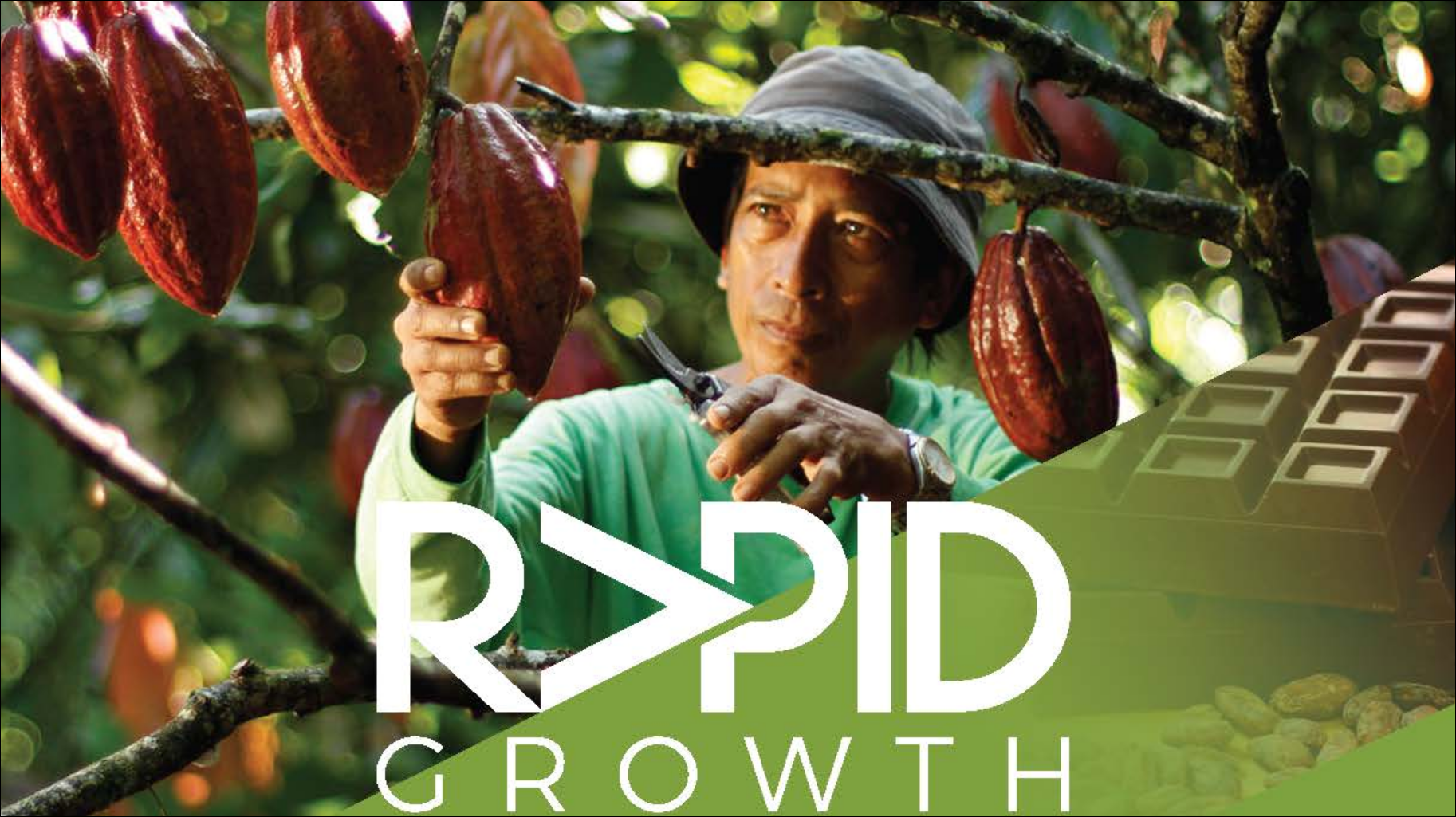
    In a webinar hosted by the Southeast Asian Regional Center for Graduate Study and Research in Agriculture (SEARCA), the Department of Trade and Industry (DTI) reported that a project called “RAPID” has been helping raise income for small farmers and unemployed rural women.

   RAPID stands for Rural Agro Enterprise Partnership for Inclusive Development and Growth.

   The concept of RAPID is first to organize farmers into bigger groups as there is strength in number and in organization.  Then, they are provided with all the business support they need in order to succeed.

   “There was sustained growth of agri-based MSMEs (micro small medium enterprises) with strong backward linkages to farmers.  The project generates employment and livelihood opportunities,” said Mysol Booc Carcueva, RAPID national value chain officer told the SEARCA webinar.

   The webinar is part of SEARCA’s SOLVE (SEARCA Online Learning and Virtual Engagement) series in support of its five-year thrust toward Accelerating Transformation through Agricultural Innovation (ATTAIN).

   The RAPID project has so far helped 78,000 farming households increase their income by 60%. 

   Carcueva said this increase in household income is attributed to increase in production due to rehabilitation and expansion of farm production areas. 

   The farmers also reduced transaction costs from consolidation of produce, creating economies of scale.  There was better quality produce from improved production and post harvest technologies that raised prices of the farm goods.  The households also earned dividends from cooperatives.

   MSMEs were able to expand their markets and raised income from value addition.

   RAPID generated 31,000 direct jobs and 155,0000 indirect jobs.  A total of 1,050 micro small and medium enterprises (MSMEs) increased their sales by 100%.

   As an “anchor firm,”  or a market to purchase the farmers’ produce is vital to an enterprise’s survival, coffee farmers in Bukidnon have so far formalized their supply agreement to Nestle. 

   Cacao farmers have formalized their supply agreement with Kennemer International which supplies cacao products to global brand Hershey’s.  Coffee farmers are able to sustain their sale of specialty coffee to Gourmet Farms and roasted coffee to Equilibrium Intertrade Corp.

  RAPID also links organized farmers to a Financial Service Provider or FSP. That includes Land Bank of the Philippines (LBP), Development Bank of the Philippines (DBP), rural banks, and other small banks.

Enabling small farmers to enter the global value chain– the business model that integrates them to the entire range of business activities like marketing and distribution– is critical to helping them become successful entrepreneurs.

   DTI which runs RAPID has entered in a memorandum of agreement (MOA) with Department of Interior and Local Government (DILG).  This is to facilitate the construction of roads, bridges, and needed infrastructure to support delivery of produce from farms to market.

   RAPID operates in seven regions including the Bangsamoro Autonomous Region in Muslim Mindanao (BARMM), Region 7 (Cebu, Bohol, Siquijor, Negros), 8 (Samar, Leyte, Biliran), 9 (Zamboanga provinces), 10 (Bukidnon, Camiguin, Lanao del Norte, and Misamis provinces), 11 (Davao provinces), and 12 (South Cotabato, Sultan Kudarat, Saranggani, Gen Santos).

   Its focus crops are coconut, coffee, and cacao.

   There are now more than 500 coffee farmers whose produce are consolidated via the Bayanihan Millennium Multi Purpose Cooperative.  They are clustered based on their location—Nabaliwa, Mendis, Poblacion, Concepcion, Lantawon.

   Cacao farmers in the Davao provinces were assisted in acquiring post harvest facilities through RAPID’s matching grant in accordance to markets’ standards.  They were given support in farm expansion and rehabilitation. The project gave farmers training in entrepreneurship.

  The cacao farmers, totalling around 2,900,  were also linked to domestic markets—Nutrarich, Rosarios Delicacies, Cacao de Davao, MS3, CSI, AECMPC, and Malagos Chocolate

   RAPID has enabled farmers’ organizations (FO) to hurdle many kinds of difficulties in upscaling. 

   FOs that cannot provide counterpart financing are rather asked to provide non-cash counterpart such as labor, existing facilities, and assets.  They are trained in preparing their own farm plans, business plans, business proposals and in managing their enterprise. 

   They are also assisted in reconstructing historical financial statements.  

   RAPID helps maximize the interbank arrangements of government financial institutions (DBP, LBP) with other small banks to facilitate credit and matching grants.

   “Technical assistance to Financial Service Providers and assessing their capability for designing value chain financing schemes are pursued to make them more accessible to project beneficiaries. The project focuses on sectors where investments matter.  Partnerships should have a clear business case model with profitable returns,” said Carcueva. (Melody Mendoza Aguiba)

Bayer donates Php 2.7 million to Philippine Red Cross for Typhoon Odette operation

Typhoon Odette relief operations

February 3, 2022

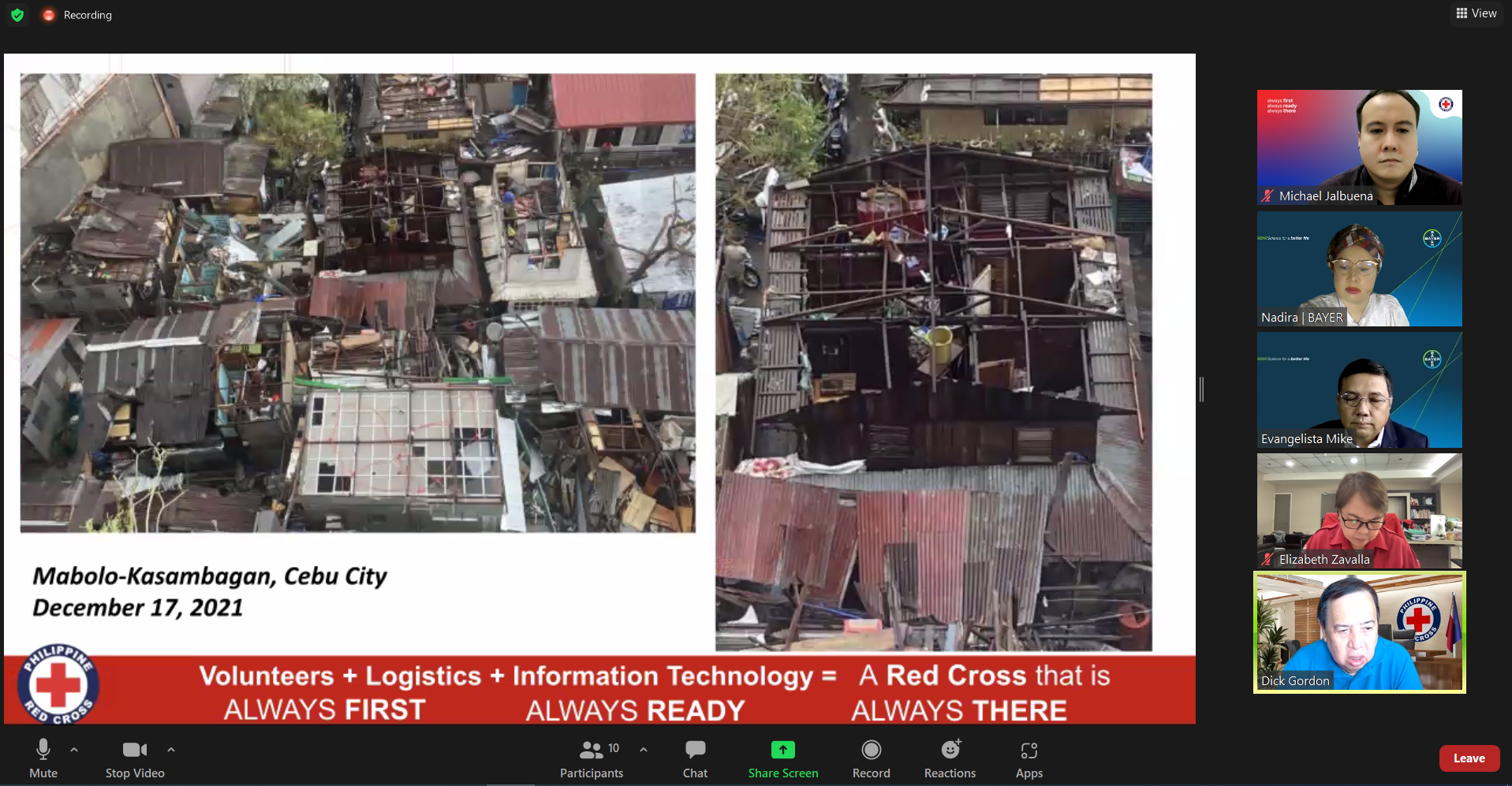
Bayer is supporting communities impacted by Typhoon Odette with a donation of Php 2.7 million to the Philippine Red Cross (PRC). The donation will be used by the PRC to address the urgent need of families in evacuation centers and typhoon affected areas for clean drinking water and food.

   “Seeing the impact of Typhoon Odette and the severe damage on so many homes and livelihoods in the process – it was without question that Bayer would support relief efforts through organizations like the Philippine Red Cross. We want to help enable access to food and clean drinking water which are necessary for good health” said Angel Michael Evangelista, Managing Director for Bayer Philippines, Inc.

   The PRC is a foremost humanitarian organization actively aiding families whose homes and livelihoods were either partially or totally damaged by the typhoon.

   “On behalf of the staff and volunteers of the Philippine Red Cross, we would like to thank Bayer for their humanitarian aid. Bayer is certainly a company we’ve worked with in the past for Typhoons Yolanda and Ulysses” said PRC Chairman and CEO Senator Richard Gordon.

   “Typhoon Odette must not be a forgotten disaster. With this donation from Bayer, we clearly see that there are still good companies who are conscious of their social responsibility and helping people in need.”

Virtual turnover call between Bayer Philippines Inc. Managing Director Angel Michael Evangelista, Bayer Communications Manager Nadira Abubakar, and the Philippine Red Cross (PRC) Chairman and CEO Senator Richard Gordon, PRC Secretary Secretary General Elizabeth Zavalla, and PRC Fund Generation Manager Michael Jalbuena

   As a life science company, Bayer provides solutions in pharmaceuticals, consumer health, and in agriculture. “Our vision at Bayer is ‘health for all, hunger for none’, and this aligns with what we want to achieve both as an organization and as individuals,” added Evangelista.

   According to PRC Secretary General Elizabeth Zavalla, they aim to provide aid to 29,900 families in the form of shelter and cash, to give food and non-food items to 20,000 families, and supply as much water as needed. So far they have provided over 4 million liters of water in the affected areas of Cebu, Bohol, Siargao Island, Agusan del Norte, Negros Occidental, Negros Oriental, Lanao del Norte, Surigao del Norte, Palawan, Lapu-Lapu, and Southern Leyte.

Bayer- Red Cross aids in Cebu’s restoration

   In line with its vision of “Health for all, hunger for none”, Bayer also donated Php 4 million in 2020 during Typhoon Ulysses, and donated products in 2013 during Typhoon Yolanda to the PRC.